The Real Story Behind CCS DC Fast Charging in 2026
If you own a non-Tesla EV purchased before 2025, there's a very good chance it charges using a CCS1 (Combined Charging System) connector. CCS DC fast charging has been the dominant public charging standard for most automakers — Hyundai, Kia, Ford, Volkswagen, BMW, and GM among them. But the landscape is shifting fast. Tesla's North American Charging Standard (NACS) has been adopted by nearly every major automaker starting with 2025 model-year vehicles, and understanding where CCS fits into this transition is critical for anyone buying, owning, or planning to charge an EV today.
This guide breaks down exactly how CCS DC fast charging works, what speeds you can expect in real-world conditions, how it compares to NACS, what you'll pay per mile, and how to set up charging at home — with hard numbers throughout.
Understanding Charging Levels: kW, kWh, and What They Mean
Before we get into CCS specifics, let's clear up the single most common EV confusion: kW (kilowatts) measures power — how fast energy flows into your battery. kWh (kilowatt-hours) measures energy — the total capacity of your battery. Think of kW as the width of a pipe and kWh as the size of the tank you're filling. A 150 kW charger fills your battery faster than a 50 kW charger, but your battery's total capacity (say, 77 kWh) stays the same regardless.
| Level | Power (kW) | Voltage | Miles of Range Added per Hour | Typical Use Case |
|---|---|---|---|---|
| Level 1 (120V AC) | 1.0–1.4 kW | 120V | 3–5 mi/hr | Overnight trickle, PHEVs, emergency top-ups |
| Level 2 (240V AC) | 3.3–19.2 kW | 240V | 12–75 mi/hr | Home daily charging, workplace, shopping centers |
| DC Fast Charging (CCS/NACS) | 50–350 kW | 200–925V DC | 150–1,200+ mi/hr (peak) | Road trips, highway corridors, rapid top-ups |
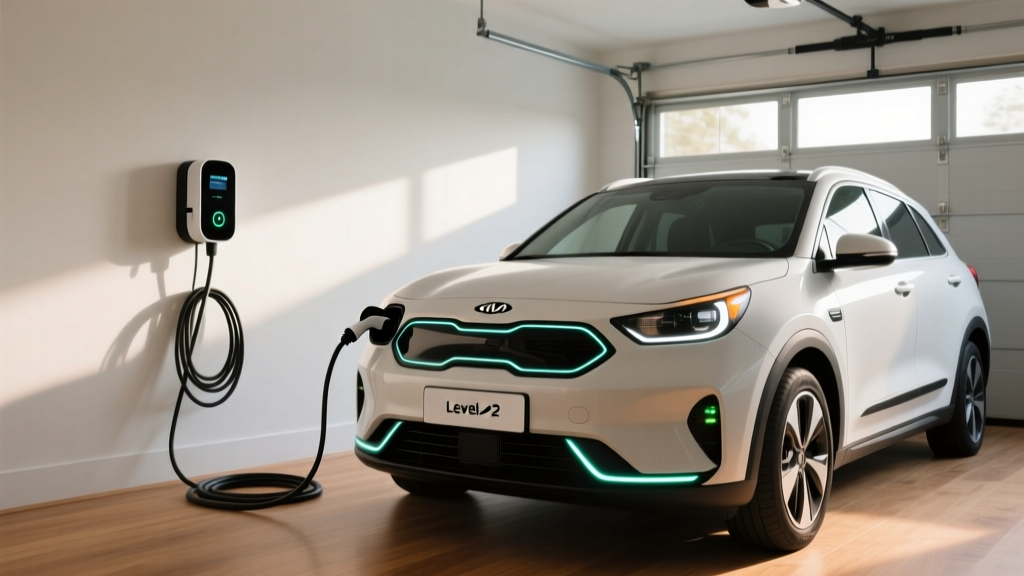
Level 1 plugs into a standard household outlet and adds roughly 4 miles of range per hour — adequate for plug-in hybrids with small batteries, but impractical as a primary charging method for a full EV. Level 2 is the home-charging sweet spot, adding 25–45 miles per hour for most setups. DC fast charging bypasses the vehicle's onboard charger entirely, feeding direct current straight to the battery at far higher power levels.
CCS DC Fast Charging Speeds: Peak vs. Sustained Reality
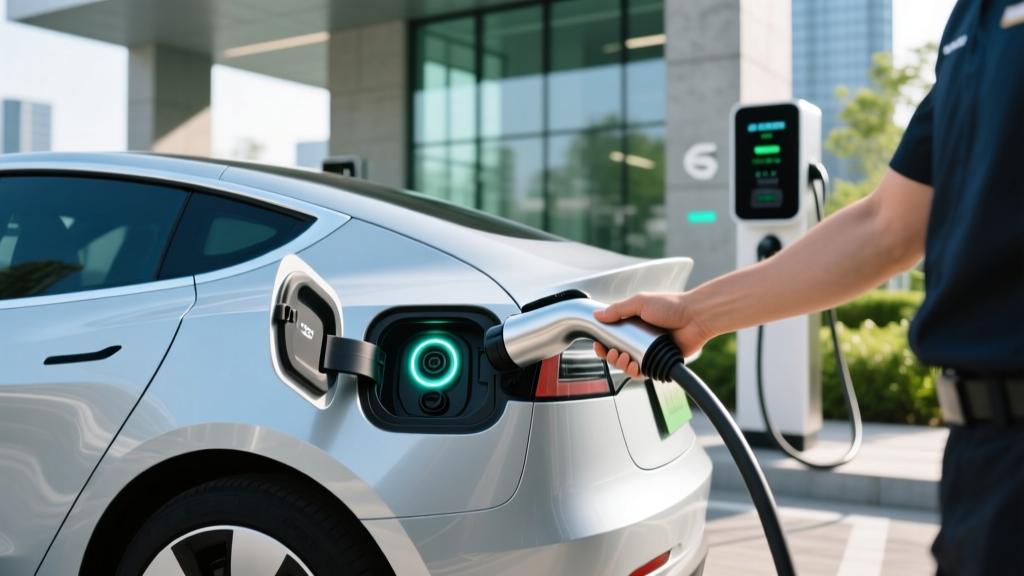
Here's where marketing meets physics. A charger may be rated for 350 kW peak output, and your EV may advertise "up to 240 kW" charging capability. But peak power is not sustained power. Every EV's battery management system follows a charge curve — power ramps up as the battery warms, holds near peak through the mid-range of the state of charge (SoC), then tapers significantly above 80% to protect battery health.
- Hyundai Ioniq 5 (77.4 kWh battery, 240 kW peak CCS): ~18 minutes on a 350 kW charger
- Kia EV6 (77.4 kWh, 240 kW peak): ~18 minutes on a 350 kW charger
- Ford Mustang Mach-E Extended Range (91 kWh usable, 150 kW peak): ~38 minutes on a 150 kW charger
- Volkswagen ID.4 (77 kWh usable, 170 kW peak): ~28 minutes on a 175+ kW charger
- BMW iX xDrive50 (105.2 kWh usable, 200 kW peak): ~34 minutes on a 200+ kW charger
Note: These times assume battery preconditioning is active and ambient temperatures are moderate (50–80°F). Cold weather (below 32°F) can add 30–50% to charge times due to reduced lithium-ion acceptance rates.
The 10–80% metric is the industry standard because charging from 80–100% can take as long as the 10–80% session itself. If you're road-tripping, plan to charge to 80% and move on — the time penalty for the final 20% is rarely worth the wait.
Connector Compatibility: CCS1 vs. NACS vs. CHAdeMO
The connector on your EV determines which public chargers you can use without an adapter. As of 2026, the North American market is in a transitional period between three DC fast-charging standards:
| Connector | Brands Using It (Native) | Adapter Availability | Network Access |
|---|---|---|---|
| CCS1 | Hyundai, Kia, VW, BMW, Ford (pre-2025), GM (pre-2025), Rivian (pre-2025), most legacy non-Tesla EVs | CCS-to-NACS adapters widely available ($150–$250) | Electrify America, EVgo, ChargePoint, Ionity (EU) |
| NACS (Tesla) | Tesla (all years), Ford (2025+), GM (2025+), Rivian (2025+), Hyundai/Kia (2025+), most new models | NACS-to-CCS adapters available from Tesla and third parties | Tesla Supercharger network (20,000+ stalls in North America), plus new NACS-native networks |
| CHAdeMO | Nissan Leaf (legacy), Mitsubishi Outlander PHEV (legacy) | Limited adapter options; not recommended for new purchases | Declining; many stations removing CHAdeMO connectors |
If you drive a CCS-equipped EV in 2026, you have two practical options: use the existing Electrify America and EVgo CCS networks directly, or purchase a CCS-to-NACS adapter to access Tesla's Supercharger network, which remains the most reliable and extensive public charging infrastructure in North America. According to Tesla's Supercharger page, the network now includes NACS-native stalls and select locations with "Magic Dock" CCS adapters built into the stall itself.
Home Charging Setup: What It Takes and What It Costs
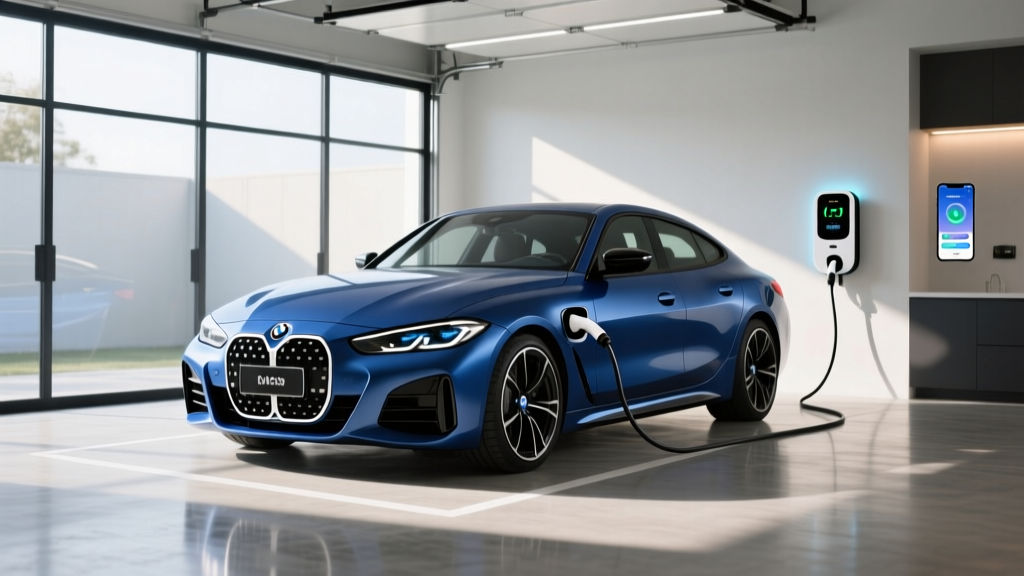
While CCS DC fast charging handles road trips, 80–90% of EV charging happens at home on Level 2. You cannot install a CCS DC fast charger at home — these units require 480V three-phase power and cost $30,000–$150,000. Home charging means Level 2, using a 240V circuit with a J1772 connector (which is the AC portion of the CCS1 plug).
Electrical Requirements for Home Level 2 Charging
A typical home Level 2 installation requires:
- Circuit: Dedicated 240V circuit, 40A or 50A minimum (a 40A circuit delivers up to 9.6 kW; a 50A circuit delivers up to 12.0 kW)
- Breaker: Per the National Electrical Code (NEC), EV chargers are considered continuous loads, so the breaker must be rated at 125% of the charger's maximum draw — a 40A charger requires a 50A breaker
- Panel capacity: Your electrical panel must have sufficient spare amperage. A 200A panel with existing heavy loads (electric range, dryer, HVAC) may require an upgrade to 300A or 400A service
- GFCI protection: NEC 2020 and later require GFCI protection for EV charging circuits; most modern hardwired chargers include built-in GFCI
- Permit: Nearly all jurisdictions require an electrical permit for new 240V circuit installation, with inspection upon completion
| Component | Cost Range | Notes |
|---|---|---|
| Level 2 Charger (Equipment) | $300–$700 | Varies by brand, power output, smart features |
| Electrician Labor (Standard Install) | $500–$1,500 | Short run from panel to garage; longer runs cost more |
| Electrical Permit | $50–$250 | Varies by municipality |
| Panel Upgrade (if needed) | $1,500–$4,500 | 200A to 300A/400A service; older homes most at risk |
| Total (no panel upgrade) | $850–$2,450 | Most homes with adequate panel capacity |
| Total (with panel upgrade) | $2,350–$6,950 | Homes with 100A–150A service or no spare breaker slots |
The panel upgrade is the cost variable most buyers overlook. Homes built before 1990 often have 100A or 150A service that's already near capacity. An electrician will perform a load calculation to determine if your panel can handle the additional 40–50A draw. If it can't, a service upgrade is mandatory — and it's not optional. According to the National Fire Protection Association's NEC guidelines, skipping proper permitting and inspection creates both a fire risk and potential insurance liability.
How Much Does Charging Cost Per Mile vs. Gas?
The economics of EV charging depend heavily on where and when you charge. Here's a realistic breakdown comparing a midsize EV (3.0 miles/kWh efficiency, like a Hyundai Ioniq 5 or Tesla Model Y) against a comparable gas vehicle averaging 28 MPG combined.
| Scenario | Rate | Cost per Mile (EV at 3.0 mi/kWh) | Cost per Mile (Gas at 28 MPG, $3.40/gal) |
|---|---|---|---|
| Home, Off-Peak (utility rate) | $0.08–$0.12/kWh | $0.03–$0.04 | $0.12 |
| Home, Standard Rate | $0.13–$0.18/kWh | $0.04–$0.06 | $0.12 |
| Public Level 2 (workplace, retail) | $0.20–$0.35/kWh | $0.07–$0.12 | $0.12 |
| DC Fast Charging (Electrify America, EVgo) | $0.35–$0.55/kWh | $0.12–$0.18 | $0.12 |
| Tesla Supercharger (NACS vehicles) | $0.25–$0.40/kWh | $0.08–$0.13 | $0.12 |
The takeaway is clear: home charging is dramatically cheaper than gas — often one-quarter to one-third the per-mile cost. Public DC fast charging at the highest rates can exceed gas costs per mile. Road-trippers should expect to pay a premium for the convenience of fast charging, just as gas drivers pay more at highway rest-stop stations.
Many utilities offer time-of-use (TOU) plans that drop rates to $0.06–$0.10/kWh during overnight hours (typically 11 PM–6 AM). If you charge exclusively at home on a TOU plan, your annual fuel cost for 12,000 miles of driving falls to roughly $360–$480 — compared to $1,457 for the gas equivalent at $3.40/gallon and 28 MPG.
Level 2 Home Charger Recommendations for CCS-Equipped EVs
Every CCS1-equipped EV uses the J1772 connector for Level 2 AC charging (the top portion of the CCS plug). Here are proven Level 2 chargers that pair well with CCS vehicles:
ChargePoint Home Flex
- Power: Up to 12.0 kW (50A circuit) / configurable down to 16A
- Connector: J1772 (CCS1 compatible for AC charging)
- Cable Length: 23 feet
- Smart Features: Wi-Fi, app scheduling, Alexa integration, energy tracking
- Price: ~$550
- Best For: Flexible amperage configuration for panels with limited spare capacity
Emporia Vue Level 2 Charger
- Power: Up to 11.5 kW (48A circuit)
- Connector: J1772
- Cable Length: 24 feet
- Smart Features: Wi-Fi, app control, solar integration, load management with Emporia energy monitor
- Price: ~$400
- Best For: Budget-conscious buyers and solar-panel households
Grizzl-E Smart
- Power: Up to 10.0 kW (40A circuit)
- Connector: J1772
- Cable Length: 24 feet
- Smart Features: Wi-Fi, OCPP-compatible, works with multiple EV energy management platforms
- Price: ~$450
- Best For: Outdoor installations (IP65 rated), extreme cold climates (-40°F rated)
All three chargers are hardwired (no NEMA plug), which is the recommended approach for reliability and code compliance. If you need a plug-in unit for portability, the Department of Energy notes that NEMA 14-50 outlets must be installed with proper torque specifications and should be inspected regularly for heat damage — a known failure point in high-draw EV charging applications.
Safety, Code, and Installation Best Practices
EV charging draws sustained high current for hours — a fundamentally different load profile than a dryer or oven that cycles on and off. This makes proper installation non-negotiable:
- Dedicated circuit: Your EV charger must have its own dedicated breaker — never share a circuit with other appliances
- Wire gauge: 6 AWG copper for 50A circuits; 4 AWG for 60A circuits. Aluminum wire requires upsizing
- Torque specifications: All terminal connections must be torqued to manufacturer specs — loose connections are the leading cause of thermal failures
- Outdoor rating: If installing outdoors, the charger must carry an IP65 or higher ingress protection rating, and the circuit must include GFCI protection per NEC Article 625
- Load management: If your panel is near capacity but you want to avoid an expensive upgrade, consider a smart load-management system (like the Emporia Smart Load Management or ChargePoint Flex with load sharing) that dynamically reduces charger draw when other household loads spike
Frequently Asked Questions
How much does it cost to install a home EV charger?
A standard Level 2 home installation runs $850–$2,450 when your electrical panel has adequate capacity. If you need a panel upgrade from 100A/150A to 200A+ service, total costs can reach $2,350–$6,950. Always get a load calculation from a licensed electrician before committing.
How fast will each charging level add range?
Level 1 (120V) adds 3–5 miles per hour. Level 2 (240V, 40A) adds roughly 30–35 miles per hour for a typical midsize EV. CCS DC fast charging at 150+ kW adds 150–300+ miles in a 20–30 minute session, depending on your vehicle's peak charge rate and battery preconditioning.
Which connector is compatible with my EV?
If your EV is a 2024 or earlier non-Tesla model (Hyundai, Kia, VW, Ford, GM, BMW, Rivian), it almost certainly uses CCS1. If it's a 2025+ model from most manufacturers, it likely uses NACS. Tesla vehicles use NACS. Check your owner's manual or the charge port itself — CCS1 has two extra DC pins below the J1772 AC connector.
How much does charging cost per mile compared to gas?
Home charging on a standard utility rate costs $0.04–$0.06 per mile for a typical EV — roughly one-third the cost of gas at $0.12/mile (28 MPG, $3.40/gallon). Public DC fast charging at $0.40–$0.55/kWh costs $0.12–$0.18/mile, which can match or exceed gas costs. Maximize home charging to realize EV savings.
What electrical upgrades might I need?
Homes with 200A panels and spare breaker capacity typically need no upgrade beyond a new 50A breaker and wire run. Homes with 100A or 150A service, or panels that are already heavily loaded (electric heat, range, dryer, hot tub), may require a service upgrade to 300A or 400A. A licensed electrician's load calculation will determine this before any work begins.
Can I use a CCS-to-NACS adapter to charge at Tesla Superchargers?
Yes. As of 2026, CCS-to-NACS adapters are widely available from Tesla and third-party manufacturers for $150–$250. These adapters allow CCS-equipped vehicles to access Tesla's Supercharger network, which now supports non-Tesla EVs at most locations. Check the Tesla app or in-car navigation for station compatibility before arriving.