Why CCS DC Charging Still Matters in a NACS World
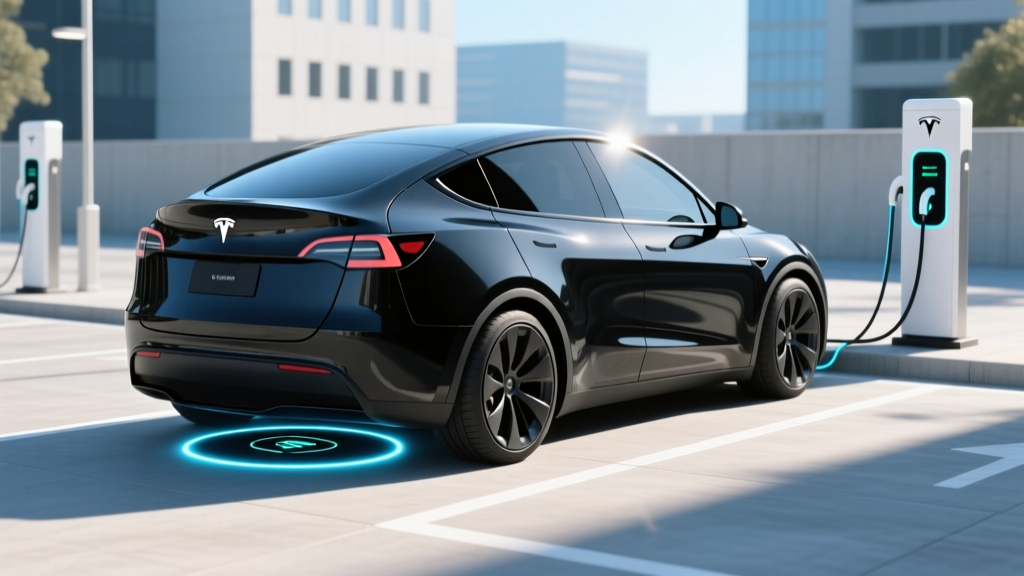
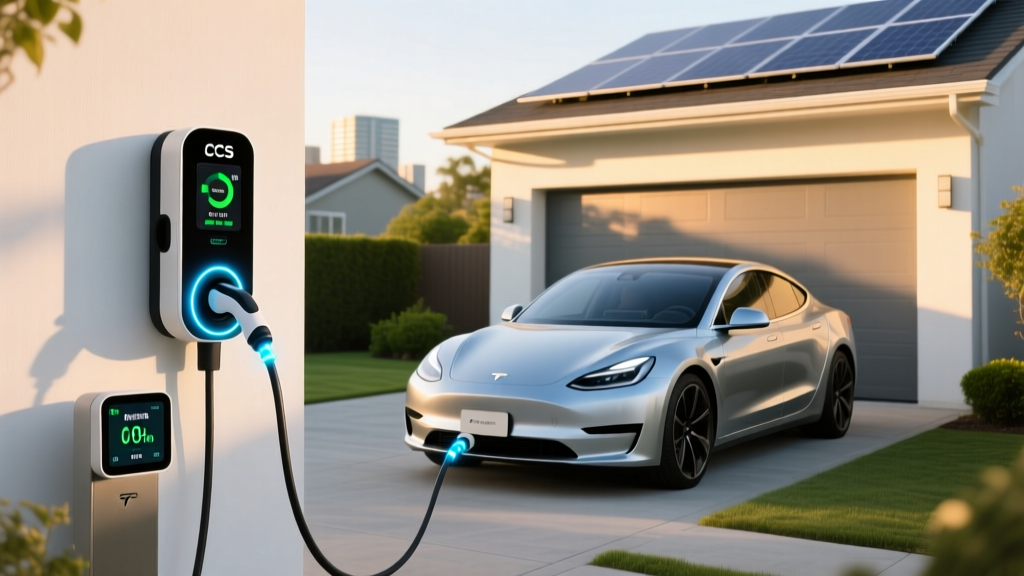
If you drive a non-Tesla EV built before 2025—or a 2025–2026 model that shipped with a CCS1 port—understanding CCS DC charging is essential to your ownership experience. The Combined Charging System (CCS1 in North America) remains the connector on millions of EVs from Volkswagen, Hyundai, Kia, Ford, BMW, Rivian, and others. Even as the industry migrates toward Tesla's NACS (North American Charging Standard), CCS infrastructure isn't disappearing: Electrify America, EVgo, and ChargePoint operate tens of thousands of CCS-equipped DC fast chargers across the U.S., and adapters now bridge the gap between the two ecosystems.
This guide breaks down exactly how CCS DC charging works, what speeds to expect in the real world, what it costs to set up charging at home, and how to navigate the connector landscape without getting stranded.
Charging Levels Explained: kW Speeds and Miles Per Hour
The single most important distinction in EV charging is between kW (kilowatts, a measure of power—the rate at which energy flows) and kWh (kilowatt-hours, a measure of energy—the capacity of your battery). Think of kW as how fast water flows from a hose, and kWh as the size of the bucket. A 150 kW charger fills your 77 kWh battery faster than a 50 kW charger—but the battery's total capacity stays the same.
Here's how each level translates to real charging speed:
| Level | Voltage | Power (kW) | Miles of Range Added Per Hour | Typical Use Case |
|---|---|---|---|---|
| Level 1 | 120V AC | 1.0–1.4 kW | 3–5 mi/hr | Overnight trickle; PHEVs; emergency backup |
| Level 2 | 240V AC | 3.3–19.2 kW | 12–75 mi/hr | Home daily charging; workplace; shopping centers |
| DC Fast (CCS1) | 400–800V DC | 50–350 kW | 150–1,200+ mi/hr (peak) | Road trips; rapid top-ups; highway corridors |
Real-world note: Those "miles per hour" figures assume peak power delivery. In practice, DC fast charging follows a charge curve—your EV pulls maximum kW only at a low state of charge (SoC), then tapers as the battery fills. A Hyundai Ioniq 5 peaking at 240 kW might sustain that rate from 10–45% SoC, then drop to 150 kW, then 80 kW, then 40 kW above 80%. That's why manufacturers and reviewers cite 10–80% charging time as the most useful real-world metric.
CCS DC Charging Times: What to Expect From 10–80%
Not all CCS-capable EVs charge at the same speed. Your vehicle's onboard charge controller and battery architecture determine how much of the station's available power it can actually accept. Here are representative 10–80% DC fast charging times for popular CCS1-equipped vehicles (using peak-rated chargers):
| Vehicle (2025–2026 MY) | Battery (kWh Usable) | Peak DC Rate | 10–80% Time |
|---|---|---|---|
| Hyundai Ioniq 5 (800V architecture) | 77.4 kWh | 240 kW | ~18 minutes |
| Kia EV6 (800V architecture) | 77.4 kWh | 240 kW | ~18 minutes |
| Volkswagen ID.4 | 77 kWh | 170 kW | ~28 minutes |
| Ford Mustang Mach-E (Extended Range) | 91 kWh | 150 kW | ~38 minutes |
| BMW iX xDrive50 | 105.2 kWh | 200 kW | ~31 minutes |
| Rivian R1T (Dual-Motor, Max Pack) | 141 kWh | 220 kW | ~42 minutes |
Key insight: The 800V architectures in the Ioniq 5 and EV6 allow them to sustain higher power longer, which is why a 77 kWh battery can charge nearly as fast as vehicles with larger packs but 400V systems. If you frequently road-trip, prioritizing a vehicle with a strong charge curve (not just a high peak kW) makes a tangible difference.
Connector Compatibility: CCS1, NACS, and CHAdeMO in 2026
The connector landscape has shifted dramatically. Here's where things stand for the 2025–2026 model years:
| Connector | Brands Using It (Native Port) | DC Fast Charging Networks |
|---|---|---|
| CCS1 | VW, Hyundai, Kia, Ford, BMW, Rivian, GM (2024 and earlier), Volvo/Polestar (2024 and earlier) | Electrify America, EVgo, ChargePoint, Blink, Francis Energy |
| NACS (Tesla) | Tesla (all years), Ford (2025+), GM (2025+), Rivian (2025+), Volvo/Polestar (2025+), Hyundai (2025+ select models) | Tesla Supercharger (open to NACS-equipped non-Teslas), plus growing NACS deployments by EA, EVgo |
| CHAdeMO | Nissan Leaf (legacy); no new 2025–2026 models | Declining; some Electrify America and EVgo stations still carry one CHAdeMO cable |
Adapter reality: If your EV has a CCS1 port and you want to access Tesla Superchargers (now open to non-Tesla vehicles at many locations), you'll need a NACS-to-CCS adapter. Ford and Rivian began shipping these adapters to owners in 2024–2025. Third-party adapters from companies like Lectron and A2Z are also available for $150–$250. Conversely, if you drive a NACS-equipped 2025+ Ford or GM and encounter a CCS-only Electrify America station, a CCS-to-NACS adapter (typically $180–$280) solves the problem.
Warning: Not all adapters support DC fast charging. Some are rated only for Level 2 AC. Before purchasing, verify the adapter is rated for the DC voltage and amperage your vehicle requires (typically 500V+ and 200A+ for DCFC). Check the manufacturer's specifications and look for UL or equivalent safety certification.
Home Charging Installation: Costs, Electrical Requirements, and Gotchas
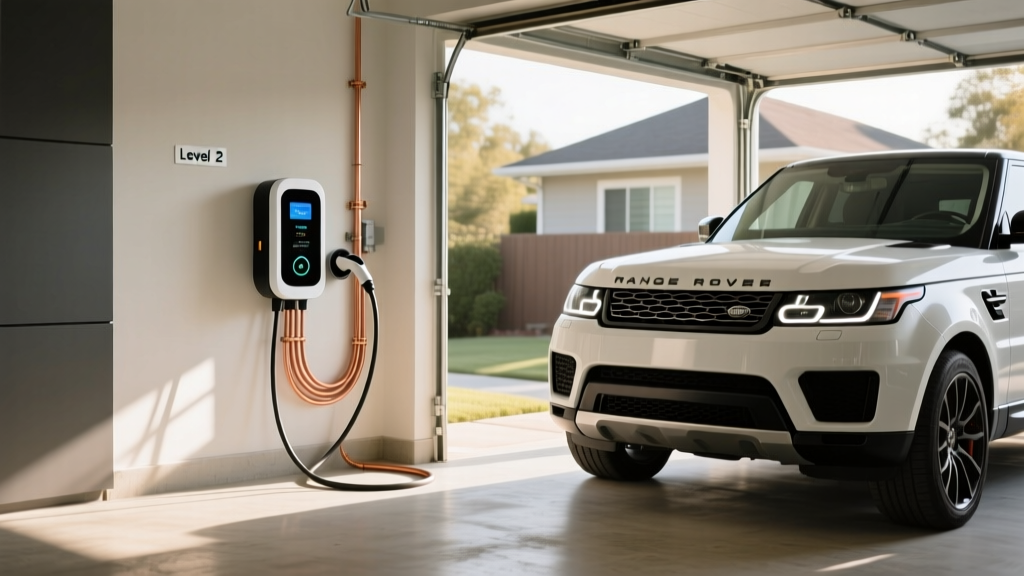
Most EV owners do 80–90% of their charging at home on a Level 2 charger. But installing a 240V circuit isn't as simple as plugging in a dryer. Here's what's involved and what it costs.
Electrical Requirements for a Level 2 Home Charger
A typical home Level 2 charger requires:
- Voltage: 240V (same as an electric dryer or oven)
- Amperage: 40A circuit for a 32A charger (NEC code requires circuits rated at 125% of continuous load), or 60A circuit for a 48A charger
- Dedicated circuit: Your charger must have its own breaker—no sharing with other appliances
- Wire gauge: 6 AWG copper for 40A circuits; 4 AWG for 60A circuits (varies by run length and local code)
- GFCI protection: Required by NEC 2020+ for EV charging outlets (some hardwired chargers have built-in GFCI)
Installation Cost Breakdown
Costs vary enormously based on your home's electrical panel capacity, the distance from panel to charger location, and local permit fees. Here's a realistic range:
| Component | Simple Install (Panel Adjacent, 200A Service) | Complex Install (Long Run, Panel Upgrade Needed) |
|---|---|---|
| Level 2 Charger Equipment | $400–$700 | $400–$700 |
| Electrician Labor | $300–$800 | $1,200–$2,500 |
| Materials (Wire, Conduit, Breaker) | $100–$300 | $300–$800 |
| Permit & Inspection | $50–$200 | $100–$350 |
| Electrical Panel Upgrade (if needed) | $0 | $1,500–$3,500 |
| Total | $850–$2,000 | $3,500–$7,850 |
The panel upgrade gotcha: Many homes built before 2000 have 100A or 150A electrical panels that are already near capacity. Adding a 40A or 60A EV circuit may push total load beyond the panel's rating, requiring a service upgrade to 200A. This is the single biggest cost variable—and you won't know until a licensed electrician performs a load calculation. Always get a panel assessment before purchasing your charger.
Safety and Code Considerations
- Hardwired vs. plug-in: Hardwired chargers (no plug) avoid the need for a 240V receptacle and are often preferred for outdoor installs. Plug-in units (NEMA 14-50 outlet) offer portability but require a GFCI breaker, which adds $50–$120 and can nuisance-trip on some panels.
- Outdoor rating: If your charger mounts outside, verify it carries a NEMA 4 or IP65 rating for weather resistance.
- Load management: Some smart chargers (like the Emporia Level 2) include load-monitoring features that dynamically reduce charge rate if household demand spikes—useful for homes with limited panel capacity.
- Permit: Nearly all jurisdictions require an electrical permit for EV charger installation. Skipping the permit risks insurance claim denial if an electrical fire occurs.
Level 2 Equipment Recommendations: What to Buy
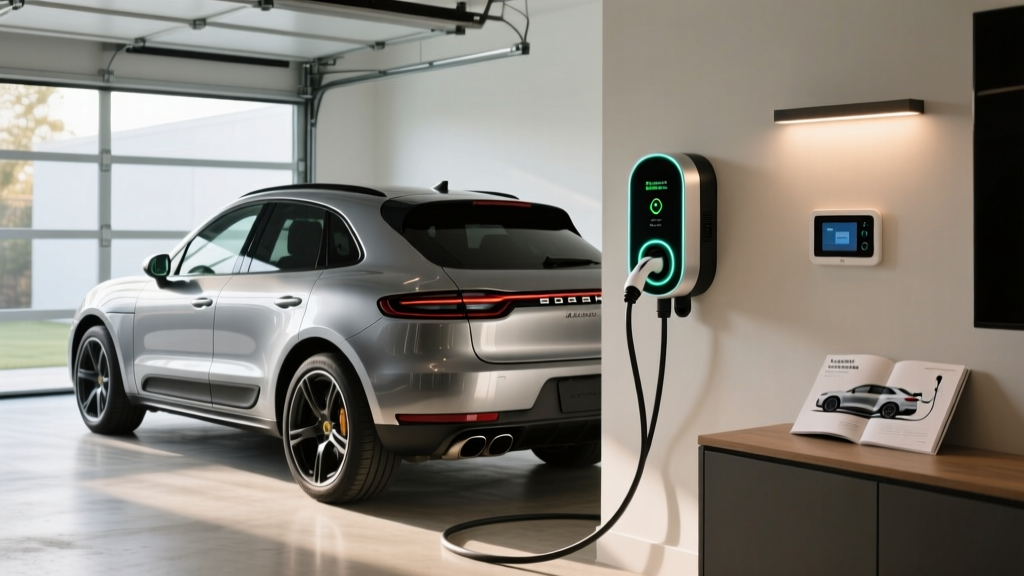
Not all Level 2 chargers are equal. Here are three proven options across different budgets, all compatible with CCS1-port vehicles (J1772 connector, which is the AC portion of the CCS1 standard):
Emporia Vue Level 2 Charger
Power: 11.5 kW (48A) / 9.6 kW (40A)
Connector: J1772 (CCS1 AC compatible)
Cable Length: 24 ft
Smart Features: Wi-Fi, app scheduling, solar integration, load management, energy tracking
Price: ~$400
Best For: Budget-conscious buyers who want smart features and load management for older panels
ChargePoint Home Flex
Power: Up to 12 kW (50A) — adjustable via DIP switch
Connector: J1772 (CCS1 AC compatible)
Cable Length: 23 ft
Smart Features: Wi-Fi, Alexa integration, app scheduling, utility demand-response programs
Price: ~$550–$650
Best For: Flexible amperage configuration to match your circuit capacity
Tesla Universal Wall Connector
Power: 11.5 kW (48A)
Connector: Built-in NACS + J1772 adapter included
Cable Length: 24 ft
Smart Features: Wi-Fi, OTA updates, Power-Share (two chargers on one circuit), access control
Price: ~$600
Best For: Households with both NACS and CCS1/J1772 vehicles—charges both natively
Pro tip: Buy a charger rated for more amperage than you currently need. If you install a 60A circuit today, a 48A charger uses it fully—but if you later upgrade your panel, you won't need to replace the charger to take advantage of higher capacity.
Cost to Charge: Home vs. Public DC Fast Charging vs. Gas
One of the strongest arguments for EV ownership is fuel cost savings—but the math depends heavily on where and when you charge.
| Scenario | Avg $/kWh | Cost Per Mile (at 3.0 mi/kWh efficiency) |
|---|---|---|
| Home, Off-Peak (utility time-of-use rate) | $0.08–$0.12 | $0.03–$0.04 |
| Home, Standard Residential Rate | $0.14–$0.18 | $0.05–$0.06 |
| Public Level 2 (ChargePoint, workplace) | $0.20–$0.35 | $0.07–$0.12 |
| DC Fast Charging (Electrify America, EVgo) | $0.35–$0.55 | $0.12–$0.18 |
| Tesla Supercharger (varies by location/time) | $0.25–$0.40 | $0.08–$0.13 |
| Gasoline Baseline (30 MPG, $3.40/gal) | — | $0.11 |
The takeaway: Home off-peak charging is the cheapest option by far—roughly one-third the per-mile cost of gasoline. Public DC fast charging, however, can actually exceed the cost of gas per mile in high-cost markets (California, Northeast). If you rely exclusively on public DCFC, the economic advantage of an EV narrows significantly. This is why home charging access remains the single most important factor in EV ownership satisfaction.
According to fueleconomy.gov, a 2025 Hyundai Ioniq 5 achieves 114 MPGe combined (approximately 3.4 miles per kWh), while a comparable 2025 Toyota RAV4 AWD (gas) gets 30 MPG combined. At national average electricity and gas prices, the Ioniq 5 costs roughly $550 less per year to fuel with predominantly home charging.
Navigating the CCS-to-NACS Transition: What CCS Owners Should Do
If your EV has a CCS1 port, you're not locked out of the growing Supercharger network. Here's a practical decision framework:
Choose Your Charging Strategy Based on Your Situation
Choose CCS-native charging if: You primarily charge at home and use Electrify America or EVgo for road trips. The CCS network along major interstates (I-5, I-95, I-80, I-10) is robust, and EA's 350 kW chargers deliver excellent speeds to 800V vehicles like the Ioniq 5.
Buy a NACS-to-CCS adapter if: You live in an area where Tesla Superchargers are more abundant or reliable than CCS networks (rural corridors, many Midwestern and Southern routes). Adapter cost ($150–$250) pays for itself quickly if it saves you from unreliable CCS stations.
Consider a CCS-to-NACS adapter if: You own a 2025+ NACS-equipped vehicle and frequently encounter CCS-only Electrify America stations in your region.
Before any road trip, use apps like PlugShare or A Better Routeplanner to verify that stations along your route have the connector your vehicle needs—and check recent user reviews for reliability. CCS stations have a mixed reliability record; a 2024 J.D. Power EVX Public Charging Study found that CCS-equipped non-Tesla networks scored significantly lower in satisfaction than Tesla Superchargers, driven largely by charger downtime and payment-system failures.
Frequently Asked Questions
How much does it cost to install a home EV charger?
A straightforward Level 2 installation on an existing 200A panel typically costs $850–$2,000 all-in (charger, electrician, materials, permit). If your home needs an electrical panel upgrade to 200A, total costs can reach $3,500–$7,850. Always get a licensed electrician's load calculation before committing.
How fast will each charging level add range?
Level 1 (120V) adds 3–5 miles per hour. Level 2 (240V) adds 12–75 miles per hour depending on amperage. CCS DC fast charging adds the equivalent of 150–1,200+ miles per hour at peak power, but real-world sessions are measured in 10–80% times (typically 18–42 minutes depending on the vehicle).
Which connector is compatible with my EV?
Check your vehicle's charge port. CCS1 is a combined AC/DC connector with two large DC pins below the standard J1772 AC pins. NACS is smaller and used by Tesla and 2025+ Ford, GM, Rivian, Volvo, and others. CHAdeMO is a round DC-only connector found only on the legacy Nissan Leaf. For home Level 2 AC charging, all CCS1 vehicles use the J1772 connector (the upper portion of the CCS1 port).
How much does charging cost per mile vs. gas?
Home off-peak charging costs $0.03–$0.04 per mile—about one-third the cost of gasoline at $3.40/gal and 30 MPG ($0.11/mile). Public DC fast charging costs $0.12–$0.18 per mile, which can equal or exceed gas costs. Maximizing home charging is the key to EV fuel savings.
What electrical upgrades might I need?
The most common upgrade is a panel capacity increase from 100A or 150A to 200A, costing $1,500–$3,500. You may also need a new breaker slot, upgraded service wire from the utility, or a sub-panel if the charger is far from the main panel. A licensed electrician can determine requirements during a load calculation—per the National Electrical Code (NEC), this assessment is mandatory for safe installation.
Can I use a Tesla Supercharger with my CCS1 vehicle?
Yes, with a NACS-to-CCS adapter. Tesla has opened select Supercharger locations to non-Tesla EVs, and the list continues to expand. However, not all Supercharger sites are open to non-Tesla vehicles, and you'll need the Tesla app to initiate and pay for charging sessions. Verify site compatibility before relying on Superchargers for a specific route.