What Is CCS Charging and Why Does It Still Matter?
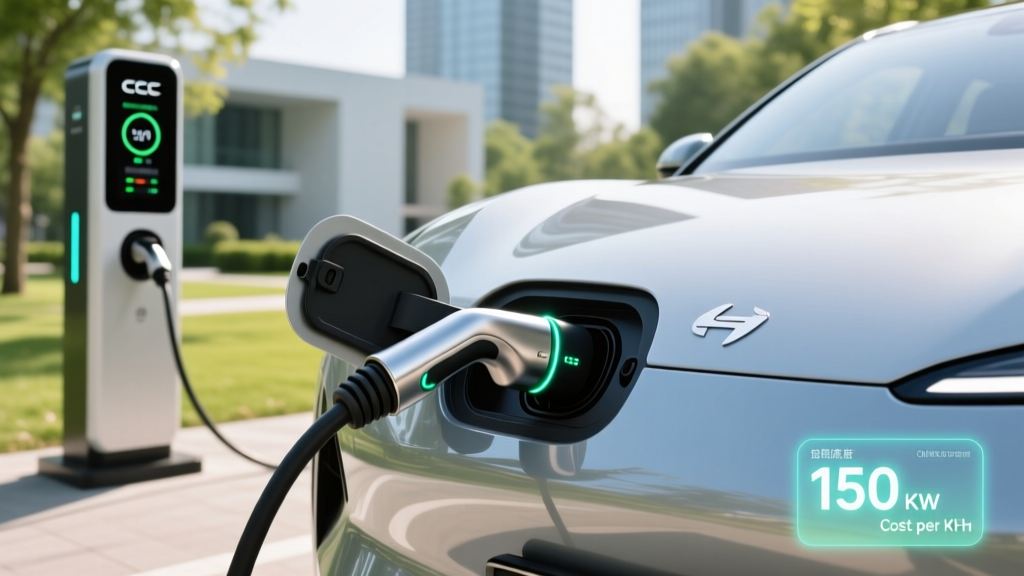
If you own or are shopping for a non-Tesla electric vehicle in the U.S., you've almost certainly encountered the Combined Charging System — commonly called CCS or CCS1. Despite Tesla's North American Charging Standard (NACS) gaining adoption across the industry, CCS charging remains the native port on millions of EVs already on the road, from the Hyundai Ioniq 5 and Ford Mustang Mach-E to the Volkswagen ID.4 and BMW i4. Understanding CCS charging speeds, connector compatibility, and real-world costs is essential for any EV buyer or owner navigating the evolving public charging landscape.
This guide breaks down exactly how CCS charging works, how it compares to NACS, what you'll pay to charge at home and on the road, and what equipment you need — all with concrete numbers, not marketing fluff.
Charging Levels Explained: kW, Speeds, and Range Added Per Hour
Before we get into CCS specifics, let's nail down the three charging levels every EV owner must know. Power is measured in kW (kilowatts) — that's the rate of energy flow. Energy stored in your battery is measured in kWh (kilowatt-hours) — that's the total capacity. Confusing kW with kWh is the single most common EV mistake. Think of kW as the speed of water flowing through a hose, and kWh as the total volume of water in the tank.
| Level | Voltage | Max Power (kW) | Miles of Range Added Per Hour | Typical Use Case |
|---|---|---|---|---|
| Level 1 | 120V AC | 1.4–1.9 kW | 3–5 miles | Overnight trickle, PHEVs, emergencies |
| Level 2 | 240V AC | 7.2–19.2 kW | 20–60 miles | Home daily charging, workplace, destinations |
| DC Fast Charging (CCS/NACS) | 400–800V DC | 50–350 kW | 150–1,200+ miles (equivalent) | Road trips, quick top-ups on the go |
Level 2 is where 90%+ of your charging will happen. DC fast charging — including CCS fast charging — is what you use on road trips. A typical EV with a 75 kWh battery gaining 150 kW of DC power can add roughly 200 miles of range in about 20 minutes under ideal conditions, though real-world charge curves taper significantly above 80% state of charge.
CCS vs NACS vs CHAdeMO: Connector Compatibility in 2026
The connector landscape has shifted dramatically since Ford, GM, Rivian, and others announced NACS adoption starting in 2025. Here's where things stand for the 2026 model year:
| Connector | Brands Using It (Native) | Notes |
|---|---|---|
| NACS (Tesla) | Tesla, Ford, GM, Rivian, Volvo, Polestar, Mercedes-Benz, Fisker | Now the dominant standard; access to Supercharger network |
| CCS1 | Hyundai, Kia, BMW, Volkswagen, Audi, Porsche, Stellantis, Lucid | Still native on many 2026 models; robust Electrify America and third-party support |
| CHAdeMO | Nissan Leaf (legacy) | Effectively discontinued for new models; limited network growth |
Key takeaway: If you buy a 2026 Hyundai Ioniq 5, Kia EV6, BMW i4, or VW ID.4, your car has a CCS1 port natively. You can charge at Electrify America, EVgo, ChargePoint DC stations, and any CCS-equipped public charger without adapters. Many automakers now offer or include CCS-to-NACS adapters so their vehicles can access Tesla Superchargers — check with your dealer for availability and pricing (typically $200–$300 for the adapter).
CCS charging remains well-supported by the Electrify America network, which operates over 5,000 DC fast chargers in the U.S., many capable of 150 kW and 350 kW. According to Electrify America, their network will continue supporting CCS connectors alongside NACS through at least 2030 under their NEVI-funded station commitments.
How Much Does It Cost to Install a Home EV Charger?
Home charging is the backbone of EV ownership. If you have a CCS-equipped EV, you'll use a Level 2 home charger with a J1772 connector (the AC portion of the CCS standard) for daily charging. Here's a realistic cost breakdown for a 240V/48A Level 2 installation in 2026:
| Item | Low Estimate | High Estimate | Notes |
|---|---|---|---|
| Level 2 Charger (hardware) | $400 | $750 | 40A–48A smart chargers; Wi-Fi enabled |
| Electrician labor | $500 | $2,000 | Depends on panel proximity, conduit run length |
| Electrical permit | $50 | $250 | Varies by municipality |
| Panel upgrade (if needed) | $1,500 | $4,000 | Required if panel is at or near capacity (common in homes with 100A service) |
| Total (no panel upgrade) | $950 | $3,000 | Most homes with 200A service fall here |
| Total (with panel upgrade) | $2,450 | $7,000 | Older homes, 100A panels, or high-load households |
Panel upgrade reality check: If your home has a 100-amp electrical panel and you're already running central AC, an electric dryer, and an electric oven, adding a 48A (11.5 kW) EV charger may exceed your panel's capacity. A licensed electrician will perform a load calculation per NEC Article 220 to determine whether an upgrade to 200A service is required. Don't skip this step — it's the single biggest variable in installation cost and a common surprise for older-home buyers.
Some utilities and states offer rebates that offset $200–$1,000 of installation costs. Check your local utility's EV program page or the Alternative Fuels Data Center for current incentives in your state.
How Much Does Charging Cost Per Mile vs Gas?
This is where EV ownership economics get compelling — but the numbers vary wildly depending on where and when you charge. Here are realistic 2026 cost scenarios for a mid-size EV averaging 3.0 miles per kWh (roughly 112 MPGe combined, similar to a Hyundai Ioniq 5 or Tesla Model Y):
| Charging Scenario | Cost per kWh | Cost Per Mile (at 3 mi/kWh) | Equivalent Gas Cost Per Mile* |
|---|---|---|---|
| Home, off-peak utility rate | $0.08–$0.12 | $0.027–$0.040 | $0.10–$0.14 (at 28 MPG, $3.30/gal) |
| Home, standard residential rate | $0.14–$0.18 | $0.047–$0.060 | $0.10–$0.14 |
| Public Level 2 (ChargePoint, etc.) | $0.20–$0.35 | $0.067–$0.117 | $0.10–$0.14 |
| DC Fast Charging (Electrify America, EVgo) | $0.35–$0.55 | $0.117–$0.183 | $0.10–$0.14 |
*Gas cost assumes 28 MPG combined and $3.30/gallon regular unleaded, national average.
The honest math: Home charging at off-peak rates is dramatically cheaper than gas — often one-third to one-quarter the per-mile cost. But DC fast charging on the road can approach or even exceed gas costs per mile in some markets. If you rely exclusively on public DC fast charging, your fuel savings shrink considerably. This is why home Level 2 access is the single most important factor in EV ownership economics.
CCS Charging Speeds: Real-World 10–80% Times for Popular EVs
Peak kW ratings on spec sheets don't tell the full story. A car rated for "240 kW peak" might only sustain that rate between 10–40% state of charge, then taper to 150 kW, then 80 kW, and finally 25 kW above 90%. This is the charge curve, and it's critical to understand for trip planning.
| Vehicle (2026) | Battery (kWh usable) | Peak DC Rate (kW) | 10–80% Time (min) | Architecture |
|---|---|---|---|---|
| Hyundai Ioniq 5 | 77.4 (NMC) | 240 | ~18 min | 800V |
| Kia EV6 | 77.4 (NMC) | 240 | ~18 min | 800V |
| BMW i4 eDrive40 | 81.5 (NMC) | 200 | ~31 min | 400V |
| Volkswagen ID.4 Pro S | 77.0 (NMC) | 170 | ~29 min | 400V |
| Porsche Taycan 4S | 83.7 (NMC) | 270 | ~22 min | 800V |
Vehicles built on 800-volt architectures (Hyundai/Kia E-GMP, Porsche/Audi PPE) accept higher sustained charge rates, which is why the Ioniq 5 and EV6 punch above their weight class. If you frequently road-trip, prioritize an 800V platform — the 10–80% time difference of 10+ minutes per stop adds up over a 1,000-mile drive.
Best Level 2 Home Chargers for CCS-Equipped EVs (2026 Picks)
Every CCS-equipped EV uses the J1772 connector for Level 2 AC charging at home. Here are proven chargers that deliver reliable daily performance:
ChargePoint Home Flex
- Power output: Up to 11.5 kW (240V/48A)
- Connector: J1772 (fits all CCS and NACS EVs for Level 2)
- Cable length: 23 feet
- Smart features: Wi-Fi, scheduling, Alexa integration, energy tracking via app
- Price: ~$550
- Best for: Most homeowners wanting smart scheduling and utility TOU optimization
Emporia Level 2 EV Charger
- Power output: Up to 11.5 kW (240V/48A)
- Connector: J1772
- Cable length: 24 feet
- Smart features: Wi-Fi, solar integration, real-time energy monitoring, load management
- Price: ~$400
- Best for: Budget-conscious buyers and homes with solar panels
Grizzl-E Smart
- Power output: Up to 10 kW (240V/40A)
- Connector: J1772
- Cable length: 24 feet
- Smart features: OCPP-compatible, adjustable amperage (16A–40A), extreme cold-rated (-40°C)
- Price: ~$450
- Best for: Cold-climate owners and those needing adjustable amperage for older panels
All three chargers are NEMA 4 or NEMA 4X rated for outdoor installation and meet UL safety standards. If your electrical panel can only support a 40A circuit (requiring a 32A continuous charger), the Grizzl-E's adjustable amperage is a practical advantage.
Safety, Electrical Code, and Installation Requirements
EV charger installation isn't a DIY project. Here's what the National Electrical Code (NEC) and best practices require:
- Dedicated circuit: Your Level 2 charger must be on its own dedicated breaker — not shared with other appliances. A 48A charger requires a 60A breaker (NEC requires circuits rated at 125% of continuous load).
- GFCI protection: NEC 2023 (Article 625.54) requires GFCI protection for all EV charging outlets. Hardwired installations may have different requirements depending on your jurisdiction — your electrician will confirm.
- Outdoor rating: If your charger is mounted outside (garage exterior, driveway, carport), it must be rated NEMA 4 or higher for weather resistance. All three chargers recommended above meet this standard.
- Permit and inspection: Nearly all jurisdictions require an electrical permit and post-installation inspection. This typically costs $50–$250 and ensures the work meets code. Skipping permits risks insurance claim denials and home-sale inspection failures.
- Wire gauge: A 60A circuit typically requires 6 AWG copper wire (THHN in conduit or NM-B cable), though longer runs may need 4 AWG to prevent voltage drop. Your electrician will size this correctly.
Always hire a licensed electrician familiar with EV charger installations. Ask whether they'll perform a load calculation and whether the quote includes the permit and inspection — some electricians quote labor only, leaving permit costs as a surprise.
Frequently Asked Questions About CCS Charging
Will CCS charging stations disappear as NACS takes over?
No, not anytime soon. Millions of CCS-equipped EVs are already on U.S. roads, and networks like Electrify America are contractually obligated to maintain CCS connectors at NEVI-funded stations through at least 2030. Many new charging stations are being deployed with both CCS and NACS cables. If you own a CCS vehicle today, you'll have robust public charging access for years to come.
Can I charge my CCS EV at a Tesla Supercharger?
Increasingly, yes — with an adapter. Tesla has opened portions of its Supercharger network to non-Tesla EVs via the "Charge with NACS" program and Magic Dock adapters at select stations. Several automakers (Ford, GM, Rivian) provide or sell CCS-to-NACS adapters. Check your vehicle manufacturer's website for adapter compatibility and pricing, and use the Tesla app to confirm which Supercharger locations accept non-Tesla vehicles.
How fast will Level 1 charging add range to my CCS EV?
Level 1 (120V) charging delivers roughly 1.4 kW, adding about 3–5 miles of range per hour. For a 75 kWh battery going from 10% to 80%, that's approximately 40+ hours — essentially impractical for a full charge. Level 1 is best reserved for plug-in hybrids with small batteries, emergency top-ups, or very low daily mileage drivers (under 20 miles/day).
What electrical upgrades might I need for a home charger?
The most common upgrade is a panel upgrade from 100A to 200A service, costing $1,500–$4,000 depending on your utility connection and local labor rates. Homes built after 2000 typically have 200A panels with sufficient headroom for a 48A EV charger. Other potential upgrades include adding a sub-panel near the garage, upgrading the service mast or meter base, or installing a load-management device that dynamically reduces charger power when other appliances are running.
Is DC fast charging bad for my battery long-term?
Modern battery management systems (BMS) actively protect against degradation during fast charging by managing cell temperatures and charge rates. That said, frequent DC fast charging — especially in extreme heat — can accelerate degradation slightly compared to Level 2 home charging. Data from Recurrent Auto suggests that EVs charged primarily on Level 2 show marginally better long-term capacity retention. The practical advice: use DC fast charging for road trips, not as your daily routine.
How does cold weather affect CCS charging speeds?
Lithium-ion batteries accept charge much more slowly when cold. If you arrive at a CCS fast charger with a cold battery (below 50°F / 10°C), peak charge rates may be cut by 30–50% until the battery warms up. Most modern EVs with active thermal management (Ioniq 5, EV6, BMW i4) offer a preconditioning feature — set your charger as the navigation destination, and the car will warm the battery en route to restore faster charging speeds. Always precondition in cold weather; it's the single biggest factor in winter charging performance.
For official efficiency and range data on specific models, consult the EPA's fueleconomy.gov database, which lists MPGe, kWh/100mi, and range figures for every certified EV sold in the U.S.