Why You Might Need a CCS Charger for Tesla in 2026
If you own a Tesla Model 3, Model Y, Model S, or Model X, you already have access to the largest fast-charging network in North America — the Tesla Supercharger network. But what happens when you pull into a rest stop, a dealership, or a friend's driveway and the only available plug is a CCS1 connector? This is where a CCS charger for Tesla becomes a practical necessity, not a niche accessory.
As of 2026, Tesla vehicles still ship with the North American Charging Standard (NACS) port. While the industry has largely converged on NACS — with Ford, GM, Rivian, Hyundai, and others adopting it — thousands of public CCS1 chargers remain in service at Electrify America, EVgo, and ChargePoint stations. Some of these chargers have not yet been retrofitted with NACS cables. For Tesla owners who travel outside the Supercharger ecosystem, understanding CCS compatibility, adapter options, and home charging alternatives is essential.
This guide covers the technical realities: which adapters actually work, what it costs to install a CCS-compatible Level 2 charger at home, how fast each charging level adds range, and what your per-mile cost looks like compared to gasoline.
Charging Levels Explained: kW, Speed, and Real-World Range Added
Before discussing adapters and equipment, the fundamentals need to be precise. Charging power is measured in kilowatts (kW) — that's the rate of energy flow. Battery capacity is measured in kilowatt-hours (kWh) — that's the total energy stored. Confusing the two is the most common EV mistake, and it leads to wildly wrong expectations about charging time.
| Level | Voltage | Power (kW) | Miles of Range Added per Hour | Typical Use Case |
|---|---|---|---|---|
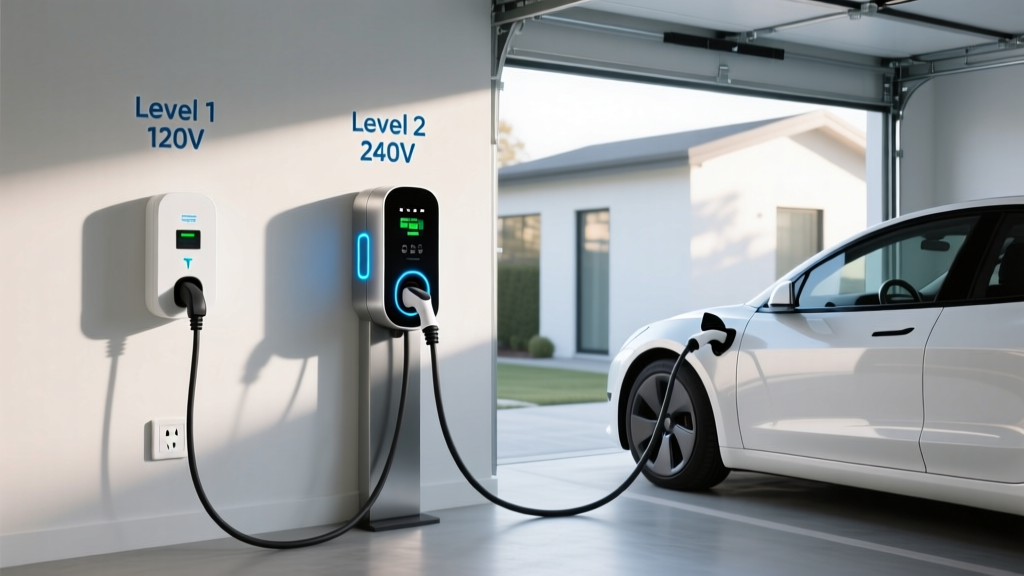
| Level 1 | 120V AC | 1.0–1.9 kW | 3–5 miles/hr | Overnight top-off, emergency, no install needed |
| Level 2 | 240V AC | 7.2–19.2 kW | 25–75 miles/hr | Home daily charging, workplace, destination |
| DC Fast | 400–900V DC | 50–350 kW | 150–1,200+ miles/hr (peak) | Road trips, rapid top-up on highways |
Real-world context: A Tesla Model Y Long Range has a ~75 kWh usable battery and an EPA range of approximately 310 miles. On a 11.5 kW Level 2 charger, a 10–80% charge takes roughly 5–6 hours. On a 250 kW Supercharger, that same 10–80% session takes about 20–25 minutes, though peak speed only sustains below ~50% State of Charge (SoC) before tapering significantly.
Connector Compatibility: NACS, CCS1, and What Fits Your Tesla
Tesla uses the NACS connector (formerly called the Tesla connector) on all current North American vehicles. The CCS1 connector — the Combined Charging System standard used by most legacy automakers — is a different physical plug with two additional DC pins below the J1772 AC section.
| Connector | Native Vehicles | Tesla Compatibility |
|---|---|---|
| NACS (Tesla) | Tesla (all), Ford, GM, Rivian, Hyundai (2025+), Volvo, Polestar | Native — no adapter needed |
| CCS1 | Older VW ID.4, BMW iX, pre-2025 Hyundai/Kia, Mercedes EQS, Chevy Bolt (pre-2025) | Requires CCS-to-NACS adapter |
| CHAdeMO | Nissan Leaf, Mitsubishi Outlander PHEV (legacy) | No practical adapter available for Tesla |
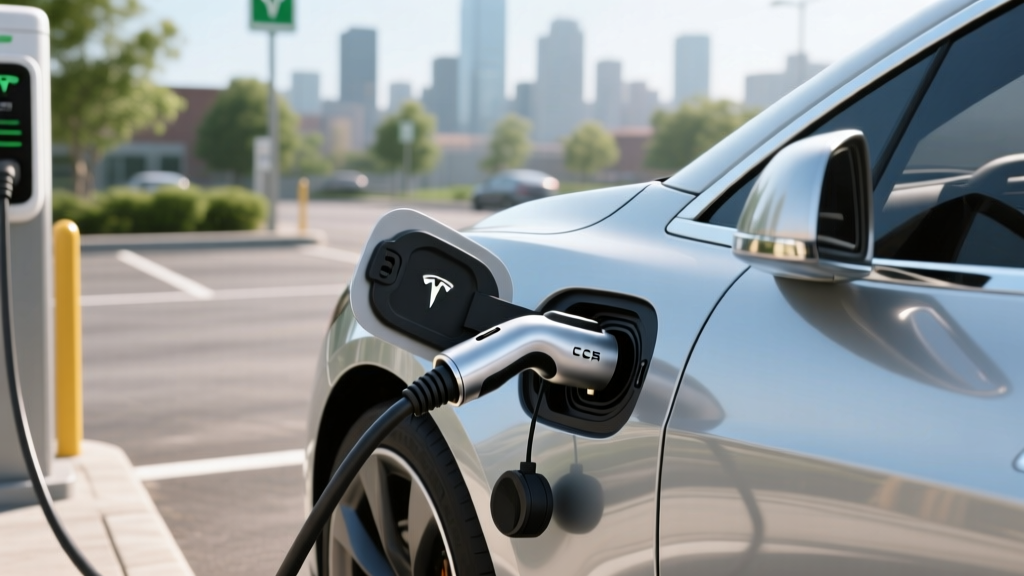
The CCS-to-NACS adapter situation: Tesla sells an official CCS Combo 2 adapter in some markets (Europe), but for North American CCS1, third-party adapters exist from companies like Lectron and A2Z. However, there's a critical caveat: many CCS1 public chargers require authentication through their native app or RFID card, and some CCS1 stations actively block non-native vehicles from initiating a session. Before relying on a CCS adapter for a road trip, verify that the specific station network supports Tesla vehicles via adapter. Tesla's in-car navigation will flag Superchargers and NACS-equipped stations, but CCS-only stations won't appear in the Tesla route planner.
Home Charger Installation: Electrical Requirements and Real Costs
If you're considering a home Level 2 charger that can serve both a Tesla (via NACS) and a visiting CCS-equipped vehicle, you have options — but the electrical work is where budgets often balloon.
Electrical Requirements for a Level 2 Home Charger
A typical 48-amp Level 2 charger draws up to 11.5 kW at 240V. Per the National Electrical Code (NEC), continuous loads must be derated to 80% of the circuit rating, so a 48A charger requires a dedicated 60-amp breaker. Older homes with 100-amp or 150-amp service panels may not have spare capacity, requiring a panel upgrade to 200 amps — a significant added cost.
| Component | Typical Cost Range | Notes |
|---|---|---|
| Level 2 Charger Equipment | $300–$700 | 40A–48A smart chargers; NACS or J1772 with adapter |
| Electrician Labor | $400–$1,200 | Depends on run length from panel to garage/driveway |
| Permit & Inspection | $50–$300 | Required in most jurisdictions; varies by city/county |
| Electrical Panel Upgrade (if needed) | $1,500–$3,500 | 100A→200A upgrade; common in homes built before 2000 |
| Total (no panel upgrade) | $750–$2,200 | Standard install with adequate panel capacity |
| Total (with panel upgrade) | $2,250–$5,700 | Older homes needing service upgrade |
Key gotcha: If your panel is in the basement and your parking spot is on the opposite side of the house, the electrician's wire run could exceed 100 feet of 6-gauge copper — adding $500+ in materials alone. Always get a site-specific quote from a licensed electrician before purchasing equipment.
Recommended Chargers: NACS, CCS, and Dual-Compatible Options
For Tesla owners who want flexibility, here are three equipment paths depending on your needs:
Emporia Level 2 EV Charger (48A, NACS)
- Power Output: 11.5 kW (48A @ 240V)
- Connector: Native NACS — plugs directly into any Tesla
- Cable Length: 24 ft
- Smart Features: Wi-Fi, energy monitoring, solar integration, scheduling via app
- Price: ~$399
- Best For: Tesla-only households wanting budget-friendly smart charging
ChargePoint Home Flex (50A, J1772 or NACS)
- Power Output: Up to 12 kW (50A @ 240V), configurable down to 16A
- Connector: Available in NACS or J1772; J1772 version works with CCS vehicles using their native inlet, and Teslas using the Tesla J1772 adapter (included with every Tesla)
- Cable Length: 23 ft
- Smart Features: Wi-Fi, Alexa, scheduling, detailed session history
- Price: ~$649
- Best For: Multi-EV households with a Tesla and a CCS vehicle (e.g., a VW ID.4)
Grizzl-E Smart (40A, J1772 with NACS adapter)
- Power Output: 9.6 kW (40A @ 240V)
- Connector: J1772 native; Tesla adapter included
- Cable Length: 24 ft
- Smart Features: OCPP-compatible, works with multiple apps, adjustable amperage
- Price: ~$449
- Best For: Cold-climate owners; rated to -40°F with a rugged aluminum case
Important: None of these Level 2 home chargers have a native CCS1 plug. CCS1 is a DC fast-charging standard and is not used for home AC charging. When people search for a "CCS charger for Tesla" at home, they're typically looking for a Level 2 unit that can also charge a visiting CCS-equipped vehicle — which means a J1772 charger (the AC portion of the CCS1 standard) with appropriate adapters.
Cost to Charge: Per-Mile Economics vs. Gasoline
The financial case for home charging is strong, but public DC fast charging narrows the gap considerably. Here's how costs break down across scenarios for a Tesla Model Y Long Range (approximately 3.0 miles per kWh efficiency):
| Scenario | $/kWh | Cost per Mile | Equivalent Gas MPG at $3.50/gal |
|---|---|---|---|
| Home Off-Peak (utility TOU rate) | $0.08–$0.12 | $0.03–$0.04 | 88–117 MPG |
| Home Standard Rate | $0.14–$0.18 | $0.05–$0.06 | 58–70 MPG |
| Public Level 2 (workplace/mall) | $0.15–$0.30 | $0.05–$0.10 | 35–70 MPG |
| DC Fast (Electrify America/EVgo) | $0.35–$0.55 | $0.12–$0.18 | 19–29 MPG |
| Tesla Supercharger (member rate) | $0.25–$0.35 | $0.08–$0.12 | 29–44 MPG |
Gas comparison baseline: A Toyota RAV4 (non-hybrid) averaging 30 MPG combined at $3.50/gallon costs $0.117/mile. A Tesla Model Y charging primarily at home on off-peak rates costs $0.03–$0.04/mile — roughly one-third the fuel cost. However, if you rely exclusively on DC fast charging at $0.48/kWh, your per-mile cost rises to $0.16, exceeding the gas car. This is why home charging access remains the single most important economic factor in EV ownership.
Charging Time Examples: 10–80% Sessions by Battery Size
Charging speed is not linear. Lithium-ion batteries accept peak power only at low State of Charge (SoC). As the battery fills, the Battery Management System (BMS) reduces current to protect cell health — this is called the charge curve taper. The "10–80%" metric is the industry standard because charging above 80% slows dramatically, often taking as long as the 10–80% session itself.
| Battery Size (kWh Usable) | Level 2 @ 11.5 kW | DC Fast @ 150 kW (peak) | DC Fast @ 250 kW (peak) |
|---|---|---|---|
| 60 kWh (Tesla Model 3 RWD) | ~3.5 hours | ~28 min | ~22 min |
| 75 kWh (Tesla Model Y LR) | ~4.5 hours | ~32 min | ~25 min |
| 90 kWh (Tesla Model S/X) | ~5.5 hours | ~38 min | ~30 min |
| 100 kWh (large trucks/SUVs) | ~6 hours | ~42 min | ~35 min |
Real-world caveat: Peak kW ratings are sustained only briefly. A Tesla Model Y at a 250 kW Supercharger will see peak rates of ~240 kW below 30% SoC, tapering to ~100 kW by 60% SoC, and dropping below 50 kW past 80%. Cold weather (below 40°F) further reduces charge acceptance unless the battery is preconditioned via in-car navigation to a Supercharger.
Safety, Electrical Code, and Permit Considerations
A Level 2 EV charger is a continuous, high-amperage load — comparable to running an electric oven for 8 hours straight. The NEC treats it seriously, and so should you.
- Dedicated Circuit: Your charger must be on its own dedicated breaker. Sharing a circuit with other appliances is a code violation and a fire risk.
- GFCI Protection: NEC 2020 and later require GFCI protection for all 240V receptacles in garages. Hardwired chargers may have GFCI built into the unit; plug-in units using a NEMA 14-60 outlet need a GFCI breaker (adding $50–$120 to the panel cost).
- Outdoor Rating: If your charger is mounted outside or in an unenclosed carport, it must carry a NEMA 4 (weatherproof) rating. All three chargers recommended above meet this standard.
- Permit and Inspection: Most U.S. jurisdictions require an electrical permit for a new 240V circuit. The inspection ensures wire gauge, breaker sizing, and grounding meet code. Skipping the permit can void your homeowner's insurance in the event of an electrical fire.
- Wire Gauge: A 60A breaker requires 6 AWG copper wire (or 4 AWG aluminum). Longer runs may need upsizing to 4 AWG copper to prevent voltage drop.
For authoritative guidance, refer to the National Fire Protection Association's NEC page and consult a licensed electrician for your specific installation.
Frequently Asked Questions
Can I plug a CCS1 charger directly into my Tesla?
No. Tesla vehicles have a NACS port, not a CCS1 port. You need a CCS1-to-NACS adapter for DC fast charging at CCS-only stations. For AC home charging, a J1772-to-Tesla adapter (included with every Tesla) handles the AC portion of the CCS1 standard.
How much does it cost to install a home EV charger?
A standard Level 2 installation with adequate panel capacity runs $750–$2,200 (equipment + electrician + permit). If your home needs a 200A panel upgrade, expect $2,250–$5,700 total. Always get a site-specific quote before buying equipment.
Will a CCS adapter void my Tesla warranty?
Tesla has not officially endorsed third-party CCS1-to-NACS adapters. While using one is unlikely to void your entire vehicle warranty, any charging-related damage traced to a non-OEM adapter may not be covered under warranty. Check your adapter's UL certification status before use.
Do I need a "CCS charger" at home if I only own a Tesla?
No. At home, you only need a Level 2 AC charger with a NACS connector. CCS1 is a DC fast-charging standard used at public stations. The only reason to install a J1772 charger at home (instead of NACS) is if you also own or regularly host a non-Tesla EV that uses CCS1.
How fast will a Level 2 charger add range to my Tesla Model Y?
At 11.5 kW (48A @ 240V), expect roughly 37–44 miles of range added per hour, depending on your Model Y's efficiency. A full overnight charge (8–10 hours) easily replenishes 300+ miles of EPA-rated range.
Is the federal tax credit available for home charger installation?
The Alternative Fuel Vehicle Refueling Property Credit (IRS §30C) covers up to 30% of home charger equipment and installation costs, capped at $1,000. However, eligibility depends on your census tract meeting certain low-income or rural criteria. Check the IRS §30C page and consult a tax professional for your specific situation.