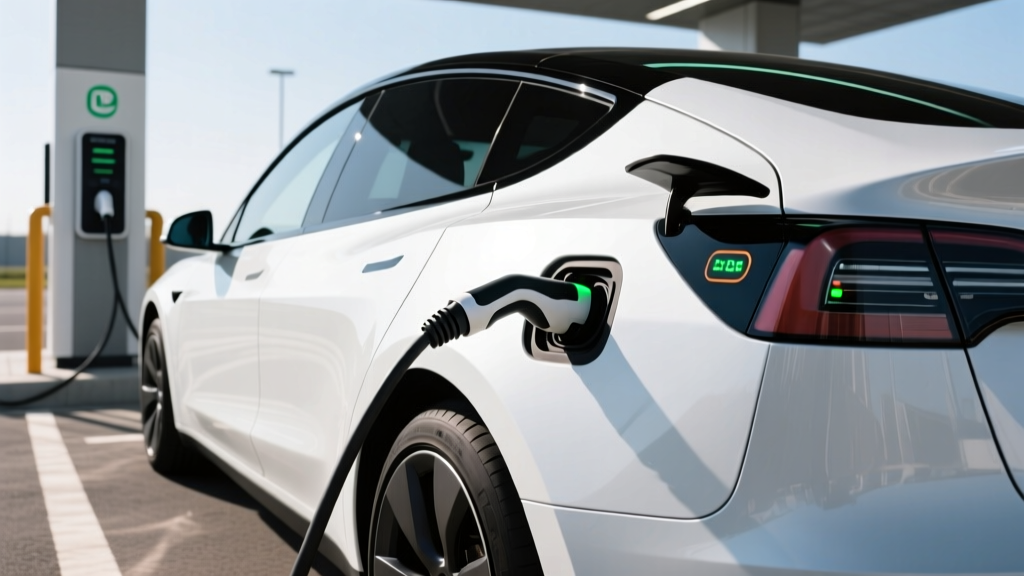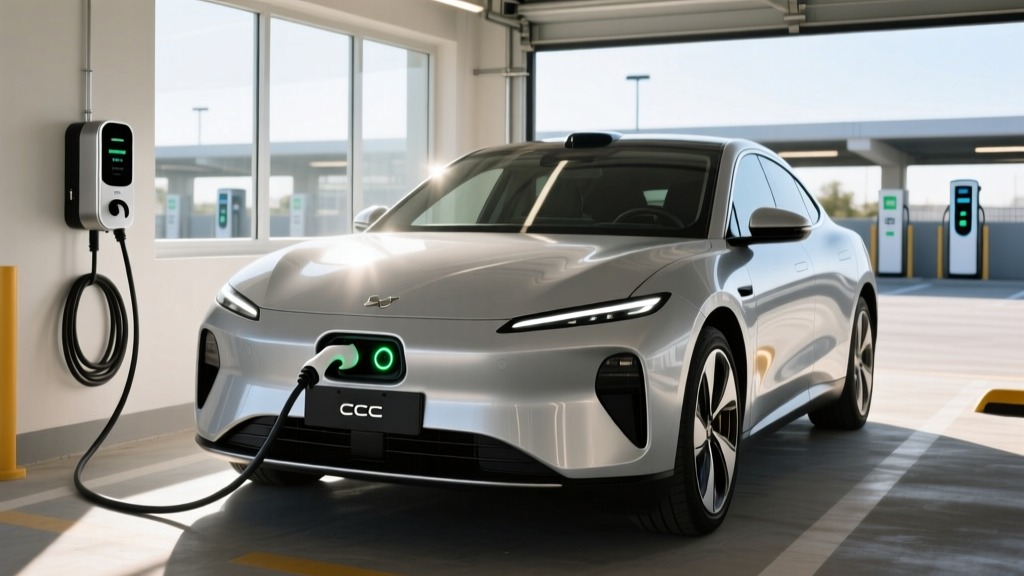
What Is a CCS Charger and Why Does It Matter?
If you've shopped for a non-Tesla electric vehicle in the last few years, you've seen the CCS1 connector — that bulky plug with two extra DC pins below the standard J1772 AC pins. The Combined Charging System (CCS) became the dominant DC fast-charging standard in North America for every automaker except Tesla. But the landscape is shifting fast: the North American Charging Standard (NACS), developed by Tesla, is now being adopted by Ford, GM, Rivian, Hyundai, and others starting with 2025–2026 model-year vehicles.
So where does that leave CCS chargers in 2026? Still very much in service. Electrify America, EVgo, and ChargePoint operate thousands of CCS-equipped DC fast chargers nationwide. If you drive a pre-2025 EV with a native CCS port — or plan to use a CCS-to-NACS adapter — understanding CCS charging speeds, costs, and home-install requirements is essential.
This guide breaks down every charging level, the real math behind installation and per-mile costs, and the equipment worth your money.
Charging Levels Explained: kW, Miles Per Hour, and Real Charge Times
The single most important distinction in EV charging: kW (kilowatts) measures power — how fast energy flows into your car. kWh (kilowatt-hours) measures energy — the total capacity stored in your battery. A 150 kW charger doesn't put 150 kWh into your car; it delivers energy at a rate of 150 kW, filling a portion of your battery per minute.
| Level | Voltage | Power (kW) | Miles Added/Hour | Typical Use Case |
|---|---|---|---|---|
| Level 1 | 120V AC | 1.0–1.4 kW | 3–5 mi/hr | Overnight trickle, PHEVs, emergencies |
| Level 2 | 240V AC | 3.3–19.2 kW | 12–70 mi/hr | Home daily charging, workplaces, malls |
| DC Fast (CCS/NACS) | 400–800V DC | 50–350 kW | 150–1,200+ mi/hr | Road trips, highway corridors |
For context, a typical 75 kWh battery (like in a Hyundai Ioniq 5 or VW ID.4) needs roughly:
- Level 1 (1.4 kW): ~53 hours from empty — impractical for full BEVs
- Level 2 (7.7 kW / 32A): ~9.5 hours — perfect overnight charge
- Level 2 (11.5 kW / 48A): ~6.5 hours — faster overnight for larger batteries
- DC Fast CCS (150 kW peak): 10–80% in ~18–25 minutes depending on vehicle acceptance rate
- DC Fast CCS (350 kW peak): 10–80% in ~15–18 minutes for 800V-architecture vehicles (Ioniq 5, Kia EV6, Porsche Taycan)
Real-world charging curve reality: No vehicle sustains peak kW for the full session. A car rated for 240 kW peak might hold that rate only between 10–40% State of Charge, then taper to 150 kW, then 80 kW above 60%, and crawl below 40 kW past 80%. That's why manufacturers quote 10–80% times — the last 20% takes nearly as long as the first 70%.
Home Charger Installation: Electrical Requirements and Real Costs
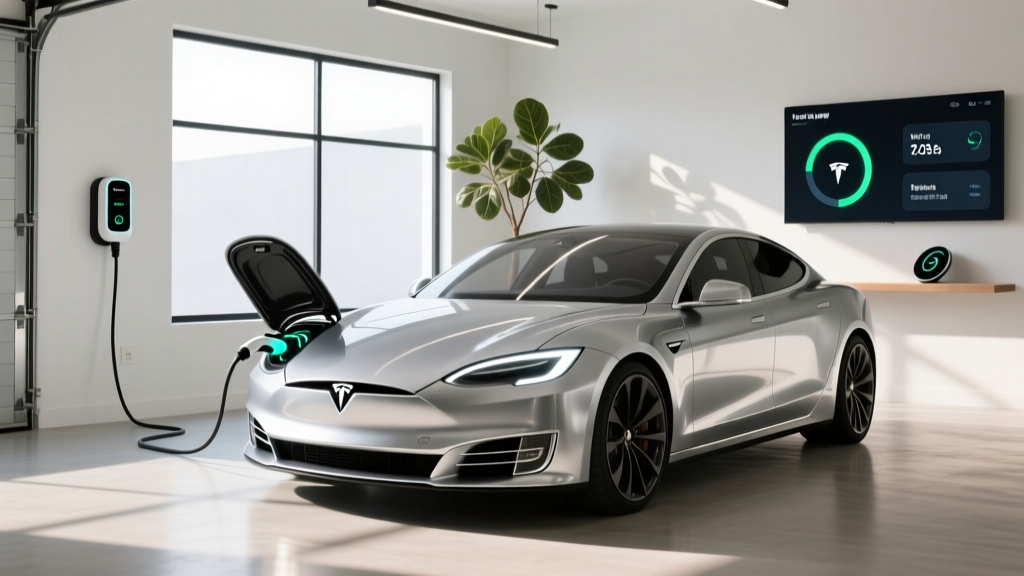
Most EV owners do the bulk of their charging at home on a Level 2 charger. A CCS-equipped vehicle charges on Level 2 using the upper J1772 portion of the CCS connector — so any standard J1772 Level 2 home charger works with every CCS-port EV. You only need the full CCS connector at DC fast-charging stations.
What Electrical Setup Does a Level 2 Charger Need?
A typical 48-amp Level 2 charger requires a dedicated 60-amp, 240V circuit (the National Electrical Code requires circuits rated at 125% of continuous load — 48A × 1.25 = 60A). Here's what that involves:
- Panel capacity: Your main electrical panel needs at least 60A of unused capacity. Most modern 200A panels can accommodate this. Older 100A panels often cannot.
- Wire gauge: 6 AWG copper (THHN in conduit) for runs up to ~50 feet; 4 AWG for longer runs to limit voltage drop.
- Breaker: Dedicated 60A double-pole breaker.
- GFCI protection: NEC 2020+ requires GFCI protection for EV receptacles (if using a plug-in charger on a NEMA 14-50 outlet). Hardwired chargers avoid this requirement and are generally recommended for reliability.
- Permit: Nearly all jurisdictions require an electrical permit for EV charger installation, typically $50–$200.
Panel Upgrade: The Hidden Cost
If your home has a 100A panel (common in pre-1990 construction), adding a 60A EV circuit may push total load past the panel's rating. A panel upgrade to 200A typically costs $1,500–$3,500 depending on your utility, local labor rates, and whether the meter base also needs replacing. Some utilities offer rebates that offset $200–$500 of this cost.
| Component | Low Estimate | High Estimate | Notes |
|---|---|---|---|
| Level 2 Charger Equipment | $300 | $700 | 48A smart charger (hardwired or plug-in) |
| Electrician Labor (standard install) | $400 | $1,200 | Depends on panel-to-garage distance, wall type |
| Electrical Permit | $50 | $200 | Varies by municipality |
| Materials (wire, conduit, breaker) | $100 | $400 | Longer runs cost more |
| Total (no panel upgrade) | $850 | $2,500 | Most homes with 200A panel |
| Panel Upgrade (if needed) | $1,500 | $3,500 | 100A → 200A service upgrade |
| Total (with panel upgrade) | $2,350 | $6,000 | Older homes, complex runs |
The IRS §30D tax credit applies to the vehicle, not the charger itself. However, the separate Residential Clean Energy Credit (25C) was historically available for home energy equipment — check current-year IRS guidance, as home EV charger credits expired after 2021 and have not been reinstated as of 2026. Some states and utilities still offer $200–$500 rebates for Level 2 equipment.
CCS Connector Compatibility: Which Cars, Which Networks?
The CCS1 connector (the North American variant) combines a J1772 AC plug with two additional DC pins. Here's where things stand in 2026:
| Connector | Vehicles (2026 Models) | Legacy Vehicles (2018–2024) | Networks |
|---|---|---|---|
| CCS1 | VW ID.4, ID.7; BMW i4, iX; some Hyundai/Kia (check trim) | Chevy Bolt, Ford Mustang Mach-E (pre-2025), Hyundai Ioniq 5, Kia EV6, VW ID.4, BMW i4, most non-Tesla EVs | Electrify America, EVgo, ChargePoint, Blink |
| NACS (Tesla) | All Tesla models; Ford F-150 Lightning & Mach-E (2025+); GM Ultium vehicles (2025+); Rivian (2025+) | Tesla Model 3/Y/S/X (all years) | Tesla Supercharger, plus growing NACS stations from EA, EVgo |
| CHAdeMO | None (discontinued for new vehicles) | Nissan Leaf (all years), Mitsubishi Outlander PHEV (older) | Limited; most networks phasing out |
Adapter Solutions
If your 2023–2024 EV has a CCS port and you want access to Tesla Superchargers (now open to non-Tesla vehicles with adapters), you'll need a CCS-to-NACS adapter. Ford and GM provide these to owners; third-party adapters from brands like Lectron and A2Z run $150–$250. Conversely, Tesla owners who want to use CCS-only Electrify America stations can buy a NACS-to-CCS adapter, though this is less commonly needed as networks add NACS cables.
Cost to Charge: Home vs. Public vs. Gas
The economic case for EV charging depends heavily on where you charge. Here's the real math for a mid-size EV averaging 3.5 miles per kWh (roughly equivalent to a Hyundai Ioniq 5 or Tesla Model Y):
| Charging Scenario | $/kWh | Cost per Mile | Notes |
|---|---|---|---|
| Home (off-peak utility rate) | $0.08–$0.14 | $0.023–$0.040 | Best-case; time-of-use plans |
| Home (standard rate) | $0.14–$0.20 | $0.040–$0.057 | Average US residential: ~$0.17/kWh |
| Public Level 2 (ChargePoint, etc.) | $0.25–$0.49 | $0.071–$0.140 | Varies wildly by location and operator |
| DC Fast (Electrify America, EVgo) | $0.35–$0.55 | $0.100–$0.157 | Idle fees can add cost if you don't unplug promptly |
| Gas equivalent (25 MPG, $3.40/gal) | — | $0.136 | Baseline comparison |
The takeaway: Home charging at off-peak rates saves 60–75% per mile vs. gasoline. But exclusive reliance on DC fast charging can actually cost more per mile than gas. This is why home Level 2 access isn't a luxury — it's the economic foundation of EV ownership. According to fueleconomy.gov, a typical EV driver who charges 80% at home and 20% on public DC fast chargers pays roughly $0.04–$0.06 per mile — less than half the cost of a 25 MPG gas car.
Recommended Level 2 Home Chargers for CCS-Equipped EVs
Every CCS-port EV uses the J1772 connector for Level 2 AC charging at home. Here are the chargers that deliver the best combination of power, reliability, and smart features in 2026:
ChargePoint Home Flex
- Power: Up to 12 kW (50A) on a 60A circuit; configurable down to 16A
- Connector: J1772 (fits all CCS and NACS vehicles on AC)
- Cable length: 23 feet
- Smart features: Wi-Fi, app scheduling, Alexa integration, energy tracking
- Price: ~$550–$650
- Best for: Flexibility — adjustable amperage means it works on 20A to 60A circuits
Wallbox Pulsar Plus
- Power: Up to 11.5 kW (48A) on a 60A circuit
- Connector: J1772
- Cable length: 25 feet
- Smart features: Wi-Fi + Bluetooth, app control, solar-integration ready, load balancing
- Price: ~$450–$550
- Best for: Compact design and solar-home integration
Emporia Level 2 EV Charger
- Power: Up to 11.5 kW (48A)
- Connector: J1772
- Cable length: 24 feet
- Smart features: Real-time energy monitoring, solar-aware scheduling, integrates with Emporia Vue home energy monitor
- Price: ~$350–$450
- Best for: Budget-conscious buyers who want smart energy tracking
Grizzl-E Smart
- Power: Up to 10 kW (40A) on a 50A circuit
- Connector: J1772
- Cable length: 24 feet
- Smart features: OCPP-compatible, app scheduling, ruggedized outdoor enclosure
- Price: ~$400–$500
- Best for: Outdoor installations in harsh climates (rated to -40°F)
For all of these, a hardwired installation is recommended over a NEMA 14-50 plug. Hardwiring eliminates the GFCI breaker requirement (which causes nuisance trips with some chargers), provides a more reliable connection, and is often required to qualify for utility rebates.
Safety, Code, and Installation Best Practices
EV chargers draw sustained high current for hours — this is unlike any other household appliance. The National Electrical Code (NEC) treats EV charging as a continuous load, which drives specific safety requirements:
- Dedicated circuit: Your EV charger must have its own breaker — no shared circuits with dryers, ovens, or HVAC.
- 125% rule: A 48A charger requires a 60A breaker and wire rated for 60A. Never undersize the breaker or wire.
- Outdoor-rated equipment: If your charger is mounted outside (carport, driveway), it must carry a NEMA 4 or IP65 weather rating. All recommended chargers above meet this standard.
- Strain relief and cable management: Use a holster or cable reel to prevent the connector from resting on the ground where it can be damaged or corroded.
- Utility notification: Some utilities require you to notify them before adding a Level 2 charger, especially on older distribution transformers. Check with your provider — they may offer a dedicated EV rate plan that saves you money.
- Inspection: After installation, your local electrical inspector will verify code compliance. This is not optional — it protects you and is required for insurance coverage.
Frequently Asked Questions
How much does it cost to install a home EV charger?
A standard Level 2 home charger installation with a 200A panel costs between $850 and $2,500 total, including the charger ($300–$700), electrician labor ($400–$1,200), materials ($100–$400), and permit ($50–$200). If your home needs a panel upgrade from 100A to 200A, add $1,500–$3,500. Always get at least two quotes from licensed electricians and verify they have EV charger installation experience.
How fast will each charging level add range?
Level 1 (120V) adds roughly 3–5 miles of range per hour — fine for plug-in hybrids with small batteries but impractical for full EVs. Level 2 (240V, 48A) adds 25–35 miles per hour for most EVs, fully replenishing a 75 kWh battery overnight. DC fast charging on a CCS connector at 150 kW adds roughly 150–200 miles in 20 minutes; at 350 kW with an 800V vehicle, you can add 200+ miles in 15 minutes. Remember that charge speed tapers significantly above 80% State of Charge.
Which connector and charger is compatible with my EV?
If your EV has a CCS port (most non-Tesla EVs from 2019–2024), you can use any J1772 Level 2 charger at home and any CCS DC fast charger on the road. If you have a 2025+ Ford, GM, or Rivian with a NACS port, you use NACS connectors at Superchargers and need a NACS-to-CCS adapter for older Electrify America stations. The Nissan Leaf uses CHAdeMO — adapters to CCS are not commercially available. Check your owner's manual or the fueleconomy.gov database for your exact vehicle's connector type.
How much does charging cost per mile compared to gas?
At home on an average electricity rate of $0.17/kWh, an EV getting 3.5 mi/kWh costs about $0.049 per mile — roughly 64% less than a 25 MPG gas car at $3.40/gallon ($0.136/mile). On DC fast chargers at $0.45/kWh, cost rises to $0.129/mile, nearly matching gas. The economic advantage of EV ownership depends on reliable home charging access.
What electrical upgrades might I need for a home charger?
The most common upgrade is adding a 60A double-pole breaker to your existing 200A panel — straightforward if you have spare slots and capacity. If your panel is 100A, nearly full, or uses outdated fuse-based breakers, you'll likely need a panel upgrade to 200A ($1,500–$3,500). In rare cases, your utility may need to upgrade the service drop or transformer, particularly in older neighborhoods. Some homes benefit from a smart load-management system (like the Wallbox Power Sharing or Emporia Smart Load Manager) that lets you share capacity between an EV charger and an existing dryer or oven circuit, avoiding a panel upgrade entirely.
Will CCS chargers become obsolete as NACS takes over?
Not anytime soon. Millions of CCS-equipped EVs are already on the road, and networks like Electrify America have committed to adding NACS connectors alongside existing CCS cables rather than replacing them. CCS DC fast chargers will remain operational through at least the early 2030s. If you're buying a 2026 model-year EV, however, NACS is increasingly the default — and a CCS adapter may become an occasional necessity rather than the other way around.