Which Cars Can Actually Stop at a Tesla Supercharger?
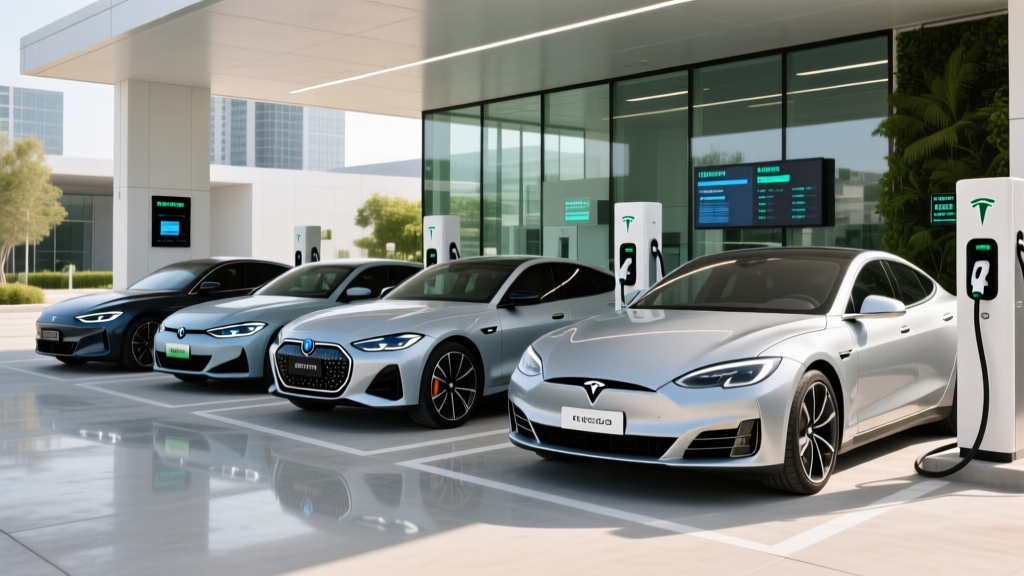
If you've driven past a Tesla Supercharger station and wondered whether your non-Tesla EV can pull in and plug up, you're not alone. The search for cars that stop at Superchargers has exploded since Tesla opened its network to other brands. But compatibility isn't universal — it depends on your vehicle's connector type, the station's hardware, and whether you're carrying the right adapter.
As of early 2026, the North American Charging Standard (NACS) — originally Tesla's proprietary connector — has become the dominant plug for new EVs sold in the United States. Nearly every major automaker has either adopted NACS natively or committed to it for upcoming model years. Meanwhile, the Combined Charging System (CCS1) plug, which was the prevailing standard just a few years ago, is being phased out on new vehicles. CHAdeMO, the third major DC fast-charging connector, is essentially legacy-only, surviving on older Nissan Leaf and Mitsubishi Outlander PHEV models.
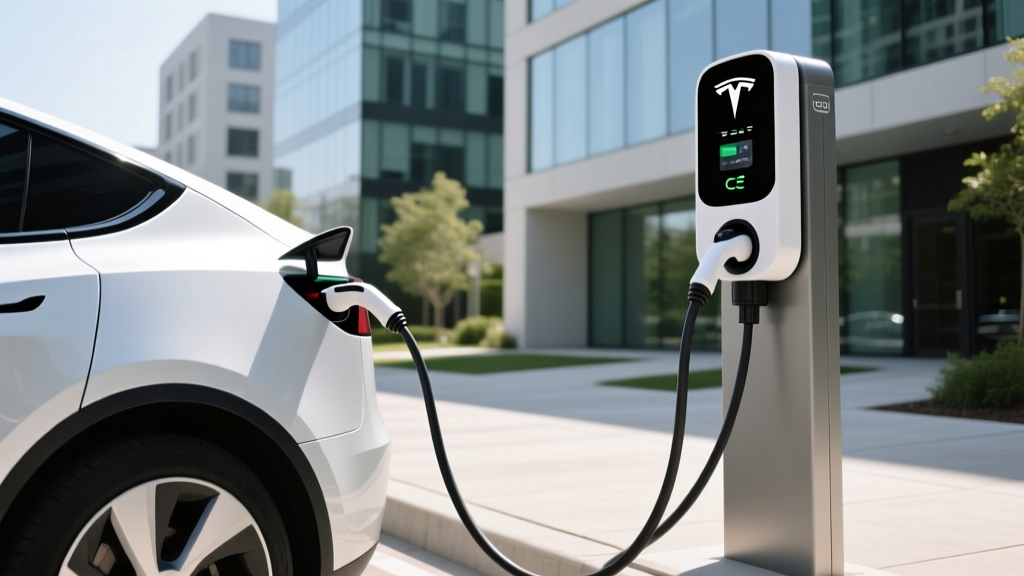
Here's the practical reality: any EV with a native NACS port can stop at a Tesla Supercharger without an adapter. Vehicles with CCS1 ports need a CCS-to-NACS adapter (many automakers now include one or sell one for $150–$250). And CHAdeMO vehicles cannot use Superchargers at all without a third-party adapter that remains rare and expensive.
| Brand / Model | Native Connector | Supercharger Access | Adapter Needed? |
|---|---|---|---|
| Tesla (all models) | NACS | Yes — full network | No |
| Ford (F-150 Lightning, Mustang Mach-E) | NACS (2025+) | Yes | No (adapter included for CCS stations) |
| Rivian (R1T, R1S) | NACS (2025+) | Yes | No |
| Hyundai / Kia (Ioniq 5, EV6, EV9) | NACS (2026 models) | Yes | No on 2026+; CCS-to-NACS adapter for 2024–25 models |
| GM (Equinox EV, Blazer EV, Silverado EV) | NACS (2025+) | Yes | No |
| BMW (iX, i4, i5) | CCS1 | Via adapter | Yes — BMW-provided CCS-to-NACS adapter |
| Mercedes-Benz (EQE, EQS) | CCS1 | Via adapter | Yes |
| Volkswagen (ID.4, ID.7) | CCS1 | Via adapter | Yes |
| Nissan (Leaf — older models) | CHAdeMO | No | No viable adapter |
Tesla's Supercharger network now exceeds 30,000 stalls in North America, and the company has opened thousands of those stalls to non-Tesla EVs through its Non-Tesla Supercharger program. Not every stall is open to other brands — Tesla restricts access at congested locations to preserve reliability for its own customers. Use the Tesla app or your vehicle's built-in navigation to confirm which specific stalls accept non-Tesla vehicles before you drive there.
Charging Levels Explained: How Fast Does Each Level Add Range?
Understanding EV charging requires a firm grasp on the difference between kW (kilowatts) and kWh (kilowatt-hours). Think of kW as the flow rate of water through a hose — it's the power being delivered at any given moment. Think of kWh as the total volume of water in the bucket — it's the energy stored in your battery. A 10 kW charger delivers energy at a rate of 10 kilowatts; an 80 kWh battery stores 80 kilowatt-hours of energy. Confusing these two is the single most common EV literacy mistake.
| Level | Voltage | Power (kW) | Miles of Range Added per Hour | Best For |
|---|---|---|---|---|
| Level 1 | 120V AC | 1.0–1.9 kW | 3–5 miles | Overnight top-ups, PHEVs, emergencies |
| Level 2 (Home/Public) | 240V AC | 3.3–19.2 kW | 12–75 miles | Daily home charging, workplace, shopping centers |
| DC Fast Charging | 400–900V DC | 50–350 kW | 150–1,200+ miles (theoretical peak) | Road trips, rapid top-ups |
Level 1 charging uses a standard household 120V outlet. It's included with every EV — the mobile connector that comes in the trunk plugs right in. At roughly 1.4 kW, you'll add about 4 miles of range per hour. That's enough for a plug-in hybrid with 30 miles of electric range, but painfully slow for a full battery-electric vehicle with an 80+ kWh battery. A full charge from empty could take 50+ hours.
Level 2 is the practical standard for home and destination charging. Running on 240V (the same voltage as your electric dryer), Level 2 chargers range from 3.3 kW (16A) to 19.2 kW (80A). Most home installations run at 40A or 48A, delivering 9.6–11.5 kW. At that rate, an EV with an 80 kWh battery charges from 10% to 80% in roughly 6–7 hours — perfect for overnight replenishment. The vehicle's onboard charger caps the maximum AC intake; for example, the Tesla Model Y accepts up to 11.5 kW on Level 2, while the Ford F-150 Lightning (extended range) can accept up to 19.2 kW with the right equipment.
DC fast charging bypasses the vehicle's onboard charger and feeds direct current straight to the battery. Speeds range from 50 kW (older CHAdeMO stations) to 350 kW (latest Electrify America and Tesla V4 stalls). However, peak kW is not sustained kW. A vehicle that advertises "250 kW peak charging" typically holds that rate only between 10% and 30% state of charge (SoC), then tapers progressively. This charge-curve taper is why manufacturers quote 10–80% times rather than 0–100% times. Charging from 80% to 100% on DC fast charging can take as long as the 10–80% portion — so plan your road-trip stops to leave at 80% unless you need the full battery.
Real-World 10–80% Charging Times for Common Battery Sizes
| Battery Size (usable kWh) | 150 kW DCFC (avg sustained) | 250 kW DCFC (avg sustained) | Level 2 at 11.5 kW |
|---|---|---|---|
| 58 kWh (e.g., VW ID.4 Standard) | ~22 minutes | ~16 minutes | ~4.5 hours |
| 77 kWh (e.g., Tesla Model Y LR) | ~29 minutes | ~20 minutes | ~6 hours |
| 84 kWh (e.g., Hyundai Ioniq 5) | ~32 minutes | ~18 minutes* | ~6.5 hours |
| 100 kWh (e.g., GMC Sierra EV) | ~38 minutes | ~28 minutes | ~8 hours |
| 131 kWh (e.g., F-150 Lightning Ext.) | ~50 minutes | ~38 minutes | ~10.5 hours |
*Hyundai Ioniq 5 and Kia EV6 use an 800V architecture that sustains higher charge rates longer, achieving 10–80% in approximately 18 minutes on a 350 kW-capable station.
Home Charger Installation: Electrical Requirements, Costs, and Gotchas
Installing a Level 2 home charger is the single highest-impact upgrade an EV owner can make. You'll do 80–95% of your charging at home, and a properly installed Level 2 unit means waking up to a full battery every morning. But the installation isn't as simple as plugging into an existing outlet.
Electrical Requirements
A Level 2 charger requires a dedicated 240V circuit. The amperage depends on the charger you choose:
- 32A charger (7.7 kW): Requires a 40A breaker (NEC code mandates the circuit be rated 125% of the continuous load)
- 40A charger (9.6 kW): Requires a 50A breaker
- 48A charger (11.5 kW): Requires a 60A breaker
- 80A charger (19.2 kW): Requires a 100A breaker — uncommon for residential
Your home's electrical panel must have enough spare capacity to support the new circuit. A typical modern home has a 200A main panel. If your panel is already near capacity (common in homes with electric heating, AC, and an electric water heater), adding a 50A or 60A EV circuit may require a panel upgrade to 300A or 400A, or the installation of a smart load-management device that throttles the charger when other high-draw appliances are running.
Installation Cost Breakdown
| Item | Low-End (Simple Install) | High-End (Complex Install) |
|---|---|---|
| Level 2 charger hardware | $350 (basic 32A unit) | $700 (smart 48A unit with WiFi) |
| Electrician labor (run conduit, wire, breaker) | $500 (short run, same wall as panel) | $2,500+ (long run, attic/crawlspace, trenching) |
| Permit and inspection | $50 | $300 |
| Panel upgrade (if needed) | $0 (sufficient capacity) | $2,000–$4,000 |
| Total | $900–$1,200 | $3,500–$7,500 |
The wide range reflects real-world variability. A homeowner with a 200A panel, an attached garage, and the charger mounted on the wall directly behind the panel might pay under $1,000 total. A homeowner with a detached garage, a 100A panel that needs upgrading, and a 60-foot conduit run could easily spend $5,000+. Always get at least three quotes from licensed electricians, and ensure the quote includes permit and inspection — unpermitted electrical work can void your homeowner's insurance.
The federal government offers a tax credit under IRS §30C for home EV charging equipment installation: 30% of the cost (hardware + labor), up to $1,000. This credit applies to equipment installed in your primary residence and is subject to income and location eligibility rules. Consult a tax professional to confirm your qualification.
How Much Does EV Charging Cost Per Mile vs. Gas?
The economic case for EVs hinges largely on fuel savings, but the actual cost per mile depends heavily on where and when you charge.
| Scenario | Rate ($/kWh) | Cost to Add 250 Miles* | Cost Per Mile |
|---|---|---|---|
| Home charging (off-peak, utility rate) | $0.08–$0.12 | $6.00–$9.00 | $0.024–$0.036 |
| Home charging (standard residential rate) | $0.13–$0.18 | $9.75–$13.50 | $0.039–$0.054 |
| Public Level 2 (ChargePoint, workplace) | $0.20–$0.35 | $15.00–$26.25 | $0.060–$0.105 |
| DC Fast Charging (Electrify America, EVgo) | $0.35–$0.55 | $26.25–$41.25 | $0.105–$0.165 |
| Tesla Supercharger (varies by location/time) | $0.25–$0.40 | $18.75–$30.00 | $0.075–$0.120 |
| Gasoline vehicle (27 MPG, $3.40/gal) | — | $31.48 | $0.126 |
*Based on an EV averaging 3.3 miles per kWh (roughly the efficiency of a Tesla Model Y or Hyundai Ioniq 5). Actual efficiency varies by vehicle, temperature, and driving style. Source: fueleconomy.gov.
The takeaway: home charging at off-peak rates delivers fuel costs roughly one-quarter to one-third that of gasoline. Even public DC fast charging at premium rates often matches or beats gasoline on a per-mile basis. But if you rely exclusively on expensive public DC fast chargers in high-cost states like California or Massachusetts, your savings narrow considerably. The economics work best when you can charge at home the majority of the time.
Which Connector and Charger Is Compatible with My EV?
The connector landscape has simplified dramatically since 2023, but legacy vehicles and stations still create complexity. Here's what you need to know:
- NACS (North American Charging Standard): The slim, compact connector used by Tesla and now adopted by Ford, GM, Rivian, Hyundai, Kia, BMW, and most other major brands for 2025–2026 models. NACS handles both AC Level 2 and DC fast charging through the same plug — no separate CCS combo pin needed. This is the connector used at Tesla Superchargers.
- CCS1 (Combined Charging System): The bulkier connector that was the US standard for non-Tesla EVs through 2024. Vehicles like the 2022–2024 VW ID.4, BMW i4, and Mercedes EQS still use CCS1 natively. CCS1 vehicles can access Superchargers that have been opened to non-Tesla EVs using a CCS-to-NACS adapter. Many automakers now include this adapter with the vehicle or sell one for $150–$250.
- CHAdeMO: The Japanese-origin DC fast-charging connector found on the Nissan Leaf and Mitsubishi Outlander PHEV. CHAdeMO infrastructure is declining — few new stations are being installed. CHAdeMO vehicles cannot use Superchargers.
- J1772: The standard AC Level 1/Level 2 connector used by all non-Tesla EVs for home and public AC charging. NACS vehicles use a J1772-to-NACS adapter (typically included) to plug into public Level 2 stations with J1772 connectors.
If you're buying a 2026 model-year EV, you'll almost certainly get a native NACS port. If you own a 2022–2025 CCS1 vehicle, invest in a quality CCS-to-NACS adapter — it unlocks the entire Supercharger network, which is generally the most reliable DC fast-charging network in the country according to J.D. Power's annual EV charging satisfaction studies.
Home Charger Equipment: What to Buy in 2026
Not all Level 2 chargers are equal. Here are the key specs that matter:
- Power output (kW): Match it to your vehicle's onboard charger capacity and your electrical panel. A 48A/11.5 kW charger is the sweet spot for most homes.
- Cable length: 18–25 feet. Longer cables reach across a two-car garage but are heavier to handle.
- Hardwired vs. plug-in: Hardwired units (no plug, direct-wired to the circuit) support higher amperage (48A+) and are required by code for circuits above 50A. Plug-in units (NEMA 14-50 outlet) offer portability — you can take the charger when you move — but are limited to 40A continuous (50A breaker).
- Smart features: WiFi connectivity, scheduled charging (to hit off-peak utility rates), energy monitoring, and utility demand-response integration.
- Safety certifications: UL-listed or ETL-listed. Avoid uncertified imports.
Recommended Home Chargers (2026)
| Charger | Max Power | Connector | Cable | Smart Features | Price |
|---|---|---|---|---|---|
| Tesla Wall Connector | 11.5 kW (48A) | NACS (J1772 adapter included) | 24 ft | WiFi, scheduling, load sharing, Powerwall integration | $475 |
| ChargePoint Home Flex | 12 kW (50A) | J1772 or NACS | 23 ft | WiFi, Alexa, scheduling, energy reports | $550–$650 |
| Emporia Vue Level 2 | 11.5 kW (48A) | J1772 or NACS | 24 ft | WiFi, solar integration, real-time energy tracking | $400–$500 |
| Grizzl-E Smart | 10 kW (40A) | J1772 or NACS | 24 ft | WiFi, OCPP, extreme cold-rated (-40°F) | $450 |
| Wallbox Pulsar Plus | 11.5 kW (48A) | J1772 or NACS | 25 ft | WiFi, Bluetooth, Power Sharing (dual-charger setups) | $550–$650 |
For NACS-native vehicles (Tesla, 2025+ Ford, GM, Rivian, Hyundai, Kia), the Tesla Wall Connector is the best value at $475 — it's the cheapest 48A smart charger on the market and integrates seamlessly with the Tesla ecosystem. For CCS1 vehicles or mixed-EV households, the ChargePoint Home Flex or Emporia Vue offer flexibility and strong app experiences. If you live in a cold climate (Minnesota, Maine, Alaska), the Grizzl-E is built in Canada and rated to -40°F — a meaningful advantage when other chargers throw cold-weather fault codes.
Safety and Electrical Code Considerations
EV charging draws sustained high current for hours — this is fundamentally different from the short burst your dryer or oven pulls. The National Electrical Code (NEC) treats EV charging as a continuous load, which triggers specific requirements:
- Dedicated circuit: Your EV charger must have its own dedicated breaker — it cannot share a circuit with any other outlet or appliance.
- 125% rule: The circuit breaker must be rated at 125% of the charger's maximum continuous draw. A 48A charger requires a 60A breaker. A 40A charger requires a 50A breaker.
- GFCI protection: The 2023 NEC update requires GFCI (Ground Fault Circuit Interrupter) protection for all EV charging outlets. Hardwired chargers are exempt from this GFCI requirement in most jurisdictions, which is one reason many electricians recommend hardwiring.
- Outdoor rating: If your charger is installed outdoors (driveway, exterior wall), it must carry a NEMA 4 or IP65 weather rating. All the chargers listed above meet this standard.
- Wire gauge: Your electrician will size the wire to the circuit — typically 6 AWG copper for a 50A circuit and 4 AWG for a 60A circuit. Aluminum wire is cheaper but requires a larger gauge; make sure your electrician uses copper for indoor runs.
- Permit and inspection: Most jurisdictions require an electrical permit for EV charger installation. The inspection verifies proper grounding, breaker sizing, wire gauge, and GFCI compliance. Do not skip this step. Unpermitted work can invalidate insurance claims if an electrical fire occurs.
Frequently Asked Questions
How much does it cost to install a home EV charger?
A straightforward Level 2 installation (short wire run, sufficient panel capacity, attached garage) typically costs $900–$1,200 including hardware, electrician labor, and permit. Complex installations involving long conduit runs, panel upgrades, or detached garages range from $2,500 to $7,500+. The federal §30C tax credit covers 30% of installation costs up to $1,000, reducing your net expense.
How fast will each charging level add range?
Level 1 (120V) adds 3–5 miles per hour. Level 2 (240V, 48A) adds 30–45 miles per hour for most EVs. DC fast charging at 150–250 kW can add 150–300+ miles in 20–30 minutes, though the charge rate tapers significantly above 80% state of charge.
Which cars stop at Superchargers without an adapter?
All Tesla vehicles, plus 2025+ models from Ford, GM, Rivian, and 2026+ models from Hyundai, Kia, and others with native NACS ports. CCS1-equipped vehicles (most 2022–2024 non-Tesla EVs) can use Superchargers opened to non-Tesla vehicles with a CCS-to-NACS adapter. CHAdeMO vehicles (Nissan Leaf) cannot use Superchargers.
How much does charging cost per mile compared to gas?
Home charging at off-peak rates costs roughly $0.03–$0.05 per mile — about one-third to one-quarter the cost of gasoline at $3.40/gallon and 27 MPG. Public DC fast charging at $0.35–$0.55/kWh costs $0.10–$0.17 per mile, which is comparable to or slightly cheaper than gasoline.
What electrical upgrades might I need?
If your home has a 200A panel with available capacity, you likely need only a new dedicated circuit — no panel upgrade required. If your panel is 100A or already near capacity, you may need a panel upgrade ($2,000–$4,000) or a smart load-management device like the Emporia Smart Load Center or Tesla Gateway, which dynamically reduces charger power when other appliances draw heavily.
Can I install a Level 2 charger myself?
Plug-in units (NEMA 14-50) can be plugged into an existing properly-rated outlet — but that outlet should still be inspected by an electrician to verify it's on a dedicated circuit with the correct breaker. Hardwired units should always be installed by a licensed electrician. DIY electrical work on 240V circuits carries serious fire and shock risk and may violate local code.