The Tesla Supercharger network — long the gold standard for DC fast charging reliability — is no longer exclusive to Tesla vehicles. Thanks to the industry-wide shift to the North American Charging Standard (NACS), a growing roster of non-Tesla EVs can now access over 25,000 Supercharger stalls across North America. But compatibility isn't universal, adapter requirements vary by brand, and real-world charging speeds depend on your vehicle's onboard architecture.
This guide covers every major automaker's Supercharger access status as of the 2026 model year, the adapters you'll need, and how to pair Supercharger road trips with a properly configured home Level 2 setup.
Understanding Charging Levels: kW, kWh, and Miles Per Hour
Before mapping out which cars can use Superchargers, it's essential to distinguish kW (kilowatts — the rate of power delivery, like water pressure from a hose) from kWh (kilowatt-hours — the total energy stored in your battery, like the size of the tank). Charging speed is measured in kW; battery capacity is measured in kWh.
| Level | Voltage | Max Power (kW) | Miles of Range Added Per Hour | Typical Use Case |
|---|---|---|---|---|
| Level 1 | 120V AC | 1.4–1.9 kW | 3–5 mi/hr | Overnight top-up, PHEVs, emergencies |
| Level 2 | 240V AC | 7.2–19.2 kW | 20–60 mi/hr | Home daily charging, workplace, shopping centers |
| DC Fast (including Superchargers) | 400–800V DC | 50–350 kW | 150–1,000+ mi/hr (peak) | Road trips, rapid top-ups, highway corridors |
A Level 2 home charger at 11.5 kW (48A on a 60A circuit) will fully replenish a 75 kWh battery overnight — roughly 7 to 8 hours from empty. A DC fast charger like a V3 Supercharger (peak 250 kW) can add 10–80% in approximately 18–25 minutes for compatible vehicles, though sustained speeds taper significantly above 80% State of Charge (SoC) to protect battery health.
Complete List: Cars That Can Use Superchargers in 2026
The transition to NACS accelerated after Ford became the first legacy automaker to sign a Supercharger access agreement in mid-2023. By 2026, most major manufacturers have either adopted NACS natively on new models or provide adapter access for existing CCS-equipped vehicles.
| Automaker | Native NACS Port? | Adapter Required? | Adapter Included? | Supercharger Access Status |
|---|---|---|---|---|
| Tesla (Model 3/Y/S/X, Cybertruck) | Yes (native) | No | N/A | Full access |
| Ford (F-150 Lightning, Mustang Mach-E) | 2025+ models native; 2022–2024 need adapter | CCS-to-NACS (older models) | Yes (free from Ford for eligible owners) | Full access via adapter or native |
| Rivian (R1T, R1S) | 2025+ models native; earlier need adapter | CCS-to-NACS (older models) | Yes (free from Rivian) | Full access |
| GM (Chevrolet, Cadillac, GMC, Buick) | 2025+ Ultium models native; older Bolt/etc. need adapter | CCS-to-NACS (older models) | Varies by model year — check dealer | Full access for NACS-equipped; adapter access for CCS |
| Hyundai / Kia (Ioniq 5/6, EV6/EV9) | 2025+ models native; older need adapter | CCS-to-NACS (older models) | Available through dealers (cost varies) | Full access with NACS or adapter |
| BMW / Mini (i4, iX, i5, Cooper SE) | 2025+ models native; older need adapter | CCS-to-NACS (older models) | Available through dealers | Full access with NACS or adapter |
| Mercedes-Benz (EQS, EQE, EQB) | 2025+ models native; older need adapter | CCS-to-NACS (older models) | Available through dealers | Full access with NACS or adapter |
| Volvo / Polestar (EX30, EX90, Polestar 2/3) | 2025+ models native; older need adapter | CCS-to-NACS (older models) | Varies — check dealer | Full access with NACS or adapter |
| Nissan (Leaf, Ariya) | Ariya 2025+ native; Leaf remains CHAdeMO | CHAdeMO-to-NACS (Leaf — limited options) | Leaf: not widely available; Ariya: included | Ariya: full access. Leaf: very limited |
| Toyota (bZ4X) | 2025+ models native | CCS-to-NACS (2023–2024 models) | Available through dealers | Access with NACS or adapter |
| Volkswagen (ID.4, ID. Buzz) | 2025+ models native; older need adapter | CCS-to-NACS (older models) | Available through dealers | Full access with NACS or adapter |
Critical caveat for older non-Tesla EVs: If your vehicle has a CCS1 port (the standard for most non-Tesla EVs sold between 2018–2024), you'll need a CCS-to-NACS adapter. Several manufacturers — including Ford, Rivian, and GM — provided these adapters free to registered owners. Third-party adapters from brands like Lectron and A2Z are also available for approximately $150–$250, but verify compatibility with your specific model year before purchasing. Always check Tesla's official Supercharger compatibility page for the latest supported vehicles.
Supercharger Charging Speeds: What to Expect by Vehicle
Accessing a Supercharger doesn't guarantee you'll hit Tesla's peak 250 kW rate. Your vehicle's maximum DC charge acceptance — determined by its battery architecture and thermal management — sets the ceiling.
| Vehicle | Battery (kWh usable) | Peak DC Rate (kW) | 10–80% Time (approx.) | Notes |
|---|---|---|---|---|
| Tesla Model 3 Long Range | 75 kWh (NMC) | 250 kW | ~18 min | Native NACS, optimized curve |
| Tesla Model Y Long Range | 75 kWh (NMC) | 250 kW | ~20 min | Native NACS |
| Ford F-150 Lightning (Ext. Range) | 131 kWh (NMC) | 150 kW | ~40 min | Large battery = longer charge despite adapter |
| Hyundai Ioniq 5 (2025+ NACS) | 77.4 kWh (NMC) | 240 kW (800V arch) | ~18 min | 800V architecture enables sustained high rates |
| Kia EV6 GT-Line (2025+ NACS) | 77.4 kWh (NMC) | 240 kW (800V arch) | ~18 min | Same E-GMP platform as Ioniq 5 |
| Chevrolet Equinox EV (2025+) | 85 kWh (NMC) | 150 kW | ~35 min | Ultium platform, native NACS |
| BMW i4 eDrive40 (2025+) | 81.5 kWh (NMC) | 200 kW | ~28 min | Native NACS on 2025+ models |
| Rivian R1T (Dual Motor, Max Pack) | 141 kWh (NMC) | 200 kW | ~45 min | Large pack, sustained rates taper above 60% |
Home Charging Setup: Electrical Requirements and Installation Costs
Superchargers solve road-trip charging, but 80% or more of EV charging happens at home. A properly installed Level 2 charger is the single most impactful upgrade for daily EV ownership.
Electrical Requirements
A typical Level 2 home charger requires a 240V dedicated circuit — the same voltage as an electric dryer or oven. The most common configurations:
- 40A circuit / 32A continuous — delivers 7.7 kW. Adequate for most EVs charging overnight.
- 48A circuit / 40A continuous — delivers 9.6 kW. Faster charging, good for larger batteries (100+ kWh).
- 60A circuit / 48A continuous — delivers 11.5 kW. Optimal for high-capacity EVs and future-proofing.
The National Electrical Code (NEC) requires EV chargers to be on a dedicated circuit (not shared with other appliances) and to operate at no more than 80% of the circuit breaker's rated amperage for continuous loads (3+ hours). A 48A charger therefore needs a 60A breaker.
Do You Need a Panel Upgrade?
Many homes built before 2000 have 100A or 150A electrical panels. Adding a 60A EV circuit to an already-loaded 100A panel may require an upgrade to 200A service — a significant additional cost. Your electrician will perform a load calculation to determine available capacity. Signs you may need a panel upgrade:
- Existing panel is 100A with few open breaker slots
- You already run high-draw appliances (electric range, heat pump, hot tub) on a smaller panel
- Your home has older wiring (aluminum branch circuits, knob-and-tube)
Installation Cost Breakdown
| Component | Simple Install (panel nearby, no upgrade) | Complex Install (long wire run, panel upgrade) |
|---|---|---|
| Level 2 Charger (hardware) | $350–$700 | $350–$700 |
| Electrical permit | $50–$200 | $50–$200 |
| Electrician labor (2–4 hrs simple; 6–12+ hrs complex) | $400–$1,200 | $1,200–$3,500 |
| Panel upgrade (if needed) | $0 | $1,500–$4,000 |
| Wiring, conduit, miscellaneous | $100–$300 | $300–$1,000 |
| Total estimated cost | $900–$2,400 | $3,400–$9,400 |
Federal incentive: The IRS Residential Clean Energy Credit (§25C) may cover up to 30% of home charging equipment and installation costs (capped at $1,000 for EV chargers). Verify current-year eligibility with a tax professional, as rules and caps are subject to legislative changes.
Safety and Code Considerations
- GFCI protection: NEC 2023 and later require Ground Fault Circuit Interrupter protection for EV charging outlets. Many hardwired chargers have built-in GFCI; plug-in units may require a GFCI breaker.
- Outdoor rating: If your charger is mounted outside, ensure it carries a NEMA 4 or IP65 rating for weather resistance.
- Connector holster and cable management: Prevent trip hazards and cable damage with a proper wall-mounted holster.
- Wi-Fi connectivity: Smart chargers enable scheduling (off-peak rates), energy monitoring, and remote diagnostics — worth the modest premium.
Recommended Home Level 2 Chargers for NACS-Equipped EVs
With NACS becoming the dominant connector, home charger manufacturers now offer native NACS connectors alongside J1772 options. Here are top picks for 2026:
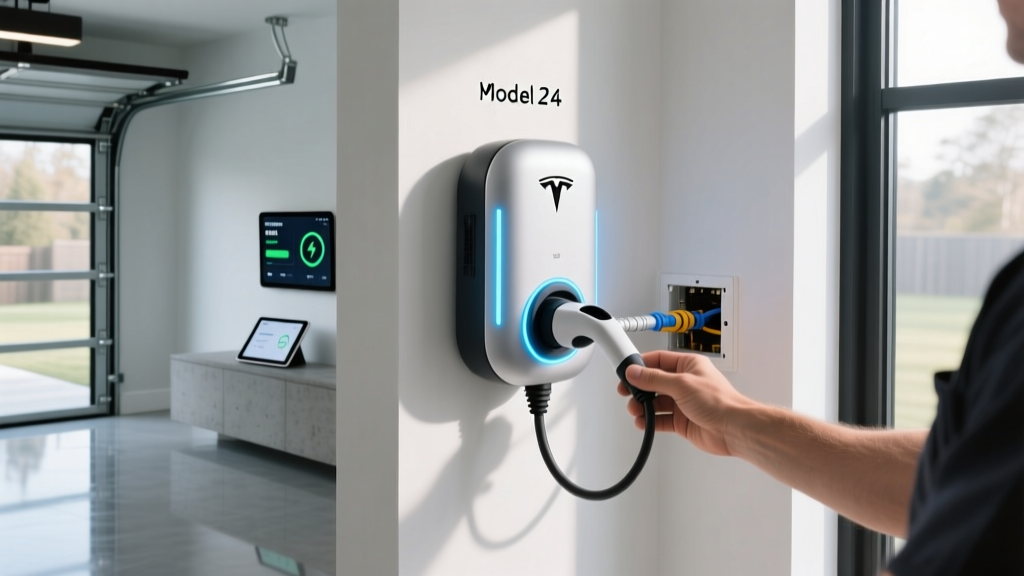
Tesla Wall Connector (Gen 3) — NACS Native
- Power output: Up to 11.5 kW (48A)
- Connector: NACS (native — no adapter needed for Tesla or NACS-equipped EVs)
- Cable length: 24 feet
- Smart features: Wi-Fi, OTA updates, load sharing between multiple units, Tesla app integration
- Price: ~$475
- Best for: Tesla owners and anyone with a native NACS-port EV. Excellent reliability and integration.
ChargePoint Home Flex — NACS or J1772
- Power output: Up to 12 kW (50A) — adjustable down to match circuit
- Connector: Available in NACS or J1772; NACS version launched 2024
- Cable length: 23 feet
- Smart features: Wi-Fi, Alexa/Google Home, ChargePoint app scheduling, energy reports
- Price: ~$699 (NACS version)
- Best for: Multi-EV households (one NACS, one CCS vehicle) — buy two connector variants.
Emporia Vue Level 2 Charger — Budget Pick
- Power output: Up to 11.5 kW (48A)
- Connector: J1772 (use NACS adapter) or NACS (newer SKU)
- Cable length: 24 feet
- Smart features: Wi-Fi, Emporia energy monitoring ecosystem integration, scheduling
- Price: ~$399
- Best for: Budget-conscious buyers who want smart features without the premium.
Grizzl-E Smart — Rugged Outdoor Pick
- Power output: Up to 11.5 kW (48A), dip-switch adjustable
- Connector: J1772 (NACS adapter available separately)
- Cable length: 24 feet
- Smart features: OCPP-compatible, works with various energy management platforms
- Price: ~$549
- Best for: Harsh climates — IP67 rated, operates from -40°F to 122°F. Built in Canada.
Charging Cost Per Mile: Home vs. Public vs. Gas
One of the strongest economic arguments for EV ownership is lower per-mile energy cost — but the savings depend heavily on where and when you charge.
| Charging Scenario | Rate ($/kWh) | Cost Per Mile | Annual Cost (12,000 mi) |
|---|---|---|---|
| Home — off-peak utility rate | $0.08–$0.12 | $0.023–$0.034 | $276–$408 |
| Home — standard residential rate | $0.14–$0.18 | $0.040–$0.051 | $480–$612 |
| Public Level 2 (ChargePoint, etc.) | $0.20–$0.35 | $0.057–$0.100 | $684–$1,200 |
| DC Fast — Tesla Supercharger (avg.) | $0.25–$0.40 | $0.071–$0.114 | $852–$1,368 |
| DC Fast — Electrify America / EVgo | $0.35–$0.55 | $0.100–$0.157 | $1,200–$1,884 |
| Gas car (28 MPG combined, $3.40/gal) | $3.40/gal | $0.121 | $1,452 |
| Gas car (22 MPG combined, $3.40/gal) | $3.40/gal | $0.155 | $1,860 |
Home off-peak charging delivers the lowest per-mile cost — often 75–80% cheaper than a comparable gas vehicle. Even DC fast charging on the road is typically cheaper per mile than gasoline, though the gap narrows significantly with premium-priced networks. According to fueleconomy.gov, most 2026 EVs achieve 100–130 MPGe combined, translating to 3.0–4.0 miles per kWh.
- If you have a garage or dedicated parking spot: Install a Level 2 charger and set your vehicle to charge during off-peak hours (typically 10 PM – 6 AM, depending on your utility). This alone can cut annual fuel costs to under $400.
- If you rely on public charging: Seek workplace Level 2 charging (often free or subsidized) and use DC fast chargers only for road trips. Subscription plans from networks like EVgo or Electrify America can reduce per-kWh rates by 15–25%.
- If you drive a PHEV: Charge nightly at home on Level 1 (sufficient for 25–40 miles of electric range) and avoid gas entirely for commutes.
Supercharger Access vs. Other DC Fast Networks: What NACS Means for Road Trips
The Supercharger network's main advantage isn't speed — several competing networks offer 350 kW chargers — it's reliability and coverage density. Tesla's stalls have consistently maintained 97%+ uptime, while CCS networks like Electrify America have historically struggled with broken connectors, payment failures, and lower uptime rates.
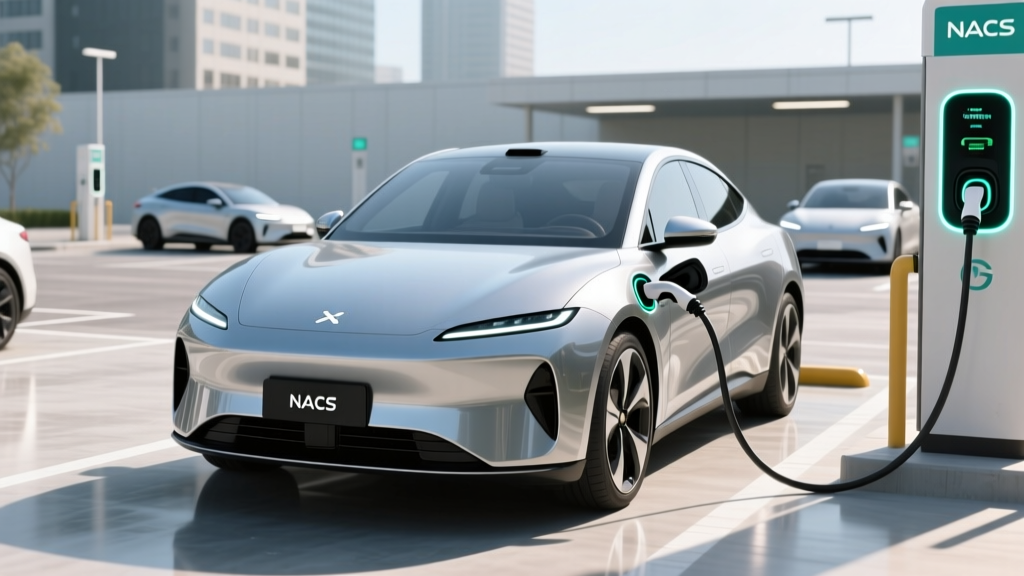
For non-Tesla EVs with NACS access, the practical road-trip experience is now nearly identical to a Tesla owner's: navigate to a Supercharger on your vehicle's built-in navigation (or the Tesla app for some adapter users), plug in, and charging begins automatically with payment linked to your account.
However, not all Supercharger stalls are open to non-Tesla vehicles. Tesla designates specific stalls at each station for non-Tesla access — typically marked in the Tesla app. In high-traffic corridors, this can mean fewer available stalls during peak travel times. Plan accordingly and have a backup DC fast charging option (Electrify America, EVgo) along your route.
Frequently Asked Questions
How much does it cost to install a home EV charger?
A straightforward Level 2 installation (panel nearby, no upgrade needed) typically runs $900–$2,400 including equipment, electrician labor, and permit. If your home needs a panel upgrade (100A to 200A) or has a long wire run from the panel to the garage, costs can range from $3,400 to $9,400. Always get a load calculation from a licensed electrician before committing.
How fast will each charging level add range?
Level 1 (120V) adds 3–5 miles per hour. Level 2 (240V, 48A) adds approximately 35–45 miles per hour for a typical EV. DC fast charging at a Supercharger (150–250 kW) can add 150–200+ miles in 15–20 minutes at peak rate, though speeds taper significantly above 80% SoC. Exact rates depend on your vehicle's battery size and charge acceptance curve.
Which connector/charger is compatible with my EV?
Check your vehicle's charge port: if it's the smaller, round NACS connector (Tesla-style), you can plug directly into Superchargers and NACS-equipped home chargers. If it's the larger CCS1 connector (two DC pins below a J1772 inlet), you'll need a CCS-to-NACS adapter for Supercharger access. CHAdeMO vehicles (older Nissan Leaf) have very limited Supercharger compatibility. Refer to the connector compatibility table above for your specific automaker.
How much does charging cost per mile vs gas?
Home charging at off-peak rates costs approximately $0.025–$0.035 per mile — roughly 75–80% less than a 28 MPG gas car at $3.40/gallon ($0.12/mile). Even public DC fast charging at $0.35/kWh works out to about $0.10/mile, still cheaper than most gas vehicles. The savings are most dramatic when you charge at home overnight.
What electrical upgrades might I need?
The most common upgrade is a panel replacement from 100A to 200A service, costing $1,500–$4,000. You may also need additional breaker slots, aluminum-to-copper wiring updates (in older homes), or a sub-panel in the garage if your main panel is far away. A licensed electrician's load calculation will determine exactly what's required. Some utilities offer rebates for panel upgrades tied to EV adoption — check with your local provider.
Can I use a Supercharger if my EV has a CCS port and I buy a third-party adapter?
Yes, but with caveats. Tesla officially supports specific non-Tesla vehicles through their "Open Supercharging" program. Third-party adapters may work physically, but Tesla's software may restrict charging to vehicles on their approved list. Always verify your specific make, model, and model year against Tesla's supported vehicle list before relying on an adapter for a road trip.
Will using a CCS-to-NACS adapter void my vehicle's battery warranty?
Manufacturer-provided adapters (from Ford, Rivian, GM, etc.) will not affect your warranty. Third-party adapters are a grayer area — while the Magnuson-Moss Warranty Act prevents blanket warranty denials, a manufacturer could deny a battery claim if they demonstrate the adapter caused damage. Stick with OEM adapters when available.