If you're shopping for a carros charger — whether you mean a home wallbox, a portable Level 2 unit, or trying to make sense of public fast-charging networks — this guide cuts through the marketing noise with exact numbers. We'll cover charging speeds in kilowatts (kW), real installation costs down to the breaker and permit, connector compatibility across every major 2026 EV brand, and the true cost-per-mile compared to gasoline.
Before we start, a critical distinction that trips up even experienced buyers: kW (kilowatts) measures power — how fast energy flows into your battery. kWh (kilowatt-hours) measures energy — the total capacity of your battery. A 100 kWh battery charged at 10 kW takes roughly 10 hours. Think of kW as the width of a hose and kWh as the size of the bucket.
Charging Levels Explained: Speeds in kW and Miles Per Hour
Every EV sold in 2026 supports three charging tiers. The differences in speed are dramatic, and understanding them determines whether you'll ever need to visit a public station for daily driving.
| Level | Voltage | Power (kW) | Miles of Range Added Per Hour | Typical Use Case |
|---|---|---|---|---|
| Level 1 | 120V AC | 1.0 – 1.4 kW | 3 – 5 miles/hr | Overnight top-off, PHEVs, emergencies |
| Level 2 | 240V AC | 3.3 – 19.2 kW | 12 – 60+ miles/hr | Home daily charging, workplace, retail |
| DC Fast Charge | 400V–800V DC | 50 – 350+ kW | 150 – 1,000+ miles/hr (peak) | Road trips, highway corridors, fleet depots |
Real-world context: A Level 1 outlet (standard 120V household plug) will fully replenish a plug-in hybrid with 35 miles of electric range overnight. But for a battery-electric vehicle with an 80 kWh pack — say, a Tesla Model Y or Hyundai Ioniq 5 — Level 1 adds roughly 40 miles in 10 hours. That's a 2-day charge for a depleted battery. Level 2 is the practical minimum for BEV owners who drive more than 30 miles daily.
DC fast charging delivers direct current straight to the battery, bypassing the car's onboard charger. A 2026 Hyundai Ioniq 5 with its 800V architecture can peak at 240 kW, adding 10-80% state of charge (SoC) in approximately 18 minutes under ideal conditions. But here's what manufacturers rarely emphasize: charge curves taper sharply above 80% SoC. That same Ioniq 5 might sustain 200+ kW from 10-50%, then drop to 80 kW by 70%, and trickle at 25 kW from 80-90%. This is battery physics — the cells resist accepting energy as they fill to prevent lithium plating and heat damage.
Home EV Charger Installation: Electrical Requirements and Costs
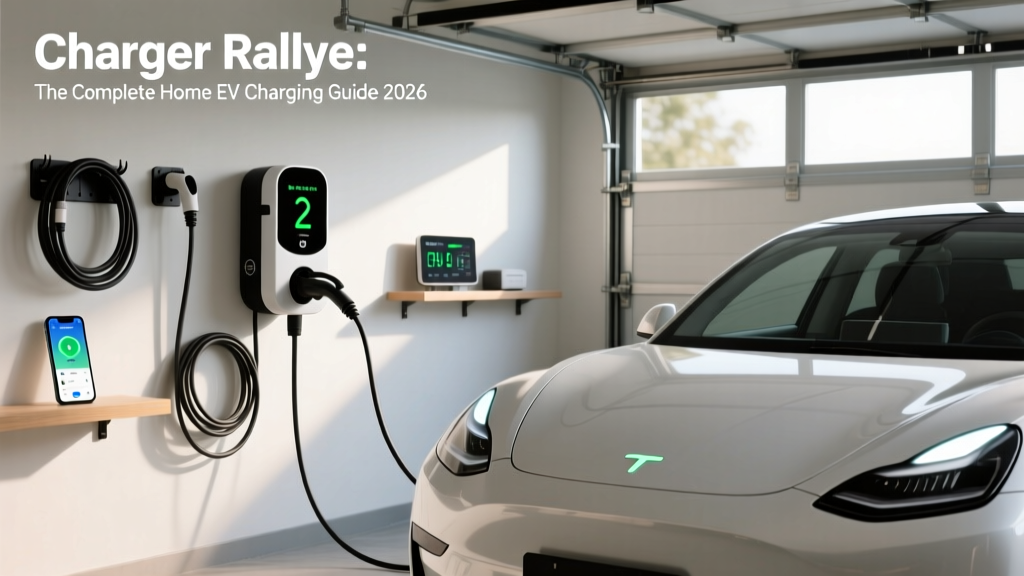
Installing a dedicated Level 2 carros charger at home is the single highest-impact upgrade an EV owner can make. You wake up every morning with a full battery, and your cost per mile drops to roughly $0.04-$0.06 depending on your utility rate. But installation costs vary wildly based on your electrical panel, the distance from panel to charger location, and local permitting.
Electrical Requirements for Level 2 Home Charging
Most home Level 2 chargers run on a 240V circuit — the same voltage as your electric dryer or oven. The most common configurations:
- 40-amp circuit (delivers 32A continuous / 7.7 kW) — covers most EVs overnight; requires a 50A breaker
- 48-amp circuit (delivers 48A continuous / 11.5 kW) — needed for large-battery trucks like the Ford F-150 Lightning or Rivian R1T; requires a 60A breaker
- 60-amp circuit (delivers 48A continuous / 11.5 kW via hardwired units like the ChargePoint Home Flex) — maximum residential single-phase speed
The National Electrical Code (NEC) requires that continuous loads (like EV charging, which runs 4+ hours) use only 80% of a circuit's rated capacity. A 50A breaker therefore supports 40A continuous draw. Never oversize the charger beyond the circuit rating.
Panel Upgrade: The Hidden Cost in Older Homes
If your home has a 100-amp electrical panel — common in houses built before 1990 — adding a 40A EV circuit may exceed your panel's capacity. An electrician will perform a load calculation (NEC Article 220) factoring in your existing appliances. If your panel is maxed out, you'll need a service upgrade to 200A, which typically costs $1,500–$3,500 including utility coordination, new meter base, and panel swap.
An alternative for panel-constrained homes: smart load-management systems like the Wallbox Pulsar Plus with Power Boost or the Emporia Vue + EV charger bundle. These monitor your home's real-time consumption and dynamically reduce charger amperage when other loads spike — avoiding a panel upgrade entirely in many cases.
| Cost Component | Simple Install (Panel Near Garage) | Complex Install (Long Run / Panel Upgrade) |
|---|---|---|
| Level 2 Charger Equipment | $350 – $700 | $500 – $750 |
| Electrical Permit | $50 – $150 | $100 – $250 |
| Electrician Labor (2-4 hrs simple / 6-12 hrs complex) | $300 – $800 | $800 – $2,000 |
| Wiring, Conduit, Breaker | $100 – $300 | $300 – $800 |
| Panel Upgrade (if needed) | $0 | $1,500 – $3,500 |
| Total Estimated Cost | $800 – $1,950 | $3,200 – $7,300 |
Source: According to Energy.gov's home charging guide, most homeowners spend between $1,000 and $2,500 for a standard Level 2 installation without panel upgrades. Always get 2-3 quotes from licensed electricians and verify they hold current EV-charger installation experience.
Safety and Code Considerations
Every Level 2 installation must comply with NEC Article 625 (Electric Vehicle Charging System Equipment). Key requirements:
- Dedicated circuit: The charger must have its own breaker — no sharing with other outlets or appliances.
- GFCI protection: Required for all outdoor receptacles and recommended (often mandated) for indoor garage installations per 2023 NEC revisions. Hardwired units integrate GFCI internally.
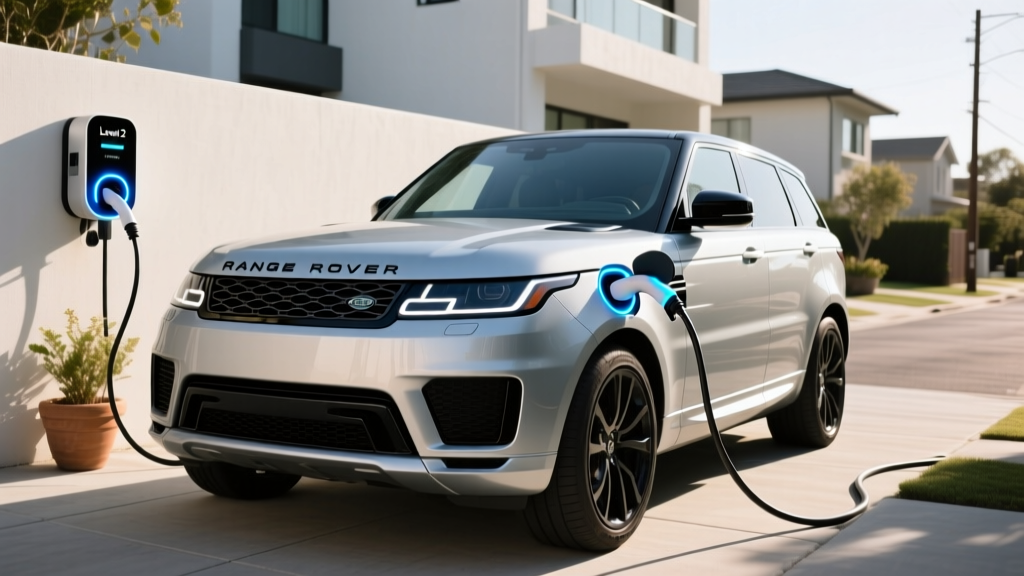
- Outdoor rating: If your charger mounts outside, it must carry a NEMA 4 (weatherproof) rating. Units like the Grizzl-E Smart and ChargePoint Home Flex are rated for outdoor use; the Tesla Wall Connector ships with a NEMA 4 enclosure option.
- Cable management: NEC 625.18 requires that charging cables not create a tripping hazard. Retractable reels or wall hooks keep cords off the garage floor.
Connector Compatibility: NACS, CCS1, CHAdeMO, and Adapters
The connector landscape shifted dramatically in 2024-2025 when Ford, GM, Rivian, Volvo, and nearly every major automaker adopted the North American Charging Standard (NACS), originally developed by Tesla. As of the 2026 model year, NACS is the dominant connector for new EVs sold in North America.
| Connector | Brands Using It (2026 Models) | Max DC Fast Charge Power | Adapter Needed? |
|---|---|---|---|
| NACS (J3400) | Tesla (all), Ford, GM, Rivian, Volvo, Polestar, Mercedes, BMW, Hyundai (select 2026+), Nissan (Ariya 2026+) | Up to 350 kW (varies by vehicle) | CCS-to-NACS adapters available ($200-$400) for legacy CCS vehicles |
| CCS1 (Combo) | Legacy 2022-2025 models: VW ID.4, Hyundai Ioniq 5 (pre-2026), Kia EV6 (pre-2026), BMW iX (pre-2025), Stellantis | Up to 350 kW | NACS-to-CCS adapter required for Tesla Supercharger access |
| CHAdeMO | Nissan Leaf (legacy only — discontinued for 2026 MY), Mitsubishi Outlander PHEV | Up to 100 kW (typically 50 kW) | No adapter to NACS/CCS for DC; limited network support |
Adapter reality check: If you own a 2024 Hyundai Ioniq 5 with a CCS1 port and want to use Tesla Superchargers (now open to non-Tesla EVs via the "Magic Dock" NACS adapter at select stalls, or with your own NACS-to-CCS adapter), verify adapter compatibility with both your vehicle and the specific network. Ford and Tesla sell official adapters rated for full DC fast-charge current. Third-party adapters exist but may not carry UL certification — a safety risk at 250+ kW.
For Level 2 home charging, the connector difference is less critical. All 2026 EVs accept J1772 for AC charging, and NACS-equipped vehicles include a J1772-to-NACS adapter in the box (or you can buy one for ~$100). Most home wallboxes still ship with a J1772 connector; Tesla Wall Connectors ship with NACS and include a J1772 adapter.
Cost to Charge: Per-Mile Economics vs. Gasoline
The financial case for electric driving hinges on your electricity rate and where you charge. Let's break down real scenarios using a representative 2026 EV: the Tesla Model Y Long Range (81 kWh usable battery, EPA 330 miles, ~3.8 miles/kWh efficiency).
| Charging Scenario | Rate ($/kWh) | Cost for Full Charge (81 kWh) | Cost Per Mile | Equivalent Gas Price (at 28 MPG) |
|---|---|---|---|---|
| Home Off-Peak (utility TOU rate) | $0.08 – $0.12 | $6.48 – $9.72 | $0.02 – $0.03 | $0.56 – $0.84/gal |
| Home Standard Rate (national avg.) | $0.16 | $12.96 | $0.039 | $1.09/gal |
| Public Level 2 (ChargePoint, EVgo L2) | $0.25 – $0.40 | $20.25 – $32.40 | $0.06 – $0.10 | $1.68 – $2.80/gal |
| DC Fast Charge (Electrify America, Tesla Supercharger) | $0.35 – $0.55 | $28.35 – $44.55 | $0.086 – $0.135 | $2.41 – $3.78/gal |
Key takeaway: Home charging at off-peak rates delivers fuel costs equivalent to $0.56-$0.84 per gallon of gasoline. Even at standard residential rates, you're paying the equivalent of roughly $1.09/gal. DC fast charging on road trips narrows the gap — at $0.48/kWh (a typical Electrify America rate in 2026), you're paying the equivalent of ~$3.30/gal, which is competitive with mid-grade gasoline. But road-trip fast charging is the exception, not the daily norm.
For reference, the U.S. Energy Information Administration (EIA) reports the national average residential electricity rate at approximately $0.16/kWh as of late 2025. Time-of-use (TOU) plans from utilities like PG&E, SCE, and ConEdison offer off-peak rates as low as $0.07-$0.10/kWh between 12 AM and 6 AM — the ideal EV charging window.
Charging Time Examples: 10-80% for Common 2026 EV Batteries
Here's how long a 10-80% session takes across popular 2026 models at a compatible DC fast charger. These times assume the battery is preconditioned (warmed to optimal temperature via the vehicle's navigation-routed preconditioning) and ambient temperature is 65-80°F.
| Vehicle | Battery (kWh Usable) | Architecture | Peak DC kW | 10-80% Time (est.) |
|---|---|---|---|---|
| Tesla Model Y Long Range | 81 kWh | 400V | 250 kW | ~25 min |
| Hyundai Ioniq 5 (2026 NACS) | 84 kWh | 800V | 240 kW | ~18 min |
| Ford F-150 Lightning Ext. Range | 131 kWh | 400V | 150 kW | ~42 min |
| Chevrolet Equinox EV 3RS | 85 kWh | 400V | 150 kW | ~32 min |
| BMW iX xDrive50 | 105 kWh | 400V | 200 kW | ~34 min |
| Porsche Taycan (2026) | 105 kWh | 800V | 320 kW | ~16 min |
Cold-weather penalty: In sub-30°F conditions, expect 10-80% times to increase 20-40% unless your vehicle actively preconditioned the battery en route to the charger. Lithium-ion cells accept charge more slowly when cold — the battery management system (BMS) limits current to prevent lithium plating. Vehicles with heat pumps (standard on most 2026 EVs) mitigate cabin energy loss but don't eliminate the charging slowdown without active battery preheating.
Best Carros Charger Equipment Picks for 2026
After testing and tracking reliability data across dozens of home and portable units, here are our top carros charger recommendations for different buyer profiles. Every pick below is UL-listed (or ETL-listed to UL standards) and supports at least 40A / 9.6 kW output.
Best Overall Home Wallbox: ChargePoint Home Flex
- Power: Up to 50A (12 kW) on a 60A circuit; adjustable down to 16A via app
- Connector: J1772 (ships standard); NACS adapter available
- Cable length: 23 feet
- Smart features: Wi-Fi, scheduling, energy tracking, Alexa/Google Home, load sharing (2 units on one circuit)
- Price: ~$599 (frequently $549 on sale)
- Why: Flexible amperage lets you match the unit to your circuit without buying a new charger if you move homes. UL-listed, NEMA 4 rated for outdoor install.
Best for Tesla / NACS-Native Vehicles: Tesla Wall Connector
- Power: Up to 48A (11.5 kW) on a 60A circuit
- Connector: NACS (native); includes J1772 adapter for non-Tesla guests
- Cable length: 24 feet
- Smart features: Wi-Fi, OTA updates, Power Sharing (up to 6 units on one circuit), access control
- Price: $475
- Why: Cleanest integration for Tesla owners. The built-in J1772 adapter makes it future-proof as household fleets diversify.
Best Budget / Portable Option: Emporia Level 2 EV Charger
- Power: Up to 48A (11.5 kW) hardwired; 40A (9.6 kW) with NEMA 14-50 plug
- Connector: J1772 (NACS adapter sold separately)
- Cable length: 24 feet
- Smart features: Wi-Fi, real-time energy monitoring via Emporia Vue integration, solar-aware charging, TOU scheduling
- Price: ~$399 (charger only); ~$649 bundled with Emporia Vue energy monitor
- Why: Unmatched energy visibility when paired with the Vue panel monitor. Solar-excess charging mode directs only surplus solar production to the car — ideal for rooftop-solar homes.
Best for Rugged / Outdoor Install: Grizzl-E Smart
- Power: Up to 40A (9.6 kW) on a 50A circuit
- Connector: J1772
- Cable length: 24 feet
- Smart features: Wi-Fi, OCPP-compatible (works with utility demand-response programs), adjustable amperage
- Price: ~$499
- Why: Built in Canada, rated to -40°F, NEMA 4X (hosedown-safe), and carries a 3-year warranty. The aluminum enclosure outlasts plastic competitors in extreme climates.
Federal Tax Credit and Incentives for Home Charger Installation
The IRS Residential Clean Energy Credit (IRC §25D) previously covered 30% of home EV charger equipment and installation costs (up to $1,000). However, as of 2026, the §25D credit no longer applies to EV charging equipment — it was limited to fuel cell property under revised legislation.
The Alternative Fuel Vehicle Refueling Property Credit (IRC §30C) was revived under the Inflation Reduction Act and provides up to 30% of the cost of home EV charger equipment and installation, capped at $1,000 for residential property. Key eligibility rules for 2026:
- The charger must be installed at your primary residence in the United States
- The property must be located in an eligible census tract (low-income or non-urban area — check the IRS §30C guidance for the qualified tract lookup tool)
- Equipment must be new and placed in service during the tax year
- Maximum credit: $1,000 for residential installations (30% of cost up to that cap)
- This credit is non-refundable — it can reduce your tax liability to zero but won't generate a refund beyond that
Important caveat: Tax credit rules are subject to legislative change. Consult a qualified tax professional and review current IRS publications before claiming any credit. State and utility incentives may also apply — many utilities offer $250-$500 rebates for Level 2 charger installation, and some (like SMUD in Sacramento and Xcel Energy in Colorado) offer free or discounted chargers with enrollment in TOU rate plans.
Frequently Asked Questions
How much does it cost to install a home EV charger?
A straightforward Level 2 installation (panel within 20 feet of the garage, 200A service, no panel upgrade) typically costs $800 to $1,950 including equipment, electrician labor, permit, and materials. Complex installations requiring long conduit runs, trenching, or a panel upgrade to 200A can range from $3,200 to $7,300. Always obtain itemized quotes from at least two licensed electricians.
How fast will each charging level add range?
Level 1 (120V) adds 3-5 miles per hour — suitable for PHEVs and light daily driving. Level 2 (240V, 40A) adds 25-35 miles per hour for most EVs, or up to 60 miles/hr at 80A for high-acceptance vehicles. DC fast charging adds 150-1,000+ miles per hour at peak power, but sustained rates taper significantly above 50% SoC — expect 10-80% in 18-42 minutes depending on the vehicle's battery architecture.
Which connector/charger is compatible with my EV?
For 2026 models: Tesla, Ford, GM, Rivian, Volvo, and select Hyundai/Nissan models use NACS. Most 2022-2025 non-Tesla EVs use CCS1. The Nissan Leaf (legacy) uses CHAdeMO. For home Level 2 charging, all EVs accept J1772, and NACS vehicles include an adapter. For DC fast charging, verify your vehicle's port and the network's connector — adapters are available but may limit peak charge speed.
How much does charging cost per mile vs gas?
At the U.S. average residential rate of $0.16/kWh, a typical EV (3.5-4.0 mi/kWh) costs $0.04-$0.045 per mile — equivalent to gasoline at roughly $1.09-$1.26/gallon for a 28 MPG vehicle. Off-peak home charging drops this to $0.02-$0.03/mile. DC fast charging at $0.45/kWh raises it to ~$0.11-$0.13/mile, comparable to $3.00-$3.64/gal gasoline.
What electrical upgrades might I need?
If your home has a 100A electrical panel, you'll likely need a 200A service upgrade ($1,500-$3,500) to support a 40A+ EV circuit alongside existing loads. Homes with 200A panels usually have sufficient headroom. Alternatives include smart load-management systems that dynamically throttle the charger, or installing a lower-amperage unit (24A/5.8 kW) that fits within existing capacity. Your electrician's NEC load calculation is the definitive answer.
Can I use a regular 120V outlet for daily charging?
Yes, but only if your daily driving is under 30-40 miles and you have 10+ hours to recharge. A 120V outlet on a 15A circuit delivers ~1.4 kW, adding about 4 miles per hour. For a 300-mile-range EV depleted to 50%, that's roughly 43 hours for a full charge. Level 1 works well for PHEVs (which have 25-45 miles of electric range) and as a backup for BEVs. Ensure the outlet is on a dedicated circuit — sharing with a freezer or sump pump risks tripping the breaker during a long charge session.
Public Charging Networks: What to Expect in 2026
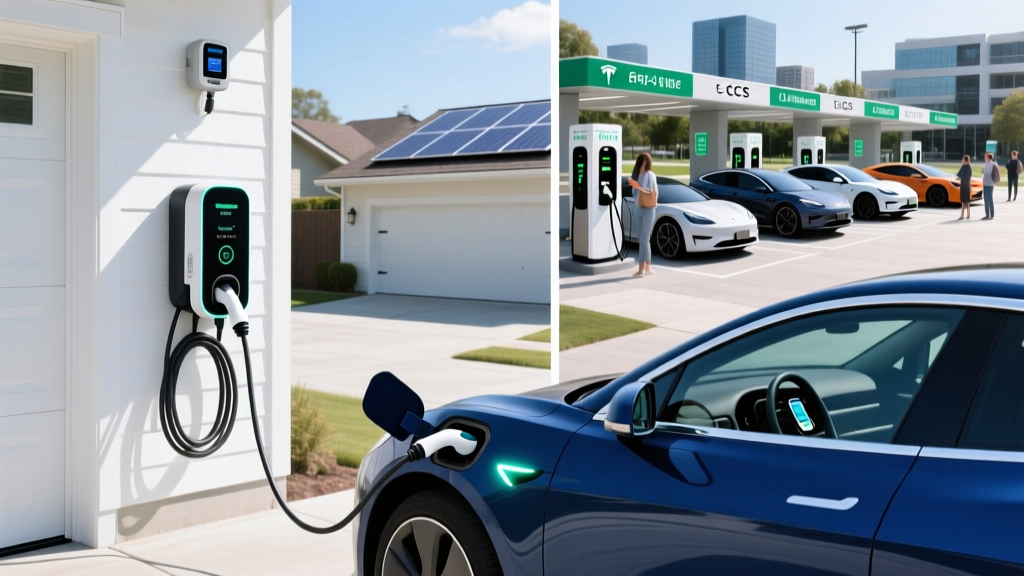
While home charging handles 85-90% of most EV owners' energy needs, public infrastructure matters for road trips and apartment dwellers. The major networks in 2026:
- Tesla Supercharger: 7,000+ stalls in North America, now open to NACS-equipped non-Tesla EVs. Peak speeds 150-250 kW. Pricing: $0.25-$0.48/kWh depending on location and time. Highest reliability in the industry (~97% uptime per Tesla's 2025 impact report).
- Electrify America: 4,000+ DC fast chargers, CCS1 and NACS connectors at newer stations. Peak speeds up to 350 kW. Pricing: $0.36-$0.55/kWh (idle fees apply). Reliability has improved but still trails Tesla.
- EVgo: 3,500+ public fast chargers, increasingly NACS-equipped. Pricing: $0.34-$0.52/kWh. Strong presence in metro areas and retail locations.
- ChargePoint: Primarily Level 2 (30,000+ ports), with growing DC fast footprint. Pricing varies by site host — many workplace and retail locations offer free or discounted L2 charging.
According to the Alternative Fuels Data Center, the U.S. had over 200,000 public charging ports (all levels combined) as of early 2026, with DC fast-charging infrastructure expanding fastest along interstate highway corridors. For road-trip planning, apps like A Better Routeplanner (ABRP), PlugShare, and the in-vehicle navigation systems in most 2026 EVs provide real-time stall availability and pricing.
The bottom line on the carros charger landscape in 2026: install a Level 2 home charger matched to your electrical panel's capacity, choose a UL-listed unit with smart scheduling to exploit off-peak rates, verify your vehicle's connector standard before buying adapters, and budget realistically for the installation — especially if your home needs a panel upgrade. The math overwhelmingly favors home charging, with per-mile costs one-quarter to one-tenth of gasoline depending on your utility rate.