Understanding the Charging System on a Car: What You Actually Need to Know
The charging system on a car is arguably the single most misunderstood component of EV ownership. Unlike a gas tank that fills in three minutes at any station, an EV's charging ecosystem spans three distinct power levels, multiple connector standards, and home electrical requirements that can range from a simple outlet swap to a full panel upgrade. Yet with the right setup, most EV owners do 80–90% of their charging at home, waking up to a "full tank" every morning for roughly $0.04–$0.06 per mile.
This guide breaks down exactly how each charging level works, what your home's electrical panel can support, which connectors fit which vehicles in 2026, and what you'll actually pay per mile compared to gasoline. We'll use precise numbers — kW for power (charge speed), kWh for energy (battery capacity) — because confusing the two is the most common EV literacy gap we see.
The Three Charging Levels: Speed, Power, and Real-World Range Added
Every EV sold in the US accepts one of three charging levels. The difference isn't just speed — it's the fundamental electrical architecture required to deliver it.
| Level | Voltage | Power (kW) | Miles of Range Added/Hour | Typical Use Case |
|---|---|---|---|---|
| Level 1 | 120V AC | 1.0–1.9 kW | 3–5 mi/hr | Overnight top-up, PHEVs, low-mileage drivers |
| Level 2 | 240V AC | 3.3–19.2 kW | 12–75 mi/hr | Home daily charging, workplace, shopping centers |
| DC Fast Charge | 400–900V DC | 50–350 kW | 150–1,200+ mi/hr | Road trips, highway corridors, quick top-ups |
Level 1 uses a standard 120V household outlet (NEMA 5-15). Every EV ships with a Level 1 cordset. It's slow — a 75 kWh battery would take 50+ hours from empty — but for a plug-in hybrid with a 15–40 mile electric range or a daily commute under 30 miles, it can suffice.
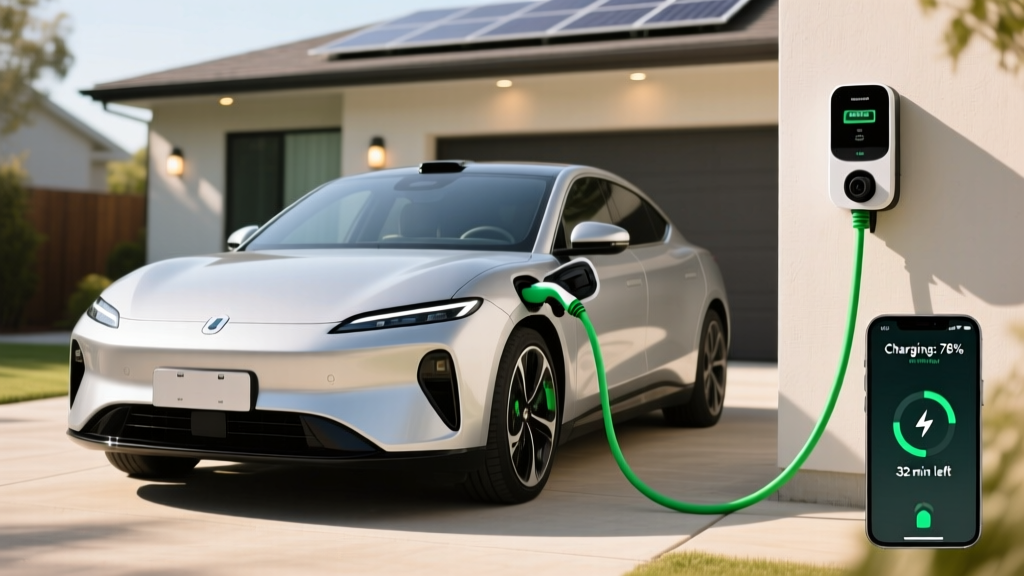
Level 2 requires a 240V circuit, identical to what powers an electric dryer or oven. This is where the real home charging happens. A 48-amp (11.5 kW) Level 2 station can add roughly 40–45 miles of range per hour on a typical EV consuming ~275 Wh/mi. Most EV owners charge from 20% to 80% overnight in 4–6 hours.
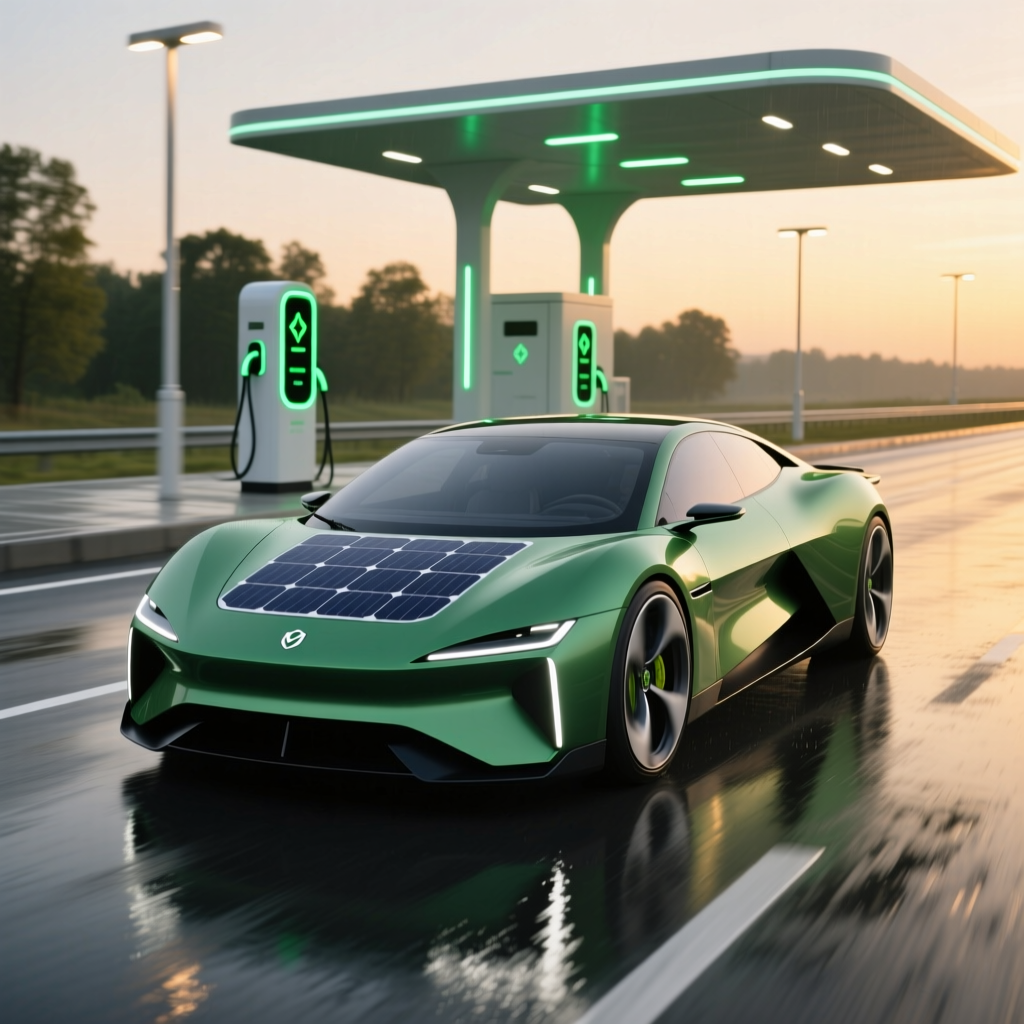
DC Fast Charging bypasses the car's onboard charger and feeds high-voltage DC directly into the battery pack. Peak rates of 250–350 kW on 800V architectures (Hyundai Ioniq 5, Kia EV6, Porsche Taycan) can push a 10–80% charge in 18 minutes. However, sustained power is always lower than peak — the charge curve tapers significantly above 80% SoC to protect battery health. Expect a realistic average of 100–150 kW across a 10–80% session on a 350 kW-capable vehicle.
Home Charger Installation: Electrical Requirements, Costs, and Panel Reality
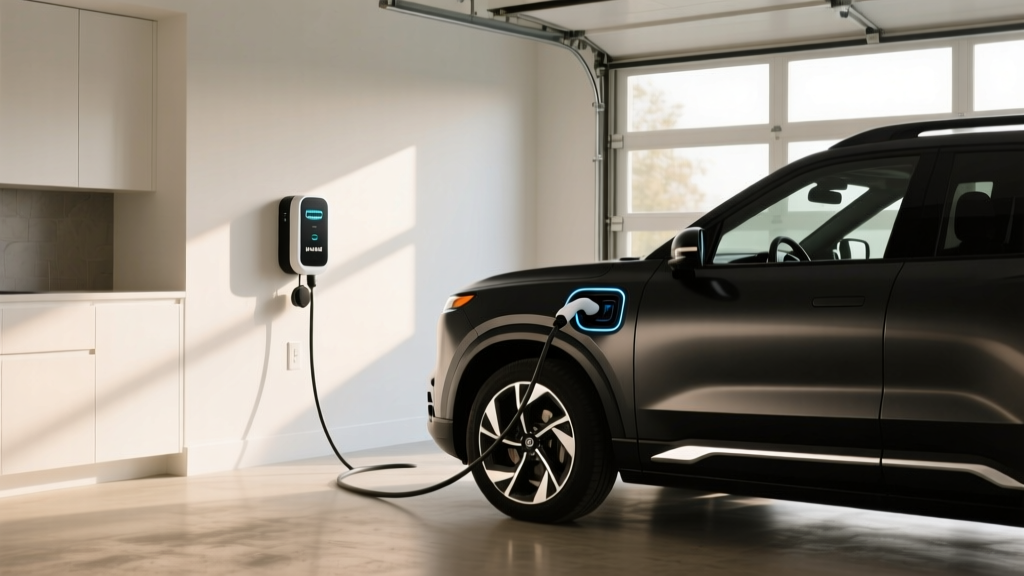
Installing a Level 2 home charger isn't just buying a wall box — it's an electrical project. The total cost depends on your panel capacity, the distance from panel to charger location, and local permit fees.
Electrical Requirements
A typical Level 2 charger draws 32–48 amps continuous. The National Electrical Code (NEC) requires circuits to be rated at 125% of continuous load, meaning:
- A 32-amp charger (7.7 kW) needs a 40-amp breaker on a 240V circuit.
- A 40-amp charger (9.6 kW) needs a 50-amp breaker.
- A 48-amp charger (11.5 kW) needs a 60-amp breaker.
Your home's electrical panel must have both the physical breaker slots available and the total amperage capacity to support the new load. A 200-amp panel can usually accommodate a 48-amp EV circuit. A 100-amp panel — common in homes built before the 1990s — may require a panel upgrade or a smart load-management device that throttles the charger when other high-draw appliances are running.
Installation Cost Breakdown
| Component | Low-End | Typical | High-End / Complex |
|---|---|---|---|
| Level 2 Charger Equipment | $250 (32A basic) | $400–$600 (40–48A smart) | $650–$800 (48A premium/Wi-Fi) |
| Electrician Labor (run 240V line) | $300 (short run, easy access) | $500–$900 (20–40 ft run) | $1,200–$2,000 (long run, conduit, trenching) |
| Permit & Inspection | $50 | $100–$250 | $250–$500 (some municipalities) |
| Panel Upgrade (if needed) | $0 (sufficient capacity) | $0 | $1,500–$3,500 (100A → 200A upgrade) |
| Total | $600 | $1,000–$1,750 | $2,500–$6,800 (with panel upgrade) |
The single biggest cost variable is panel capacity. If your home has a 200-amp panel with spare breaker slots and your garage is close to the panel, you're looking at the lower end. If you need a panel upgrade to 200 amps, that alone can add $1,500–$3,500. Some utilities offer rebates for panel upgrades that support EV charging — check with your local provider.
A lower-cost alternative: some EVs and chargers support load-sharing software (e.g., Enel X JuiceBox's Smart Grid feature, or Tesla's built-in load management with Powerwall). These systems monitor your home's total draw and reduce charger amperage when other appliances activate, potentially avoiding a panel upgrade entirely.
Connector Compatibility: NACS, CCS1, and CHAdeMO in 2026
The connector landscape has shifted dramatically. As of 2026, the North American Charging Standard (NACS) — originally developed by Tesla — has become the dominant connector, adopted by Ford, GM, Rivian, Hyundai, Kia, BMW, and most major automakers for new models.
| Connector | Brands Using It (New Vehicles) | Notes |
|---|---|---|
| NACS (Tesla / J3400) | Tesla, Ford, GM, Rivian, Hyundai, Kia, BMW, Volvo, Polestar, Mercedes-Benz, Lucid, Fisker | Native access to Tesla Supercharger network; CCS vehicles need adapter |
| CCS1 (Combined Charging System) | Volkswagen ID.4 (legacy), some Stellantis models, older Ford/GM/Hyundai/Kia (2024 and earlier) | Widely available at Electrify America, EVgo; NACS adapter available |
| CHAdeMO | Nissan Leaf (legacy only — discontinued for new US sales) | Declining infrastructure; avoid for new purchases |
If you're buying a new EV in 2026, you will almost certainly get a NACS port. This is a significant advantage because it provides native access to the Tesla Supercharger network — over 28,000 stalls in North America — without an adapter. If you own an older CCS-equipped EV, Tesla sells a CCS-to-NACS adapter (~$250) that unlocks Supercharger access at slightly reduced peak charge rates.
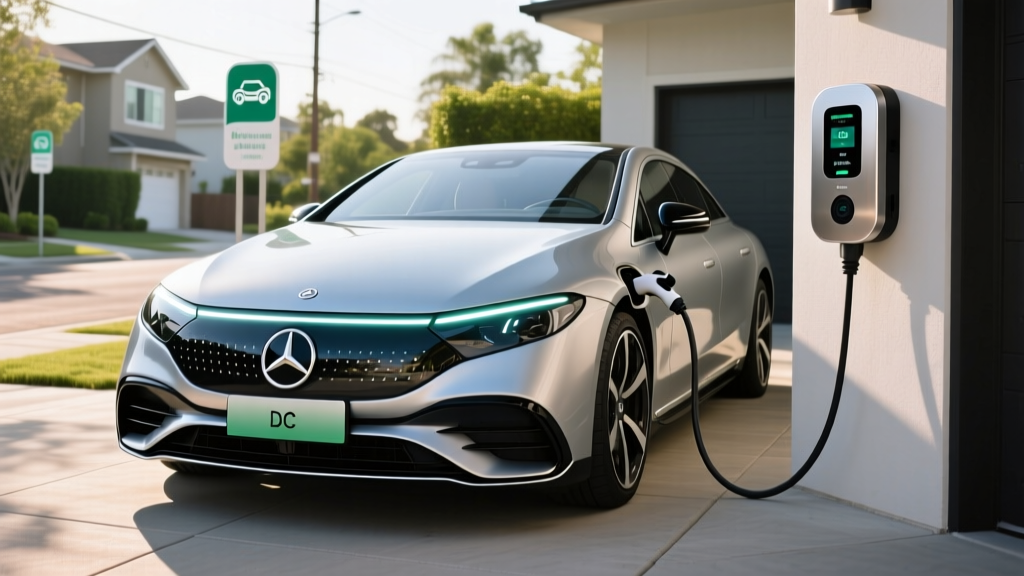
For Level 2 home charging, all vehicles use a J1772 connector (or NACS, which carries J1772 signaling for AC). Most Level 2 home chargers ship with a J1772 plug; if your car has a NACS port, you'll either use a J1772-to-NACS adapter (often included with the car) or buy a NACS-terminated home charger like the Tesla Wall Connector.
Charging Cost Per Mile: Home vs. Public vs. Gasoline
The economic case for an EV hinges on charging costs. Let's compare real numbers using the national average electricity rate and gasoline price.
| Scenario | Rate | Vehicle Efficiency | Cost Per Mile |
|---|---|---|---|
| Home Level 2 (national avg electricity) | $0.17/kWh | 3.5 mi/kWh (285 Wh/mi) | $0.049/mi |
| Home Level 2 (off-peak / time-of-use) | $0.09/kWh | 3.5 mi/kWh | $0.026/mi |
| Public Level 2 (network pricing) | $0.30–$0.49/kWh | 3.5 mi/kWh | $0.086–$0.14/mi |
| DC Fast Charge (public) | $0.35–$0.61/kWh | 3.5 mi/kWh | $0.10–$0.17/mi |
| Gasoline (25 MPG combined) | $3.20/gal | 25 mi/gal | $0.128/mi |
| Gasoline (35 MPG combined) | $3.20/gal | 35 mi/gal | $0.091/mi |
Home charging is the economic sweet spot. At off-peak rates, an EV costs roughly one-fifth to one-quarter what a 25-MPG gas car costs per mile. Even at public DC fast-charging prices, most EVs break even or beat a 25-MPG gas car per mile — though frequent DCFC reliance erodes the savings advantage.
For a driver covering 12,000 miles per year, home-only charging at $0.17/kWh costs about $588 annually versus $1,536 for gas at 25 MPG. That's a $948/year fuel savings — or $1,248/year with off-peak rates. Over a 5-year ownership period, that's $4,740–$6,240 in fuel savings, which significantly offsets the higher purchase price of many EVs.
Important nuance: Public DC fast-charging costs vary enormously by network and location. Electrify America charges $0.48/kWh in many metro areas for non-subscribers but drops to $0.36/kWh with a $4/month Pass+ plan. Tesla Superchargers average $0.25–$0.35/kWh for non-Tesla vehicles. Plan road-trip charging stops strategically using apps like A Better Routeplanner or PlugShare.
Real-World Charging Times: 10–80% for Common Battery Sizes
Charging speed isn't just about peak kW — it's about the charge curve. Batteries accept maximum power only at low states of charge (typically 5–30% SoC), then taper progressively. Here's what to expect in practice:
| Battery (kWh usable) | Example Vehicles | Level 2 @ 11.5 kW (48A) | DCFC Peak 150 kW | DCFC Peak 250 kW | DCFC Peak 350 kW |
|---|---|---|---|---|---|
| ~58 kWh | VW ID.4 Standard, Chevy Equinox EV | ~3.5 hrs | ~28 min | ~22 min | ~18 min (if supported) |
| ~75 kWh | Tesla Model Y LR, Ford Mustang Mach-E ER | ~4.5 hrs | ~34 min | ~25 min | ~20 min (if supported) |
| ~84 kWh | Hyundai Ioniq 5, Kia EV6 (800V) | ~5 hrs | ~38 min | ~28 min | ~18 min (800V architecture) |
| ~100 kWh | Tesla Model S, Rivian R1T Max Pack | ~6 hrs | ~45 min | ~32 min | ~25 min (if supported) |
| ~131 kWh | GMC Hummer EV, Ford F-150 Lightning ER | ~8 hrs | ~58 min | ~42 min | ~35 min |
Key insight: A 350 kW peak rating only matters if the vehicle's battery architecture supports it. 800V platforms (Hyundai/Kia E-GMP, Porsche Taycan, Lucid Air) sustain higher power longer than 400V systems. A 400V vehicle on a 350 kW charger may peak at 150–175 kW and taper quickly — the charger's rating exceeds the car's acceptance rate.
Also critical: battery preconditioning. Most EVs with active thermal management will warm or cool the battery to optimal temperature when you navigate to a fast charger. Tesla, Ford, and Hyundai all do this automatically via the navigation system. Arriving at a DCFC without preconditioning can cut your peak charge rate by 30–50% in cold weather.
2026 Home Charger Equipment Picks
Not all Level 2 chargers are equal. We evaluate based on power output, cable length, smart features, connector type, build quality, and price.
Best Overall: Tesla Wall Connector (J3400/NACS)
- Power: Up to 11.5 kW (48A) on a 60A circuit
- Connector: Native NACS — also includes J1772 adapter in box
- Cable: 24 ft
- Smart Features: Wi-Fi, OTA updates, power sharing between multiple units, access control
- Price: ~$475
- Best for: NACS-equipped vehicles; cleanest install with Tesla ecosystem
Best for CCS / Universal: ChargePoint Home Flex
- Power: Up to 12 kW (50A) on a 60A circuit — adjustable down to 16A
- Connector: J1772 (NACS adapter sold separately)
- Cable: 23 ft
- Smart Features: Wi-Fi, Alexa integration, scheduling, detailed energy reporting, flexible amperage for panel-limited homes
- Price: ~$550–$650
- Best for: CCS vehicles, households with mixed EV brands, panel-limited installs
Budget Smart Pick: Emporia Level 2 EV Charger
- Power: Up to 11.5 kW (48A) on a 60A circuit
- Connector: J1772 (NACS adapter available)
- Cable: 24 ft
- Smart Features: Wi-Fi, energy monitoring, solar integration, time-of-use scheduling, load management with Emporia Vue panel monitor
- Price: ~$350–$400
- Best for: Budget-conscious buyers who want smart features; solar-panel households
Premium / High-Power: Enel X JuiceBox 50
- Power: Up to 12 kW (50A) on a 60A circuit
- Connector: J1772 (25 ft cable)
- Smart Features: Wi-Fi, app-based scheduling, energy tracking, Smart Grid load management, UL-listed for outdoor use
- Price: ~$550
- Best for: Outdoor installations, homes needing load management without panel upgrade
All four chargers are hardwired or plug into a NEMA 14-50 outlet (240V, 50A). Hardwired installs are preferred for 48A+ chargers — a NEMA 14-50 receptacle is only rated for 50A, so a 48A continuous draw is at the limit of plug-in safety margins.
Safety, Electrical Code, and Permit Considerations
EV charging is a significant continuous electrical load. Cutting corners on safety isn't just risky — it can void your homeowner's insurance if an electrical fire traces back to an unpermitted installation.
- Dedicated circuit: Your Level 2 charger must have its own dedicated 240V circuit. Sharing a circuit with other appliances violates NEC and creates a fire hazard.
- GFCI protection: The 2020 NEC (and later) requires GFCI protection for EV charging outlets in garages. Hardwired chargers may be exempt depending on local code interpretation — your electrician will know. Note: some EV owners report nuisance GFCI trips with certain charger/outlet combinations; hardwiring avoids this issue entirely.
- Outdoor rating: If your charger is mounted outside (carport, driveway wall), it must be rated for outdoor use (NEMA 4 or IP65 enclosure). All four picks above carry outdoor ratings.
- Permit and inspection: Nearly all US jurisdictions require an electrical permit for a new 240V circuit. The permit cost is typically $50–$250, and an inspector will verify wire gauge, breaker sizing, grounding, and GFCI compliance. Skipping the permit risks insurance denial and code violations when you sell the home.
- Wire gauge: A 60A circuit requires 6 AWG copper wire (or 4 AWG aluminum). Your electrician will size appropriately. Never undersize wire — it's the most common DIY electrical hazard.
Frequently Asked Questions
How much does it cost to install a home EV charger?
A typical Level 2 home charger installation costs $1,000–$1,750 including equipment ($350–$650), electrician labor ($500–$900), and permit ($50–$250). If your home needs a panel upgrade from 100A to 200A, add $1,500–$3,500. The total range is roughly $600 for a simple install with sufficient panel capacity to $6,800+ for complex installs with panel upgrades and long wire runs.
How fast will each charging level add range?
Level 1 (120V) adds 3–5 miles of range per hour. Level 2 (240V) adds 12–75 miles per hour depending on charger amperage and vehicle efficiency. DC fast charging adds 150–1,200+ miles per hour at peak power, though sustained rates taper above 80% SoC. For daily driving, Level 2 at 11.5 kW comfortably replenishes a full day's driving (30–50 miles) in under 2 hours.
Which connector/charger is compatible with my EV?
If your EV is a 2025–2026 model from Tesla, Ford, GM, Hyundai, Kia, Rivian, or BMW, it likely has a NACS port. Older models (2024 and earlier from non-Tesla brands) typically have CCS1. The Nissan Leaf uses CHAdeMO. For home Level 2 charging, a J1772-terminated charger works with CCS vehicles natively and with NACS vehicles via an adapter (usually included with the car). For DC fast charging, NACS vehicles access Tesla Superchargers natively; CCS vehicles use Electrify America, EVgo, and other networks.
How much does charging cost per mile vs gas?
Home charging at the national average of $0.17/kWh costs roughly $0.05/mile for a typical EV. Off-peak rates can drop this to $0.03/mile. Gasoline at $3.20/gallon in a 25-MPG car costs $0.13/mile. Even public DC fast charging at $0.48/kWh ($0.14/mile) is comparable to or cheaper than gasoline. Home charging is where the dramatic savings live — expect $600–$900/year in fuel savings for a 12,000-mile driver.
What electrical upgrades might I need?
If your home has a 200-amp panel with spare breaker slots, you likely need no upgrades — just a new 240V circuit run from panel to charger location. If you have a 100-amp panel (common in pre-1990 homes), you may need a panel upgrade to 200A ($1,500–$3,500) or a smart load-management device that throttles the charger when total home draw approaches the panel limit. Some utilities offer rebates for panel upgrades that enable EV charging. Always have a licensed electrician evaluate your panel before purchasing equipment.
Does the federal tax credit cover home charger installation?
The IRS residential clean energy credit previously covered EV charger installation, but as of 2026, the §30D credit applies to vehicle purchases only. Some state and utility programs still offer charger installation rebates — check the Alternative Fuels Data Center for state-specific incentives. Charger hardware alone may qualify under the broader Residential Clean Energy Credit if bundled with solar or battery storage installation.