If you've just ordered an EV or are seriously considering one, the phrase "car charging mobile" probably brings up a dozen conflicting images: a cord plugged into a standard wall outlet, a wall-mounted box in a garage, a gas-station-style kiosk with thick cables. In 2026, mobile EV charging is a spectrum — from the 1.4 kW cord that comes in your trunk to 350 kW public chargers that can add 200 miles in 18 minutes. This guide maps the entire landscape with exact numbers so you know what you're buying, installing, and paying for.
Charging Levels Explained: kW Speeds and Miles Per Hour
The single most common point of confusion for new EV owners is the difference between kW (kilowatts, a measure of power or charge rate) and kWh (kilowatt-hours, a measure of energy or battery capacity). Think of kW as how fast water flows from a hose; kWh is the size of the bucket. A 10 kW charger fills a 75 kWh battery much more slowly than a 150 kW charger, but the battery's capacity (kWh) stays the same.
| Level | Voltage | Power (kW) | Miles Added/Hour | Best Use Case |
|---|---|---|---|---|
| Level 1 (Mobile Cord) | 120V | 1.4–1.9 kW | 3–5 mi/hr | Overnight top-ups, apartments, travel |
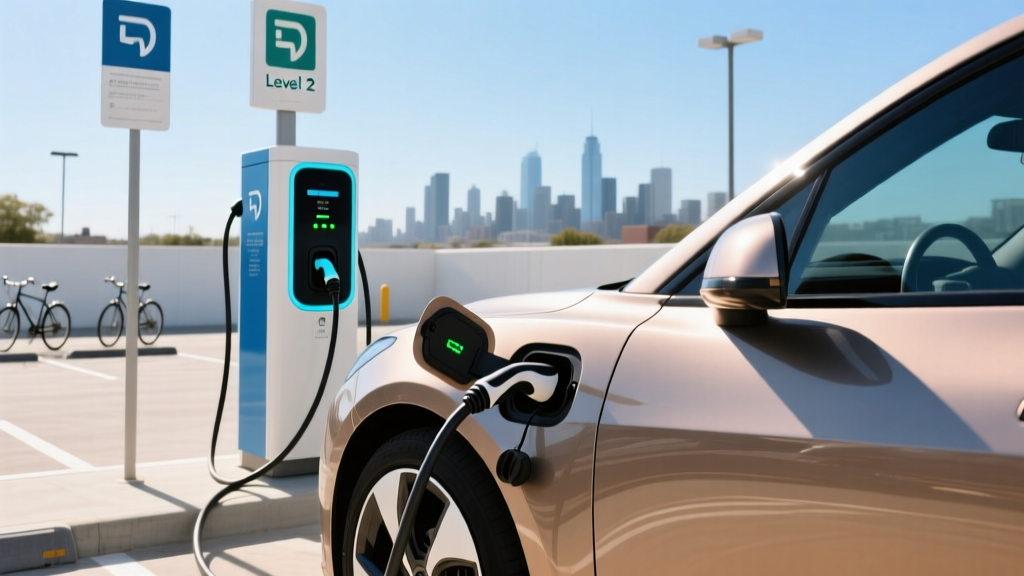
| Level 2 (Home/Public) | 240V | 7.2–19.2 kW | 20–60 mi/hr | Daily home charging, workplace, retail |
| DC Fast Charging | 400–800V DC | 50–350 kW | 150–800 mi/hr (peak) | Road trips, rapid top-ups |
Real-world context: Most modern EVs have batteries between 60 kWh (e.g., base Tesla Model 3) and 100 kWh (e.g., GMC Sierra EV). A full Level 1 charge on an 80 kWh battery takes roughly 50–60 hours — which is why Level 1 is best thought of as "trickle" or "opportunity" charging. Level 2 at home handles 90% of daily needs. DC fast charging is strictly for road trips and should be used sparingly for long-term battery health.
Home EV Charger Installation: Requirements, Costs, and Gotchas
Installing a Level 2 home charger is the single highest-impact upgrade an EV owner can make. But the total cost depends heavily on your home's electrical panel, the distance from the panel to your parking spot, and local code requirements.
Electrical Requirements
Most Level 2 chargers run on a 240V dedicated circuit, similar to what a clothes dryer uses. The most common setups are:
- 40-amp circuit / 32-amp continuous draw (7.7 kW) — adequate for most EVs, requires a 50-amp breaker
- 48-amp circuit / 40-amp continuous draw (9.6 kW) — charges larger batteries faster, requires a 60-amp breaker
- 60-amp circuit / 48-amp continuous draw (11.5 kW) — for heavy users with 200-amp panels
The National Electrical Code (NEC) requires EV circuits to be rated at 125% of the continuous load, so a 40-amp charger needs a 50-amp breaker. Per the NFPA 70 (NEC) Article 625, outdoor installations require GFCI protection and weather-rated (NEMA 4 or 4X) enclosures.
Panel Upgrade Reality
Homes built before 2000 often have 100-amp or 150-amp main panels. Adding a 50-amp EV circuit may push your total load past 80% of panel capacity — the NEC threshold that triggers a mandatory upgrade. A panel upgrade from 100A to 200A typically costs $1,500–$3,500 before the charger install even begins. Always get a licensed electrician to perform a load calculation first.
| Cost Component | Low End | High End | Notes |
|---|---|---|---|
| Level 2 Charger Equipment | $350 | $750 | Hardwired or NEMA 14-50 plug |
| Electrician Labor (standard install) | $500 | $1,500 | Short run, same wall as panel |
| Electrical Permit | $50 | $250 | Varies by municipality |
| Panel Upgrade (if needed) | $1,500 | $3,500 | 100A → 200A service upgrade |
| Long Conduit Run (50+ ft) | $500 | $2,000 | Detached garage, underground trench |
| Total (typical, no panel upgrade) | $900 | $2,500 | Most suburban homes |
| Total (with panel upgrade) | $2,400 | $5,500+ | Older homes, detached garages |
Connector Compatibility: NACS, CCS, and CHAdeMO in 2026
The connector landscape has consolidated significantly. Tesla's North American Charging Standard (NACS) has been adopted by Ford, GM, Rivian, Volvo, BMW, and most major automakers starting with 2025–2026 model-year vehicles. CCS1 remains on many vehicles sold between 2019–2024. CHAdeMO is effectively legacy, found on the Nissan Leaf and older Mitsubishi models.
| Connector | Brands Using It (2026 Models) | DC Fast Availability | Adapter Needed? |
|---|---|---|---|
| NACS (Tesla Standard) | Tesla, Ford, GM, Rivian, Volvo, BMW, Hyundai (new) | Tesla Supercharger network + growing third-party | CCS-to-NACS adapters available ($150–$250) |
| CCS1 | VW ID.4 (prior years), older Hyundai/Kia, legacy EVs | Electrify America, EVgo, ChargePoint DC | NACS-to-CCS adapters for Tesla Superchargers |
| CHAdeMO | Nissan Leaf (discontinued), Mitsubishi Outlander PHEV (older) | Declining; some Electrify America stations | Limited adapter options |
Practical advice: If you're buying a new EV in 2026, prioritize NACS-equipped models for access to the Tesla Supercharger network, which remains the most reliable public DC fast-charging network in North America. If you own a CCS-equipped EV, a NACS-to-CCS adapter (approximately $200) opens up Tesla Superchargers — but check your vehicle's software compatibility first.
Charging Cost Per Mile: EV vs. Gas
One of the strongest economic arguments for EVs is lower per-mile energy cost — but the savings depend heavily on where and when you charge. According to fueleconomy.gov, the average EV achieves 100–130 MPGe, translating to roughly 25–35 kWh per 100 miles driven.
| Scenario | Cost per kWh | Cost per 100 Miles | Cost per Mile | vs. Gas (30 MPG @ $3.40/gal) |
|---|---|---|---|---|
| Home, Off-Peak (utility rate) | $0.09–$0.13 | $2.70–$3.90 | $0.03–$0.04 | 75% cheaper |
| Home, Standard Rate | $0.14–$0.18 | $4.20–$5.40 | $0.04–$0.05 | 60% cheaper |
| Public Level 2 | $0.25–$0.40 | $7.50–$12.00 | $0.08–$0.12 | 30–45% cheaper |
| DC Fast Charging | $0.35–$0.55 | $10.50–$16.50 | $0.11–$0.17 | Comparable or slightly cheaper |
The math: A driver covering 12,000 miles per year and charging primarily at home (off-peak) spends roughly $360–$480 annually on electricity. A comparable gas car at 30 MPG and $3.40/gallon costs $1,360 per year. That's a $880–$1,000 annual savings — though it assumes reliable home charging access. Drivers who rely exclusively on public DC fast chargers may see savings shrink to just 10–20%.
Charging Time Examples: 10–80% for Common Battery Sizes
EV charging isn't linear. Batteries charge fastest between roughly 10% and 50% state of charge (SoC), then taper significantly as they approach 80%. This "charge curve" means the peak kW rating on a charger is only sustained for a fraction of the session. Here's what real sessions look like for common 2026 EV battery sizes:
| Vehicle Example | Battery (kWh) | Peak DC kW | 10–80% Time | Level 2 (9.6 kW) 0–100% |
|---|---|---|---|---|
| Tesla Model 3 LR (2026) | 75 kWh (NMC) | 250 kW | ~25 min | ~8.5 hours |
| Hyundai Ioniq 5 (2026) | 84 kWh (NMC) | 240 kW | ~18 min (800V architecture) | ~9.5 hours |
| Ford F-150 Lightning Ext. Range | 131 kWh (NMC) | 150 kW | ~41 min | ~14.5 hours |
| Chevrolet Equinox EV (2026) | 85 kWh (NMC) | 190 kW | ~28 min | ~9.5 hours |
Cold weather caveat: In sub-freezing temperatures, DC fast charging speeds can drop 20–40% unless the battery is preconditioned. Most modern EVs precondition automatically when you navigate to a charger. Always plug in at home and set a departure time so the car can warm its battery before your commute.
Recommended Home Charging Equipment for 2026
The home charger market has matured. Here are three proven options across price tiers, all NACS-compatible (with CCS adapters available) and UL-listed for safety:
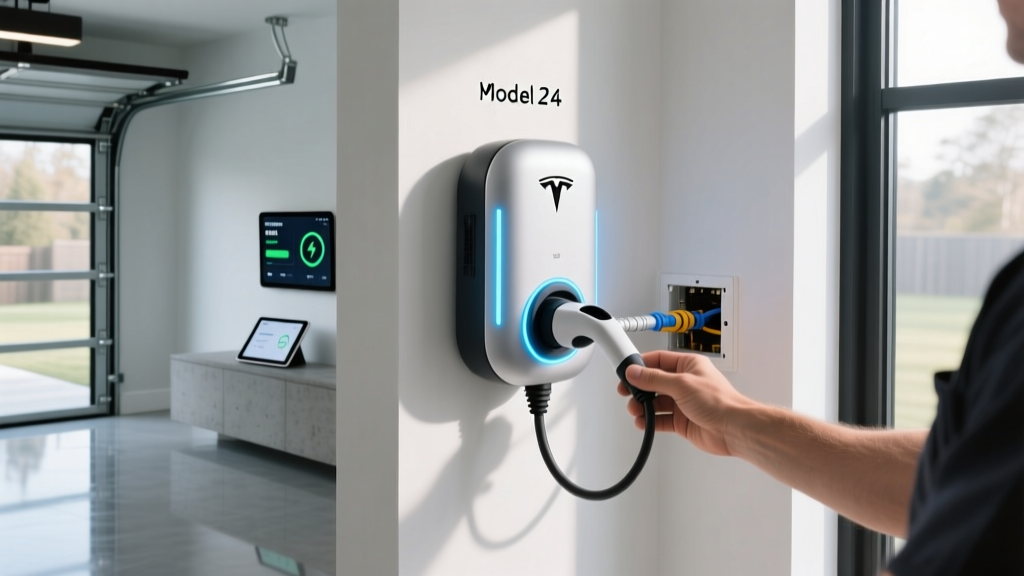
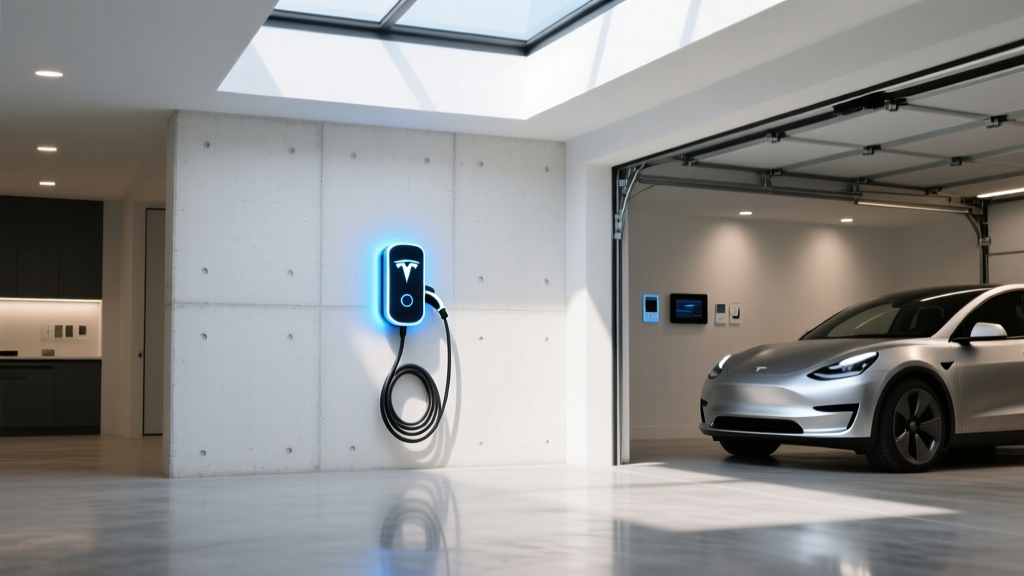
Tesla Wall Connector (Gen 4)
- Power Output: 11.5 kW (48A) on 60A circuit; 9.6 kW (40A) on 50A circuit
- Connector: NACS native
- Cable Length: 24 ft
- Smart Features: Wi-Fi, OTA updates, load sharing between two units, access control
- Price: ~$475
- Best For: Tesla and NACS-equipped vehicles; multi-EV households
ChargePoint Home Flex
- Power Output: Up to 12 kW (50A) — adjustable via DIP switches from 16A to 50A
- Connector: NACS or CCS1 (select at purchase)
- Cable Length: 23 ft
- Smart Features: App-based scheduling, utility integration, Alexa, energy tracking
- Price: ~$550–$650
- Best For: Flexible amperage for older panels; non-Tesla EVs
Emporia Vue Level 2 Charger
- Power Output: 11.5 kW (48A) on 60A circuit
- Connector: NACS or J1772 (with adapter)
- Cable Length: 24 ft
- Smart Features: Solar integration, time-of-use scheduling, energy monitoring via Emporia Vue panel
- Price: ~$399
- Best For: Budget-conscious buyers; solar-home integration
Safety, Code, and Permitting Essentials
EV charging equipment carries significant continuous electrical load. Corner-cutting on installation creates fire risk and may void your homeowner's insurance. Key requirements per the NEC and typical local codes:
- Dedicated circuit: Your EV charger must have its own breaker — not shared with other appliances.
- GFCI protection: Required for all outdoor receptacles and increasingly required indoors for EV circuits in 2026 code cycles.
- NEMA 4/4X rating: Outdoor chargers must be rated for weather exposure (rain, dust, ice).
- Permit and inspection: Virtually all jurisdictions require an electrical permit for a new 240V circuit. The inspection ensures wire gauge, breaker sizing, and grounding meet code.
- Hardwired vs. plug: Hardwired installations (no plug) are generally preferred for safety and may be required for circuits above 50 amps in some jurisdictions. A NEMA 14-50 plug offers portability but adds a point of failure.
Frequently Asked Questions
How much does it cost to install a home EV charger?
A typical Level 2 home installation (equipment + electrician + permit) costs $900–$2,500 in homes with adequate panel capacity. If a panel upgrade from 100A to 200A is needed, add $1,500–$3,500, bringing the total to $2,400–$5,500+. Always get a load calculation from a licensed electrician before committing.
How fast will each charging level add range?
Level 1 (120V) adds roughly 3–5 miles per hour. Level 2 (240V, 7.7–11.5 kW) adds 20–45 miles per hour depending on vehicle efficiency. DC fast charging at 150–350 kW can add 150–250+ miles in a 20–30 minute session, but speeds taper above 80% SoC.
Which connector/charger is compatible with my EV?
For 2026 models, most new EVs from Tesla, Ford, GM, Rivian, Volvo, and BMW use the NACS connector. Vehicles from 2019–2024 more commonly use CCS1. The Nissan Leaf uses CHAdeMO. Check your vehicle's charge port — and if you own a CCS vehicle, a CCS-to-NACS adapter (~$200) can unlock Tesla Superchargers.
How much does charging cost per mile vs gas?
Home off-peak charging costs roughly $0.03–$0.04 per mile — about 75% less than a 30 MPG gas car at $3.40/gallon ($0.11/mile). Public DC fast charging at $0.35–$0.55/kWh costs $0.11–$0.17/mile, which narrows or eliminates the savings. Maximizing home charging is key to EV economics.
What electrical upgrades might I need?
The most common upgrade is a panel service increase from 100A or 150A to 200A, required when your existing panel can't handle the additional 50–60 amp EV circuit alongside your current loads. Older homes, homes with electric heat, and homes with multiple large appliances are most likely to need this. A licensed electrician can perform a load calculation per NEC Article 220 to determine your specific needs. Consult the IRS guidelines on clean vehicle credits as some utility rebates and state incentives may offset installation costs.