You plug in your EV and a light blinks back at you — but what is it actually telling you? That small car charging light on your dashboard, charge port, or wall connector is your primary interface with one of the most important systems in your vehicle. Misreading it can mean waking up to an undercharged battery, a tripped breaker, or worse, ignoring a fault that could damage your equipment.
This guide decodes what your charging indicators mean across major EV brands, then walks through every layer of the charging ecosystem: speeds, home installation realities, connector standards, and what you'll actually pay per mile.
What Your Car Charging Light Is Trying to Tell You
Every EV and charging cable uses colored indicator lights to communicate status. While exact patterns vary by manufacturer, the underlying logic is standardized across the industry:
- Solid green: Charging complete or vehicle ready to charge.
- Pulsing green or blue: Active charging in progress — the pulse rate sometimes correlates with charge speed.
- Amber/yellow blinking: Reduced charging rate detected — usually a circuit limitation, adapter issue, or thermal throttling.
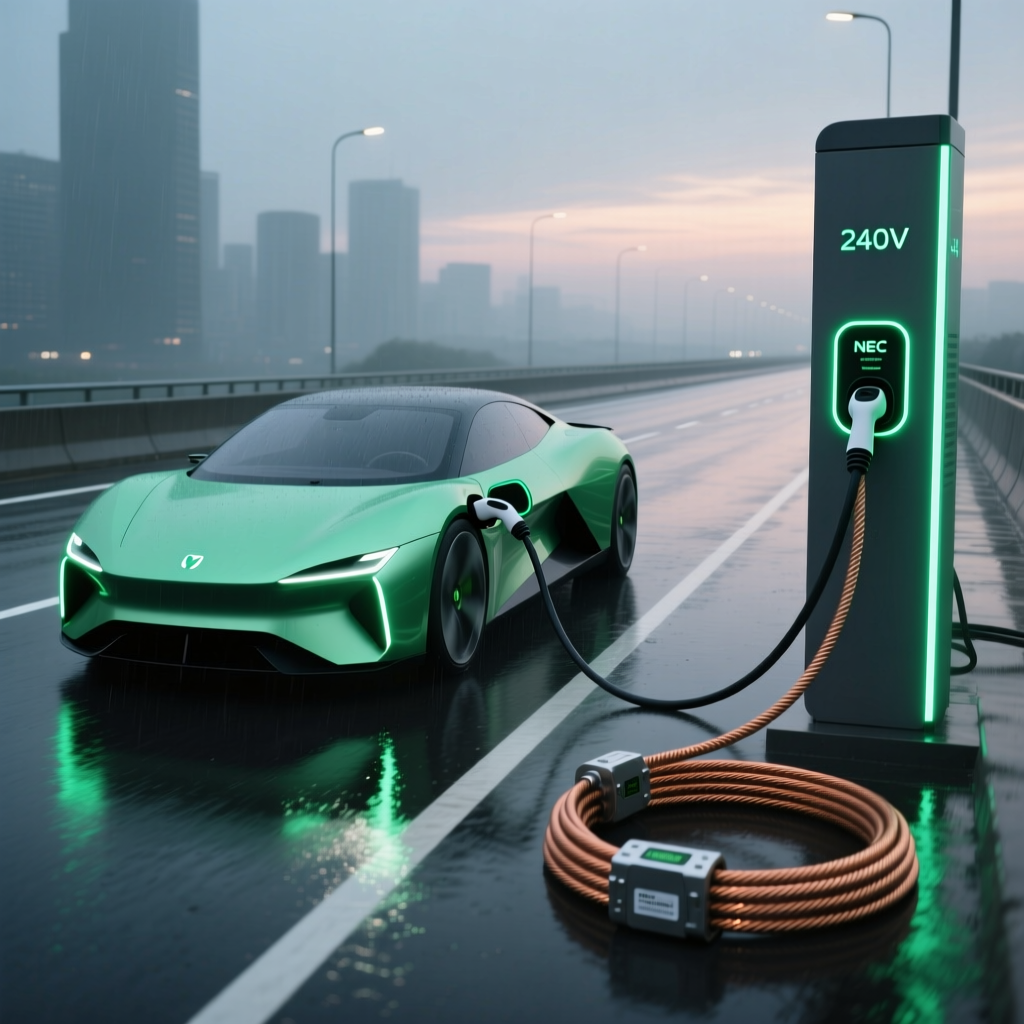
- Red (solid or flashing): Fault condition — ground fault, overcurrent, connector not seated, or equipment failure. Do not ignore this.
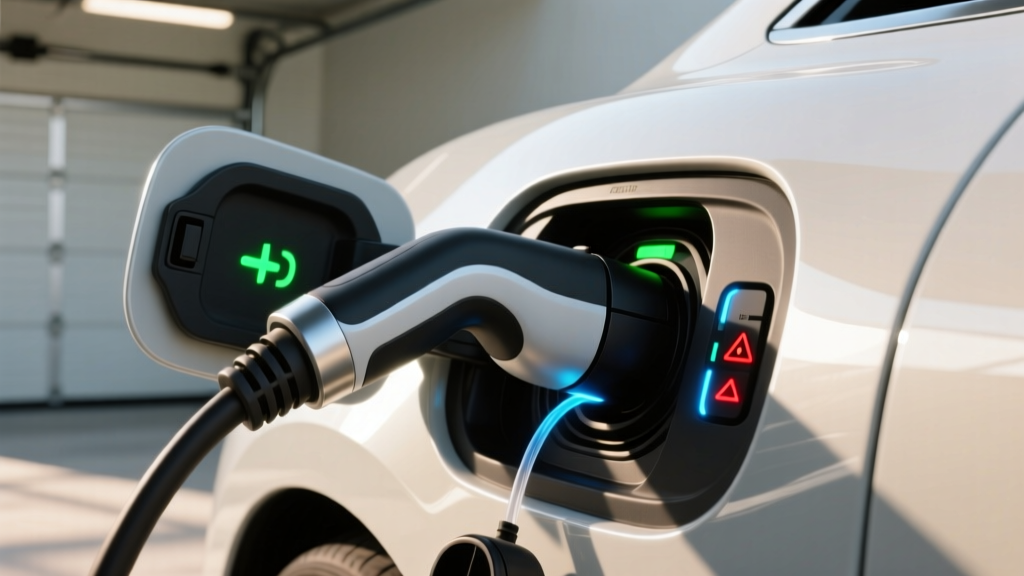
- White or blue ring (charge port): Common on Tesla, Hyundai, and Ford — illuminates when the port door opens and may pulse during charging.
On the Tesla Model Y owner's manual, the charge port light ring specifically communicates: green (ready), pulsing green (charging), blue (connection initiated), and red (error). Similar systems exist across the Hyundai Ioniq 5, Ford Mustang Mach-E, and Rivian R1S/R1T — though Rivian uses a logo-backlight system instead of a dedicated port ring.
If your car charging light shows red and your vehicle's app reports a fault, check these first: ensure the connector is fully seated (you should hear a click), verify your home charger hasn't tripped its internal GFCI, and confirm the circuit breaker in your panel hasn't tripped. Persistent red lights warrant a call to your charger manufacturer's support line or a licensed electrician.
The Three Charging Levels: Speeds, kW Ratings, and Miles Added Per Hour
EV charging operates across three tiers. Understanding the distinction between kW (kilowatts — the rate of power delivery, like water pressure) and kWh (kilowatt-hours — the total energy stored, like gallons in a tank) is non-negotiable for every EV owner.
| Level | Voltage | Max Power (kW) | Miles of Range Added Per Hour | Best For |
|---|---|---|---|---|
| Level 1 | 120V AC | 1.0–1.9 kW | 2–5 miles | Overnight top-ups, PHEVs, emergency use |
| Level 2 | 240V AC | 3.3–19.2 kW | 12–75 miles | Daily home charging, workplace, destination |
| DC Fast | 200–900V DC | 50–350+ kW | 150–1,200+ miles (theoretical) | Road trips, rapid top-ups |
Level 1 charging from a standard household outlet delivers roughly 1.4 kW continuously — enough to add about 3–4 miles of range per hour in a mid-size EV like the Tesla Model Y. For a 75 kWh battery, a full 0–100% charge would take roughly 50+ hours. This is viable only for plug-in hybrids with small batteries (like the Toyota RAV4 Prime's 18.1 kWh pack) or as an emergency fallback.
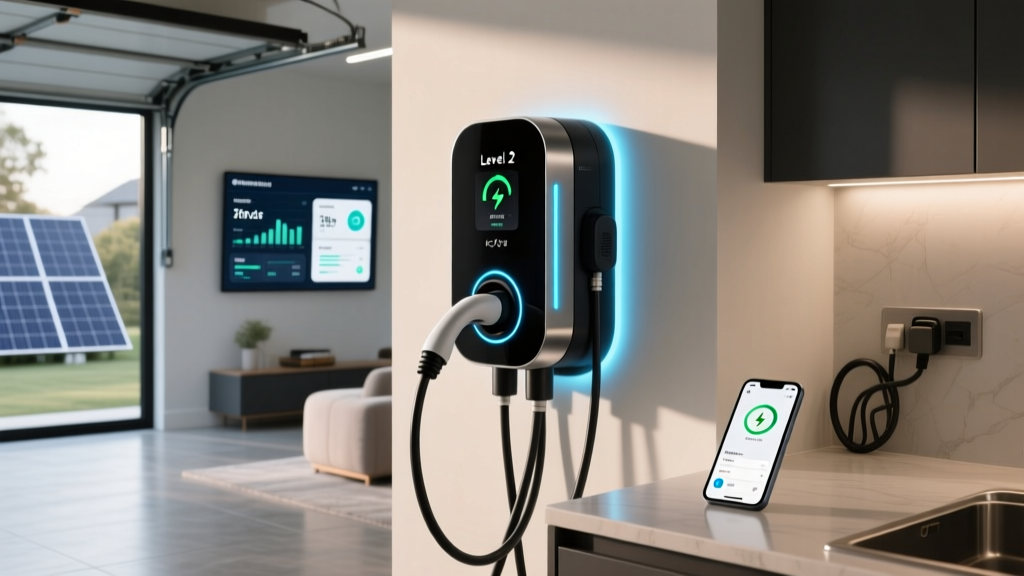
Level 2 is the backbone of practical EV ownership. A 48-amp (11.5 kW) home charger can fully replenish most EV batteries overnight in 6–9 hours. Public Level 2 stations at shopping centers or workplaces typically run at 6.6–7.2 kW.
DC fast charging bypasses the vehicle's onboard charger and sends DC current directly to the battery. Peak rates like 350 kW at Electrify America or Tesla V4 Superchargers are headline numbers — sustained rates are lower due to the charge curve taper above 80% state of charge (SoC) and thermal management limits.
Real-World 10–80% DC Fast Charge Times
- Hyundai Ioniq 5 (84 kWh, NMC, 800V architecture): 235 kW peak, ~18 minutes 10–80%
- Tesla Model Y Long Range (75 kWh, NMC/LFP depending on build): 250 kW peak, ~22 minutes 10–80%
- Ford Mustang Mach-E Extended Range (91 kWh usable, NMC): 150 kW peak, ~32 minutes 10–80%
- Chevrolet Equinox EV (85 kWh, NMC): 150 kW peak, ~30 minutes 10–80%
These times assume battery preconditioning is active (the car has warmed the battery to optimal temperature before arrival) and ambient temperatures are moderate. In sub-freezing weather without preconditioning, expect 10–80% times to increase by 30–50%.
Home Charger Installation: Electrical Requirements, Costs, and Panel Upgrades
Installing a Level 2 home charger is the single highest-impact upgrade an EV owner can make. But the total cost extends well beyond the charger unit itself.
Electrical Requirements
A typical 48-amp Level 2 charger requires a dedicated 60-amp, 240-volt circuit (the National Electrical Code requires circuits be rated at 125% of the continuous load — so 48A × 1.25 = 60A). The wiring will be 6 AWG copper or 4 AWG aluminum, run through conduit where exposed.
Your electrical panel must have sufficient spare capacity. An electrician will perform a load calculation per NEC Article 220 to determine if your panel can support the additional 60A draw. Most modern 200-amp panels in homes built after 2000 handle this without issue. Older homes with 100-amp or 150-amp service may need a panel upgrade — a significant added cost.
Installation Cost Breakdown
| Component | Typical Cost Range | Notes |
|---|---|---|
| Level 2 charger unit (hardwired, 48A) | $400–$700 | Smart Wi-Fi-enabled models at upper end |
| Electrical permit | $50–$200 | Varies by municipality |
| Electrician labor (standard install) | $500–$1,500 | Short run from panel to garage: lower end |
| Conduit, wiring, breaker (materials) | $150–$400 | Longer runs and outdoor conduit cost more |
| Panel upgrade (if needed) | $1,500–$3,500 | 100A → 200A service upgrade |
| Total (no panel upgrade) | $1,100–$2,800 | Most homes with 200A service |
| Total (with panel upgrade) | $2,600–$6,300 | Older homes with 100A service |
Some utilities offer rebates of $200–$500 for smart charger installations, and the federal Alternative Fuel Vehicle Refueling Property Credit (IRC §30C) covers up to 30% of home charging equipment and installation costs, capped at $1,000 — though eligibility depends on your census tract meeting specific criteria. Confirm current-year rules with a tax professional.
Connector Compatibility: NACS, CCS1, CHAdeMO, and Adapters
The North American charging connector landscape consolidated significantly between 2023 and 2026. Here's where things stand:
| Connector | Brands Using It (Native) | Max DC Fast Charge Rate | Adapter Needed For |
|---|---|---|---|
| NACS (Tesla / SAE J3400) | Tesla, Ford, GM, Rivian, Volvo, Polestar, Hyundai/Kia (2025+) | Up to 350 kW | CCS1 stations (via included or purchased adapter) |
| CCS1 (Combined Charging System) | VW ID.4 (older), BMW iX (2024 and earlier), some Stellantis models | Up to 350 kW | Tesla Superchargers (via CCS-to-NACS adapter) |
| CHAdeMO | Nissan Leaf (legacy only — discontinued for new US models) | Up to 100 kW | Declining network; limited future access |
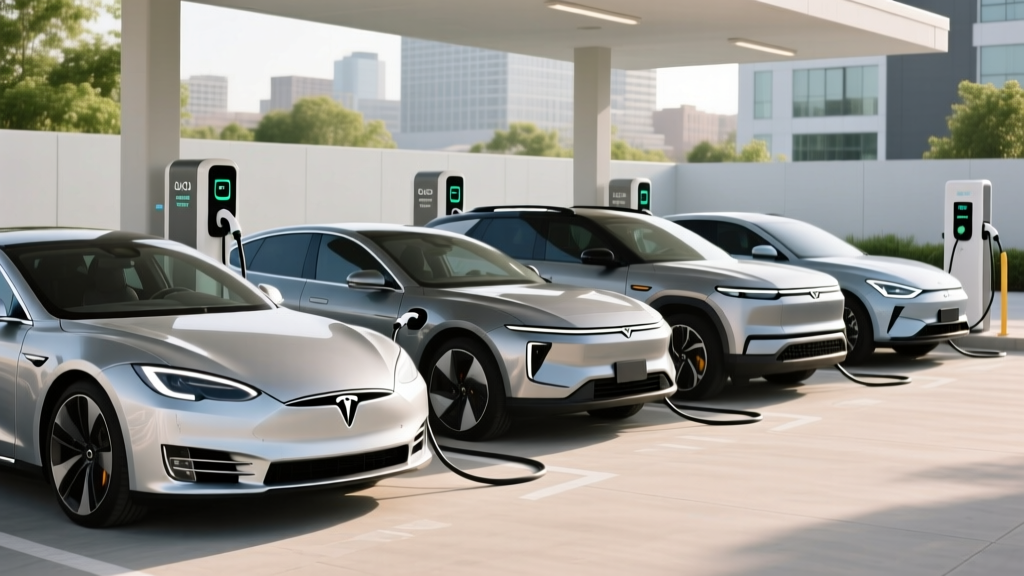
As of 2026, NACS (now formally SAE J3400) is the dominant standard. If you're buying a new EV from Ford, GM, Rivian, Hyundai, or Kia, your car will ship with a NACS port natively. Most of these vehicles include or offer a CCS1 adapter for accessing Electrify America and other CCS-equipped public chargers.
For home Level 2 charging, the connector is less critical — nearly all home chargers now ship with NACS connectors, and J1772 adapters are included for legacy compatibility. Tesla's Wall Connector and third-party options like the Emporia Vue and ChargePoint Home Flex all support NACS natively.
What Charging Actually Costs Per Mile vs. Gasoline
The economic case for EVs hinges on fuel cost savings — but the gap varies dramatically based on where and when you charge.
| Scenario | Rate | Cost Per Mile (250 Wh/mi EV) | Annual Cost (12,000 mi) |
|---|---|---|---|
| Home Level 2 (off-peak utility rate) | $0.08–$0.13/kWh | $0.020–$0.033 | $240–$390 |
| Home Level 2 (standard utility rate) | $0.14–$0.20/kWh | $0.035–$0.050 | $420–$600 |
| Public Level 2 (ChargePoint, EVgo) | $0.25–$0.49/kWh | $0.063–$0.123 | $750–$1,470 |
| DC Fast (Electrify America, Tesla) | $0.35–$0.58/kWh | $0.088–$0.145 | $1,050–$1,740 |
| Gasoline (28 MPG combined, $3.40/gal) | $3.40/gallon | $0.121 | $1,457 |
At home off-peak rates, an efficient EV like the Tesla Model 3 (consuming roughly 250 Wh/mile) costs under 3 cents per mile — about one-quarter the cost of a 28 MPG gas car. Even at standard residential rates, home charging saves $800–$1,200 annually over gasoline for a typical driver covering 12,000 miles.
The economics invert if you rely exclusively on DC fast charging at $0.50+/kWh. At that rate, your per-mile cost can match or exceed gasoline. This is why home Level 2 access is the single most important factor in EV ownership satisfaction and economics.
Equipment Recommendations: Best Home Level 2 Chargers for 2026
Based on real-world installation experience and reliability data, here are the top home chargers for different needs:
Tesla Wall Connector (Gen 4)
- Power: Up to 48A (11.5 kW on 240V/60A circuit)
- Connector: NACS native; J1772 adapter available
- Cable length: 24 feet
- Smart features: Wi-Fi, OTA updates, power sharing (link up to 6 units on one circuit), access control
- Price: ~$475
- Best for: Tesla owners and NACS-equipped EVs; cleanest integration
Emporia Level 2 EV Charger
- Power: Up to 48A (11.5 kW); configurable down to 16A for smaller circuits
- Connector: NACS (J1772 version also available)
- Cable length: 24 feet
- Smart features: Wi-Fi, energy monitoring, solar integration, scheduling, utility demand-response programs
- Price: ~$399
- Best for: Budget-conscious buyers who want smart features and solar integration
ChargePoint Home Flex (2nd Gen)
- Power: Up to 50A (12 kW on 240V/70A circuit); adjustable amperage
- Connector: NACS (J1772 adapter included)
- Cable length: 23 feet
- Smart features: Wi-Fi, app scheduling, Alexa integration, detailed session history
- Price: ~$649
- Best for: Maximum flexibility across EV brands; robust app ecosystem
All three units are NEMA 4 rated for indoor/outdoor installation and support hardwired connection (strongly recommended over plug-in for reliability and to avoid the need for a GFCI breaker, which adds $100–$200 to material costs and can cause nuisance tripping on EV circuits).
Safety, Code, and Installation Best Practices
Your home charger installation must comply with NEC Article 625 (Electric Vehicle Charging System Equipment). Key requirements:
- Dedicated circuit: Your Level 2 charger must be on its own dedicated breaker — no sharing with other outlets or appliances.
- GFCI protection: If you use a plug-in receptacle (NEMA 14-50 or 6-50), NEC 2023 and later require GFCI protection on the breaker. Hardwired installations are exempt from this requirement, which is why most electricians recommend hardwiring.
- Outdoor rating: Any charger mounted outside must carry a NEMA 3R or NEMA 4 rating. All recommended units above meet this standard.
- Cable management: Keep the charging cable off the ground with a holster or retractor to prevent trip hazards and cable damage.
- Permit and inspection: Nearly all jurisdictions require an electrical permit and final inspection for EV charger installations. Skipping this risks voiding homeowner's insurance coverage for related electrical fires.
For the installation itself, always hire a licensed electrician — not a general handyman. Ask for their experience specifically with EV charger installations and NEC Article 625. Get at least three quotes, as installation labor varies widely even within the same metro area.
Frequently Asked Questions
How much does it cost to install a home EV charger?
A standard Level 2 home charger installation (48A hardwired, short conduit run, 200A panel with capacity) typically costs $1,100–$2,800 all-in, including the charger unit, materials, permit, and electrician labor. If your home needs a panel upgrade from 100A to 200A service, add $1,500–$3,500, bringing the total to $2,600–$6,300. Federal tax credits under IRC §30C may offset up to $1,000 (30% of equipment and installation) if you're in an eligible census tract.
How fast will each charging level add range?
Level 1 (120V) adds 2–5 miles per hour — adequate only for PHEVs or overnight trickle charging. Level 2 (240V, 48A) adds 30–45 miles per hour for most EVs, fully recharging overnight. DC fast charging can add 100–200+ miles in 15–25 minutes at peak rates, but sustained speed depends on the vehicle's charge curve, battery temperature, and state of charge.
Which connector and charger is compatible with my EV?
For 2026 model-year vehicles: Tesla, Ford, GM, Rivian, Volvo, and most new Hyundai/Kia models use NACS (SAE J3400). Older VW, BMW, and Stellantis EVs may still use CCS1. CHAdeMO is effectively discontinued for new vehicles. For home charging, a NACS-equipped Level 2 charger covers nearly all current EVs, and J1772 adapters handle legacy vehicles.
How much does EV charging cost per mile compared to gas?
Home charging at off-peak rates ($0.08–$0.13/kWh) costs roughly 2–3 cents per mile — about 75% cheaper than gasoline at $3.40/gallon for a 28 MPG vehicle (12 cents per mile). Standard residential rates ($0.15–$0.20/kWh) still save 50–65% per mile. Public DC fast charging at $0.40–$0.58/kWh narrows the gap significantly and can approach gas-equivalent costs.
What electrical upgrades might my home need for an EV charger?
The most common upgrade is a panel capacity increase. If your home has a 100-amp electrical service (common in homes built before 1990), an electrician's load calculation will likely show insufficient headroom for a 60-amp EV circuit alongside existing loads. Upgrading to 200-amp service costs $1,500–$3,500. Secondary upgrades may include replacing aluminum wiring, adding conduit for long cable runs, or installing a sub-panel in a detached garage.
What does a flashing red car charging light mean?
A flashing red indicator on your vehicle's charge port or dashboard signals a fault. Common causes include: connector not fully inserted, ground fault detected, circuit overcurrent, thermal overload, or communication failure between the charger and vehicle. Unplug, wait 30 seconds, reseat the connector firmly, and try again. If the red light persists, check your breaker panel and the charger's own status LED. Repeated faults require professional diagnosis.