What Does It Actually Cost to Charge an EV?
The single most common question from prospective EV buyers isn't about range—it's about money. Car charging cost varies dramatically depending on where and how you plug in. A full charge at home on an off-peak utility rate might run $4–$8, while the same energy at a highway DC fast charger could cost $18–$30. That's a 4x spread, and understanding it is the difference between saving thousands over gas or wondering why your electricity bill spiked.
This guide breaks down every cost layer: home installation (equipment, electrician, permits, panel upgrades), per-kWh pricing across charging scenarios, cost-per-mile comparisons against gasoline, and the specific hardware we recommend in 2026. All figures reflect current utility rates, equipment pricing, and the latest connector landscape now that NACS has largely consolidated the North American market.
Charging Levels Explained: Speed, Power, and Cost
Before calculating cost, you need to understand the three charging tiers. The critical distinction: kW (kilowatts) measures power—the rate energy flows into your car. kWh (kilowatt-hours) measures energy—the total amount stored in your battery. Think of kW as the width of a hose and kWh as the bucket you're filling. You pay per kWh consumed; the kW rating determines how fast you fill up.
| Level | Voltage | Power (kW) | Miles of Range Added per Hour | Typical Use Case | Approx. Cost per kWh |
|---|---|---|---|---|---|
| Level 1 | 120V AC | 1.0–1.4 kW | 3–5 mi/hr | Overnight top-up, PHEVs, emergencies | $0.12–$0.18 (home) |
| Level 2 | 240V AC | 7.2–19.2 kW | 20–60 mi/hr | Daily home/work charging | $0.12–$0.25 (home/public) |
| DC Fast Charge | 200–900V DC | 50–350 kW | 150–1,200+ mi/hr | Road trips, quick top-ups | $0.30–$0.60 (public) |
Real-world charging time examples (10–80% SoC):
- 60 kWh battery (e.g., Chevrolet Equinox EV): ~28 min at a 150 kW DCFC; ~6.5 hours on a 9.6 kW Level 2; ~42 hours on Level 1
- 82 kWh battery (e.g., Tesla Model Y Long Range): ~25 min at a 250 kW Supercharger; ~8.5 hours on a 9.6 kW Level 2; ~58 hours on Level 1
- 100 kWh battery (e.g., Ford F-150 Lightning Extended Range): ~35 min at a 150 kW DCFC; ~10.5 hours on a 9.6 kW Level 2; ~70 hours on Level 1
Note that DC fast charging follows a charge curve: the battery accepts peak kW only at low states of charge (typically 10–30% SoC), then tapers progressively above 50–60% to protect the cells. A "250 kW" charger doesn't deliver 250 kW for the entire session. This is why manufacturers quote 10–80% times rather than 0–100%.
Home Charger Installation: What It Really Costs
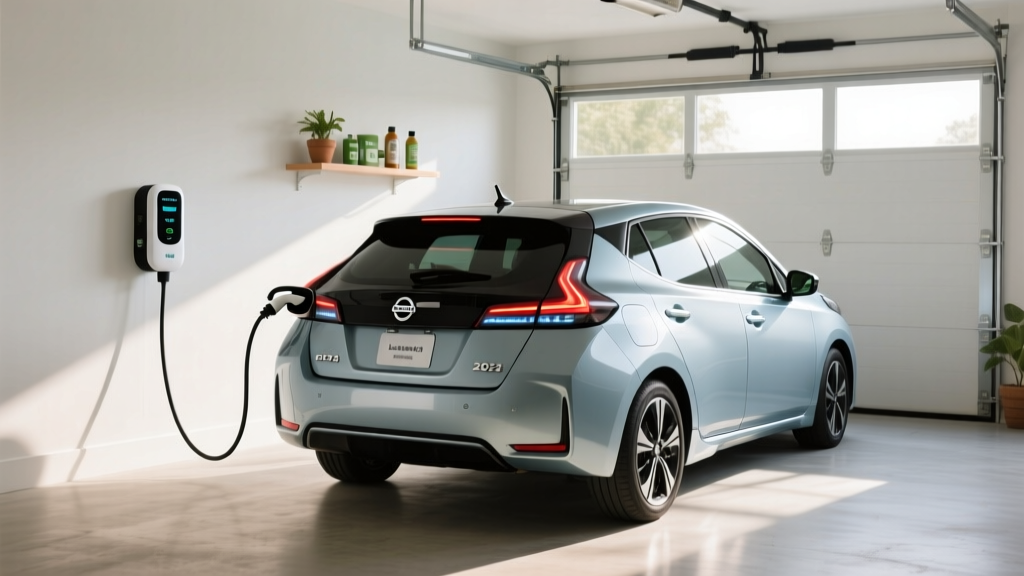
Installing a Level 2 home charger is the single best investment an EV owner can make. It's where you'll do 80–90% of your charging, and it's where per-kWh cost is lowest. But the upfront investment varies enormously based on your home's electrical infrastructure.
Electrical Requirements
A typical Level 2 home charger requires a 240V dedicated circuit—the same voltage as your electric dryer or oven. Most homeowners install a 40-amp or 48-amp circuit, which supports chargers rated at 32A or 40A continuous draw (electrical code requires circuits rated at 125% of continuous load). That translates to 7.7 kW or 9.6 kW of charging power, respectively.
Your charger should be hardwired or plugged into a NEMA 14-50 outlet installed by a licensed electrician. Hardwired units support higher amperage and eliminate the outlet as a potential failure point; NEMA 14-50 outlets offer portability if you move.
Panel Upgrade Reality
Here's the cost factor many online guides gloss over: your electrical panel may need an upgrade. Most homes built before 2000 have 100-amp or 150-amp service panels. Adding a 40–48 amp EV circuit to an already-loaded panel can exceed its capacity, requiring a panel upgrade to 200 amps. This isn't optional—it's a code and safety requirement.
Signs you may need a panel upgrade:
- Your panel is 100A or 150A total service
- You already run high-draw appliances (electric range, dryer, HVAC, hot tub)
- Your panel has no open breaker slots
- Your home is 30+ years old with original wiring
Some utilities and municipalities now offer smart panel solutions (e.g., Span panels or load-management devices like the Emporia Smart Load Management) that allow an EV circuit without a full panel upgrade by dynamically shedding load. These cost $500–$1,500 but can save thousands versus a full service upgrade.
| Component | Simple Install (panel has capacity, short run) | Moderate Install (longer wire run, conduit) | Complex Install (panel upgrade required) |
|---|---|---|---|
| Level 2 Charger (hardware) | $400–$700 | $400–$700 | $400–$700 |
| Electrician labor | $400–$800 | $800–$1,500 | $1,200–$2,000 |
| Permit and inspection | $50–$150 | $50–$200 | $100–$250 |
| Panel upgrade (if needed) | — | — | $1,500–$3,500 |
| Wire, conduit, materials | $100–$300 | $300–$800 | $300–$800 |
| Total | $950–$1,950 | $1,550–$3,200 | $3,500–$7,250 |
Always get 2–3 quotes from licensed electricians familiar with EV charger installs. Ask specifically about your panel's remaining amperage capacity. Some utilities offer rebates of $250–$1,000 for home charger installation—check with your provider before scheduling work.
Safety and Code Considerations
Per the National Electrical Code (NEC Article 625), EV charging installations require:
- A dedicated circuit—no sharing with other appliances
- GFCI protection for outdoor installations (and some jurisdictions now require it indoors)
- Proper wire gauge for the circuit amperage and run length (typically 6 AWG copper for 48A circuits, 4 AWG for longer runs)
- Outdoor-rated (NEMA 4) enclosures and connectors for any exterior installation
- A permit and inspection in most jurisdictions—skip this and you risk voiding your homeowner's insurance in the event of an electrical fire
Charging Cost per Mile: EV vs. Gasoline
The headline advantage of EVs is fuel cost. But the actual savings depend on your local electricity rate, your vehicle's efficiency, and whether you charge at home or rely on public infrastructure. Let's run real numbers.
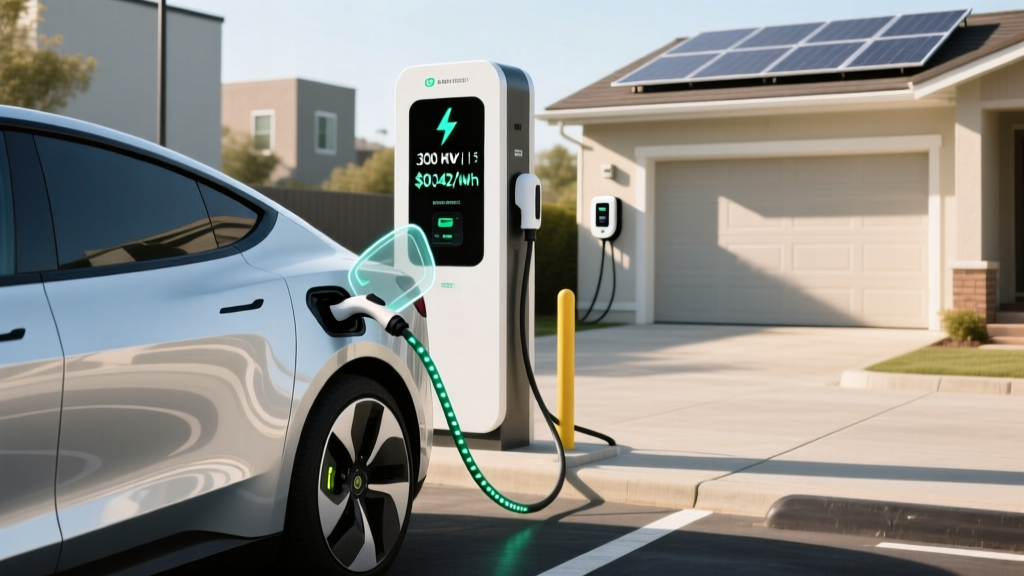
According to the U.S. Energy Information Administration, the national average residential electricity rate in 2026 hovers around $0.16/kWh. Public DC fast charging averages $0.40–$0.55/kWh depending on network and location, with some highway stations exceeding $0.60/kWh during peak hours.
| Scenario | Rate ($/kWh or $/gal) | Vehicle Efficiency | Cost per Mile |
|---|---|---|---|
| Home Level 2 (national avg. rate) | $0.16/kWh | 3.0 mi/kWh (typical midsize EV) | $0.053 |
| Home Level 2 (off-peak TOU rate) | $0.09/kWh | 3.0 mi/kWh | $0.030 |
| Home Level 2 (high-cost state, e.g., CA) | $0.30/kWh | 3.0 mi/kWh | $0.100 |
| Public Level 2 (network pricing) | $0.25/kWh | 3.0 mi/kWh | $0.083 |
| DC Fast Charge (highway corridor) | $0.48/kWh | 3.0 mi/kWh | $0.160 |
| Gasoline car (30 MPG combined) | $3.30/gal | 30 MPG | $0.110 |
| Gasoline car (25 MPG combined) | $3.30/gal | 25 MPG | $0.132 |
The takeaway: Home charging on an average or off-peak rate costs roughly half what gasoline costs per mile. Even at California's higher electricity rates, home charging is competitive with gas. The savings erode if you rely exclusively on DC fast charging—at highway corridor pricing, a DCFC session can match or exceed the per-mile cost of a fuel-efficient gas car. This is why home charging access remains the single biggest economic factor in EV ownership.
For a driver covering 12,000 miles per year:
- Home charging (avg. rate): ~$636/year in electricity
- Gasoline (30 MPG, $3.30/gal): ~$1,320/year in fuel
- Annual savings: ~$684/year, or ~$3,420 over five years
Those savings widen further with off-peak time-of-use (TOU) rates, which many utilities offer specifically for EV owners. Check fueleconomy.gov for your specific vehicle's kWh/100mi efficiency rating to calculate your personalized cost.
Connector Compatibility: NACS, CCS, and CHAdeMO in 2026
The connector landscape has consolidated dramatically since Tesla opened its Supercharger network and the industry adopted the North American Charging Standard (NACS). Here's where things stand in 2026:
| Connector | Brands Using It (Native) | DC Fast Charge Availability | Adapter Needed? |
|---|---|---|---|
| NACS (J3400) | Tesla, Ford, GM, Rivian, Volvo, Polestar, Mercedes, Nissan (new models), Hyundai/Kia (2025+) | Tesla Supercharger (17,000+ stalls), Electrify America, EVgo, ChargePoint (new installs) | CCS-to-NACS adapters available for legacy CCS vehicles (~$200–$300) |
| CCS1 | Legacy models: older Hyundai Ioniq 5, Kia EV6, VW ID.4, BMW iX, pre-2025 models from most brands | Electrify America, EVgo, ChargePoint, Ionity (EU) | NACS-to-CCS adapters available (~$200–$300) for Tesla Supercharger access |
| CHAdeMO | Nissan Leaf (discontinued), Mitsubishi Outlander PHEV (legacy) | Limited and shrinking—most networks have deprioritized CHAdeMO stalls | No widely available adapter to NACS/CCS for DCFC |
Practical advice: If you're buying a new EV in 2026, prioritize a NACS-equipped vehicle for the broadest fast-charging network access. If you own a CCS vehicle, Ford and GM have begun providing complimentary or discounted Tesla Supercharger access via adapter—check your manufacturer's current program. CHAdeMO owners face increasingly limited DC fast-charging options; plan road trips carefully around remaining compatible stations.
Home Charger Equipment Recommendations (2026)
We've tested and tracked reliability data on the major Level 2 home chargers available in 2026. Here are our picks across categories, with exact specs:
Best Overall: ChargePoint Home Flex
- Power output: Up to 11.5 kW (48A) on a 60A circuit, or configurable down to 16A for smaller circuits
- Connector: NACS (J3400) native; CCS adapter included in box
- Cable length: 23 feet
- Smart features: Wi-Fi connected, ChargePoint app scheduling, utility TOU integration, Alexa/Google Home, energy tracking
- Price: ~$599 (hardware only)
- Why: Flexible amperage configuration means it works in homes with limited panel capacity. Solid app, reliable hardware track record, UL-listed.
Best Value: Emporia Level 2 EV Charger
- Power output: Up to 11.5 kW (48A)
- Connector: NACS native; J1772/CCS adapter available separately
- Cable length: 24 feet
- Smart features: Wi-Fi, Emporia app, solar integration (pairs with Emporia Vue energy monitor), TOU scheduling
- Price: ~$399
- Why: Undercuts competitors by $150–$200 while delivering full 48A power. Excellent for solar-equipped homes—can charge only on excess solar production.
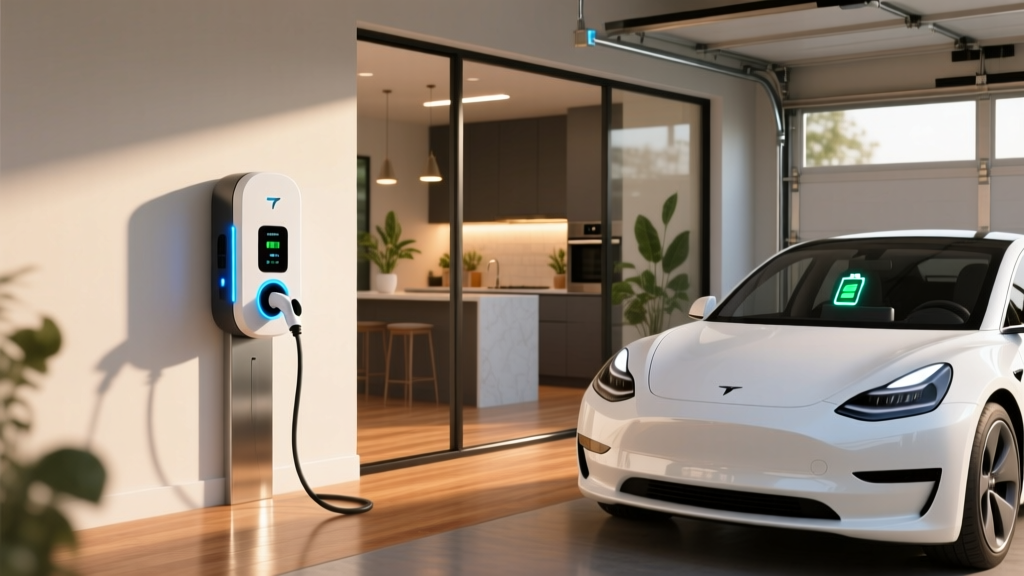
Best for Tesla Owners: Tesla Wall Connector
- Power output: Up to 11.5 kW (48A)
- Connector: NACS native; integrated J1772 adapter (Gen 4)
- Cable length: 24 feet
- Smart features: Wi-Fi, Tesla app, Power Sharing (link multiple units on one circuit), over-the-air updates
- Price: ~$475
- Why: Seamless integration with Tesla vehicles, clean aesthetic, Power Sharing feature lets you install two connectors on a single 60A circuit—ideal for two-EV households.
Best for High-Power Needs: Grizzl-E Smart
- Power output: Up to 19.2 kW (80A) on a 100A circuit—the fastest residential Level 2 available
- Connector: NACS native
- Cable length: 24 feet
- Smart features: Wi-Fi, OCPP-compatible, adjustable amperage, load balancing
- Price: ~$749
- Why: For EVs with large batteries (Ford F-150 Lightning, Rivian R1T, GMC Hummer EV) that can accept 19.2 kW AC. Cuts Level 2 charge times nearly in half versus a 9.6 kW unit. Requires robust panel capacity.
Public Charging Cost: Networks, Pricing, and How to Save
Public charging is where car charging cost gets unpredictable. Networks use different pricing models—some charge per kWh, others per minute, and a few add idle fees or session fees on top. Here's the 2026 landscape:
- Tesla Supercharger: $0.25–$0.50/kWh depending on location and time of day. Non-Tesla vehicles with NACS or CCS adapter pay a 10–20% surcharge at open stalls. Membership pricing available (~$0.22–$0.35/kWh).
- Electrify America: $0.40–$0.56/kWh for guest users. Pass+ membership ($7/month) drops rates to ~$0.31–$0.40/kWh. Includes 800 kWh free with many new EV purchases.
- EVgo: $0.36–$0.52/kWh. EVgo Plus membership ($4.99/month) reduces rates by ~15%. Strong urban coverage.
- ChargePoint: Pricing set by individual site hosts—ranges wildly from free (workplace, retail) to $0.60+/kWh. Always check the app before plugging in.
Money-saving tips for public charging:
- Subscribe to your most-used network's membership plan—the per-kWh savings pay for the subscription within 2–3 sessions.
- Check for free charging programs: many automakers include 1–3 years of complimentary public charging with new EV purchases (e.g., Hyundai's complimentary Electrify America sessions, BMW's included ChargePoint credits).
- Charge during off-peak hours where networks offer TOU pricing—some Superchargers and EA stations discount rates by 20–30% overnight or mid-morning.
- Use apps like PlugShare or A Better Routeplanner to compare pricing at stations along your route before committing.
Reducing Your Car Charging Cost: Practical Strategies
Beyond choosing where to plug in, several strategies can meaningfully reduce your ongoing charging spend:
Enroll in a utility EV rate plan. Many utilities now offer dedicated EV time-of-use (TOU) rates with super-off-peak windows (typically 11 PM–6 AM) at $0.06–$0.10/kWh—roughly 40–60% below standard rates. Schedule your charger to activate during these windows via the charger's app or your vehicle's built-in scheduling.
Precondition your battery before DC fast charging. Most modern EVs will warm the battery to optimal temperature when you navigate to a fast charger in the vehicle's nav system. A preconditioned battery charges faster (accepting higher sustained kW), reducing the time you spend at expensive per-minute-billed stations and improving the overall session efficiency.
Maintain 20–80% daily SoC for NMC batteries. If your EV uses an NMC (nickel manganese cobalt) battery, keeping daily charges between 20% and 80% extends long-term battery health, reducing the rate of capacity degradation. LFP (lithium iron phosphate) batteries, used in standard-range Teslas and some other models, tolerate 100% daily charges without accelerated degradation—check your owner's manual for your battery chemistry and recommended charge limits.
Monitor for utility rebates and federal credits. The IRS §30C alternative fuel vehicle refueling property credit offers up to $1,000 (30% of cost, capped) for home EV charger equipment and installation through 2032, subject to income and census-tract eligibility. Many states and utilities stack additional rebates on top—some covering 50–100% of installation cost for income-qualified households.
Frequently Asked Questions
How much does it cost to install a home EV charger?
A straightforward Level 2 home charger installation (panel has capacity, short wire run) costs $950–$1,950 including equipment, electrician labor, and permit. If your panel needs an upgrade to 200A service, expect $3,500–$7,250 total. Always get multiple quotes and check for utility rebates and the federal §30C tax credit (up to $1,000).
How fast will each charging level add range?
Level 1 (120V) adds 3–5 miles per hour—suitable only for PHEVs or emergency top-ups. Level 2 (240V, 48A) adds 30–45 miles per hour, fully recharging most EVs overnight. DC fast charging adds 150–1,200+ miles per hour at peak power, enabling a 10–80% charge in 18–40 minutes depending on vehicle and charger capability.
Which connector/charger is compatible with my EV?
For 2026 model-year vehicles, most new EVs from Tesla, Ford, GM, Rivian, Hyundai, Kia, and others use the NACS (J3400) connector natively. Older or legacy models may have CCS1. CHAdeMO is limited to the discontinued Nissan Leaf and a few older PHEVs. Check your vehicle's charge port or owner's manual, and verify compatibility before purchasing a home charger.
How much does charging cost per mile vs gas?
Home charging at the national average rate ($0.16/kWh) costs approximately $0.053/mile for a typical midsize EV—roughly half the $0.11/mile cost of a 30 MPG gas car at $3.30/gallon. Off-peak home charging drops to ~$0.03/mile. However, exclusive reliance on DC fast charging ($0.48/kWh) raises EV cost to ~$0.16/mile, exceeding many gas cars. Home access is the key variable.
What electrical upgrades might I need?
If your home has a 100A or 150A electrical panel, you may need a panel upgrade to 200A to support a 40–48A Level 2 circuit—this costs $1,500–$3,500. Alternatives include smart load-management devices ($500–$1,500) that dynamically share capacity between your EV charger and other appliances, or installing a lower-amperage charger (16A or 24A) that fits within your existing panel's spare capacity. A licensed electrician can perform a load calculation to determine your options.