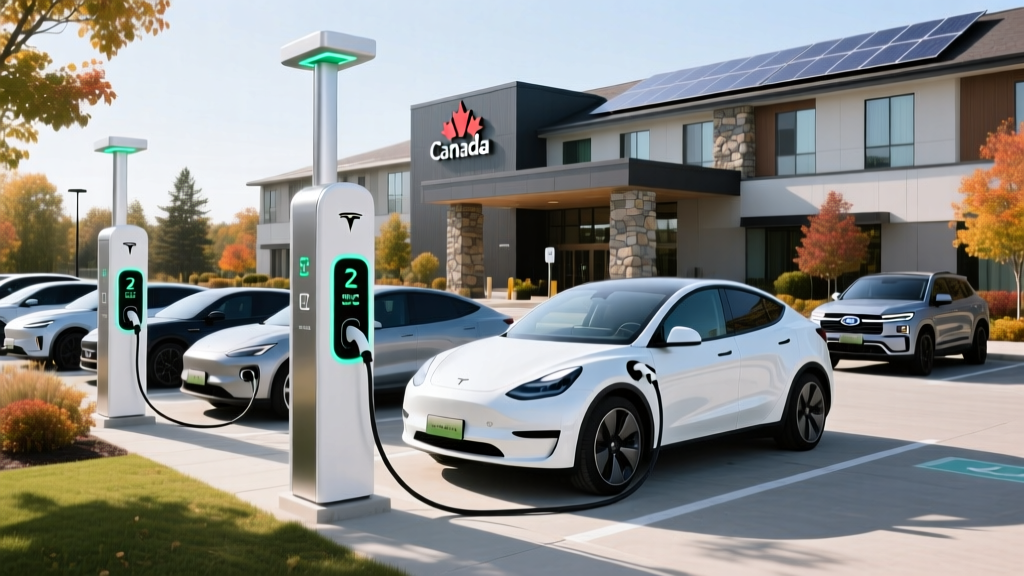
Electric vehicle adoption in Canada has accelerated through 2026, but cross-border and cross-province road trips still hinge on one question: where do you plug in overnight? Major Canadian hotel brands have responded by installing EV charging stations on their properties, but the experience varies wildly — from a single 7.2 kW Level 2 wallbox in a parking garage to a bank of 150 kW DC fast chargers flanking the lobby entrance. This guide breaks down which Canadian hotel brands are leading on EV infrastructure, what charging levels you will actually find, what it costs, and how to plan around connector compatibility.
Why Hotel Charging Matters for Canadian EV Road Trips
Canada's geography makes hotel-based charging uniquely important. Distances between cities — Toronto to Montreal is 540 km, Calgary to Vancouver is 970 km — mean that most EVs cannot complete inter-city drives on a single charge without at least one DC fast stop. But overnight charging at your hotel eliminates range anxiety for the next leg. A typical hotel stay of 8–12 hours on a Level 2 charger adds enough range for 200–400 km of driving the next day, depending on your vehicle's acceptance rate.
According to Natural Resources Canada, over 2,200 public charging locations were added nationwide between 2024 and 2025, with hospitality properties representing a growing share. Brands like Fairmont, Delta Hotels, Alt Hotels, and Best Western Plus have publicly committed to expanding EV infrastructure across their Canadian portfolios.
Charging Levels Explained: What You Will Find at Hotels
Before evaluating specific hotel brands, understand the three charging tiers you will encounter. The distinction between kW (power — how fast energy flows) and kWh (energy — how much your battery stores) is critical to interpreting these speeds.
| Level | Voltage / Power | Typical kW Output | Miles of Range Added Per Hour | Common Hotel Presence |
|---|---|---|---|---|
| Level 1 | 120V / 1.4–1.9 kW | 1.4–1.9 kW | 3–5 mi/hr | Rare (standard outlet in garage) |
| Level 2 | 208–240V / 3.3–19.2 kW | 7.2–11.5 kW (most common) | 20–40 mi/hr | Very common — majority of hotel installations |
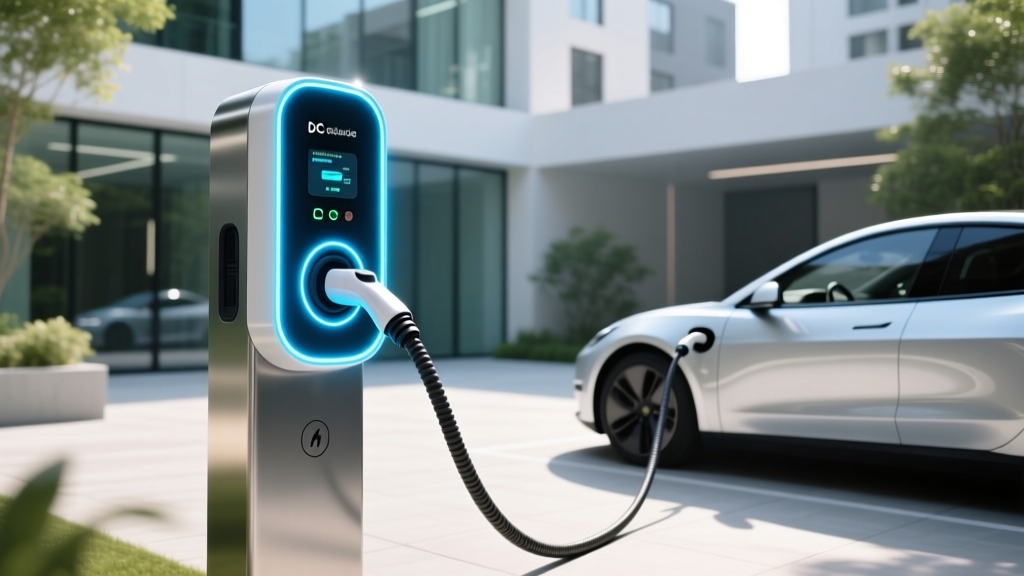
| DC Fast Charging | 400–800V DC / 50–350 kW | 50–150 kW (hotel-adjacent) | 150–500+ mi/hr | Limited — mostly highway corridors, select upscale properties |
Most Canadian hotel EV charging stations are Level 2, delivering between 7.2 kW (30 amps at 240V) and 11.5 kW (48 amps at 240V). A few flagship properties — particularly Fairmont and select Delta locations along the Trans-Canada corridor — have partnered with networks like Flo, Electrify Canada, or Petro-Canada's EV network to host DC fast chargers on-site or immediately adjacent.
Canadian Hotel Brands With EV Charging: A Brand-by-Brand Breakdown
Fairmont Hotels & Resorts
Fairmont, owned by Accor, has been among the most aggressive in deploying EV chargers at its iconic Canadian properties. As of early 2026, Fairmont Le Château Frontenac (Quebec City), Fairmont Banff Springs, Fairmont Château Lake Louise, and Fairmont The Queen Elizabeth (Montreal) all offer Level 2 charging via the Flo network, typically 7.2 kW or 11.5 kW stations. Select locations have DC fast chargers (50–100 kW) in partnership with local utilities. Guest charging is often complimentary for hotel patrons, though some properties charge $1.50–$2.50/hour after an initial free period.
Delta Hotels by Marriott
Delta's Canadian portfolio includes over 40 properties, and Marriott's corporate sustainability targets have pushed EV charger deployment to roughly 60% of Delta's Canadian locations. Most installations are Level 2 (7.2 kW) via ChargePoint or Flo networks. Expect to pay $1.00–$2.00/hour, with some properties offering free overnight charging as a guest amenity. DC fast charging is rare at Delta properties directly but is often available within 5–10 km.
Alt Hotels (Groupe Germain)
Alt Hotels, the eco-focused boutique brand operating in Toronto, Montreal, Calgary, Halifax, and Ottawa, has made EV charging a brand differentiator. Most Alt locations feature Level 2 chargers (7.2–11.5 kW) with Tesla Destination Charger compatibility plus J1772 connectors. Overnight charging is typically included in the room rate — a significant value-add for EV travelers.
Best Western Plus and Best Western Premier
Best Western's Canadian franchise model means charger availability varies by property, but the brand's North American EV initiative has brought Level 2 stations to approximately 30% of its Canadian Plus and Premier locations. These are typically 7.2 kW Flo or ChargePoint units. Pricing is inconsistent — some offer free charging, others bill $1.50–$3.00/hour.
Hilton (Canada-Wide Portfolio)
Hilton's global partnership with EV charging networks has slowly reached its Canadian properties. Expect Level 2 chargers at roughly 40% of Canadian Hilton, Hilton Garden Inn, and DoubleTree locations, primarily in urban centers and along major highway corridors. Most use ChargePoint or Flo. DC fast chargers are uncommon on Hilton properties in Canada but are increasingly present at adjacent retail or highway rest areas.
Connector Compatibility: Will Your EV Plug In?
Canada's connector landscape in 2026 is transitional. The North American Charging Standard (NACS), adopted by Tesla and now by Ford, GM, Rivian, Volvo, and others, is becoming dominant for new vehicles. However, many existing Canadian hotel chargers still use the J1772 connector for Level 2 and CCS1 for DC fast charging.
| Connector Type | Level 2 (J1772/NACS) | DC Fast (CCS1/NACS/CHAdeMO) | Compatible EV Brands |
|---|---|---|---|
| J1772 | Level 2 standard | N/A | Most pre-2025 EVs (Hyundai, Kia, VW, BMW, etc.) |
| NACS (Tesla) | Level 2 (Tesla & adopters) | DC Fast (Supercharger & adopters) | Tesla (all), Ford (2025+), GM (2025+), Rivian, Volvo, Polestar |
| CCS1 | N/A | DC Fast standard | Most non-Tesla EVs through 2024; still widely available |
| CHAdeMO | N/A | DC Fast (legacy) | Nissan Leaf, Mitsubishi Outlander PHEV (declining) |
Adapter note for travelers: If you drive a Tesla and arrive at a Canadian hotel with J1772 Level 2 chargers, you will need a J1772-to-NACS adapter (approximately $50–$70 CAD). Tesla includes one with new vehicles, but carry it in your travel kit. Conversely, if you drive a CCS1-equipped EV (like a 2024 Hyundai Ioniq 5) and encounter a NACS-only charger, a NACS-to-CCS adapter is required — these are becoming available from third-party manufacturers but are not yet universally stocked.
Cost to Charge at Canadian Hotels vs. Gasoline
One of the strongest arguments for hotel-based EV charging is cost predictability. Here is a realistic cost comparison for a mid-size EV (75 kWh battery, ~3.0 mi/kWh efficiency) versus a comparable gasoline sedan (30 MPG combined) in 2026:
| Scenario | Rate | Cost to Add 300 km (186 mi) | Cost Per Mile |
|---|---|---|---|
| Hotel Level 2 — complimentary | $0.00 | $0.00 | $0.00 |
| Hotel Level 2 — paid ($2.00/hr) | ~$0.28/kWh effective | ~$11.50 | ~$0.06/mi |
| Public DC Fast (Electrify Canada) | $0.40–$0.55/kWh | ~$17.00–$23.00 | ~$0.09–$0.12/mi |
| Gasoline (30 MPG, $1.65/L) | $6.24/gallon | ~$38.70 | ~$0.21/mi |
Even when paying for hotel Level 2 charging, EV travelers spend roughly one-third to one-quarter per mile compared to gasoline. When the hotel includes charging in the room rate — as Alt Hotels and some Fairmont properties do — the fuel cost for that leg of the trip drops to zero.
Charging Time Examples: How Long to Top Up Overnight
Here is what an 8-hour overnight hotel stay adds to common EV battery sizes at a typical 7.2 kW hotel Level 2 charger:
- Tesla Model 3 (75 kWh battery, ~4.0 mi/kWh): 7.2 kW × 8 hours = 57.6 kWh added → approximately 230 miles (370 km) of range
- Hyundai Ioniq 5 (77.4 kWh battery, ~3.2 mi/kWh): 57.6 kWh added → approximately 184 miles (296 km) of range
- Ford F-150 Lightning (131 kWh extended range, ~2.0 mi/kWh): 57.6 kWh added → approximately 115 miles (185 km) of range
- Chevrolet Equinox EV (85 kWh battery, ~3.4 mi/kWh): 57.6 kWh added → approximately 196 miles (315 km) of range
For most Canadian inter-city legs, an overnight hotel charge at Level 2 is more than sufficient. The exception is large-battery trucks and SUVs driven at highway speeds in cold weather — a loaded F-150 Lightning in −15°C January conditions may see efficiency drop to 1.5 mi/kWh, meaning 57.6 kWh yields only ~86 miles (138 km). Plan accordingly and look for properties offering 11.5 kW or higher Level 2 output.
Real-world charging caveat: Hotel Level 2 chargers deliver their rated kW only when your vehicle's onboard charger can accept it. Most EVs have onboard chargers rated at 7.2 kW, 11.5 kW, or (in the case of some luxury models) 19.2 kW. If your car's onboard charger maxes at 7.2 kW, plugging into an 11.5 kW hotel station will still charge at 7.2 kW.
Planning Tools and Apps for Finding Hotel EV Chargers in Canada
Before booking, cross-reference these resources:
- Flo app: The dominant Canadian charging network — filter by "hospitality" to find hotel chargers, check real-time availability, and see kW ratings.
- ChargePoint app: Covers many hotel installations, especially in British Columbia and Ontario.
- PlugShare: Community-sourced reviews reveal whether chargers actually work, whether ICE vehicles block spots ("ICEing"), and whether hotels enforce EV-only parking.
- Natural Resources Canada's EV charging map: The official federal database of public charging infrastructure.
- Tesla in-app navigation: For Tesla drivers, the built-in trip planner identifies Superchargers and Destination Chargers at hotels.
What to Ask Before Booking: A Hotel EV Charging Checklist
Not all "EV-friendly" hotels deliver equal experiences. Call ahead or check the property's website for these specifics:
- How many chargers are on-site? A single charger at a 200-room hotel creates competition. Look for properties with 4+ stations.
- What is the kW output? 7.2 kW is acceptable for overnight; 11.5 kW is preferable for larger batteries.
- What connector type? J1772, NACS, or both? This determines whether your adapter kit is needed.
- Is charging complimentary or paid? If paid, what is the hourly or per-kWh rate?
- Are chargers reserved for EVs only? Some hotels enforce EV-only parking; others do not, leading to blocked spots.
- Is there DC fast charging nearby? If you need a quick top-up before a long highway leg, a DC fast charger within 5–10 km is valuable.
- Do chargers work in extreme cold? Canadian winters can affect charger electronics. Flo and ChargePoint stations are generally rated to −30°C, but confirm recent user reviews on PlugShare.
Home Charging Setup: For When the Road Trip Ends
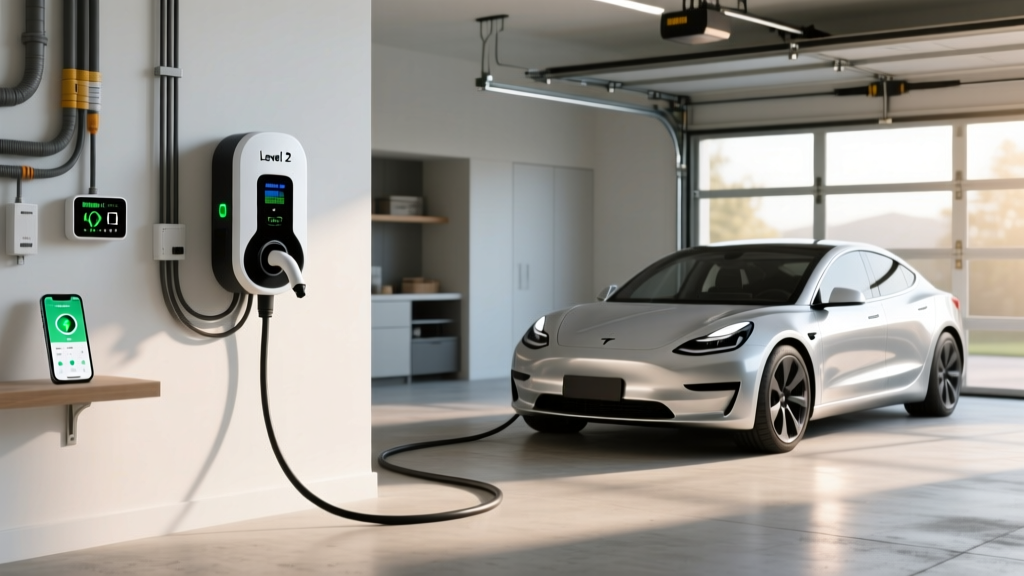
Hotel charging solves the travel problem, but 80%+ of EV charging happens at home. If you have returned from a Canadian road trip and realized your home setup needs an upgrade, here is a comprehensive breakdown of what a Level 2 home installation involves in 2026.
Electrical Requirements for Home Level 2 Charging
A Level 2 home charger requires a dedicated 240V circuit, typically 40A or 48A. This is the same voltage as an electric dryer or oven. Key specifications:
- 40A circuit: Supports up to 9.6 kW continuous output (32A continuous draw, per the 80% NEC/CEC rule for continuous loads). Suitable for most EVs.
- 48A circuit: Supports up to 11.5 kW continuous output (48A rated chargers draw 48A but require a 60A breaker). Faster charging for large-battery vehicles.
- 60A breaker and 6 AWG copper wire (for 48A chargers) or 50A breaker and 8 AWG copper wire (for 40A chargers).
Panel Upgrade Considerations
Older Canadian homes — particularly those built before 1990 — may have 100A electrical panels that lack capacity for a dedicated 40–60A EV circuit. A panel upgrade to 200A typically costs $2,000–$4,000 CAD including permits and electrician labor. Some homeowners opt for a smart load-management system (like the Emporia Vue with smart breaker) that dynamically limits charger draw when other high-load appliances are running, avoiding the need for a panel upgrade entirely.
Installation Cost Breakdown (Canadian Dollars, 2026)
| Component | Cost Range (CAD) | Notes |
|---|---|---|
| Level 2 charger hardware (hardwired, 40–48A) | $600–$1,100 | ChargePoint Home Flex, Flo Home X5, Emporia Level 2 |
| Electrician labor (circuit run, wiring, mounting) | $800–$2,500 | Varies by distance from panel; longer runs cost more |
| Electrical permit | $100–$300 | Required in all Canadian provinces; inspection included |
| Panel upgrade (if needed) | $2,000–$4,000 | 100A to 200A upgrade; not always required |
| Total (no panel upgrade) | $1,500–$3,900 | Most common scenario for homes built after 2000 |
| Total (with panel upgrade) | $3,500–$7,900 | Older homes with 100A service |
Many Canadian provinces offer rebates that offset installation costs. British Columbia's CleanBC program, Quebec's Roulez vert program, and various municipal incentives can cover $250–$1,000 of the total. Check your province's current offerings, as programs and budgets change annually.
Recommended Home Chargers for Canadian EV Owners
- Flo Home X5 (48A, 11.5 kW, J1772): Canadian-made, rated to −40°C, hardwired, smart scheduling, ~$899 CAD. Best cold-weather performance.
- ChargePoint Home Flex (up to 50A, 12 kW, J1772 or NACS): Adjustable amperage via app, 23-foot cable, Energy Star certified, ~$949 CAD. Most flexible amperage configuration.
- Emporia Level 2 Smart Charger (48A, 11.5 kW, J1772): Integrated energy monitoring, load management capable, ~$599 CAD. Best value with smart features.
- Tesla Wall Connector (48A, 11.5 kW, NACS): Native NACS connector, 24-foot cable, load sharing between multiple units, ~$650 CAD. Best for Tesla-only households.
Safety and Code Requirements
All Canadian provinces require Level 2 charger installations to comply with the Canadian Electrical Code (CEC). Key requirements include:
- Dedicated circuit: The charger must have its own breaker — no sharing with other outlets or appliances.
- GFCI protection: Required for outdoor installations and in garages in many jurisdictions.
- Outdoor rating: If mounted outside, the charger must carry an NEMA 4 or IP65 rating for weather resistance. All recommended chargers above meet this standard.
- Permit and inspection: Mandatory in all provinces. An ESA (Electrical Safety Authority) or provincial equivalent inspector will verify the installation before energizing.
Frequently Asked Questions
Which Canadian hotel brand has the most EV charging stations?
As of 2026, Fairmont leads among luxury brands with Level 2 and some DC fast chargers at most of its major Canadian properties. Among mid-scale brands, Best Western Plus has the widest deployment by total property count, though availability is inconsistent due to its franchise model. Alt Hotels offers the most reliable complimentary charging experience relative to its portfolio size.
Can I use a Tesla Supercharger at a Canadian hotel?
Tesla Superchargers are not typically located at hotels — they are deployed along highway corridors and at retail centers. However, some Canadian hotels host Tesla Destination Chargers (Level 2, NACS connector, 7.2–11.5 kW), which are slower than Superchargers but ideal for overnight stays. With Tesla opening the Supercharger network to non-Tesla EVs via the NACS standard, some highway-adjacent hotels may eventually host Supercharger stalls, but this remains rare as of 2026.
How much does it cost to charge an EV overnight at a Canadian hotel?
Costs range from $0 (complimentary at properties like Alt Hotels and some Fairmont locations) to approximately $12–$20 CAD for a full overnight session at paid stations charging $1.50–$2.50/hour over 8 hours. Compare this to $35–$45 CAD for gasoline to cover the same distance.
Do I need an adapter to charge at Canadian hotel EV stations?
It depends on your vehicle. If you drive a Tesla (NACS connector) and the hotel has J1772 Level 2 chargers, you need a J1772-to-NACS adapter. If you drive a CCS1-equipped EV and the hotel has NACS chargers, you need a NACS-to-CCS adapter. Most Canadian hotel chargers in 2026 still use J1772 for Level 2, so Tesla drivers should always travel with their adapter. Non-Tesla EV drivers with J1772 inlets can plug in directly at most hotel stations.
What happens if the hotel charger is broken or blocked by a gas car?
This is a common frustration. Use PlugShare to check recent user reviews and photos before booking. If you arrive and find chargers non-functional or ICE'd (blocked by a non-EV), contact the front desk — many hotels will move the vehicle or direct you to a nearby public charger. Flo and ChargePoint apps also show real-time charger status, so you can verify functionality before arrival.
Is DC fast charging available at Canadian hotels?
DC fast charging at hotel properties is still uncommon in Canada as of 2026, limited to select Fairmont, Delta, and independent properties along major corridors like the Trans-Canada Highway and the 401 in Ontario. Most hotels offer Level 2 only, which is sufficient for overnight stays. For rapid top-ups, plan a stop at a Petro-Canada EV station, Electrify Canada site, or Tesla Supercharger within 10–20 km of your hotel.