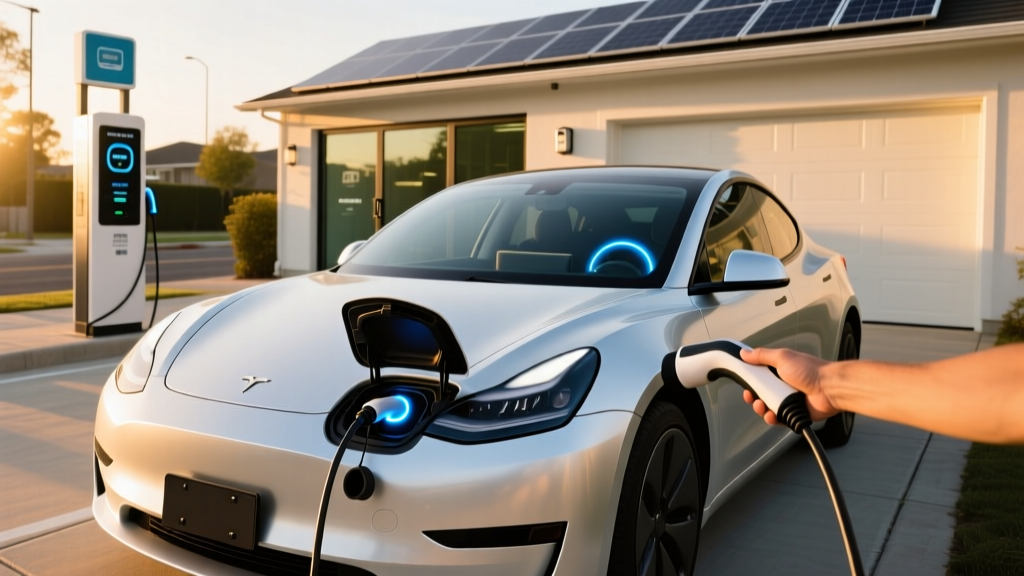
The short answer to "can you buy a Tesla Supercharger" is technically yes — but probably not in the way you're imagining, and almost certainly not for your garage. Tesla's V3 and V4 Superchargers deliver 250 kW to 350+ kW of DC fast-charging power, require 480V three-phase commercial electrical service, and cost tens of thousands of dollars per unit before installation. For the overwhelming majority of EV owners, a Level 2 home charger is the practical, cost-effective solution that delivers a full battery every morning.
This guide breaks down exactly what's available for purchase, what home electrical service can actually support, what real charging speeds look like at each level, and how to spec a home charging setup that matches your vehicle and electrical panel.
Why You Can't (Practically) Buy a Tesla Supercharger for Home
Tesla does sell Supercharger hardware to commercial fleet operators, hotels, and shopping centers through its commercial charging programs. However, a single V4 Supercharger cabinet and post costs roughly $30,000–$50,000 before installation, and the electrical service required — typically a dedicated 480V three-phase transformer feed — runs an additional $20,000–$100,000+ depending on utility proximity and trenching distance.
Residential electrical panels in the U.S. are almost universally single-phase 120V/240V split-phase service, typically 100A to 200A total capacity. Even a high-end residential panel cannot deliver the 300+ amps of continuous 480V three-phase current that a Supercharger demands. Utilities will not approve a residential Supercharger interconnection in virtually any jurisdiction.
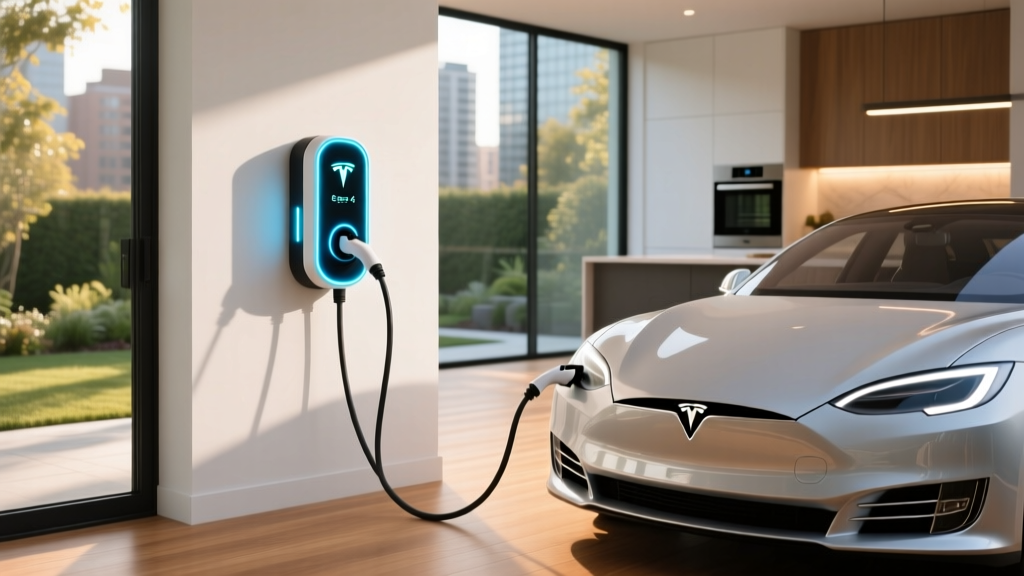
What Tesla does sell to homeowners is the Tesla Wall Connector — a Level 2 AC charger that delivers up to 11.5 kW (48A) on a 60A dedicated circuit. This is the practical home-charging solution Tesla recommends, and it's what most Tesla owners actually install.
Charging Levels Explained: Speeds in kW and Miles Per Hour
Understanding the three charging levels is essential before spec'ing equipment. The critical distinction: kW (kilowatts) measures power — how fast energy flows into your battery. kWh (kilowatt-hours) measures energy — the total capacity of your battery, like gallons in a fuel tank.
| Level | Voltage | Max Power (kW) | Miles of Range Added Per Hour | Typical Use Case |
|---|---|---|---|---|
| Level 1 | 120V AC | 1.4–1.9 kW | 3–5 mi/hr | Overnight trickle; PHEVs; emergency backup |
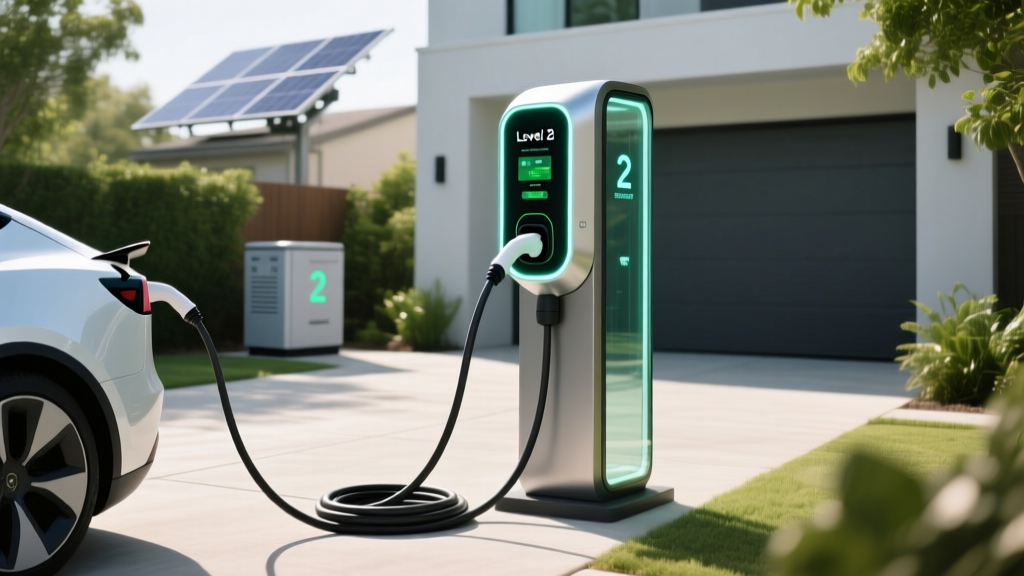
| Level 2 | 240V AC | 3.3–19.2 kW | 12–75 mi/hr | Home daily charging; workplace; public AC |
| DC Fast Charge | 200–900V DC | 50–350+ kW | 150–1,000+ mi/hr (peak) | Road trips; 10–80% in 15–40 min |
Real-world context: A Tesla Model Y Long Range (75 kWh usable battery, ~310 miles EPA range) charging on a 48A Level 2 Wall Connector at 11.5 kW will add roughly 44 miles of range per hour, going from 10% to 80% in approximately 4.5 hours. That same vehicle on a 250 kW V3 Supercharger reaches 10–80% in roughly 25–30 minutes, though charging speed tapers significantly above 80% to protect battery health.
Level 1 charging from a standard 120V household outlet at 12A delivers about 1.4 kW — enough for roughly 4 miles of range per hour. This works for plug-in hybrids with small batteries (e.g., a Toyota RAV4 Prime with 18.1 kWh battery, ~42 miles electric range) but is impractical as a primary charging method for any full-size BEV.
Home Level 2 Installation: Electrical Requirements and Costs
Installing a Level 2 home charger involves three cost components: the charging equipment itself, the licensed electrician's labor and materials, and local permitting. Total costs vary enormously based on your home's existing electrical infrastructure.
Electrical Requirements for Level 2 Charging
Most Level 2 home chargers run on 240V AC and draw between 16A and 48A continuous. Electrical code (NEC Article 625) requires that continuous loads use no more than 80% of a circuit's rated capacity, meaning:
- A 32A charger (7.7 kW) requires a 40A dedicated circuit
- A 40A charger (9.6 kW) requires a 50A dedicated circuit
- A 48A charger (11.5 kW) requires a 60A dedicated circuit
Your home's electrical panel must have both the physical breaker slots available and the total amperage capacity to support the additional load. A 200A panel with existing heavy loads (electric range, dryer, HVAC) may not have sufficient headroom for a 60A EV circuit without a load calculation performed by a licensed electrician.
Panel Upgrade Reality
Homes with 100A service — common in houses built before 1990 — almost always require a panel upgrade to 200A before adding a 48A Level 2 charger. Even some 200A panels need upgrading if they're older Federal Pacific or Zinsco panels (known safety hazards that insurers flag) or if existing loads consume most of the panel's capacity.
A panel upgrade from 100A to 200A typically costs $1,500–$3,500 including the new panel, permit, utility coordination, and electrician labor. In rare cases requiring a new service drop from the utility, costs can reach $5,000–$8,000.
| Component | Simple Install (Panel Adjacent) | Complex Install (Long Run / Panel Upgrade) |
|---|---|---|
| Level 2 Charger Equipment | $400–$700 | $400–$700 |
| Electrician Labor + Wire + Conduit | $300–$800 | $1,200–$3,000 |
| Electrical Permit | $50–$200 | $50–$200 |
| Panel Upgrade (if needed) | — | $1,500–$3,500 |
| Utility Service Upgrade (rare) | — | $2,000–$5,000 |
| Total Estimated Cost | $750–$1,700 | $3,150–$12,400 |
The simplest, cheapest installs involve a garage or exterior wall directly behind or adjacent to the electrical panel, requiring a short wire run of 10–20 feet. Costs escalate with distance (longer wire runs in conduit through walls or underground), the need to trench across a yard, or finished-wall demolition and repair.
Federal Tax Credit for Home Charging Equipment
The IRS §30C Alternative Fuel Vehicle Refueling Property Credit covers 30% of home EV charger equipment and installation costs, up to $1,000. This credit applies through 2032 but has geographic restrictions — your home must be located in a qualifying census tract (generally non-urban or low-income communities). Check the IRS guidance for current eligibility maps, as these are subject to annual updates.
Connector Compatibility: NACS, CCS1, and CHAdeMO
The North American EV charging connector landscape has consolidated significantly. Tesla's North American Charging Standard (NACS) has been adopted by nearly every major automaker for vehicles starting in the 2025–2026 model years.
| Connector | Brands Using It (Native) | DC Fast Charging Network Access |
|---|---|---|
| NACS (Tesla) | Tesla (all years), Ford (2025+), GM (2025+), Rivian (2025+), Hyundai/Kia (2025+), Volvo/Polestar (2025+), BMW (2025+), Mercedes (2026+) | Tesla Supercharger (native), Electrify America (NACS stalls deploying), EVgo |
| CCS1 | Volkswagen, older Ford/GM/Hyundai/Kia (2024 and earlier), BMW iX (pre-2025), most legacy BEVs | Electrify America, EVgo, ChargePoint DC, Ionity (EU) |
| CHAdeMO | Nissan Leaf (legacy only — discontinued 2025), Mitsubishi Outlander PHEV (legacy) | Declining network support; limited new installations |
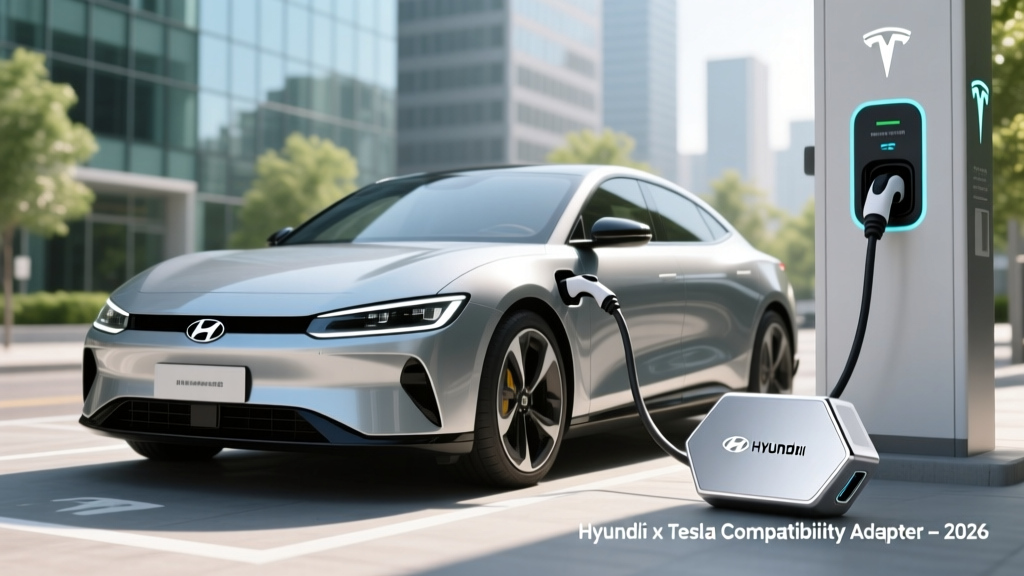
Adapter needs: If you own a CCS1-equipped vehicle (e.g., 2022–2024 Ford Mustang Mach-E or Hyundai Ioniq 5), you'll need a CCS-to-NACS adapter (approximately $200–$250 from Tesla or third-party manufacturers) to access Tesla Superchargers. Tesla owners charging at CCS-only public stations need a NACS-to-CCS adapter. Most 2025+ model-year EVs ship with NACS natively, eliminating adapter requirements.
For Level 2 home charging, all non-Tesla EVs use the J1772 connector standard. Tesla provides a J1772 adapter with every vehicle. The Tesla Wall Connector ships with the NACS plug natively but works with non-Tesla NACS vehicles directly and with CCS/J1772 vehicles via adapter.
Charging Cost Per Mile: Home vs. Public vs. Gas
The cost advantage of home charging over public DC fast charging is substantial, and both typically beat gasoline on a per-mile basis. Here's how the numbers work with real electricity and fuel prices.
| Scenario | Rate | Vehicle Efficiency | Cost Per Mile |
|---|---|---|---|
| Home Level 2 (national avg electricity) | $0.16/kWh | 3.5 mi/kWh (typical midsize BEV) | $0.046 |
| Home Level 2 (off-peak TOU rate) | $0.09/kWh | 3.5 mi/kWh | $0.026 |
| Home Level 2 (California peak) | $0.35/kWh | 3.5 mi/kWh | $0.100 |
| Public Level 2 (ChargePoint, avg) | $0.25/kWh | 3.5 mi/kWh | $0.071 |
| DC Fast Charge (Tesla Supercharger, avg) | $0.32/kWh | 3.5 mi/kWh | $0.091 |
| DC Fast Charge (Electrify America) | $0.48/kWh | 3.5 mi/kWh | $0.137 |
| Gasoline (25 MPG combined, $3.40/gal) | $3.40/gallon | 25 mi/gal | $0.136 |
| Gasoline (30 MPG combined, $3.40/gal) | $3.40/gallon | 30 mi/gal | $0.113 |
Key takeaway: Home charging on an off-peak time-of-use (TOU) rate plan delivers fuel costs 75–80% lower than gasoline. Even at California's peak residential rates, home Level 2 charging is competitive with a 30 MPG gas car. Public DC fast charging narrows the gap considerably — exclusive reliance on Electrify America or similar networks can match or exceed gasoline costs per mile.
To maximize savings, contact your utility about EV-specific TOU rate plans. Most utilities offer significantly discounted overnight rates (10 PM – 6 AM) designed for EV charging. Setting your charger or vehicle to charge during these windows is the single most impactful cost optimization available.
Recommended Home Level 2 Chargers (2026)
After evaluating build quality, reliability, smart features, cable management, and real-world charging performance, these are the top Level 2 home chargers available in 2026.
Tesla Wall Connector (Gen 3)
- Power Output: Up to 11.5 kW (48A) on a 60A circuit
- Connector: NACS native; J1772 adapter included
- Cable Length: 24 feet
- Smart Features: Wi-Fi enabled, OTA firmware updates, power sharing (link up to 6 units on one circuit), Tesla app integration, load management
- Price: $475 (direct from Tesla)
- Best For: Tesla owners; households with multiple Teslas needing power sharing
ChargePoint Home Flex
- Power Output: Configurable 16A–50A (3.8–12 kW); requires appropriately sized circuit
- Connector: J1772 native (22-foot cable); NACS adapter available
- Cable Length: 22 feet
- Smart Features: Wi-Fi, ChargePoint app with scheduling and cost tracking, Alexa integration, amperage configurable via DIP switch to match your circuit
- Price: $550–$700
- Best For: Non-Tesla EV owners; flexible amperage for panels with limited headroom
Emporia Vue Level 2 EV Charger
- Power Output: Up to 11.5 kW (48A) on a 60A circuit
- Connector: J1772 native; NACS adapter available
- Cable Length: 24 feet
- Smart Features: Wi-Fi, Emporia app with real-time energy monitoring, integrates with Emporia Vue home energy monitor for whole-home load tracking, solar-aware charging
- Price: $400–$500
- Best For: Budget-conscious buyers; homes with solar panels; energy monitoring enthusiasts
Grizzl-E Smart
- Power Output: Up to 10 kW (40A) on a 50A circuit
- Connector: J1772 native
- Cable Length: 24 feet
- Smart Features: Wi-Fi, OCPP-compatible (open protocol for future network flexibility), adjustable amperage, built-in overload protection
- Price: $450–$550
- Best For: Cold-climate durability (rated to -40°F); Canadian-built quality; outdoor installations
Real-World Charging Times: 10% to 80% by Battery Size
Charging speed depends on both the charger's power output (kW) and the vehicle's onboard charger capacity (for AC Level 2) or battery acceptance rate (for DC fast charging). Here are approximate 10–80% charge times for common scenarios.
| Vehicle (Battery Size) | Level 1 (1.4 kW) | Level 2 — 32A (7.7 kW) | Level 2 — 48A (11.5 kW) | DC Fast (Peak Rate) |
|---|---|---|---|---|
| Toyota RAV4 Prime PHEV (18.1 kWh) | ~8.5 hrs | ~1.5 hrs | ~1.1 hrs* | N/A (no DCFC) |
| Tesla Model Y LR (75 kWh) | ~36 hrs | ~6.5 hrs | ~4.5 hrs | ~25 min (250 kW peak) |
| Hyundai Ioniq 5 (77.4 kWh) | ~37 hrs | ~7 hrs | ~5 hrs | ~18 min (350 kW peak) |
| Ford F-150 Lightning Ext. (131 kWh) | ~65 hrs | ~12 hrs | ~8 hrs | ~40 min (150 kW peak) |
| Chevy Equinox EV (85 kWh) | ~41 hrs | ~7.5 hrs | ~5.5 hrs | ~30 min (175 kW peak) |
*Note: Most PHEVs have onboard chargers limited to 3.3–6.6 kW, so a 48A/11.5 kW circuit will not charge them faster than their onboard charger allows. The vehicle's onboard AC-to-DC converter is the bottleneck, not the wall charger.
Charging curve reality check: DC fast charging speeds are peak rates, not sustained rates. A vehicle advertising "250 kW peak" may sustain that rate only between 10–30% state of charge, then taper progressively — dropping to ~100 kW by 60% and ~40 kW by 80%. The 10–80% time is the meaningful metric, not the peak kW number.
Safety and Electrical Code Requirements
EV charging installations must comply with NEC Article 625 and local building codes. Key requirements your electrician will address:
- Dedicated circuit: Your EV charger must be on its own dedicated breaker — it cannot share a circuit with other outlets or appliances.
- GFCI protection: The 2020 NEC and later require GFCI (Ground Fault Circuit Interrupter) protection for all EV charging outlets rated 150V to ground or less and 50A or less. Many modern hardwired chargers have built-in GFCI protection; outlet-based (NEMA 14-50) installations require a GFCI breaker, which adds $50–$120 to the installation cost.
- Outdoor rating: If your charger is installed outdoors, it must carry a NEMA 4 or NEMA 4X weather-resistance rating. All chargers recommended above meet this standard.
- Wire gauge: A 60A circuit requires 6 AWG copper wire (THHN in conduit) or 4 AWG aluminum. Your electrician will size wire based on run length, ambient temperature, and conduit fill.
- Permit and inspection: Virtually all jurisdictions require an electrical permit for EV charger installation, followed by a municipal inspection. Unpermitted installations can void homeowner's insurance coverage and create liability exposure.
Frequently Asked Questions
Can you buy a Tesla Supercharger for your home?
Tesla does not sell Supercharger units to residential customers for home installation. Superchargers require 480V three-phase commercial electrical service that residential panels cannot provide. The Tesla Wall Connector (Level 2, up to 11.5 kW) is Tesla's home charging product and is available for $475.
How much does it cost to install a home EV charger?
A straightforward Level 2 installation with the electrical panel nearby typically costs $750–$1,700 including equipment, electrician labor, and permit. Complex installations requiring long wire runs, trenching, or a panel upgrade from 100A to 200A can range from $3,150 to $12,400. Get at least three quotes from licensed electricians.
How fast will each charging level add range?
Level 1 (120V) adds approximately 3–5 miles per hour. Level 2 (240V, 48A) adds roughly 30–45 miles per hour depending on vehicle efficiency. DC fast charging at 150–250 kW can add 150–300+ miles in 20–30 minutes, though speed tapers as the battery fills past 80%.
Which connector does my EV use?
All 2025+ Tesla, Ford, GM, Rivian, Hyundai, Kia, and Volvo/Polestar EVs use the NACS connector. Most pre-2025 non-Tesla EVs use CCS1. The Nissan Leaf (now discontinued) used CHAdeMO. For Level 2 home charging, non-Tesla vehicles use J1772; Tesla provides a J1772 adapter with every vehicle.
Do I need to upgrade my electrical panel for an EV charger?
Homes with 100A service almost always need a 200A panel upgrade ($1,500–$3,500). Homes with 200A service may or may not need an upgrade depending on existing loads. A licensed electrician will perform a load calculation per NEC Article 220 to determine if your panel has sufficient capacity for a dedicated 40A–60A EV circuit.
Is home charging cheaper than gas?
Yes, significantly. Home charging on a national average electricity rate of $0.16/kWh costs approximately $0.046 per mile for a typical midsize EV — about 65% less than gasoline at $3.40/gallon in a 25 MPG vehicle. On off-peak TOU rates ($0.09/kWh), the cost drops to $0.026 per mile, an 80% savings. Public DC fast charging at $0.32–$0.48/kWh narrows the advantage but still typically undercuts gasoline.
Can I charge my non-Tesla EV at a Tesla Supercharger?
Yes, if your vehicle has a NACS connector (most 2025+ EVs) or you have a CCS-to-NACS adapter. Tesla has opened its Supercharger network to non-Tesla vehicles at select locations, and expansion continues through 2026. Check the Tesla app for station availability and NACS compatibility before relying on Superchargers for non-Tesla vehicles.