The Short Answer: Yes, Rivian Can Use Tesla Superchargers
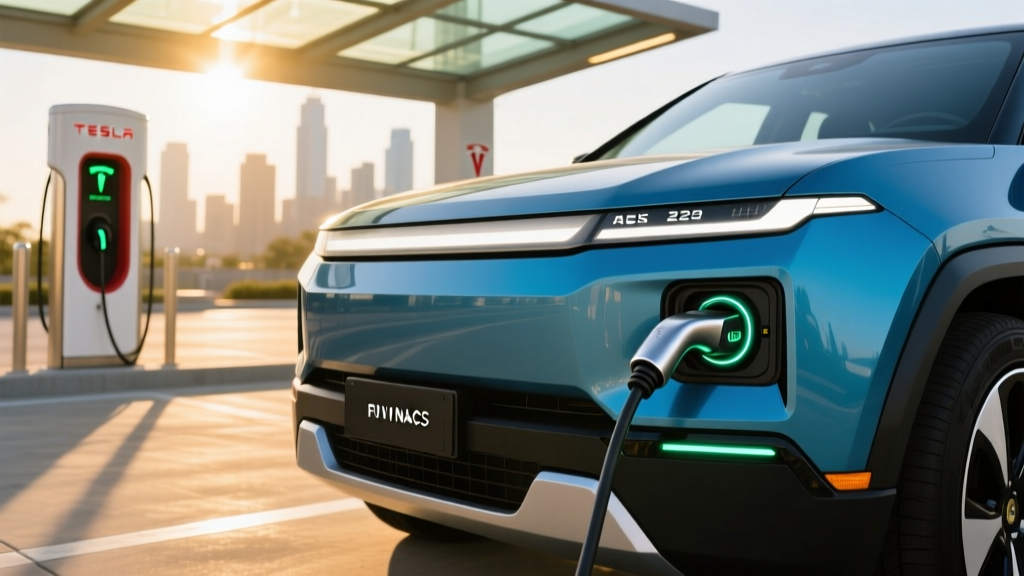
As of 2026, Rivian owners can charge at Tesla Supercharger stations using a NACS (North American Charging Standard) adapter. Rivian began shipping NACS adapter kits to existing owners in mid-2024, and all 2025 and 2026 model-year R1T trucks and R1S SUVs now come equipped with a native NACS charge port, eliminating the need for an adapter at Tesla stations entirely.
This transition followed Rivian's February 2024 announcement that it would adopt the NACS connector, joining Ford, GM, Volvo, and others in moving away from the CCS1 standard. The practical result: Rivian drivers now have access to over 25,000 Tesla Supercharger stalls across North America in addition to Electrify America, EVgo, and other CCS-based networks via a separate CCS adapter.
But access isn't the same as optimal speed. Let's break down exactly what charging looks like for Rivian vehicles across every level, what equipment you need, and what it actually costs to set up and fuel an R1T or R1S.
Rivian Charging Levels: Speed, Power, and Range Added
Understanding EV charging requires separating kW (kilowatts), which measures power flow rate, from kWh (kilowatt-hours), which measures total energy stored. Think of kW as the width of the pipe and kWh as the size of the tank. A 149 kWh battery (like the Rivian Max Pack) takes longer to fill than a 106 kWh Standard battery — even at the same charge rate.
| Level | Voltage / Amps | Power (kW) | Miles of Range Per Hour | Typical Use Case |
|---|---|---|---|---|
| Level 1 | 120V / 12A | ~1.4 kW | ~3–4 mi/hr | Emergency / overnight trickle |
| Level 2 | 240V / 48A | 11.5 kW | ~25–30 mi/hr | Home daily charging |
| Level 2 (max Rivian onboard) | 240V / 48A | 11.5 kW | ~25–30 mi/hr | Home / destination |
| DC Fast (CCS1) | 400V+ DC | Up to ~200 kW peak | ~140+ mi in 20 min | Road trips (EA, EVgo) |
| DC Fast (NACS / Supercharger V3) | 400V+ DC | Up to ~200 kW peak | ~140+ mi in 20 min | Road trips (Tesla network) |
Connector Compatibility: NACS, CCS1, and Adapter Requirements
The connector landscape has shifted dramatically. Here's where Rivian stands in 2026:
| Connector | Network Examples | Rivian Status (2025–2026 MY) | Rivian Status (2022–2024 MY) |
|---|---|---|---|
| NACS (Tesla) | Tesla Supercharger, Rivian Adventure Network (future) | Native port — no adapter needed | Adapter required (provided by Rivian) |
| CCS1 | Electrify America, EVgo, ChargePoint DC | CCS adapter required (sold separately) | Native port — no adapter needed |
| CHAdeMO | Largely retired networks | Not compatible; no adapter available | Not compatible |
| J1772 (Level 2 AC) | Home chargers, public Level 2 | NACS port accepts J1772 via adapter | CCS1 port accepts J1772 natively (top portion) |
If you own a 2022–2024 Rivian with the original CCS1 port, you need the Rivian-provided NACS adapter to use Tesla Superchargers. Rivian shipped these adapters to registered owners starting in mid-2024. If you haven't received yours, contact Rivian support or check your account in the Rivian app.
For 2025–2026 Rivians with the native NACS port, you'll instead need a CCS adapter (available from Rivian and third-party manufacturers) to access Electrify America and other CCS networks. This is critical for road trips where Supercharger coverage has gaps.
How Fast Does a Rivian Actually Charge at a Tesla Supercharger?
Tesla's V3 Superchargers deliver up to 250 kW, and V4 cabinets can deliver even more — but your vehicle's charge acceptance rate is the limiting factor. Rivian's Dual-Motor and Tri-Motor configurations peak around 200 kW under ideal conditions, meaning you won't fully utilize a V3 stall's maximum output.
Here's what real-world charging sessions look like for popular Rivian battery packs:
| Battery Pack | Usable Capacity | Peak Charge Rate | 10–80% at 200 kW Capable Station | 10–80% at 150 kW Station |
|---|---|---|---|---|
| Standard (2025+) | ~106 kWh | ~200 kW | ~28–32 min | ~35–40 min |
| Large / Dual-Motor | ~128 kWh | ~200 kW | ~33–38 min | ~40–48 min |
| Max Pack (Tri-Motor) | ~149 kWh | ~200 kW | ~38–44 min | ~48–55 min |
Preconditioning matters. Rivian's battery thermal management system will precondition the pack when you navigate to a charging station in the vehicle's navigation system. A cold battery (especially below 50°F) may accept only a fraction of its peak rate until it warms up. Always navigate to your charger using the built-in nav to trigger preconditioning — this alone can shave 5–10 minutes off your session in cold weather.
Home Charging Installation: Costs, Electrical Requirements, and Equipment
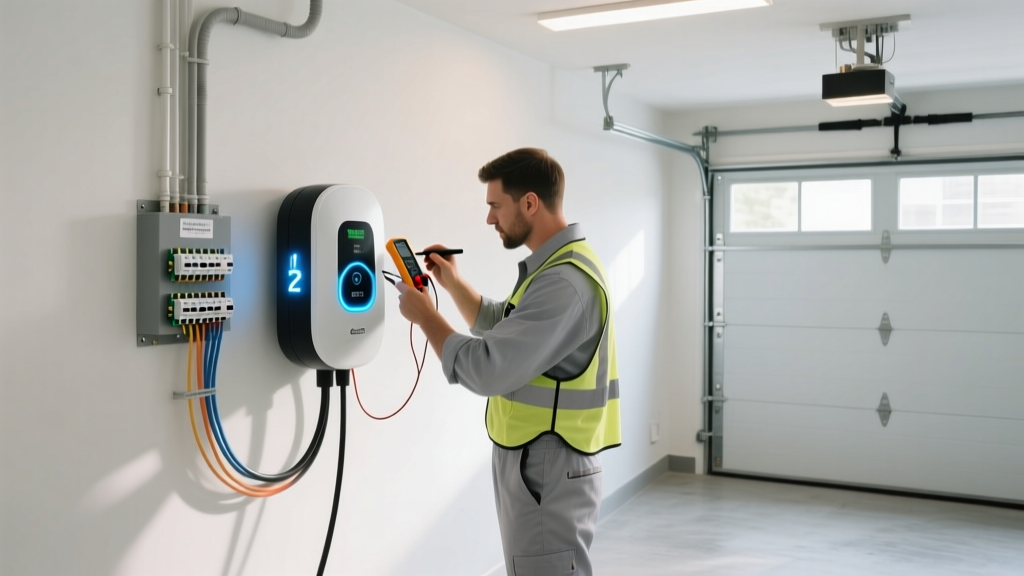
Home Level 2 charging is the backbone of EV ownership. For Rivian's 11.5 kW onboard charger, you want a 240V / 48A dedicated circuit (a 60A breaker is required by the National Electrical Code for continuous loads at 48A). This delivers the maximum AC charge rate your R1T or R1S can accept.
What Electrical Upgrades Might You Need?
Before installing a Level 2 charger, assess your home's electrical panel:
- Panel capacity: You need at least 60A of available headroom on a 200A service panel. Homes with 100A service or heavily loaded 200A panels may require a panel upgrade ($1,500–$3,000+) or a smart load-management device.
- Dedicated circuit: EV chargers require their own dedicated circuit — you cannot share it with a dryer or oven.
- Run length: If your panel is far from the garage or parking spot, longer wire runs add copper cost ($8–$15/ft for 6 AWG).
- Permit: Most jurisdictions require an electrical permit ($50–$200) and a final inspection.
- GFCI protection: NEC 2020+ requires GFCI protection for EV circuits in garages. Some chargers have built-in GFCI; confirm with your electrician to avoid nuisance tripping.
- Outdoor rating: If installing outside, the charger and receptacle must be NEMA 4 or NEMA 4X rated for weather resistance.
| Component | Cost Range | Notes |
|---|---|---|
| Level 2 Charger (hardware) | $300 – $750 | Varies by brand, power, smart features |
| Electrician labor | $500 – $2,000 | Depends on run length, conduit, complexity |
| Electrical permit | $50 – $200 | Varies by municipality |
| Panel upgrade (if needed) | $1,500 – $3,500 | 100A→200A service upgrade; not always required |
| Load management device (if needed) | $200 – $600 | Alternative to panel upgrade; shares capacity |
| Total (standard install) | $850 – $2,950 | Without panel upgrade |
| Total (with panel upgrade) | $2,350 – $6,450 | Older homes with 100A service |
Always get at least two quotes from licensed electricians. Ask specifically about your panel's available amperage and whether a load calculation is needed. For detailed guidance on residential EV electrical work, consult a licensed professional — final specifications must come from a qualified electrician familiar with your home's wiring.
Recommended Home Chargers for Rivian (2026)
| Charger Model | Max Power Output | Connector | Cable Length | Smart Features | Price (MSRP) |
|---|---|---|---|---|---|
| Tesla Wall Connector (Gen 4) | 11.5 kW (48A) | NACS (native for 2025+ Rivian) | 24 ft | Wi-Fi, OTA updates, load sharing, access control | ~$450 |
| ChargePoint Home Flex | 12 kW (50A adjustable) | J1772 (use NACS adapter) or NACS version | 23 ft | Wi-Fi, app scheduling, Alexa, energy tracking | ~$550–$700 |
| Emporia Level 2 EV Charger | 11.5 kW (48A) | J1772 or NACS | 24 ft | Wi-Fi, solar integration, energy monitoring, scheduling | ~$350–$400 |
| Grizzl-E Smart | 10 kW (40A) | J1772 (NACS via adapter) | 24 ft | OTA updates, OCPP, rugged outdoor build | ~$450 |
Editor's pick for Rivian (2025+): The Tesla Wall Connector Gen 4 is the most seamless choice for Rivians with the native NACS port. It delivers the full 11.5 kW your vehicle can accept, has a clean 24-foot cable, and integrates with the same ecosystem you'll use at Superchargers. For 2022–2024 Rivians with CCS1 ports, the ChargePoint Home Flex with a J1772 connector (which plugs into the top half of a CCS1 inlet) is the most versatile option.
Charging Cost: Home vs. Public vs. Gas
One of the strongest ownership arguments for the Rivian R1T and R1S is fuel cost savings — but the math varies significantly depending on where and when you charge.
| Scenario | Avg. $/kWh | Cost for 100 kWh (Large Pack) | Cost Per Mile (R1T Dual-Motor ~2.4 mi/kWh) |
|---|---|---|---|
| Home (national avg. residential) | $0.17 | $17.00 | ~$0.07/mi |
| Home (off-peak TOU rate) | $0.08–$0.12 | $8.00–$12.00 | ~$0.03–$0.05/mi |
| Tesla Supercharger (avg.) | $0.28–$0.36 | $28.00–$36.00 | ~$0.12–$0.15/mi |
| Electrify America (avg.) | $0.31–$0.43 | $31.00–$43.00 | ~$0.13–$0.18/mi |
| Gas equivalent (20 MPG truck, $3.40/gal) | — | $17.00 equivalent | ~$0.17/mi |
At home on an off-peak time-of-use (TOU) rate plan, a Rivian R1T Dual-Motor costs roughly 3–5 cents per mile to "fuel" — about one-quarter to one-third the cost of a comparable gas-powered truck getting 18–20 MPG. Even on public DC fast chargers, you're generally paying less per mile than gasoline, though the gap narrows considerably.
For context, the Rivian R1T Dual-Motor achieves approximately 73 MPGe combined per the EPA on fueleconomy.gov. Real-world highway efficiency drops to roughly 2.0–2.2 mi/kWh (about 60–65 MPGe), especially at 75+ mph or in cold weather. Factor this into road-trip fuel budgeting.
Federal Tax Credits and Incentives for Home Charging
The federal Alternative Fuel Vehicle Refueling Property Credit (§30C) covers 30% of home EV charger equipment and installation costs, up to $1,000. This credit applies to the charger hardware and the electrical work. Eligibility depends on your census tract meeting certain low-income or non-urban criteria — check the IRS §30C guidelines for your specific address.
For the vehicles themselves, the §30D Clean Vehicle Credit offers up to $7,500 for new EV purchases, subject to MSRP caps ($80,000 for trucks/SUVs), buyer income limits ($300K joint / $150K single), and critical-mineral and battery-sourcing requirements. As of 2026, Rivian's eligibility varies by trim and battery pack sourcing — confirm current status on the IRS qualified vehicles list before purchasing. The credit can be transferred to the dealer as a point-of-sale discount.
Many states and utilities also offer rebates for Level 2 charger installation ($200–$1,000+). Check your local utility's EV programs and your state's energy office for specific amounts, as these vary widely by jurisdiction.
Frequently Asked Questions
Can I plug my 2022–2024 Rivian directly into a Tesla Supercharger without an adapter?
No. Model-year 2022–2024 Rivians have a CCS1 charge port, which is physically incompatible with Tesla's NACS connector. You need the Rivian-provided NACS adapter. Rivian shipped these to registered owners beginning in mid-2024. If you haven't received one, contact Rivian directly or check your owner account.
Will charging at a Tesla Supercharger void my Rivian warranty?
No. Using a manufacturer-approved adapter to charge on the Tesla network does not void your Rivian battery or powertrain warranty. Rivian's battery warranty covers 8 years / 175,000 miles (whichever comes first) with a minimum 70% capacity retention threshold. The Rivian warranty details are available on their official site.
Do I need a Tesla account or app to charge my Rivian at a Supercharger?
Yes, you'll need a Tesla account linked to your Rivian vehicle. Through the Rivian app or Tesla app, you add your Rivian's VIN to your Tesla profile. Billing is handled through your Tesla account payment method. The process is similar to how Ford and GM EV owners access Superchargers.
How much does it cost to install a home EV charger for my Rivian?
A standard Level 2 home installation (48A / 240V) typically costs $850–$2,950 including the charger hardware, electrician labor, and permit — assuming your electrical panel has sufficient capacity. If your home requires a panel upgrade from 100A to 200A service, add $1,500–$3,500. Always get a professional load calculation from a licensed electrician before committing.
Which is better for road trips: Tesla Superchargers or Electrify America?
In 2026, Tesla's Supercharger network remains the most reliable and geographically comprehensive DC fast-charging network in North America, with consistently high uptime and accurate stall-status reporting. Electrify America has improved reliability but still trails in user experience. For Rivian owners with a 2025+ native NACS port, Superchargers are the default; carry a CCS adapter as backup for areas where Supercharger coverage is sparse.
Can I charge my Rivian on a regular 120V household outlet?
Yes, using the mobile charger that came with your Rivian and a standard 120V NEMA 5-15 outlet. However, Level 1 charging delivers only about 1.4 kW, adding roughly 3–4 miles of range per hour. Fully recharging a Large Pack from empty would take over 90 hours. Level 1 is suitable for emergency top-ups or very low-mileage drivers, but not practical as a daily charging strategy for most owners.
Does cold weather affect Rivian charging speed?
Significantly. Lithium-ion batteries charge slower at low temperatures to prevent lithium plating, which causes permanent degradation. In sub-freezing conditions, expect DC fast-charging sessions to take 20–40% longer unless the battery has been preconditioned. Always use the Rivian navigation system to route to a charger — this triggers automatic battery preconditioning, warming the pack to its optimal charging temperature before you arrive.