The Short Answer: Yes, Most EVs Can Now Use Tesla Chargers
If you're shopping for an EV and wondering whether non-Tesla vehicles can tap into the Supercharger network, the answer in 2026 is overwhelmingly yes — with a few connector and adapter caveats. Tesla opened its North American Charging Standard (NACS) connector to rival automakers starting in 2024, and by 2026 the transition is well underway. Ford, Rivian, General Motors, Volvo, Polestar, and Mercedes-Benz EVs now ship with native NACS charge ports, while legacy CCS1-equipped vehicles from Hyundai, Kia, BMW, and Volkswagen can access Tesla Superchargers using a certified adapter.
But access isn't uniform. Tesla operates three distinct charging ecosystems — the Supercharger DC fast network, the Destination Charger Level 2 network, and the Mobile Connector for home use — each with different compatibility rules, speeds, and costs. This guide walks through exactly which EVs can plug in, what you'll pay, how fast you'll charge, and what home-installation realities look like.
Understanding Charging Levels: What Speeds Are We Talking About?
Before mapping connector compatibility, it's critical to understand the three charging tiers and what each delivers. The most common mistake new EV owners make is confusing kW (kilowatts — the rate of power flow, like water pressure) with kWh (kilowatt-hours — the total energy stored, like gallons in a tank). A 150 kW charger doesn't deliver 150 kWh; it delivers energy at a rate of 150 kilowatts, and your battery's kWh capacity determines how long a full charge takes.
| Level | Voltage / Phase | Typical Power (kW) | Miles of Range Added per Hour | 10–80% Time (75 kWh Battery) | Use Case |
|---|---|---|---|---|---|
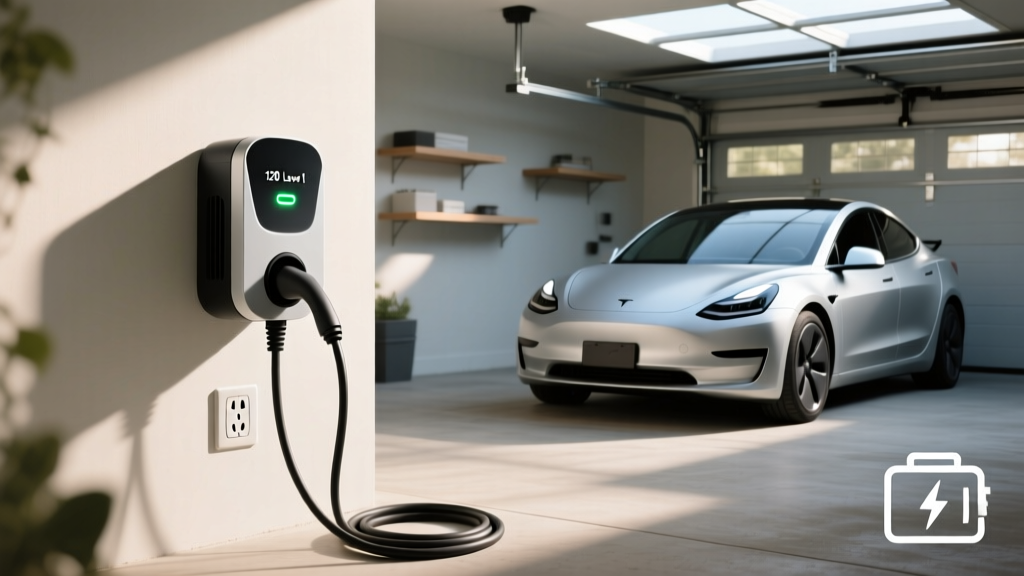
| Level 1 | 120V / Single | 1.2–1.9 kW | 3–5 miles | ~32–53 hours | Overnight trickle; PHEVs or low-mileage commutes |
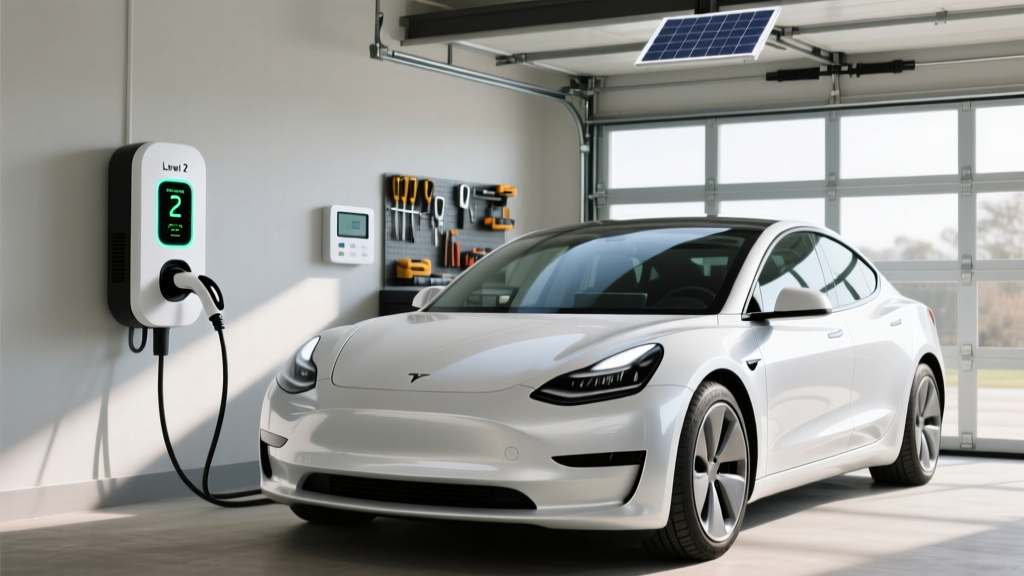
| Level 2 | 240V / Single | 7.2–19.2 kW | 20–60 miles | ~4–10 hours | Daily home and workplace charging |
| DC Fast Charge | 400–900V DC | 50–350 kW | 150–1,000+ miles (peak) | ~15–45 minutes | Road trips; rapid top-ups |
Real-world DC fast charging never sustains peak kW for the full session. Most EVs hit peak charge rate between 10–30% state of charge (SoC), then taper progressively above 50%, and dramatically above 80% to protect battery chemistry. A Tesla Model Y Long Range (75 kWh usable, NMC battery) on a V3 Supercharger peaks at ~250 kW but averages closer to 100–120 kW across a 10–80% session, completing it in roughly 25–28 minutes. Expect similar curves from a Ford Mustang Mach-E or Rivian R1T on the same hardware.
Which EVs Are Compatible with Tesla Superchargers?
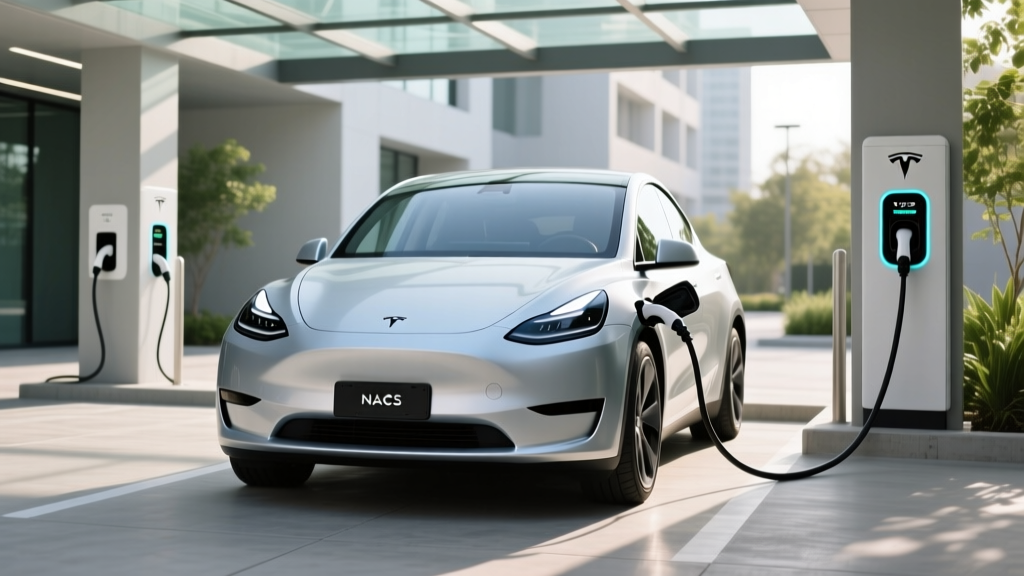
Tesla's Supercharger network — over 30,000 stalls in North America as of early 2026 — is accessible to non-Tesla EVs through two pathways: native NACS ports and CCS-to-NACS adapters.
| EV Brand | Native Port | Supercharger Access | Adapter Required? |
|---|---|---|---|
| Tesla (all models) | NACS | Full network | No |
| Ford (F-150 Lightning, Mach-E) | NACS (2025+) | Full network | No (adapter for 2022–2024 CCS models) |
| Rivian (R1T, R1S) | NACS (2025+) | Full network | No (adapter for earlier models) |
| GM (Cadillac Lyriq, Blazer EV, Equinox EV) | NACS (2025+) | Full network | No (adapter for 2024 CCS models) |
| Volvo / Polestar (EX30, EX90, Polestar 3) | NACS (2025+) | Full network | No |
| Mercedes-Benz (EQS, EQE SUV) | NACS (2025+) | Full network | No |
| Hyundai / Kia (Ioniq 5, EV6, EV9) | CCS1 | Open Supercharger stalls only | Yes — certified CCS-to-NACS adapter |
| Volkswagen (ID.4) | CCS1 | Open Supercharger stalls only | Yes — certified CCS-to-NACS adapter |
| BMW (i4, iX, i5) | CCS1 | Open Supercharger stalls only | Yes — certified CCS-to-NACS adapter |
| Nissan (Leaf, Ariya) | CHAdeMO (Leaf) / CCS1 (Ariya) | Limited (Ariya via adapter) | Yes (CHAdeMO-to-NACS adapters scarce) |
Key distinction: Tesla has opened only select Supercharger stalls to non-Tesla EVs — identified in the Tesla app as "Open to Non-Tesla EVs." Native-NACS vehicles from Ford, GM, Rivian, and others can access the full network. CCS1 vehicles using adapters are restricted to designated open stalls, which represent roughly 30–40% of the network as of mid-2026, though that share is growing. You can check stall-by-stall availability in the Tesla app or your vehicle's built-in navigation if supported.
What Does Charging at a Tesla Supercharger Cost?
Tesla Supercharger pricing varies by location, time of day, and local utility rates. Non-Tesla EV drivers typically pay a slightly higher per-kWh rate than Tesla owners unless they subscribe to Tesla's membership plan ($12.99/month in most states), which brings the per-kWh rate in line.
| Scenario | Rate | Cost to Add 200 Miles (3.5 mi/kWh avg) | Cost per Mile |
|---|---|---|---|
| Home Level 2 (off-peak utility rate) | $0.08–$0.14/kWh | $4.57–$8.00 | $0.02–$0.04 |
| Home Level 2 (standard residential rate) | $0.15–$0.22/kWh | $8.57–$12.57 | $0.04–$0.06 |
| Tesla Supercharger (Tesla owner) | $0.28–$0.42/kWh | $16.00–$24.00 | $0.08–$0.12 |
| Tesla Supercharger (non-Tesla, no membership) | $0.36–$0.52/kWh | $20.57–$29.71 | $0.10–$0.15 |
| Electrify America / EVgo DC fast | $0.35–$0.55/kWh | $20.00–$31.43 | $0.10–$0.16 |
| Gas vehicle (25 MPG combined, $3.40/gal) | $3.40/gallon | $27.20 | $0.14 |
The economics strongly favor home charging. Even at peak public DC fast rates, most EVs cost less per mile than a 25 MPG gas car. But if you rely exclusively on public Superchargers at non-member rates, the savings narrow significantly — and in high-cost states like California or Massachusetts, a heavily used DC fast charging habit can approach or briefly exceed gas costs during peak demand pricing.
Home Charging Installation: Requirements, Costs, and Gotchas
Installing a Level 2 home charger is the single highest-impact upgrade an EV owner can make. It transforms daily charging from a public-station chore into a plug-in-overnight convenience. But the installation isn't as simple as plugging into an existing outlet.
Electrical Requirements
A typical Level 2 home charger requires a 240-volt dedicated circuit — the same voltage as your electric dryer or oven. Common configurations:
- 40-amp circuit / 32-amp continuous draw: Delivers ~7.7 kW. Suitable for most daily charging needs (adds ~25–30 miles per hour). Requires a NEMA 14-50 outlet or hardwired connection.
- 50-amp circuit / 40-amp continuous draw: Delivers ~9.6 kW. Adds ~35 miles per hour. Common for larger batteries (100+ kWh trucks like the F-150 Lightning Extended Range).
- 60-amp circuit / 48-amp continuous draw: Delivers ~11.5 kW. The maximum most residential panels and EV onboard chargers support. Adds ~40–45 miles per hour.
The National Electrical Code (NEC) requires that continuous loads (anything running 3+ hours, which EV charging qualifies as) use only 80% of the circuit's rated capacity. So a 40A breaker supports 32A continuous; a 60A breaker supports 48A continuous. Your electrician will size the wire gauge accordingly — typically 6 AWG copper for 50A circuits, 4 AWG for 60A.
Do You Need a Panel Upgrade?
This is the question that can turn a $1,200 installation into a $4,500 one. Most modern homes built after 2000 have 200-amp electrical service panels with sufficient spare capacity for a 40–60A EV circuit. Older homes — particularly those built before 1980 — may have 100A or even 60A panels that are already near capacity with existing loads (HVAC, electric range, dryer, water heater).
Your electrician will perform a load calculation per NEC Article 220 to determine if your panel can handle the additional draw. If not, a panel upgrade to 200A service typically costs $1,800–$3,500 depending on your utility's connection requirements and whether new service conductors are needed.
| Component | Low Estimate | High Estimate | Notes |
|---|---|---|---|
| Level 2 Charger (hardware) | $350 | $750 | Varies by brand, power output, smart features |
| Electrician labor (simple install, short wire run) | $400 | $800 | Panel to garage, <30 ft run, conduit in finished walls adds cost |
| Electrician labor (complex install, long run or trenching) | $800 | $2,200 | Detached garage, underground conduit, attic crawls |
| Permit and inspection | $50 | $250 | Varies by municipality; some jurisdictions waive for EV circuits |
| Panel upgrade (if needed) | $1,800 | $3,500 | 100A → 200A service upgrade; not always required |
| Total (no panel upgrade) | $800 | $3,000 | Most common scenario for post-2000 homes |
| Total (with panel upgrade) | $2,600 | $5,750 | Older homes or high-load existing panels |
The federal Alternative Fuel Vehicle Refueling Property Credit (IRS Form 8911) covers up to 30% of home charger hardware and installation costs, capped at $1,000. Eligibility depends on your census tract meeting certain income or rural criteria. Always verify with a tax professional before assuming you'll qualify.
Safety and Code Considerations
- Dedicated circuit: NEC requires a dedicated breaker for EV charging — you cannot share a circuit with other appliances.
- GFCI protection: NEC 2020 and later require GFCI protection for all 240V EV receptacles (NEMA 14-50). Many Level 2 chargers have built-in GFCI; if hardwiring, your electrician may install a GFCI breaker in the panel.
- Outdoor rating: If your charger is mounted outside or in an open carport, ensure it carries a NEMA 4 or IP65 weather rating. Most major brands (ChargePoint, Wallbox, Emporia) are outdoor-rated.
- Hardwired vs. plug-in: Hardwired installations (no outlet, direct wire to charger) are generally safer for continuous high-amperage use, avoid the ~$80 NEMA 14-50 receptacle cost, and eliminate the GFCI nuisance-trip issue some owners report with receptacle-based setups.
Home Charger Equipment Recommendations (2026)
The market is saturated with Level 2 chargers, but only a few consistently deliver reliable daily performance, accurate amperage delivery, and useful smart features. Here are four proven options across the price spectrum:
Tesla Wall Connector (Gen 4)
Power: Up to 11.5 kW (48A on 60A circuit)
Connector: NACS native; includes J1772 adapter for non-Tesla EVs
Cable length: 24 ft
Smart features: Wi-Fi, OTA updates, load sharing (pair two units on one circuit), Tesla app integration, access control
Price: ~$475
Best for: Tesla owners and mixed-EV households (NACS is now the dominant standard)
ChargePoint Home Flex
Power: Up to 12 kW (50A on 60A circuit); configurable via dip switches
Connector: J1772 (compatible with all non-Tesla EVs; Tesla vehicles use included adapter)
Cable length: 23 ft
Smart features: Wi-Fi, ChargePoint app scheduling, Alexa integration, utility demand-response programs
Price: ~$550
Best for: CCS/J1772 EV owners who want maximum app control and utility rebate eligibility
Emporia Vue EV Charger
Power: Up to 11.5 kW (48A)
Connector: J1772 (NACS adapter available)
Cable length: 24 ft
Smart features: Wi-Fi, solar integration (pairs with Emporia Vue energy monitor), time-of-use scheduling, real-time cost tracking
Price: ~$400
Best for: Solar-equipped homes wanting to optimize EV charging to self-generated power
Wallbox Pulsar Plus
Power: Up to 11.5 kW (48A)
Connector: J1772 (NACS version available in 2026)
Cable length: 25 ft
Smart features: Wi-Fi + Bluetooth, Power Sharing (two chargers, one circuit), myWallbox app, Eco-Smart solar mode
Price: ~$500
Best for: Two-EV households needing dual charging on a single 60A circuit
All four units are UL-listed and support hardwired or NEMA 14-50 plug-in installation. If your household has both a Tesla and a non-Tesla EV, the Tesla Wall Connector with its included J1772 adapter is the most versatile single-unit solution. If all your vehicles are CCS/J1772, the ChargePoint Home Flex offers the deepest utility integration — many utilities offer $250–$500 rebates specifically for ChargePoint installations.
Tesla Destination Chargers: The Overlooked Level 2 Network
Beyond Superchargers, Tesla operates thousands of Destination Chargers — Level 2 Wall Connectors installed at hotels, restaurants, and shopping centers. Historically Tesla-only, many Destination Charger hosts have added J1772 units alongside the Tesla connectors, and newer installations increasingly include both. Non-Tesla EVs can use any Destination Charger equipped with a J1772 connector or a Tesla Wall Connector with a J1772 adapter (carry your own if traveling).
Destination Chargers typically deliver 7.2–11.5 kW (240V, 30–48A), adding roughly 25–44 miles of range per hour. They're usually free for customers of the host business, making them the most cost-effective public charging option — though you'll need to be parked for several hours (a dinner, a hotel night) for meaningful range gain.
Frequently Asked Questions
Can my Hyundai Ioniq 5 or Kia EV6 use Tesla Superchargers?
Yes, but only at Supercharger stalls designated as "Open to Non-Tesla EVs" in the Tesla app, and only with a certified CCS-to-NACS adapter. Hyundai and Kia are transitioning to native NACS ports starting with 2026 model-year vehicles. Until then, your adapter must support the communication handshake protocol — use only adapters approved by Tesla or your automaker to avoid connector damage or warranty issues.
Will using a Tesla Supercharger charge my non-Tesla EV at full speed?
It depends on your vehicle's maximum DC charge acceptance rate and the Supercharger generation. Tesla V3 Superchargers peak at 250 kW; V4 stalls reach up to 350 kW. A Ford F-150 Lightning (peak ~150 kW acceptance) will charge at its own maximum rate, not the stall's maximum. A Hyundai Ioniq 5 with its 800V architecture (peak ~240 kW acceptance) can take advantage of most of a V3 stall's capacity. Expect real-world 10–80% times of 18–30 minutes depending on your vehicle's charge curve and battery temperature preconditioning.
Do I need a Tesla account to charge my non-Tesla EV at a Supercharger?
Yes. Download the Tesla app, create an account, and add a payment method. You'll use the app to initiate the charging session at open stalls — there's no card reader on the stall itself. Tesla also offers a membership tier ($12.99/month) that reduces the per-kWh rate for non-Tesla vehicles to match Tesla owner pricing.
Can I install a Tesla Wall Connector for my non-Tesla EV at home?
Absolutely. The Tesla Wall Connector Gen 4 ships with a NACS connector and includes a J1772 adapter, making it compatible with virtually every EV on the road. It delivers up to 11.5 kW on a 60A circuit, supports Wi-Fi scheduling, and costs ~$475 — competitive with other premium Level 2 chargers. It's a strong choice if you anticipate your next EV being a NACS-native vehicle (increasingly likely as the industry standardizes).
How much does it cost to charge at home vs. public Superchargers?
Home Level 2 charging on an off-peak utility rate ($0.10/kWh average) costs roughly $5.70 to add 200 miles of range in a vehicle averaging 3.5 miles per kWh. The same 200 miles at a Tesla Supercharger at $0.38/kWh costs about $21.70. For comparison, a 25 MPG gas vehicle at $3.40/gallon spends $27.20 for 200 miles. Home charging saves 70–80% vs. gas; exclusive Supercharger use saves 15–25%.
What if my home's electrical panel can't support a Level 2 charger?
If your load calculation shows insufficient capacity, you have three options: (1) upgrade your panel to 200A service ($1,800–$3,500), (2) install a lower-amperage circuit (a 20A/240V circuit still delivers ~3.8 kW, adding ~13 miles per hour — adequate for low-mileage commuters), or (3) use a smart charger with load-management capability, like the Emporia Vue or Wallbox Pulsar Plus, which dynamically reduces charge rate when other household loads spike, allowing EV charging on a tighter panel budget without a full upgrade.
Sources: Tesla Supercharger network data and non-Tesla access policy via Tesla Support; IRS Alternative Fuel Vehicle Refueling Property Credit via irs.gov; EPA efficiency data via fueleconomy.gov.