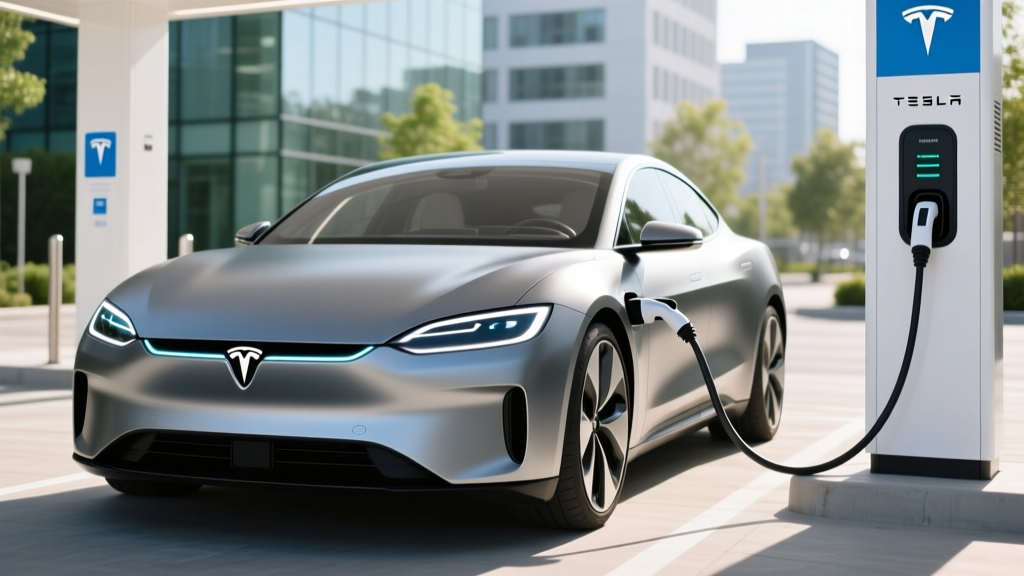
The short answer to "can non-Teslas use Superchargers?" is yes — and the access is broader in 2026 than ever before. Two paths exist: (1) vehicles built with the native NACS (North American Charging Standard) port can plug directly into any V3 or V4 Supercharger, and (2) CCS-equipped EVs can use Tesla's built-in Magic Dock adapter at select stations or carry a third-party NACS-to-CCS adapter. But access isn't universal, speeds vary by vehicle architecture, and home charging remains where most daily miles are added. This guide covers the full picture — Supercharger compatibility, real-world charging speeds, and what a Level 2 home setup actually costs.
How Non-Tesla EVs Connect to the Supercharger Network
Tesla opened its Supercharger network to non-Tesla vehicles through two mechanisms:
- Native NACS vehicles — Starting in 2025, Ford, Rivian, GM, Volvo, Polestar, and others transitioned to the NACS charge port, replacing CCS1. These vehicles plug directly into any Supercharger stall without an adapter. By the 2026 model year, nearly every major automaker selling in the US either ships with NACS or offers it as standard.
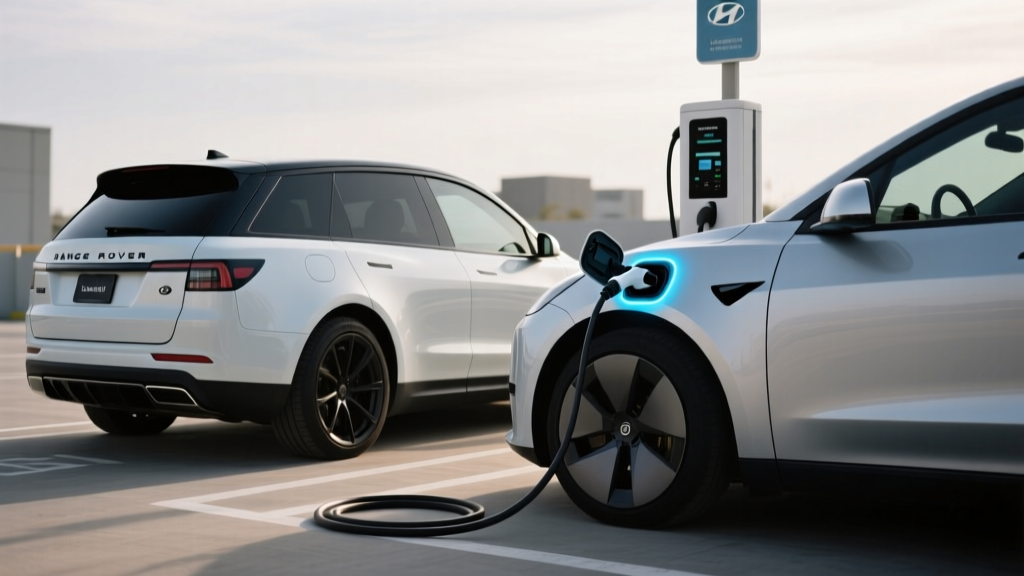
- Magic Dock stations — Tesla retrofitted select Supercharger stalls with a built-in CCS1 adapter called Magic Dock. A CCS-equipped vehicle (like a 2024 Hyundai Ioniq 5 or Volkswagen ID.4) pulls up, initiates the session via the Tesla app, and the dock extends a CCS connector. As of early 2026, Magic Dock is available at roughly 200+ stations across the US — enough for major corridors but not everywhere.
- Third-party NACS adapters — Companies like Lectron and A2Z sell CCS-to-NACS adapters (~$150–$250) rated for up to 250 kW DC. These work at standard V3 Superchargers but are not officially endorsed by Tesla or most automakers, so warranty implications vary.
| Brand | Charge Port | Supercharger Access | Adapter Needed? |
|---|---|---|---|
| Tesla (all models) | NACS | Full network | No |
| Ford (F-150 Lightning, Mustang Mach-E 2025+) | NACS | Full network | No |
| Rivian (R1T, R1S 2025+) | NACS | Full network | No |
| GM (Cadillac, Chevy, GMC 2025+) | NACS | Full network | No |
| Hyundai / Kia (2024–2025 CCS models) | CCS1 | Magic Dock stations only | Yes (Magic Dock or third-party) |
| Volkswagen ID.4 (2024–2025) | CCS1 | Magic Dock stations only | Yes |
| BMW (i4, iX 2025+) | NACS | Full network | No |
| Nissan Ariya (2026) | NACS | Full network | No |
| Toyota bZ4X (2025+) | NACS | Full network | No |
Real-world caveat: Even with NACS, not every Supercharger stall delivers the same speed. V3 stalls peak at 250 kW; V4 stalls (deployed starting 2024) peak at 350 kW but only vehicles with 800V architectures — like the Hyundai Ioniq 5 (when it transitions to NACS) or the Porsche Macan Electric — can meaningfully use that headroom. A 400V vehicle like the Ford F-150 Lightning will peak around 120–150 kW regardless of stall type.
Charging Levels Explained: Speeds, Times, and Range Added
Understanding charging requires separating kW (power — how fast energy flows) from kWh (energy — how much the battery holds). Think of kW as the flow rate of a hose and kWh as the size of the bucket. Here's what each level delivers:
| Level | Voltage | Power (kW) | Miles of Range per Hour | Typical Use |
|---|---|---|---|---|
| Level 1 | 120V AC | 1.0–1.4 kW | 3–5 mi/hr | Overnight trickle, PHEVs, emergencies |
| Level 2 | 240V AC | 7.2–19.2 kW | 25–75 mi/hr | Home daily charging, workplace, destinations |
| DC Fast (V3) | 400–800V DC | 50–250 kW | 150–1,000+ mi/hr (peak) | Road trips, corridor travel |
| DC Fast (V4) | 400–900V DC | 50–350 kW | 200–1,200+ mi/hr (peak) | Next-gen ultra-fast stops |
Charging Time Examples: 10–80% State of Charge
DC fast charging doesn't sustain peak power for the full session — the charge curve tapers significantly above 50–60% SoC to protect battery health. Here's realistic 10–80% timing for common battery sizes:
- Tesla Model Y (75 kWh, NMC, NACS) on V3 Supercharger: peaks at 250 kW, sustains ~170 kW average → ~25 minutes 10–80%.
- Ford F-150 Lightning Extended Range (131 kWh, NMC, NACS) on V3: peaks at ~150 kW due to 400V architecture → ~41 minutes 10–80%.
- Hyundai Ioniq 5 (77.4 kWh, NMC, CCS1 via Magic Dock) on V3 with adapter: 800V architecture allows ~235 kW peak → ~18 minutes 10–80%. Note: Magic Dock stalls are limited to 150 kW for CCS adapter sessions, pushing this to ~28 minutes.
- Chevy Equinox EV (85 kWh, NMC, NACS) on V3: peaks ~150 kW → ~32 minutes 10–80%.
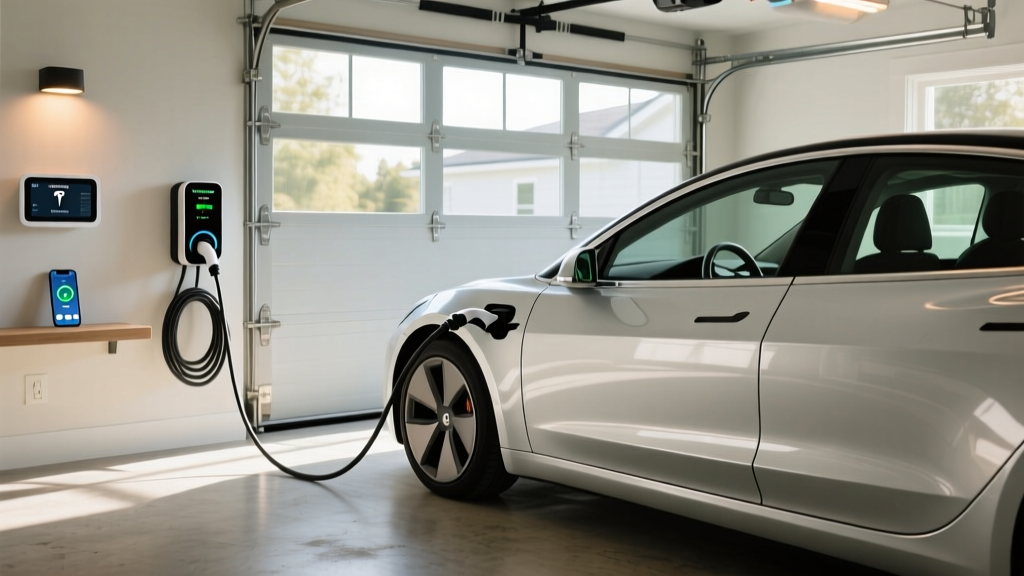
- Level 2 home charging (11.5 kW / 48A) for a 75 kWh battery from 10–80%: approximately 5.5 hours — ideal for overnight.
Home Charger Installation: Costs, Electrical Requirements, and Upgrades
Home Level 2 charging is where 80%+ of EV miles are added, according to the US Department of Energy. But installation cost varies dramatically based on your electrical panel's capacity and the distance from panel to charger location.
Electrical Requirements
A typical Level 2 home charger requires a 240V dedicated circuit, similar to a clothes dryer or electric range. Common configurations:
- 40A circuit / 32A continuous → 7.7 kW output — adequate for most EVs overnight.
- 50A circuit / 40A continuous → 9.6 kW output — faster, recommended for larger batteries (100+ kWh).
- 60A circuit / 48A continuous → 11.5 kW output — fastest residential single-phase; requires a 200A service panel in most homes.
The National Electrical Code (NEC) requires EV circuits to be rated at 125% of the continuous load — meaning a 48A charger needs a 60A breaker. Your electrician will verify this.
| Component | Low Estimate | High Estimate | Notes |
|---|---|---|---|
| Level 2 charger hardware | $400 | $750 | Smart Wi-Fi chargers; basic models from $250 |
| Electrician labor (standard install) | $500 | $1,500 | Short run from panel, same wall or garage |
| Electrician labor (long run / trenching) | $1,500 | $3,500 | Panel on opposite side of house, detached garage |
| Permit and inspection | $50 | $300 | Varies by municipality; some jurisdictions waive |
| Electrical panel upgrade (100A → 200A) | $1,500 | $4,000 | Required if panel is at capacity; common in pre-2000 homes |
| Total (no panel upgrade) | $950 | $2,550 | Typical suburban garage install |
| Total (with panel upgrade) | $2,450 | $6,550 | Older home with 100A service |
Panel upgrade reality: If your home has a 100-amp service panel that's already near capacity (common in homes built before 2000 with electric heat, A/C, and appliances), adding a 50–60A EV circuit may require upgrading to 200A service. This is the single biggest cost variable. Get a load calculation from a licensed electrician before committing to a charger purchase.
Federal incentive: The residential clean energy credit (IRS §25C, extended through 2032) covers 30% of charger hardware and installation costs, up to $1,000 per year. This is separate from the §30D vehicle purchase credit. Confirm eligibility with a tax professional, as income and sourcing rules may apply.
Which Home Charger Should You Buy? Equipment Picks for 2026
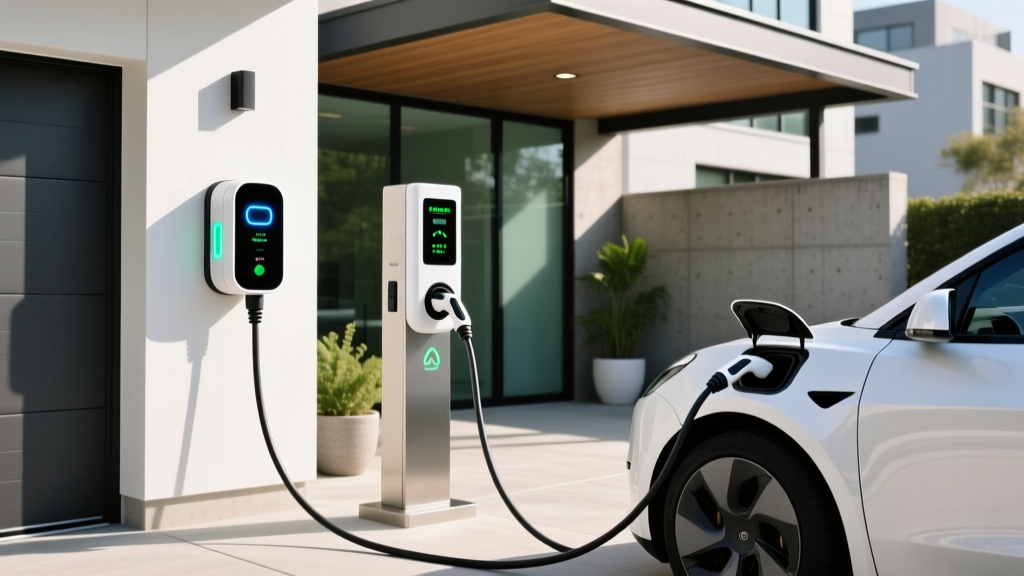
Not all Level 2 chargers are equal. Key specs to compare: max amperage (determines kW output), cable length (18–25 ft ideal), connector type (NACS is now standard for most new EVs; J1772 for older models), smart features (Wi-Fi scheduling, load management), and hardwired vs. plug (NEMA 14-50 outlet offers portability; hardwired allows higher amperage without GFCI breaker requirements).
Emporia Level 2 Smart Charger
- Power: 48A / 11.5 kW (hardwired) or 40A / 9.6 kW (14-50 plug)
- Connector: J1772 (NACS adapter included with select bundles)
- Cable: 24 ft
- Smart features: Wi-Fi, app scheduling, solar integration, energy monitoring
- Price: ~$400
- Best for: Budget-conscious buyers wanting smart features and energy tracking
ChargePoint Home Flex
- Power: Configurable 16A–50A (3.8–12 kW; up to 50A hardwired)
- Connector: J1772 or NACS (configurable at purchase)
- Cable: 23 ft
- Smart features: Wi-Fi, Alexa, app scheduling, Alexa integration
- Price: ~$550–$700 depending on configuration
- Best for: Flexibility across amperage and connector types
Tesla Wall Connector
- Power: 48A / 11.5 kW (hardwired, 60A circuit required)
- Connector: NACS native (J1772 adapter available)
- Cable: 24 ft
- Smart features: Wi-Fi, OTA updates, power sharing (link multiple units), load management
- Price: ~$475
- Best for: Tesla and native-NACS vehicle owners; best value at 48A
Grizzl-E Smart
- Power: 40A / 9.6 kW (14-50 plug) or 48A / 11.5 kW (hardwired)
- Connector: J1772 or NACS
- Cable: 24 ft
- Smart features: Wi-Fi, OCPP-compatible, EV Smart Charging integration
- Price: ~$500–$600
- Best for: Cold-climate durability (rated to -40°F), rugged outdoor installs
Cost to Charge: Home vs. Public vs. Gas — Per-Mile Breakdown
The economics of EV charging depend heavily on where you charge. Home off-peak electricity is dramatically cheaper than public DC fast charging, and both typically beat gasoline on a per-mile basis.
| Scenario | Rate | Vehicle Efficiency | Cost per Mile |
|---|---|---|---|
| Home Level 2 (off-peak, national avg) | $0.13/kWh | 3.5 mi/kWh (avg BEV) | $0.037 |
| Home Level 2 (California TOU off-peak) | $0.18/kWh | 3.5 mi/kWh | $0.051 |
| Home Level 2 (Northeast, higher rates) | $0.24/kWh | 3.5 mi/kWh | $0.069 |
| Tesla Supercharger V3 (avg US) | $0.30/kWh | 3.5 mi/kWh | $0.086 |
| Electrify America DC fast | $0.43/kWh | 3.5 mi/kWh | $0.123 |
| Gas vehicle (28 MPG combined, $3.40/gal) | $3.40/gal | 28 mi/gal | $0.121 |
| Gas vehicle (22 MPG combined, $3.40/gal) | $3.40/gal | 22 mi/gal | $0.155 |
Key takeaway: Home charging at off-peak rates costs roughly $0.04–$0.07 per mile — about one-third to one-half the cost of gasoline. Public DC fast charging at $0.30–$0.43/kWh narrows the gap, and at the highest rates (some urban Electrify America or EVgo stations at $0.58+/kWh), charging can briefly exceed gas cost per mile. This is why home charging access remains the single biggest factor in EV ownership economics.
According to fueleconomy.gov, the average 2026 BEV achieves roughly 100–130 MPGe combined (3.0–4.0 mi/kWh), with efficient models like the Tesla Model 3 and Lucid Air exceeding 4.0 mi/kWh. Larger vehicles like the Rivian R1T and F-150 Lightning average closer to 2.0–2.5 mi/kWh, raising per-mile cost proportionally.
Safety, Code, and Installation Considerations
A Level 2 charger installation is a permanent electrical modification to your home. Key requirements and best practices:
- Dedicated circuit: The NEC requires a dedicated circuit for EV charging — it cannot share a breaker with other appliances.
- GFCI protection: The 2023 NEC update requires GFCI protection for 14-50 receptacles used for EV charging in garages. Hardwired installations are exempt from this requirement, which is one reason many electricians recommend hardwiring for 48A+ chargers.
- Outdoor rating: If installing outdoors, ensure the charger carries a NEMA 4 or NEMA 4X rating for weather resistance. All chargers listed above meet this standard.
- Permit and inspection: Most jurisdictions require an electrical permit for EV charger installation. The inspection ensures the circuit, breaker, wire gauge, and grounding meet code. Skipping this step can void home insurance coverage for electrical fires.
- Load management: If your panel is near capacity but you want to avoid a full upgrade, smart chargers like the Emporia and Tesla Wall Connector offer load management — they monitor total household draw and throttle charging to stay within panel limits. This can allow a 48A charger on a 150A panel that would otherwise require a 200A upgrade.
Supercharger Access for Non-Teslas: Practical Tips
If you're driving a CCS vehicle relying on Magic Dock or an adapter, keep these realities in mind:
- Check station availability first. Not every Supercharger location has Magic Dock stalls. Use the Tesla app (non-Tesla charging section) or PlugShare to verify before routing to a station.
- Magic Dock sessions cap at 150 kW for CCS vehicles, even at V3 stations capable of 250 kW. This adds roughly 5–10 minutes to a 10–80% session compared to a native NACS connection.
- Pricing is typically higher for non-Tesla vehicles at Superchargers — often $0.35–$0.45/kWh vs. $0.25–$0.30 for Tesla owners, though Tesla has been narrowing this gap in 2026.
- Cable length can be an issue. Supercharger cables are designed for Tesla's rear-driver-side charge port. If your EV's port is on the front fender (like some older CCS vehicles), you may need to park at an angle or use a stall at the end of a row.
- Preconditioning matters. Most native NACS vehicles precondition the battery when a Supercharger is set as the navigation destination, warming the pack for faster charging. If you're using a third-party adapter, preconditioning may not trigger automatically — manually activate it via your vehicle's app or climate settings before arriving.
Frequently Asked Questions
Can non-Teslas use Superchargers without any adapter?
Yes — if your vehicle has a native NACS charge port. As of 2026, Ford, GM, Rivian, BMW, Toyota, Nissan, Volvo, and Polestar ship most or all EV models with NACS. These vehicles plug directly into any V3 or V4 Supercharger stall and initiate charging via the Tesla app or an in-car integration.
How much does it cost to install a home EV charger?
A standard Level 2 home installation (short wire run, no panel upgrade) costs between $950 and $2,550 including equipment, electrician labor, and permit. If your home requires a panel upgrade from 100A to 200A service, total cost ranges from $2,450 to $6,550. The federal §25C credit covers 30% of the cost up to $1,000.
How fast will each charging level add range?
Level 1 (120V) adds 3–5 miles per hour. Level 2 (240V, 48A) adds 30–45 miles per hour for most EVs. DC fast charging at a V3 Supercharger (250 kW peak) can add 150–200+ miles in 15 minutes, though the charge curve tapers significantly above 60% SoC.
Which connector is compatible with my EV?
Check your vehicle's charge port. If it's NACS (the Tesla-style connector, now the industry standard), you can use Tesla Superchargers and any NACS-equipped public station directly. If it's CCS1, you'll need either a Magic Dock station, a third-party CCS-to-NACS adapter, or a CCS-to-J1772 adapter for Level 2 public chargers. CHAdeMO is effectively discontinued in the US for new vehicles.
How much does charging cost per mile vs. gas?
Home charging at national average rates costs about $0.04–$0.07 per mile. Public DC fast charging runs $0.09–$0.12 per mile. A gas vehicle at 28 MPG and $3.40/gallon costs about $0.12 per mile. Home charging is consistently the cheapest option; exclusive public DC fast charging may approach or match gas costs.
What electrical upgrades might I need for a home charger?
The most common upgrade is a panel capacity increase from 100A to 200A service ($1,500–$4,000) if your existing panel can't accommodate a new 50–60A circuit. Other potential needs: replacing a Federal Pacific or Zinsco panel (known fire hazards, mandatory replacement), running new conduit for long wire runs, or adding a sub-panel for a detached garage. A licensed electrician's load calculation is the definitive answer.
Can I use a Supercharger if I have a CHAdeMO vehicle?
No. CHAdeMO vehicles (like the older Nissan Leaf or Mitsubishi Outlander PHEV) cannot connect to Superchargers. CHAdeMO DC fast charging infrastructure is being phased out in the US in favor of CCS and NACS. Owners of CHAdeMO vehicles rely on Electrify America, EVgo, and remaining CHAdeMO-equipped stations.
For the most current Supercharger locations with non-Tesla access, check the Tesla Supercharger map and filter for "Charge Your Non-Tesla." For home charging electrical requirements, consult the National Electrical Code (NFPA 70) and your local building department.