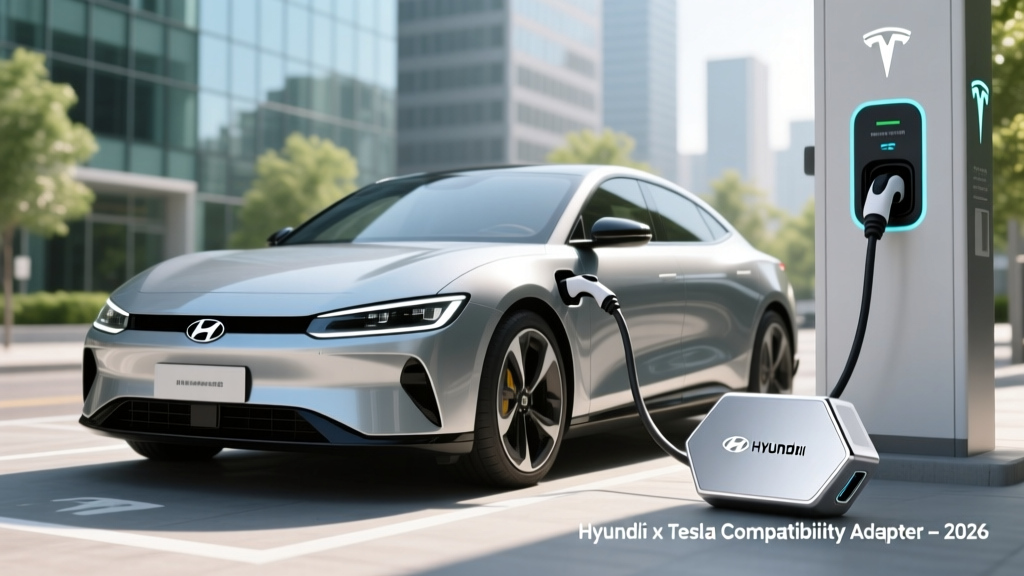
If you drive a Hyundai Ioniq 5, Ioniq 6, Kona Electric, or are shopping for one, you've likely asked: can Hyundai use Tesla chargers? The short answer for 2026 is yes — and it's getting easier every month. Hyundai began equipping new EVs with the North American Charging Standard (NACS) port starting with the 2025 model year refresh, and Tesla has opened its Supercharger network to non-Tesla vehicles via both built-in NACS compatibility and approved CCS-to-NACS adapters.
But access isn't the same as optimization. Charging speed, cost, and real-world convenience depend on your specific Hyundai model, whether you're using an adapter or a native NACS port, and whether you're at home or on the road. This guide breaks down every charging scenario with exact numbers — kW rates, miles per hour added, cost per mile, and home installation costs — so you can plan your charging strategy with confidence.
Understanding EV Charging Levels: kW, kWh, and What They Mean
Before we get into Hyundai-Tesla compatibility, let's clarify the most common source of EV confusion: the difference between kW (kilowatts) and kWh (kilowatt-hours).
- kW (kilowatts) measures power — the rate at which electricity flows into your battery. Think of it like water pressure from a hose. A 150 kW DC fast charger delivers energy much faster than a 7.2 kW Level 2 home charger.
- kWh (kilowatt-hours) measures energy — the total amount of electricity stored in your battery. A Hyundai Ioniq 5 has a 77.4 kWh usable battery pack. Filling it from 10% to 80% requires roughly 54 kWh of energy.
With that distinction clear, here's how the three charging levels break down in real-world performance:
| Level | Voltage / Power | Typical kW Output | Miles of Range Added per Hour | Best Use Case |
|---|---|---|---|---|
| Level 1 | 120V AC | 1.0–1.4 kW | 3–5 miles | Overnight top-up, PHEVs, emergencies |
| Level 2 | 240V AC | 3.3–19.2 kW | 12–75 miles | Daily home charging, workplace, shopping centers |
| DC Fast Charging | 400–800V DC | 50–350 kW | 150–1,000+ miles (peak rate) | Road trips, rapid top-ups |
Real-world note: DC fast chargers don't sustain their peak kW rate for the entire session. A Hyundai Ioniq 5 on a 350 kW charger will peak near 240 kW at low state of charge, then taper as the battery fills. A 10–80% session takes roughly 18 minutes under ideal conditions, but the last 20% slows dramatically to protect battery health. Always plan road-trip stops around 10–80% charging windows.
Can Hyundai Use Tesla Chargers? Connector Compatibility Explained
Hyundai's transition to the Tesla-originated NACS connector has been phased across model years. Here's where things stand in 2026:
| Model | Native Connector | Tesla Supercharger Access | Adapter Required? |
|---|---|---|---|
| Ioniq 5 (2025+ refresh) | NACS | Yes — direct plug-in | No |
| Ioniq 6 (2025+ refresh) | NACS | Yes — direct plug-in | No |
| Ioniq 9 (2026) | NACS | Yes — direct plug-in | No |
| Kona Electric (2024+, current gen) | CCS1 | Yes — with approved adapter | Yes (CCS-to-NACS) |
| Ioniq 5 (2022–2024) | CCS1 | Yes — with approved adapter | Yes (CCS-to-NACS) |
For CCS-equipped Hyundais: Tesla and Hyundai have approved specific CCS-to-NACS adapters (priced around $200–$300) that allow older Ioniq 5 and Kona Electric models to physically connect to Tesla Supercharger stalls. However, not every Supercharger stall supports non-Tesla vehicles — Tesla designates specific stalls via the Tesla app. Check the Tesla app or your Hyundai Bluelink navigation for compatible locations before relying on this for a road trip.
For NACS-equipped Hyundais (2025+): You can pull up to any open Supercharger stall and plug in directly, just like a Tesla. The Hyundai Bluelink system and Tesla app both show real-time stall availability.
Home EV Charger Installation: Costs, Electrical Requirements, and Gotchas
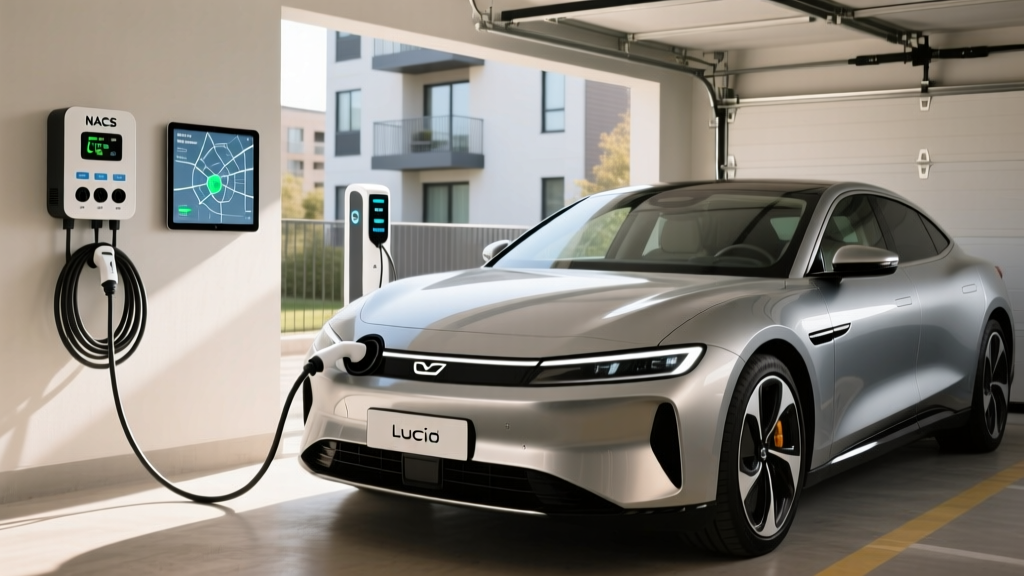
Charging at home is where EV ownership delivers its biggest convenience and cost advantage. For Hyundai owners, a Level 2 home charger running on a 240V circuit is the standard recommendation. Here's what's involved:
Electrical Requirements
Most Level 2 chargers draw between 32A and 48A on a 240V circuit. Per the National Electrical Code (NEC), continuous loads like EV charging require a circuit rated at 125% of the actual draw — so a 40A charger needs a 50A breaker, and a 48A charger needs a 60A breaker.
- Minimum recommended circuit: 240V / 50A (supports up to 40A continuous charging, or ~9.6 kW)
- Optimal circuit for Hyundai Ioniq 5/6 (10.9 kW onboard charger): 240V / 60A (supports 48A continuous, or ~11.5 kW)
- Wire gauge: 6 AWG copper for 50A circuits; 4 AWG for 60A circuits
Does Your Electrical Panel Need an Upgrade?
This is the question that can turn a $600 installation into a $3,000+ project. Most homes built after 2000 have a 200A main panel, which can usually accommodate a 50A EV circuit. But older homes with 100A or 150A panels may need a panel upgrade to 200A, especially if you already have high-draw appliances like electric ranges, dryers, or central AC.
Your electrician will perform a load calculation per NEC Article 220 to determine if your panel has headroom. If it doesn't, options include:
- A full panel upgrade ($1,500–$3,000+)
- An automatic load-management device like the Emporia Smart Load Manager (~$150) that throttles the charger when other appliances are running — avoiding a panel upgrade entirely
Installation Cost Breakdown
| Item | Cost Range | Notes |
|---|---|---|
| Level 2 Charger (hardware) | $250–$700 | Varies by brand, power, smart features |
| Electrician labor | $300–$1,500 | Depends on run length, conduit, wall type |
| Permit fees | $50–$250 | Varies by municipality |
| Panel upgrade (if needed) | $1,500–$3,500 | Only if existing panel lacks capacity |
| Total (no panel upgrade) | $600–$2,450 | Most common scenario |
| Total (with panel upgrade) | $2,100–$5,950 | Older homes, high-load households |
Tip: The federal Residential Clean Energy Credit (IRC §25C) covers 30% of home charger hardware and installation costs, up to $1,000, for equipment placed in service through 2032. Check irs.gov for current eligibility rules, as income and location-based requirements may apply.
Recommended Home Chargers for Hyundai EVs
The Hyundai Ioniq 5 and Ioniq 6 feature an 10.9 kW onboard charger, meaning they can accept up to 48A on Level 2 AC. To maximize charging speed at home, pair them with a 48A-capable charger on a 60A circuit. Here are top picks for 2026:
Emporia Vue Level 2 Smart Charger
- Power output: 48A max (11.5 kW at 240V)
- Connector: NACS (J3400) — CCS adapter included
- Cable length: 24 feet
- Smart features: Wi-Fi, app scheduling, solar integration, load management
- Price: ~$399
- Best for: Budget-conscious buyers who want smart features and full 48A output
ChargePoint Home Flex
- Power output: Up to 50A (12 kW at 240V, configurable 16A–50A)
- Connector: NACS (2025+ models); CCS available for older stock
- Cable length: 23 feet
- Smart features: Wi-Fi, app control, Alexa integration, scheduled charging
- Price: ~$599
- Best for: Flexible amperage settings for homes with limited panel capacity
Tesla Wall Connector (Gen 4)
- Power output: 48A max (11.5 kW at 240V)
- Connector: NACS native
- Cable length: 24 feet
- Smart features: Wi-Fi, OTA updates, power sharing between multiple units
- Price: ~$475
- Best for: NACS-equipped Hyundais (2025+) and households with mixed Tesla/Hyundai EVs
According to fueleconomy.gov, the 2026 Hyundai Ioniq 5 achieves an EPA-estimated 318 miles of range (SEL AWD trim) and 117 MPGe combined. Charging at 11.5 kW on a 48A Level 2 unit, you'll add roughly 42 miles of range per hour — meaning a full 10–80% charge completes in about 5.5 hours, perfect for overnight sessions.
Charging Costs: Home vs. Public vs. Gas — What You'll Actually Spend
The economics of EV ownership hinge on your local electricity rates and how much you rely on public DC fast charging. Here's a realistic cost comparison using the 2026 Hyundai Ioniq 5 (77.4 kWh battery, ~3.5 miles per kWh efficiency):
| Scenario | Rate | Cost per kWh | Cost per Mile |
|---|---|---|---|
| Home charging (off-peak utility rate) | $0.11/kWh | $0.11 | $0.031 |
| Home charging (average US rate) | $0.17/kWh | $0.17 | $0.049 |
| Public Level 2 (ChargePoint, EVgo) | $0.25–$0.40/kWh | $0.32 avg | $0.091 |
| Tesla Supercharger (non-Tesla pricing) | $0.35–$0.55/kWh | $0.45 avg | $0.129 |
| Electrify America DC fast | $0.40–$0.58/kWh | $0.48 avg | $0.137 |
| Gas vehicle (28 MPG combined, $3.40/gal) | — | — | $0.121 |
The takeaway: Home charging at off-peak rates makes EVs dramatically cheaper per mile than gas — roughly one-quarter the cost. But frequent DC fast charging at public rates can actually exceed the per-mile cost of gasoline. The financial case for an EV is strongest when you charge at home 80%+ of the time.
10–80% charging time examples for the Ioniq 5 (77.4 kWh):
- Level 2 at 11.5 kW (48A home charger): ~4.7 hours
- Level 2 at 7.2 kW (32A charger): ~7.5 hours
- DC fast at 350 kW station (peak 240 kW): ~18 minutes (ideal conditions, preconditioned battery)
- DC fast at 150 kW station: ~30 minutes
- DC fast at 50 kW station: ~85 minutes
Cold-weather caveat: In temperatures below 32°F, expect DC fast charging times to increase by 20–40% unless you precondition the battery. The Ioniq 5's heat pump and battery preconditioning feature (activated when you navigate to a charger in the Bluelink system) help mitigate this, but plan for longer stops in winter.
Safety, Permits, and Code Compliance for Home Charging
Installing a 240V EV charger is not a DIY project. The NEC and most local building codes require a licensed electrician and a permit. Here's what proper installation includes:
- Dedicated circuit: Your EV charger must have its own breaker — it cannot share a circuit with other appliances.
- GFCI protection: NEC 2020 and later requires ground-fault circuit interrupter (GFCI) protection for all outdoor receptacles and many indoor EV installations. Some chargers have built-in GFCI; if yours doesn't, your electrician will install a GFCI breaker.
- Outdoor rating: If your charger is mounted outside (garage exterior, driveway), it must carry a NEMA 4 or NEMA 4X weather-resistance rating. All three chargers recommended above are outdoor-rated.
- Conduit and wiring: Runs longer than a few feet require conduit protection. THHN wire in EMT conduit is standard for garage installs; UF-B cable may be used for short outdoor runs.
- Permit and inspection: Most jurisdictions require an electrical permit ($50–$250) and a post-installation inspection. Skipping this step can void your homeowner's insurance coverage in the event of an electrical fire.
Load-management tip: If your panel is near capacity but you want to avoid a costly upgrade, devices like the Emporia Smart Load Manager or the Myenergi libbi monitor your home's real-time electricity usage and dynamically throttle the charger's amperage to stay within your panel's limits. This is a code-compliant solution that can save $1,500+ on a panel upgrade.
Frequently Asked Questions
Can Hyundai use Tesla chargers without an adapter?
Yes, if your Hyundai has a native NACS port — this includes the 2025+ Ioniq 5, 2025+ Ioniq 6, and the 2026 Ioniq 9. Older CCS-equipped Hyundais (2022–2024 Ioniq 5, current-gen Kona Electric) require a CCS-to-NACS adapter, available from Tesla and third-party suppliers for $200–$300.
How much does it cost to install a home EV charger?
Most installations run $600–$2,450 including equipment, electrician labor, and permit fees — assuming your electrical panel has sufficient capacity. If a panel upgrade from 100A to 200A is needed, add $1,500–$3,500. The federal §25C credit covers 30% of installation costs up to $1,000.
How fast will each charging level add range to my Hyundai?
Level 1 (120V) adds 3–5 miles per hour. Level 2 at 48A/11.5 kW adds roughly 42 miles per hour to an Ioniq 5. DC fast charging at a 350 kW station can add up to 200+ miles in 18 minutes at peak rate, though the charge curve tapers significantly above 80% state of charge.
Which connector is compatible with my Hyundai EV?
2025 and newer Hyundai EVs use the NACS (J3400) connector natively. Pre-2025 models use CCS1. Both can access Tesla Superchargers — NACS models directly, CCS models via an approved adapter. All new Hyundais also retain access to Electrify America, EVgo, and ChargePoint networks (CCS stations via adapter, NACS stations natively as networks add NACS cables).
How much does charging cost per mile vs. gas?
At home on off-peak rates ($0.11/kWh), a Hyundai Ioniq 5 costs about $0.03 per mile. On average US electricity ($0.17/kWh), it's about $0.05 per mile. A comparable gas vehicle at 28 MPG and $3.40/gallon costs about $0.12 per mile. Public DC fast charging at $0.45/kWh pushes EV cost to ~$0.13 per mile — slightly above gas. Home charging is where the savings are.
What electrical upgrades might I need for a home charger?
The most common upgrade is ensuring your main panel has capacity for a 50A or 60A dedicated circuit. Homes with 200A panels typically need no upgrade. Homes with 100A or 150A panels — common in pre-2000 construction — may need a panel upgrade ($1,500–$3,500) or a smart load-management device (~$150) to avoid one. A licensed electrician will perform a load calculation to determine your specific needs.