Why Compare a Camaro ZL1 Supercharged to an EV in 2026?
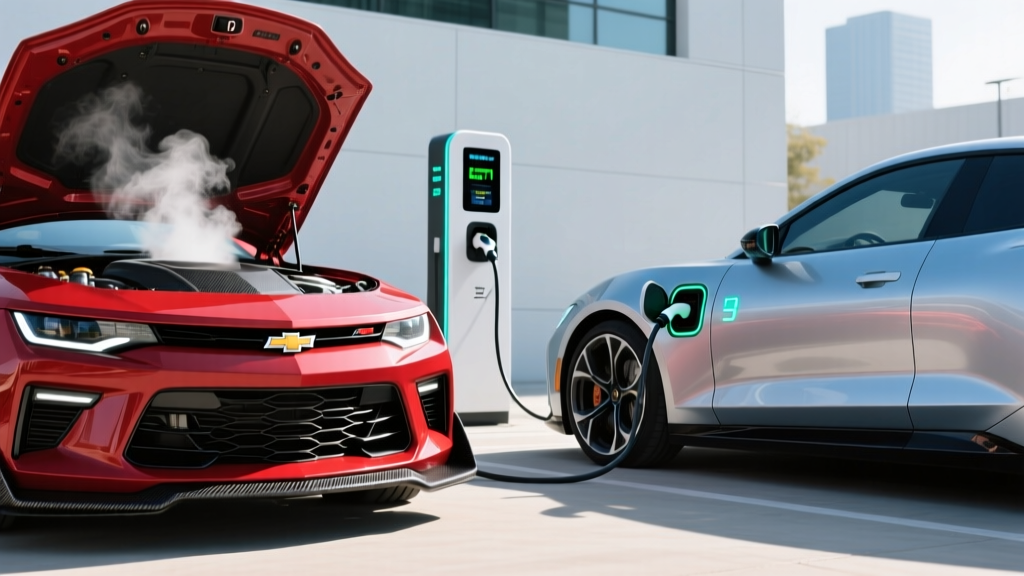
The Chevrolet Camaro ZL1 supercharged — with its 650-horsepower, 6.2L LT4 V8 — remains one of the most visceral American performance machines ever built. But as EVs like the Tesla Model S Plaid, Hyundai Ioniq 5 N, and Porsche Taycan Turbo GT close the performance gap (and sometimes obliterate it), a practical question emerges: what does it actually cost to run a supercharged V8 versus a high-performance EV?
This guide isn't a Camaro ZL1 review — it's a charging and ownership-cost deep-dive for enthusiasts cross-shopping a supercharged muscle car against an electric performance vehicle. We'll cover home charging installation, public charging costs, connector compatibility, equipment picks, and a brutally honest cost-per-mile breakdown.
EV Charging Levels Explained: Speeds, Power, and What They Mean
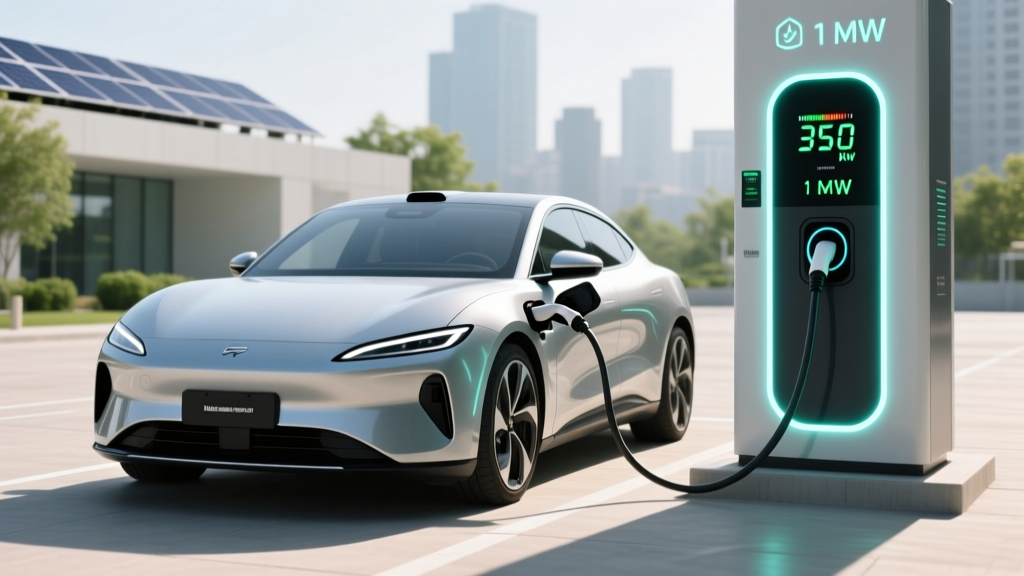
Before comparing costs, you need to understand the three charging tiers. The single most important distinction in EV ownership: kW (kilowatts) measures power — how fast energy flows into the car. kWh (kilowatt-hours) measures energy — the total capacity of the battery. Think of kW as the width of a hose and kWh as the size of the bucket.
| Level | Voltage | Power (kW) | Miles of Range Added Per Hour | Typical Use Case |
|---|---|---|---|---|
| Level 1 | 120V AC | 1.2–1.9 kW | 3–5 mi/hr | Overnight trickle, PHEVs, emergency |
| Level 2 | 240V AC | 7.2–19.2 kW | 20–60 mi/hr | Daily home/work charging (primary) |
| DC Fast Charge | 400–800V DC | 50–350 kW | 150–800+ mi/hr (peak) | Road trips, highway corridors |
A performance EV like the 2025 Hyundai Ioniq 5 N (84 kWh usable battery, NMC chemistry) charges from 10–80% in roughly 18 minutes on a 350 kW DC fast charger — adding about 240 miles of range in that window. However, real-world charging curves taper significantly above 80% state of charge (SoC), so that last 20% can take nearly as long as the first 60%. Always plan road trips around 10–80% charging windows for efficiency.
How Much Does It Cost to Install a Home EV Charger?
This is the first question every EV buyer asks, and the answer varies enormously based on your home's electrical infrastructure. Here's the realistic breakdown for a Level 2 (240V) home charging station in 2026:
| Component | Low Estimate | High Estimate | Notes |
|---|---|---|---|
| Level 2 Charger (Equipment) | $350 | $750 | Smart Wi-Fi chargers, 32A–48A |
| Electrician Labor (240V/50A circuit) | $600 | $2,000 | Depends on panel proximity, conduit run |
| Permit & Inspection | $50 | $300 | Varies by municipality |
| Electrical Panel Upgrade (if needed) | $1,500 | $4,000 | Required if panel is 100A or near capacity |
| Total (no panel upgrade) | $1,000 | $3,050 | Most newer homes with 200A panels |
| Total (with panel upgrade) | $2,500 | $7,050 | Older homes, 100A service |
Electrical Requirements for Level 2 Charging
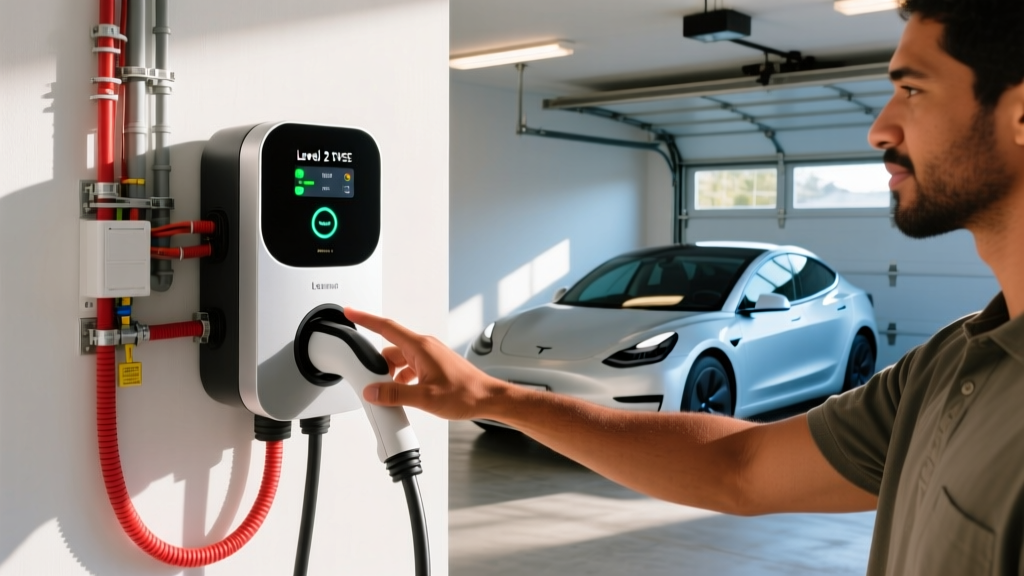
A standard Level 2 home charger requires a dedicated 240V circuit at 40–50 amps (for a 32A or 40A continuous-draw charger, respectively — the National Electrical Code requires circuits rated at 125% of continuous load). Your charger should be installed by a licensed electrician on a dedicated breaker — never share the circuit with other high-draw appliances.
Panel Upgrade Reality Check
If your home has a 100-amp electrical panel (common in homes built before 1990), you will almost certainly need an upgrade to 200A service before adding a 50A EV circuit. This is the single biggest surprise cost for new EV owners. Budget $1,500–$4,000 for the panel upgrade alone, and factor in 1–3 weeks for utility coordination and permitting. Some utilities offer rebates of $200–$500 for panel upgrades tied to EV adoption — check your local provider.
Safety and Code Requirements
- Dedicated circuit: NEC Article 625 requires EVSE (Electric Vehicle Supply Equipment) on its own breaker — no shared circuits.
- GFCI protection: 2026 NEC editions increasingly require GFCI breakers for outdoor and garage EV circuits.
- Outdoor rating: If installing outdoors, the charger must carry a NEMA 4 or NEMA 4X rating for weather resistance.
- Cable management: Keep cables off the ground where possible; use a holster or retractor to prevent trip hazards and wear.
Cost Per Mile: Camaro ZL1 Supercharged vs. Performance EVs
Here's where the Camaro ZL1 supercharged faces its toughest comparison. The ZL1's 6.2L supercharged V8 returns an EPA-rated 13 mpg city / 21 mpg highway / 16 mpg combined according to fueleconomy.gov. It requires premium 93-octane fuel.
| Vehicle | Fuel/Energy Source | Efficiency | Cost Per Unit | Cost Per Mile |
|---|---|---|---|---|
| Camaro ZL1 (6.2L SC V8) | Premium Gasoline | 16 mpg combined | $4.50/gal (avg premium) | $0.28 |
| Camaro ZL1 (highway driving) | Premium Gasoline | 21 mpg highway | $4.50/gal | $0.21 |
| Tesla Model S Plaid | Home electricity (off-peak) | 3.0 mi/kWh | $0.13/kWh | $0.043 |
| Hyundai Ioniq 5 N | Home electricity (off-peak) | 2.8 mi/kWh | $0.13/kWh | $0.046 |
| Tesla Model S Plaid | DC fast charge (public) | 3.0 mi/kWh | $0.40/kWh | $0.13 |
| Hyundai Ioniq 5 N | DC fast charge (public) | 2.8 mi/kWh | $0.40/kWh | $0.14 |
• Camaro ZL1 supercharged (combined): ~$4,200/year
• Performance EV (80% home / 20% DC fast): ~$1,100/year
• Annual savings with EV: ~$3,100
Over 5 years, that's roughly $15,500 in fuel savings — enough to cover the home charger installation, a panel upgrade, and still have money left.
Connector Compatibility: Which Plug Fits Which EV?
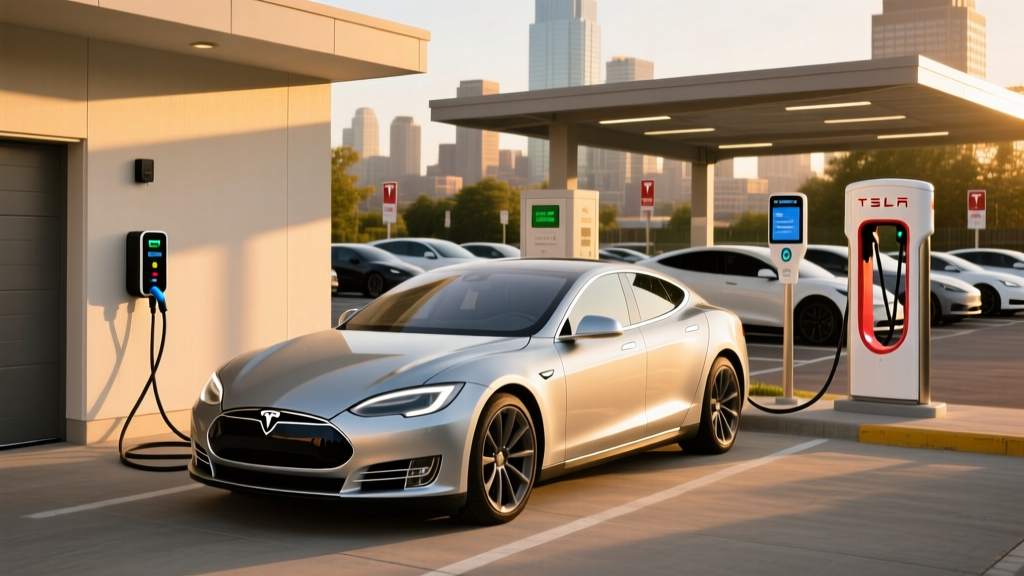
The connector landscape has shifted dramatically. As of 2026, the North American Charging Standard (NACS, originally Tesla's proprietary connector) has become the dominant standard, with nearly every major automaker adopting it for new vehicles. Here's the current compatibility picture:
| Connector | Brands Using It | DC Fast Charge Max | Adapter Needed? |
|---|---|---|---|
| NACS (Tesla-style) | Tesla, Ford, GM, Rivian, Volvo, Polestar, Hyundai/Kia (2025+), BMW, Mercedes | Up to 350 kW | CCS-to-NACS adapter for older CCS chargers (~$200) |
| CCS1 | Legacy VW ID.4, older Hyundai/Kia, Stellantis, some BMW | Up to 350 kW | NACS-to-CCS adapter for Tesla Superchargers (~$200–$250) |
| CHAdeMO | Nissan Leaf (legacy only, discontinued) | Up to 100 kW | Limited network; no practical adapter path |
For home Level 2 charging: Nearly all Level 2 home chargers now ship with a J1772 connector (universal for Level 2 AC). Tesla vehicles use a NACS-to-J1772 adapter (included with the car). Starting in 2025, most new EVs with NACS ports accept J1772 AC charging via a compact adapter.
Recommended Home EV Chargers for 2026
After testing dozens of units, these represent the best balance of power, reliability, smart features, and value for performance EV owners:
ChargePoint Home Flex
- Power: Up to 12 kW (50A circuit, 40A continuous)
- Connector: J1772 (NACS adapter included for newer models)
- Cable: 23 ft
- Smart features: Wi-Fi, app scheduling, utility integration, Alexa
- Price: ~$550
Best for: Most homeowners. Flexible amperage (16A–50A) lets you match your circuit.
Tesla Wall Connector
- Power: Up to 11.5 kW (60A circuit, 48A continuous)
- Connector: NACS native (J1772 adapter available)
- Cable: 24 ft
- Smart features: Wi-Fi, power sharing (multiple units), OTA updates
- Price: ~$475
Best for: Tesla and NACS-equipped owners. Highest continuous output in class.
Emporia Vue + EV Charger
- Power: Up to 11.5 kW (48A continuous)
- Connector: J1772
- Cable: 24 ft
- Smart features: Whole-home energy monitoring, solar integration, load management
- Price: ~$400 (charger) + ~$200 (Vue panel monitor)
Best for: Solar-equipped homes and panel-capacity-limited installs.
Grizzl-E Smart
- Power: Up to 10 kW (40A continuous)
- Connector: J1772
- Cable: 24 ft
- Smart features: OCPP protocol, adjustable amperage, rugged outdoor build
- Price: ~$500
Best for: Outdoor installations and extreme climates (-40°F rated).
Charging Time Examples: What to Expect
Here's how long common performance EV batteries take to charge at each level. Remember: these times assume optimal conditions — cold weather, high battery age, or grid congestion can add 15–30%.
| Vehicle | Battery (kWh usable) | Level 1 (1.4 kW) | Level 2 (11.5 kW) | DC Fast 10–80% |
|---|---|---|---|---|
| Tesla Model S Plaid | 95 kWh | ~68 hours (0–100%) | ~8.5 hours (0–100%) | ~25 min (250 kW peak) |
| Hyundai Ioniq 5 N | 84 kWh | ~60 hours | ~7.5 hours | ~18 min (350 kW peak) |
| Porsche Taycan Turbo GT | 97 kWh | ~69 hours | ~8.5 hours | ~20 min (320 kW peak) |
| BMW i4 M50 | 81 kWh | ~58 hours | ~7 hours | ~31 min (205 kW peak) |
For comparison, refueling a Camaro ZL1 supercharged takes about 4 minutes at a gas station for its 19-gallon tank (~304 miles of range at combined EPA). The EV trade-off is clear: far slower road-trip refueling, but the ability to "refuel" every night at home while you sleep — waking up to a full "tank" every morning.
Performance Comparison: ZL1 Supercharged vs. Electric
For enthusiasts, the numbers matter as much as the costs. Here's how the Camaro ZL1 supercharged stacks up against performance EVs in raw metrics:
| Metric | Camaro ZL1 (2024 final year) | Tesla Model S Plaid | Hyundai Ioniq 5 N |
|---|---|---|---|
| Horsepower | 650 hp | 1,020 hp | 641 hp (N Active) |
| 0–60 mph | 3.5 sec | 1.99 sec (rollout) | 3.25 sec |
| EPA Range / Tank | ~304 mi (19 gal) | 396 mi (EPA) | 221 mi (EPA, ~180 mi performance driving) |
| Curb Weight | 3,880 lbs | 4,766 lbs | 4,861 lbs |
| Starting MSRP | ~$68,000 (used/market) | $89,990 | $67,500 |
The ZL1's supercharged V8 delivers a sensory experience — exhaust note, supercharger whine, mechanical shift feel — that EVs cannot replicate. But the Model S Plaid's 1.99-second 0–60 time exists in a different reality. The Ioniq 5 N, meanwhile, uses simulated gear shifts and synthetic engine sound to bridge the emotional gap, making it perhaps the most convincing EV for muscle-car enthusiasts.
Frequently Asked Questions
How much does it cost to install a home EV charger?
A typical Level 2 home charger installation costs $1,000–$3,050 if your electrical panel has sufficient capacity (200A service with available breaker slots). If you need a panel upgrade from 100A to 200A, add $1,500–$4,000. Always get a licensed electrician's assessment before purchasing equipment. The federal IRS §30D tax credit does not cover charger installation, but the separate §25C Energy Efficient Home Improvement Credit can cover up to $1,000 (30%) of qualified EVSE installation costs through 2032 — consult a tax professional for eligibility.
How fast will each charging level add range?
Level 1 (120V standard outlet) adds 3–5 miles per hour — adequate only for plug-in hybrids or very low daily mileage. Level 2 (240V, 40–50A circuit) adds 20–60 miles per hour and fully replenishes most EV batteries overnight. DC fast charging (50–350 kW) can add 150–800+ miles per hour at peak, but sustained rates are much lower — expect 10–80% in 18–35 minutes depending on the vehicle's charge curve and the station's output.
Which connector/charger is compatible with my EV?
For 2025–2026 model-year vehicles, most new EVs use NACS (Tesla-style) connectors. Older CCS1-equipped EVs (2021–2024 models from VW, Hyundai, Kia) need an adapter to access Tesla Superchargers. CHAdeMO is effectively discontinued. For home Level 2 charging, nearly all chargers use J1772 connectors, which work with every EV via adapter. Buy a charger that matches your car's native connector to avoid daily adapter hassle.
How much does charging cost per mile vs. gas?
At the national average of $0.13/kWh for residential electricity, a performance EV costs roughly $0.04–$0.06 per mile. A Camaro ZL1 supercharged at 16 mpg combined on $4.50/gal premium costs about $0.28 per mile — roughly 5–7× more expensive per mile. Even using expensive DC fast charging at $0.40/kWh, the EV still costs about half per mile compared to the ZL1. Source: fueleconomy.gov and EIA electricity pricing data.
What electrical upgrades might I need?
The most common upgrade is a panel service increase from 100A to 200A, required when your existing panel lacks capacity for a dedicated 50A EV circuit. Other potential needs: running new conduit from the panel to the garage or driveway ($5–$15/foot), upgrading the meter socket if utility-required, and installing a GFCI breaker (required by 2026 NEC in many jurisdictions for garage and outdoor circuits). A licensed electrician's load calculation will determine exactly what your home needs.