Why California EV Charging Is Different From the Rest of the U.S.
California leads the nation with over 2.5 million registered electric vehicles and more than 110,000 public and private charging ports as of early 2026, according to the California Energy Commission. But infrastructure density varies wildly — from San Francisco and Los Angeles, where chargers outnumber gas stations in some zip codes, to rural stretches of the Central Valley and far Northern California where 50-mile gaps between DC fast chargers still exist.
Utility rate structures also set California apart. Pacific Gas & Electric (PG&E), Southern California Edison (SCE), and San Diego Gas & Electric (SDG&E) all offer time-of-use (TOU) EV rate plans, but peak-hour electricity can exceed $0.45/kWh — making unmanaged daytime charging nearly as expensive per mile as gasoline. Meanwhile, off-peak rates can dip below $0.12/kWh, turning overnight home charging into a fraction of fuel costs.
This guide covers everything a California EV owner or buyer needs: charging speeds, home installation costs, public network realities, connector compatibility, and specific equipment recommendations. All figures reflect 2026 pricing and utility structures.
Charging Levels Explained: Speeds, Power, and Range Added
The single most important distinction in EV charging is between kW (kilowatts — the rate of power delivery, like water pressure) and kWh (kilowatt-hours — the total energy delivered, like gallons in a bucket). A 48 kW charger running for one hour delivers roughly 48 kWh of energy. Your car's battery capacity is measured in kWh; the charger's output is measured in kW.
| Level | Voltage | Max Power (kW) | Miles of Range per Hour | Typical Use Case |
|---|---|---|---|---|
| Level 1 | 120V AC | 1.0–1.4 kW | 3–5 mi/hr | Overnight trickle; PHEVs; emergencies |
| Level 2 | 240V AC | 3.3–19.2 kW | 12–75 mi/hr | Home daily charging; workplaces; destinations |
| DC Fast (Level 3) | 400–800V DC | 50–350 kW | 150–1,000+ mi/hr (peak) | Road trips; highway corridors; quick top-ups |
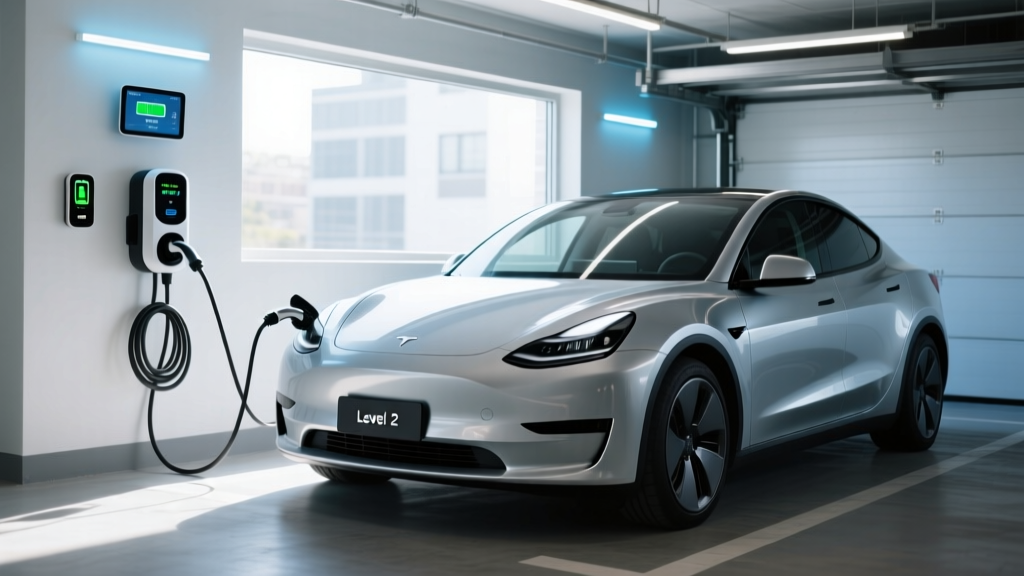
Real-world context: A Tesla Model Y (75 kWh usable battery, ~310 EPA miles) charging on a 48-amp (11.5 kW) Level 2 home charger adds roughly 44 miles of range per hour. A full 10–80% session takes about 5.5 hours overnight. On a 250 kW DC fast charger, that same 10–80% takes approximately 20–25 minutes, though peak speed is not sustained — charging slows significantly above 60% state of charge to protect the battery. This taper is called the charge curve, and it means a "250 kW" charger averages closer to 120–150 kW over a full 10–80% session.
Home Charger Installation in California: Costs, Electrical Requirements, and Permits
Installing a dedicated Level 2 home charger is the single highest-impact upgrade for EV ownership. Here's what California homeowners need to know about electrical requirements and real costs.
Electrical Requirements
Most Level 2 home chargers require a 240-volt, dedicated circuit — the same voltage as an electric dryer or oven. Common configurations:
- 40-amp circuit / 32-amp continuous: Delivers 7.7 kW. Suitable for most EVs; requires a NEMA 14-50 outlet or hardwired connection.
- 48-amp circuit / 40-amp continuous: Delivers 9.6 kW. Charges larger batteries (100+ kWh) faster; hardwired recommended.
- 60-amp circuit / 48-amp continuous: Delivers 11.5 kW. Maximum for most residential chargers; requires robust panel capacity.
The National Electrical Code (NEC) requires that continuous loads (like EV charging) not exceed 80% of the circuit breaker rating. A 40-amp breaker therefore supports 32 amps of continuous draw.
Panel Upgrade Considerations
Many older California homes — particularly those built before 1990 — have 100-amp main electrical panels. Adding a 40–60 amp dedicated EV circuit may push total load beyond safe capacity, requiring a panel upgrade to 200 amps. Signs you may need an upgrade:
- Your panel is already near capacity (frequent breaker trips, multiple high-draw appliances)
- You have a 100-amp service with electric range, dryer, and HVAC
- Your utility's load calculation shows insufficient headroom
Panel upgrades in California typically cost $2,000–$5,000 depending on accessibility, local permitting, and whether the utility needs to upgrade the service drop. PG&E, SCE, and SDG&E sometimes offer rebates or make-ready programs that offset a portion of this cost.
Permitting
California law requires a permit for any new 240V circuit or hardwired EV charger installation. Most jurisdictions accept a standard electrical permit application, with fees ranging from $50 to $250. The installer (a licensed C-10 electrical contractor) typically pulls the permit and schedules the inspection. Some cities, like San Jose and Los Angeles, have streamlined EV permit processes under California's CALeVIP and local building codes.
| Cost Component | Low End | High End | Notes |
|---|---|---|---|
| Level 2 Charger (Equipment) | $350 | $750 | Smart Wi-Fi chargers; 32–48A |
| Electrician Labor (install + wire run) | $400 | $1,800 | Depends on panel-to-outlet distance, wall type |
| Electrical Permit | $50 | $250 | Varies by city/county |
| Panel Upgrade (if needed) | $2,000 | $5,000 | 100A → 200A service upgrade |
| Total (No Panel Upgrade) | $800 | $2,800 | Most straightforward installs |
| Total (With Panel Upgrade) | $2,800 | $7,800 | Older homes with 100A service |
Federal incentive: The IRS §30D tax credit does not cover home charging equipment directly, but the separate §30C Alternative Fuel Vehicle Refueling Property Credit provides up to $1,000 (30% of cost, capped) for home charger installation in eligible census tracts. Check IRS.gov §30C guidelines for current eligibility maps, as these are tied to low-income and rural census tract designations.
California Public Charging Networks: What Actually Works in 2026
California's public charging landscape has consolidated significantly. Here's the current state of major networks:
Tesla Supercharger Network (Open to Non-Tesla EVs)
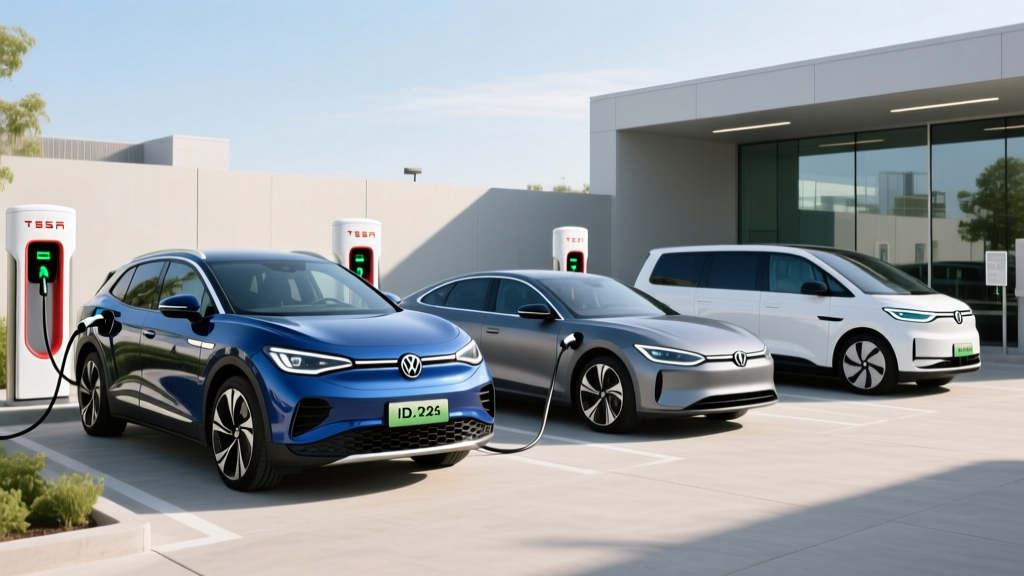
As of 2026, Tesla has opened a growing portion of its Supercharger network to non-Tesla EVs through the "Charge with NACS" program. In California, over 1,200 Supercharger stalls across 200+ stations are accessible to CCS-equipped vehicles using Tesla's Magic Dock adapter (built into the stall) or a third-party NACS-to-CCS adapter. Speeds range from 150 kW (V2 stalls) to 250 kW (V3) and up to 350 kW at newer V4 locations. Pricing for non-Tesla vehicles typically runs $0.48–$0.68/kWh in California, though Tesla membership ($12.99/month) reduces rates to roughly $0.36–$0.52/kWh.
Electrify America, EVgo, and ChargePoint
Electrify America operates roughly 150 California stations, primarily along highway corridors and in major retail centers. Most stalls offer 150–350 kW CCS charging. Real-world reliability has improved but still lags Tesla — expect roughly 85–90% uptime. Pricing: $0.48–$0.56/kWh for guest rates; Pass+ subscription ($25/month) drops it to ~$0.36/kWh.
EVgo focuses on urban and suburban locations — grocery stores, malls, and parking garages. California stations average 4–8 stalls at 100–350 kW. Pricing: $0.43–$0.55/kWh; EVgo Plus subscription ($4.99/month) saves ~$0.07/kWh.
ChargePoint dominates Level 2 destination charging (workplaces, apartments, retail) with over 30,000 California ports. Their DC fast stations are less common. Level 2 rates vary widely by property owner: free to $0.25/kWh.
California Utility Rebates for Public Charging
PG&E, SCE, and SDG&E all operate infrastructure incentive programs. SCE's Charge Ready program, for instance, provides rebates covering make-ready infrastructure costs for workplaces and multi-unit dwellings. These don't directly reduce per-session costs for drivers but expand access.
Connector Compatibility: NACS, CCS1, CHAdeMO, and Adapter Reality
The North American Charging Standard (NACS), developed by Tesla and adopted by nearly every major automaker starting with 2025 model-year vehicles, has effectively won the connector war in North America. Here's where California EV owners stand:
| Connector | Vehicles Using It (2026) | Network Access in CA | Adapter Needed? |
|---|---|---|---|
| NACS (Tesla-style) | Tesla (all), Ford, GM, Rivian, Hyundai, Kia, BMW, Mercedes, Volvo, Polestar, and more (2025+ models) | Tesla Superchargers natively; growing EA/EVgo NACS stalls | CCS-to-NACS adapter for older CCS vehicles ($200–$350) |
| CCS1 (Combo) | 2024 and older models from VW, Hyundai, Kia, BMW, Ford, GM; older Bolt EV, Ioniq 5, Mach-E | Electrify America, EVgo, ChargePoint DC fast | NACS-to-CCS adapter to use Tesla Superchargers |
| CHAdeMO | Nissan Leaf (discontinued after 2025), Mitsubishi Outlander PHEV (older) | Limited — ~15% of CA DC fast stations still have CHAdeMO | CHAdeMO-to-CCS adapters available but expensive ($400+) |
| J1772 (Level 2 AC) | All non-Tesla EVs (Level 2 public and home) | Universal for Level 2 | Tesla Mobile Connector includes J1772 adapter |
Practical advice: If you own a 2025+ model-year EV from a major brand, it likely ships with a native NACS port. If you own a 2022–2024 CCS-equipped vehicle, purchasing a NACS-to-CCS adapter (from Tesla, Lectron, or A2Z) unlocks the Supercharger network — a significant advantage for California road trips along I-5, Highway 101, and I-80 where Superchargers are the most reliable and densely spaced option.
Charging Cost in California: Per-Mile Breakdown vs. Gasoline
California has the highest electricity rates in the continental U.S. and the highest gasoline prices. The cost comparison depends entirely on when and where you charge.
| Scenario | Rate ($/kWh) | Efficiency (kWh/mi) | Cost per Mile | Equivalent MPG (at $5.20/gal gas) |
|---|---|---|---|---|
| Home Off-Peak (TOU plan, overnight) | $0.12 | 0.28 | $0.034 | 153 MPG |
| Home Peak (afternoon TOU) | $0.42 | 0.28 | $0.118 | 44 MPG |
| Home Solar (owned system, net cost) | $0.04 | 0.28 | $0.011 | 473 MPG |
| Public Level 2 (workplace/retail) | $0.18 | 0.28 | $0.050 | 104 MPG |
| DC Fast (EA/EVgo, guest rate) | $0.52 | 0.28 | $0.146 | 36 MPG |
| DC Fast (Tesla Supercharger, member) | $0.44 | 0.28 | $0.123 | 42 MPG |
| Gasoline (CA avg, 28 MPG vehicle) | $5.20/gal | — | $0.186 | 28 MPG |
The takeaway: A California EV owner who charges primarily at home on an off-peak TOU plan pays roughly $0.03–$0.05 per mile — equivalent to driving a 100+ MPG vehicle. Even DC fast charging, the most expensive option, typically costs less per mile than gasoline at California's $5.20/gallon average. The worst-case scenario — peak-rate home charging without solar — still undercuts gas for most vehicles.
Efficiency matters here. The 0.28 kWh/mile figure above represents an average midsize SUV like a Tesla Model Y or Hyundai Ioniq 5. A more efficient sedan like the Lucid Air (0.25 kWh/mile) or Hyundai Ioniq 6 (0.26 kWh/mile) will cost even less; a heavy truck like the Rivian R1T (0.42 kWh/mile) will cost proportionally more.
Recommended Home Charging Equipment for California EV Owners
Below are three Level 2 chargers that balance reliability, smart features, and value for California installations. All support the NACS connector (native or via adapter) and are UL-listed for safety.
ChargePoint Home Flex (Best Overall)
- Power Output: Up to 12 kW (50A circuit) adjustable down to 16A
- Connector: NACS (2025+ models); J1772 with adapter
- Cable Length: 23 feet
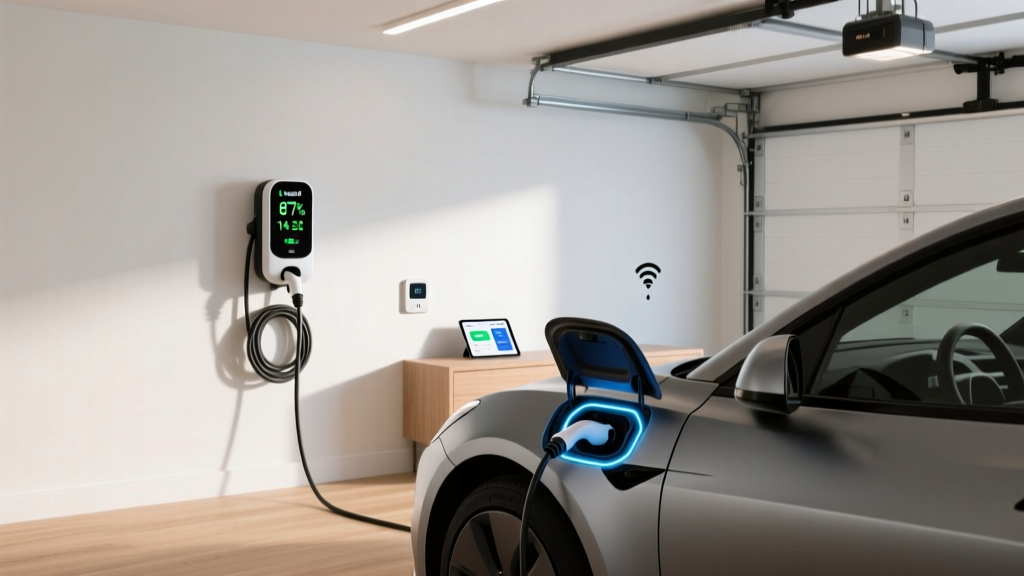
- Smart Features: Wi-Fi, app scheduling (critical for TOU rate optimization), Alexa integration, energy tracking
- Price: ~$599 (NACS version)
- Why it works in CA: Built-in TOU scheduling lets you set charging windows to off-peak hours automatically, avoiding $0.40+/kWh peak rates without thinking about it.
Wall Connector Gen 3 (Best for Tesla & NACS Owners)
- Power Output: Up to 11.5 kW (48A / 60A circuit)
- Connector: Native NACS
- Cable Length: 24 feet
- Smart Features: Wi-Fi, over-the-air updates, power sharing (link multiple units on one circuit), Tesla app integration
- Price: ~$420
- Why it works in CA: Power sharing allows two Wall Connectors on a single 60A circuit — useful for two-EV households in homes with limited panel capacity.
Emporia Vue Level 2 (Best Budget Smart Charger)
- Power Output: Up to 11.5 kW (48A / 60A circuit)
- Connector: J1772 (NACS adapter included with 2025+ models)
- Cable Length: 24 feet
- Smart Features: Wi-Fi, solar integration (pairs with Emporia Vue energy monitor), TOU scheduling, load management
- Price: ~$399
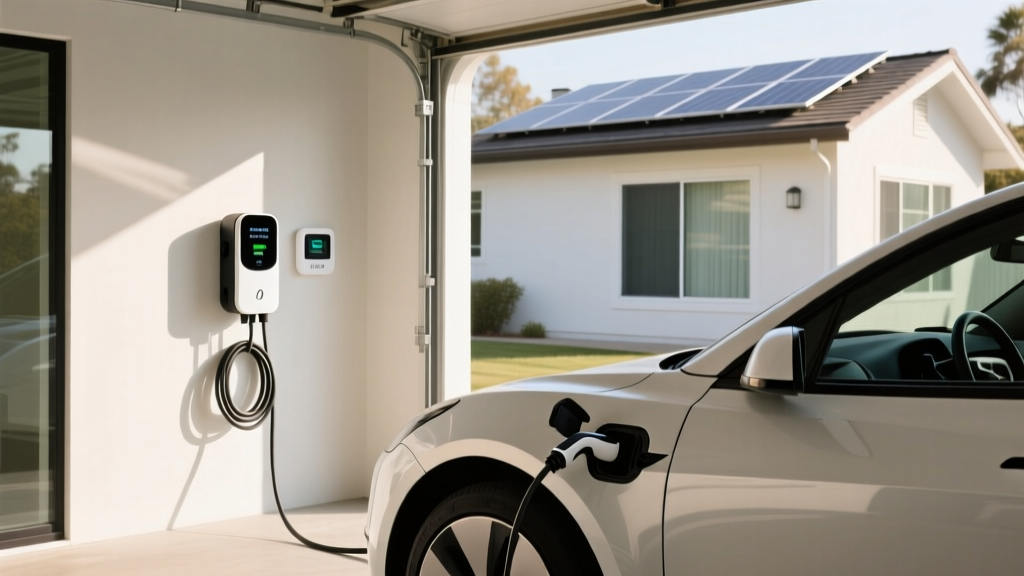
- Why it works in CA: Solar-aware charging can prioritize excess solar production during midday, effectively charging for free on homes with rooftop PV — a common setup in California.
Safety, Electrical Code, and California-Specific Requirements
California enforces the California Electrical Code (based on the NEC with state amendments). Key requirements for residential EV charger installations:
- Dedicated circuit: Your EV charger must have its own dedicated breaker — it cannot share a circuit with other appliances.
- GFCI protection: The 2023 NEC (adopted in California in 2024) requires GFCI protection for all 240V EV charging outlets rated 60 amps or less. Hardwired chargers are exempt from this specific GFCI requirement, which is one reason many installers recommend hardwiring.
- Outdoor rating: If your charger is installed outdoors (common in California, where many homes lack garages), the unit must carry a NEMA 4 or IP65 weather resistance rating. All three chargers recommended above meet this standard.
- Ventilation: Indoor installations in enclosed garages do not typically require additional ventilation for Level 2 chargers, as they produce minimal heat compared to DC fast chargers.
- Load management: If your panel is near capacity but you don't want to pay for a full upgrade, some smart chargers (like the Emporia Vue and ChargePoint Home Flex) support load management — a device that monitors total household draw and throttles the charger if other appliances kick on. This can avoid a panel upgrade in marginal situations.
Always hire a licensed California C-10 electrical contractor for EV charger installation. Verify their license at cslb.ca.gov and confirm they pull a permit — unpermitted work can void homeowner's insurance and cause problems at resale.
Charging Time Examples for Common California EVs
Below are estimated 10–80% charging times for popular EVs sold in California, across different charging scenarios. These assume normal ambient temperatures (60–80°F — typical for most of California) and a battery preconditioned for fast charging.
| Vehicle (2026 MY) | Battery (kWh usable) | Level 2 Home (11.5 kW) | DC Fast Peak (kW) | DC Fast 10–80% Time |
|---|---|---|---|---|
| Tesla Model Y Long Range | 75 kWh | ~5.5 hours | 250 kW | ~22 min |
| Hyundai Ioniq 5 (Long Range) | 77.4 kWh | ~6 hours | 240 kW (800V) | ~18 min |
| Ford Mustang Mach-E (ER) | 91 kWh | ~7 hours | 150 kW | ~38 min |
| Chevrolet Equinox EV | 85 kWh | ~6.5 hours | 190 kW | ~28 min |
| Rivian R1T (Max Pack) | 141 kWh | ~11 hours | 220 kW | ~45 min |
| BMW i4 eDrive40 | 81.5 kWh | ~6.5 hours | 205 kW | ~30 min |
Cold-weather note: While California's climate is mild, mountain passes and Northern California winters can drop battery temperatures enough to slow DC fast charging by 15–30%. Always use your vehicle's preconditioning feature (navigate to a charger in the infotainment system) to warm the battery before arrival. The Hyundai Ioniq 5's 800-volt architecture and the Tesla Model Y's heat pump are particularly effective at maintaining charge speed across temperature ranges.
Frequently Asked Questions About California EV Charging
How much does it cost to install a home EV charger in California?
For a straightforward installation (adequate panel capacity, short wire run from panel to garage or exterior wall), expect $800–$2,800 all-in, including the charger ($350–$750), electrician labor ($400–$1,800), and permit ($50–$250). If your home needs a 200-amp panel upgrade, add $2,000–$5,000. California utility rebate programs (PG&E EV Rate Assistance, SCE Charge Ready) can offset some of these costs — check your utility's EV page for current offers.
How fast will each charging level add range to my EV?
Level 1 (120V) adds 3–5 miles per hour — adequate only for plug-in hybrids with small batteries or as an emergency backup. Level 2 (240V) at 11.5 kW adds roughly 40–50 miles per hour for a typical midsize EV, enough to fully replenish overnight. DC fast charging at 150–250 kW can add 200+ miles in 15–20 minutes, though speed tapers above 60–80% state of charge due to battery protection protocols.
Which connector and charger is compatible with my EV?
If your EV is a 2025 or newer model from Tesla, Ford, GM, Hyundai, Kia, Rivian, BMW, Mercedes, Volvo, or Polestar, it has a native NACS port and can use Tesla Superchargers directly. Older CCS-equipped vehicles need a NACS-to-CCS adapter ($200–$350) for Supercharger access. CHAdeMO vehicles (Nissan Leaf) face declining infrastructure and should carry a CHAdeMO-to-CCS adapter for broader access. For Level 2 home charging, all non-Tesla EVs use the J1772 connector (or NACS on newer models); Tesla includes a J1772 adapter with every vehicle.
How much does charging cost per mile compared to gasoline in California?
At California's 2026 average gasoline price of ~$5.20/gallon and a 28 MPG combined vehicle, you're paying roughly $0.186/mile. Home off-peak charging at $0.12/kWh costs about $0.034/mile for an efficient EV — an 82% savings. Even DC fast charging at $0.52/kWh costs ~$0.146/mile, still 21% less than gas. The savings multiply dramatically if you charge from rooftop solar (effectively $0.01/mile or less).
What electrical upgrades might I need for a home charger?
The most common upgrade is a panel capacity increase from 100 amps to 200 amps, needed when your existing panel can't safely accommodate a new 40–60 amp dedicated circuit alongside existing loads (HVAC, electric range, dryer). Less commonly, you may need a service drop upgrade from the utility, new conduit runs through finished walls (more expensive than exposed garage runs), or a sub-panel addition. A licensed electrician will perform a load calculation per NEC Article 220 to determine your exact requirements before quoting the job.
Is it worth getting a utility EV rate plan in California?
Almost always, yes. PG&E's EV2-A rate, SCE's TOU-EV-5, and SDG&E's EV-TOU-5 all offer dramatically lower off-peak rates (often $0.09–$0.14/kWh between midnight and 3 PM) in exchange for higher peak rates. If you can schedule charging overnight using your car's built-in scheduler or your charger's app, the savings are substantial — often cutting your charging electricity cost by 50–70% compared to a standard residential tiered rate. Contact your utility to enroll; most can switch your plan within one billing cycle.
Can I use a regular 120V outlet to charge my EV?
Yes, but it's impractical as a primary strategy for battery EVs. A standard 120V outlet delivers roughly 1.2 kW, adding about 4 miles of range per hour. A full charge of a 75 kWh battery from empty would take over 60 hours. For plug-in hybrids with 25–40 miles of electric range, Level 1 is viable for overnight replenishment. For BEVs, treat Level 1 as a backup or supplement — install a 240V Level 2 circuit for daily use.
For current California EV incentive details, consult the California Energy Commission incentive page and the U.S. DOE Alternative Fuels Data Center for station maps and state/federal program updates.