Owning a Cadillac electric vehicle means navigating a rapidly evolving charging ecosystem. Whether you drive the Lyriq crossover, the compact Optiq, or the flagship Escalade IQ, understanding how to charge efficiently at home and on the road is the single biggest factor in long-term satisfaction. This guide breaks down every aspect of keeping your Cadillac "supercharged" — from Level 1 trickle charging to 350 kW DC fast charging — with exact numbers, real costs, and equipment picks for 2026.
Understanding EV Charging Levels: kW, kWh, and Miles Per Hour
Before plugging in, clarify the most common EV confusion: kW (kilowatts) measures power — how fast energy flows into your battery. kWh (kilomatt-hours) measures energy — the total capacity stored. Think of kW as the width of a pipe and kWh as the size of the tank. A wider pipe (higher kW) fills the tank (kWh) faster.
Every Cadillac EV sold in 2026 uses the Ultium battery platform with usable capacities ranging from ~68 kWh (Optiq) to over 200 kWh (Escalade IQ). Here is how each charging level performs:
| Level | Voltage / Amps | Power (kW) | Miles of Range Added per Hour | Best Use Case |
|---|---|---|---|---|
| Level 1 | 120V / 12A | ~1.4 kW | 3–5 mi/hr | Emergency / overnight top-off |
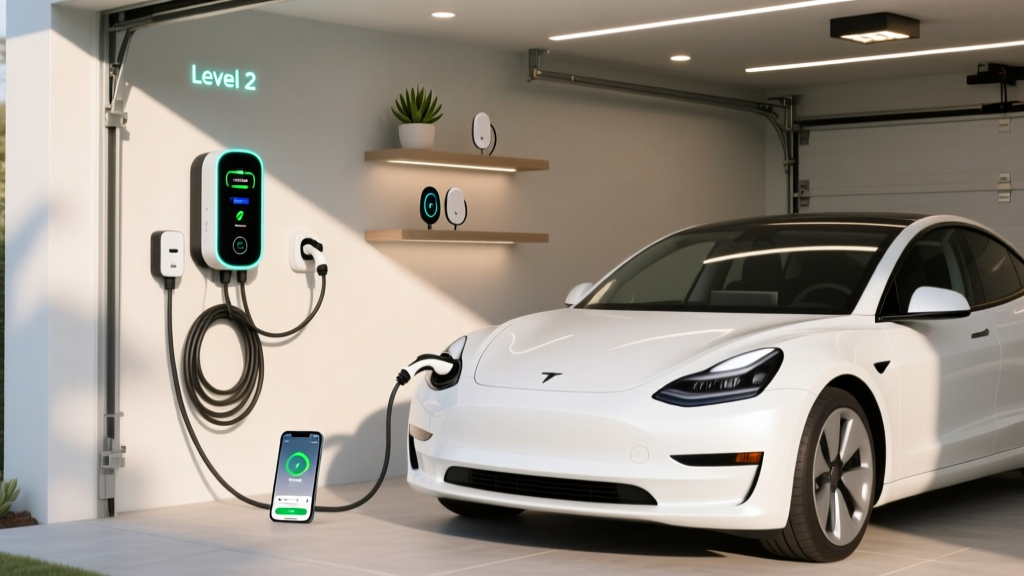
| Level 2 | 240V / 32–48A | 7.7–11.5 kW | 22–38 mi/hr | Daily home charging |
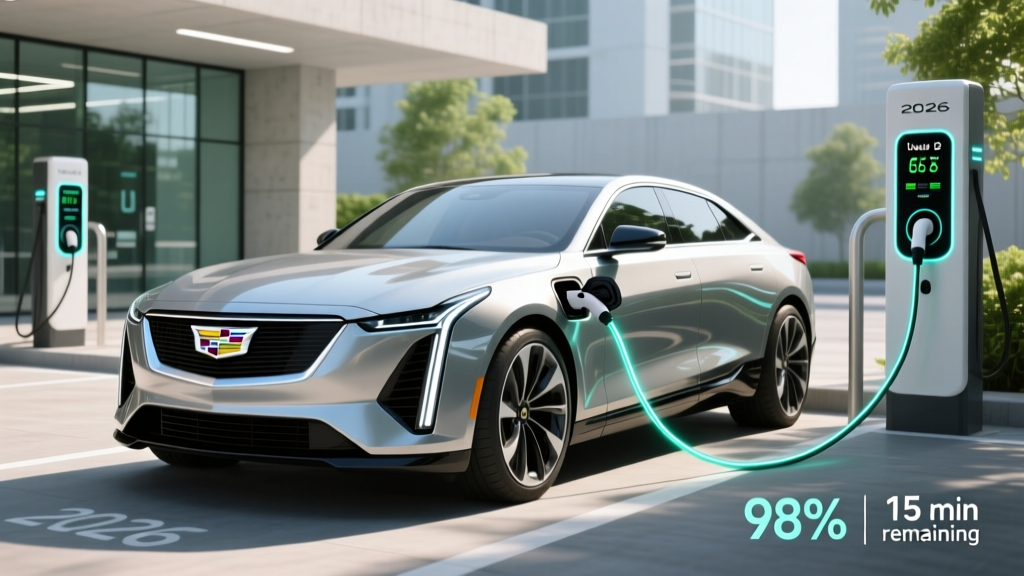
| DC Fast Charge | 400–800V DC | 50–350 kW | 150–600+ mi/hr (peak) | Road trips / rapid top-up |
For a Cadillac Lyriq with its 102 kWh usable battery and EPA-estimated 314 miles of range, Level 2 charging at 11.5 kW adds roughly 35 miles of range per hour — enough to fully replenish overnight. DC fast charging at the Lyriq's peak rate of 190 kW can take the battery from 10% to 80% in approximately 27 minutes under ideal thermal conditions.
Home Charger Installation: Electrical Requirements and Costs
Installing a Level 2 home charger is the single most impactful upgrade for daily EV ownership. For Cadillac owners, GM recommends a 48-amp charger on a dedicated 60-amp circuit to maximize the onboard charger's 11.5 kW acceptance rate.
Electrical Panel Requirements
A Level 2 charger drawing 48 amps requires a 240-volt, 60-amp dedicated circuit with a double-pole breaker. Most modern homes with a 200-amp electrical panel can accommodate this, but older homes with 100-amp service may need a panel upgrade — a significant additional cost. Your electrician will perform a load calculation per NEC Article 220 to verify capacity.
Homes that may need a panel upgrade include those with:
- 100-amp main service panels (common in pre-1990 construction)
- Existing high-draw appliances (electric range, dryer, HVAC) already consuming most panel capacity
- Sub-panels serving detached garages with insufficient feeder wire gauge
Installation Cost Breakdown
Home charger installation costs vary widely based on panel condition, conduit run length, and local permit fees. Here is a realistic breakdown for a typical 2026 installation:
| Component | Simple Install (Near Panel) | Complex Install (Long Run / Panel Upgrade) |
|---|---|---|
| Level 2 Charger Equipment | $500–$700 | $500–$700 |
| Electrician Labor (2–4 hrs typical) | $300–$600 | $800–$2,000 |
| Materials (conduit, wire, breaker) | $100–$200 | $300–$800 |
| Permit & Inspection | $50–$150 | $50–$200 |
| Panel Upgrade (if needed) | $0 | $1,500–$3,500 |
| Total Estimated Cost | $950–$1,650 | $3,150–$7,200 |
Some utility companies offer rebates of $250–$500 for Level 2 installations, and certain states provide additional incentives. Check with your local utility and the Alternative Fuels Data Center for current programs in your area.
Connector Compatibility: NACS, CCS, and the Cadillac Advantage
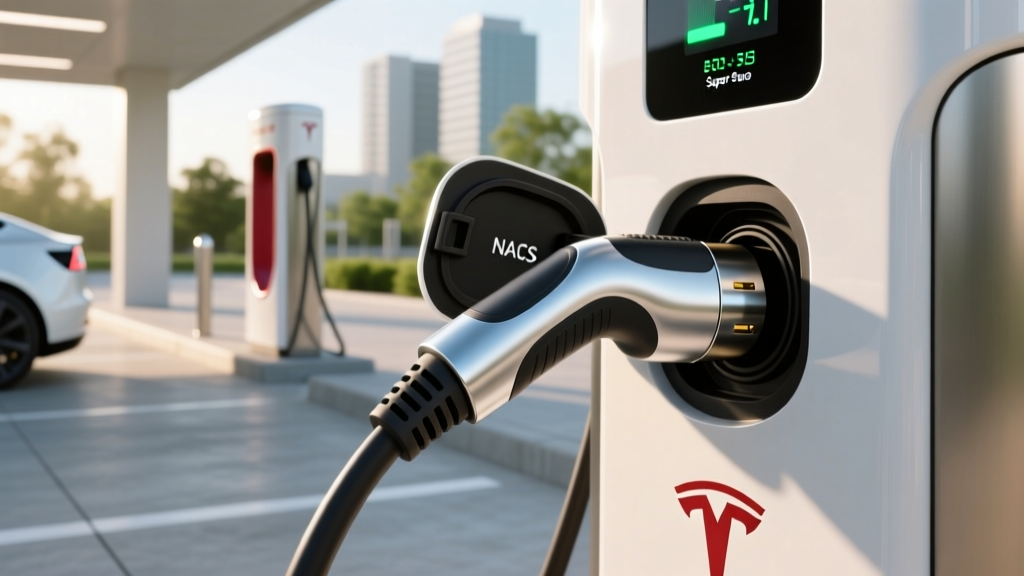
For 2026, General Motors has fully transitioned Cadillac to the North American Charging Standard (NACS) — the connector originally developed by Tesla. This is a significant advantage, as it grants native access to the Tesla Supercharger network (now branded as part of the broader NACS ecosystem) without an adapter.
| Connector Type | Native Support | Network Access | Adapter Required? |
|---|---|---|---|
| NACS (J3400) | Yes — all 2025+ Cadillacs | Tesla Superchargers, Electrify America (NACS stalls), EVgo, and growing network | No |
| CCS1 | No (native) — adapter included by GM | Legacy Electrify America, ChargePoint DC, EVgo legacy stalls | Yes — GM-provided NACS-to-CCS adapter |
| CHAdeMO | No | Limited / legacy Nissan Leaf infrastructure | Not recommended; no official adapter |
| J1772 (Level 2 public) | Yes — adapter included | Public Level 2 stations (ChargePoint, Blink, etc.) | Yes — NACS-to-J1772 adapter (included) |
The transition to NACS means Cadillac owners have the broadest DC fast-charging access of any non-Tesla brand. When planning road trips, the Supercharger network remains the most reliable option, with over 25,000 stalls in North America as of early 2026. According to Cadillac's official EV hub, all new Cadillacs ship with both a NACS-to-J1772 adapter and a CCS1 adapter in the glovebox.
Charging Cost: Per-Mile Economics vs. Gasoline
One of the strongest arguments for a Cadillac EV is the dramatically lower fuel cost — but the savings depend heavily on where and when you charge. Here are realistic 2026 scenarios for a Lyriq (averaging 2.9 miles/kWh or ~34 kWh/100mi):
| Scenario | Cost per kWh | Cost per 100 Miles | Cost per Mile | Annual Cost (12,000 mi) |
|---|---|---|---|---|
| Home Off-Peak (utility rate) | $0.09–$0.13 | $3.06–$4.42 | $0.03–$0.04 | $367–$530 |
| Home Standard Rate | $0.14–$0.18 | $4.76–$6.12 | $0.05–$0.06 | $571–$734 |
| Public Level 2 (ChargePoint, etc.) | $0.25–$0.40 | $8.50–$13.60 | $0.09–$0.14 | $1,020–$1,632 |
| DC Fast Charging (EA / EVgo) | $0.35–$0.55 | $11.90–$18.70 | $0.12–$0.19 | $1,428–$2,244 |
| Gas SUV (22 MPG combined, $3.40/gal) | — | $15.45 | $0.15 | $1,854 |
Home charging at off-peak rates delivers the best economics — roughly 75–80% cheaper per mile than gasoline. Even exclusive DC fast charging is often comparable to or slightly cheaper than gas, depending on your local electricity rates. The key takeaway: install a home charger to capture the full cost advantage.
For reference, the EPA rates the 2026 Lyriq at approximately 89 MPGe combined. Visit fueleconomy.gov to look up exact efficiency figures for your specific trim and model year.
DC Fast Charging: Real-World Times and Charge Curve Reality
Marketing materials highlight peak charge rates, but sustained charging speed matters more for road trips. The charge curve — how charging power tapers as the battery fills — is critical to understand.
Cadillac EV DC Fast-Charging Specs
- Lyriq (102 kWh, NMC): Peak 190 kW, 10–80% in ~27 minutes. Power tapers significantly above 80%, adding another 15–20 minutes to reach 100%.
- Optiq (~68 kWh, NMC): Peak ~150 kW, 10–80% in ~24 minutes. Smaller battery means shorter absolute charge times despite lower peak rate.
- Escalade IQ (~200+ kWh, NMC): Peak ~350 kW (800V architecture), 10–80% in ~22 minutes. The massive battery accepts more sustained power, making it one of the fastest-charging large SUVs available.
Preconditioning: Why It Matters
When you navigate to a DC fast charger using your Cadillac's built-in navigation, the vehicle automatically begins preconditioning the battery — warming it to the optimal temperature range for maximum charge acceptance. In cold weather (below 40°F), preconditioning can make the difference between a 90 kW charge rate and the full 190 kW peak. Always use the in-dash navigation for charger routing to enable this feature. Arriving at a fast charger with a cold battery can double your charge time.
Recommended Home Charging Equipment for Cadillac EVs
With the NACS connector now standard on all 2026 Cadillacs, your Level 2 charger must have a native NACS plug (or you must use the included adapter on a J1772 unit). Here are top picks across price and feature tiers:
GM PowerConnect Home Charger (Best Integration)
- Power Output: 11.5 kW (48A, 240V)
- Connector: Native NACS
- Cable Length: 25 feet
- Smart Features: myCadillac app integration, scheduled charging, energy tracking
- Wi-Fi: Yes — OTA updates
- Outdoor Rating: NEMA 4 (indoor/outdoor)
- Price: ~$600
Best for: Cadillac owners who want seamless app integration and the confidence of OEM-backed hardware.
ChargePoint Home Flex (Best Flexibility)
- Power Output: Up to 12 kW (50A, 240V) — configurable down to 16A for lower-capacity panels
- Connector: Native NACS (2025+ model) or J1772 with adapter
- Cable Length: 23 feet
- Smart Features: ChargePoint app, Alexa, scheduling, amperage adjustment
- Wi-Fi: Yes
- Outdoor Rating: NEMA 4
- Price: ~$550–$650
Best for: Homes with limited panel capacity — the adjustable amperage avoids a costly panel upgrade.
Tesla Wall Connector (Best Value)
- Power Output: 11.5 kW (48A, 240V)
- Connector: Native NACS
- Cable Length: 24 feet
- Smart Features: Wi-Fi, scheduling, power sharing (multiple units on one circuit), load management
- Outdoor Rating: NEMA 3R
- Price: ~$450–$500
Best for: Budget-conscious buyers who want reliable NACS hardware. Works with any NACS-equipped vehicle, not just Teslas.
Safety, Code Compliance, and Installation Best Practices
EV charging involves sustained high-current draw — often 8+ hours at 48 amps. This is unlike any other household appliance and demands proper installation per the National Electrical Code (NEC).
Non-Negotiable Safety Requirements
- Dedicated Circuit: Your Level 2 charger must be on its own dedicated circuit — never shared with other appliances. Continuous loads (3+ hours) require the breaker to be rated at 125% of the charger's draw, hence a 60A breaker for a 48A charger.
- GFCI Protection: NEC 2020 and later require GFCI protection for all EV charging outlets. Hardwired chargers with built-in ground-fault protection satisfy this requirement. Some jurisdictions require a GFCI breaker even for hardwired units — your electrician will know local code.
- Outdoor Rating: If your charger is installed outdoors or in an unenclosed carport, it must carry at minimum a NEMA 3R rating (rain-resistant). NEMA 4 is preferred for full weather and hose-directed water protection.
- Wire Gauge: A 60A circuit requires 6 AWG copper wire (THHN in conduit) or 4 AWG aluminum. Undersized wire is a fire hazard — never cut corners here.
- Permit and Inspection: Virtually all jurisdictions require an electrical permit for a new 240V circuit. The inspection verifies wire gauge, breaker sizing, grounding, and GFCI compliance. Unpermitted work can void your homeowner's insurance in the event of an electrical fire.
Hardwired vs. Plug-In (NEMA 14-50)
You have two installation options:
- Hardwired: The charger is directly connected to the circuit in a junction box. Eliminates the outlet as a failure point, allows full 48A continuous draw, and satisfies most GFCI code paths. Recommended for most installations.
- NEMA 14-50 Receptacle: The charger plugs into a 240V/50A outlet, making it portable. However, NEC continuous-load rules limit a 50A outlet to 40A continuous draw (9.6 kW). Some jurisdictions now require GFCI breakers for 14-50 receptacles used for EV charging, adding $50–$100 to the install.
Frequently Asked Questions
How much does it cost to install a home EV charger for my Cadillac?
A straightforward Level 2 installation with adequate panel capacity typically costs $950–$1,650 including equipment, labor, materials, and permit. If your home requires an electrical panel upgrade (common with 100-amp service), total costs can reach $3,150–$7,200. Always get a quote from a licensed electrician who will perform a load calculation first.
How fast will each charging level add range to my Cadillac Lyriq?
Level 1 (120V) adds approximately 3–5 miles per hour — suitable only for overnight top-offs. Level 2 (240V, 48A) adds approximately 35 miles per hour, fully recharging the Lyriq's 102 kWh battery in about 9–10 hours. DC fast charging at 190 kW adds up to 150+ miles in 10 minutes during the peak portion of the charge curve.
Which connector does my 2026 Cadillac use?
All 2026 Cadillac EVs use the NACS (J3400) connector natively. This provides direct access to Tesla Superchargers and the growing NACS public charging network. GM includes a NACS-to-J1772 adapter for public Level 2 stations and a CCS1 adapter for legacy DC fast chargers.
How much does charging cost per mile compared to gas?
Home charging at off-peak rates costs approximately $0.03–$0.04 per mile — roughly 75% less than a comparable gas SUV at $0.15/mile. Even exclusive public DC fast charging at $0.35–$0.55/kWh costs $0.12–$0.19 per mile, competitive with or cheaper than gasoline. The savings are maximized with home Level 2 charging.
What electrical upgrades might my home need for a Level 2 charger?
Homes with 100-amp electrical panels often require an upgrade to 200-amp service ($1,500–$3,500). If your garage is far from the panel, long conduit runs add material and labor costs. Some older homes need new grounding rods or updated service entrance wiring. A licensed electrician's load calculation will identify all requirements before installation begins.
Does the federal tax credit cover home charger installation?
The IRS §30D credit covers the vehicle itself (up to $7,500, subject to MSRP caps, income limits, and battery-sourcing requirements as of 2026). A separate credit under IRC §30C covers up to 30% of home charging equipment and installation costs, capped at $1,000, but is subject to census-tract eligibility requirements. Consult a tax professional and review current rules at IRS.gov before filing.