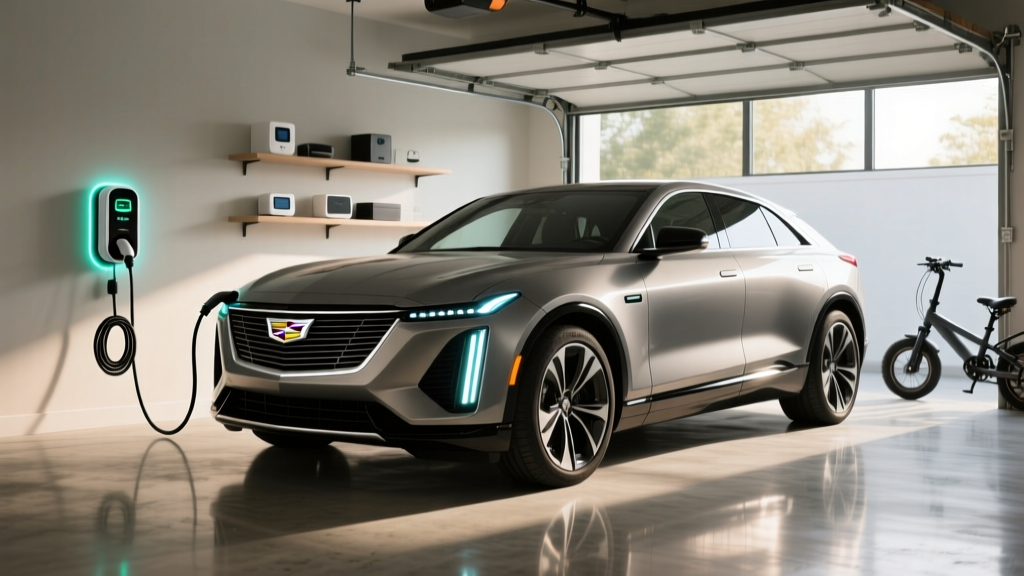
The Cadillac Lyriq pairs striking design with GM's Ultium battery platform, but extracting the maximum Cadillac Lyriq range from its 102 kWh (usable) battery pack depends heavily on how and where you charge. Whether you're a current owner optimizing daily efficiency or a buyer planning your home charging infrastructure, this guide covers the exact numbers — from EPA estimates versus real-world highway expectations to the electrical requirements for a 48-amp Level 2 home charger.
We'll walk through every charging level, the NACS connector transition happening across GM vehicles, what a home installation actually costs (including panel upgrades), and which wall connectors deliver the best value for your Lyriq in 2026.
Cadillac Lyriq Range: EPA Sticker vs. Real-World Reality
The 2026 Cadillac Lyriq is offered with rear-wheel drive (RWD) and all-wheel drive (AWD) powertrains, each carrying the same 102 kWh usable Ultium battery (NMC chemistry). Here's what the EPA says versus what you'll actually see on the road.
Lyriq RWD (Tech/Luxury): EPA 314 miles | Real-world highway (70 mph): ~265–285 miles | Cold weather (below 32°F): ~220–250 miles
Lyriq AWD (Sport): EPA 307 miles | Real-world highway (70 mph): ~255–275 miles | Cold weather: ~215–245 miles
Lyriq V-Series: EPA 284 miles | Real-world highway: ~235–255 miles | Cold weather: ~200–225 miles
Note: Real-world figures vary with driving style, terrain, HVAC use, and temperature. Highway driving at sustained speeds reduces range 15–20% versus EPA combined. Cold weather with cabin heating can reduce range 25–35%.
| Spec | RWD | AWD | V-Series |
|---|---|---|---|
| EPA Range | 314 mi | 307 mi | 284 mi |
| Battery (usable) | 102 kWh NMC | 102 kWh NMC | 102 kWh NMC |
| MPGe (combined) | 89 MPGe | 88 MPGe | 82 MPGe |
| Efficiency | 38 kWh/100mi | 38 kWh/100mi | 41 kWh/100mi |
| Peak DC Charge Rate | 190 kW | 190 kW | 190 kW |
| 10–80% DC Fast Charge | ~33 min | ~33 min | ~33 min |
| Level 2 Max Acceptance | 19.2 kW (80A) | 19.2 kW (80A) | 19.2 kW (80A) |
| Horsepower | 340 hp | 500 hp | 615 hp |
| 0–60 mph | 6.0 sec | 4.6 sec | 3.9 sec |
| Starting MSRP | $58,590 | $62,090 | $74,990 |
| Battery Warranty | 8 yr / 100,000 mi | 8 yr / 100,000 mi | 8 yr / 100,000 mi |
Source: EPA Fueleconomy.gov
Charging Levels Explained: How Fast Will Each Add Range?
Understanding the difference between kW (power — how fast energy flows) and kWh (energy — how much the battery holds) is essential. Your Lyriq's 102 kWh battery is the "tank size." The charger's kW rating determines how quickly that tank fills. A higher kW rate fills the battery faster, but only up to the vehicle's maximum acceptance rate.
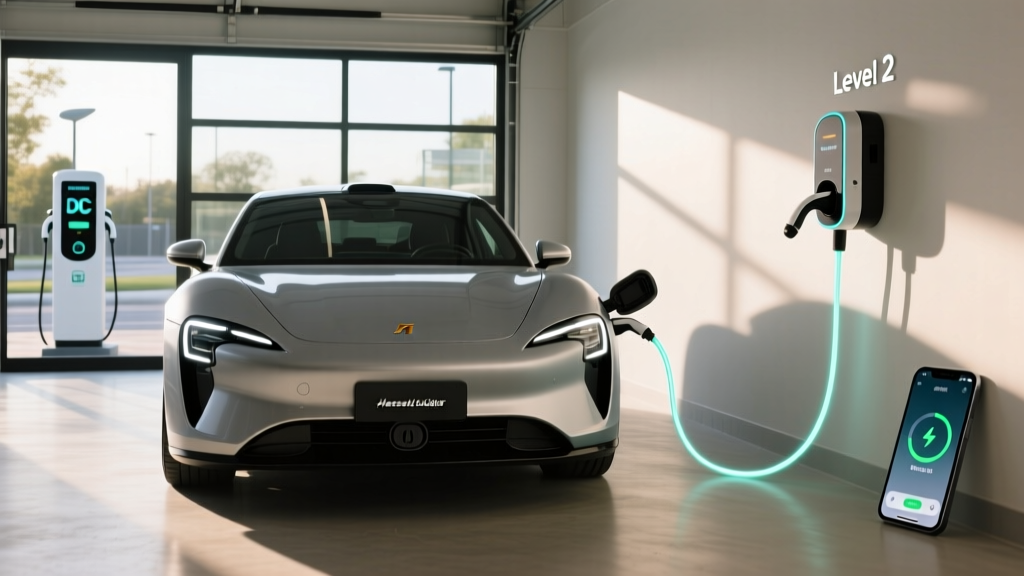
The Lyriq's onboard charger accepts up to 19.2 kW on Level 2 (a segment-leading spec) and up to 190 kW on DC fast charging. Here's what each level delivers in practical terms:
| Level | Power (kW) | Miles of Range Added per Hour | 0–100% Time (102 kWh) | Best Use Case |
|---|---|---|---|---|
| Level 1 (120V standard outlet) | 1.4 kW (12A) | ~4 miles/hr | ~73 hours | Emergency/trickle only |
| Level 2 (240V, 32A) | 7.7 kW | ~21 miles/hr | ~13.3 hours | Minimum viable home charging |
| Level 2 (240V, 48A) | 11.5 kW | ~31 miles/hr | ~8.9 hours | Most popular home setup |
| Level 2 (240V, 80A) | 19.2 kW | ~52 miles/hr | ~5.3 hours | Lyriq max — fastest Level 2 |
| DC Fast (150 kW station) | ~150 kW peak | ~240 miles/hr (peak) | 10–80% in ~37 min | Road trips |
| DC Fast (350 kW station) | ~190 kW peak* | ~300 miles/hr (peak) | 10–80% in ~33 min | Road trips — optimal |
*The Lyriq peaks at 190 kW even on a 350 kW charger. The charge curve tapers significantly above 80% SoC to protect battery health — expect the last 20% to take nearly as long as the first 70%.
Connector Compatibility: NACS, CCS, and the Tesla Supercharger Network
For the 2025 model year, GM transitioned all new EVs — including the Lyriq — to the North American Charging Standard (NACS) connector, the same plug used by Tesla. If you're buying a 2025 or 2026 Lyriq, it ships with a native NACS charge port. This is a significant advantage: you get direct access to Tesla's Supercharger network (over 25,000 stalls in North America) without an adapter.
For 2022–2024 Lyriq owners with the CCS1 port, GM provides a complimentary NACS adapter that enables Supercharger access. Here's the full compatibility picture:
| Model Year | Native Port | Tesla Supercharger | CCS Networks (EA, EVgo) | Adapter Needed? |
|---|---|---|---|---|
| 2025–2026 | NACS | ✅ Direct plug-in | ✅ With NACS-to-CCS adapter | CCS adapter (included by GM) |
| 2022–2024 | CCS1 | ✅ With NACS adapter | ✅ Direct plug-in | NACS adapter (complimentary from GM) |
CHAdeMO is effectively discontinued for new DC fast-charging installations in North America. Neither Lyriq model year supports it natively, and no reliable CHAdeMO-to-NACS/CCS adapter exists for DC fast charging. Avoid CHAdeMO-only stations for road-trip planning.
Home Charger Installation: Electrical Requirements and Costs
The Lyriq's 19.2 kW onboard charger is one of the most powerful in its class, meaning you can benefit from a higher-amperage home circuit than most EVs. But that also means your electrical panel must support it. Here's what each home charging tier requires:
- 48-amp charger (11.5 kW): Requires a 60-amp dedicated circuit (NEC code mandates circuits be rated 125% of continuous load). Uses a NEMA 14-60 outlet or hardwired connection. This is the sweet spot for most Lyriq owners — it adds ~31 miles of range per hour and fully replenishes the battery overnight.
- 80-amp charger (19.2 kW): Requires a 100-amp dedicated circuit. Must be hardwired (no plug configuration rated for this). This is the maximum the Lyriq can accept and delivers ~52 miles/hr, but it demands a panel with significant spare capacity.
Do You Need a Panel Upgrade?
Most homes built after 2000 have a 200-amp service panel. To determine if you can add a 60-amp or 100-amp EV circuit, an electrician will perform a load calculation — adding up your existing circuits and major appliances to see how much headroom remains. If your panel is already near capacity (common with electric ranges, dryers, HVAC, and hot tubs), you may need:
- A panel upgrade from 100A or 150A to 200A service: $1,500–$3,500
- A service upgrade from 200A to 325A or 400A (for 80-amp EV charging on loaded panels): $3,000–$5,500
- A load-management device (e.g., Emporia or Wallbox PowerShare) that dynamically limits charger draw when other appliances are running: $200–$500 additional
Homes with older 100-amp panels will almost certainly need an upgrade before installing any 48-amp or higher charger.
| Component | 48A Charger (60A Circuit) | 80A Charger (100A Circuit) |
|---|---|---|
| Level 2 Charger Equipment | $400–$700 | $600–$1,200 |
| Electrician Labor (wire run, breaker, outlet/hardwire) | $500–$1,500 | $800–$2,500 |
| Electrical Permit | $50–$200 | $75–$250 |
| Panel Upgrade (if needed) | $1,500–$3,500 | $1,500–$5,500 |
| Total (no panel upgrade) | $950–$2,400 | $1,475–$3,950 |
| Total (with panel upgrade) | $2,450–$5,900 | $2,975–$9,450 |
Federal tax incentive: The IRS Residential Clean Energy Credit (Form 5695) covers 30% of home EV charger equipment and installation costs, up to $1,000, through 2032. This applies to the charger and electrical work but not to a full panel upgrade. Check with a tax professional for your specific eligibility.
Charging Cost: Home vs. Public vs. Gas Comparison
The Lyriq's 38 kWh/100mi efficiency (RWD) makes it relatively cost-effective to operate. Your actual cost per mile depends on electricity rates, which vary dramatically between home charging and public DC fast stations.
| Scenario | Rate | Cost per kWh | Cost per Mile (Lyriq RWD) |
|---|---|---|---|
| Home Off-Peak (national avg.) | $0.13/kWh | $0.13 | $0.049 |
| Home Peak (high-cost state) | $0.28/kWh | $0.28 | $0.106 |
| Public Level 2 (workplace/mall) | $0.20–$0.35/kWh | $0.28 avg | $0.106 |
| DC Fast Charging (Electrify America) | $0.48–$0.56/kWh | $0.52 avg | $0.198 |
| Tesla Supercharger (avg.) | $0.30–$0.40/kWh | $0.35 avg | $0.133 |
| Gas SUV (25 MPG combined) | $3.40/gallon | — | $0.136 |
The takeaway: Charging at home on off-peak rates saves roughly $0.09 per mile compared to a 25 MPG gas SUV — that's $1,350 saved over 15,000 miles per year. However, exclusive reliance on DC fast charging can actually cost more than gasoline. Home charging is where the economics work best.
Recommended Home Chargers for the Cadillac Lyriq
Because the Lyriq can accept up to 19.2 kW on Level 2, investing in a higher-amperage charger unlocks meaningful time savings. Here are the top picks for 2026, all NACS-native or available with NACS connectors:
ChargePoint Home Flex (NACS)
Power: Up to 12 kW (50A) on a 60A circuit
Connector: NACS native (2025+ models)
Cable Length: 23 feet
Smart Features: Wi-Fi, app scheduling, Alexa integration, energy tracking
Price: ~$599
Verdict: Reliable workhorse. Doesn't max out the Lyriq's 19.2 kW capability but covers overnight needs at a fair price.
⭐ Wallbox Pulsar Max (48A)
Power: 11.5 kW (48A) on a 60A circuit
Connector: NACS native
Cable Length: 25 feet
Smart Features: Wi-Fi, app control, load balancing (with Power Meter), solar integration
Price: ~$549
Verdict: Best value for 48A charging. Compact, well-built, and the load-balancing add-on avoids panel upgrades in many homes.
Emporia Vue + EV Charger (80A)
Power: Up to 19.2 kW (80A) on a 100A circuit, hardwired
Connector: NACS native
Cable Length: 24 feet
Smart Features: Whole-home energy monitoring, dynamic load management, app scheduling
Price: ~$799 (charger) + ~$300 (Vue panel monitor)
Verdict: The only way to unlock the Lyriq's full 19.2 kW home charging. The integrated load management can prevent a costly panel upgrade.
Tesla Wall Connector (NACS)
Power: Up to 11.5 kW (48A) on a 60A circuit
Connector: NACS native
Cable Length: 24 feet
Smart Features: Wi-Fi, OTA updates, power sharing (up to 6 units on one circuit), Tesla app
Price: ~$450
Verdict: Least expensive quality option. Lacks advanced energy monitoring but is dead-simple and reliable. Power sharing is useful for two-EV households.
Safety, Code, and Installation Best Practices
EV charging draws sustained high current for hours — this is the most demanding continuous load in most homes. Cutting corners on installation creates fire risk. Here's what proper installation requires:
- Dedicated circuit: Your EV charger must have its own breaker — never share a circuit with other appliances. A 48A charger requires a 60A breaker; an 80A charger requires a 100A breaker.
- Wire gauge: 60A circuits require minimum 6 AWG copper (or 4 AWG aluminum). 100A circuits require minimum 3 AWG copper (or 1 AWG aluminum). Longer wire runs may need larger gauge to prevent voltage drop.
- GFCI protection: The 2023 NEC (and most 2026 local adoptions) requires GFCI protection for all EV charging outlets. Hardwired chargers with built-in ground-fault protection satisfy this requirement without a GFCI breaker, which saves $50–$150 and eliminates nuisance tripping.
- Outdoor rating: If your charger is installed outdoors or in an unsealed garage, it must carry a NEMA 4 (weatherproof) rating. All chargers listed above meet this standard.
- Permit and inspection: Most jurisdictions require an electrical permit for EV charger installation ($50–$250). The inspection verifies wire gauge, breaker sizing, grounding, and GFCI compliance. Skipping the permit risks insurance denial if an electrical fire occurs.
- Licensed electrician: Always use a licensed, insured electrician. Ask specifically about their EV charger installation experience — the continuous-load calculations differ from standard residential wiring.
Frequently Asked Questions
How much does it cost to install a home EV charger for the Cadillac Lyriq?
For a standard 48-amp Level 2 charger on a 60-amp circuit, expect to pay $950–$2,400 total (equipment + electrician + permit) if your panel has sufficient capacity. If a panel upgrade is needed, add $1,500–$3,500. An 80-amp setup that maxes out the Lyriq's 19.2 kW acceptance rate costs $1,475–$3,950 without a panel upgrade. The 30% federal Residential Clean Energy Credit (up to $1,000) offsets some of this cost.
How fast will each charging level add range to my Lyriq?
Level 1 (120V) adds roughly 4 miles per hour — impractical for daily use. A 48-amp Level 2 charger adds ~31 miles per hour, fully replenishing the 102 kWh battery in about 9 hours. At the Lyriq's maximum 80-amp Level 2 rate (19.2 kW), you gain ~52 miles per hour and a full charge in ~5.3 hours. DC fast charging at 190 kW peak adds roughly 190 miles in 30 minutes (10–80% SoC).
Which connector does the 2026 Cadillac Lyriq use?
The 2025 and 2026 Lyriq use the NACS (Tesla-style) connector natively. This means direct compatibility with Tesla Superchargers and an expanding number of NACS-equipped public stations. For CCS1-based public chargers (Electrify America, EVgo), use the NACS-to-CCS adapter provided by GM. The 2022–2024 Lyriq has a CCS1 port and receives a complimentary NACS adapter from GM for Supercharger access.
How much does charging the Lyriq cost per mile compared to gas?
At the national average home electricity rate of $0.13/kWh, the Lyriq RWD (38 kWh/100mi) costs about $0.049 per mile. A comparable gas SUV at 25 MPG and $3.40/gallon costs $0.136 per mile. That's a savings of roughly $0.087 per mile, or $1,300+ per year at 15,000 miles. However, exclusive DC fast charging at $0.52/kWh costs $0.198 per mile — more than gasoline. The economics strongly favor home charging.
What electrical upgrades might I need for a Lyriq home charger?
The most common upgrade is a panel capacity increase. If your home has a 100-amp service panel, you'll almost certainly need a 200-amp upgrade ($1,500–$3,500) before adding a 48-amp or higher charger. Even with a 200-amp panel, existing loads (electric range, dryer, HVAC, hot tub) may leave insufficient headroom for an 80-amp EV circuit. In that case, a load-management device ($200–$500) can dynamically share capacity without a panel upgrade. Always have a licensed electrician perform a load calculation before committing to a charger size.
Can I precondition my Lyriq's battery for faster DC charging?
Yes. When you navigate to a DC fast charger using the Lyriq's built-in navigation, the thermal management system automatically begins preconditioning the battery to its optimal charging temperature (roughly 85–95°F). This can reduce 10–80% charge time by 5–10 minutes in cold weather. Always use the in-dash navigation routing to chargers to activate this feature — manually selecting a charger in a phone app does not trigger preconditioning.
Sources: EPA Fueleconomy.gov, Cadillac Lyriq Official Specifications, IRS Residential Clean Energy Credit