Cadillac Lyriq Charging Speed at a Glance
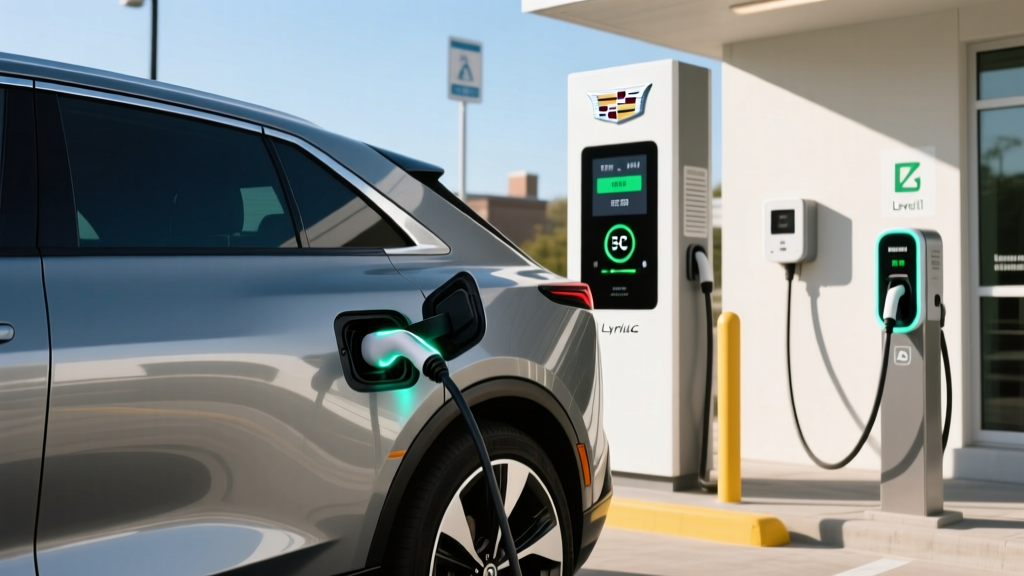
The Cadillac Lyriq pairs a 102 kWh usable battery (Ultium NMC chemistry) with a charging architecture that peaks at 190 kW on DC fast chargers and accepts up to 19.2 kW on Level 2 AC. For most owners, the daily question isn't peak DC speed — it's how quickly a home Level 2 setup replenishes the battery overnight. The Lyriq's onboard charger is one of the most capable in the luxury EV segment, turning a properly equipped garage into a genuine daily refueling station.
Below, we break down exactly what Cadillac Lyriq charging speed looks like across every charging level, what you'll need at home, what public charging costs, and which equipment delivers the best results. All figures reflect the current 2025/2026 model-year Lyriq with the standard 102 kWh battery pack.
Cadillac Lyriq Charging Specs
| Battery Capacity | 102 kWh usable (NMC, Ultium platform) |
| EPA Range | 314 mi (RWD) / 307 mi (AWD) |
| Max DC Fast Charge | 190 kW peak |
| 10–80% DC Fast Time | ~33 minutes (optimal conditions) |
| Max Level 2 AC Rate | 19.2 kW (80A onboard charger) |
| Level 2 Time (0–100%) | ~6.5 hours at 19.2 kW / ~10 hours at 11.5 kW |
| Connector | CCS1 (NACS adapter available for Tesla Superchargers) |
| Efficiency | 89 MPGe combined (RWD) |
Charging Levels Explained: How Fast Will Each Add Range?
Understanding Cadillac Lyriq charging speed requires separating three distinct levels. The critical distinction: kW (kilowatts) measures power — the rate of energy flow — while kWh (kilowatt-hours) measures energy, the total capacity stored in the battery. Think of kW as how wide the pipe is, and kWh as how big the tank is.
| Level | Voltage / Amperage | Max Power (kW) | Miles of Range per Hour | Full Charge Time |
|---|---|---|---|---|
| Level 1 (120V) | 120V / 12A | 1.4 kW | ~3–4 mi/hr | ~72+ hours (0–100%) |
| Level 2 (240V, 48A) | 240V / 48A | 11.5 kW | ~30 mi/hr | ~10 hours (0–100%) |
| Level 2 (240V, 80A) | 240V / 80A | 19.2 kW | ~52 mi/hr | ~6.5 hours (0–100%) |
| DC Fast Charge | 400V+ architecture | 190 kW peak | ~210 mi in 30 min (10–80%) | ~33 min (10–80%) |
Home Charger Installation: Costs, Electrical Requirements & Upgrades
The Lyriq's 19.2 kW onboard charger is a standout feature, but extracting that speed at home requires a 100-amp dedicated circuit with 80 amps of continuous draw capacity. Most homes don't have this ready to go. Here's what a realistic installation looks like.
Electrical Requirements by Charging Speed
- 11.5 kW (48A continuous): Requires a 60A dedicated breaker, 240V circuit, and 6 AWG copper wire. This is the most common home setup and handles overnight replenishment for nearly all daily driving.
- 19.2 kW (80A continuous): Requires a 100A dedicated breaker, 240V circuit, and 3 AWG copper wire. This demands a panel with substantial spare capacity — typically a 200A main service or larger.
Installation Cost Breakdown
| Component | 48A / 11.5 kW Setup | 80A / 19.2 kW Setup |
|---|---|---|
| Level 2 Charger (hardwired) | $500–$750 | $700–$1,200 |
| Electrician labor (2–6 hrs) | $400–$1,200 | $800–$2,000 |
| Electrical permit | $50–$200 | $50–$250 |
| Wire/run materials (up to 50 ft) | $100–$400 | $200–$600 |
| Panel upgrade (if needed) | $1,500–$3,000 | $2,000–$4,500 |
| TOTAL (no panel upgrade) | $1,050–$2,550 | $1,750–$4,050 |
| TOTAL (with panel upgrade) | $2,550–$5,550 | $3,750–$8,550 |
Safety & Code Requirements
Per the National Electrical Code (NEC), EV charging circuits must be:
- Dedicated: The breaker serves only the EV charger — no shared outlets or appliances.
- GFCI protected: Required for outdoor installations and garages in many jurisdictions (NEC 2020+).
- Properly rated for environment: Outdoor chargers must carry a NEMA 4 or IP65 weather rating. Indoor units need NEMA 1 minimum.
- Hardwired or locked receptacle: For 48A+ circuits, hardwiring is standard. NEMA 14-50 outlets are rated for 50A but only 40A continuous — a common mistake that creates a fire risk if paired with a 48A charger on a plug.
Connector Compatibility: CCS1, NACS & Adapter Options
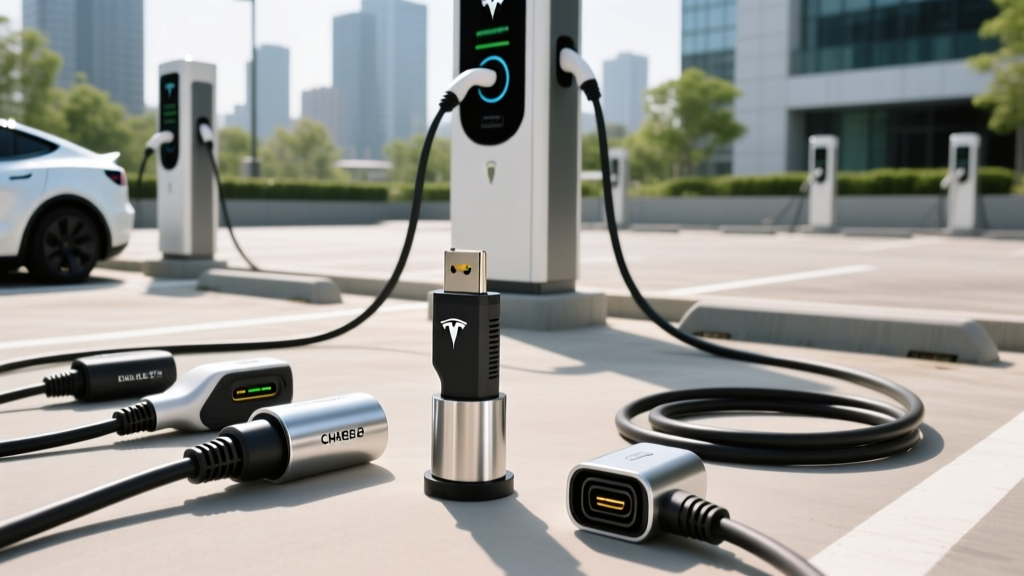
The Cadillac Lyriq ships with a CCS1 (Combined Charging System) port. This is the standard connector used by Electrify America, EVgo, ChargePoint, and most non-Tesla public networks. However, with GM's transition to NACS (North American Charging Standard), Lyriq owners now have access to Tesla Superchargers using a GM-approved adapter.
| Connector | Native Support? | Network Access | Adapter Required? |
|---|---|---|---|
| CCS1 | Yes (native) | Electrify America, EVgo, ChargePoint, Ionity (EU) | No |
| NACS (Tesla) | Via adapter | Tesla Supercharger network (17,000+ stalls) | Yes — GM-approved CCS-to-NACS adapter (~$225) |
| CHAdeMO | No | Legacy network (phasing out in US) | Not available |
| J1772 (Level 2) | Yes (native) | All public Level 2 stations | No |
Adapter note: GM began shipping CCS-to-NACS adapters to Lyriq owners and made them available for purchase through GM accessory channels. When using a NACS adapter at a Tesla Supercharger V3 (250 kW stall), the Lyriq will still be limited by its own 190 kW peak acceptance rate. Always use the GM-approved adapter — third-party adapters may not communicate properly with the vehicle's battery management system and can void warranty coverage. See Cadillac's official charging page for the latest adapter availability.
Public Charging Costs vs. Home: What You'll Actually Pay Per Mile
One of the strongest economic arguments for EV ownership is lower per-mile fueling cost — but only if you charge strategically. Public DC fast charging has become expensive enough in some markets that it approaches gasoline costs.
| Scenario | Rate ($/kWh) | Cost for 102 kWh (full) | Cost per Mile |
|---|---|---|---|
| Home (off-peak utility rate) | $0.08–$0.12 | $8.16–$12.24 | $0.03–$0.04 |
| Home (average US residential) | $0.16 | $16.32 | $0.05 |
| Public Level 2 (ChargePoint, etc.) | $0.20–$0.35 | $20.40–$35.70 | $0.07–$0.11 |
| DC Fast (Electrify America) | $0.43–$0.56 | $43.86–$57.12 | $0.14–$0.18 |
| Tesla Supercharger (via adapter) | $0.28–$0.40 | $28.56–$40.80 | $0.09–$0.13 |
| Gasoline equivalent (25 MPG, $3.40/gal) | — | — | $0.14 |
For a Lyriq driven 12,000 miles per year with 80% home charging at $0.12/kWh and 20% public DC fast charging at $0.48/kWh, annual fuel cost is approximately $1,150. A comparable gasoline luxury SUV at 22 MPG combined and $3.40/gallon would cost about $1,855 annually — a savings of roughly $700/year with the Lyriq.
Recommended Home Chargers for the Cadillac Lyriq
To take advantage of the Lyriq's 19.2 kW onboard charger, you need a charger that can deliver it. Most popular Level 2 units max out at 48A (11.5 kW), which is still excellent for overnight use. Below are our top picks across both tiers.
Best for 19.2 kW: ChargePoint Home Flex (80A config)
- Power Output: Up to 19.2 kW (80A) with hardwired install
- Connector: J1772 (CCS-compatible for AC)
- Cable Length: 23 ft
- Smart Features: Wi-Fi, app scheduling, utility demand-response, Alexa
- Price:~$700 (unit only)
- Why: One of few residential chargers that supports 80A output, unlocking the Lyriq's full AC charging capability.
Best Value (48A): Emporia Level 2 Smart Charger
- Power Output: Up to 11.5 kW (48A)
- Connector: J1772
- Cable Length: 24 ft
- Smart Features: Wi-Fi, app control, solar integration, energy monitoring
- Price: ~$400
- Why: Excellent value with robust energy monitoring; 48A covers most daily needs at ~30 mi/hr recovery.
Premium Pick: Wallbox Pulsar Plus (48A)
- Power Output: Up to 11.5 kW (48A)
- Connector: J1772
- Cable Length: 25 ft
- Smart Features: Wi-Fi + Bluetooth, app scheduling, power sharing (dual-unit), load balancing
- Price: ~$650
- Why: Compact, well-built, and supports Power Sharing for two-EV households on a single circuit.
Tesla Wall Connector (J1772 tip)
- Power Output: Up to 11.5 kW (48A)
- Connector: J1772 (newer versions) or NACS
- Cable Length: 24 ft
- Smart Features: Wi-Fi, OTA updates, power sharing
- Price: ~$475
- Why: Reliable, well-priced, and ideal if your household also has a Tesla. Ensure you select the J1772 variant for native Lyriq compatibility.
Road-Trip Charging: What to Expect on DC Fast Chargers
The Lyriq's 190 kW peak DC rate places it in the upper tier of current luxury EVs, though it falls short of the Hyundai Ioniq 5's 240 kW or the Porsche Taycan's 270 kW. Here's how the charging curve actually plays out on a road trip:
- 10–35% SoC: The Lyriq holds near its 190 kW peak, adding roughly 5–6 miles of range per minute.
- 35–55% SoC: Rate tapers to ~140–150 kW.
- 55–80% SoC: Further taper to ~70–90 kW.
- 80–100% SoC: Drops below 50 kW. Avoid charging past 80% on road trips unless you need the final miles to reach your destination.
On a practical road trip from Los Angeles to San Francisco (~380 miles), you'll likely need one charging stop. Arriving at a 350 kW Electrify America or Tesla Supercharger station with 10% remaining, a 10–80% session takes approximately 33 minutes, adding roughly 215 miles of range — enough to complete the trip. Always use the Lyriq's built-in navigation route planner, which preconditions the battery for optimal charging speed when a DC fast charger is set as your destination. Skipping preconditioning in cold weather can add 10–15 minutes to your session.
For verified range and efficiency data, see the EPA's fueleconomy.gov listing for the Cadillac Lyriq.
Cadillac Lyriq Charging FAQ
How much does it cost to install a home EV charger for the Lyriq?
A standard 48A/11.5 kW Level 2 installation runs $1,050–$2,550 including equipment, electrician labor, and permits — assuming your electrical panel has sufficient spare capacity. If you need a panel upgrade (common in pre-2000 homes), add $1,500–$3,000. An 80A/19.2 kW installation costs $1,750–$4,050 without a panel upgrade, and may require a 200A+ main service panel.
Can I charge the Lyriq on a standard 120V outlet?
Yes, but slowly. Level 1 charging at 120V/12A delivers roughly 1.4 kW, adding about 3–4 miles of range per hour. A full 0–100% charge would take over 72 hours. Level 1 works for plug-in hybrids with small batteries but is impractical as a primary charging method for the Lyriq's 102 kWh pack.
Does the Lyriq use CCS or NACS (Tesla) connectors?
The Lyriq has a native CCS1 port. To use Tesla Superchargers, you need GM's approved CCS-to-NACS adapter (approximately $225). For Level 2 charging at home or public locations, the standard J1772 connector (the AC portion of CCS) works natively.
How does the Lyriq's charging speed compare to rivals?
The Lyriq's 190 kW DC peak is competitive but not class-leading. The BMW iX xDrive50 peaks at ~200 kW, the Audi Q8 e-tron at 170 kW, and the Hyundai Ioniq 5 at 240 kW. On Level 2 AC, the Lyriq's 19.2 kW onboard charger is among the fastest available — most rivals are limited to 11.5 kW (48A), making the Lyriq notably faster when paired with an 80A home charger.
Should I charge to 100% every night?
No. For daily driving, set the Lyriq's charge limit to 80% to preserve long-term battery health. The NMC chemistry in the Ultium pack degrades faster when held at high state of charge for extended periods. Charge to 100% only when you need the full 314 miles for a road trip, and try to depart soon after reaching full charge. GM's battery warranty covers 8 years/100,000 miles with a capacity retention threshold — proper charging habits help ensure you stay well within it.
What electrical upgrades might I need for a home charger?
The most common upgrade is a panel replacement if your home has a 100A or 150A main service and you want a 48A or 80A EV circuit. Other potential needs: running a new 240V circuit from the panel to the garage (especially if the panel is on the opposite side of the house), upgrading from a NEMA 10-50 to a hardwired connection for higher amperage, and adding a GFCI breaker if local code requires it for garage or outdoor installations. Always have a licensed electrician perform a load calculation before committing to a circuit size.
Does cold weather affect the Lyriq's charging speed?
Yes. In temperatures below 32°F, the battery management system will limit charge rates to protect the cells until the pack warms up. Without preconditioning, a cold-soaked Lyriq at a DC fast charger may initially accept only 40–60 kW, gradually increasing as the battery heats. Always use the navigation preconditioning feature — it activates the thermal management system en route, so you arrive at the charger with the battery at optimal temperature. Expect 15–25% range loss in sustained sub-freezing driving due to cabin heating and reduced battery efficiency, per U.S. Department of Energy guidance.