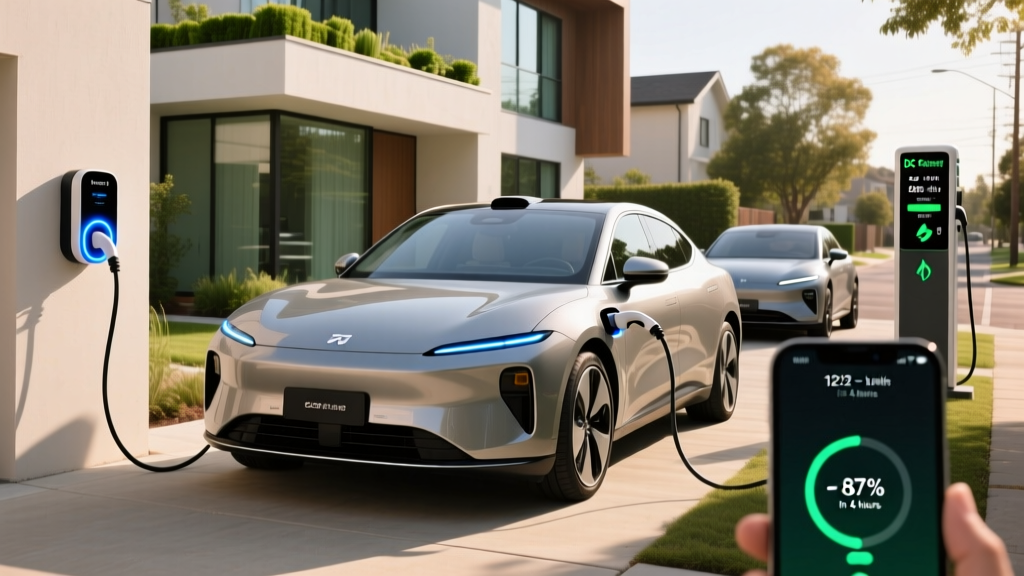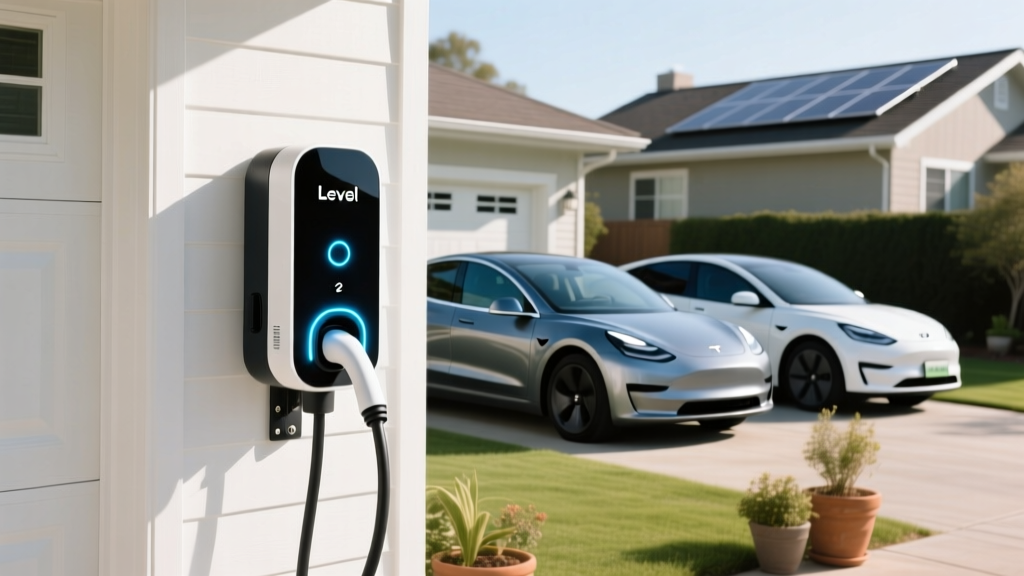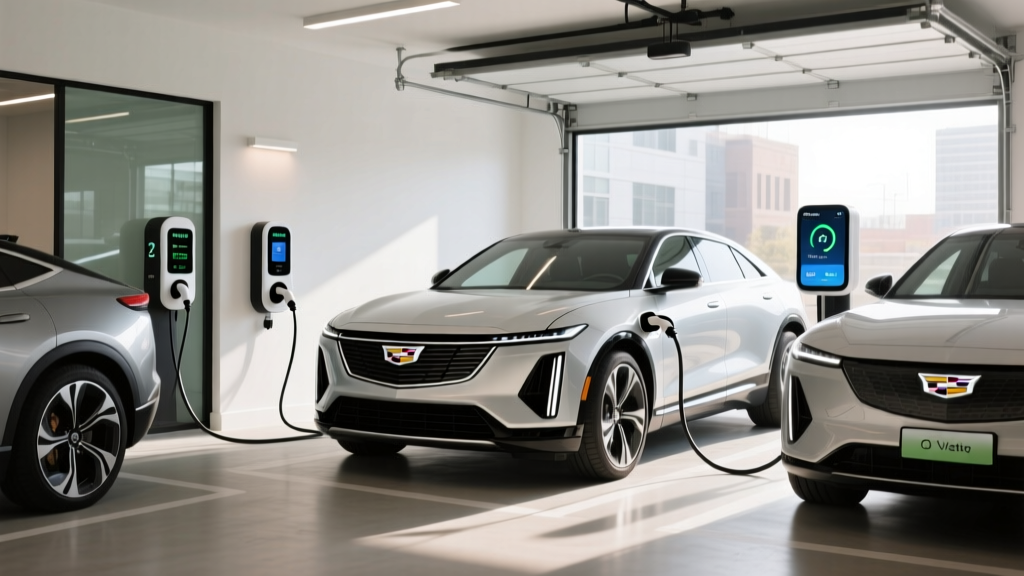
If you're shopping for a Cadillac EV or have one sitting in your driveway, you've probably searched for what it takes to keep a supercharged Cadillac running at peak efficiency. Whether you're eyeing the Lyriq crossover, the compact Optiq, or the three-row Vistiq, understanding the charging ecosystem is just as important as understanding the vehicle itself. This guide breaks down exactly what Cadillac EV owners need for home charging installations, public fast-charging speeds, connector compatibility, and real-world cost-per-mile figures.
Cadillac EV Lineup: Battery Specs and Charging Architecture
Cadillac's Ultium-platform EVs share a common charging architecture but differ in battery size and acceptance rates. Here's what you're working with across the current 2025–2026 lineup:
| Model | Battery (kWh usable) | EPA Range | Max DC Fast Charge (kW) | Level 2 Rate (kW) | 10–80% DC Time |
|---|---|---|---|---|---|
| Cadillac Lyriq (RWD) | 102 kWh (NMC) | 314 mi | 190 kW | 11.5 kW | ~34 min |
| Cadillac Lyriq (AWD) | 102 kWh (NMC) | 307 mi | 190 kW | 11.5 kW | ~34 min |
| Cadillac Optiq | 85 kWh (NMC) | 300+ mi (est.) | 150 kW | 11.5 kW | ~30 min |
| Cadillac Vistiq | 102 kWh (NMC) | 300 mi (est.) | 190 kW | 11.5 kW | ~34 min |
All three models use GM's Ultium battery platform with NMC (nickel manganese cobalt) chemistry, which prioritizes energy density over the extended cycle life you'd get from LFP cells. The Lyriq and Vistiq share the larger 102 kWh pack, while the Optiq uses a smaller 85 kWh unit. Real-world range will vary — expect highway driving at 75 mph to reduce range by roughly 10–15%, and cold-weather operation (below 30°F) can cut range by 20–30% depending on cabin heating use and whether you precondition the battery.
Charging Levels Explained: How Fast Will Each Level Add Range?
EV charging operates across three tiers, and the distinction between kW (power, or how fast energy flows) and kWh (energy, or how much your battery holds) is critical. Think of kW as the width of the pipe and kWh as the size of the tank.
| Level | Voltage | Power (kW) | Miles of Range Added Per Hour | Best For |
|---|---|---|---|---|
| Level 1 | 120V AC | 1.2–1.4 kW | 3–5 mi/hr | Overnight trickle, PHEVs, emergencies |
| Level 2 | 240V AC | 7.2–11.5 kW | 25–40 mi/hr | Daily home charging |
| DC Fast Charge | 400V+ DC | 50–350 kW | 150–500+ mi/hr (at peak) | Road trips, rapid top-ups |
For a Cadillac Lyriq with its 102 kWh battery, Level 1 charging is impractical for anything beyond maintaining charge — a full charge would take over 70 hours. Level 2 at 11.5 kW fills the pack from empty in roughly 9 hours, making it ideal for overnight replenishment. DC fast charging at 190 kW peak can add roughly 75 miles of range in 10 minutes under optimal conditions, though the charge curve tapers significantly above 80% state of charge (SoC). That taper is why manufacturers quote 10–80% times rather than full-charge times.
Home Charger Installation: Electrical Requirements and Costs
Installing a Level 2 home charger is the single biggest ownership advantage for Cadillac EV drivers. Here's what the installation actually involves.
Electrical Requirements
To deliver 11.5 kW to your Cadillac, you need a 240V, 60-amp dedicated circuit (which provides 48 amps of continuous charging current, since the National Electrical Code requires circuits to be rated at 125% of continuous load). For a 48-amp charger, that means a 60A breaker. Lower-output chargers (32A / 7.7 kW) can run on a 40A breaker and are a practical option if your panel has limited capacity.
Panel Upgrade Considerations
Many older homes have 100-amp electrical panels that simply cannot support an additional 60A circuit alongside existing loads (HVAC, electric oven, dryer). A panel upgrade to 200 amps typically costs $1,500–$3,000 before the charger installation even begins. An electrician will perform a load calculation per NEC Article 220 to determine whether your current panel can handle the additional draw. Don't skip this step — it's a safety requirement and a code-enforced one.
Installation Cost Breakdown
| Item | Cost Range | Notes |
|---|---|---|
| Level 2 Charger (hardware) | $400–$800 | 48A smart charger, 25-ft cable |
| Electrician labor (standard install) | $500–$1,500 | Run from panel to garage, ~50 ft |
| Electrical permit | $50–$200 | Varies by municipality |
| Panel upgrade (if needed) | $1,500–$3,000 | 100A → 200A service |
| Total (no panel upgrade) | $950–$2,500 | Typical scenario |
| Total (with panel upgrade) | $2,450–$5,500 | Older homes |
Get at least three quotes from licensed electricians. Ask specifically about conduit type (EMT vs. flexible), whether the run requires a subpanel, and if the quote includes permit pulling and final inspection. The National Electrical Contractors Association maintains a directory of qualified installers.
Safety and Code Requirements
- Dedicated circuit: Your EV charger must have its own breaker — no sharing with other appliances.
- GFCI protection: NEC 2020 and later require GFCI protection for all 240V EV charging outlets (NEMA 14-50). Hardwired installations may have different requirements depending on your local jurisdiction.
- Outdoor rating: If your charger is mounted outside, it must carry a NEMA 4 or NEMA 4X rating for weather resistance.
- Cable management: Use a holster or retractable reel to prevent trip hazards and cable damage.
Connector Compatibility: NACS, CCS, and What Cadillac Uses
Cadillac has transitioned to the NACS (North American Charging Standard) connector — the Tesla-designed plug now adopted across the industry. The 2025 Lyriq was among the first GM vehicles to ship with a native NACS port, and the Optiq and Vistiq follow suit. This is a major advantage for access to the Tesla Supercharger network, which remains the most reliable public charging infrastructure in the US.
| Connector | Used By | Cadillac Compatibility | Adapter Needed? |
|---|---|---|---|
| NACS (Tesla) | Tesla, Cadillac (2025+), Ford, Rivian, GM | Native on 2025+ models | No — direct plug |
| CCS1 | Most non-Tesla EVs (pre-2025) | Legacy CCS stations accessible via adapter | NACS-to-CCS adapter (~$200) |
| CHAdeMO | Nissan Leaf (legacy) | Not compatible | No adapter available |
If you're charging at older CCS-only public stations (common at Electrify America and some EVgo locations), you'll need a NACS-to-CCS adapter. GM provides one with certain 2025 models, but if yours didn't include one, aftermarket adapters from Lectron or A2Z cost approximately $150–$250. For home Level 2 charging, most modern wall connectors now ship with NACS plugs, though J1772-to-NACS adapters remain widely available for legacy home chargers.
Recommended Home Chargers for Cadillac EVs
These wall connectors match Cadillac's 11.5 kW onboard charger capability and the NACS connector standard:
ChargePoint Home Flex (NACS)
Power: Up to 11.5 kW (48A) | Cable: 23 ft | Price: ~$599
Smart scheduling, utility integration, Alexa/Google Home support. Adjustable amperage lets you dial down to 32A if your panel is constrained. Energy Star certified. UL listed.
Tesla Wall Connector (NACS native)
Power: Up to 11.5 kW (48A) | Cable: 24 ft | Price: ~$425
Simplest option for NACS-native Cadillacs. Wi-Fi enabled for OTA updates. Power-sharing feature allows two units on one circuit. No native app scheduling — relies on vehicle-side scheduling.
Emporia Level 2 EV Charger
Power: Up to 11.5 kW (48A) | Cable: 24 ft | Price: ~$399
Best budget option with full smart features. Real-time energy monitoring pairs with Emporia's whole-home energy monitor. Load management feature protects your panel without an upgrade. NACS connector available.
Cost to Charge: Home vs. Public vs. Gas
Charging economics depend heavily on where and when you plug in. Here's a realistic breakdown for a Cadillac Lyriq driven 12,000 miles annually (the US average, per fueleconomy.gov):
| Scenario | Rate ($/kWh) | Cost to Add 200 mi | Annual Cost (12k mi) | Cost per Mile |
|---|---|---|---|---|
| Home Level 2 (off-peak utility rate) | $0.08–$0.12 | $5.40–$8.10 | $324–$486 | $0.027–$0.041 |
| Home Level 2 (standard rate) | $0.14–$0.18 | $9.45–$12.15 | $567–$729 | $0.047–$0.061 |
| Public Level 2 (ChargePoint, EVgo) | $0.25–$0.49 | $16.88–$33.08 | $1,013–$1,985 | $0.084–$0.165 |
| DC Fast Charge (Tesla Supercharger) | $0.28–$0.40 | $18.90–$27.00 | $1,134–$1,620 | $0.095–$0.135 |
| Gas equivalent (25 MPG avg, $3.50/gal) | — | $28.00 | $1,680 | $0.140 |
The Lyriq's efficiency is approximately 3.0–3.4 miles per kWh (roughly 98–110 MPGe combined). At home off-peak rates, charging costs roughly 3 cents per mile — less than a quarter of the cost of fueling a comparable gas-powered Cadillac XT5 at 22 MPG combined. Even at public DC fast charger rates, the per-mile cost generally undercuts gasoline.
However, if you rely exclusively on public charging at premium rates ($0.40+/kWh), your cost advantage shrinks significantly. This is why home charging access remains the most important financial variable in EV ownership. Check with your utility about time-of-use (TOU) plans that offer discounted overnight rates — many utilities offer 40–60% reductions between 11 PM and 6 AM.
Public Charging: Supercharger Access and DC Fast Charging Tips
With a native NACS port, 2025+ Cadillac EVs access Tesla's Supercharger network directly — over 20,000 stalls in North America as of early 2026. This is a meaningful reliability advantage: Tesla Superchargers consistently report 95%+ uptime, compared to the 70–80% uptime typical of other networks according to J.D. Power studies.
Maximizing DC Fast Charge Speed
- Precondition the battery: Navigate to a Supercharger or DC fast charger using the Cadillac's built-in navigation. The vehicle will warm or cool the battery to optimal temperature before you arrive, which can improve peak charge rates by 20–30%.
- Arrive at low SoC: Peak charge rates (190 kW for Lyriq/Vistiq) only occur between roughly 10–40% SoC. Above 80%, the rate drops dramatically — sometimes below 40 kW — to protect battery longevity. Plan your stops to arrive at 10–20% SoC rather than 50%.
- Understand the charge curve: A Lyriq charging from 10–80% in ~34 minutes doesn't charge linearly. Expect the first 30% to fill rapidly (10–40% in ~12 minutes), then a gradual taper. Charging from 80–100% at a DC fast charger is wasteful and slow — save that for home Level 2.
- Stall selection: At V3 Superchargers (250 kW capable) and V4 stalls (up to 350 kW), your Cadillac will be limited by its own 190 kW acceptance rate. You won't damage anything by using a higher-rated stall, but you won't exceed the vehicle's limit either.
For non-Tesla DC fast networks (Electrify America, EVgo), use your NACS-to-CCS adapter where needed. The PlugShare app is indispensable for checking real-time stall availability and user-reported reliability before you commit to a stop.
Federal Tax Credits and Incentives for Home Charging
The Alternative Fuel Vehicle Refueling Property Credit (IRS §30C) covers up to 30% of home EV charger equipment and installation costs, capped at $1,000. To qualify, your home must be located in a qualifying census tract (generally non-urban or low-income areas). The credit is non-refundable and claimed on your federal tax return.
Additionally, the IRS §30D Clean Vehicle Credit of up to $7,500 applies to qualifying new Cadillac EVs, subject to MSRP caps ($80,000 for SUVs like the Lyriq and Vistiq, $55,000 for sedans), buyer income limits ($300,000 joint / $150,000 single), and battery critical-mineral and component sourcing requirements. As of 2026, point-of-sale transfer is available, letting you apply the credit as a down payment reduction rather than waiting for tax season. Always verify current eligibility on IRS.gov, as sourcing requirements have tightened annually.
Frequently Asked Questions
How much does it cost to install a home EV charger for my Cadillac?
A standard Level 2 installation with a 60A circuit runs $950–$2,500 (equipment + electrician + permit) if your electrical panel has sufficient capacity. Homes needing a panel upgrade to 200A should budget $2,450–$5,500 total. Always get a load calculation before committing to a charger amperage.
How fast will each charging level add range to a Cadillac Lyriq?
Level 1 (120V) adds 3–5 miles per hour — essentially unusable for daily driving. Level 2 (240V, 48A) adds roughly 35–40 miles per hour, enough to fully replenish overnight. DC fast charging at 190 kW peak adds approximately 75 miles in 10 minutes under optimal conditions, tapering as the battery fills.
Which connector does my Cadillac EV use?
2025 and newer Cadillac EVs (Lyriq, Optiq, Vistiq) use the native NACS connector. This gives you direct access to Tesla Superchargers without an adapter. For older CCS-only public chargers, you'll need a NACS-to-CCS adapter, which GM provides with some models or can be purchased aftermarket for $150–$250.
How much does charging a Cadillac EV cost per mile versus gas?
At home off-peak rates ($0.08–$0.12/kWh), expect $0.03–$0.04 per mile — roughly 75% cheaper than fueling a comparable gas Cadillac at $3.50/gallon and 22 MPG. Public DC fast charging at $0.30–$0.40/kWh costs $0.10–$0.14 per mile, roughly comparable to gasoline.
What electrical upgrades might I need for a home charger?
Homes with 100A electrical service typically need a panel upgrade to 200A ($1,500–$3,000). Homes with 200A service usually have sufficient capacity for a 60A EV circuit, but a load calculation is required to confirm. Other potential upgrades include running new conduit, adding a subpanel in a detached garage, or upgrading the meter socket.
Should I charge to 100% every night?
No. NMC batteries (used in all Cadillac Ultium EVs) degrade faster when held at high state of charge for extended periods. GM recommends setting your daily charge limit to 80% and only charging to 100% before long road trips. Your Cadillac's infotainment system allows you to set custom charge limits and departure schedules to minimize time spent at high SoC.