Charging the Electric Escalade: What You Need to Know
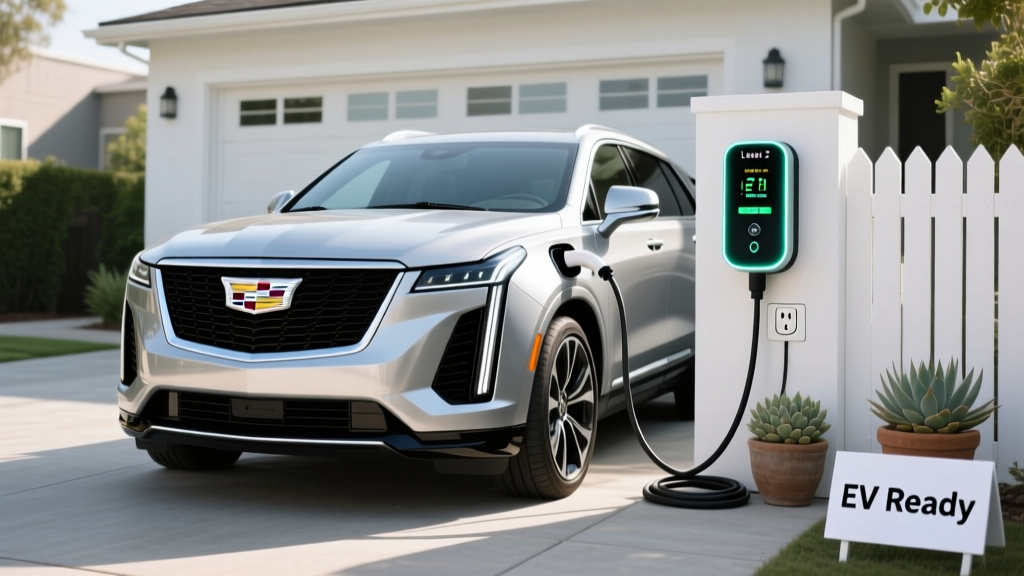
The Cadillac Escalade IQ — the all-electric successor to the supercharged Escalade V — arrives for the 2026 model year with a massive Ultium-based battery pack, NACS (Tesla-style) charging port, and up to 200 kW DC fast-charging capability. If you're transitioning from a 6.2L supercharged V8 to this electric flagship, understanding your charging options is critical. This guide covers every charging level, home installation costs, connector compatibility, and real-world cost-per-mile math so you can plan your setup before delivery day.
Charging Levels Explained: kW, Speeds, and Miles Per Hour
EV charging is measured in kilowatts (kW), which represents power — the rate of energy delivery. Your battery capacity is measured in kilowatt-hours (kWh), which is energy — the total fuel in the tank. Confusing these two is the single most common EV mistake. Think of kW as the flow rate of a hose and kWh as the size of the bucket.
| Level | Voltage | Power (kW) | Miles of Range Added/Hour | Best Use Case |
|---|---|---|---|---|
| Level 1 | 120V AC | 1.2–1.9 kW | 3–5 miles | Emergency/overnight top-off only |
| Level 2 | 240V AC | 7.2–19.2 kW | 20–55 miles | Daily home charging (primary) |
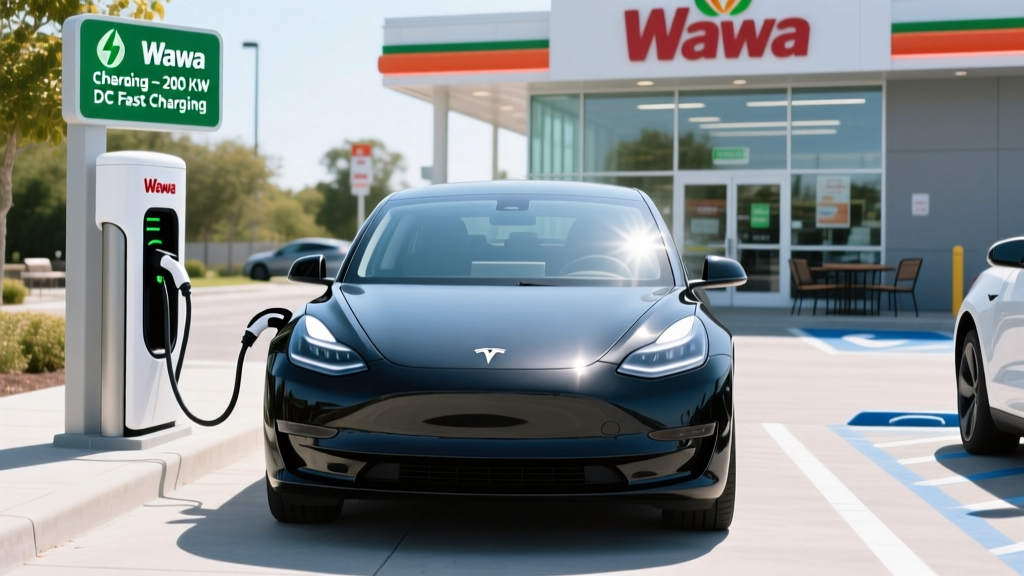
| DC Fast Charge | 400V+ DC | 50–200+ kW | 150–400+ miles | Road trips, quick top-ups |
For the Escalade IQ's ~200 kWh battery, Level 1 charging is essentially impractical — it would take over 100 hours for a full charge. Level 2 at 11.5 kW (48A) adds roughly 30–35 miles per hour, meaning a full overnight session (10 hours) restores ~300 miles. DC fast charging at the IQ's peak ~200 kW can add approximately 200 miles in 15–20 minutes, though charging speed tapers significantly above 80% state of charge due to battery management protocols.
Home Charger Installation: Electrical Requirements and Costs
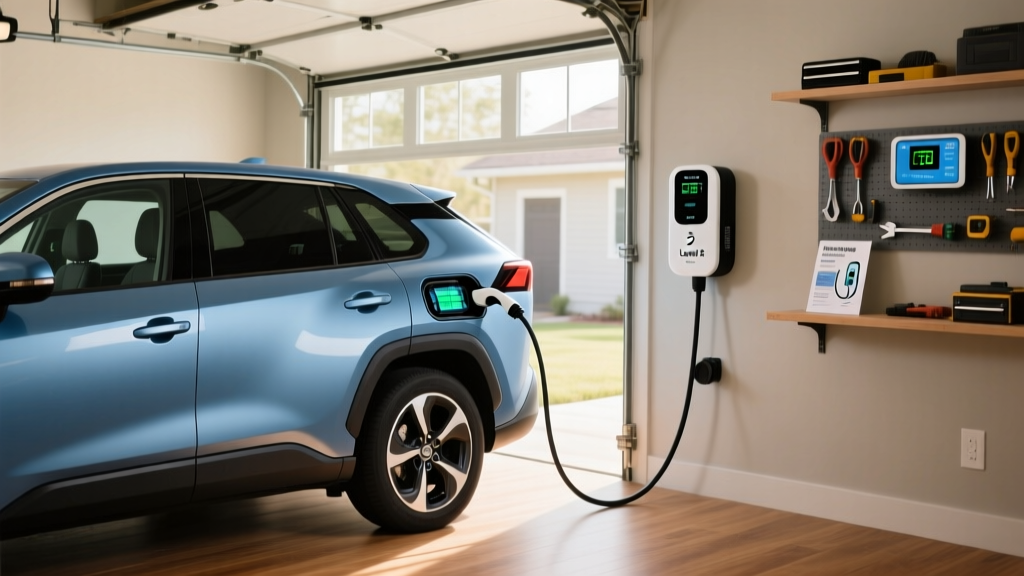
Installing a Level 2 home charger for a large-battery EV like the Escalade IQ requires planning. The IQ's onboard charger accepts up to 19.2 kW (80A) on Level 2, but most homeowners install a 48A or 60A circuit as the cost-to-benefit sweet spot.
Electrical Requirements
- Minimum recommended: 240V / 48A dedicated circuit (60A breaker) — delivers 11.5 kW
- Optimal for IQ: 240V / 64A dedicated circuit (80A breaker) — delivers 15.3–19.2 kW
- Wire gauge: 6 AWG copper for 48A; 4 AWG or 3 AWG for 64–80A circuits
- Panel capacity: Most homes need a 200A main panel minimum; older 100A panels will require an upgrade
Home Charger Installation Cost Breakdown (2026 Estimates)
| Item | Low End | High End | Notes |
|---|---|---|---|
| Level 2 Charger (hardware) | $400 | $1,200 | 48A–80A smart charger, NACS |
| Electrician labor | $500 | $2,000 | Depends on panel distance, conduit run |
| Permit & inspection | $50 | $300 | Varies by municipality |
| Panel upgrade (if needed) | $1,500 | $4,000 | 100A→200A service upgrade |
| Total (no panel upgrade) | $950 | $3,500 | Typical suburban install |
| Total (with panel upgrade) | $2,450 | $7,500 | Older homes with 100A service |
Homes built after 2000 typically have 200A panels with sufficient spare capacity. If your panel is maxed out — common in homes with electric ranges, dryers, and HVAC — your electrician may recommend a panel upgrade or a load-management device like the Emporia Smart Load Center, which dynamically shares amperage between the EV charger and other circuits to avoid overdraw.
Connector Compatibility: NACS, CCS, and the Escalade IQ
The 2026 Cadillac Escalade IQ uses the NACS (North American Charging Standard) connector — the same plug used by Tesla vehicles and now adopted by GM, Ford, Rivian, and most major automakers. This is a significant advantage: it grants native access to Tesla's Supercharger network (20,000+ stalls in North America) without an adapter.
| Connector | Used By | Escalade IQ Compatible? | Adapter Needed? |
|---|---|---|---|
| NACS (Tesla-style) | Tesla, GM, Ford, Rivian, Hyundai (2025+) | Yes — native port | No |
| CCS1 | Legacy: VW, BMW, older Hyundai/Kia | Via adapter | CCS-to-NACS adapter (~$200–$300) |
| CHAdeMO | Discontinued (Nissan Leaf legacy) | Not recommended | No practical adapter available |
For public charging on networks that still use CCS1 (some Electrify America and EVgo stations), you'll want a CCS-to-NACS adapter. GM includes or offers one with the IQ. Tesla Superchargers and the growing number of NACS-equipped ChargePoint, EVgo, and Electrify America stations will work natively.
Equipment Recommendations: Best Home Chargers for the Escalade IQ
Because the IQ supports up to 19.2 kW / 80A on Level 2, you have flexibility. Here are chargers matched to different budgets and electrical setups:
Best Overall: Tesla Wall Connector (NACS)
- Power: Up to 11.5 kW (48A) on a 60A circuit
- Connector: Native NACS
- Cable length: 24 feet
- Smart features: Wi-Fi, OTA updates, power sharing with multiple units, access control
- Price: ~$475
- Why: Reliable, clean design, native NACS, and Tesla's proven track record. Covers ~90% of daily needs for the IQ.
Best High-Power: ChargePoint Home Flex (NACS Configuration)
- Power: Up to 19.2 kW (80A) on a 100A circuit — configurable via dip switches
- Connector: Available in NACS (2025+ models) or J1772 with adapter
- Cable length: 23 feet
- Smart features: App scheduling, energy tracking, Alexa integration, utility demand-response
- Price: ~$699
- Why: If you have the panel capacity for an 80A circuit, this maximizes the IQ's onboard charger. Adds ~55 miles/hour vs ~30 with a 48A unit.
Budget Pick: Emporia Level 2 Charger (NACS)
- Power: Up to 11.5 kW (48A) on a 60A circuit
- Connector: NACS
- Cable length: 24 feet
- Smart features: Real-time energy monitoring, solar integration, time-of-use scheduling, load management
- Price: ~$399
- Why: Best value for a smart NACS charger. Excellent if you pair EV charging with solar panels or want detailed energy data.
Charging Cost Per Mile: Escalade IQ vs Supercharged Gas V8
The Escalade IQ's efficiency is estimated at approximately 48–52 kWh/100 miles (roughly 2.0–2.1 kWh/mi). Compare this to the outgoing supercharged 6.2L Escalade V, which averaged around 13–15 MPG combined. The math strongly favors electrons over gasoline.
| Scenario | Cost/kWh or Gallon | Cost Per Mile (EV) | Cost Per Mile (Gas V8, 14 MPG) |
|---|---|---|---|
| Home charging (off-peak utility rate) | $0.13/kWh | $0.026–$0.028 | $0.25 (at $3.50/gal) |
| Home charging (peak / standard rate) | $0.22/kWh | $0.044–$0.048 | $0.25 |
| Public Level 2 (ChargePoint, etc.) | $0.35/kWh | $0.070–$0.076 | $0.25 |
| DC Fast Charging (Electrify America / Tesla) | $0.48/kWh | $0.096–$0.104 | $0.25 |
| DC Fast Charging (peak pricing) | $0.64/kWh | $0.128–$0.138 | $0.25 |
Annual savings estimate: At 12,000 miles/year, home charging at $0.13/kWh costs roughly $336 annually. The supercharged gas Escalade at 14 MPG and $3.50/gallon costs $3,000/year — a $2,664 annual fuel savings. Even exclusive DC fast charging at $0.48/kWh ($1,200/year) saves $1,800 vs. gas.
Charging Time Examples: 10–80% and Full Charge Scenarios
The Escalade IQ's large battery means charging takes longer than smaller EVs. Here's what to expect based on GM's preliminary data and comparable Ultium-platform vehicles:
| Charging Method | Power | 10–80% Time (~140 kWh added) | Full 0–100% Time |
|---|---|---|---|
| Level 2 (48A / 11.5 kW) | 11.5 kW | ~12–13 hours | ~17–18 hours |
| Level 2 (80A / 19.2 kW) | 19.2 kW | ~7.5–8 hours | ~10.5–11 hours |
| DC Fast (peak 200 kW) | 200 kW peak (~140 kW avg) | ~45–55 minutes | N/A (not recommended to 100%) |
| Level 1 (120V / 12A) | 1.4 kW | ~100+ hours | Not practical |
Safety, Permits, and Electrical Code Considerations
Level 2 EV charger installation must comply with the National Electrical Code (NEC Article 625) and your local building department. Key requirements:
- Dedicated circuit: Your EV charger needs its own breaker — it cannot share a circuit with other appliances.
- GFCI protection: NEC 2020+ requires GFCI breakers for outdoor receptacles and many jurisdictions now require them for indoor EV circuits as well. Budget an extra $30–$80 for a GFCI breaker if your panel requires one.
- Outdoor rating: If mounting outside, ensure the charger carries a NEMA 4 or NEMA 4X rating for weather resistance. All recommended chargers above meet this standard.
- Permit and inspection: Most jurisdictions require an electrical permit ($50–$300) and a post-installation inspection. Skipping this can void homeowner's insurance coverage for electrical fires.
- Utility notification: Some utilities require notification for EV charger installs and may offer time-of-use (TOU) rate plans that dramatically reduce charging costs. Check with your provider before installation.
Always hire a licensed electrician familiar with EV charger installations. According to NHTSA and the Electrical Safety Foundation International, improper EV charging installations are a leading cause of residential electrical incidents involving EVs.
Federal Tax Credit and Incentives for Home Charging
The IRS §30D Clean Vehicle Credit applies to the Escalade IQ purchase (up to $7,500, subject to MSRP caps, buyer income limits, and battery sourcing requirements — verify current eligibility at irs.gov). Additionally, the Alternative Fuel Vehicle Refueling Property Credit (§30C) may cover up to 30% of home charger hardware and installation costs (capped at $1,000) if you live in an eligible census tract. Consult a tax professional for your specific situation.
Frequently Asked Questions
How much does it cost to install a home EV charger for the Escalade IQ?
Expect $950–$3,500 for a standard install (charger + electrician + permit) in a home with a 200A panel. Older homes needing a panel upgrade may pay $2,450–$7,500 total. The charger itself costs $400–$1,200 depending on amperage and features.
How fast will each charging level add range to the Escalade IQ?
Level 1 (120V): 3–5 miles/hour — impractical for a 200 kWh battery. Level 2 (240V, 48A): ~30–35 miles/hour — sufficient for daily use. Level 2 (80A): ~50–55 miles/hour — ideal for quick overnight recovery. DC Fast (200 kW peak): ~150–200 miles in 15–20 minutes at the peak of the charge curve.
Which connector and charger is compatible with the Cadillac Escalade IQ?
The Escalade IQ uses the NACS connector natively. This means direct compatibility with Tesla Superchargers, Tesla Wall Connectors, and the growing number of NACS-equipped public stations. For legacy CCS1 stations, a CCS-to-NACS adapter is needed.
How much does charging the Escalade IQ cost per mile vs the supercharged gas V8?
At home off-peak rates ($0.13/kWh), the IQ costs roughly $0.027/mile — about 10x cheaper than the supercharged V8 Escalade at $0.25/mile (14 MPG, $3.50/gal). Even public DC fast charging at $0.48/kWh ($0.10/mile) is still 60% cheaper than gasoline.
What electrical upgrades might I need for a home charger?
If your home has a 100A panel (common in pre-1990 homes), you'll likely need a $1,500–$4,000 upgrade to 200A service. Even with a 200A panel, if your existing loads (HVAC, dryer, oven) consume most of your capacity, you may need a load-management device or a dedicated sub-panel. A licensed electrician can perform a load calculation to determine your exact needs.
Can I charge the Escalade IQ on a regular 120V outlet?
Technically yes, but it's impractical. At 1.4 kW, you'd add only 3–5 miles of range per hour. A full charge would take over 100 hours. Level 1 is only useful as an emergency backup or for maintaining charge on a parked vehicle.
For official EPA range and efficiency figures once finalized, check fueleconomy.gov. For current federal tax credit rules, visit IRS.gov Clean Vehicle Credit.