If you've searched for "C7 Z06 supercharged" and landed here, you're likely weighing raw horsepower against the rising appeal of high-performance EVs. The C7 Corvette Z06's supercharged 6.2L LT4 V8 makes 650 hp and 650 lb-ft of torque, hitting 0-60 mph in roughly 2.8 seconds. But what does that look like in the EV world, and more importantly, what does it take to actually charge an electric vehicle at home or on the road? This guide breaks down EV charging infrastructure — from kilowatts to connector types — while keeping the performance benchmark the C7 Z06 supercharged established in the sports car segment.
Understanding EV Charging Levels: kW, Speeds, and Range Added Per Hour
Before plugging in anything, the single most important distinction in EV ownership is the difference between kW (kilowatts) and kWh (kilowatt-hours). Think of kW as the flow rate of electricity — how fast energy moves into the battery. Think of kWh as the volume — how much energy the battery holds. A 100 kWh battery charged at 10 kW takes roughly 10 hours. That same battery at 150 kW DC fast charging can reach 80% in under 30 minutes. Confusing these two units is the most common mistake new EV owners make.
| Level | Voltage | Max Power (kW) | Miles of Range Added Per Hour | Typical Use Case |
|---|---|---|---|---|
| Level 1 | 120V AC | 1.2–1.9 kW | 3–5 miles | Overnight trickle; PHEV top-ups |
| Level 2 | 240V AC | 3.3–19.2 kW | 12–75 miles | Home daily charging; workplace; destinations |
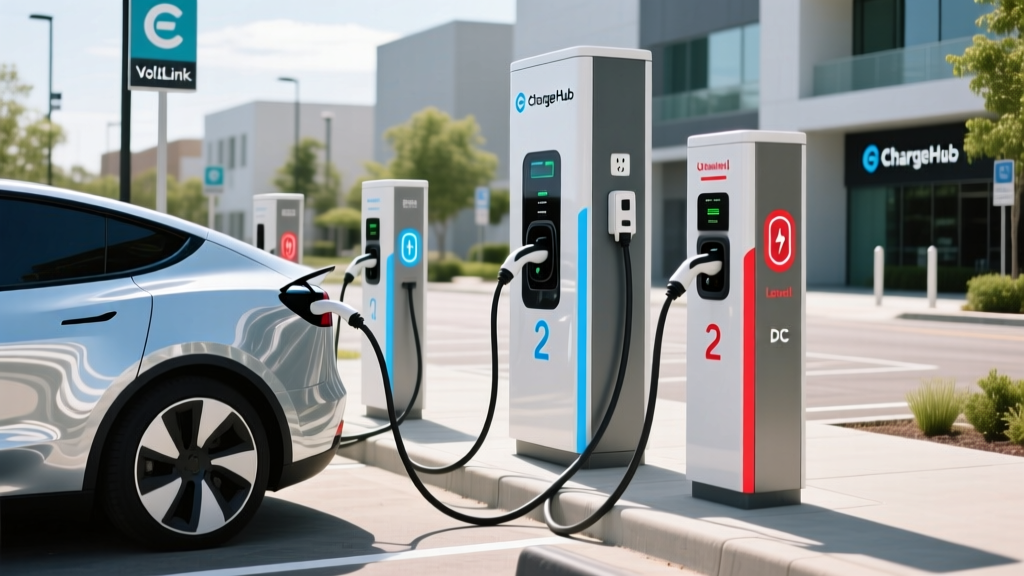
| DC Fast (Level 3) | 400–900V DC | 50–350+ kW | 150–1,200+ miles (equivalent rate) | Road trips; highway corridors |
For context, a C7 Z06 supercharged with its 18-gallon fuel tank refuels in about 3 minutes at any gas station — the equivalent of roughly 2,000+ kW of "charge rate." Modern EVs like the Lucid Air Grand Touring or Porsche Taycan Turbo S (performance peers to the Z06) accept up to 270–320 kW DC fast charging, adding roughly 200 miles of range in 15–20 minutes under optimal conditions. The charging curve matters: peak kW only holds between roughly 10–50% state of charge before tapering. A "250 kW charger" rarely delivers 250 kW for the full session.
Home Charger Installation: Electrical Requirements, Panel Upgrades, and Real Costs
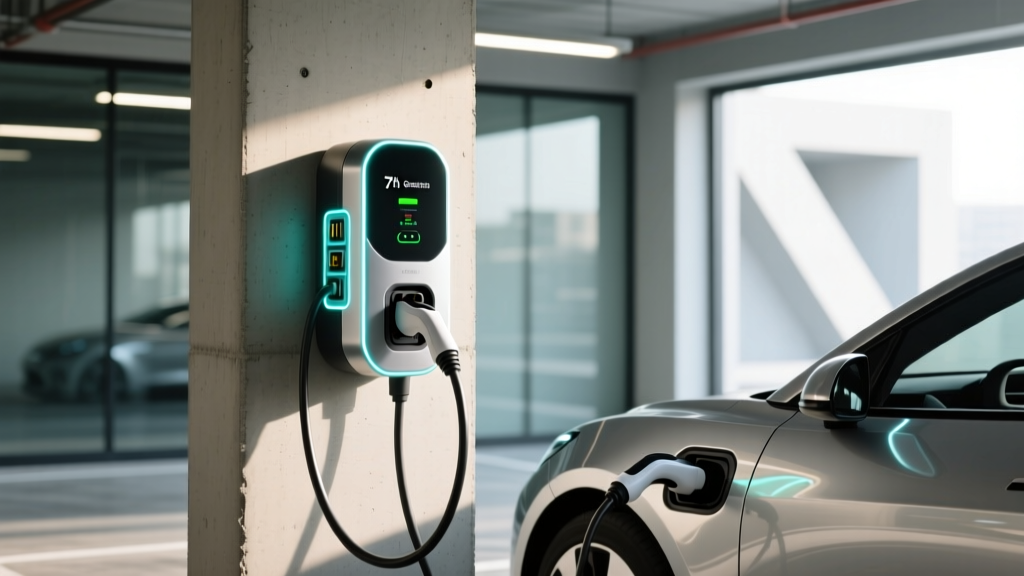
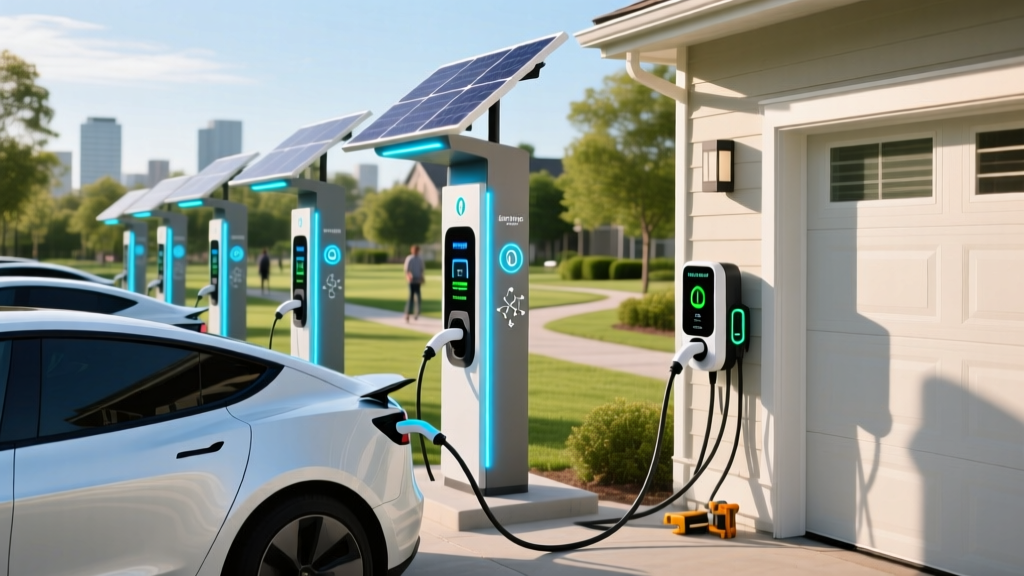
Installing a Level 2 home charger is the single biggest infrastructure decision an EV owner makes. Here's what's involved electrically:
- Circuit: A dedicated 240V circuit, typically 40A or 60A, on a double-pole breaker
- Continuous load rule: The NEC requires EV chargers (a continuous load) to use only 80% of circuit capacity. A 48A charger needs a 60A circuit; a 32A charger needs a 40A circuit.
- Wire gauge: 6 AWG copper for 60A; 8 AWG for 40A (may vary by run length and local code)
- Panel capacity: Your main service panel must have enough spare amperage. A 200A panel with 160A of existing load has room; a maxed-out 100A panel does not.
- GFCI protection: The 2020 NEC (and later) requires GFCI protection for EV outlets in garages; hardwired chargers may bypass this requirement depending on jurisdiction.
How Much Does It Cost to Install a Home EV Charger?
| Component | Low End | High End | Notes |
|---|---|---|---|
| Level 2 Charger (Equipment) | $300 | $750 | 32A–48A smart chargers; WiFi-enabled |
| Electrician Labor | $300 | $1,500 | Depends on panel proximity and wall/floor penetrations |
| Electrical Permit | $50 | $300 | Varies by municipality |
| Panel Upgrade (if needed) | $1,500 | $4,000+ | 100A → 200A service upgrade; common in pre-2000 homes |
| Total (no panel upgrade) | $650 | $2,550 | Most homes with 200A service |
| Total (with panel upgrade) | $2,150 | $6,550+ | Older homes or high-load panels |
The panel upgrade is the hidden cost that catches buyers off guard. If your home was built before 2000 with a 100A service, or if your 200A panel is already near capacity (electric range, dryer, HVAC, hot tub), a licensed electrician will need to perform a load calculation before approving a new 60A circuit. Some utilities offer panel-upgrade rebates — check with your provider.
The IRS §30D clean vehicle credit does not cover home charger installation for most taxpayers in 2026. The separate §30C alternative fuel vehicle refueling property credit (up to $1,000 for residential chargers) expired for most claims after 2025, though some census-tract-based eligibility may remain. Consult a tax professional for current-year applicability.
Connector Compatibility: NACS, CCS1, CHAdeMO, and Adapter Realities
The North American charging landscape in 2026 has largely consolidated around NACS (North American Charging Standard) — the connector Tesla developed and opened to the industry. Here's where each brand stands:
| Connector | Brands Using Natively | DC Fast Network Access | Adapter Needed? |
|---|---|---|---|
| NACS (Tesla-style) | Tesla, Ford, GM, Rivian, Volvo, Polestar, Mercedes, Nissan (2025+), Honda (2026+) | Tesla Supercharger + NACS-equipped EA, EVgo, BP Pulse stations | CCS→NACS adapter for legacy CCS vehicles |
| CCS1 (Combo) | Hyundai, Kia, BMW (some), VW ID.4 (pre-2025), Stellantis | Electrify America, EVgo, ChargePoint DC — declining NACS conversion | NACS→CCS adapter for Supercharger access (Ford Magic Dock, Lectron) |
| CHAdeMO | Nissan Leaf (legacy), Mitsubishi Outlander PHEV (older) | Limited; most networks phasing out | No practical adapter to CCS/NACS for DC; plan for obsolescence |
If you're buying a 2026 model-year EV, prioritize NACS-native vehicles for the widest Supercharger access. For home Level 2 charging, most chargers ship with a J1772 connector (the legacy AC standard); NACS vehicles use a simple J1772-to-NACS adapter (included with most new Teslas, Fords, and GMs). The adapter adds negligible charging loss.
Charging Cost Per Mile: Home, Public, and DC Fast Scenarios vs. the C7 Z06 Supercharged
This is where the math gets interesting — especially compared to a supercharged C7 Z06 that averages roughly 15 mpg combined on premium fuel.
| Scenario | Energy Cost | Vehicle Efficiency | Cost Per Mile |
|---|---|---|---|
| Home Level 2 (off-peak utility rate) | $0.12/kWh | 3.0 mi/kWh (avg EV) | $0.04 |
| Home Level 2 (standard residential rate) | $0.18/kWh | 3.0 mi/kWh | $0.06 |
| Public Level 2 (network pricing) | $0.30/kWh | 3.0 mi/kWh | $0.10 |
| DC Fast Charging (Tesla Supercharger avg) | $0.35/kWh | 3.0 mi/kWh | $0.12 |
| DC Fast Charging (EA/EVgo peak pricing) | $0.55/kWh | 3.0 mi/kWh | $0.18 |
| C7 Z06 Supercharged (93 octane premium) | $4.80/gallon | 15 mpg combined | $0.32 |
Even at peak DC fast charging rates, an EV costs roughly half per mile to "fuel" compared to a supercharged C7 Z06 on premium. Home charging at off-peak rates drops that to one-eighth the cost. Over 15,000 annual miles, the difference is stark: ~$600/year for home-charged EV versus ~$4,800/year for the Z06.
For a more apples-to-apples performance EV comparison, the Porsche Taycan Turbo S (3.2 mi/kWh efficiency) or Tesla Model S Plaid (3.5 mi/kWh) deliver comparable acceleration while keeping per-mile costs under $0.07 at home. Source: fueleconomy.gov EPA data.
Charging Time Examples: 10-80% for Common Battery Sizes
Real charging times depend on battery size (kWh), peak charge rate (kW), and the charge curve taper above 80%. Here are representative times for popular EV categories:
| Battery Size | Example Vehicle | Level 2 (48A / 11.5 kW) | DC Fast (Peak kW) | 10-80% DC Time |
|---|---|---|---|---|
| 60 kWh | Chevy Equus EV / base Tesla Model 3 | ~4.5 hours | 170 kW | ~22 min |
| 77 kWh | Ford Mustang Mach-E Ext Range | ~5.8 hours | 150 kW | ~32 min |
| 85 kWh | Hyundai Ioniq 5 N / Kia EV6 GT | ~6.4 hours | 240 kW | ~18 min |
| 100 kWh | Tesla Model S / BMW iX xDrive50 | ~7.5 hours | 250 kW | ~25 min |
| 112 kWh | Lucid Air Grand Touring / GMC Hummer EV | ~8.5 hours | 300+ kW | ~22 min |
Charge curve reality check: The "peak kW" number is only sustained for a portion of the session. Most EVs hold peak rate between 10-50% SoC, then taper progressively. A vehicle advertising "250 kW charging" might average 150-180 kW across the full 10-80% session. Battery preconditioning (warming the pack before arriving at the charger) is critical — without it, a cold battery may accept only 50-70 kW even at a 350 kW station. Tesla, Rivian, and Hyundai/Kia vehicles precondition automatically when a charger is set as the navigation destination.
Recommended Home EV Chargers: Equipment Picks for 2026
Tesla Wall Connector (Gen 4)
- Power: Up to 48A / 11.5 kW (on 60A circuit)
- Connector: NACS native; J1772 adapter included
- Cable Length: 24 ft
- Smart Features: WiFi, OTA updates, load sharing (up to 6 units on one circuit), access control
- Price: ~$475
- Best For: NACS-vehicle households; multi-EV garages
ChargePoint Home Flex
- Power: Configurable 16A–50A / up to 12 kW (NEMA 14-50 or hardwired)
- Connector: J1772 (works with all EVs via adapter for NACS)
- Cable Length: 23 ft
- Smart Features: WiFi, app scheduling, Alexa integration, energy tracking
- Price: ~$550–$700
- Best For: Mixed-fleet garages; flexible amperage for panel-constrained homes
Emporia Level 2 EV Charger
- Power: Up to 48A / 11.5 kW (hardwired on 60A circuit)
- Connector: J1772 (NACS adapter available)
- Cable Length: 24 ft
- Smart Features: WiFi, solar integration (pairs with Emporia Vue energy monitor), time-of-use scheduling
- Price: ~$399
- Best For: Solar-equipped homes; budget-conscious buyers wanting smart features
All three chargers above are NEMA 4 or NEMA 4X rated for outdoor installation. For outdoor mounting, hardwired connections are preferred over NEMA 14-50 receptacles (which require a weatherproof in-use cover and may trigger GFCI breaker requirements under NEC 2020+). Always verify UL listing — avoid uncertified imports from marketplace sellers.
Safety, Code, and Installation Best Practices
EV charging is a high-duration, high-amperage continuous load. The electrical code treats it seriously, and so should you:
- Dedicated circuit: Never share an EV charger circuit with other appliances. A 60A breaker should serve only the charger.
- GFCI protection: Required for receptacle-based (NEMA 14-50) installations in garages under NEC 2020 §210.8(A). Hardwired chargers may be exempt — confirm with your local AHJ (Authority Having Jurisdiction).
- Outdoor rating: If mounting outside, ensure the charger is rated NEMA 4 (splash-resistant) minimum. Cable management prevents tripping hazards and UV degradation.
- Permit and inspection: Most jurisdictions require an electrical permit for a new 240V circuit. The inspection ensures wire gauge, breaker sizing, and grounding meet code. Skipping the permit risks insurance denial in the event of a fire.
- Load management: If your panel is near capacity but you don't want to pay for a full upgrade, consider a smart load-management system (e.g., Emporia, Span panel) that dynamically reduces charger amperage when other circuits are active.
The NHTSA recommends purchasing only UL-listed or ETL-listed charging equipment and having installation performed by a licensed electrician. Reports of thermal events from uncertified chargers, while rare, are almost exclusively tied to non-listed equipment.
Frequently Asked Questions
How much does it cost to install a home EV charger?
Expect $650–$2,550 for a standard Level 2 installation (equipment + electrician + permit) in a home with an adequate 200A panel. If a panel upgrade from 100A to 200A is needed, add $1,500–$4,000. Get at least two quotes from licensed electricians and confirm they include the permit in their estimate.
How fast will each charging level add range?
Level 1 (120V) adds 3–5 miles per hour — suitable for PHEVs or very low daily mileage. Level 2 (240V) at 48A adds roughly 35–44 miles per hour depending on vehicle efficiency. DC fast charging at 150+ kW adds 100–300 miles in 15–25 minutes, but only between roughly 10–80% state of charge before tapering sharply.
Which connector or charger is compatible with my EV?
For 2026 models: Tesla, Ford, GM, Rivian, Volvo, and Polestar use NACS natively. Hyundai, Kia, BMW, and some Stellantis vehicles still use CCS1 — an adapter (such as Ford's Magic Dock or a Lectron CCS-to-NACS adapter, ~$180–$250) provides Supercharger access. CHAdeMO vehicles (older Nissan Leaf, Mitsubishi) have no practical DC adapter path and face declining public infrastructure. For home Level 2, any J1772 charger works with all EVs using the appropriate adapter.
How much does charging cost per mile vs gas?
Home-charged EVs at average US electricity rates ($0.16/kWh) cost roughly $0.05–$0.06 per mile. DC fast charging on the road runs $0.12–$0.18 per mile. Compare that to a C7 Z06 supercharged at 15 mpg on $4.80/gallon premium: $0.32 per mile. Even a fuel-efficient 30 mpg gas car at $3.50/gallon regular costs $0.12 per mile. The EV home-charging advantage is massive; road-trip DC fast charging is roughly comparable to a mid-efficiency gas car.
What electrical upgrades might I need?
The most common upgrade is a panel capacity increase from 100A to 200A service ($1,500–$4,000). Homes built after 2010 with 200A panels rarely need this. Other potential upgrades: replacing a Federal Pacific or Zinsco panel (known fire hazards, $2,000–$3,500 replacement), adding a sub-panel if the main panel is full, or upgrading the meter base if the utility requires it for higher service. A licensed electrician's load calculation (typically $100–$200 if not part of the install quote) will determine your exact needs before any work begins.
Bottom line: Whether you're coming from a C7 Z06 supercharged or considering your first EV, the charging infrastructure math favors home Level 2 installation heavily. Budget $1,000–$2,500 for a straightforward install, confirm your panel capacity, choose a NACS-compatible or J1772 charger based on your vehicle, and take advantage of off-peak utility rates for the lowest per-mile cost in personal transportation. The supercharged V8 era is thrilling, but the per-mile economics and instant torque of a well-charged EV are hard to argue with.