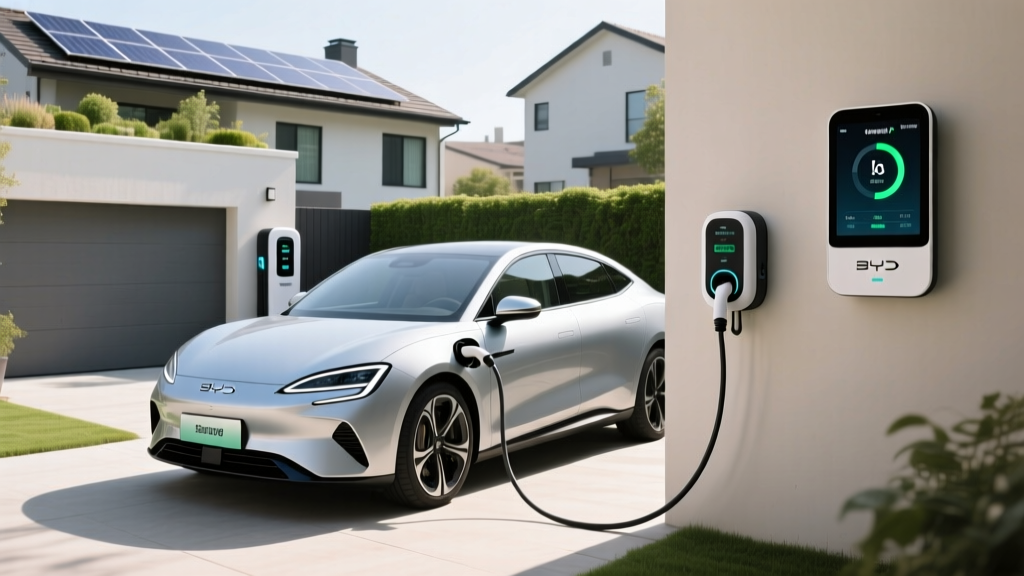
The BYD Seagull (sold in some markets as the Dolphin Mini) has generated enormous interest as one of the most affordable electric vehicles on the global market. With a starting price under $10,000 USD in China and a compact footprint ideal for urban driving, buyers and enthusiasts alike want to know: what is the real-world BYD Seagull range, and how do you actually charge it? This guide breaks down the Seagull's battery specs, charging speeds at every level, home installation requirements, and what it costs to keep one powered up compared to a gas car.
Battery: 30.08 kWh (Standard) / 38.88 kWh (Extended) — LFP (Lithium Iron Phosphate)
CLTC Range: 305 km (190 mi) / 405 km (252 mi)
Estimated EPA-equivalent Range: ~160 mi / ~210 mi (CLTC overstates by ~15-20% vs EPA)
Motor: 75 hp (55 kW)
DC Fast Charge: ~30 kW peak, 30-80% in ~30 min
Level 2 AC Charge: 6.6 kW onboard charger
Connector: GB/T (China) / CCS2 (export markets) — adapter required for NACS regions
BYD Seagull Range: Real-World vs. Sticker Numbers
The BYD Seagull comes in two battery configurations. The standard model uses a 30.08 kWh LFP (lithium iron phosphate) Blade battery rated at 305 km (190 miles) under China's CLTC testing cycle. The extended-range variant steps up to a 38.88 kWh LFP pack rated at 405 km (252 miles) CLTC.
CLTC tends to overestimate range compared to the US EPA cycle by roughly 15-20%. Based on the Seagull's efficiency profile and comparable LFP-equipped compacts tested in the US, expect approximately 160 miles real-world for the standard battery and 210 miles for the extended battery under mixed driving conditions. Highway-heavy driving at 70+ mph will reduce these figures to roughly 130 and 175 miles respectively. Cold weather (below 32°F) can knock off an additional 15-25%, as LFP chemistry is more susceptible to low-temperature range loss than NMC cells.
Standard (30.08 kWh): ~160 mi mixed / ~130 mi highway / ~120 mi cold-weather
Extended (38.88 kWh): ~210 mi mixed / ~175 mi highway / ~160 mi cold-weather
Based on comparable LFP compact EV efficiency data; official EPA figures pending US market availability.
The LFP chemistry choice is significant. LFP batteries offer longer cycle life (3,000+ full cycles before 80% capacity retention), greater thermal stability, and lower cost than NMC cells. The trade-off is lower energy density (heavier pack for the same kWh) and more pronounced range loss in freezing temperatures. For a city-oriented car like the Seagull, LFP is the right engineering call.
Charging Levels Explained: How Fast Does the Seagull Charge?
Understanding EV charging requires distinguishing between kW (kilowatts), which measures power — the rate electricity flows — and kWh (kilowatt-hours), which measures energy — the total amount stored in the battery. Think of kW as the speed of water flowing through a hose and kWh as the size of the bucket you're filling. The Seagull's bucket is 30.08 or 38.88 kWh; the hose size depends on your charger.
| Level | Voltage / Power | Miles of Range Added per Hour | Best For |
|---|---|---|---|
| Level 1 | 120V AC / 1.4-1.9 kW | 3-5 mi/hr | Overnight top-ups, emergencies |
| Level 2 | 240V AC / 3.3-19.2 kW | 12-60 mi/hr | Daily home & workplace charging |
| DC Fast | 400-800V DC / 50-350 kW | 150-1,000+ mi/hr | Road trips, rapid top-ups |
Level 1 (120V household outlet): Plugging the Seagull into a standard wall outlet delivers about 1.4 kW. That translates to roughly 3-5 miles of range per hour. A full charge from empty on the 38.88 kWh pack would take approximately 28 hours. Level 1 works for overnight maintenance if your daily commute is under 30 miles, but it's not a primary charging strategy.
Level 2 (240V home charger): The Seagull's onboard AC charger is rated at 6.6 kW. Connected to a 240V Level 2 station, you'll add roughly 22-25 miles of range per hour. Charging the extended battery from 10% to 80% takes about 4-5 hours — ideal for overnight charging. Even a 3.3 kW Level 2 unit (common in older installations) would complete an overnight charge in 8-10 hours.
DC Fast Charging: The Seagull supports DC fast charging at a peak rate of approximately 30-40 kW. This is modest by 2026 standards (many EVs now peak at 150-350 kW), but appropriate for its battery size. At 30 kW, charging from 30% to 80% takes roughly 30 minutes. The charge curve tapers significantly above 80% SoC — a physical limitation of lithium-ion chemistry to prevent cell damage — so DC fast charging is best used to reach 80% and then unplugging.
Home Charger Installation: Requirements and Costs
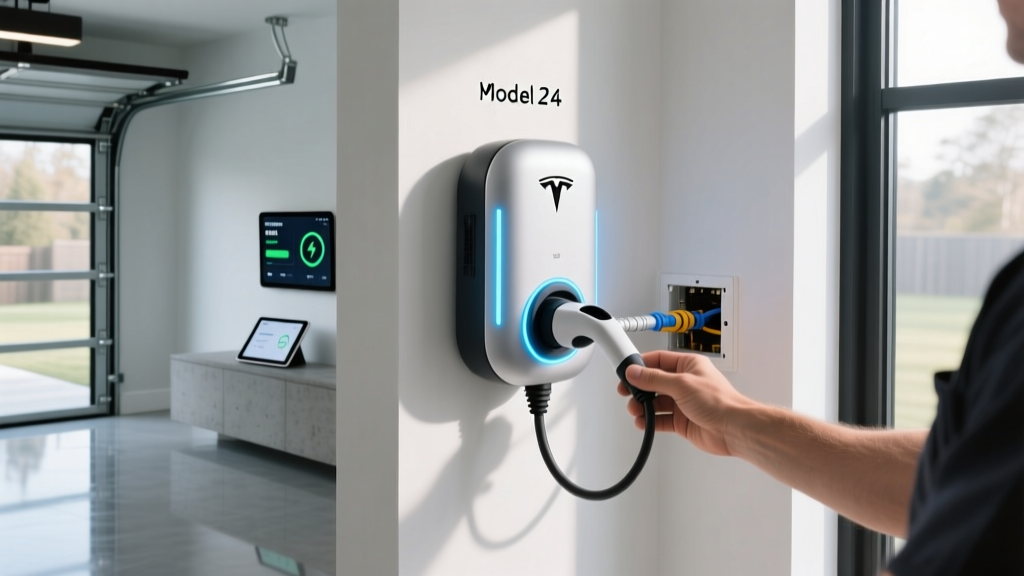
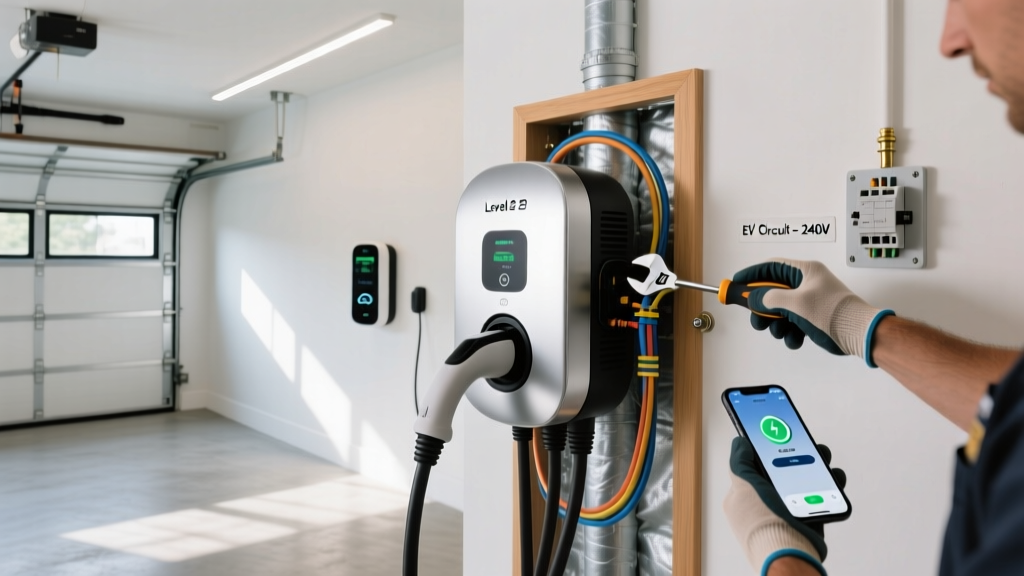
Installing a Level 2 home charger is the single most impactful upgrade for EV ownership. Here's what the Seagull (or any EV) needs:
Electrical Requirements
A Level 2 charger requires a dedicated 240V circuit. For the Seagull's 6.6 kW onboard charger, a 30-amp circuit (delivering 24 continuous amps, or 5.76 kW) is sufficient. A 40-amp circuit (32 continuous amps, 7.7 kW) provides headroom for future vehicles with larger onboard chargers. The circuit must be on its own breaker — sharing with other appliances violates the National Electrical Code (NEC).
Panel Upgrade Considerations
Homes with 100-amp electrical service may need a panel upgrade to 200 amps before adding an EV circuit, especially if you already run electric heat, a dryer, and an oven. A panel upgrade adds $1,500-$3,000 to the project. Homes with existing 200-amp service typically have capacity for a 40-amp EV circuit without upgrades. Have a licensed electrician perform a load calculation before quoting the job.
| Component | Cost Range | Notes |
|---|---|---|
| Level 2 Charger (hardware) | $250 - $700 | Varies by brand, power, smart features |
| Electrician labor | $400 - $1,500 | Depends on run length, conduit, wall type |
| Electrical permit | $50 - $200 | Required in most jurisdictions |
| Panel upgrade (if needed) | $1,500 - $3,000 | 100A → 200A service upgrade |
| Total (no panel upgrade) | $700 - $2,400 | Most common scenario |
| Total (with panel upgrade) | $2,200 - $5,400 | Older homes with 100A service |
Safety and Code Requirements
- Dedicated circuit: The EV charger must be on its own breaker — no shared circuits with dryers, HVAC, or other loads.
- GFCI protection: NEC 2020 and later requires GFCI (ground-fault circuit interrupter) protection for all EV charging outlets, especially outdoor installations.
- Outdoor rating: If mounting outside, the charger must carry a NEMA 4 or IP65 weatherproof rating. Most quality Level 2 units meet this standard.
- Hardwired vs. plug-in: Hardwired units (no plug) are permitted at higher amperages and eliminate the failure point of a receptacle. Plug-in units (NEMA 14-50 outlet) offer portability but require a GFCI breaker.
- Permit and inspection: Nearly all jurisdictions require an electrical permit and post-installation inspection. Skipping this voids homeowner insurance coverage for electrical fires.
Connector Compatibility: Will Your Charger Fit the Seagull?
Connector standards vary by market, and the BYD Seagull's compatibility depends on where you live and which model year you purchase. In China, the Seagull uses the GB/T standard. Export-market versions (Southeast Asia, Latin America, potential European markets) use CCS2. If BYD enters the North American market, the vehicle would need to support the NACS (J3400) connector now adopted by most automakers for the 2025+ model years.
| Connector | AC Level 2 | DC Fast | Primary Region |
|---|---|---|---|
| NACS (J3400) | Yes | Yes | North America (Tesla + most 2025+ EVs) |
| CCS1 | J1772 | CCS Combo | Legacy North America (pre-2025) |
| CCS2 | Type 2 | CCS Combo | Europe, some export markets |
| GB/T | GB/T AC | GB/T DC | China |
| CHAdeMO | J1772 | CHAdeMO | Japan (legacy, phasing out) |
If you purchase a Seagull in a CCS2 market and later move to a NACS region, you'll need a CCS2-to-NACS adapter (approximately $150-$250). Adapters are available from manufacturers like Lectron and A2Z. Always verify that any adapter is UL-listed or certified to the relevant safety standard before use.
Charging Cost: Seagull vs. Gas Car Per Mile
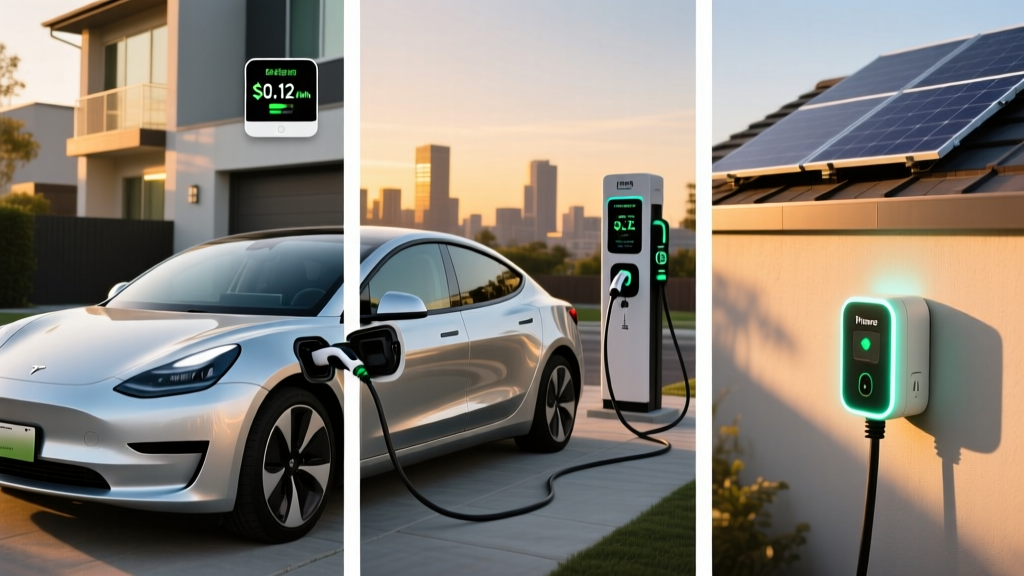
The Seagull's efficiency is approximately 3.5-4.0 miles per kWh (roughly 120-130 MPGe combined). At that efficiency, here's what charging costs look like across different scenarios compared to a gas car averaging 30 MPG:
| Scenario | Rate | Cost per Mile | Annual (12,000 mi) |
|---|---|---|---|
| Home off-peak (utility rate) | $0.09/kWh | $0.026 | $312 |
| Home average rate | $0.16/kWh | $0.046 | $552 |
| Public Level 2 (network) | $0.30/kWh | $0.086 | $1,032 |
| DC Fast (Electrify America, etc.) | $0.48/kWh | $0.137 | $1,644 |
| Gas car (30 MPG) | $3.40/gal | $0.113 | $1,356 |
Home charging at off-peak rates is dramatically cheaper than gasoline — roughly 77% less per mile. Even public DC fast charging is comparable to or slightly above gas costs, which is why home charging access is the single biggest factor in EV economics. The Seagull's small battery amplifies the savings: a full charge from empty costs just $2.71-$3.50 at home rates, compared to $35-$45 for a gas car's tank.
Recommended Level 2 Chargers for the Seagull
Since the Seagull's onboard charger maxes out at 6.6 kW, you don't need a 48-amp station. A 32-amp unit delivers the full 7.7 kW (more than the car can accept), leaving headroom. Here are three solid options across price tiers:
Power: 48A / 11.5 kW (adjustable down to 32A)
Connector: NACS (J3400), CCS adapter included
Cable: 24 ft
Smart Features: Wi-Fi, app scheduling, energy monitoring, load management
Price: ~$399
Best value in smart chargers; pairs with Emporia home energy monitor.
Power: 50A / 12 kW (adjustable via DIP switches)
Connector: NACS or J1772 (configurable)
Cable: 23 ft
Smart Features: Wi-Fi, app, Alexa, ChargePoint network integration
Price: ~$549
UL-listed, proven reliability, wide amperage range.
Power: 48A / 11.5 kW
Connector: NACS native, J1772 adapter included (2025+ models)
Cable: 24 ft
Smart Features: Wi-Fi, OTA updates, Power-Share load balancing, vehicle integration
Price: ~$475
Best ecosystem integration for Tesla + NACS-adopted vehicles.
Any of these units will fully charge the Seagull overnight. The key decision factor is your home's available amperage: a 40-amp circuit supports up to 32 continuous amps, while a 60-amp circuit supports 48 continuous amps. Your electrician will specify the correct circuit based on your panel capacity.
Charging Time Examples: What to Expect
Here are realistic charging times for the Seagull's two battery sizes across common scenarios:
| Method | Standard 30 kWh | Extended 38.9 kWh |
|---|---|---|
| Level 1 (120V / 1.4 kW) | ~15 hours | ~19.5 hours |
| Level 2 (240V / 3.3 kW) | ~6.5 hours | ~8.5 hours |
| Level 2 (240V / 6.6 kW) | ~3.2 hours | ~4.2 hours |
| DC Fast (~30 kW peak) | ~45 min | ~55 min |
Note that DC fast charging the Seagull from 10-80% takes longer than larger-battery EVs with higher peak charge rates. A Hyundai Ioniq 5 with 84 kWh and 240 kW peak DC charging completes 10-80% in about 18 minutes. The Seagull's 30 kW peak is a trade-off for its lower price point — the smaller battery simply cannot safely accept high charge rates without accelerating degradation.
US Availability and Tax Credit Considerations
As of early 2026, BYD has not officially launched the Seagull in the United States. The vehicle is available in China, Southeast Asia, Latin America, and select European markets. Should BYD enter the US market, the Seagull would likely face IRS §30D tax credit scrutiny, as the credit requires battery components and critical minerals to be sourced from the US or free-trade-agreement partners — a threshold that Chinese-manufactured batteries currently do not meet. Additionally, 100% tariffs on Chinese-built EVs imposed in 2024 make direct import economically unviable without a localized production facility.
If you're considering the Seagull in a market where it's currently sold, local incentives and EV registration fees will apply instead of US federal credits.
Frequently Asked Questions
How much does it cost to install a home EV charger?
A typical Level 2 home charger installation costs $700-$2,400 including equipment, electrician labor, and permit — assuming your electrical panel has sufficient capacity. If a panel upgrade from 100A to 200A is required, add $1,500-$3,000, bringing the total to $2,200-$5,400. Always get a load calculation from a licensed electrician first.
How fast will each charging level add range to the Seagull?
Level 1 (120V) adds 3-5 miles per hour. Level 2 (240V at 6.6 kW) adds approximately 22-25 miles per hour. DC fast charging at 30 kW adds roughly 100-120 miles per hour, though the rate tapers above 80% state of charge.
Which connector is compatible with the BYD Seagull?
In China, the Seagull uses GB/T. Export models use CCS2. For North America, the vehicle would need NACS (J3400) compatibility. Adapters are available between standards but must be UL-listed for safety.
How much does charging the Seagull cost per mile vs. gas?
At home off-peak rates ($0.09/kWh), the Seagull costs about $0.026 per mile — roughly 77% less than a 30 MPG gas car at $3.40/gallon ($0.113/mile). Even at public DC fast charger rates ($0.48/kWh), the cost of $0.137/mile is comparable to gasoline.
What electrical upgrades might I need for a home charger?
You need a dedicated 240V circuit (30-40 amps for the Seagull) with its own breaker. Homes with 100-amp service may need a panel upgrade to 200 amps. All installations require a GFCI-protected circuit, a permit, and a post-installation inspection per NEC requirements.