What Is the BYD Flash Charging Network and How Does It Fit Into EV Charging?
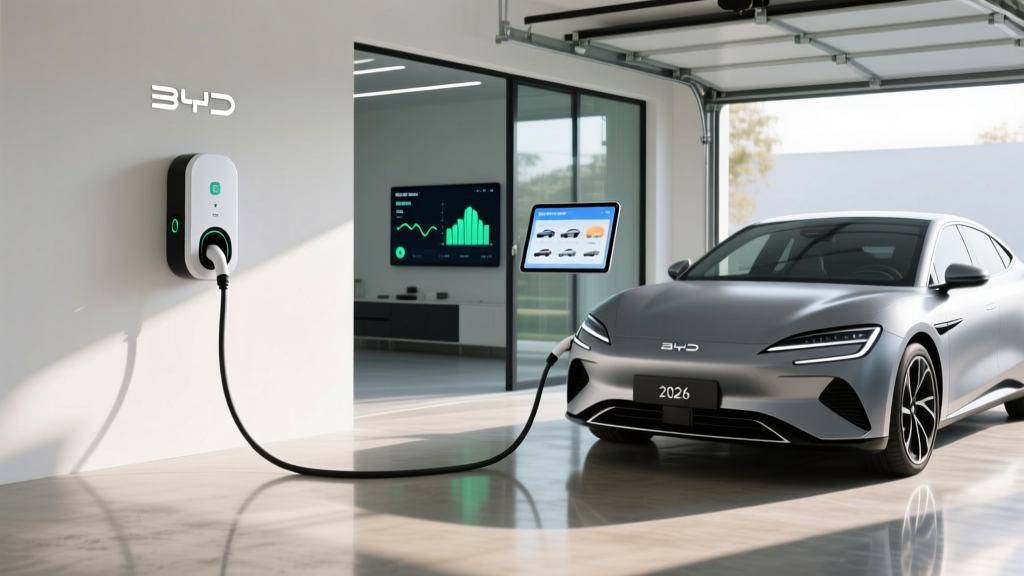
BYD's Flash Charging Network is the automaker's proprietary-branded DC fast-charging ecosystem, rolling out globally through 2025-2026 with stations capable of delivering up to 500 kW peak power at select flagship locations. While BYD has historically dominated in China, its international expansion — including markets in Europe, Southeast Asia, and Latin America — brings a new variable to the public-charging landscape. For buyers considering a BYD EV or any vehicle that may use these stations, understanding how Flash Charging integrates with home Level 2 setups, what connectors are involved, and what the real-world economics look like is essential before making a purchase decision.
This guide covers the full charging ecosystem relevant to BYD owners and curious shoppers: DC fast-charging speeds on the Flash network, home Level 2 installation requirements and costs, connector compatibility across the BYD lineup, and a clear cost-per-mile breakdown compared to gasoline.
Charging Levels Explained: Level 1, Level 2, and DC Fast Charging
Every EV owner needs to understand three charging tiers. The critical distinction: kW (kilowatts) measures power — how fast energy flows into the battery. kWh (kilowatt-hours) measures energy — the total capacity of the battery, like gallons in a fuel tank. A 500 kW charger fills an 80 kWh battery much faster than a 7.2 kW home unit.
| Charging Level | Voltage | Power (kW) | Miles of Range Added Per Hour | Typical Use Case |
|---|---|---|---|---|
| Level 1 (120V) | 120V AC | 1.0 – 1.4 kW | 3 – 5 miles/hr | Emergency / overnight trickle for PHEVs |
| Level 2 (240V) | 240V AC | 3.3 – 19.2 kW | 12 – 70 miles/hr | Daily home and workplace charging |
| DC Fast Charging | 200 – 900V DC | 50 – 500 kW | 150 – 1,000+ miles/hr (peak) | Road trips, rapid top-ups |
For context, a BYD Seal with a 82.5 kWh battery charging at a 500 kW BYD Flash station could theoretically add roughly 200 miles of range in 10 minutes during the peak portion of the charge curve. However, peak kW is never sustained for the full session — charging speed tapers significantly above 80% state of charge (SoC) to protect battery health. Real-world 10-80% times on flagship 500 kW stations have been reported in the 12-18 minute range for BYD's e-Platform 3.0 vehicles equipped with 800V architectures.
Home Level 2 Charger Installation: Electrical Requirements and Costs
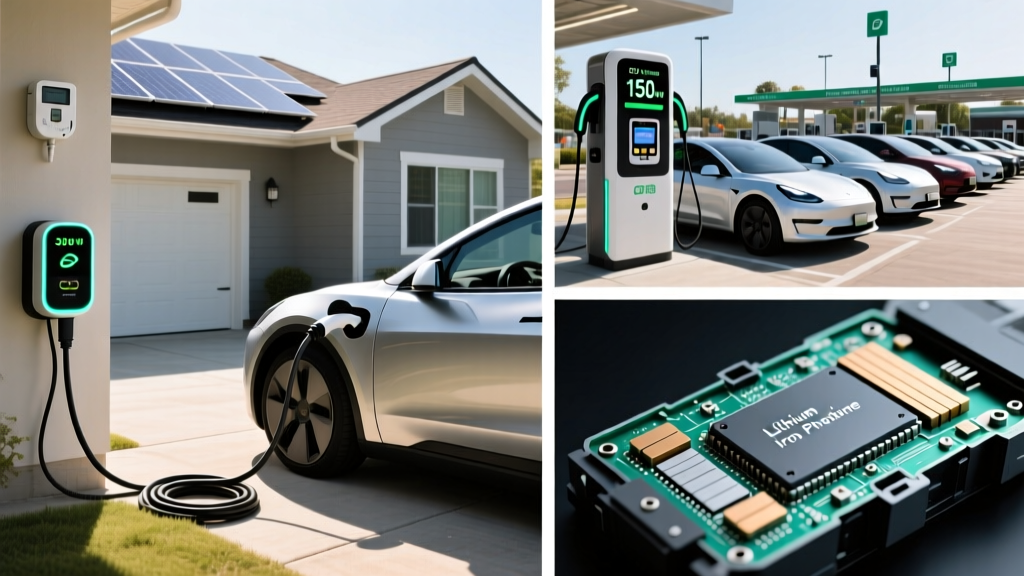
Most BYD owners will do 85-95% of their charging at home on a Level 2 unit. A proper home setup requires a dedicated 240V circuit, typically rated at 40A to 60A, which delivers between 9.6 kW and 14.4 kW of continuous power. Here is what the electrical work actually involves.
Electrical Panel and Circuit Requirements
- Minimum circuit: 240V / 40A dedicated breaker (supports up to 9.6 kW continuous, or 32A actual draw per the 80% NEC rule for continuous loads)
- Optimal circuit: 240V / 60A breaker (supports up to 11.5 kW continuous, or 48A draw — future-proofs for higher-capacity EVs)
- Panel capacity: Your main service panel must have enough spare amperage. A 100A panel in an older home may require an upgrade to 200A service — a significant added cost
- Permit: Required in virtually all US and international jurisdictions; ensures inspection of wiring, breaker sizing, and grounding
- GFCI protection: NEC 2020+ requires GFCI protection for EV outlets in garages; hardwired units may have different requirements depending on local code
| Cost Component | Simple Install (near panel) | Complex Install (far run or panel upgrade) |
|---|---|---|
| Level 2 Charger Equipment | $400 – $750 | $500 – $1,200 |
| Electrician Labor | $500 – $1,000 | $1,500 – $3,000 |
| Electrical Permit | $50 – $150 | $100 – $300 |
| Panel Upgrade (if needed) | $0 (not required) | $1,500 – $3,500 |
| Conduit, Wire, Misc. | $100 – $300 | $300 – $800 |
| Total Estimated Cost | $1,050 – $2,200 | $3,900 – $8,800 |
The wide range reflects a key variable: distance from your electrical panel to the charger location. If your garage is directly adjacent to a 200A panel with spare breaker slots, expect the lower end. If you need a 50-foot conduit run through finished walls or a full panel upgrade from 100A to 200A service, costs climb sharply. Always get at least two quotes from licensed electricians and confirm they have EV charger installation experience.
Safety and Code Considerations
- Use only UL-listed (or equivalent regional certification) charging equipment
- Outdoor-rated chargers must carry a NEMA 4 or IP65+ rating for weather resistance
- Hardwired units eliminate the GFCI nuisance-trip issues some owners experience with NEMA 14-50 receptacles
- Never use extension cords or adapter plugs not rated for continuous EV charging loads
- Verify your homeowner's insurance policy covers EV charging equipment — some carriers require notification
Connector Compatibility: NACS, CCS, GB/T, and the BYD Lineup
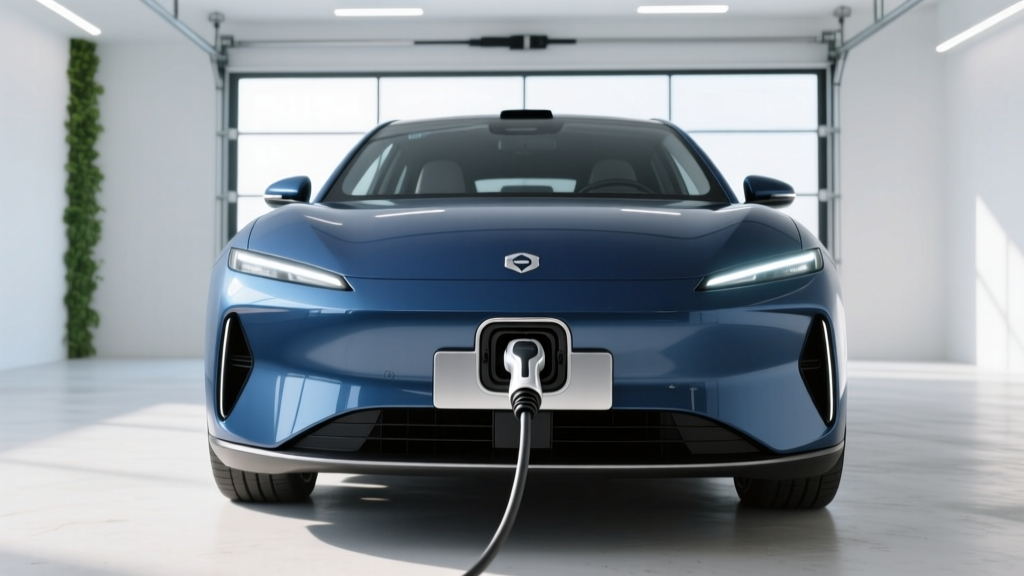
BYD vehicles sold globally use different charging connectors depending on the market. This is one of the most confusing aspects for international buyers, and it directly affects which public networks and home chargers you can use.
| Connector | Primary Region | AC Charging | DC Fast Charging | BYD Compatibility |
|---|---|---|---|---|
| NACS (Tesla) | North America (US/Canada) | Yes (with adapter) | Yes (native on Tesla; adapter for others) | Not native; CCS-to-NACS adapter may be required in future |
| CCS1 (Combo) | North America, South Korea | Yes (J1772 upper) | Yes | Some export markets; not primary BYD connector |
| CCS2 (Combo) | Europe, Oceania, parts of Asia | Yes (Type 2 upper) | Yes | Native on BYD vehicles sold in Europe/Australia |
| GB/T | China (domestic market) | Yes | Yes (separate DC port) | Native on all BYD vehicles sold in China |
| CHAdeMO | Japan (legacy) | No | Yes (legacy) | Not used by BYD |
Key takeaway for US-based buyers: As of 2026, BYD does not sell passenger vehicles in the United States due to tariff and market-access barriers. If you are evaluating BYD for a market where they do operate (Europe, Australia, Southeast Asia, Latin America), your vehicle will almost certainly use CCS2 for both AC and DC charging. Home Level 2 chargers in these regions use the Type 2 (Mennekes) connector, which is the upper portion of the CCS2 plug.
If you purchase a BYD in a CCS2 market and later need to charge at a NACS-only station (increasingly common in North America if you travel), you would need a CCS2-to-NACS adapter — though availability and certification of such adapters varies. Always verify adapter compatibility with your specific vehicle's onboard charger specifications before purchasing.
BYD Flash Charging Network: Speeds, Station Types, and 10-80% Times
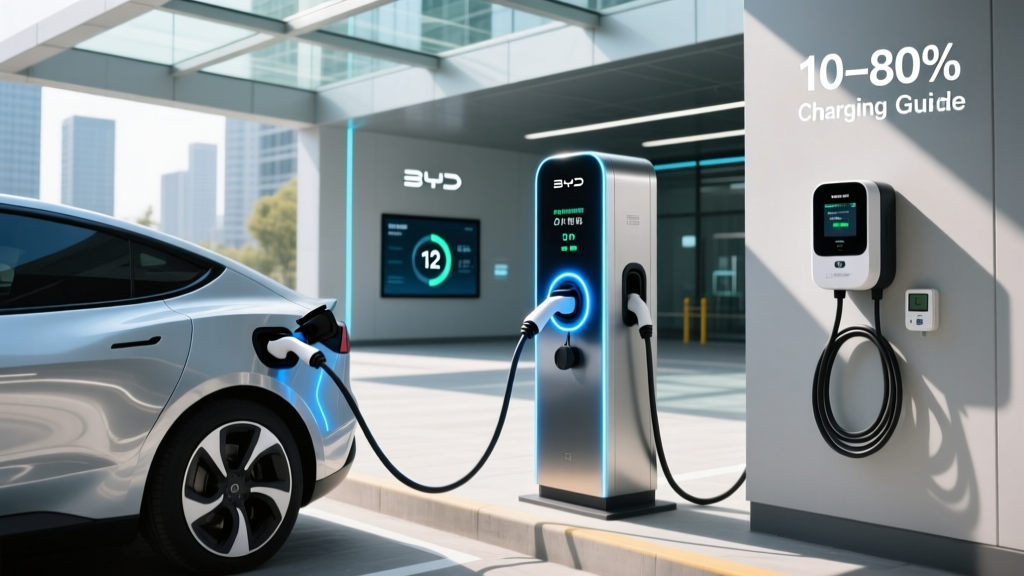
BYD's Flash Charging infrastructure is tiered by power output. Not every station delivers the headline 500 kW figure. Here is what to expect across the network:
- Flagship Ultra-Fast Stations (500 kW): Available in select high-traffic corridors in China and expanding internationally. Require vehicles with 800V architecture (e.g., BYD Seal, Han EV updated trims). 10-80% in approximately 12-18 minutes depending on battery size and ambient temperature.
- Standard Fast Stations (150-200 kW): The more common deployment. Compatible with all BYD BEVs. 10-80% in approximately 25-35 minutes for a typical 82 kWh pack.
- Destination / Retail Chargers (50-100 kW): Located at shopping centers, hotels, and BYD dealerships. 10-80% in approximately 40-60 minutes.
Charging Time Examples by Battery Size
| Battery Capacity (kWh) | Vehicle Example | At 500 kW Station | At 150 kW Station | At 50 kW Station |
|---|---|---|---|---|
| 44.9 kWh (LFP) | BYD Dolphin | ~12 min | ~25 min | ~50 min |
| 60.5 kWh (LFP) | BYD Atto 3 / Yuan Plus | ~15 min | ~30 min | ~60 min |
| 82.5 kWh (LFP) | BYD Seal | ~18 min | ~35 min | ~75 min |
These times assume optimal conditions: battery preconditioned to ideal temperature (roughly 25-35°C / 77-95°F), starting at 10% SoC, and no power-sharing with adjacent stalls. In cold weather (below 0°C / 32°F), expect 10-80% times to increase by 20-40% because the battery management system limits charge rate until the pack warms up. BYD vehicles with heat pumps and active thermal management handle this better than passive-cooled packs, but the physics of lithium-ion charging in cold temperatures cannot be fully eliminated.
Cost to Charge: Home vs. Public vs. DC Fast Charging Per Mile
The economics of EV charging depend heavily on where you charge. Here is a realistic breakdown using a BYD Seal (82.5 kWh battery, approximately 3.5 miles/kWh efficiency, or roughly 120 MPGe combined) as the reference vehicle.
| Charging Scenario | Electricity Rate ($/kWh) | Cost for Full 82.5 kWh Charge | Cost Per Mile (at 3.5 mi/kWh) |
|---|---|---|---|
| Home Off-Peak (utility time-of-use) | $0.08 – $0.12 | $6.60 – $9.90 | $0.019 – $0.028 |
| Home Standard Rate | $0.13 – $0.18 | $10.73 – $14.85 | $0.031 – $0.042 |
| Public Level 2 (workplace/mall) | $0.20 – $0.35 | $16.50 – $28.88 | $0.047 – $0.082 |
| DC Fast Charging (public network) | $0.30 – $0.55 | $24.75 – $45.38 | $0.071 – $0.129 |
| Gas Vehicle Baseline (30 MPG, $3.50/gal) | — | $3.50/gallon | $0.117 |
The data is clear: home off-peak charging is 4-6x cheaper per mile than gasoline, and even the most expensive DC fast charging is roughly cost-competitive with gas. However, if you rely exclusively on public DC fast charging at $0.45-$0.55/kWh, your per-mile cost can actually exceed that of a fuel-efficient hybrid. This is why home Level 2 access is the single biggest factor in EV ownership economics.
BYD Flash Charging stations may offer competitive pricing in markets where BYD operates the network directly, potentially undercutting third-party networks. However, pricing structures vary by region and station operator. Always check the BYD app or station signage for current per-kWh rates before initiating a session.
Recommended Home Level 2 Chargers: Equipment Picks for 2026
Whether you own a BYD (in markets where available) or any other EV, these Level 2 chargers represent the best combination of power output, reliability, smart features, and value for home installation.
ChargePoint Home Flex
- Power: Up to 12 kW (50A) / configurable down to 16A
- Connector: J1772 (NACS adapter available)
- Cable Length: 23 feet
- Smart Features: Wi-Fi, app scheduling, Alexa integration, energy tracking
- Price: ~$550 – $650
- Best For: Flexible amperage for older panels; excellent app
Wallbox Pulsar Plus
- Power: Up to 11.5 kW (48A)
- Connector: J1772 (Type 2 in EU/AU markets)
- Cable Length: 25 feet
- Smart Features: Wi-Fi + Bluetooth, Power Sharing (two units on one circuit), app control
- Price: ~$500 – $600
- Best For: Compact size; dual-charger households
Tesla Wall Connector
- Power: Up to 11.5 kW (48A)
- Connector: NACS native (J1772 adapter included)
- Cable Length: 24 feet
- Smart Features: Wi-Fi, OTA updates, Power Sharing, load management
- Price: ~$420 – $475
- Best For: Best value; NACS-native with J1772 adapter for non-Tesla EVs
For BYD owners in CCS2 markets (Europe, Australia), look for the Wallbox Pulsar Plus Type 2 or the KEBA KeContact P40, both widely available with native Type 2 tethered cables and up to 22 kW output on three-phase power (where available). Single-phase homes will be limited to 7.4 kW regardless of charger capability — your onboard charger and home electrical supply are the bottleneck, not the wallbox.
Frequently Asked Questions
How much does it cost to install a home EV charger?
A straightforward Level 2 installation with a nearby 240V panel and spare breaker capacity typically costs $1,050 – $2,200 total (equipment + electrician + permit). Complex installations requiring long wire runs, conduit through finished walls, or a 200A panel upgrade can reach $3,900 – $8,800. Always obtain itemized quotes that separate equipment, labor, and permit costs.
How fast will each charging level add range?
Level 1 (120V) adds roughly 3-5 miles per hour — adequate only for PHEVs with small batteries. Level 2 (240V, 40-48A) adds 25-40 miles per hour for most EVs, easily replenishing a full night's driving. DC fast charging at 150 kW adds roughly 150-200 miles in 15 minutes; at 500 kW (BYD Flash flagship), roughly 200+ miles in 10 minutes during the peak charge-curve window.
Which connector and charger is compatible with my EV?
In North America, nearly all non-Tesla EVs use J1772 for Level 2 and CCS1 for DC fast charging. Tesla uses NACS. In Europe and Australia, Type 2 / CCS2 is universal — and this is the connector BYD uses in those markets. Check your vehicle's charge port and match it to your home charger's tethered cable or socket type. Adapters exist (CCS-to-NACS, J1772-to-NACS) but verify certification and continuous-load ratings before relying on them.
How much does charging cost per mile compared to gas?
Home charging at off-peak utility rates costs approximately $0.02 – $0.03 per mile — roughly 4-6x cheaper than a 30 MPG gas car at $3.50/gallon ($0.12/mile). Public DC fast charging at $0.35-$0.55/kWh costs $0.07-$0.13/mile, making it competitive with or slightly cheaper than gas. The savings multiply the more you charge at home.
What electrical upgrades might I need for a home charger?
The most common upgrade is a panel capacity increase from 100A to 200A service ($1,500-$3,500), required if your existing panel lacks spare amperage for a dedicated 40-60A EV circuit. Other potential upgrades include: adding a sub-panel closer to the garage ($500-$1,200), replacing outdated wiring, or upgrading your utility meter socket. A licensed electrician can perform a load calculation to determine whether your current panel supports an EV charger without upgrades.
Can I use BYD Flash Charging stations with a non-BYD vehicle?
This depends on the market and station configuration. In China, BYD Flash stations with GB/T connectors are generally compatible with any GB/T-equipped vehicle. In international markets using CCS2, BYD stations are expected to be open to all CCS2 vehicles, though BYD owners may receive preferential pricing or priority access through the BYD app. Check station signage or the BYD charging app for access policies at specific locations.
Sources: BYD official specifications and press releases, fueleconomy.gov for efficiency data, and local electrical code requirements (NEC 2020/2023). Tax incentive eligibility for home charger installation varies by jurisdiction — consult a tax professional and reference current IRS guidance on the §30C Alternative Fuel Vehicle Refueling Property Credit for potential credits up to $1,000 on home charging equipment.