BYD's "Flash Charger" branding has become one of the most searched terms among EV shoppers trying to understand what ultra-fast DC charging actually delivers in the real world. If you've seen the headline claim — up to 300 km of range added in roughly 5 minutes — and wondered how that translates to U.S. charging infrastructure, home setup requirements, and your actual cost per mile, this guide maps it all out with exact numbers.
Before we get into the BYD-specific data, let's ground this in a distinction that trips up too many buyers: kW (kilowatts) measures power — how fast energy flows into your battery right now. kWh (kilowatt-hours) measures energy — how much total capacity your battery holds. A 360 kW charger doesn't deliver 360 kWh; it delivers energy at a rate of 360 kW, which would fill a 72 kWh battery in about 12 minutes if that peak rate were sustained the entire time. In reality, charge curves taper hard above 80% State of Charge (SoC), which is why we focus on 10–80% times.
What BYD Flash Charger Speed Actually Means in Practice
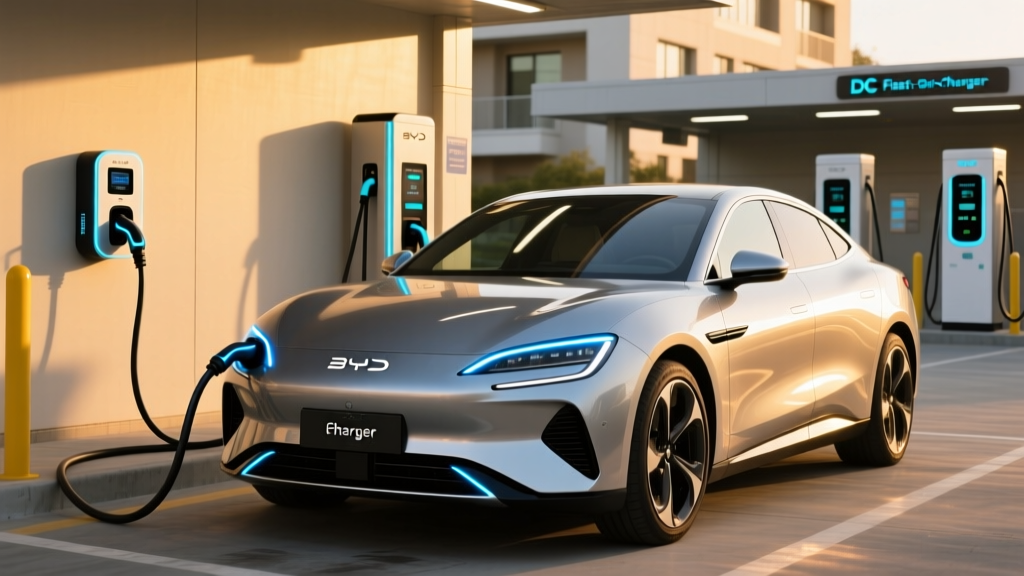
BYD's dual-gun Flash Charger architecture, deployed across China and expanding into Europe and Southeast Asia, is rated for a peak output of 360 kW per gun on its latest V3 generation stations (announced late 2024, rolling out through 2025–2026). On compatible BYD vehicles with 800V battery architectures — like the Seal U and newer Atto variants — BYD claims a 10–80% charge in approximately 12–15 minutes under optimal thermal conditions.
Here's where real-world honesty matters:
- Peak vs. sustained kW: The 360 kW figure is a momentary peak typically seen between 10–30% SoC. From 50–80%, the curve tapers to roughly 120–180 kW depending on battery temperature.
- Vehicle-side limit: Even if the station can deliver 360 kW, your car's onboard charge controller caps intake. Most non-800V EVs max out at 150–250 kW regardless of station capability.
- Thermal preconditioning: BYD's battery management system (BMS) warms the pack en route to the charger. Skip preconditioning in cold weather and your peak may drop to 200 kW or less.
- U.S. availability: As of early 2026, BYD passenger vehicles are not sold in the U.S. market. The Flash Charger network is primarily operational in China, Thailand, Brazil, and parts of Europe. U.S. buyers evaluating this tech are typically comparing it against Tesla Supercharger V4 (up to 350 kW), Electrify America 350 kW stations, and IONNA's emerging 400 kW corridor chargers.
Charging Levels Compared: kW, Miles Per Hour, and 10–80% Times
Whether you're comparing BYD's Flash Charger claims against what you can actually install at home, understanding the three charging tiers is essential. Here's how each level performs across common battery sizes:
| Level | Voltage / Amps | Power (kW) | Miles of Range / Hour | 10–80% Time (75 kWh pack) |
|---|---|---|---|---|
| Level 1 (120V household) | 120V / 12A | 1.4 kW | 3–5 mi/hr | ~37 hours |
| Level 2 (240V home/public) | 240V / 32–48A | 7.7–11.5 kW | 25–44 mi/hr | 5–7 hours |
| DC Fast (public CCS/NACS) | 400–900V DC | 50–350 kW | 150–1,000+ mi/hr (peak) | 18–45 minutes |
| BYD Flash Charger (800V DC) | 800V DC dual-gun | Up to 360 kW | ~1,100 mi/hr (peak theoretical) | 12–18 minutes (compatible vehicles) |
The takeaway: BYD's Flash Charger speed sits at the upper end of global DC fast-charging capability, competitive with Tesla's V4 Supercharger and IONNA's 400 kW units. But your ability to use it depends entirely on your vehicle's charge architecture — and for U.S. buyers in 2026, that means evaluating comparable domestic networks.
Home Level 2 Charger Installation: Electrical Requirements and Cost Breakdown
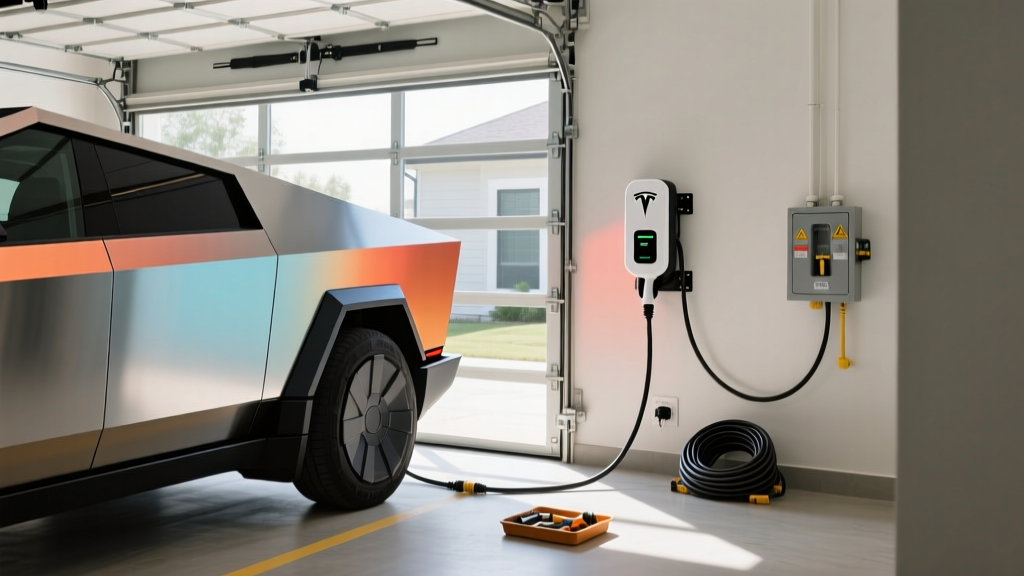
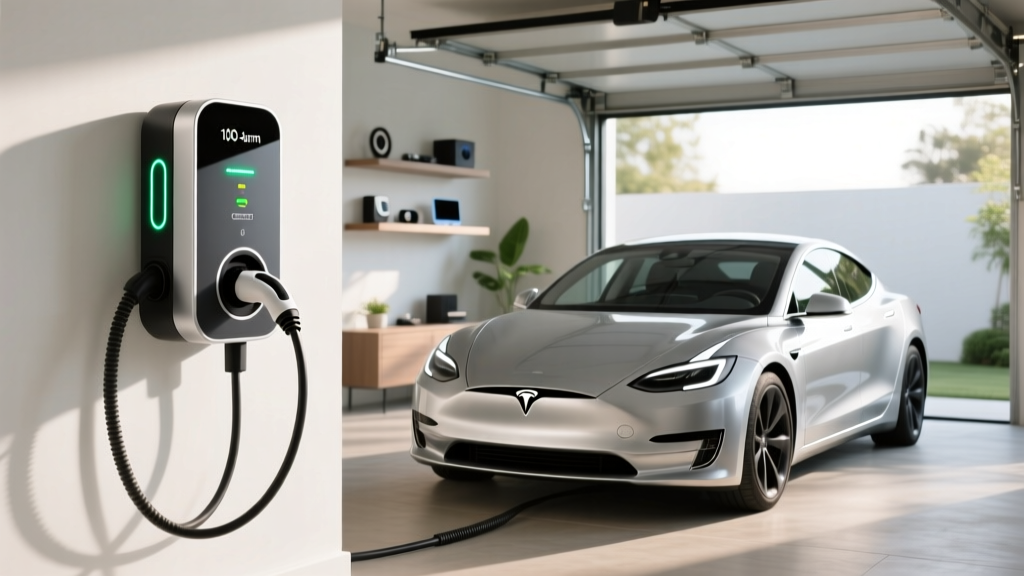
Most EV owners do 80–90% of their charging at home on Level 2. Here's what a proper installation requires and what it actually costs — including the panel upgrade scenario that catches many older-home buyers off guard.
Electrical Requirements
- Circuit: A dedicated 240V circuit, typically 40A or 60A (breaker rated at 125% of continuous load, so a 48A charger needs a 60A breaker)
- Wire gauge: 6 AWG copper for 48A circuits; 4 AWG for 60A circuits (varies by run length and local code)
- Panel capacity: Most homes need at least 150A total service; a 200A panel is strongly recommended for simultaneous EV charging, HVAC, and electric dryer/cooktop use
- Permit: Required in virtually all U.S. jurisdictions; inspection ensures code compliance and protects your insurance coverage
- GFCI protection: NEC 2020 and later require GFCI breakers for EV receptacles (NEMA 14-50); hardwired units may exempt this depending on local interpretation
| Component | Typical Range | Notes |
|---|---|---|
| Level 2 charger equipment | $350 – $750 | 40A–48A smart Wi-Fi units |
| Electrician labor (standard install) | $400 – $1,200 | Depends on panel-to-outlet distance, wall material |
| Permit and inspection | $50 – $250 | Varies by municipality |
| Panel upgrade (if needed, 100A → 200A) | $1,800 – $4,500 | Common in pre-1990 homes; includes new panel, breaker, utility coordination |
| Total (no panel upgrade) | $800 – $2,200 | Most common scenario for homes built after 2000 |
| Total (with panel upgrade) | $2,600 – $6,950 | Budget for this possibility in older homes |
Federal incentive note: The §30C Alternative Fuel Vehicle Refueling Property Credit (separate from the §30D vehicle credit) can cover up to 30% of home charger equipment and installation costs, capped at $1,000, for installations in eligible census tracts. Check current-year eligibility at irs.gov and confirm with a tax professional.
Connector Compatibility: NACS, CCS, CHAdeMO, and BYD's GB/T
BYD's Flash Charger stations in China use the GB/T connector standard, which is not compatible with North American or European vehicles without an adapter. For U.S. buyers comparing charging ecosystems, here's how the connector landscape looks in 2026:
| Connector | Max Power | Brands Using (2026) | Adapter Needed? |
|---|---|---|---|
| NACS (J3400) | Up to 350 kW | Tesla, Ford, GM, Rivian, Hyundai, Volvo, Polestar, most major OEMs by 2026 | CCS→NACS adapter for legacy CCS vehicles ($150–$250) |
| CCS1 | Up to 350 kW | Legacy: older VW ID.4, BMW iX, some Stellantis models (phasing out) | NACS→CCS adapter needed for Tesla Superchargers |
| CHAdeMO | Up to 100 kW (mostly 50 kW) | Nissan Leaf (discontinued), Mitsubishi Outlander PHEV (legacy) | Limited adapter options; network shrinking |
| GB/T | Up to 360 kW (BYD Flash) | BYD, NIO, Xpeng, Zeekr (China market) | Not available for North American vehicles |
For U.S. buyers in 2026, the NACS standard has effectively won. If you're shopping for a new EV, prioritize NACS-equipped vehicles for the broadest access to Tesla Superchargers (now open to non-Tesla vehicles) and the growing IONNA network. CCS1 vehicles still charge on Electrify America and EVgo, but the long-term infrastructure investment is flowing toward NACS.
Cost to Charge: Home vs. Public vs. DC Fast — Per Mile Compared to Gas
One of the most common questions from EV-curious buyers: does charging actually save money? The answer depends heavily on where and when you charge.
| Scenario | Rate ($/kWh) | Cost for 75 kWh (10–80% ≈ 52.5 kWh usable) | Cost Per Mile (at 3.5 mi/kWh) |
|---|---|---|---|
| Home off-peak (utility time-of-use) | $0.08 – $0.14 | $4.20 – $7.35 | $0.023 – $0.040 |
| Home standard rate | $0.14 – $0.20 | $7.35 – $10.50 | $0.040 – $0.057 |
| Public Level 2 (ChargePoint, workplace) | $0.20 – $0.35 | $10.50 – $18.38 | $0.057 – $0.100 |
| DC Fast Charging (EA, EVgo, Tesla) | $0.32 – $0.56 | $16.80 – $29.40 | $0.091 – $0.160 |
| Gas equivalent (28 MPG avg, $3.40/gal) | — | — | $0.121 |
The math is clear: home off-peak charging delivers the lowest per-mile cost of any fueling method, typically 3–5× cheaper than gasoline. DC fast charging on road trips can approach or exceed gas costs per mile, but it represents a small fraction of most owners' total charging. According to fueleconomy.gov, the average EV efficiency in 2026 hovers around 3.0–4.0 miles per kWh, making home charging the dominant economic advantage of EV ownership.
Recommended Home Level 2 Chargers for 2026
Based on power output, reliability, smart features, and value, these are the Level 2 units we recommend for U.S. homeowners:
ChargePoint Home Flex
- Power: Up to 11.5 kW (48A) on 60A circuit; configurable down to 16A
- Connector: NACS (J3400) native as of 2025 revision; CCS1 adapter available
- Cable length: 23 ft
- Smart features: Wi-Fi, scheduled charging, Alexa/Google Home, energy dashboard
- Price: ~$599
- Best for: Most homes; flexible amperage means it works on 20A–60A circuits
Tesla Wall Connector
- Power: Up to 11.5 kW (48A) on 60A circuit
- Connector: NACS native
- Cable length: 24 ft
- Smart features: Wi-Fi, OTA updates, Powerwall integration, load sharing (up to 6 units on one circuit)
- Price: ~$450
- Best for: Tesla and NACS-equipped owners; best value at this power level
Emporia Vue 2 EV Charger
- Power: Up to 11.5 kW (48A)
- Connector: NACS (2025+ models); J1772 for older stock
- Cable length: 24 ft
- Smart features: Whole-home energy monitoring integration, solar-aware charging, time-of-use scheduling
- Price: ~$399
- Best for: Solar-panel homes; budget-conscious buyers wanting smart features
All three units are UL-listed, rated for indoor and outdoor use (NEMA 4 enclosure), and eligible for the §30C tax credit where applicable. Always have a licensed electrician verify your panel capacity before purchasing.
Safety, Electrical Code, and Panel-Upgrade Considerations
EV charging is a significant continuous electrical load — the NEC classifies it as a "continuous load" meaning the circuit must be rated at 125% of the charger's maximum draw. Here's what that means in practice and what to watch for:
- Dedicated circuit required: Your EV charger cannot share a circuit with other major appliances. A 48A charger needs its own 60A breaker.
- Panel load calculation: An electrician will perform a NEC Article 220 load calculation to determine if your panel can handle the additional draw. A 200A panel with existing electric HVAC, dryer, range, and water heater may be near capacity.
- Panel upgrade triggers: Homes with 100A or 150A service, or homes with all-electric appliances on a 200A panel, frequently need an upgrade. Budget $1,800–$4,500 and 2–4 weeks for utility coordination.
- GFCI breaker: Required for receptacle-based (NEMA 14-50) installations per NEC 2020+. Hardwired installations may not require GFCI depending on local code — your electrician will advise.
- Outdoor rating: If mounting outdoors, ensure the charger carries a NEMA 4 or IP65 rating. All three units recommended above meet this standard.
- Smart load management: If a panel upgrade is cost-prohibitive, devices like the Emporia Smart Load Manager or ChargePoint Flex allow the charger to dynamically reduce draw when other appliances are running, avoiding a panel upgrade entirely in some cases.
BYD Flash Charger vs. U.S. DC Fast Networks: What U.S. Buyers Should Know
While BYD's Flash Charger technology represents the leading edge of DC fast-charging globally, U.S. buyers in 2026 should evaluate the domestic networks they'll actually use:
- Tesla Supercharger V4: Up to 350 kW, 15,000+ stalls in North America, now open to NACS-equipped non-Tesla vehicles. Reliability consistently rated highest in JD Power and PlugShare surveys.
- Electrify America: 350 kW capable at newer stations, ~4,500 stalls. CCS1 native; NACS adapters available. Reliability improving but historically inconsistent.
- IONNA (Hyundai/Kia/GM joint venture): 400 kW chargers rolling out along major interstate corridors starting 2025–2026. NACS native. Early reliability data promising.
- EVgo: 350 kW "eXtend" stations in metro areas. Mixed CCS/NACS. Subscription plans reduce per-kWh costs for frequent users.
The BYD Flash Charger's 360 kW peak is competitive with all of these, but the critical differentiator is vehicle-side acceptance rate. A Hyundai Ioniq 5 with its 800V E-GMP platform can accept up to 240 kW on a 350 kW charger, achieving a 10–80% time of ~18 minutes. A 400V architecture vehicle like the VW ID.4 caps at roughly 170 kW, making a 350 kW station's extra capacity irrelevant.
Frequently Asked Questions
How much does it cost to install a home EV charger?
A standard Level 2 home installation (48A charger on an existing 200A panel with short wire runs) typically costs $800–$2,200 total, including equipment ($350–$750), electrician labor ($400–$1,200), and permit ($50–$250). If your home requires a panel upgrade from 100A to 200A, add $1,800–$4,500, bringing the total to $2,600–$6,950. Always get a load calculation first.
How fast will each charging level add range?
Level 1 (120V): 3–5 miles per hour. Level 2 (240V, 48A): 30–44 miles per hour depending on vehicle efficiency. DC Fast Charging (150–350 kW): 150–1,000+ miles per hour at peak, though charge curves taper significantly above 80% SoC. The BYD Flash Charger at 360 kW peaks at roughly 1,100 miles per hour theoretically, but real-world 10–80% sessions average 12–18 minutes.
Which connector/charger is compatible with my EV?
In 2026, most new EVs sold in the U.S. use the NACS (J3400) connector, including Tesla, Ford, GM, Hyundai, Kia, Rivian, and Volvo. Older CCS1 vehicles can use a CCS-to-NACS adapter (~$150–$250) for Tesla Supercharger access. CHAdeMO is effectively discontinued. BYD's GB/T connector is not compatible with North American vehicles.
How much does charging cost per mile vs gas?
Home off-peak charging costs $0.02–$0.04 per mile, compared to the gasoline average of ~$0.12 per mile (at 28 MPG and $3.40/gallon). Public DC fast charging costs $0.09–$0.16 per mile, which can approach or exceed gas costs. The economic advantage of EV ownership is overwhelmingly driven by consistent home charging.
What electrical upgrades might I need for a home charger?
The most common upgrade is a panel upgrade from 100A to 200A service, required in many pre-1990 homes. You'll also need a dedicated 240V circuit (40A or 60A breaker), appropriate wire gauge (6 AWG or 4 AWG copper), and a permit with inspection. If a panel upgrade is cost-prohibitive, smart load management devices can allow Level 2 charging on a smaller panel by dynamically reducing charger draw when other appliances run.
Is BYD's Flash Charger available in the United States?
No. As of 2026, BYD does not sell passenger vehicles in the U.S., and its Flash Charger network operates primarily in China, Southeast Asia, Brazil, and select European markets. U.S. buyers seeking comparable ultra-fast DC charging should evaluate Tesla Supercharger V4 (350 kW), Electrify America (350 kW), and the emerging IONNA network (400 kW) — paired with a vehicle featuring an 800V charge architecture like the Hyundai Ioniq 5, Kia EV6, or Porsche Taycan.
Sources: fueleconomy.gov (EPA efficiency data), irs.gov (§30C charger credit), BYD global press releases (Flash Charger V3 specifications). Installation costs based on 2025–2026 electrician survey data; confirm with a licensed electrician in your jurisdiction.