The 1000 km Battery Problem: Bigger Tanks Need Bigger Hoses
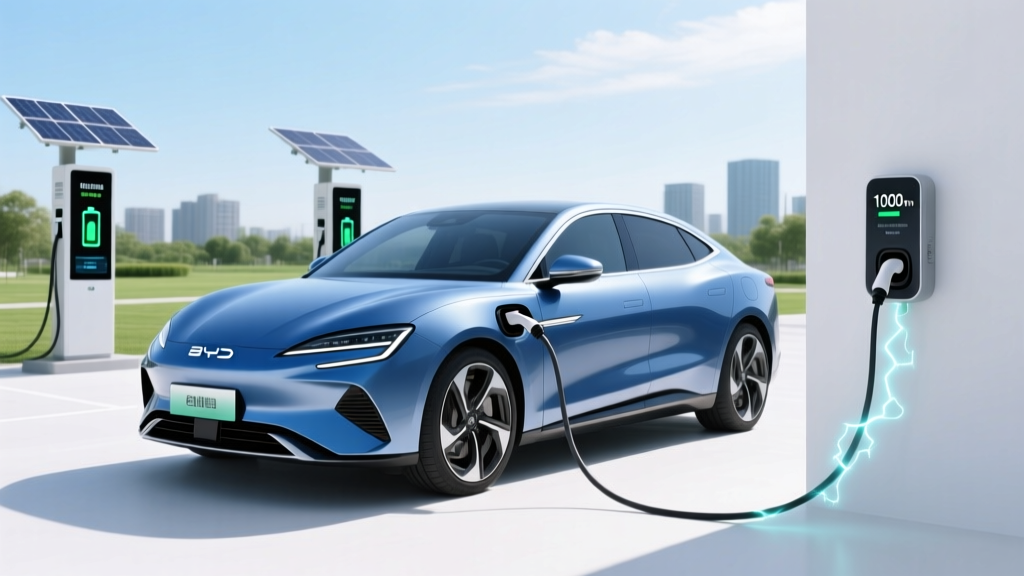
BYD's announcement of electric vehicles achieving a 1000 km range (roughly 620 miles) on a single charge has captured global headlines. These ultra-long-range EVs — enabled by BYD's next-generation Blade Battery cells with improved energy density and advanced LFP (lithium iron phosphate) chemistry — pack battery capacities estimated at 120–150 kWh usable. That's roughly double the battery size of a Tesla Model Y Long Range or Hyundai Ioniq 5.
But here's the reality check most coverage misses: a bigger battery doesn't just change how far you drive. It fundamentally changes how you charge. A 150 kWh battery charged on a standard 120V household outlet (Level 1) would take over 120 hours from empty to full. Even a typical 7.2 kW Level 2 home charger needs 20+ hours for a complete charge. If you're considering a BYD with 1000 km range — or any ultra-large-battery EV entering global markets — your charging infrastructure strategy needs to match the vehicle's ambition.
This guide breaks down exactly what charging an ultra-long-range BYD EV (or comparable large-battery EV) requires at home and on the road, with exact figures, costs, and equipment picks.
Charging Levels Explained: Speeds for a 150 kWh Battery
Before we get specific, let's clarify the critical distinction: kW (kilowatts) measures charging power — how fast energy flows into the battery. kWh (kilowatt-hours) measures battery capacity — how much energy the battery stores. A 150 kWh battery charged at 11.5 kW takes roughly 13 hours. The same battery charged at 150 kW takes roughly 1 hour (in theory; real charge curves taper — more on that below).
| Level | Voltage / Amps | Power (kW) | Miles of Range Added per Hour | 0–100% Time (150 kWh) | 10–80% Time (Est.) |
|---|---|---|---|---|---|
| Level 1 (Standard Outlet) | 120V / 12A | ~1.4 kW | ~3–4 mi/hr | ~107 hours | ~75 hours |
| Level 2 (Home / Workplace) | 240V / 40–48A | 7.2–11.5 kW | ~20–32 mi/hr | ~13–21 hours | ~9–15 hours |
| DC Fast Charging | 400V–800V DC | 50–350 kW (peak) | ~140–700 mi/hr (peak) | N/A (rarely 0–100%) | ~25–55 min (varies) |
Real-world note: DC fast charging never sustains peak power for the full session. A vehicle advertising "350 kW peak" may only hold that rate between 10–30% State of Charge (SoC), then taper to 150 kW, then 80 kW, then 40 kW above 80%. BYD's e-Platform 3.0 vehicles with 800V architecture (like the Seal and Han variants) can sustain higher rates longer than 400V competitors, but the taper is unavoidable. For a 150 kWh pack, expect a realistic 10–80% DC fast charge in 30–45 minutes at a 250–350 kW station, depending on battery temperature and preconditioning.
Home Charging Installation: What a 150 kWh EV Demands
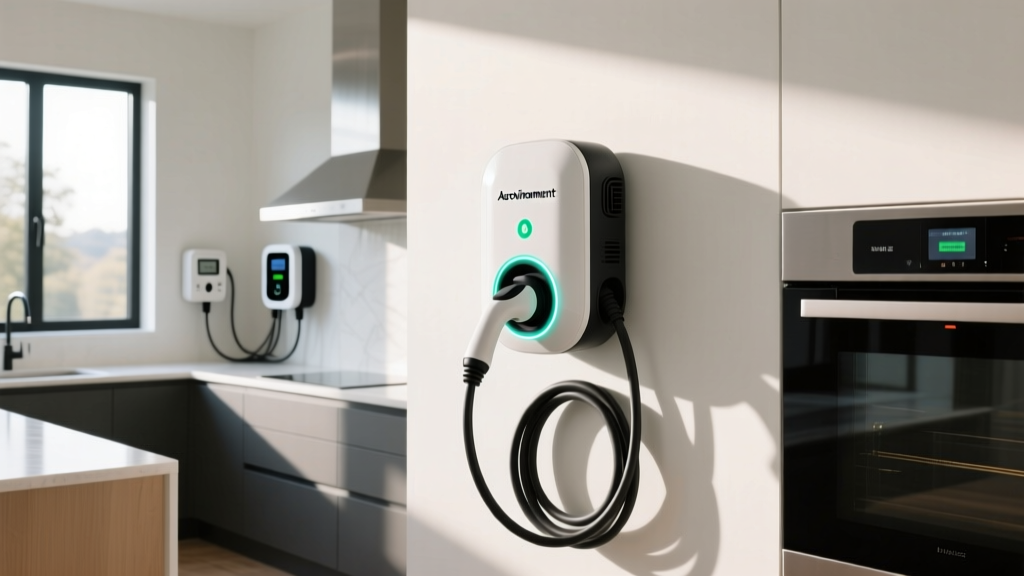
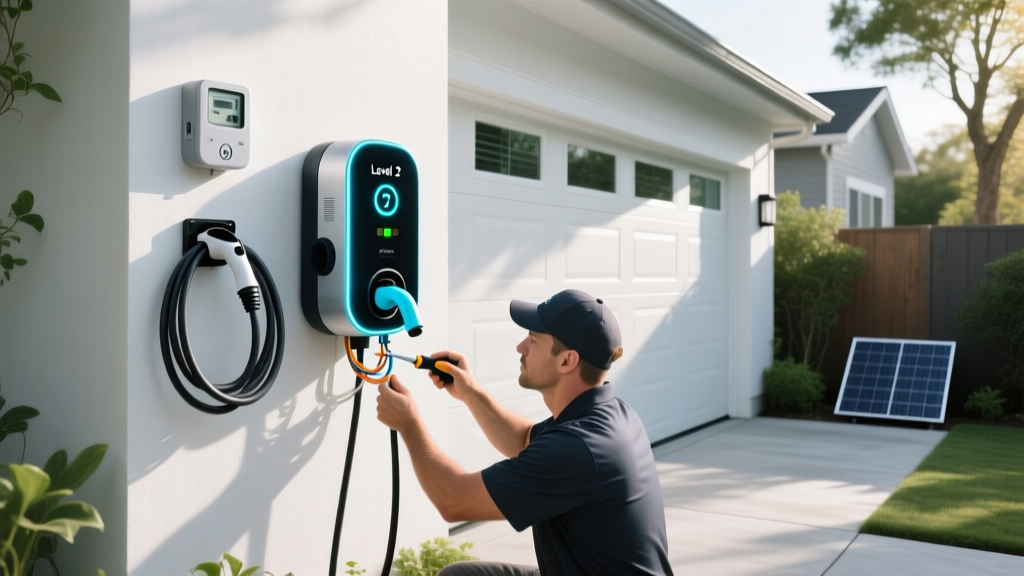
With a battery this large, Level 1 charging is effectively useless except for emergency trickle-top-ups. You need a robust Level 2 home installation. Here's what that involves.
Electrical Requirements
For a meaningful Level 2 charge rate on a 150 kWh battery, target a 240V / 48-amp dedicated circuit (delivering 11.5 kW continuous). This adds roughly 30 miles of range per hour — enough to recover a typical day's driving (30–40 miles) in just 1–1.5 hours, or fully recharge overnight if you didn't drain the entire pack.
- Circuit breaker: 60A (NEC requires circuits rated at 125% of continuous load; 48A continuous = 60A breaker)
- Wire gauge: 6 AWG copper (or 4 AWG aluminum) for runs up to ~50 feet; thicker for longer runs
- Panel capacity: Minimum 200A main service panel recommended. Homes with 100A panels will likely need a panel upgrade.
- GFCI protection: Required by NEC 2020+ for EV outlets in garages and all outdoor installations
- Permit: Required in virtually all US jurisdictions; typically $50–$200
Installation Cost Breakdown
| Component | Cost Range | Notes |
|---|---|---|
| Level 2 EVSE (charger hardware) | $400–$800 | 48A smart charger; see equipment picks below |
| Electrician labor (standard install) | $500–$1,500 | Assumes panel is nearby, short wire run |
| Electrician labor (complex install) | $1,500–$3,500 | Long wire run, conduit, wall penetration |
| Electrical panel upgrade (if needed) | $1,500–$4,000 | 100A → 200A upgrade; older homes often need this |
| Permit & inspection | $50–$250 | Varies by municipality |
| Total (no panel upgrade) | $950–$2,550 | Typical for newer homes with 200A service |
| Total (with panel upgrade) | $2,450–$6,550 | Common for homes built before 2000 |
Panel upgrade reality: If your home has a 100A main panel — common in houses built before the 1990s — adding a 60A EV circuit may exceed your panel's capacity, especially if you also run electric HVAC, a dryer, and an electric range. A licensed electrician will perform a load calculation per NEC Article 220 to determine if an upgrade is mandatory. Don't skip this step. Some utilities offer rebates of $500–$1,500 for panel upgrades paired with EV charger installation — check with your local provider.
Connector Compatibility: NACS, CCS, and BYD's Global Position
BYD vehicles sold in international markets (Europe, Southeast Asia, Australia, Latin America) predominantly use CCS2 connectors (the European/Asian DC fast charging standard) or GB/T (China's national standard). As of 2026, BYD has not entered the US consumer market, so there is no US-spec BYD with NACS (Tesla's North American Charging Standard) or CCS1.
However, if you're reading this from a market where BYD's 1000 km range vehicles are available — or if you're planning for future market entries — here's the connector landscape:
| Connector | Region | DC Fast Charge | Level 2 AC | Brands Using It |
|---|---|---|---|---|
| NACS (Tesla) | North America | Up to 350 kW (V4 Supercharger) | J3400 (NACS AC) | Tesla; Ford, GM, Rivian, Hyundai, others (2025+) |
| CCS1 | North America (legacy) | Up to 350 kW | J1772 | Pre-2025 non-Tesla EVs; phasing to NACS |
| CCS2 | Europe, Oceania, parts of Asia | Up to 350+ kW | Type 2 (Mennekes) | BYD (export), VW, BMW, most European brands |
| GB/T | China | Up to 600 kW (ChaoJi) | GB/T AC | BYD (domestic), NIO, XPeng, all China-market EVs |
| CHAdeMO | Legacy (Japan, some global) | Up to 400 kW (rare) | J1772 (with adapter) | Nissan Leaf (legacy); largely discontinued |
Adapter note: If you own a CCS1 vehicle and want access to Tesla Superchargers (now open to non-Tesla EVs at many locations), a CCS-to-NACS adapter is available from Tesla and third parties for $150–$250. BYD owners in CCS2 markets can use the rapidly expanding CCS2 public networks (Ionity, Shell Recharge, etc.) without adapters. Always verify adapter compatibility with your specific vehicle model and model year before purchasing.
Cost to Charge: Home vs. Public vs. Gas Comparison
One of the most compelling arguments for EVs — even those with massive batteries — is the per-mile energy cost. Here's how it breaks down for a 1000 km range BYD with a ~150 kWh battery, compared to a gasoline equivalent getting 28 MPG combined.
| Scenario | Rate ($/kWh) | Full 150 kWh Charge Cost | Cost per Mile (620 mi range) | Equivalent Gas Cost (28 MPG @ $3.40/gal) |
|---|---|---|---|---|
| Home (off-peak / time-of-use) | $0.08–$0.12 | $12–$18 | $0.02–$0.03 | $0.12/mi |
| Home (standard residential avg) | $0.15–$0.18 | $22.50–$27 | $0.04–$0.04 | $0.12/mi |
| Public Level 2 (workplace / retail) | $0.20–$0.35 | $30–$52.50 | $0.05–$0.08 | $0.12/mi |
| DC Fast Charging (public) | $0.35–$0.55 | $52.50–$82.50 | $0.08–$0.13 | $0.12/mi |
Key takeaway: At home on off-peak rates, a 1000 km BYD charges for roughly $12–$18 and delivers 620 miles — about 6–7× cheaper per mile than gasoline. Even at the most expensive DC fast chargers, the per-mile cost is roughly comparable to gas. The savings multiply if you have rooftop solar, where marginal charging cost approaches zero.
For perspective on real-world charging sessions: most drivers won't charge a 150 kWh battery from 0–100% in one sitting. A typical pattern is plugging in at 20% SoC at home overnight and waking up at 80–90% — costing roughly $10–$14 on off-peak residential rates and taking 8–10 hours on an 11.5 kW Level 2 charger.
Equipment Picks: Best Level 2 Chargers for Large-Battery EVs
For a 150 kWh battery, you want a charger that maximizes your overnight recovery window. Here are three proven 48A Level 2 units suited to ultra-large batteries.
ChargePoint Home Flex (2nd Gen)
- Power output: Up to 11.5 kW (48A @ 240V); adjustable down to 16A for lower-capacity panels
- Connector: J1772 (NACS adapter available separately)
- Cable length: 23 feet
- Smart features: Wi-Fi, scheduled charging (time-of-use optimization), Alexa/Google integration, energy tracking, OTA updates
- Indoor/Outdoor: NEMA 4 rated (indoor and outdoor)
- Price: ~$550–$650 (hardware only)
- Why it works for 150 kWh: Flexible amperage setting means you can match it precisely to your panel's available capacity. At full 48A, it recovers ~30 miles/hour — adequate for overnight replenishment of even the largest packs.
Emporia Level 2 EV Charger
- Power output: Up to 11.5 kW (48A @ 240V)
- Connector: J1772
- Cable length: 24 feet
- Smart features: Wi-Fi, integrates with Emporia Vue home energy monitor, solar-aware charging, time-of-use scheduling
- Indoor/Outdoor: NEMA 4 rated
- Price: ~$350–$450
- Why it works for 150 kWh: Best value in the 48A class. If you have solar panels, the Emporia can prioritize charging during peak solar production — effectively making your 1000 km range charges nearly free during sunny months.
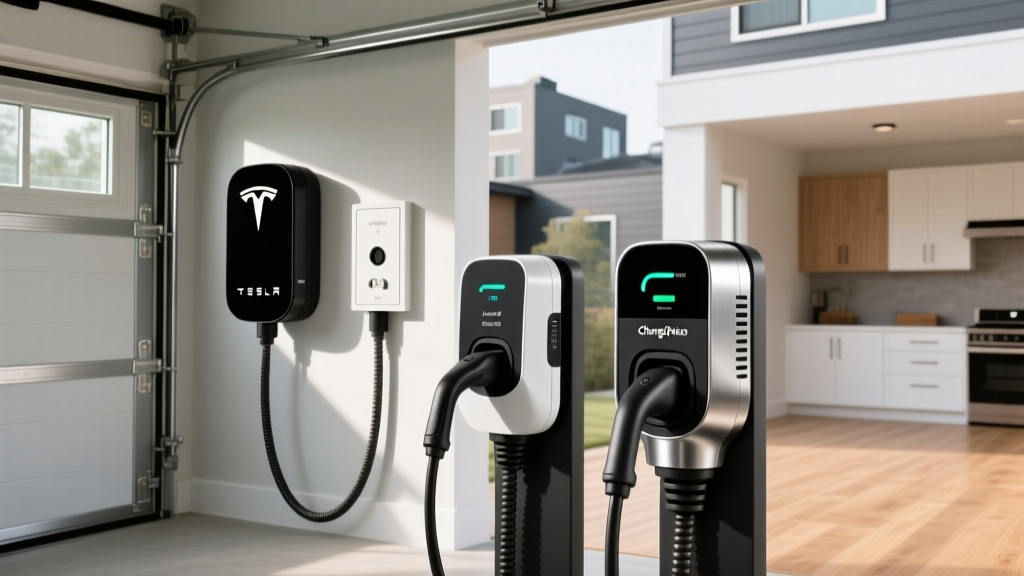
Tesla Wall Connector (NACS)
- Power output: Up to 11.5 kW (48A @ 240V)
- Connector: NACS (native Tesla); non-Tesla EVs require NACS-to-J1772 adapter or vehicle-side NACS inlet
- Cable length: 24 feet
- Smart features: Wi-Fi, OTA updates, load sharing (pair two units on one circuit), Power Sharing with Tesla Powerwall
- Indoor/Outdoor: NEMA 3R rated (indoor and outdoor, less sealed than NEMA 4)
- Price: ~$450–$500
- Why it works for 150 kWh: If you're in a NACS-market vehicle (or a BYD future US model with NACS), this is the cleanest ecosystem integration. Load sharing is valuable if you install two chargers in a two-EV household with a large combined battery capacity.
Hardwired vs. plug-in: All three chargers above are available in hardwired or NEMA 14-50 plug configurations. For 48A operation, hardwired is strongly recommended — a NEMA 14-50 outlet is rated for 50A but NEC derates continuous loads to 40A (9.6 kW max). Hardwiring eliminates the outlet as a failure point and allows the full 48A. Have your electrician install a hardwired connection unless you specifically need portability.
Safety, Code, and the Details That Matter
EV charging involves sustained high-current draw for hours — more like running an electric furnace than plugging in a phone. Safety isn't optional.
- Dedicated circuit: Your EV charger must have its own dedicated breaker — never share a circuit with other appliances. A 48A charger needs a 60A breaker with nothing else on it.
- GFCI protection: NEC 2020 and later requires GFCI (Ground Fault Circuit Interrupter) protection for EV charging outlets in garages and all outdoor locations. Hardwired installations may have different requirements depending on jurisdiction — your electrician will confirm.
- Outdoor rating: If your charger is installed outdoors, it must carry at minimum a NEMA 3R rating (rain protection). NEMA 4 (splash-proof) is preferred for exposed locations. All three picks above qualify.
- Cable management: A 23–24 foot cable is heavy when coiled. Install a cable holster or hook rated for the cable's weight to prevent strain on the connector and wall mount.
- Utility notification: Many utilities require you to notify them when installing an EV charger, especially one drawing 48A+. Some offer dedicated EV rate plans with lower off-peak pricing — this can cut your charging costs by 30–50%.
- Permit & inspection: Skipping the permit to save $100 is false economy. An unpermitted installation can void your homeowner's insurance in the event of an electrical fire and may cause issues at home sale. Per the National Electrical Code (NEC), all EV charging circuits must be permitted and inspected.
DC Fast Charging a 150 kWh Battery: Realistic Expectations
When you do need to road-trip a 1000 km range BYD, the size of the battery works both for and against you.
In your favor: A 150 kWh battery means you can realistically drive 450–500 miles before needing to charge (accounting for real-world highway efficiency loss of ~20% from the rated 620 miles, plus a comfort buffer). That's 7–8 hours of driving — meaning most people will need only one charging stop on a full day's road trip.
Against you: When you do stop, you're replenishing a lot of energy. Here's what 10–80% DC fast charging looks like on a 150 kWh pack:
| Charger Peak Power | Estimated Sustained Avg Power (10–80%) | Approx. 10–80% Time | Miles Added |
|---|---|---|---|
| 350 kW station | ~220–260 kW avg | ~28–35 minutes | ~380–430 miles |
| 250 kW station | ~170–200 kW avg | ~35–45 minutes | ~350–400 miles |
| 150 kW station | ~110–130 kW avg | ~50–65 minutes | ~300–350 miles |
| 50 kW station (legacy) | ~45 kW avg | ~100–120 minutes | ~250 miles |
Preconditioning matters: BYD's e-Platform 3.0 includes battery thermal preconditioning — if you set a DC fast charger as your navigation destination, the vehicle will warm or cool the battery to optimal temperature before arrival. This can improve peak charge acceptance by 20–40% in cold weather, shaving 5–10 minutes off your stop. Always precondition before fast charging when possible.
Frequently Asked Questions
How much does it cost to install a home EV charger for a BYD 1000 km EV?
Expect $950–$2,550 for a standard installation in a home with a 200A panel and short wire run. If your home needs a panel upgrade (100A to 200A), total costs rise to $2,450–$6,550. The charger hardware itself runs $350–$650 for a quality 48A smart unit.
How fast will each charging level add range to a 150 kWh battery?
Level 1 (120V): ~3–4 miles per hour. Level 2 (240V, 48A): ~30 miles per hour. DC fast charging (250–350 kW): 350–700 miles per hour at peak, though the rate tapers significantly above 80% SoC. For a 1000 km battery, Level 2 at home is your daily workhorse; DC fast charging is for road trips.
Which connector is compatible with a BYD EV?
BYD vehicles in export markets use CCS2 (Europe, Oceania, Southeast Asia) or GB/T (China). BYD does not currently sell consumer vehicles in the US market. If BYD enters the US, expect NACS or CCS1 compatibility. Always confirm the connector type for your specific market and model year before purchasing charging equipment.
How much does charging cost per mile vs. gasoline?
At home on off-peak electricity ($0.10/kWh), a 150 kWh BYD costs roughly $0.02–$0.03 per mile — about 4–6× cheaper than gasoline at $3.40/gallon in a 28 MPG vehicle ($0.12/mile). Even on the most expensive public DC fast chargers ($0.50/kWh), the cost is roughly $0.13/mile — comparable to gas. Most charging happens at home, where savings are greatest.
What electrical upgrades might I need?
The most common upgrade is a main panel replacement from 100A to 200A service, needed in many homes built before 2000. This costs $1,500–$4,000. You may also need new conduit, a longer wire run (increasing wire gauge and cost), or a sub-panel if your main panel is full. A licensed electrician will perform a load calculation to determine exact requirements. Check with your utility — some offer rebates of $500–$1,500 for panel upgrades tied to EV adoption.
Sources: National Fire Protection Association — NEC Standards, US Department of Energy — Home EV Charging, BYD Global — Blade Battery Technology.