BYD Charging in the US: What You Need to Know in 2026
BYD has become the world's largest plug-in vehicle manufacturer by volume, and while its presence in the United States remains limited to commercial vehicles and buses as of early 2026, US-based owners of imported BYD models, fleet operators, and buyers anticipating a broader consumer rollout need a clear picture of how BYD charging works on American infrastructure. This guide covers every layer of the charging stack — from a standard 120V wall outlet to 150+ kW DC fast chargers — with exact kW figures, real-world charge times, installation costs, and connector compatibility for BYD's global lineup including the Atto 3, Dolphin, Seal, and Seagull.
Charging Levels Explained: How Fast Will Each Level Add Range?
Every BYD EV sold globally supports three charging tiers. The actual miles-per-hour added depends on the vehicle's efficiency (typically 3.0–4.0 miles per kWh for BYD's Blade Battery models) and the sustained power delivery, not just the peak kW rating.
| Level | Voltage / Amperage | Max Power (kW) | Miles of Range Added per Hour | Best For |
|---|---|---|---|---|
| Level 1 | 120V / 12A | ~1.4 kW | 3–5 mi/hr | Overnight top-ups, PHEVs, emergencies |
| Level 2 | 240V / 32–48A | 7.7–11.5 kW | 25–44 mi/hr | Daily home charging, workplace |
| DC Fast Charge | 400–800V DC | Up to 150 kW (model-dependent) | 180–350+ mi/hr (peak) | Road trips, rapid top-ups |
Real-world charge time examples (10–80% SoC):
- BYD Dolphin (60.4 kWh LFP Blade Battery, 11 kW onboard AC): Level 2 at 11 kW takes roughly 4.5 hours for a 10–80% session. On an 80 kW DC fast charger, expect 10–80% in approximately 30–35 minutes, with the charge curve tapering significantly past 80%.
- BYD Seal (82.5 kWh LFP Blade Battery, 150 kW DC peak): Level 2 at 11 kW requires about 5.5 hours for 10–80%. On a 150 kW DC fast charger, 10–80% takes roughly 26–30 minutes. Peak power is sustained to around 55–60% SoC before tapering.
- BYD Atto 3 (58.56 kWh LFP, 80 kW DC peak): Level 2 at 7.4 kW (single-phase markets) or 11 kW (where supported) fills 10–80% in 5–6 hours. DC fast charging 10–80% takes approximately 35–40 minutes at an 80 kW station.
Home Charger Installation: Electrical Requirements and Costs
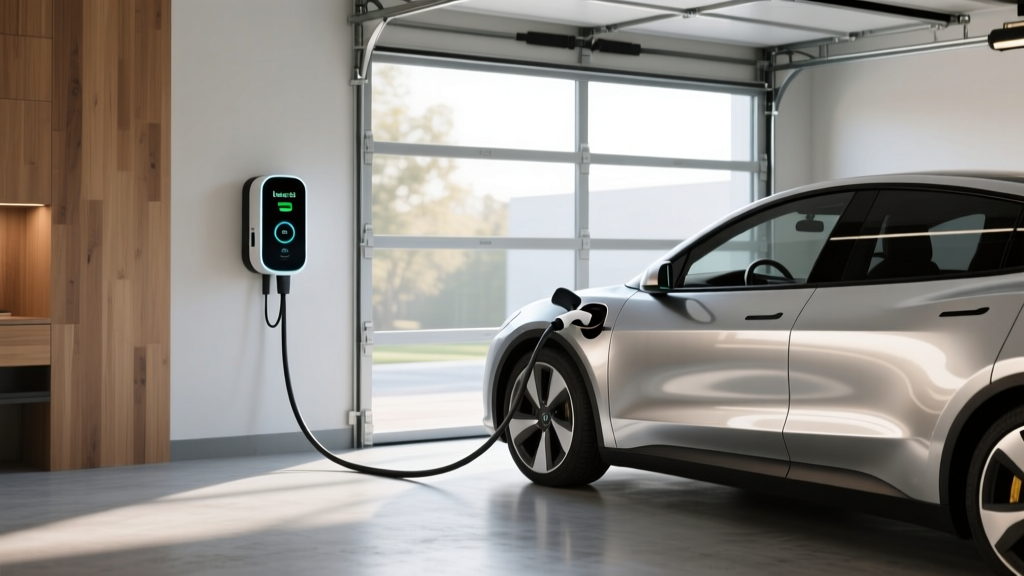
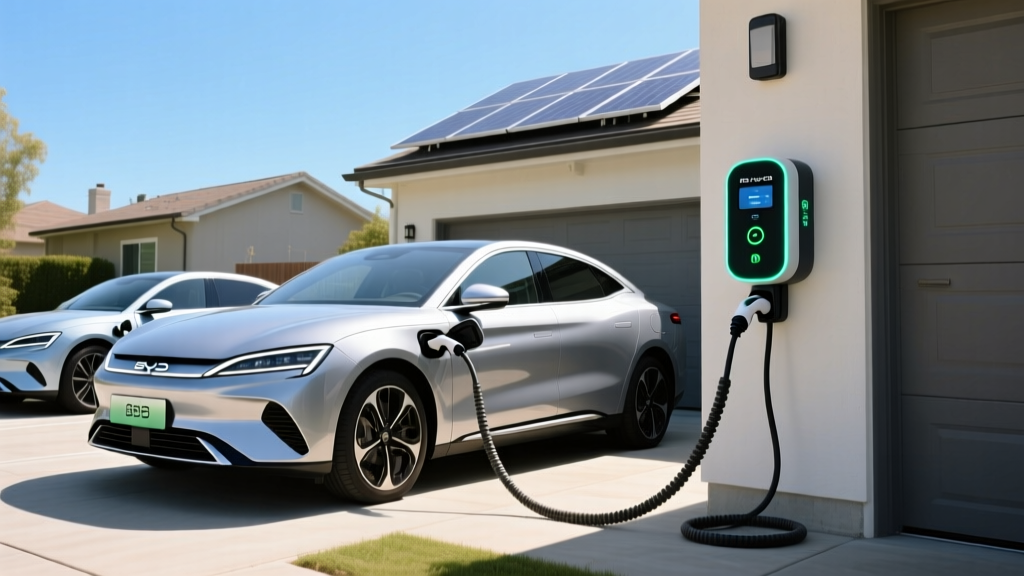
Installing a Level 2 home charger for a BYD EV requires a dedicated 240V circuit, typically 40A or 50A, installed by a licensed electrician. The BYD Seal's 11 kW onboard charger benefits from a 48A circuit (delivering up to 11.5 kW), while the Atto 3 and Dolphin at 7–11 kW can use a 40A circuit.
What Electrical Upgrades Might I Need?
Most modern homes with a 200A electrical panel can accommodate a 40–50A dedicated EV circuit without a panel upgrade. However, older homes with 100A service or panels already near capacity (common with electric ranges, dryers, and HVAC) may require:
- Panel upgrade from 100A to 200A: This is the single largest cost variable and is non-negotiable if your panel lacks spare amperage headroom.
- Load management device: An alternative to panel upgrades, devices like the Emporia Smart Charger with load-sensing can dynamically reduce charger amperage when household demand spikes, avoiding a full panel replacement.
- New conduit run: If your garage or parking spot is far from the panel (100+ feet), conduit and wire costs increase significantly.
| Item | Typical Cost Range | Notes |
|---|---|---|
| Level 2 charger (hardware) | $300–$700 | Varies by brand, power output, smart features |
| Electrician labor (standard install) | $400–$1,200 | Depends on panel proximity, conduit run length |
| Permit and inspection | $50–$250 | Required by most local jurisdictions |
| Panel upgrade (if needed) | $1,500–$3,500 | 100A to 200A; only if existing panel lacks capacity |
| Total (no panel upgrade) | $750–$2,150 | Most common scenario for newer homes |
| Total (with panel upgrade) | $2,250–$5,650 | Older homes with 100A service |
Safety and Code Considerations
- Dedicated circuit: NEC Article 625 requires EV charging equipment to be on its own dedicated circuit — no sharing with other appliances.
- GFCI protection: The 2020 NEC and later editions require GFCI (Ground Fault Circuit Interrupter) protection for all EV receptacles. Most hardwired chargers have built-in ground-fault protection; receptacle-based setups need a GFCI breaker.
- Outdoor rating: If your charger is installed outside, ensure it carries a NEMA 4 or IP65 weather-resistance rating. All recommended units below meet this standard.
- Hardwired vs. plug: Hardwired installations (no plug) support up to 48A continuous and avoid the 80% derating rule that limits NEMA 14-50 receptacles to 40A continuous draw. For 11 kW charging on the BYD Seal, hardwired at 48A is the preferred approach.
Connector Compatibility: CCS1, NACS, and Adapter Needs for BYD
BYD vehicles sold in international markets (Europe, Australia, Southeast Asia, Latin America) use the Type 2 AC connector and the CCS2 DC fast-charge connector. This is different from the US-standard CCS1 and the Tesla/NACS connector. Here's how that affects US-based BYD owners or importers:
| Connector Type | Region | BYD Compatibility | Adapter Needed? |
|---|---|---|---|
| CCS1 (US standard) | North America | Not native on current BYD models | Yes — CCS2-to-CCS1 DC adapter required |
| NACS (Tesla standard) | North America | Not native | Yes — CCS2-to-NACS adapter for Supercharger access |
| CCS2 (EU/International) | Europe, Australia, Asia | Native on all global BYD EVs | No |
| GB/T | China domestic | Native on China-market BYD | Yes — GB/T-to-CCS adapter (rare, expensive) |
| Type 2 AC | Europe, international | Native on global BYD models | Type 2-to-J1772 cable for US Level 2 stations |
Practical implication for US owners: If you're operating a BYD vehicle in the US (imported, fleet, or future consumer model), you'll need a CCS2-to-CCS1 adapter for Electrify America and most non-Tesla DC fast chargers, and a CCS2-to-NACS adapter for Tesla Supercharger access. For home Level 2 charging, a Type 2-to-J1772 cable or a dedicated Type 2 wallbox solves AC charging. As of 2026, quality CCS2-to-CCS1 adapters from brands like Lectron and Tesla's official CCS adapter (modified for CCS2 vehicles) run $150–$350.
How Much Does BYD Charging Cost Per Mile vs. Gas?
Charging cost depends entirely on your electricity rate and whether you're charging at home, at a public Level 2 station, or at a DC fast charger. Here's a breakdown using the BYD Seal's efficiency of approximately 3.2 miles per kWh (roughly 31 kWh/100 mi) and a gasoline comparison vehicle at 30 MPG combined.
| Scenario | Rate ($/kWh) | Cost per Mile (BYD Seal) | Annual Cost (12,000 mi) |
|---|---|---|---|
| Home off-peak (utility time-of-use) | $0.09–$0.13 | $0.028–$0.040 | $336–$480 |
| Home standard rate (national avg) | $0.16 | $0.050 | $600 |
| Public Level 2 (ChargePoint, EVgo) | $0.25–$0.49 | $0.078–$0.153 | $936–$1,836 |
| DC Fast Charge (public, peak) | $0.35–$0.60 | $0.109–$0.188 | $1,308–$2,256 |
| Gasoline (30 MPG, $3.40/gal) | — | $0.113 | $1,356 |
The bottom line: Home charging on an off-peak rate is 60–75% cheaper per mile than gasoline. However, exclusive reliance on DC fast charging at $0.50+/kWh can actually exceed gasoline costs on a per-mile basis. This is why home Level 2 charging is the economic backbone of EV ownership — a point that applies to BYD's LFP-equipped vehicles just as it does to any other BEV.
Recommended Level 2 Chargers for BYD EVs
Because BYD vehicles use the Type 2 AC inlet internationally, US-based owners have two paths: purchase a Type 2 wallbox directly, or use a J1772 charger with a J1772-to-Type 2 adapter cable. Below are specific charger recommendations with power output, cable length, smart features, and pricing.
Emporia Vue Smart Charger (48A)
- Power output: 11.5 kW at 48A / 240V (hardwired)
- Connector: J1772 (use J1772-to-Type 2 adapter for BYD)
- Cable length: 24 ft
- Smart features: Wi-Fi, app scheduling, real-time energy monitoring, load management with Emporia Vue panel sensor
- Price: ~$399 (charger only)
- Best for: Budget-conscious owners who want load management to avoid panel upgrades
ChargePoint Home Flex (50A)
- Power output: 12 kW at 50A / 240V (NEMA 14-50 or hardwired)
- Connector: J1772 (adapter needed for BYD Type 2 inlet)
- Cable length: 23 ft
- Smart features: Wi-Fi, Alexa integration, amperage configurable via app (16A–50A), scheduled charging
- Price: ~$699
- Best for: Flexible amperage adjustment for older electrical panels
Wallbox Pulsar Plus (40A)
- Power output: 9.6 kW at 40A / 240V
- Connector: Type 2 (available in international version — direct BYD fit)
- Cable length: 25 ft
- Smart features: Wi-Fi + Bluetooth, Power Sharing (daisy-chain two units on one circuit), solar integration
- Price: ~$649 (Type 2 version)
- Best for: BYD owners who want a native Type 2 connector without adapters
BYD Battery Chemistry and Charging Best Practices
BYD's defining technology is the LFP (Lithium Iron Phosphate) Blade Battery, used across the Dolphin, Atto 3, Seal, and Seagull. LFP chemistry has distinct charging implications compared to the NMC (Nickel Manganese Cobalt) cells used in many competing EVs:
- 100% charging is safe: Unlike NMC batteries, which degrade faster when regularly charged to 100%, LFP cells tolerate — and actually benefit from — periodic full charges. BYD recommends charging to 100% at least once per week to allow the Battery Management System (BMS) to recalibrate cell balancing.
- DC fast-charge taper is gentler: LFP cells maintain relatively flat internal resistance, meaning the charge curve taper above 80% is less severe than NMC. You'll still see a slowdown, but it's less dramatic — a BYD Seal might sustain 40–50 kW from 80–95% SoC, where an NMC vehicle might drop to 15–20 kW.
- Cold-weather charging penalty: LFP chemistry is more sensitive to low temperatures than NMC. Below 32°F (0°C), expect DC fast-charge speeds to drop 30–50% until the battery warms up. BYD's thermal management system includes battery preconditioning when navigation is set to a charger, but the effect is less aggressive than Tesla's or Hyundai's heat-pump-based systems. In sub-freezing conditions, budget an extra 10–15 minutes for a 10–80% session.
- Longevity: LFP cells typically sustain 3,000+ full charge cycles before dropping below 80% State of Health (SoH) — roughly double the cycle life of NMC. For a BYD Seal with a 260-mile real-world range, that's approximately 780,000 miles of theoretical cycle life before significant degradation. BYD's battery warranty covers 8 years / 100,000 miles (varies by market), with a capacity retention threshold of 70%.
Frequently Asked Questions About BYD Charging
How much does it cost to install a home EV charger for a BYD?
A standard Level 2 home charger installation (40–50A, 240V) costs between $750 and $2,150 when no panel upgrade is needed. This includes the charger hardware ($300–$700), electrician labor ($400–$1,200), and local permit fees ($50–$250). If your home has a 100A panel that needs upgrading to 200A, add $1,500–$3,500. Always get a load calculation from your electrician before assuming your panel has headroom.
Can I use a Tesla Supercharger with a BYD vehicle?
Not directly. BYD vehicles use the CCS2 connector, while Tesla Superchargers use NACS. You would need a CCS2-to-NACS adapter. As of 2026, Tesla has opened select Superchargers to non-Tesla EVs via the Magic Dock (which provides a CCS1 connection), but a CCS2-to-CCS1 adapter would still be required for BYD vehicles. Availability varies by station — check the Tesla app for "Charge Your Non-Tesl vehicle" compatible locations.
Does BYD's Blade Battery support 800V ultra-fast charging?
As of early 2026, BYD's consumer models (Seal, Dolphin, Atto 3) operate on a 400V architecture with DC fast-charge peaks of 80–150 kW. BYD has announced an 800V platform for future models, which would enable 300+ kW charging, but no production vehicles with this architecture are currently on sale. The BYD Blade Battery page details current specifications.
Is Level 1 (120V) charging practical for a BYD EV?
Only as a supplement. At 1.4 kW, Level 1 adds roughly 3–5 miles of range per hour. A BYD Dolphin with a 60 kWh battery would take over 40 hours for a full charge. If your daily driving is under 20 miles and you can leave the car plugged in for 10+ hours overnight, Level 1 can maintain your charge. For anything beyond minimal daily use, a Level 2 installation is strongly recommended.
How does BYD charging cost compare to a gas car?
At a national average home electricity rate of $0.16/kWh, charging a BYD Seal costs approximately $0.05 per mile — roughly 55% less than a 30 MPG gas car at $3.40/gallon ($0.113/mile). On off-peak utility rates ($0.09–$0.13/kWh), the cost drops to $0.03–$0.04 per mile. However, exclusive DC fast charging at $0.50+/kWh can push EV costs above gasoline, making home charging the critical economic advantage.
Sources: Battery specifications and charging data from BYD Global official site. Efficiency and charging comparisons reference fueleconomy.gov (US EPA). Electrical code requirements per NEC Article 625 — consult a licensed electrician for your specific installation. Federal EV tax credit rules under IRS §30D are subject to MSRP caps, income limits, and battery-sourcing requirements; see IRS clean vehicle credits for current eligibility. Note: BYD consumer vehicles are not widely available in the US market as of 2026; this guide applies to imported, fleet, and future US-market models.