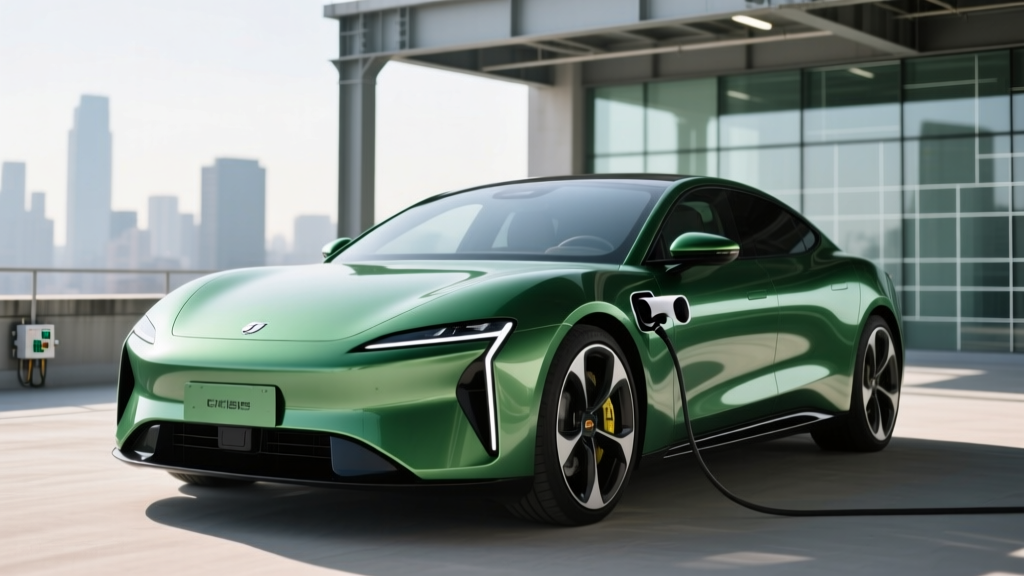
BYD's expanding global footprint means more drivers are asking a practical question: how do I actually charge a BYD electric vehicle at home and on the road? Whether you own a BYD Atto 3, Dolphin, Seal, or are considering one of the brand's upcoming models for markets where it's available, understanding charger compatibility, installation requirements, and real-world charging costs is essential before you plug in.
This guide covers everything a BYD EV owner or prospective buyer needs to know about BYD charger options — from Level 1 trickle charging to DC fast charging, home installation costs, connector standards, and how charging a BYD compares to fueling a gas car. All figures reflect 2026 model-year specifications and current electrical codes.
Understanding BYD Charger Levels: Speeds and Range Added
EV charging is measured in kilowatts (kW), which represents power flow rate — not to be confused with kilowatt-hours (kWh), which measures total energy stored in the battery. Think of kW as how fast water flows from a hose, and kWh as the total volume in the bucket. This distinction matters because charger kW ratings determine your wait time, while your BYD's battery kWh capacity determines how far you can drive.
| Level | Voltage / Amperage | Max Power (kW) | Miles of Range Added per Hour | Typical Use Case |
|---|---|---|---|---|
| Level 1 | 120V / 12A | 1.4 kW | 3–5 miles | Overnight top-up, emergency |
| Level 2 (Home/Public) | 240V / 32–48A | 7.2–11.5 kW | 20–40 miles | Daily home charging, workplace |
| DC Fast Charging | 400–800V DC | 80–150+ kW | 150–400+ miles | Road trips, highway corridors |
Most BYD models, including the Atto 3 (60.5 kWh LFP Blade Battery) and the Seal (82.5 kWh LFP), accept up to 7 kW on AC Level 2 charging (single-phase) or up to 11 kW on three-phase AC where available. DC fast charge capability varies: the Atto 3 peaks at approximately 80 kW, while the Seal can accept up to 150 kW on compatible chargers.
How Much Does It Cost to Install a Home BYD Charger?
Installing a dedicated Level 2 home charger for your BYD involves three cost components: the charging equipment itself, licensed electrician labor, and local permits. Total costs vary significantly based on your home's electrical panel capacity and the distance from panel to charger location.
| Component | Low-End Estimate | High-End Estimate | Notes |
|---|---|---|---|
| Level 2 Charger Unit (32A–48A) | $350 | $750 | Smart Wi-Fi chargers with cable management |
| Electrician Labor (new 240V circuit) | $500 | $1,500 | Depends on run length, wall type, conduit |
| Electrical Permit | $50 | $200 | Varies by municipality |
| Panel Upgrade (if needed) | $1,500 | $4,000+ | Required if panel is at capacity or under 200A |
| Total (no panel upgrade) | $900 | $2,450 | Most homes with 200A service |
| Total (with panel upgrade) | $2,400 | $6,450+ | Older homes with 100A or 150A panels |
What Electrical Upgrades Might I Need?
A Level 2 BYD charger running at 32A draws continuous power on a dedicated 40A breaker (National Electrical Code requires circuits rated at 125% of continuous load). A 48A charger needs a 60A breaker. Your electrician will verify:
- Panel capacity: A 200-amp service panel is standard in modern homes and typically supports a 40–60A EV circuit. Homes with 100A or 150A panels — common in builds before 2000 — may need an upgrade.
- Available breaker slots: Physical space in your panel for a new double-pole breaker.
- Wire gauge: 6 AWG copper for 40A circuits; 4 AWG for 60A circuits, run in conduit where exposed.
- GFCI protection: NEC 2020 and later require GFCI protection for EV charging outlets in garages and all outdoor locations.
Always hire a licensed electrician and pull a permit. Unpermitted EV charger installations can void home insurance claims and create fire hazards. The National Electrical Contractors Association maintains a directory of certified installers.
BYD Charger Connector Compatibility: NACS, CCS, and Adapters
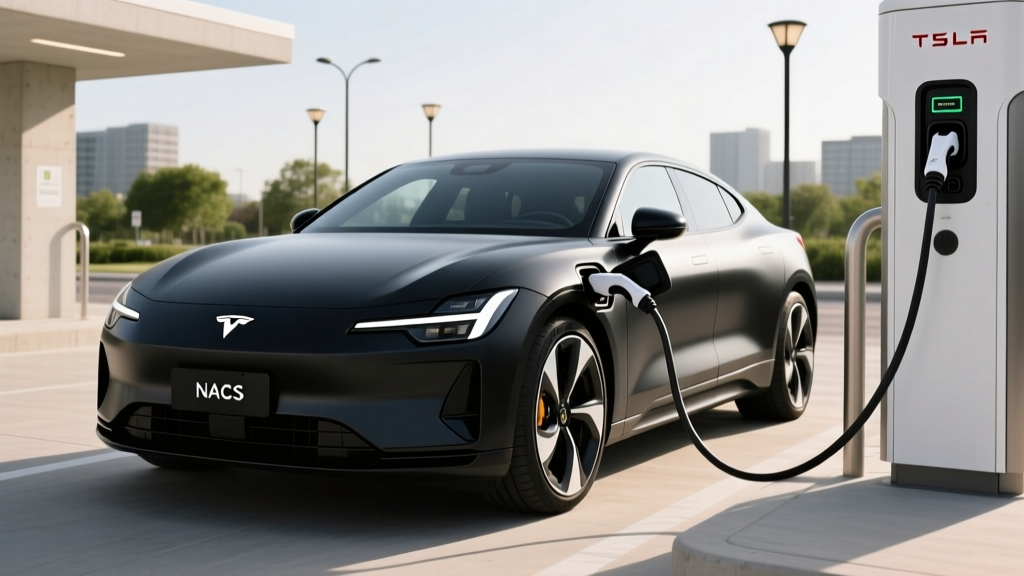
BYD's connector strategy depends heavily on your market. In China and many export markets, BYD vehicles use the GB/T standard. In Europe, BYD models ship with CCS2 (the European variant). For markets adopting NACS (the Tesla-designed North American Charging Standard), BYD has signaled future compatibility, but current models sold outside China primarily use CCS or GB/T.
| Connector Standard | Region | BYD Models Using It | Adapter Needed? |
|---|---|---|---|
| GB/T | China | All domestic BYD EVs | Yes — for CCS/NACS networks |
| CCS2 | Europe, Australia, parts of Asia | Atto 3, Dolphin, Seal, Han | No — native on most EU networks |
| CCS1 | South America, South Korea | Select export models | No on CCS1 networks |
| NACS | North America (future) | Announced for upcoming models | CCS-to-NACS adapter for current |
If you're importing a BYD or driving one in a market where CCS and NACS infrastructure coexist, a CCS-to-NACS adapter (such as those from Lectron or A2Z) allows access to Tesla Supercharger networks. Expect to pay $150–$300 for a quality adapter rated for DC fast charging. Always verify the adapter's kW rating matches your vehicle's maximum charge acceptance.
Charging Cost per Mile: BYD vs. Gas Car
One of the strongest arguments for switching to a BYD EV is the per-mile energy cost. Below, we compare charging scenarios against a typical compact gas SUV averaging 28 MPG combined (similar to a Toyota RAV4).
| Scenario | Rate | BYD Atto 3 Cost/Mile | Gas SUV Cost/Mile (28 MPG) |
|---|---|---|---|
| Home charging (off-peak) | $0.12/kWh | $0.036 | $0.125 |
| Home charging (peak) | $0.22/kWh | $0.066 | $0.125 |
| Public Level 2 | $0.30/kWh | $0.090 | $0.125 |
| DC Fast Charging | $0.45/kWh | $0.135 | $0.125 |
Assumptions: BYD Atto 3 efficiency rated at approximately 3.0 miles/kWh (roughly 100 MPGe combined per fueleconomy.gov equivalent testing). Gas price at $3.50/gallon. Your local electricity rates and time-of-use plans will shift these numbers — many utilities offer EV-specific off-peak rates below $0.10/kWh, making home charging even cheaper.
At off-peak home rates, a BYD Atto 3 owner driving 12,000 miles annually spends roughly $432/year on electricity versus $1,500/year on gasoline — a savings of over $1,000 annually. The crossover point where DC fast charging becomes more expensive than gas occurs at approximately $0.42/kWh, which is above most network pricing but worth monitoring on road trips.
Charging Time Examples for BYD Battery Sizes
BYD's Blade Battery (LFP chemistry) comes in several capacities across the lineup. Here's what charging looks like in real-world scenarios:
| Model | Battery (kWh usable) | Level 1 (1.4 kW) | Level 2 (7 kW) | DC Fast 10–80% |
|---|---|---|---|---|
| BYD Dolphin | 44.9 kWh (LFP) | ~32 hours | ~6.5 hours | ~29 min (at 60 kW peak) |
| BYD Atto 3 | 60.5 kWh (LFP) | ~43 hours | ~8.5 hours | ~40 min (at 80 kW peak) |
| BYD Seal | 82.5 kWh (LFP) | ~59 hours | ~12 hours | ~28 min (at 150 kW peak) |
Level 2 charging at home is the practical daily solution for all BYD models — even the Seal's large 82.5 kWh battery refills overnight if you start charging by early evening. DC fast charging times assume optimal battery temperature (preconditioned) and a charger capable of delivering the vehicle's peak rate. Cold weather (below 40°F / 4°C) can add 15–30% to DC fast charge times because the battery management system limits charge rate to protect the LFP cells.
Recommended BYD Charger Equipment for Home Use
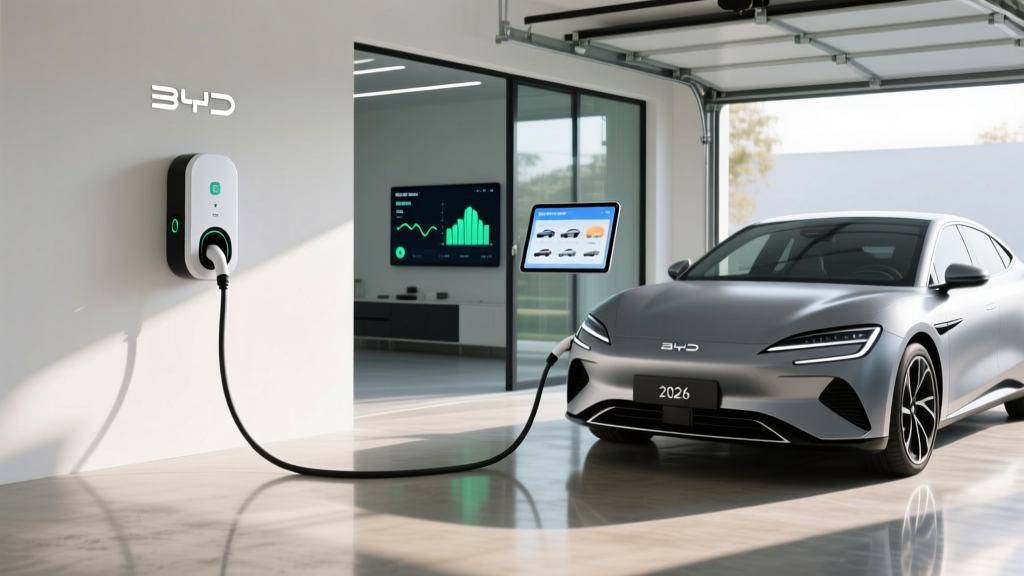
While BYD offers its own branded home wallbox in select markets (typically a 7 kW single-phase unit), third-party chargers often provide better smart features, longer cables, and broader compatibility. Here are proven options that work with BYD vehicles using a J1772 or Type 2 connector (depending on your market):
ChargePoint Home Flex (Level 2)
- Power Output: Up to 11.5 kW (48A) on a 60A circuit; adjustable down to 16A
- Connector: J1772 (NACS adapter available)
- Cable Length: 23 feet
- Smart Features: Wi-Fi, app scheduling, Alexa integration, energy tracking
- Price: ~$550 (unit only)
- Best for: BYD owners wanting flexible amperage and detailed energy data
Wallbox Pulsar Plus (Level 2)
- Power Output: Up to 9.6 kW (40A) on a 50A circuit
- Connector: J1772 / Type 2 (market-dependent)
- Cable Length: 25 feet
- Smart Features: Wi-Fi + Bluetooth, Power Sharing (daisy-chain two units), solar integration
- Price: ~$450
- Best for: Compact size, solar-panel homes, dual-EV households
Emporia Vue EV Charger (Level 2)
- Power Output: Up to 11.5 kW (48A)
- Connector: J1772
- Cable Length: 24 feet
- Smart Features: Whole-home energy monitoring integration, time-of-use scheduling
- Price: ~$400
- Best for: Budget-conscious buyers who want energy monitoring
All three chargers are NEMA 4 rated for outdoor installation and UL-listed for safety. For BYD vehicles limited to 7 kW AC charging, even a 32A (7.7 kW) charger delivers maximum speed — there's no benefit to installing a 48A unit unless you plan to charge a second EV with higher AC acceptance in the future.
Safety, Code, and Maintenance Considerations
Proper BYD charger installation isn't just about getting power to your car — it's about doing so safely and legally:
- Dedicated circuit: Your Level 2 charger must be on its own dedicated breaker — no sharing with appliances or outlets.
- GFCI protection: Required for all EV charging receptacles under NEC Article 625. Hardwired chargers (no plug) may be exempt in some jurisdictions, but GFCI is best practice regardless.
- Outdoor rating: If mounting outside, ensure both the charger and any receptacle carry a NEMA 4 (weatherproof) rating.
- Cable management: Use a holster or retraction system to prevent trip hazards and cable damage from being run over.
- Surge protection: Consider a whole-panel surge protective device (SPD), especially in areas with frequent lightning or grid instability. LFP batteries are robust, but onboard chargers are sensitive electronics.
Maintenance is minimal: inspect the cable annually for cracking or abrasion, keep the connector pins clean and dry, and update charger firmware when prompted via the companion app. Most quality Level 2 units carry 3-year warranties.
BYD Charger FAQ
How much does it cost to install a home BYD charger?
Expect $900–$2,450 for a standard installation (equipment + electrician + permit) on a home with adequate 200A panel capacity. Homes requiring a panel upgrade should budget $2,400–$6,450+. The single biggest variable is whether your existing electrical panel can accommodate a new 40–60A double-pole breaker.
How fast will each charging level add range to my BYD?
Level 1 (120V) adds roughly 3–5 miles per hour — impractical as a primary strategy. Level 2 (240V, 7 kW) adds approximately 20–25 miles per hour on a BYD Atto 3, fully replenishing the battery overnight. DC fast charging adds 150+ miles in 30 minutes at peak rate, but taper above 80% SoC means the last 20% takes nearly as long as the first 70%.
Which connector and charger is compatible with my BYD EV?
In Europe and Australia, BYD models use CCS2 for DC and Type 2 for AC. In China, GB/T is standard. If you need to access NACS (Tesla Supercharger) networks, a CCS-to-NACS DC adapter ($150–$300) is required. Always match the adapter's rated kW to your BYD's maximum DC acceptance rate.
How much does charging a BYD cost per mile compared to gas?
At home off-peak rates ($0.12/kWh), a BYD Atto 3 costs approximately $0.036/mile — roughly one-quarter the cost of a 28 MPG gas SUV at $3.50/gallon ($0.125/mile). Even at public DC fast charger rates ($0.45/kWh), the BYD is only marginally more expensive per mile than gas. Most charging happens at home, where savings are greatest.
What electrical upgrades might I need for a BYD home charger?
The most common upgrade is a panel service increase from 100A or 150A to 200A, costing $1,500–$4,000+. You may also need a new conduit run if your panel is far from the garage or parking spot (long wire runs increase cost). A licensed electrician can perform a load calculation to determine if your current panel supports a 40–60A EV circuit without an upgrade.
Does BYD's LFP Blade Battery need special charging care?
LFP (lithium iron phosphate) batteries tolerate regular 100% charging better than NMC chemistries — BYD actually recommends periodic full charges to recalibrate the battery management system. However, for daily driving, charging to 80–90% and using DC fast charging only when needed will maximize long-term battery health. The BYD Blade Battery carries an 8-year/100,000-mile warranty (varies by market) with a capacity retention threshold of 70%.
For the latest BYD specifications and market availability, consult BYD's official global site. For electrical code requirements, reference the National Fire Protection Association's NEC resources.