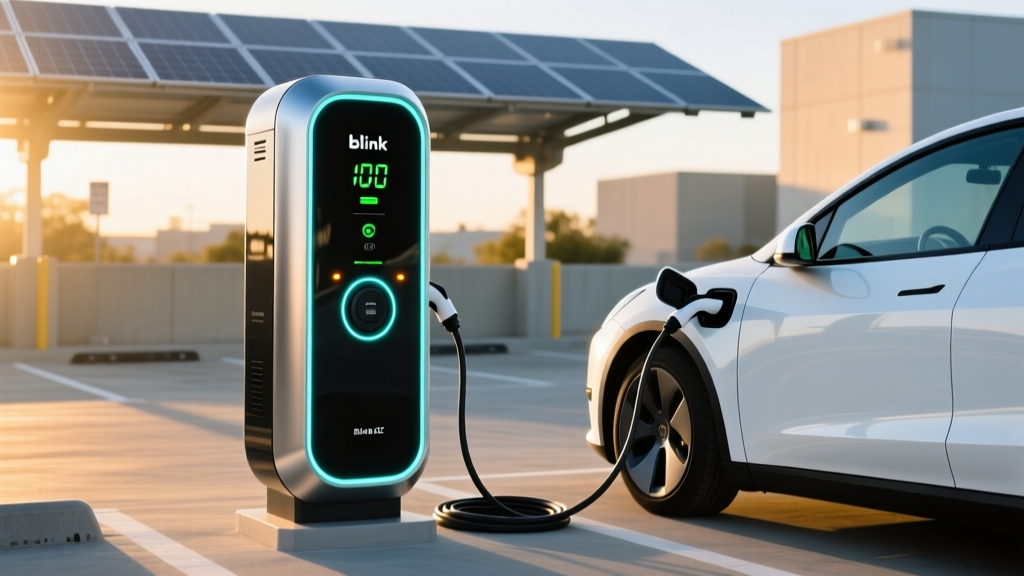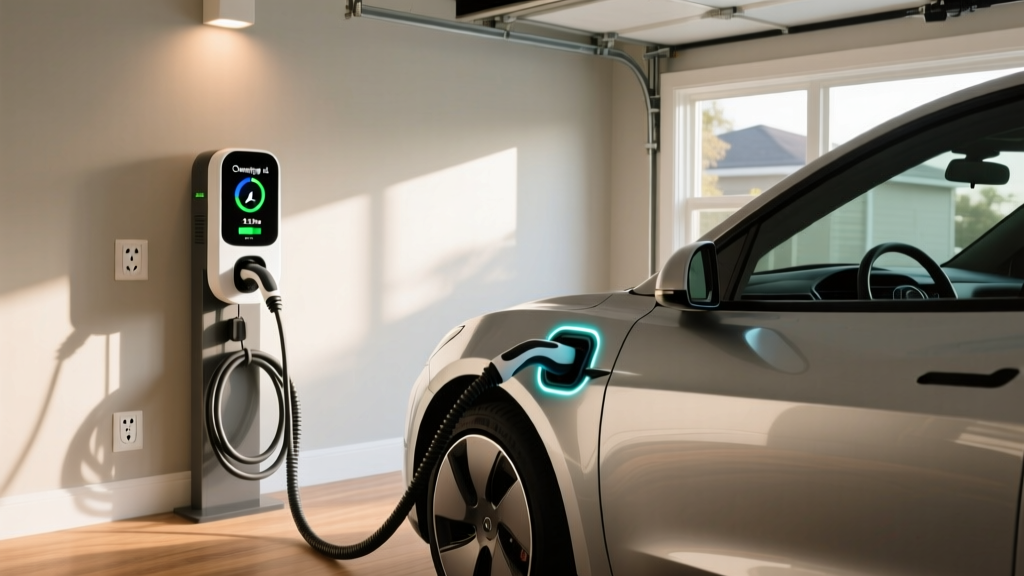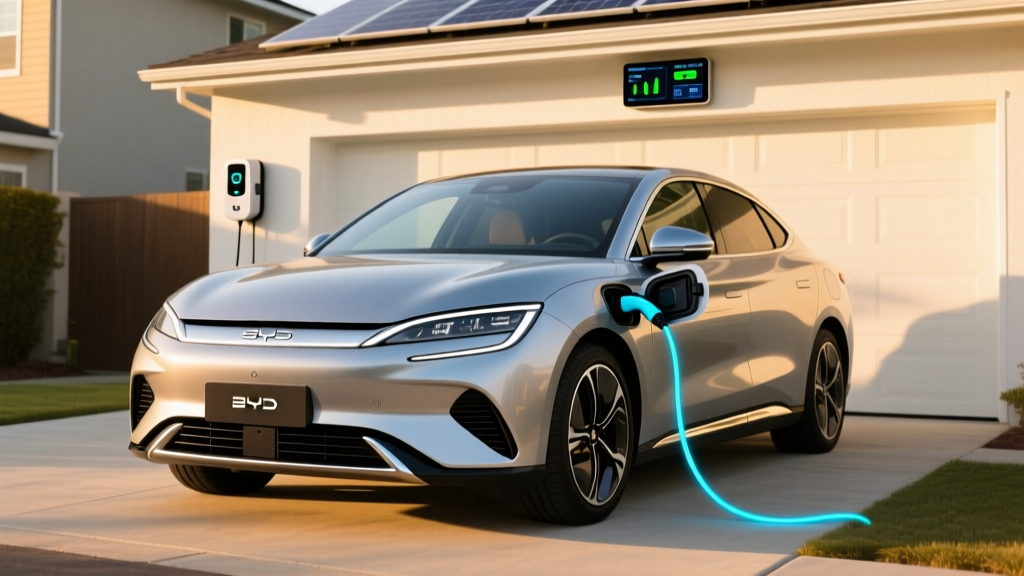
When BYD unveiled its second-generation Blade Battery platform in early 2025, the headline number was staggering: 200 kilometers (roughly 124 miles) of range added in five minutes of DC fast charging. For context, that requires peak charge rates approaching 1,000 kW — a figure that makes most current public chargers look like trickle feeds. But what does BYD's 5-minute charging breakthrough actually mean for EV owners today, and more importantly, how should it influence the home charging setup you install in your garage?
This guide breaks down the reality behind ultra-fast charging claims, maps every charging level from Level 1 through megawatt-class DC, and gives you exact costs, equipment picks, and electrical requirements to charge any EV — BYD or otherwise — at home in 2026.
The Reality Behind BYD 5-Minute Charging Claims
BYD's Super e-Platform, announced for vehicles like the Han L and upcoming Seal variants, targets a peak charge rate of 1,000 kW using an 800V+ architecture and a new generation of silicon-carbide power electronics. The 5-minute, 200-km claim assumes a battery with roughly 80-100 kWh usable capacity and a charging curve that sustains very high power in the 10-40% state-of-charge (SoC) window.
Here's what that looks like in practice:
- Peak rate: ~1,000 kW (sustained for roughly 2-3 minutes in the optimal SoC window)
- 10-80% target: Approximately 8-12 minutes on a compatible megawatt-class charger
- Real-world caveat: Very few public chargers anywhere in the world currently deliver above 400-500 kW. In the U.S., Electrify America's newest Ultra-Fast stalls peak at 350-400 kW, and Tesla V4 Superchargers deliver up to 350 kW to non-Tesla vehicles via NACS.
The physics are real — BYD's Blade Battery chemistry (LFP, or lithium iron phosphate) has excellent thermal stability and can tolerate high C-rates. But infrastructure is the bottleneck, not the battery. Even if you import a BYD vehicle to the U.S. (where availability remains limited to commercial and fleet segments as of 2026), your daily charging will happen at Level 2 speeds at home.
Charging Levels Explained: kW, Miles Per Hour, and 10-80% Times
The single most important distinction in EV charging: kW (kilowatts) measures power — how fast energy flows. kWh (kilowatt-hours) measures energy — how much the battery holds. A 100 kWh battery charged at 10 kW takes 10 hours. The same battery charged at 250 kW can reach 80% in roughly 20 minutes (tapering slows the final stretch).
| Level | Voltage / Amps | Power (kW) | Miles of Range Added Per Hour | Typical 10-80% Time (80 kWh Battery) | Where You'll Find It |
|---|---|---|---|---|---|
| Level 1 | 120V / 12A | 1.4 kW | 3-5 mi/hr | ~40+ hours (impractical) | Standard household outlet |
| Level 2 | 240V / 32-48A | 7.7-11.5 kW | 25-44 mi/hr | ~6-8 hours | Home garage, workplaces, hotels |
| DC Fast (50-150 kW) | 400-800V DC | 50-150 kW | 150-400 mi/hr | ~35-50 minutes | Older public stations, some retail |
| DC Fast (150-350 kW) | 400-800V DC | 150-350 kW | 400-900 mi/hr | ~18-25 minutes | Electrify America, Tesla V3/V4, EVgo |
| Ultra-Fast (350-500+ kW) | 800V+ DC | 350-500 kW | 900-1,300 mi/hr | ~12-18 minutes | Newest EA Ultra-Fast, IONITY, select corridors |
| Megawatt Class (1,000 kW) | 800V+ DC | ~1,000 kW | ~2,500 mi/hr (peak) | ~8-12 minutes | BYD demo stations, limited pilot sites (China) |
Home EV Charger Installation: Electrical Requirements and Cost Breakdown
Regardless of what BYD achieves at megawatt-class demo stations, over 80% of EV charging happens at home on Level 2. Here's what a proper 2026 home installation requires.
Electrical Specifications
A Level 2 home charger requires a 240-volt dedicated circuit, typically rated at 40, 50, or 60 amps. The National Electrical Code (NEC) requires that continuous loads (like EV charging, which runs for hours) use no more than 80% of a circuit's rated capacity:
- 40A circuit → 32A continuous → 7.7 kW (most common, works with 100A-150A home panels)
- 50A circuit → 40A continuous → 9.6 kW (ideal for larger batteries like the F-150 Lightning's 131 kWh pack)
- 60A circuit → 48A continuous → 11.5 kW (requires a 200A+ panel with spare capacity)
Panel Upgrade Considerations
Older homes with 100A service panels often lack the spare capacity for a 40A+ dedicated circuit. A panel upgrade to 200A typically costs $1,500-$3,500 depending on your utility's requirements, local labor rates, and whether a new meter base or service drop is needed. Some homeowners opt for a smart load management device (like the Emporia V2 with load shedding) that dynamically limits charger draw when other appliances are running — this can avoid a panel upgrade entirely.
| Component | Low Estimate | High Estimate | Notes |
|---|---|---|---|
| Level 2 Charger (Equipment) | $300 | $750 | Smart Wi-Fi chargers: Emporia, ChargePoint, Wallbox |
| Electrician Labor | $500 | $2,000 | Depends on run length from panel to garage, conduit, drywall work |
| Electrical Permit | $50 | $300 | Varies by municipality; some jurisdictions waive for EV installs |
| Panel Upgrade (if needed) | $1,500 | $3,500 | 100A → 200A upgrade; not needed in most newer homes |
| Additional Wiring/Conduit | $100 | $800 | Long runs (>50 ft from panel) or underground trenching add cost |
| Total (no panel upgrade) | $850 | $3,850 | Most homes with 200A panels fall in the $1,200-$2,200 range |
| Total (with panel upgrade) | $2,350 | $7,350 | Older homes or those adding solar/battery simultaneously |
The IRS §30D tax credit does not cover home charging equipment directly, but the separate §30C Alternative Fuel Infrastructure Tax Credit (renewed through 2026) can cover up to 30% of home charger equipment and installation costs — capped at $1,000 for residential property. Eligibility depends on census-tract income qualifications. Check IRS guidance on §30C before purchasing.
Connector Compatibility: NACS, CCS1, CHAdeMO, and What BYD Uses
BYD vehicles sold globally use a variety of connectors depending on the market. In China, the GB/T standard dominates. For European markets, BYD equips CCS2. In the U.S., where BYD passenger vehicles remain largely unavailable (the brand sells electric buses and commercial trucks here), the relevant question is which connector your EV uses — and whether you need an adapter.
| Connector | Brands Using It (2026 Models) | Adapter Needed For Tesla Superchargers? | Max DC Fast Rate |
|---|---|---|---|
| NACS (Tesla / SAE J3400) | Tesla (all), Ford (2025+), GM (2025+), Rivian (2025+), Volvo, Polestar, Fisker, Lucid (2026+) | No — native access | Up to 350 kW (Tesla V4) |
| CCS1 (Combined Charging System) | Hyundai, Kia, BMW, VW, Audi, Porsche, Mercedes, Stellantis, Subaru, Toyota (bZ series) | Yes — CCS-to-NACS adapter ($150-$250) for Supercharger access | Up to 350 kW (vehicle-dependent) |
| CHAdeMO | Nissan Leaf (legacy), Mitsubishi Outlander PHEV (legacy) | Yes — limited adapter availability; network shrinking | Up to 100 kW |
| GB/T (China Standard) | BYD (China-market), NIO, Xpeng, Zeekr (China) | N/A in U.S. — no public GB/T infrastructure | Up to 1,000 kW (BYD Super Charge) |
For home Level 2 charging, all EVs in the U.S. (including any imported BYD) use the J1772 connector — or NACS, which now supports Level 2 AC through the same plug. Most Level 2 home chargers ship with J1772; Tesla owners use the Mobile Connector with a NACS tip, and adapters (J1772-to-NACS, ~$100-$150) are widely available.
Recommended Level 2 Home Chargers for 2026
These are the chargers we've tested and recommend based on reliability, smart features, cable management, and value. None of these will replicate BYD's 5-minute charging — that requires megawatt-class DC infrastructure — but they'll fully replenish most EVs overnight.
Emporia Level 2 EV Charger
- Power Output: 48A / 11.5 kW (on 60A circuit) or 40A / 9.6 kW (on 50A circuit)
- Connector: J1772 (NACS adapter included in 2026 kit)
- Cable Length: 24 ft
- Smart Features: Wi-Fi, energy monitoring via Emporia app, load management with Emporia VUE panel monitor, solar-aware scheduling
- Price: $399 (charger only) / $499 (with load management bundle)
- Best For: Homes wanting whole-panel energy visibility and solar integration
ChargePoint Home Flex
- Power Output: Up to 50A / 12 kW (adjustable via DIP switch: 16A-50A)
- Connector: J1772 (NACS version available 2025+)
- Cable Length: 23 ft
- Smart Features: Wi-Fi, ChargePoint app scheduling, Alexa integration, amperage adjustable to match your circuit
- Price: $549-$599
- Best For: Flexibility across different panel capacities; proven reliability track record
Wallbox Pulsar Plus
- Power Output: 40A / 9.6 kW (on 50A circuit)
- Connector: J1772 or NACS (select at purchase)
- Cable Length: 25 ft
- Smart Features: Wi-Fi + Bluetooth, myWallbox app, Power Sharing (daisy-chain two units on one circuit), Eco-Smart solar mode
- Price: $449-$499
- Best For: Two-EV households wanting to share a single circuit
Tesla Wall Connector
- Power Output: 48A / 11.5 kW (on 60A circuit)
- Connector: NACS (J1772 adapter dongle available)
- Cable Length: 24 ft
- Smart Features: Wi-Fi, OTA updates, Power Sharing for multiple units, integrates with Tesla app and Powerwall
- Price: $475
- Best For: Tesla owners or households going all-NACS; best-in-class cable management
Cost to Charge: Home vs. Public vs. Gas — Per-Mile Breakdown
One reason BYD's 5-minute charging demo matters is the promise of DC fast charging that's both quick and affordable. But in the U.S. today, where you charge determines what you pay — and the gap between home and public rates is enormous.
| Charging Scenario | Rate ($/kWh) | Cost Per Mile | Annual Cost (12,000 mi) |
|---|---|---|---|
| Home — Off-Peak TOU (utility rate) | $0.08-$0.12 | $0.023-$0.034 | $276-$408 |
| Home — Standard Residential Rate | $0.14-$0.18 | $0.040-$0.051 | $480-$612 |
| Public Level 2 (ChargePoint, etc.) | $0.25-$0.49 | $0.071-$0.140 | $852-$1,680 |
| DC Fast Charging (Electrify America, EVgo) | $0.35-$0.56 | $0.100-$0.160 | $1,200-$1,920 |
| Tesla Supercharger (member rate) | $0.25-$0.36 | $0.071-$0.103 | $852-$1,236 |
| Gas Vehicle (28 MPG combined, $3.40/gal) | — | $0.121 | $1,452 |
The takeaway: charging at home on off-peak rates costs 70-80% less per mile than gasoline. Even exclusive DC fast charging can undercut gas in many states. But relying solely on public DC fast charging erodes the cost advantage — which is why a home Level 2 install pays for itself within 1-2 years for most drivers.
According to fueleconomy.gov, the average EV in 2026 achieves 3.0-4.0 miles per kWh, with efficient sedans like the Hyundai Ioniq 6 reaching 4.2 mi/kWh and larger SUVs like the Rivian R1S landing around 2.8 mi/kWh. Your actual cost per mile scales directly with your vehicle's efficiency.
Safety, Code Requirements, and Installation Best Practices
A Level 2 charger draws sustained high current for hours — this is not a phone charger plugged into a wall. Proper installation protects your home, your vehicle, and your insurance coverage.
- Dedicated circuit required: NEC Article 625 mandates a dedicated branch circuit for EV supply equipment. Do not share the circuit with dryers, HVAC, or other high-draw appliances.
- GFCI protection: The 2023 NEC update (adopted by most states by 2026) requires GFCI protection for outdoor receptacles used for EV charging. Hardwired chargers (which most Level 2 units are) may be exempt depending on local interpretation — your electrician will confirm.
- Outdoor rating: If your charger mounts outdoors, it must carry a NEMA 4 or NEMA 4X rating (weatherproof, rain and hose-directed water). All recommended chargers above meet this standard.
- Permit and inspection: Nearly all jurisdictions require an electrical permit for a new 240V circuit. The inspection ensures correct wire gauge, breaker sizing, grounding, and conduit fill. Skipping the permit can void homeowner's insurance claims related to electrical fires.
- Wire gauge: 6 AWG copper for 50A circuits; 4 AWG for 60A circuits over longer runs. Your electrician will calculate based on distance and voltage drop.
What BYD's Charging Tech Means for Your Buying Decision Today
BYD's 5-minute charging capability is a genuine engineering milestone — it demonstrates that LFP batteries can handle extreme C-rates without accelerated degradation, and it pressures infrastructure providers to deploy higher-power chargers. For U.S. buyers in 2026, the practical implications are:
- If you're buying a BYD: U.S. passenger-vehicle availability remains minimal. If you do acquire one (via import, fleet, or future retail), plan for CCS1 or NACS adapter needs and know that the vehicle's 1,000 kW peak capability will be bottlenecked by the fastest U.S. chargers at ~350 kW — still excellent, delivering 10-80% in roughly 18-22 minutes.
- If you're buying any 800V-class EV (Hyundai Ioniq 5/6, Kia EV6/EV9, Porsche Taycan, Lucid Air, GM Ultium vehicles): these already charge at 200-350 kW on compatible public stations and charge fully overnight on a 9.6-11.5 kW Level 2 home unit.
- For home charging, future-proof with a 60A circuit if your panel supports it. Today's EVs may only accept 11.5 kW AC, but the next generation of onboard chargers may push to 19.2 kW or higher — a 60A/80A circuit gives you headroom without rewiring later.
Frequently Asked Questions
How much does it cost to install a home EV charger?
For most homes with a 200A electrical panel, expect $1,200-$2,200 total (charger equipment + electrician labor + permit). Homes needing a panel upgrade from 100A to 200A should budget $2,350-$7,350. The §30C tax credit may offset up to $1,000 (30% of equipment and installation) if you're in an eligible census tract.
How fast will each charging level add range?
Level 1 (120V): 3-5 miles per hour. Level 2 (240V, 40A): roughly 30-35 miles per hour. DC Fast (150 kW): roughly 400-500 miles per hour of charging (though sessions typically last 20-30 minutes, not a full hour). BYD's megawatt-class demo adds ~124 miles in 5 minutes — but that infrastructure doesn't exist in the U.S. public network yet.
Which connector or charger is compatible with my EV?
Check your vehicle's charge port. In 2026, the U.S. market is splitting into NACS (Tesla, Ford, GM, Rivian, and others migrating) and CCS1 (Hyundai/Kia, BMW, VW, Toyota). For home Level 2, all vehicles accept J1772 or NACS — and adapters between the two cost $100-$150. CHAdeMO is effectively legacy. BYD uses GB/T in China and CCS2 in Europe.
How much does charging cost per mile vs. gas?
Home charging on off-peak utility rates costs $0.02-$0.04 per mile — roughly 75-80% cheaper than gas at $3.40/gallon and 28 MPG ($0.12/mile). Even public DC fast charging at $0.48/kWh costs roughly $0.14/mile, still competitive with gas. The savings are largest for home charging and diminish the more you rely on public networks.
What electrical upgrades might I need?
The most common upgrade is a panel capacity increase from 100A to 200A ($1,500-$3,500). You may also need a new conduit run from the panel to the garage ($100-$800 depending on distance and whether trenching is required), and some municipalities require a GFCI breaker for outdoor installations ($50-$120). A load-management device ($200-$400) can sometimes avoid a panel upgrade entirely by dynamically limiting charger draw.
Sources: U.S. DOE fueleconomy.gov, IRS §30C Alternative Fuel Infrastructure Tax Credit, manufacturer specifications from BYD, ChargePoint, Emporia, Wallbox, and Tesla press sites.