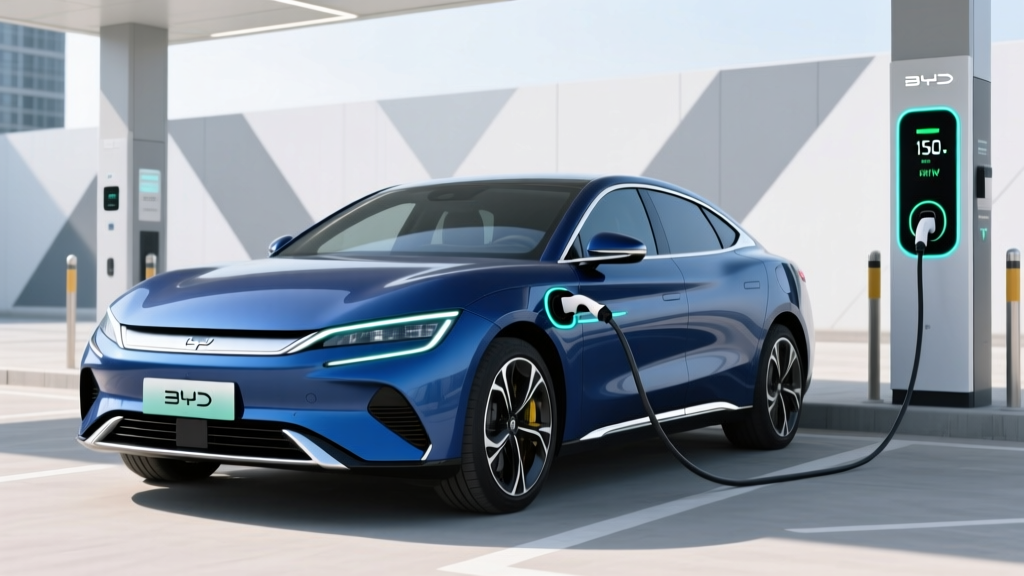
Headlines about a BYD 2000 km range vehicle — roughly 1,240 miles — have circulated across EV forums and tech media, often tied to BYD's plug-in hybrid (PHEV) platforms like the Qin L and Seal U DM-i, which pair a large battery with a high-efficiency internal combustion engine. These figures typically reflect the Chinese CLTC or WLTP testing cycles, which tend to rate higher than the US EPA standard. For US-based buyers and EV enthusiasts, the practical question isn't just whether 2,000 km is achievable — it's what charging infrastructure you'd need to support a vehicle with an 80–100+ kWh battery pack, whether pure BEV or PHEV.
This guide cuts through the hype. We'll map out exactly what Level 1, Level 2, and DC fast charging look like for a large-battery vehicle in the BYD class, break down real installation costs, compare connector standards, and calculate what you'll actually pay per mile. Whether you're tracking BYD's eventual US market entry or planning your charging setup for a comparable large-battery EV already available stateside, the numbers below apply.
Understanding the BYD 2000 km Range Claim
BYD's widely reported 2,000+ km combined range figures apply to their DM-i (Dual Mode intelligent) plug-in hybrid lineup, not a pure battery-electric vehicle. The Qin L DM-i, for example, pairs a ~15.87 kWh LFP Blade battery with a 1.5L engine and a 65-liter fuel tank. Under the CLTC cycle — which is more generous than EPA testing — BYD quotes a combined electric + fuel range exceeding 2,100 km.
For context, a US EPA evaluation of a similar powertrain would likely yield a combined range closer to 1,400–1,600 km (870–990 miles). The EPA cycle uses higher average speeds, more aggressive acceleration profiles, and accounts for real-world accessory loads. If BYD ever brings a pure BEV with a ~100 kWh pack to the US, expect an EPA range in the 350–420 mile bracket — impressive, but far from 1,240 miles.
Charging Levels Explained: Speeds, Power, and Range Added
The single most important distinction in EV charging is between kW (kilowatts) and kWh (kilowatt-hours). Kilowatts measure power — the rate at which electricity flows into your car, like water pressure from a hose. Kilowatt-hours measure energy — the total amount stored in the battery, like gallons in a tank. A 100 kWh battery charged at 10 kW takes 10 hours. The same battery charged at 100 kW takes roughly one hour (ignoring charge-curve taper, which we'll cover below).
| Level | Voltage / Amps | Max Power (kW) | Miles of Range / Hour | Best For |
|---|---|---|---|---|
| Level 1 | 120V / 12A | 1.4 kW | 3–5 mi/hr | Overnight top-up, PHEVs, emergencies |
| Level 2 | 240V / 32–48A | 7.7–11.5 kW | 20–40 mi/hr | Daily home charging, workplace |
| DC Fast | 400–800V DC | 50–350 kW | 150–800+ mi/hr (peak) | Road trips, rapid top-ups |
For a vehicle with a ~100 kWh battery (the size needed for a long-range BEV in the BYD class), here's what charging times look like in practice:
- Level 1 (1.4 kW): 0–100% in ~71 hours. Effectively unusable for a full recharge; adds ~40 miles overnight.
- Level 2 at 7.7 kW (32A): 0–100% in ~13 hours. A full overnight charge is feasible if you arrive depleted.
- Level 2 at 11.5 kW (48A): 0–100% in ~8.7 hours. Comfortable overnight charge even from near-empty.
- DC Fast at 150 kW peak: 10–80% in ~35–40 minutes. Note that peak rate is sustained only between roughly 10–50% State of Charge (SoC); above 60%, the rate tapers significantly.
- DC Fast at 250+ kW peak (800V architecture): 10–80% in ~18–25 minutes, depending on battery chemistry and thermal management.
Home Charger Installation: Electrical Requirements and Costs
Installing a Level 2 home charger is the single highest-impact upgrade for EV ownership. For a large-battery vehicle, a 48-amp (11.5 kW) charger is strongly recommended over a 32-amp unit — it cuts overnight charge time by roughly 30%.
Electrical Requirements
A 48-amp Level 2 charger requires a dedicated 60-amp, 240-volt circuit (the National Electrical Code requires the circuit breaker to be rated at 125% of the continuous load: 48A × 1.25 = 60A). This circuit runs from your main electrical panel to a NEMA 14-60 outlet or a hardwired connection at the charger location.
Panel upgrade considerations: Most modern homes with 200-amp service can accommodate a 60A EV circuit without a panel upgrade. However, older homes with 100-amp or 150-amp service, or homes already running high-draw appliances (electric range, dryer, HVAC, tankless water heater), may need a service upgrade to 200A — or a smart load-management system that shares capacity between the EV charger and other circuits.
| Item | Low Estimate | High Estimate | Notes |
|---|---|---|---|
| Level 2 Charger (hardware) | $350 | $750 | 32A–48A smart chargers |
| Electrician labor (run 240V circuit) | $400 | $1,500 | Depends on panel-to-charger distance, wall penetrations |
| Permit & inspection | $50 | $250 | Varies by municipality |
| Electrical panel upgrade (if needed) | $1,500 | $3,500 | 100A → 200A service upgrade |
| Total (no panel upgrade) | $800 | $2,500 | Typical scenario for newer homes |
| Total (with panel upgrade) | $2,300 | $6,000 | Older homes or maxed-out panels |
The IRS Residential Clean Energy Credit (Form 5695) covers 30% of charger hardware and installation costs, up to $1,000, for equipment placed in service through 2032. This applies to your federal tax liability and is separate from any state or utility rebates, which vary widely by jurisdiction — check your local utility's website for current offers.
Connector Compatibility: NACS, CCS, and CHAdeMO
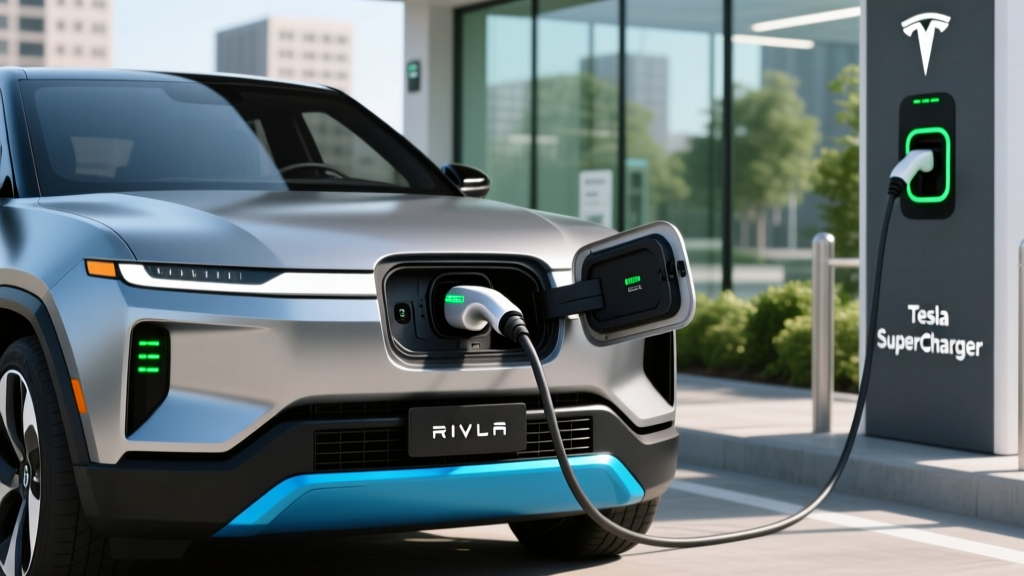
The North American charging connector landscape has consolidated significantly. As of the 2025–2026 model years, the NACS (North American Charging Standard) — originally Tesla's proprietary connector — has been adopted by Ford, GM, Rivian, Hyundai, Kia, BMW, and most major automakers. CCS1 remains on many vehicles sold through 2024, and CHAdeMO is effectively legacy (Nissan Leaf being the last major holdout).
BYD does not currently sell passenger vehicles in the US market. Should they enter, they would almost certainly adopt NACS for the North American market, given the industry-wide shift. In China and Europe, BYD uses the GB/T and CCS2 standards respectively.
| Connector | AC Level 2 | DC Fast Charge | Adopted By | Adapter Needed? |
|---|---|---|---|---|
| NACS (J3400) | Yes | Yes (up to 350+ kW) | Tesla, Ford, GM, Rivian, Hyundai/Kia, BMW, Volvo, and growing | CCS-to-NACS adapters available ($150–$250) |
| CCS1 | Yes (via J1772) | Yes (up to 350 kW) | 2024 and earlier models from VW, Hyundai, Kia, BMW; being phased out | NACS-to-CCS adapters available for Tesla Superchargers |
| CHAdeMO | No (uses J1772 for AC) | Yes (up to 100 kW typical) | Nissan Leaf (legacy); infrastructure declining | Limited adapter options; network shrinkage is the bigger concern |
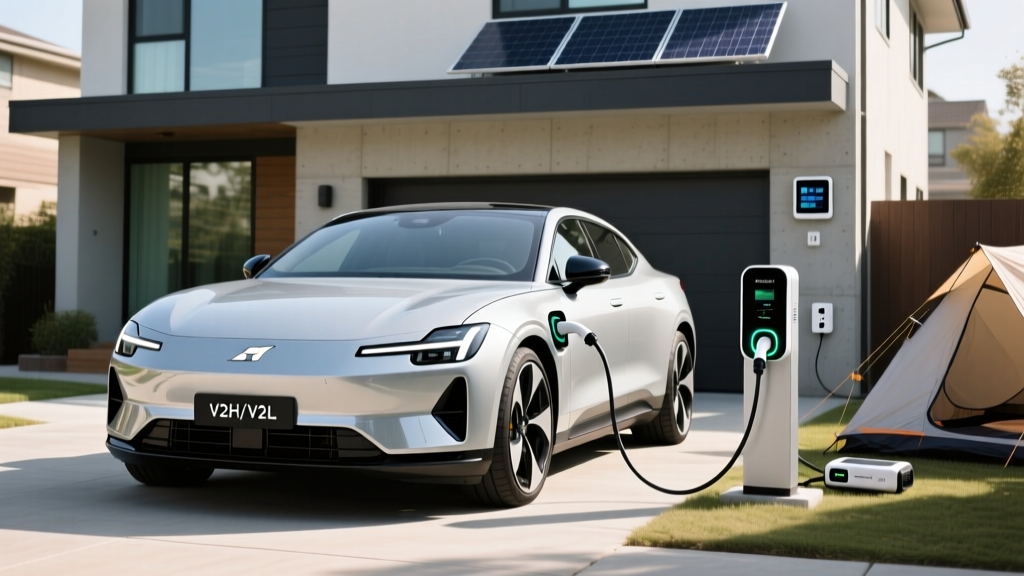
For home Level 2 charging, virtually all chargers ship with a J1772 connector (the AC standard), which works with every EV sold in North America except Tesla — and Tesla includes a J1772-to-NACS adapter in the glovebox. For NACS-native vehicles, chargers like the Tesla Wall Connector now serve non-Tesla EVs natively.
Cost to Charge: Home vs. Public vs. Gas
Charging costs vary enormously depending on where and when you plug in. The metric that matters is cost per mile, which depends on your electricity rate ($/kWh) and your vehicle's efficiency (kWh per mile or kWh/100 mi).
For a large-battery EV in the BYD class, assume an efficiency of roughly 3.0–3.5 miles per kWh (equivalent to ~29–33 kWh/100 mi) under mixed driving. A PHEV like the Qin L DM-i would use far less battery (15–20 kWh for ~60–80 miles of electric-only range), then switch to gasoline.
| Scenario | Rate ($/kWh) | Vehicle Efficiency | Cost / Mile | Cost for 300 mi |
|---|---|---|---|---|
| Home, off-peak TOU rate | $0.08–$0.12 | 3.2 mi/kWh | $0.025–$0.038 | $7.50–$11.25 |
| Home, standard flat rate | $0.14–$0.18 | 3.2 mi/kWh | $0.044–$0.056 | $13.13–$16.88 |
| Public Level 2 (workplace, retail) | $0.20–$0.35 | 3.2 mi/kWh | $0.063–$0.109 | $18.75–$32.81 |
| DC Fast Charging (Electrify America, EVgo) | $0.35–$0.55 | 3.2 mi/kWh | $0.109–$0.172 | $32.81–$51.56 |
| Gasoline baseline (28 MPG, $3.40/gal) | — | 28 MPG | $0.121 | $36.43 |
The takeaway: home charging at off-peak rates is 3–5× cheaper per mile than gasoline. Public DC fast charging, however, can equal or exceed the cost of gas — it's a convenience for road trips, not a daily strategy. For PHEV owners running BYD's DM-i architecture, the calculus shifts: you'll charge the small (~16 kWh) battery cheaply at home for daily commuting, then rely on the efficient hybrid engine for longer trips where gasoline costs ~$0.08–$0.12/mile given the DM-i's exceptional combined fuel economy.
Recommended Level 2 Home Chargers for Large-Battery EVs
For vehicles with 80–100+ kWh batteries, a 48-amp charger is the practical minimum for comfortable overnight charging. Here are three proven units suited to the task:
Tesla Wall Connector (J3400/NACS)
- Power: 11.5 kW (48A) at 240V
- Connector: NACS (J3400) native; works with all NACS-equipped EVs
- Cable length: 24 ft
- Smart features: Wi-Fi, OTA updates, load sharing between multiple units, power-sharing with Tesla Powerwall
- Price: ~$420 (hardwired)
- Best for: Tesla owners and NACS-native vehicles from Ford, GM, Rivian, Hyundai
ChargePoint Home Flex
- Power: Up to 12 kW (50A) at 240V, configurable down to 16A for panel-limited homes
- Connector: J1772 (works with all non-Tesla EVs; Tesla owners use included adapter)
- Cable length: 23 ft
- Smart features: Wi-Fi, ChargePoint app scheduling, Alexa integration, amperage dip-switch configurable
- Price: ~$550 (NEMA 14-50 plug or hardwired)
- Best for: CCS/J1772 vehicles, homes needing flexible amperage settings
Emporia Vue Smart Charger
- Power: 11.5 kW (48A) at 240V
- Connector: J1772
- Cable length: 24 ft
- Smart features: Integrates with Emporia Vue energy monitor for whole-home load tracking, solar-aware charging, time-of-use scheduling
- Price: ~$399 (hardwired or plug-in)
- Best for: Solar-equipped homes, budget-conscious buyers wanting energy monitoring
Safety, Code, and Installation Best Practices
EV charging is a high-draw, continuous electrical load — the National Electrical Code (NEC Article 625) treats it differently from intermittent appliances. Key requirements and best practices:
- Dedicated circuit: Your Level 2 charger must be on its own dedicated breaker — it cannot share a circuit with other outlets or appliances.
- GFCI protection: NEC 2020 and later require GFCI protection for all EV charging outlets (NEMA 14-50 or 6-50). Hardwired chargers have built-in ground-fault protection and are exempt from the external GFCI breaker requirement — this is one reason hardwired installations are preferred by many electricians.
- Outdoor rating: If your charger is installed outdoors, ensure the unit carries a NEMA 4 or NEMA 4X rating (weatherproof). All three chargers recommended above are outdoor-rated.
- Wire gauge: A 60A circuit requires 6 AWG copper wire (THHN in conduit) or 4 AWG if using NM-B (Romex) cable, which is derated to 55A in some jurisdictions. Your licensed electrician will specify the correct gauge for your run length and local code.
- Permit and inspection: Virtually all jurisdictions require an electrical permit for a new 240V circuit. The inspection ensures correct wire sizing, breaker rating, grounding, and GFCI compliance. Do not skip this step — unpermitted work can void your homeowner's insurance in the event of an electrical fire.
Frequently Asked Questions
How much does it cost to install a home EV charger?
For a typical 48-amp Level 2 charger on an existing 200-amp panel, expect to pay $800–$2,500 total (hardware + electrician + permit). If your home needs a panel upgrade from 100A to 200A service, add $1,500–$3,500. The federal Residential Clean Energy Credit covers 30% of hardware and installation, up to $1,000.
How fast will each charging level add range?
Level 1 (120V) adds roughly 3–5 miles of range per hour — enough for PHEVs with small batteries but impractical for a 100 kWh BEV. Level 2 (240V, 48A) adds 25–40 miles per hour, fully recharging a 100 kWh battery overnight in ~9 hours. DC fast charging at 150+ kW can add 150–300 miles in 20–30 minutes, but only between roughly 10–80% SoC before the charge curve tapers.
Which connector/charger is compatible with my EV?
For 2025–2026 model-year vehicles in North America, NACS (J3400) is the dominant standard, adopted by Tesla, Ford, GM, Rivian, Hyundai/Kia, and others. CCS1 remains on many 2024 and earlier models. CHAdeMO is legacy. For home Level 2 charging, J1772 works with all non-Tesla EVs, and Tesla includes an adapter. If your car has CCS and you want to use Tesla Superchargers, a CCS-to-NACS adapter ($150–$250) is required.
How much does charging cost per mile vs gas?
At home on an off-peak electricity rate ($0.08–$0.12/kWh), EV charging costs roughly $0.03–$0.04 per mile — about 3–4× cheaper than gasoline at $3.40/gallon in a 28 MPG vehicle ($0.12/mile). Public DC fast charging at $0.35–$0.55/kWh costs $0.11–$0.17 per mile, which is comparable to or slightly above gasoline. The economic case for EVs depends heavily on consistent access to home or workplace charging.
What electrical upgrades might I need?
If your home has a 200-amp electrical panel with available capacity, you likely need only a new 60A breaker and a 240V circuit run — no upgrade required. Homes with 100A or 150A service, or panels already near their load limit, may need a service upgrade to 200A ($1,500–$3,500) or a smart load-management system that dynamically shares power between the EV charger and other high-draw circuits. A licensed electrician can perform an NEC Article 220 load calculation to determine your exact situation.
Does BYD sell EVs in the United States?
As of 2026, BYD does not sell passenger vehicles in the US market, though they have a growing presence in commercial vehicles (electric buses) and sell consumer EVs in China, Europe, Southeast Asia, Australia, and South America. The widely reported "BYD 2000 km range" applies to their DM-i plug-in hybrid models under the CLTC test cycle. Should BYD enter the US passenger market, NACS connector adoption and EPA-cycle range ratings would apply.