From Highland Green to High Voltage: Why the Bullitt Charger Matters Today
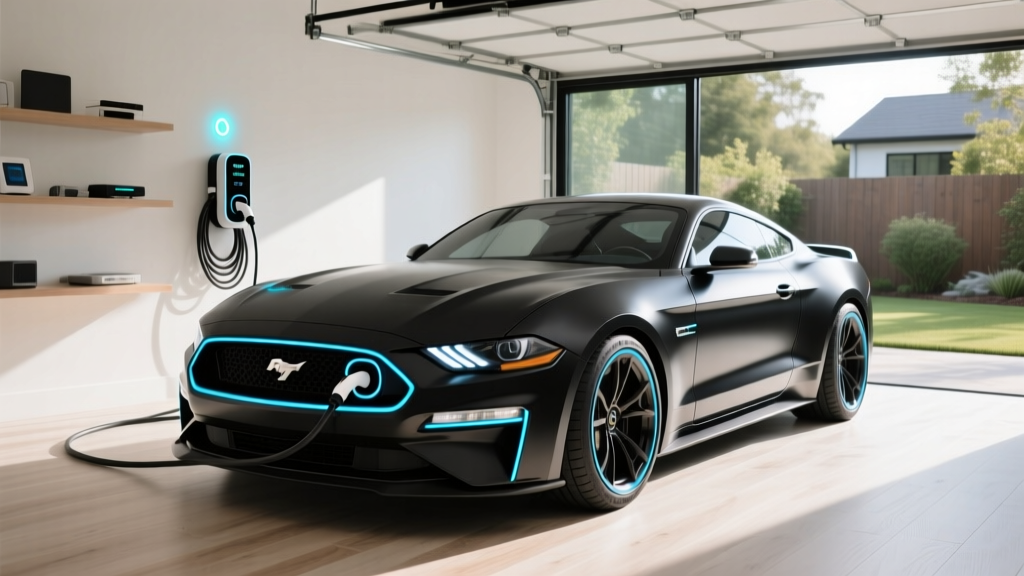
The 1968 Ford Mustang GT 390 Fastback driven by Steve McQueen in Bullitt remains one of cinema's most celebrated automobiles. But as electrification accelerates, a growing niche of restomodders are asking: what if you dropped the 390 V8 and installed a battery pack instead? The phrase "Bullitt movie charger" has gained traction among enthusiasts researching how to wire a high-voltage EV drivetrain into a classic Mustang shell — and more importantly, how to charge it at home.
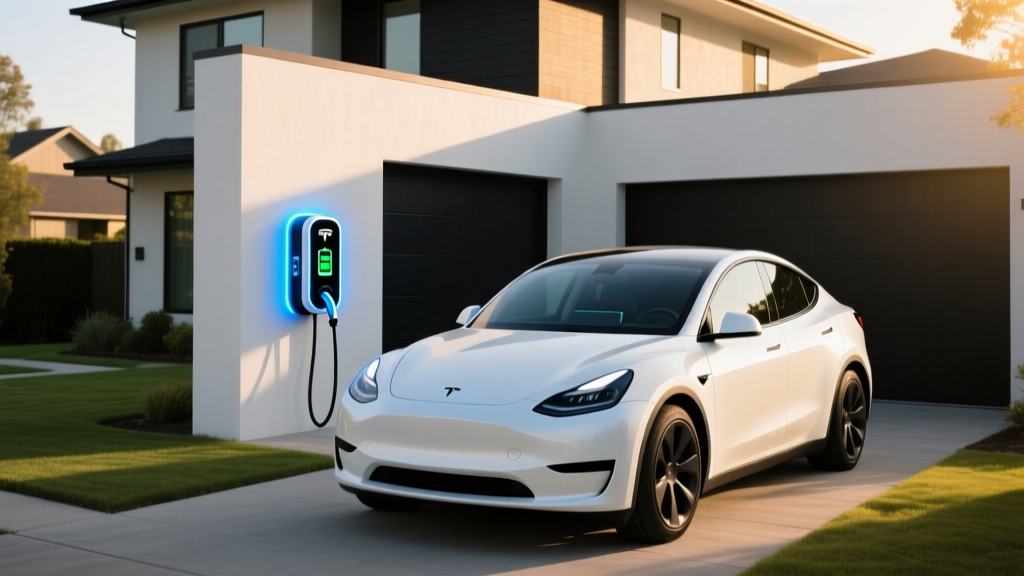
Whether you're contemplating a Bullitt-inspired EV conversion or simply shopping for a Level 2 home charger for a modern Mustang Mach-E GT, the fundamentals of EV charging remain identical. This guide covers every layer: charging levels, home electrical requirements, connector compatibility, cost-per-mile math, and the specific hardware you need to keep your electrons flowing reliably.
Charging Levels Explained: Speed, Power, and What Each Adds Per Hour
Before selecting equipment, understand the three charging tiers. The critical distinction: kW (kilowatts) measures power — the rate at which energy flows into your battery. kWh (kilowatt-hours) measures energy — the total capacity of your battery pack. Think of kW as the width of a hose and kWh as the size of the bucket.
| Level | Voltage | Max Power (kW) | Miles Added/Hour | Best For |
|---|---|---|---|---|
| Level 1 | 120V AC | 1.2–1.9 kW | 3–5 mi/hr | Overnight top-ups, low daily mileage |
| Level 2 | 240V AC | 7.2–19.2 kW | 20–60 mi/hr | Daily home charging, conversions |
| DC Fast Charge | 400–800V DC | 50–350 kW | 150–1,000+ mi/hr | Road trips, rapid replenishment |
For a Bullitt-style EV conversion running a 60–80 kWh battery pack, Level 2 is the daily workhorse. A 48-amp (11.5 kW) home station will refill a 70 kWh pack from 10% to 90% in roughly 5–6 hours. DC fast charging, if your conversion's BMS supports it, can hit 10–80% in 25–40 minutes depending on peak kW acceptance.
How Much Does It Cost to Install a Home EV Charger?
Installation costs vary dramatically based on your home's electrical infrastructure. A newer build with a 200-amp panel and short conduit runs might cost $800–$1,200 total. A 1960s home (era-appropriate for a Bullitt project garage) with a 100-amp panel could require a $2,000–$4,500 panel upgrade before any charger installation begins.
| Component | Cost Range | Notes |
|---|---|---|
| Level 2 Charger Equipment | $350–$750 | Hardwired or NEMA 14-50 plug; smart vs. basic |
| Electrician Labor (240V/50A circuit) | $500–$1,800 | Depends on conduit length, wall material, panel proximity |
| Permit & Inspection | $50–$250 | Required in most jurisdictions; varies by municipality |
| Panel Upgrade (if needed) | $1,500–$4,500 | 100A → 200A service; common in pre-1980 homes |
| Total (no panel upgrade) | $900–$2,800 | Typical scenario for modern homes |
| Total (with panel upgrade) | $2,400–$7,300 | Older homes or high-load setups |
For a Bullitt restomod project, factor in potential garage upgrades: many classic-car garages were wired for lighting and a single outlet, not a 50-amp dedicated circuit. Always hire a licensed electrician — and verify they pull a permit. Unpermitted EV charger installations can void homeowner insurance and create fire risk.
Electrical Requirements: Voltage, Amperage, and Panel Capacity
A typical Level 2 home charger requires a 240-volt, 50-amp dedicated circuit, delivering up to 40 amps continuous (National Electrical Code requires circuits be loaded to no more than 80% of their rated capacity for continuous loads). This yields approximately 9.6 kW of charging power.
Key electrical considerations:
- Dedicated circuit: Your EV charger must not share a breaker with other appliances. A 50A EV circuit on a 200A panel consumes 25% of total service capacity.
- GFCI protection: NEC 2020+ requires GFCI breakers for outdoor receptacles and garage circuits in many jurisdictions. GFCI breakers cost $60–$120 more than standard breakers.
- Wire gauge: 6 AWG copper (THHN in conduit) or 4 AWG aluminum for 50A circuits over longer runs.
- Outdoor rating: If your Bullitt lives in an open carport, select a charger rated NEMA 4 (weatherproof) or install a protective enclosure.
Connector Compatibility: NACS, CCS, CHAdeMO, and Conversion Wiring
For production EVs, connector choice is dictated by the manufacturer. For a Bullitt EV conversion, you choose the inlet — and that decision affects public charging access for years to come.
| Connector | Used By | DC Fast Charge? | 2026 Status |
|---|---|---|---|
| NACS (Tesla/J3400) | Tesla, Ford, GM, Rivian, most new 2025+ models | Yes (Supercharger & third-party) | Dominant North American standard |
| CCS1 | Legacy VW, Hyundai, BMW, Stellantis models | Yes (Electrify America, EVgo) | Phasing out; adapters available to NACS |
| CHAdeMO | Nissan Leaf, Mitsubishi Outlander PHEV | Yes (declining networks) | Effectively discontinued in US |
| J1772 (AC only) | All non-Tesla EVs (Level 1/2) | No | Universal for AC; NACS adapter included with Teslas |
For a Bullitt conversion, we recommend installing a NACS (J3400) inlet. As of 2026, the NACS standard grants access to over 25,000 Tesla Supercharger stalls plus a growing number of third-party NACS-equipped DC stations. CCS-to-NACS adapters exist ($150–$250), but native NACS eliminates adapter complexity.
On the AC side, your conversion's onboard charger (the device converting AC wall power to DC battery power) determines maximum Level 2 acceptance. Most EV conversion kits use 6.6 kW or 11.5 kW onboard chargers. Match your home station's output accordingly — a 48-amp station is wasted money if your onboard charger maxes at 32 amps (7.7 kW).
Cost to Charge: Per-Mile Economics vs. Gasoline
One of the strongest arguments for electrifying a classic muscle car is operating cost. The 390 V8 in the original Bullitt Mustang returned roughly 10–12 MPG. An EV conversion averaging 2.5–3.0 miles per kWh costs a fraction per mile, depending on your electricity rate.
| Scenario | Cost/kWh or Gallon | Efficiency | Cost Per Mile |
|---|---|---|---|
| Home charging (off-peak, 2026 avg) | $0.13/kWh | 3 mi/kWh | $0.043 |
| Home charging (peak rate) | $0.28/kWh | 3 mi/kWh | $0.093 |
| Public Level 2 (ChargePoint, EVgo) | $0.35/kWh | 3 mi/kWh | $0.117 |
| DC Fast Charging (Electrify America) | $0.48/kWh | 3 mi/kWh | $0.160 |
| Original 390 V8 (premium gas) | $4.20/gal | 11 MPG | $0.382 |
| 2026 Mustang Mach-E GT | $0.13/kWh home | 3.2 mi/kWh (97 MPGe) | $0.041 |
At 10,000 miles per year, home off-peak charging a Bullitt EV conversion costs roughly $430 annually — versus $3,820 in premium fuel for the original V8. That's $3,390 in annual savings, enough to recoup a quality EV conversion's battery cost within 5–7 years.
Equipment Recommendations: Chargers That Fit the Build
Whether you're wiring a restomod or plugging in a Mach-E, these Level 2 stations deliver reliable daily performance in 2026:
Emporia Level 2 Smart Charger
- Power: 48A / 11.5 kW (hardwired) or 40A / 9.6 kW (NEMA 14-50)
- Connector: J1772 (NACS adapter included)
- Cable: 24 ft
- Smart features: Wi-Fi scheduling, energy monitoring, solar integration
- Price: ~$399
- Best for: Budget-conscious installs with full app control
ChargePoint Home Flex
- Power: Up to 50A / 12 kW (adjustable via DIP switches)
- Connector: J1772 or NACS (select at purchase)
- Cable: 23 ft
- Smart features: Alexa, scheduling, charge history, utility demand-response
- Price: ~$549
- Best for: Flexible amperage for older panels; robust app ecosystem
Tesla Wall Connector (Gen 4)
- Power: 48A / 11.5 kW
- Connector: NACS native; J1772 adapter available
- Cable: 24 ft
- Smart features: Wi-Fi updates, load sharing (up to 6 units on one circuit), Powerwall integration
- Price: ~$495
- Best for: NACS-native conversions and Tesla owners
Grizzl-E Smart
- Power: 40A / 9.6 kW
- Connector: J1772 or NACS
- Cable: 24 ft
- Smart features: OCPP-compatible, works with multiple utility apps
- Price: ~$449
- Best for: Extreme cold climates (rated to -40°F); Canadian-built durability
For a Bullitt EV conversion, the ChargePoint Home Flex stands out: its adjustable amperage (16A to 50A) lets you match the charger to your panel's available headroom without swapping hardware. If your panel only has 30A of spare capacity, set the Flex to 24A continuous (5.8 kW) and upgrade later.
Charging Time Examples for Common Battery Sizes
Whether your conversion uses salvaged Tesla modules, a NetGain Hyper9 kit, or a Cascadia Motion pack, charging times follow predictable math: Time (hours) = kWh needed ÷ kW rate.
| Battery Size | 7.7 kW (32A L2) | 9.6 kW (40A L2) | 11.5 kW (48A L2) | 150 kW DCFC |
|---|---|---|---|---|
| 40 kWh (short-range conversion) | 3.6 hrs | 2.9 hrs | 2.4 hrs | ~18 min |
| 60 kWh (mid-range conversion) | 5.5 hrs | 4.4 hrs | 3.7 hrs | ~27 min |
| 80 kWh (long-range conversion) | 7.3 hrs | 5.8 hrs | 4.9 hrs | ~36 min |
| 91 kWh (Mach-E Extended Range) | 8.3 hrs | 6.6 hrs | 5.5 hrs | ~41 min |
DC fast charge times assume a modern BMS with proper thermal preconditioning. Many DIY conversions lack active battery cooling, which limits DC charge acceptance to 50–75 kW and extends session times. Plan your conversion's thermal management early if road-trip charging matters.
Safety, Code Compliance, and Permitting
The National Electrical Code (NEC Article 625) governs EV charging installations. Key requirements:
- Dedicated branch circuit — no shared breakers with laundry, HVAC, or workshop equipment.
- GFCI protection for all receptacles used for EV charging (NEC 2020+, enforced in most 2026 jurisdictions).
- Strain relief on cord-and-plug connections to prevent accidental disconnect under load.
- Ventilation — not required for sealed lithium packs, but your garage should have general airflow for any battery chemistry off-gassing.
- Permit before energizing — your utility may require inspection documentation before activating a high-load circuit.
For a Bullitt conversion specifically, ensure your battery enclosure meets SAE J2929 crash-safety guidelines if the vehicle will be street-registered. State inspection requirements vary — check with your local DMV or a specialty registrar like the SEMA Garage for guidance on titled EV conversions.
Frequently Asked Questions
How much does it cost to install a home EV charger?
Between $900 and $2,800 for most homes with adequate panel capacity. If your home needs a 100A-to-200A panel upgrade (common in homes built before 1980), expect $2,400–$7,300 total. Always get at least two electrician quotes and verify the permit is pulled.
How fast will each charging level add range?
Level 1 (120V) adds 3–5 miles per hour. Level 2 (240V, 40–48A) adds 20–60 miles per hour depending on your onboard charger. DC fast charging adds 150–1,000+ miles per hour at peak rate, but sessions typically last 20–40 minutes (10–80%) due to charge-curve taper.
Which connector should I use for an EV conversion?
NACS (J3400) is the recommended standard in 2026 for maximum public charging access. CCS1 adapters are available if you find used CCS inlets at lower cost. Avoid CHAdeMO — the network is effectively retired in the United States.
How much does charging cost per mile vs gas?
Home off-peak charging averages $0.04–$0.05 per mile. The original Bullitt 390 V8 at 11 MPG and $4.20/gal premium costs $0.38 per mile. That's a 7.5×–9× cost reduction per mile driven on electricity.
What electrical upgrades might I need?
The most common upgrade is a panel increase from 100A to 200A ($1,500–$4,500). Secondary needs include replacing a Federal Pacific or Zinsco panel (insurance-mandated in many states), adding a sub-panel in a detached garage ($800–$2,000), or trenching conduit for long runs ($15–$30/linear foot).
Can I charge a Bullitt EV conversion on a standard 120V outlet?
Yes, but slowly. Level 1 charging at 1.4 kW adds roughly 4 miles per hour — sufficient if you drive under 30 miles daily and can plug in for 12+ hours. For a 60 kWh pack, a full 10–90% charge on Level 1 takes approximately 45 hours. Level 2 is strongly recommended as the primary charging method.