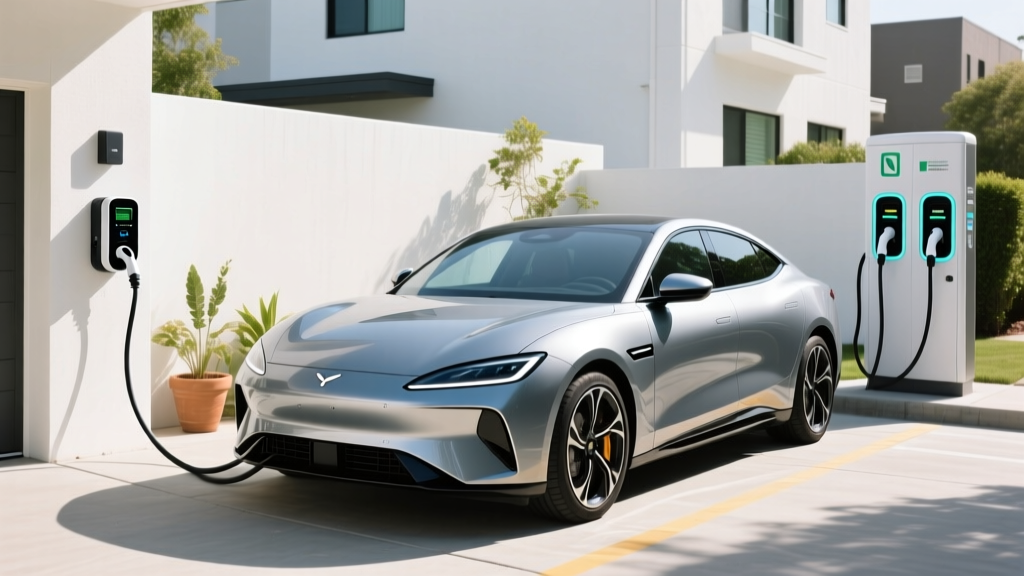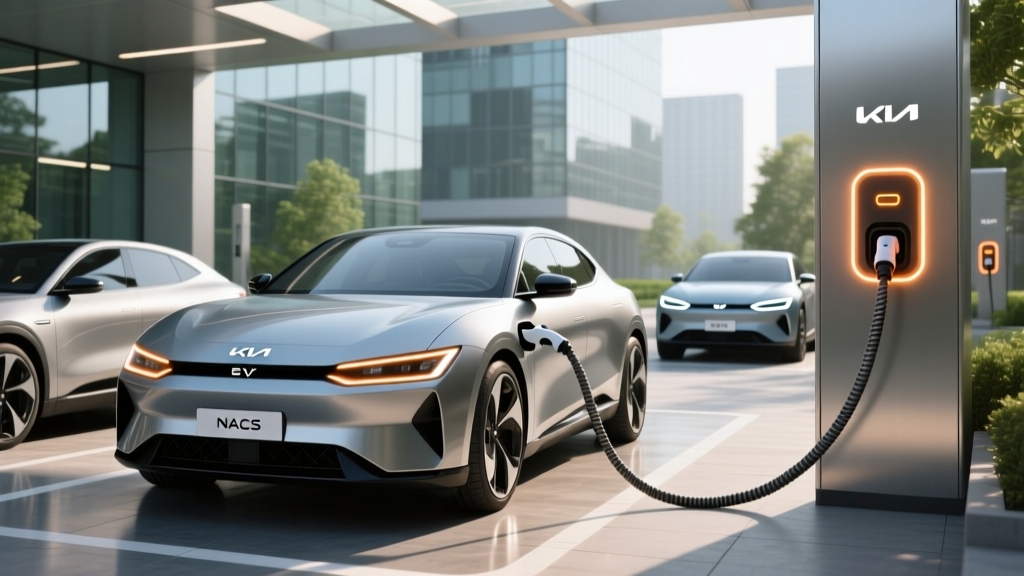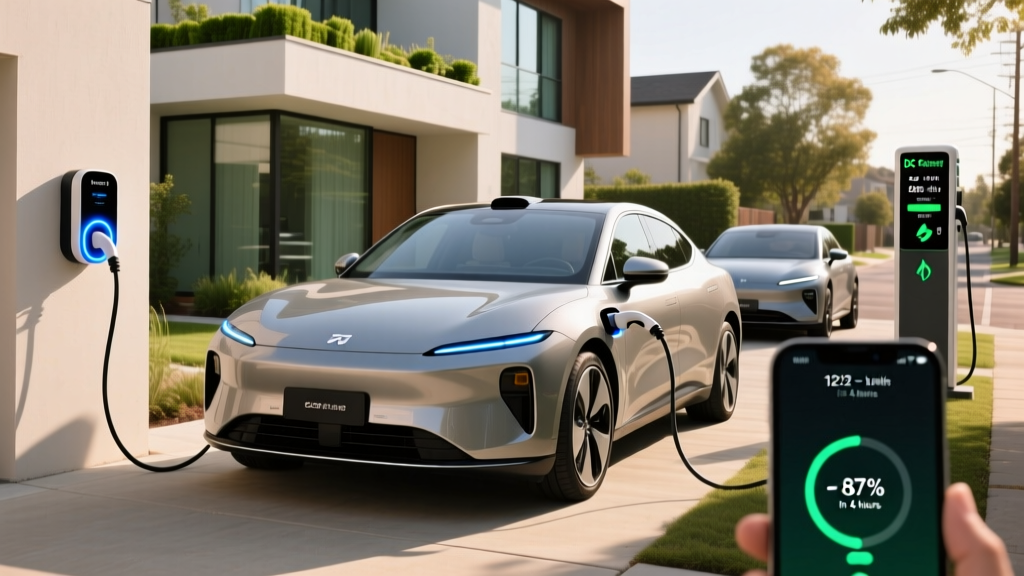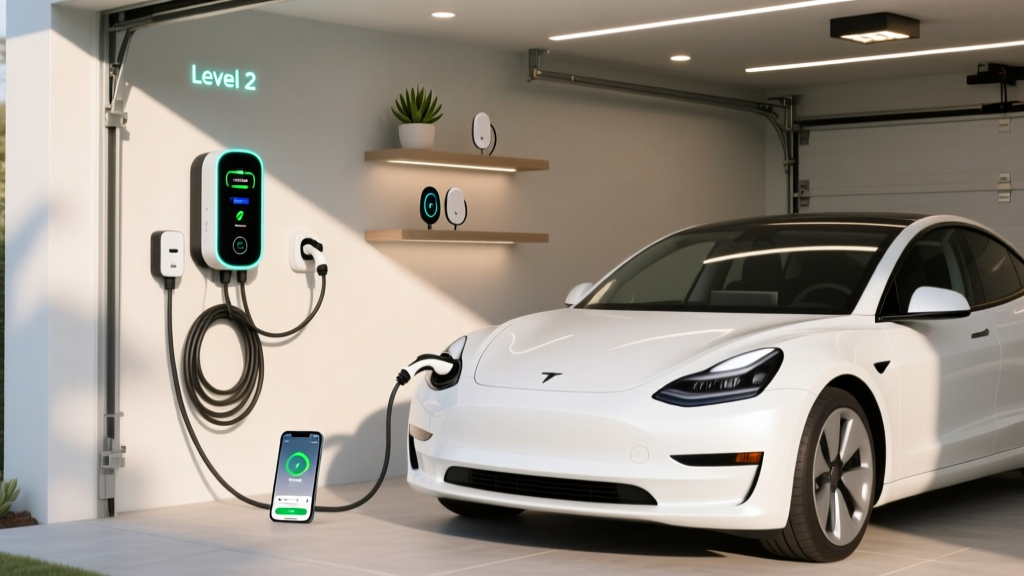
Setting up home EV charging is the single biggest quality-of-life upgrade an electric vehicle owner can make. If you're searching for how to build a charger setup that's fast, safe, and cost-effective, you're not alone — home charging covers roughly 80% of all EV charging for owners with garage or driveway access. This guide walks you through every decision: choosing a charging level, understanding your electrical panel, budgeting for installation, picking the right hardware, and calculating what you'll actually pay per mile.
Understanding EV Charging Levels: Speeds That Matter
Before buying equipment, you need to understand the three charging levels and what each delivers in real-world terms. The critical distinction in EV charging is kW (kilowatts), which measures power delivery rate, versus kWh (kilowatt-hours), which measures energy stored in your battery. Think of kW as how fast water flows from a hose, and kWh as the size of the bucket you're filling.
| Level | Voltage | Power (kW) | Miles of Range/Hour | Best Use Case |
|---|---|---|---|---|
| Level 1 | 120V (standard outlet) | 1.2–1.9 kW | 3–5 miles | Overnight top-up for PHEVs or low-mileage drivers |
| Level 2 | 240V (dryer-style outlet or hardwired) | 3.3–19.2 kW | 12–75 miles | Daily home charging for all BEVs |
| DC Fast Charging | 400V–800V+ (public stations) | 50–350+ kW | 150–1,000+ miles | Road trips and rapid top-ups |
For most EV owners building a home charger, Level 2 at 240V is the target. A 48-amp Level 2 charger (delivering roughly 11.5 kW) will fully replenish a 75 kWh battery (like a Tesla Model Y Long Range) in about 7–8 hours — perfectly aligned with overnight charging. A Level 1 outlet, by contrast, would take over 40 hours for the same battery.
Electrical Requirements: What Your Panel Can Handle
Building a charger at home starts with your electrical panel. Most modern homes have a 200-amp service panel, which can typically support a dedicated 40-amp to 60-amp circuit for EV charging. Here's what you need to evaluate:
- Voltage and amperage: Level 2 charging requires a 240V circuit. Common EV circuits are 40A (supporting a 32A charger, ~7.7 kW) or 60A (supporting a 48A charger, ~11.5 kW). The National Electrical Code requires chargers to draw no more than 80% of the circuit's rated capacity for continuous loads.
- Panel capacity: Your electrician will perform a load calculation to determine if your panel has room. If you already run electric heat, a dryer, and an oven on a 100A or 150A panel, you may need an upgrade.
- Outlet vs. hardwired: A NEMA 14-50 outlet (the same as an electric range) allows you to plug in a mobile charger or wall unit — and take it with you if you move. Hardwired units are permanent but often allow higher amperage and avoid the $75–$150 cost of a GFCI breaker required for receptacle installations in many jurisdictions.
When You'll Need a Panel Upgrade
Homes built before 1990 frequently have 100-amp panels. Adding a 60A EV circuit to a fully loaded 100A panel is often impossible without upgrading to 200A service. A panel upgrade typically costs $1,500–$4,000 depending on your utility's requirements, trenching needs, and local permit fees. This is the single biggest variable that can inflate your build-a-charger budget, and it's frequently overlooked in online cost estimates.
How Much Does It Cost to Install a Home EV Charger?
Here's a realistic cost breakdown for building a Level 2 charger at home in 2026. Costs vary significantly by region, home age, and run length from panel to garage.
| Component | Simple Install (panel nearby) | Complex Install (long run / upgrade) |
|---|---|---|
| EV charger unit (Level 2, 40–48A) | $400–$700 | $400–$700 |
| Electrical permit | $50–$200 | $50–$200 |
| Electrician labor + materials (wire, conduit, breaker) | $400–$800 | $1,200–$3,000 |
| Panel upgrade (if needed) | $0 | $1,500–$4,000 |
| NEMA 14-50 outlet + GFCI breaker (if not hardwired) | $75–$150 | $75–$150 |
| Total | $925–$1,850 | $3,225–$8,050 |
The federal government offers the Alternative Fuel Vehicle Refueling Property Credit (IRS Form 8911), which can cover up to 30% of home charging equipment and installation costs, capped at $1,000 for residential property. Eligibility depends on whether you live in a qualifying census tract — check the latest IRS guidance before counting on this credit.
Connector Compatibility: NACS, CCS, and CHAdeMO Explained
The EV charging connector landscape has shifted dramatically. As of 2026, the North American Charging Standard (NACS) — originally Tesla's proprietary connector — has been adopted by Ford, GM, Rivian, Hyundai, Kia, BMW, and most major automakers. CCS1 remains on vehicles sold through 2024–2025 by legacy brands, and CHAdeMO is essentially legacy-only (Nissan Leaf being the main holdout).
| Connector | Brands Using It (2026 models) | Home Charger Availability | Adapter Needed? |
|---|---|---|---|
| NACS (J3400) | Tesla, Ford, GM, Rivian, Hyundai, Kia, BMW, Volvo, Polestar | Tesla Wall Connector, Emporia, Autel | CCS-to-NACS adapters available (~$200–$300) |
| CCS1 | Older VW ID.4, Porsche Taycan, BMW i4 (pre-2025), some Stellantis | ChargePoint, Emporia, Grizzl-E | NACS-to-CCS adapters available for public charging |
| CHAdeMO | Nissan Leaf (legacy) | Limited home options; mostly public | No practical adapter to NACS/CCS |
Practical advice: If you're buying a new EV in 2026, it almost certainly uses NACS. Buy a NACS-connector home charger. If your EV has CCS1, several quality CCS1 chargers remain available, and you can use a NACS-to-CCS adapter at Tesla Superchargers (where permitted by the vehicle manufacturer).
Equipment Picks: What to Buy When You Build a Charger
We evaluated home chargers on power output, cable length, smart features, build quality, and price. Here are three strong picks for different needs:
Tesla Wall Connector (NACS) — Best Overall
- Power output: Up to 11.5 kW (48A on a 60A circuit)
- Connector: NACS (J3400)
- Cable length: 24 feet
- Smart features: Wi-Fi, OTA updates, load sharing (pair two units on one circuit), Power-Share with Tesla vehicles
- Price: ~$475
- Best for: Tesla owners and any NACS-equipped EV
Emporia Vue Smart EV Charger — Best Value
- Power output: Up to 11.5 kW (48A on a 60A circuit)
- Connector: Available in NACS or J1772 (CCS adapter for older vehicles)
- Cable length: 24 feet
- Smart features: Wi-Fi, app scheduling, solar integration, energy monitoring, load management
- Price: ~$399
- Best for: Budget-conscious buyers wanting smart features and energy tracking
Grizzl-E Smart — Best for Cold Climates / Durability
- Power output: Up to 10 kW (40A on a 50A circuit)
- Connector: J1772 (CCS1 standard); NACS version available
- Cable length: 24 feet
- Smart features: Wi-Fi, OCPP compatibility, adjustable amperage (down to 16A for weak panels)
- Price: ~$449
- Best for: Outdoor installs in extreme cold (rated to -40°F), adjustable amperage for older panels
All three units carry NEMA 4 (outdoor/weatherproof) ratings and should be installed on a dedicated GFCI-protected circuit per NEC 2023 code requirements in most jurisdictions. The Grizzl-E's adjustable amperage is a standout feature: if your panel can only spare a 30A or 40A circuit, you can dial the charger down rather than buying a lower-output unit.
Charging Cost Per Mile: EV vs. Gas in 2026
One of the strongest arguments for building a home charger is fuel cost savings. Here's how common charging scenarios compare on a cost-per-mile basis, using a vehicle with average efficiency of 3.5 miles per kWh (roughly 28.5 kWh/100mi, typical for a mid-size crossover EV).
| Charging Scenario | Rate ($/kWh) | Cost Per Mile | Annual Cost (12,000 mi) |
|---|---|---|---|
| Home Level 2 (off-peak utility rate) | $0.08–$0.14 | $0.023–$0.040 | $276–$480 |
| Home Level 2 (standard residential rate) | $0.14–$0.20 | $0.040–$0.057 | $480–$684 |
| Public Level 2 (network pricing) | $0.25–$0.49 | $0.071–$0.140 | $852–$1,680 |
| DC Fast Charging (public) | $0.35–$0.65 | $0.100–$0.186 | $1,200–$2,232 |
| Gasoline (25 MPG combined, $3.40/gal) | — | $0.136 | $1,632 |
Home charging on an off-peak rate (available from most utilities) delivers fuel at roughly one-quarter to one-third the per-mile cost of gasoline. Even at standard residential rates, you'll save $900–$1,350 annually versus gas. However, if you rely exclusively on DC fast charging, costs can exceed gasoline — which is exactly why building a home charger is financially essential.
For detailed efficiency data on specific models, the EPA's fueleconomy.gov database provides kWh/100mi figures for every EPA-certified EV sold in the US.
Charging Time Examples: What to Expect
Charging time depends on your battery size, the charger's kW output, and the vehicle's onboard charger capacity. Most EVs accept between 7.2 kW and 19.2 kW on Level 2 AC. Here are realistic 10–80% charging times for common scenarios:
- Tesla Model Y (75 kWh usable, 11.5 kW onboard): ~4.5 hours on a 48A Level 2 charger (10–80%)
- Hyundai Ioniq 5 (77.4 kWh usable, 10.9 kW onboard): ~5 hours on a 48A charger (10–80%)
- Ford F-150 Lightning Extended Range (131 kWh usable, 19.2 kW onboard): ~6.8 hours on a 48A charger; ~5 hours on an 80A charger (10–80%)
- Chevrolet Equinox EV (85 kWh usable, 11.5 kW onboard): ~5.2 hours on a 48A charger (10–80%)
DC fast charging is a different story. Most modern EVs on a 150–250 kW DC charger will hit 10–80% in 18–30 minutes. However, charging slows dramatically above 80% to protect battery health — the "charge curve taper" means the last 20% can take as long as the first 80%. For daily driving, set your charge limit to 80% (or 100% for LFP batteries like Tesla's standard-range models) and charge overnight at home.
Safety, Code, and Permit Considerations
Building a charger isn't a DIY electrical project. Here's what code compliance looks like:
- Dedicated circuit: Your EV charger must be on its own dedicated breaker — no sharing with other appliances. This prevents overloads and tripped breakers during long charging sessions.
- GFCI protection: The 2023 National Electrical Code (NEC) requires GFCI protection for EV charging outlets in garages and outdoor locations. Hardwired installations may be exempt in some jurisdictions. A 240V GFCI breaker adds $75–$150 to your install.
- Outdoor rating: If your charger is outdoors, it must carry a NEMA 4 or NEMA 4X rating for weather resistance. All three picks above meet this standard.
- Permit and inspection: Most municipalities require an electrical permit ($50–$200) and a post-install inspection. Skipping the permit risks insurance claim denial if a fire originates from unpermitted work. Your electrician should pull the permit — not you.
- Wire gauge: A 60A circuit requires 6 AWG copper wire (or 4 AWG aluminum). Longer runs may require upsizing to prevent voltage drop. Your electrician will calculate this based on distance.
Frequently Asked Questions
How much does it cost to install a home EV charger?
A straightforward Level 2 install with the panel nearby typically costs $925–$1,850 total (equipment, labor, permit). Complex installs requiring long wire runs or a panel upgrade can reach $3,200–$8,000+. The federal refueling property credit may offset up to $1,000 in qualifying census tracts.
How fast will each charging level add range?
Level 1 (120V) adds 3–5 miles per hour. Level 2 (240V, 48A) adds roughly 35–45 miles per hour depending on vehicle efficiency. DC fast charging can add 150–300+ miles in 20–30 minutes, depending on station power and the vehicle's charge curve.
Which connector/charger is compatible with my EV?
Check your vehicle's charge port. Nearly all new EVs from 2025 onward use NACS. Vehicles from 2023–2024 may have CCS1. The Nissan Leaf uses CHAdeMO. Match your home charger's connector to your vehicle, or use an adapter for public charging.
How much does charging cost per mile vs gas?
Home Level 2 charging on off-peak rates costs $0.02–$0.04 per mile — roughly 70–80% less than gasoline at $3.40/gallon and 25 MPG. Public DC fast charging at $0.35–$0.65/kWh costs $0.10–$0.19 per mile, which can exceed gas costs.
What electrical upgrades might I need?
If your home has a 100A panel or limited breaker slots, you may need a panel upgrade to 200A ($1,500–$4,000). Some utilities offer managed-charging programs that allow a higher-amperage circuit by automatically reducing charge rate during peak demand — ask your utility before upgrading your panel.
Can I install an EV charger myself?
Level 1 (plugging into a standard 120V outlet) requires no installation. Level 2 involves 240V wiring at high amperage — this is not a DIY project. Improper installation risks fire, equipment damage, and insurance claim denial. Always hire a licensed electrician and pull a permit.