Why a 1995 Buick Riviera Supercharged Owner Needs This Charging Primer
If you've spent years behind the wheel of a 1995 Buick Riviera Supercharged — that supercharged 3.8L L36 V6 pushing 240 horsepower and roughly 18 MPG combined — you already know what it means to watch the fuel gauge drop on a long interstate run. Now that you're researching electric vehicles, the biggest mental shift isn't the lack of a supercharger whine. It's replacing "fill up at the pump" with a layered charging ecosystem measured in kilowatts (kW, the rate of flow) and kilowatt-hours (kWh, the energy stored). Confusing those two is the single most common EV literacy mistake, and it leads to bad buying decisions.
This guide walks you through every charging layer you'll actually use, with the exact numbers a former internal-combustion buyer needs: miles added per hour, install costs down to the breaker, connector compatibility by brand, and the per-mile math versus the premium fuel that supercharged 3800 Series II V6 demanded.
Charging Levels Explained: kW, Miles Per Hour, and When Each Makes Sense
Every EV sold in the U.S. today supports three charging tiers. The power figure (kW) determines how quickly electrons move into the battery pack; the miles-per-hour figure translates that into something your Riviera-trained brain recognizes.
| Level | Voltage / Phase | Typical Power (kW) | Miles of Range Added Per Hour | Best Use Case |
|---|---|---|---|---|
| Level 1 | 120V AC, single-phase | 1.0 – 1.4 kW | 3 – 5 mi/hr | Overnight top-ups, PHEVs, low-mileage drivers |
| Level 2 | 240V AC, single-phase | 7.2 – 19.2 kW | 25 – 70 mi/hr | Daily home charging, workplace, destination |
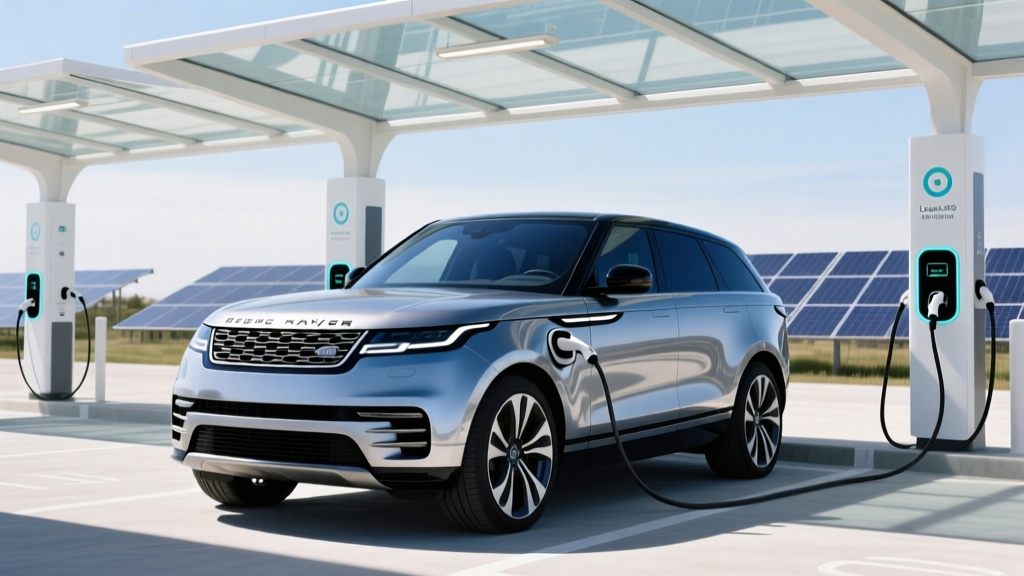
| DC Fast Charge | 400V–800V DC | 50 – 350 kW (peak) | 150 – 1,000+ mi/hr (first 20 min) | Road trips, corridor travel, fleet turnover |
A few realities the spec sheet won't tell you:
- DC fast charging does not sustain peak kW. A vehicle rated for 250 kW peak may only hold that rate between 10% and 35% state of charge (SoC), then taper to ~150 kW, then ~75 kW above 70%. That's why manufacturers quote 10–80% times rather than 0–100%.
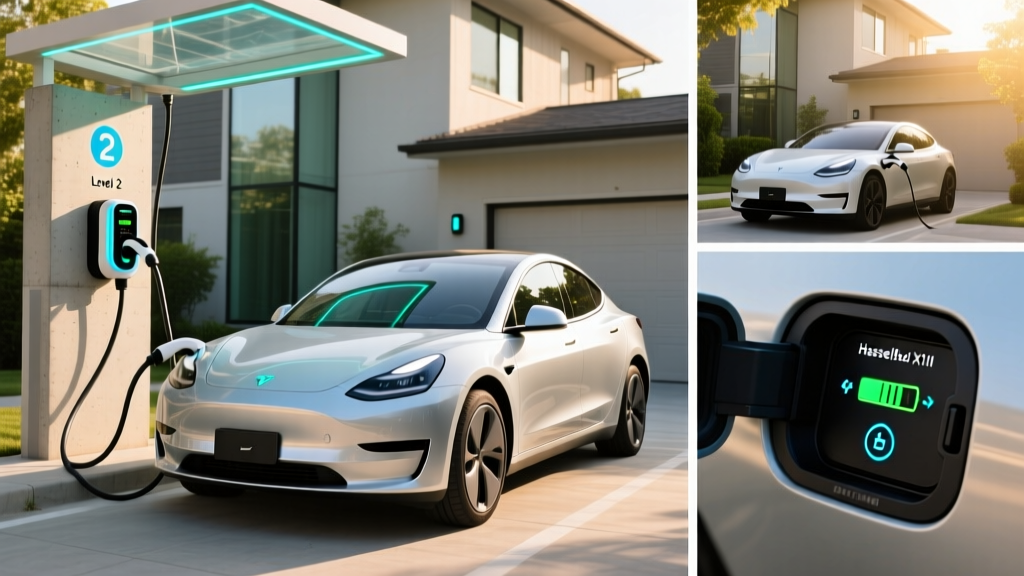
- Level 2 at home is where 85%+ of EV charging happens for owners with garage or driveway access. It's the electric equivalent of never visiting a gas station for daily driving.
- Level 1 is viable for PHEVs with small batteries (10–20 kWh usable) but painfully slow for a 75–100 kWh BEV — figure 3+ days for a full charge from near-empty.
Home Level 2 Installation: Electrical Requirements, Panel Upgrades, and Real Costs
A proper Level 2 home install is a 240V dedicated circuit — the same class of service your electric dryer or oven uses. The Riviera's generation never worried about amperage at the fuel pump; you will now.
What the Electrician Will Evaluate
- Panel capacity: Most modern homes have 200A service. A 48A EV charger draws 60A breaker capacity (NEC 125% continuous-load rule). If your panel is already near 80% utilization — common in homes with electric heat, A/C, and a dryer — you may need a 400A upgrade or a smart load-management device like the Emporia VUE with automatic EV-current throttling.
- Circuit rating vs. charger rating: A 48A continuous charger requires a 60A breaker. A 40A charger needs a 50A breaker. Never undersize the breaker.
- Wire gauge: 6 AWG copper for 48A runs under ~100 feet; 4 AWG for longer runs or 64A circuits.
- GFCI protection: NEC 2020/2023 requires GFCI on 240V EV receptacles (NEMA 14-50). Hardwired units often sidestep this requirement and are more reliable — no nuisance trips.
- Permit and inspection: Most jurisdictions require an electrical permit ($50–$250) and a final inspection. Skip this and your insurance carrier can deny a related claim.
Install Cost Breakdown
| Line Item | Low End | Typical | High End |
|---|---|---|---|
| Level 2 EVSE hardware (40–48A) | $350 | $550 | $750 |
| Electrician labor (2–6 hrs @ $85–$150/hr) | $170 | $500 | $900 |
| Materials (wire, conduit, breaker, disconnect) | $80 | $200 | $450 |
| Permit and inspection | $50 | $150 | $250 |
| Panel upgrade (if needed, 200A → 400A) | $2,000 | $3,500 | $5,500 |
| Total (no panel upgrade) | $650 | $1,400 | $2,350 |
The IRS §30C alternative fuel vehicle refueling property credit covers up to 30% of home charger hardware and installation costs, capped at $1,000, for eligible census tracts. Confirm eligibility with a tax professional before counting on it.
Connector Compatibility: NACS, CCS1, CHAdeMO, and the Adapter Reality
The 1995 Riviera used a single fuel filler neck. Today's EV market has fragmented into three DC fast-charging connector families, though consolidation is underway fast.
| Connector | Brands Using It (Factory) | DC Network Access | Adapter Required For |
|---|---|---|---|
| NACS (North American Charging Standard) | Tesla, Ford, GM, Rivian, Volvo, Polestar, Nissan (2025+), Fisker, Lucid (2025+) | Tesla Supercharger + growing CCS retrofits | Legacy CCS stations (CCS1→NACS adapter included with most new vehicles) |
| CCS1 (Combined Charging System) | Hyundai, Kia, BMW, VW, Audi, Porsche, Mercedes, Stellantis | Electrify America, EVgo, ChargePoint, Ionity | Tesla Superchargers (Magic Dock built-in at select stalls, or NACS→CCS adapter) |
| CHAdeMO | Legacy Nissan Leaf, Mitsubishi Outlander PHEV | Declining; mostly legacy stations | Not practical for new EV purchase |
Practical guidance: if you're buying a new 2025/2026 BEV, NACS is becoming the de facto standard, and the Tesla Supercharger network remains the most reliable U.S. corridor infrastructure per fueleconomy.gov and third-party uptime trackers. Hyundai/Kia's E-GMP vehicles (Ioniq 5, EV6, EV9) still ship CCS1 but include or offer a NACS adapter; verify before purchase.
Charging Time Examples: What 10–80% Actually Looks Like
Because the charge curve tapers above ~50% SoC to protect battery health (lithium-ion cells resist accepting current as they fill — it's electrochemistry, not a software quirk), 10–80% is the standard comparison window.
- Hyundai Ioniq 5 (84 kWh usable, NMC, 800V architecture): Peak 240 kW on 350 kW stall, 10–80% in approximately 18 minutes. Sustained average closer to 165 kW.
- Tesla Model Y Long Range (~75 kWh, NMC): Peak 250 kW on V3 Supercharger, 10–80% in roughly 25–28 minutes.
- Ford F-150 Lightning Extended Range (131 kWh usable, NMC): Peak 150 kW, 10–80% in approximately 41 minutes — a big pack and a moderate peak rate make for a long session.
- Chevrolet Equinox EV (85 kWh, NMC): Peak 150 kW, 10–80% in about 35 minutes.
- Level 2 home, 48A / 11.5 kW, 75 kWh pack (e.g., Model Y): 0–100% in ~7.5 hours — easily overnight.
Preconditioning matters: if you navigate to a DC fast charger using the vehicle's built-in nav, most EVs will warm the battery en route, enabling peak kW upon arrival. Show up cold and that 18-minute stop can stretch past 35 minutes, especially below 40°F ambient.
Cost Per Mile: EV Charging vs. Premium Gasoline (Your Riviera's Baseline)
The 1995 Buick Riviera Supercharged required premium fuel and averaged roughly 18 MPG combined. At $3.80/gallon premium, that's $0.211 per mile in fuel alone. Here's what the EV side looks like across common scenarios, assuming a vehicle efficiency of 3.0 miles/kWh (typical for a midsize crossover BEV).
| Scenario | Price Paid | Cost Per Mile | Annual Savings vs. Riviera (12,000 mi) |
|---|---|---|---|
| Home, off-peak utility rate | $0.12/kWh | $0.040 | $2,052 |
| Home, average blended rate | $0.17/kWh | $0.057 | $1,848 |
| Public Level 2 (ChargePoint, EVgo) | $0.35/kWh | $0.117 | $1,128 |
| DC Fast Charging (Electrify America) | $0.48/kWh | $0.160 | $612 |
| Tesla Supercharger (varies by location) | $0.32/kWh avg | $0.107 | $1,248 |
| 1995 Riviera Supercharged (premium) | $3.80/gal @ 18 MPG | $0.211 | — |
Even exclusive DC fast charging — the most expensive scenario — undercuts premium gasoline. Most owners who charge at home 80%+ of the time see effective fuel costs drop below $0.06/mile. The U.S. Department of Energy's EV technology overview corroborates the 60–70% per-mile savings most BEV owners report versus ICE vehicles on premium fuel.
Equipment Picks: Three Level 2 Chargers Worth Installing in 2026
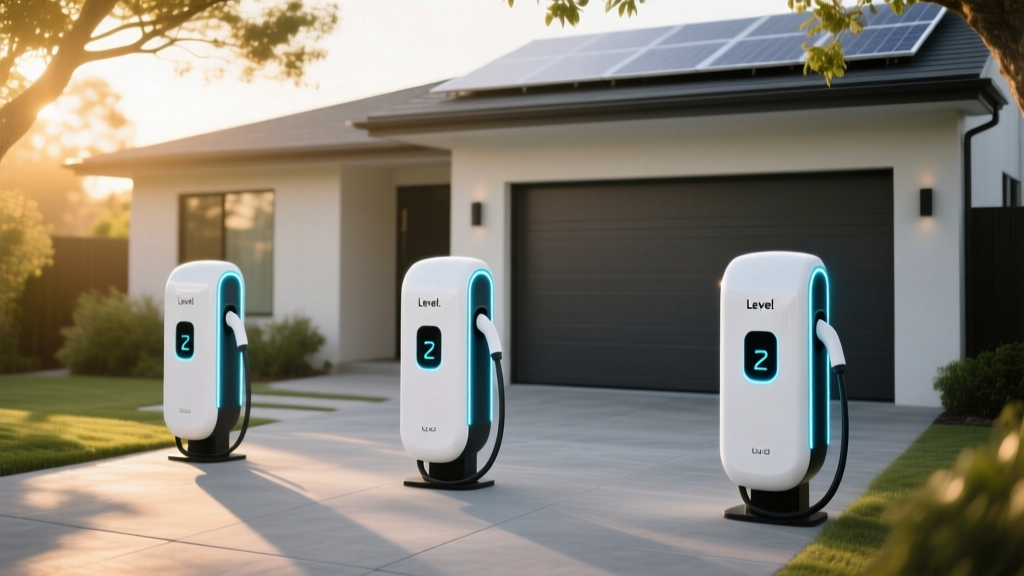
ChargePoint Home Flex (NACS or CCS1)
- Power output: Up to 12 kW (50A) on a 60A circuit; configurable down to 16A for smaller panels
- Connector: NACS or CCS1 at order
- Cable length: 23 feet
- Smart features: Wi-Fi, app scheduling, utility demand-response integration, Alexa/Google
- Price: ~$549 (hardware only)
- Why it earns the pick: Flexible amperage lets you future-proof a 60A circuit today but throttle to 32A if your panel is tight. UL-listed, Energy Star certified.
Wall Connector (Tesla, NACS native)
- Power output: Up to 11.5 kW (48A) on a 60A circuit
- Connector: NACS (CCS vehicles can use Tesla's Universal Wall Connector with integrated Magic Dock)
- Cable length: 24 feet
- Smart features: Wi-Fi updates, Power-Share between two units on one circuit, vehicle-specific access control
- Price: ~$495
- Why it earns the pick: Best-in-class cable management, tightest integration with Tesla/Ford/GM NACS-native vehicles, and proven long-term reliability.
Emporia Vue Level 2 Charger
- Power output: Up to 11.5 kW (48A) on 60A circuit
- Connector: NACS or CCS1
- Cable length: 24 feet
- Smart features: Solar-aware charging, integration with Emporia VUE energy monitor, automatic load management to avoid panel overload
- Price: ~$399
- Why it earns the pick: If your home has solar or an older 100–150A panel, the load-management feature can avoid a $3,000+ panel upgrade by dynamically throttling charge rate when the house load spikes.
Safety, Code, and the Details That Keep Your Installation Legal
The NEC (National Electrical Code) treats EV charging as a continuous load — defined as running at maximum current for three hours or more. That triggers the 125% rule: a 48A charger needs a 60A breaker, and the wire must be sized accordingly. Shortcuts here cause nuisance trips, melted receptacles, or worse.
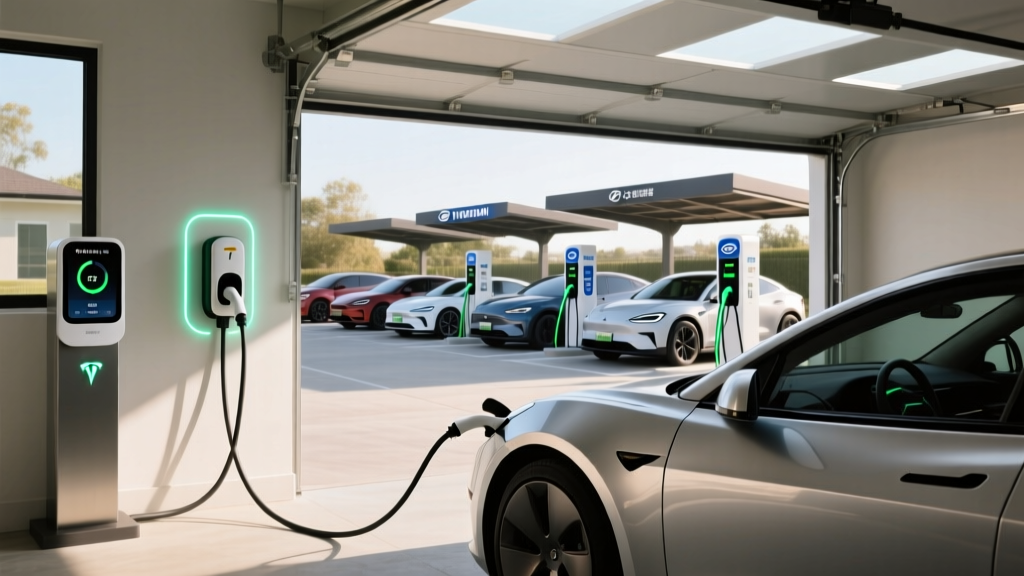
- Hardwired vs. plug-in: Hardwired installations skip the NEMA 14-50 receptacle, which eliminates the GFCI nuisance-trip problem and removes one failure point. Most electricians prefer hardwired for daily-use EVSEs.
- Outdoor rating: Any outdoor-mounted unit must be NEMA 4 rated (weatherproof). All three picks above qualify. Confirm your installer uses an in-use cover if a plug-in receptacle is mounted outside.
- Dedicated circuit: Never share the EV circuit with other loads. The NEC is unambiguous here.
- Cable management: A retractable cord reel or J-hook prevents trip hazards and UV/wear damage. Don't leave the cable on a garage floor where tires can run over it.
- Utility notification: Some utilities (PG&E, ConEd, Xcel) require notification before adding a Level 2 load and will offer time-of-use rates that cut your charging cost in half by shifting sessions to 11 p.m.–6 a.m.
The NHTSA does not regulate home EVSEs directly, but UL listing (UL 2594 for EVSE) is the safety standard your insurer will reference in the event of a claim. Never install a non-UL-listed unit imported from an unknown brand — the liability exposure is real.
Frequently Asked Questions
How much does it cost to install a home EV charger?
A typical 48A Level 2 install on an existing 200A panel runs $1,000–$2,000 all-in (hardware, labor, permit, materials). Homes needing a panel upgrade to 400A should budget an additional $2,000–$5,500. The IRS §30C credit can offset up to $1,000 of that total for eligible taxpayers in qualifying census tracts.
How fast will each charging level add range?
Level 1 (120V) adds roughly 3–5 miles per hour. Level 2 (240V, 48A) adds 25–45 miles per hour depending on vehicle efficiency. DC fast charging can add 150–250 miles in 15–25 minutes, but only within the 10–80% SoC window; charging slows sharply above 80% to protect battery chemistry.
Which connector or charger is compatible with my EV?
Check the vehicle's factory port: 2025–2026 Tesla, Ford, GM, Rivian, and Volvo use NACS. Hyundai, Kia, BMW, VW, and most Stellantis models still use CCS1. CHAdeMO is effectively dead for new vehicles. Most automakers now include or offer the adapter needed to reach the other network — confirm at point of sale.
How much does charging cost per mile versus gas?
Home charging at average U.S. electricity rates ($0.17/kWh) costs about $0.05–$0.06 per mile for a typical BEV. The 1995 Buick Riviera Supercharged on premium at 18 MPG costs roughly $0.21 per mile. Even public DC fast charging at $0.48/kWh undercuts premium gasoline at approximately $0.16 per mile.
What electrical upgrades might I need?
The most common upgrade is a new 60A double-pole breaker and 6 AWG wire run from panel to garage — straightforward on a 200A panel with spare slots. Older homes with 100A or 150A service, or panels already loaded with electric heat, dryer, range, and A/C, may need a service upgrade to 200A or 400A, or a smart load-management device that throttles the charger when house load spikes.
Will my EV battery degrade from frequent DC fast charging?
Modern thermal management systems have reduced DC-fast-charging degradation to a minor factor. Data from Recurrent Auto shows batteries charged primarily on DC fast chargers retain roughly 2–4% less capacity at 100,000 miles versus those charged predominantly on Level 2 — a difference most owners will never notice in daily range. Still, Level 2 at home remains gentler on the pack and is the recommended daily method.