If you're still driving a 1999 Buick Riviera Supercharged — that supercharged 3.8L V6 pushing 240 hp and sipping premium at roughly 18 mpg combined — you already know the pain of $60+ fill-ups. Swapping that classic GM grand tourer for a modern electric vehicle eliminates gas station dependency entirely, but only if you understand the charging ecosystem before you buy. This guide maps every charging level, connector, cost, and home-installation detail you need to make the transition seamless.
Why Charging Literacy Matters Before You Shop for an EV
The Riviera's 18.5-gallon tank took five minutes to fill. An EV battery requires a fundamentally different mental model: you'll charge where you park, not where you detour. Before comparing vehicles, lock down the distinction between kW (kilowatts), which measures the rate of energy flow like water pressure in a hose, and kWh (kilowatt-hours), which measures the total energy stored in the battery, like the volume of a tank. A 75 kWh battery charged at 11.5 kW (a typical Level 2 home charger) takes roughly 6.5 hours from empty to full. Confusing these units is the single most common mistake new EV buyers make.
The Three Charging Levels: Speed, Cost, and Real-World Range Added
Every EV sold in the U.S. charges across one or more of three tiers. Here's how each performs with a representative 75 kWh battery pack (similar to a Tesla Model Y Long Range or Hyundai Ioniq 5):
| Level | Voltage / Amps | Power (kW) | Miles Added per Hour | 10–80% Time (75 kWh) | Typical Use |
|---|---|---|---|---|---|
| Level 1 | 120V / 12A | ~1.4 kW | 3–5 mi/hr | ~36 hours | Overnight trickle; PHEVs |
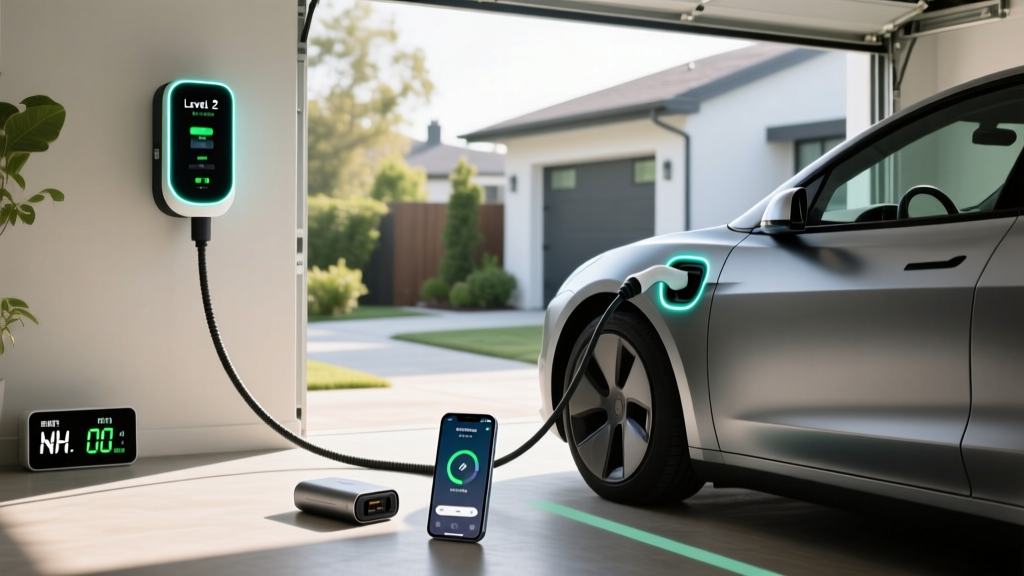
| Level 2 | 240V / 32–48A | 7.7–11.5 kW | 25–44 mi/hr | 5.5–7 hours | Home daily charging |
| DC Fast | 400–800V DC | 50–350 kW | 150–1,200+ mi/hr | 18–40 min | Road trips, highway corridors |
DC fast chargers don't sustain peak power across the full session. A charger rated at 250 kW might deliver that rate only between 10–30% State of Charge (SoC), then taper to ~100 kW above 60% and ~40 kW above 85%. This is the charge curve, and it's why manufacturers quote 10–80% times rather than 0–100% times. Charging past 80% on DC fast charging is slow and stresses the battery — reserve it for when you genuinely need the range.
Home Charger Installation: Requirements, Panel Upgrades, and Real Costs
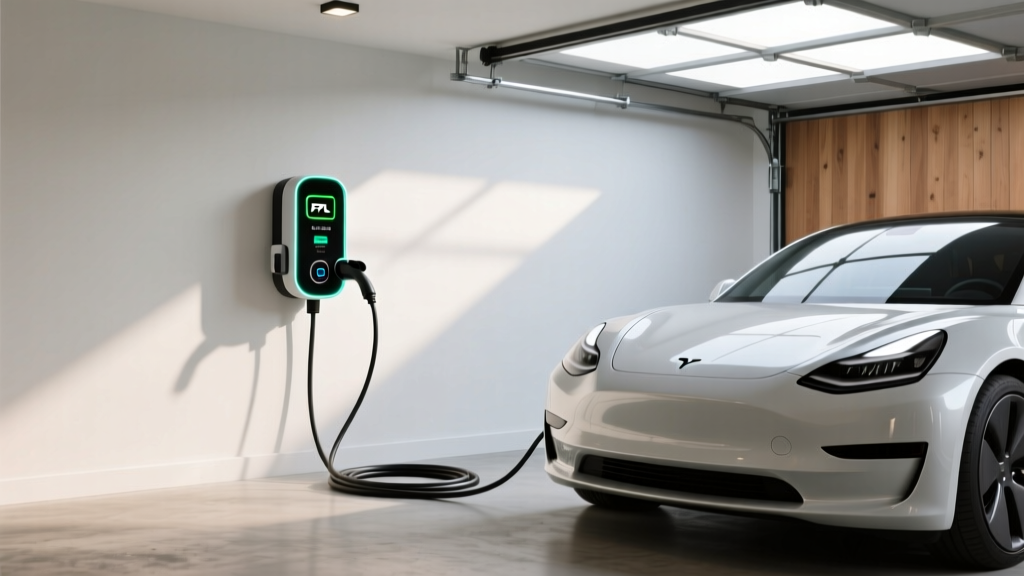
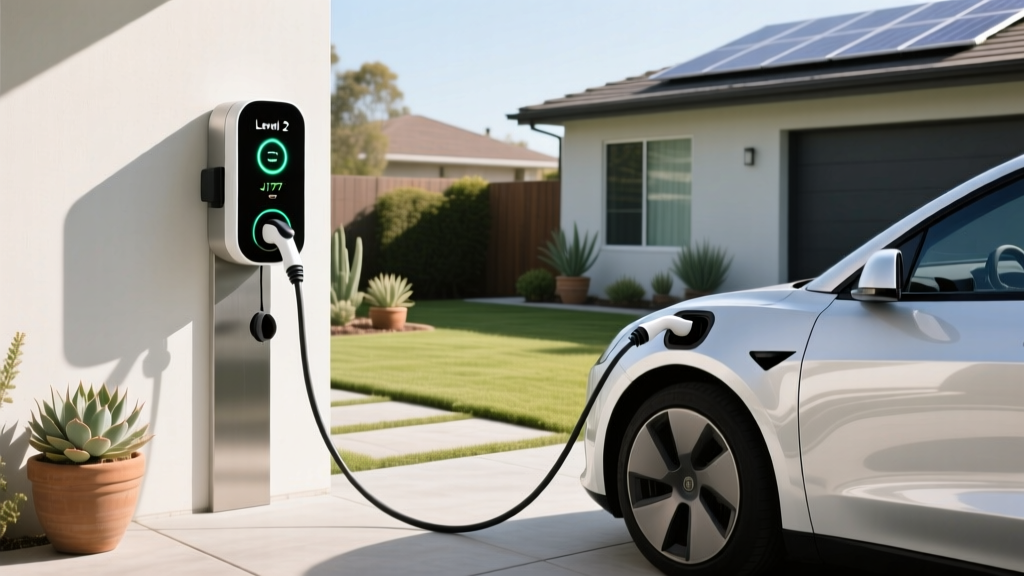
A Level 2 home charger is the single biggest quality-of-life upgrade an EV owner can make. You wake up every morning with a "full tank." But installation isn't plug-and-play — it depends on your home's electrical panel, the distance from panel to charger location, and local permitting.
Electrical Requirements
- Circuit: A dedicated 40A or 50A 240V circuit (NEMA 14-50 outlet or hardwired).
- Continuous load rule: NEC requires EV chargers to run at 80% of circuit capacity. A 40A circuit supports a 32A (7.7 kW) charger; a 50A circuit supports a 40A (9.6 kW) charger; a 60A circuit supports a 48A (11.5 kW) charger.
- Panel capacity: Most homes built after 1990 have 200A service, which usually accommodates a Level 2 charger. Older homes — including many built around the same era as the '99 Riviera — may have 100A or 150A panels that require an upgrade.
- Permit: Most jurisdictions require an electrical permit ($50–$200) and a post-install inspection.
Installation Cost Breakdown
| Component | Simple Install (short run, 200A panel) | Complex Install (long run, panel upgrade) |
|---|---|---|
| EVSE equipment (Level 2 charger) | $300–$700 | $300–$700 |
| Electrician labor (2–8 hours) | $300–$800 | $800–$2,000 |
| Materials (conduit, wire, breaker) | $100–$300 | $200–$600 |
| Electrical permit | $50–$150 | $50–$200 |
| Panel upgrade (100A → 200A), if needed | $0 | $1,500–$3,500 |
| Total | $750–$1,950 | $2,850–$7,000 |
Always get at least two quotes from licensed electricians. Ask specifically whether the quote includes a load calculation to confirm your panel can handle the new circuit — a reputable electrician will perform this before pulling wire. Some utilities offer rebates of $250–$1,000 for Level 2 installations; check with your local provider before work begins.
Connector Compatibility: NACS, CCS1, CHAdeMO, and Adapters
Not every EV plugs into every charger. Here's the connector landscape as of 2026:
| Connector | Brands Using It (2025–2026 models) | DC Fast Charge Support | Adapter Available? |
|---|---|---|---|
| NACS (Tesla / J3400) | Tesla, Ford, GM, Rivian, Volvo, Polestar, Hyundai, Kia, BMW | Yes — Supercharger & third-party | OEM adapters for legacy CCS vehicles |
| CCS1 (Combined Charging System) | Volkswagen ID.4 (older), Stellantis, some legacy models | Yes — Electrify America, EVgo | CCS-to-NACS adapters emerging |
| CHAdeMO | Nissan Leaf (discontinued new), Mitsubishi Outlander PHEV | Yes — declining network | Limited availability |
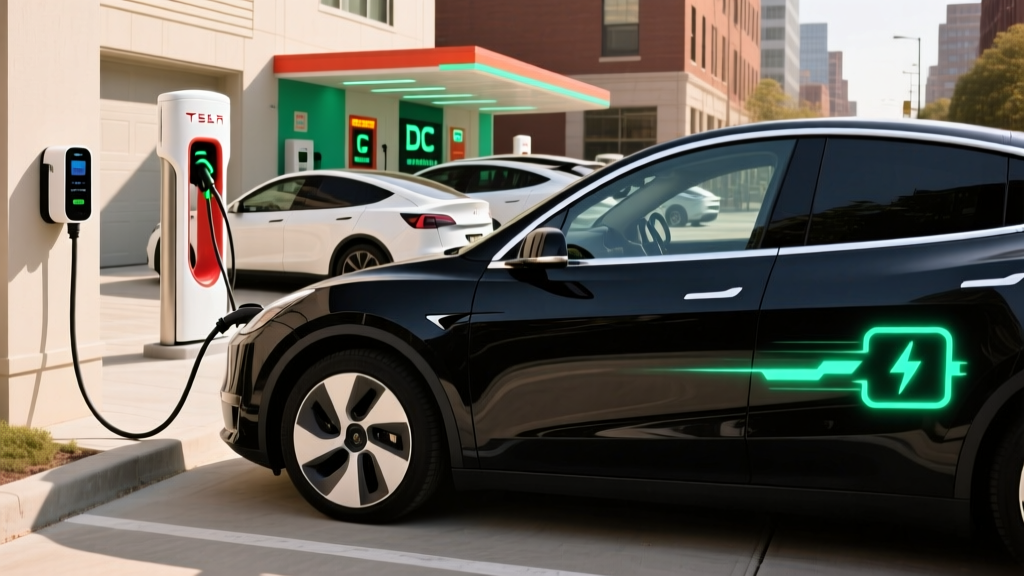
The industry has overwhelmingly adopted NACS as the North American standard. If you're buying a new EV in 2026, it almost certainly ships with a NACS port. Non-Tesla NACS vehicles can access Tesla Superchargers using the manufacturer-supplied adapter (typically included or ~$200–$250). If you buy a used EV with a CCS1 port, CCS-to-NACS adapters from brands like Lectron and A2Z are available for $150–$300, letting you access Superchargers.
Cost to Charge: Per-Mile Economics vs. Your Riviera's Gas Bill
The 1999 Buick Riviera Supercharged averages about 18 mpg combined on premium fuel. At $4.00/gallon (a reasonable 2026 national average for premium), that's $0.222 per mile in fuel alone. Here's how EVs compare across charging scenarios, assuming a vehicle efficiency of 3.5 miles per kWh (representative of a Tesla Model Y or Hyundai Ioniq 5):
| Charging Scenario | $/kWh | Cost per Mile | Savings vs. Riviera (per 12,000 mi/yr) |
|---|---|---|---|
| Home, off-peak utility rate | $0.10–$0.14 | $0.029–$0.040 | $2,180–$2,320 |
| Home, standard residential rate | $0.15–$0.20 | $0.043–$0.057 | $1,980–$2,150 |
| Public Level 2 (ChargePoint, etc.) | $0.25–$0.40 | $0.071–$0.114 | $1,290–$1,750 |
| DC Fast Charging (Electrify America, EVgo) | $0.35–$0.55 | $0.100–$0.157 | $780–$1,460 |
| Tesla Supercharger (varies by location) | $0.25–$0.40 | $0.071–$0.114 | $1,290–$1,750 |
The math is stark: charging at home on an off-peak rate costs roughly one-sixth what you're spending on premium for the Riviera. Even exclusive DC fast charging — the most expensive scenario — still saves most drivers $780+ annually. According to fueleconomy.gov, the average EV driver who charges primarily at home saves $800–$1,500 per year in fuel costs compared to a comparable gasoline vehicle.
Recommended Home Chargers: Power, Features, and Price
Here are three well-regarded Level 2 home chargers suited to different budgets and needs. All are UL-listed and compatible with NACS (or offer NACS variants):
Emporia Level 2 Smart Charger
- Power: 48A / 11.5 kW (requires 60A circuit)
- Connector: NACS (J3400) or J1772 with adapter
- Cable length: 24 ft
- Smart features: Wi-Fi, energy monitoring via Emporia Vue integration, scheduled charging, utility rate optimization
- Price: ~$350–$400
- Best for: Budget-conscious buyers who want full smart features and solar integration
ChargePoint Home Flex
- Power: Configurable 16–50A / up to 12 kW (adjust to your circuit)
- Connector: NACS or J1772 (swappable pigtail)
- Cable length: 23 ft
- Smart features: Wi-Fi, app-based scheduling, Alexa integration, detailed session history
- Price: ~$550–$650
- Best for: Flexible amperage for homes with limited panel capacity
Wall Connector (Tesla, 3rd Gen)
- Power: 48A / 11.5 kW (requires 60A circuit)
- Connector: NACS native
- Cable length: 24 ft
- Smart features: Wi-Fi, OTA firmware updates, power-sharing with second unit, access control
- Price: ~$420–$475
- Best for: Tesla owners or multi-EV households wanting power-sharing
If your panel can only support a 40A circuit, choose a charger configurable to 32A (7.7 kW) — the ChargePoint Home Flex excels here. Never install a charger that draws more than 80% of your circuit's rated amperage.
Safety, Code Compliance, and Outdoor Installation
EV chargers are high-draw, continuous-load appliances — the same electrical category as an electric oven or dryer. Key safety considerations per the National Electrical Code (NEC Article 625):
- Dedicated circuit: Your Level 2 charger must have its own breaker — never share a circuit with other appliances.
- GFCI protection: NEC 2020+ requires GFCI breakers for outdoor receptacles used for EV charging. Hardwired installations may not require GFCI in all jurisdictions — confirm with your electrician and local inspector.
- Outdoor rating: If mounting outside, the EVSE must carry a NEMA 4 (weatherproof) rating. All three chargers recommended above are outdoor-rated.
- Cable management: Use a wall-mounted holster or cable organizer to prevent tripping hazards and cord damage.
- Wire gauge: 6 AWG copper for 50A circuits; 4 AWG for 60A circuits over longer runs. Your electrician will size this based on run distance and local code.
Frequently Asked Questions
How much does it cost to install a home EV charger?
A straightforward Level 2 installation on an existing 200A panel with a short wire run typically costs $750–$1,950 including equipment, electrician labor, materials, and permit. If your home needs a panel upgrade (common in pre-2000 homes), expect $2,850–$7,000 total. Always get a load calculation from a licensed electrician before committing.
How fast will each charging level add range?
Level 1 (120V) adds 3–5 miles of range per hour — adequate only for plug-in hybrids with small batteries. Level 2 (240V) adds 25–44 miles per hour, easily replenishing a daily commute overnight. DC fast charging adds 150–1,200+ miles per hour at peak power, but tapers significantly above 80% SoC — expect a 75 kWh battery to reach 10–80% in 18–40 minutes depending on the charger's peak kW and the vehicle's charge acceptance rate.
Which connector/charger is compatible with my EV?
Nearly all new EVs sold in 2026 use the NACS (J3400) connector, including Tesla, Ford, GM, Hyundai, Kia, BMW, Rivian, and Volvo models. Older used EVs may have CCS1 (VW ID.4, older Bolt) or CHAdeMO (Nissan Leaf). CCS-to-NACS adapters are available for $150–$300, and most automakers include or sell OEM NACS adapters for Supercharger access. Check your vehicle's spec sheet or owner's manual before purchasing a home charger.
How much does charging cost per mile vs. gas?
Home charging at off-peak rates ($0.10–$0.14/kWh) costs roughly $0.03–$0.04 per mile for an efficient EV. Compare that to the 1999 Buick Riviera Supercharged at 18 mpg on $4.00 premium: $0.22 per mile. Even the most expensive public DC fast charging ($0.35–$0.55/kWh) comes in at $0.10–$0.16 per mile — still cheaper than the Riviera. The U.S. Department of Energy's eGallon calculator provides state-by-state electricity vs. gas comparisons.
What electrical upgrades might I need?
Homes with 100A or 150A electrical service — common in houses built before 1990 — often need a panel upgrade to 200A before adding a 40–60A EV circuit. This costs $1,500–$3,500. Even on a 200A panel, a load calculation may show insufficient headroom if you already run electric heat, a dryer, and an oven simultaneously. In that case, a smart panel or load-management device (like the Emporia Smart Panel or Span Drive) can dynamically throttle the charger when other appliances draw heavily, avoiding a full panel upgrade for $500–$1,500 additional.
Can I use a regular 120V outlet to charge my EV?
Yes — every EV ships with a mobile cord that plugs into a standard 120V (Level 1) outlet. But at 1.4 kW, you'll gain only 3–5 miles per hour. That's viable for a PHEV with a 30-mile electric range, but a full BEV with a 75 kWh battery would take 36+ hours from empty. Level 1 is an emergency backup, not a daily strategy for battery-electric vehicles.