Trading a Supercharged V6 for Electrons: Why Charging Knowledge Matters
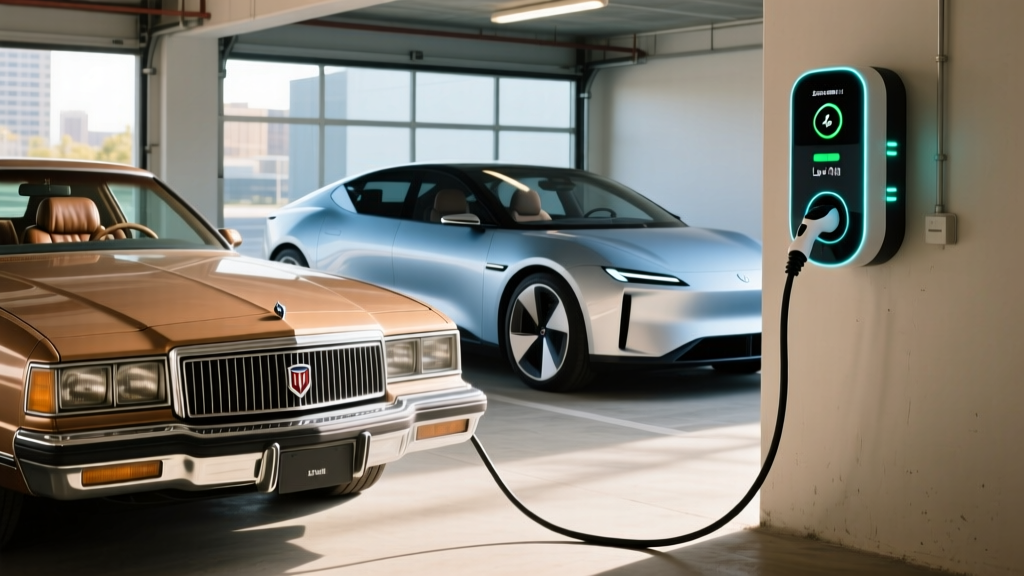
If you've spent years enjoying the 240-horsepower, supercharged 3.8L V6 in a 1997 Buick Riviera, the leap to an electric vehicle feels like entering a different universe. The Riviera's 18-gallon fuel tank and ~22 MPG combined meant roughly 396 miles of range and a 5-minute fill-up at any gas station. An EV replaces that paradigm entirely: your "fuel" arrives through kilowatt-hours (kWh) stored in a battery pack, your "fill-up" speed depends on kilowatts (kW) flowing through a cable, and your home electrical panel becomes the most important component you never thought about.
This guide breaks down everything a former Riviera owner—or anyone transitioning from a classic supercharged gas car—needs to understand about EV charging in 2026. We cover charging speeds, home installation costs, connector compatibility, and the per-mile economics that make the switch worthwhile.
Charging Levels Explained: kW, kWh, and Miles Per Hour
The most common confusion for new EV owners is the difference between kW (kilowatts, a measure of power or flow rate) and kWh (kilowatt-hours, a measure of energy or total fuel in the tank). Think of kW as the diameter of the hose pumping fuel, and kWh as the size of the tank being filled.
There are three charging levels you'll encounter, each with distinct speeds and use cases:
| Level | Voltage | Power (kW) | Miles of Range Added Per Hour | Typical Use Case |
|---|---|---|---|---|
| Level 1 | 120V AC | 1.0–1.4 kW | 3–5 miles | Overnight trickle, PHEVs, emergency |
| Level 2 | 240V AC | 3.3–19.2 kW | 12–75 miles | Home daily charging, workplaces, hotels |
| DC Fast Charge | 400–800V DC | 50–350 kW | 150–1,000+ miles/hr (peak) | Road trips, highway corridors |
Real-world context: A typical 2026 EV with a 75 kWh battery (roughly 270–310 miles EPA range) will charge from 10–80% in about 8–12 hours on Level 1, 4–8 hours on a 7.7 kW Level 2 home charger, and 18–30 minutes on a 150–250 kW DC fast charger. Those DC fast times assume ideal battery temperature and account for the charge-curve taper above 80% SoC, where speeds slow dramatically to protect battery chemistry.
Home Charger Installation: Costs, Electrical Requirements, and Panel Gotchas
The biggest sticker shock for former gas-car owners isn't the EV itself—it's learning that their home's electrical system may need an upgrade. A 1997 Buick Riviera never required you to call an electrician. An EV does.
Electrical Requirements
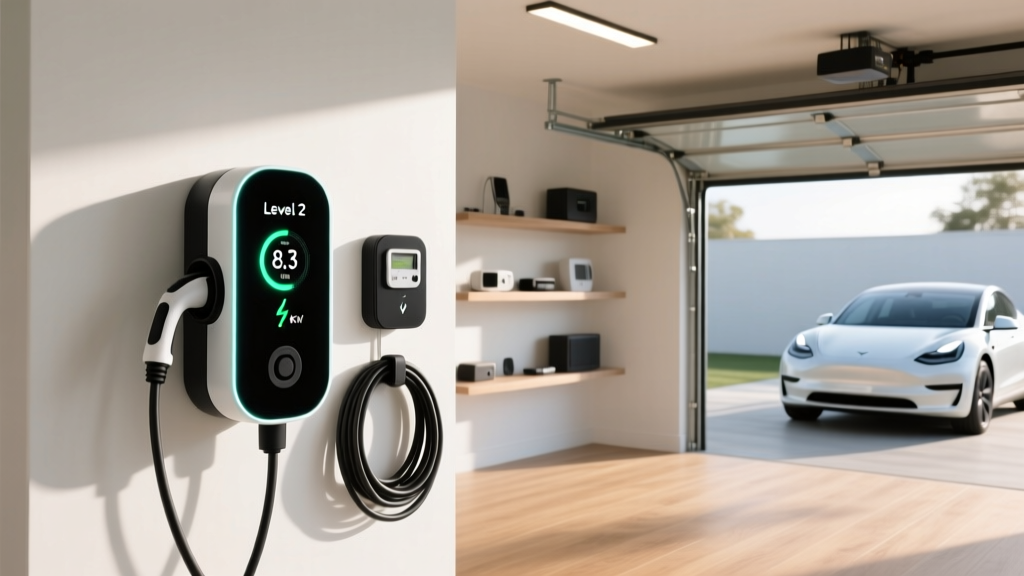
Most EV owners install a Level 2 charger on a dedicated 240V circuit, typically 40A or 50A. This is the same voltage as your electric dryer or oven. A 40A circuit delivers up to 9.6 kW (32A continuous, following the NEC 80% rule for continuous loads); a 50A circuit delivers up to 12.0 kW (40A continuous). For homes with a 200A main panel that already has headroom, this is straightforward. For older homes—especially those with 100A service common in houses built in the Riviera's era—a panel upgrade may be required.
Installation Cost Breakdown
| Component | Low End | High End | Notes |
|---|---|---|---|
| Level 2 Charger (Equipment) | $300 | $700 | Smart WiFi-enabled, 32–48A, 18–25 ft cable |
| Electrician Labor | $300 | $1,500 | Depends on run length from panel to garage |
| Electrical Permit | $50 | $200 | Required in most jurisdictions |
| Panel Upgrade (if needed) | $1,500 | $4,000 | 100A → 200A service upgrade |
| Total (no panel upgrade) | $650 | $2,400 | Most common scenario |
| Total (with panel upgrade) | $2,150 | $6,400 | Older homes with 100A service |
Key insight: Homes built in the 1990s—the Riviera's vintage—often have 100A or 150A panels that may be near capacity. Before buying a charger, have a licensed electrician perform a load calculation per NEC Article 220. Some utilities offer time-of-use (TOU) rate plans that make overnight charging dramatically cheaper, and some states offer rebates of $200–$1,000 for charger installation. Check the Alternative Fuels Data Center for your state's incentives.
Connector Compatibility: NACS, CCS, and CHAdeMO in 2026
Unlike the universal gas nozzle, EV connectors have fragmented into competing standards—though 2026 marks a major consolidation year.
| Connector | Brands Using It | Notes |
|---|---|---|
| NACS (North American Charging Standard) | Tesla, Ford, GM, Rivian, Volvo, Polestar, Hyundai, Kia (2025+ models) | Now dominant; access to Tesla Supercharger network |
| CCS1 (Combined Charging System) | VW, BMW, older Ford/GM/Hyundai/Kia models (pre-2025) | Legacy standard; adapters to NACS widely available |
| CHAdeMO | Nissan Leaf (discontinued), Mitsubishi Outlander PHEV | Declining; limited new infrastructure |
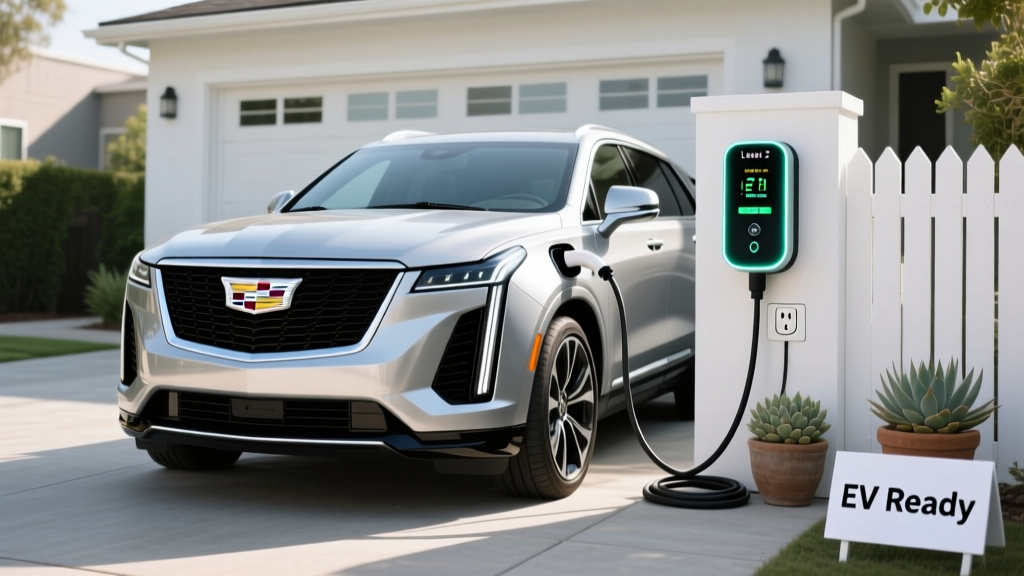
Adapter reality: If you buy a 2026 EV with a NACS port, you'll access Tesla Superchargers natively. If you own a CCS-equipped EV from 2023–2024, manufacturers and third parties sell CCS-to-NACS adapters ($150–$300) enabling Supercharger access. Before purchasing any home charger, verify its connector matches your vehicle—or plan for an adapter. Most Level 2 home chargers now ship with either a NACS or J1772 connector (J1772 works with all non-Tesla EVs via adapter; NACS chargers work with Tesla and newer NACS-native models).
Cost to Charge: Per-Mile Economics vs Your Old Riviera
The 1997 Buick Riviera Supercharged averaged roughly 22 MPG combined. At $3.50/gallon (a reasonable 2026 national average), that's $0.159 per mile in fuel alone. Here's how EV charging compares across scenarios:
| Charging Scenario | Rate ($/kWh) | Cost Per Mile* | Annual Fuel Cost (12,000 mi) |
|---|---|---|---|
| Home, off-peak TOU rate | $0.08–$0.12 | $0.024–$0.036 | $288–$432 |
| Home, standard residential rate | $0.14–$0.18 | $0.042–$0.054 | $504–$648 |
| Public Level 2 (workplace, retail) | $0.20–$0.35 | $0.060–$0.105 | $720–$1,260 |
| DC Fast Charging (road trips) | $0.35–$0.55 | $0.105–$0.165 | $1,260–$1,980 |
| 1997 Riviera (gas, 22 MPG) | $3.50/gal | $0.159 | $1,908 |
*Based on an average EV efficiency of 3.0 miles/kWh (roughly 112 MPGe), typical of mid-size crossovers like the Hyundai Ioniq 5 or Tesla Model Y.
The takeaway: even at standard residential rates, an EV costs 65–75% less per mile to "fuel" than a supercharged V6 Riviera from 1997. If you can charge primarily at home on off-peak rates, the savings exceed 80%. According to fueleconomy.gov, EVs consistently deliver 100–130 MPGe combined, translating to dramatic long-term savings even accounting for higher upfront vehicle costs and potential insurance premiums.
Equipment Recommendations: Best Home Chargers for 2026
Not all Level 2 chargers are equal. Here are three proven units covering different budgets and needs:
Budget Pick: Emporia Level 2 Smart Charger
- Power Output: 40A / 9.6 kW (hardwired) or 32A / 7.7 kW (NEMA 14-50 plug)
- Connector: J1772 (NACS adapter available)
- Cable Length: 24 ft
- Smart Features: WiFi, energy monitoring, TOU scheduling, solar integration
- Price: ~$399
- Best for: Budget-conscious buyers who want smart features and energy tracking
Best Overall: ChargePoint Home Flex
- Power Output: Up to 50A / 12.0 kW (adjustable via dip switches to match your circuit)
- Connector: J1772 or NACS (select at purchase)
- Cable Length: 23 ft
- Smart Features: WiFi, app scheduling, Alexa/Google integration, UL-listed
- Price: ~$549–$649
- Best for: Most homeowners; flexible amperage means it works on 40A or 50A circuits
Premium Pick: Tesla Wall Connector
- Power Output: Up to 48A / 11.5 kW (hardwired, 60A circuit)
- Connector: NACS native
- Cable Length: 24 ft
- Smart Features: WiFi, OTA updates, power sharing (link multiple units on one circuit), integrated cable management
- Price: ~$475
- Best for: Tesla owners or anyone buying a NACS-equipped 2025+ EV; elegant design
Safety, Code, and the Things Your Electrician Won't Skip
EV charging draws sustained high current for hours—unlike a dryer that cycles on and off. This makes code compliance non-negotiable:
- Dedicated circuit: Your Level 2 charger needs its own breaker. No sharing with other outlets or appliances.
- NEC 80% rule: A 40A breaker supports only 32A continuous draw. Don't buy a 48A charger and plug it into a 40A circuit—it will trip.
- GFCI protection: NEC 2020 and later require GFCI protection for EV receptacles. Hardwired chargers often sidestep this requirement and are preferred by many electricians for reliability.
- Outdoor rating: If your charger mounts outside, ensure it carries a NEMA 4 (weatherproof) rating. Most quality units do, but the connector holster should also be sheltered from direct rain and ice.
- Permit and inspection: Skipping the permit to save $100 risks insurance denial if an electrical fire occurs. Always permit, always inspect.
According to NHTSA and fire safety data, properly installed EV chargers carry extremely low risk. The hazard comes from undersized wiring, unpermitted work, or extension cords—never from a code-compliant installation.
Charging Time Examples: What to Expect with Common Battery Sizes
Charge times vary based on battery capacity, charger power, battery temperature, and the vehicle's onboard charger limit. Here are representative 10–80% times for popular 2026 EVs:
| Vehicle | Battery (kWh usable) | Level 2 (9.6 kW) 10–80% | DC Fast 10–80% | Peak DC Rate |
|---|---|---|---|---|
| Tesla Model Y Long Range | 75 kWh | ~5.5 hours | ~22 min | 250 kW |
| Hyundai Ioniq 5 (Long Range) | 77.4 kWh | ~5.7 hours | ~18 min | 238 kW (800V) |
| Ford Mustang Mach-E Extended | 91 kWh | ~6.7 hours | ~29 min | 150 kW |
| Chevrolet Equinox EV | 85 kWh | ~6.2 hours | ~26 min | 175 kW |
Charge-curve reality check: The "peak" DC fast-charge rate is sustained only between roughly 10–40% SoC. Above 60%, speeds taper. Above 80%, they drop to near-Level 2 speeds. This is why manufacturers quote 10–80% times—pushing to 100% on a road trip is rarely worth the wait unless you need every mile to reach your next stop.
Frequently Asked Questions
How much does it cost to install a home EV charger?
For most homes with a 200A panel and a garage close to the electrical panel, expect $650–$2,400 total (equipment, electrician, and permit). Older homes with 100A service may need a $1,500–$4,000 panel upgrade, bringing the total to $2,150–$6,400. Get three quotes—electrician rates vary dramatically by region.
How fast will each charging level add range?
Level 1 (120V) adds 3–5 miles per hour. Level 2 (240V, 40A) adds roughly 28–32 miles per hour. DC fast charging at 150+ kW can add 150–300+ miles in 20 minutes, though the rate tapers as the battery fills. For daily driving, Level 2 at home covers 95% of needs.
Which connector/charger is compatible with my EV?
Check your vehicle's charge port. For 2025–2026 models: Tesla, Ford, GM, Rivian, Hyundai, and Kia now use NACS. Older CCS vehicles (2020–2024) can use a CCS-to-NACS adapter ($150–$300) for Tesla Supercharger access. CHAdeMO is limited to older Nissan Leafs. For home Level 2 charging, any J1772 charger works with all non-Tesla EVs; NACS chargers work with Tesla and newer NACS-native vehicles.
How much does charging cost per mile vs gas?
At home on a standard $0.16/kWh rate, an average EV costs $0.04–$0.05 per mile. A 1997 Buick Riviera Supercharged at 22 MPG and $3.50/gallon costs $0.16 per mile—roughly 3–4x more. Over 12,000 miles per year, that's $500–$650 for the EV vs $1,900+ for the Riviera in fuel alone.
What electrical upgrades might I need?
A licensed electrician will perform a load calculation on your panel. If your panel is 100A and already near capacity (common in 1990s-era homes), you'll likely need a 200A upgrade ($1,500–$4,000). If you have 200A service with headroom, you may only need a new 40A or 50A breaker and a wire run to your garage. Some utilities offer smart-panel solutions or managed-charging programs that let you add a charger without a full panel upgrade.