Why Buick Regal Supercharged GS Owners Are Eyeing EVs
The Buick Regal Supercharged GS — particularly the 2004–2004 generation with its supercharged 3.8L V6 producing 240 hp — remains a cult favorite among enthusiasts who value its blend of torque, comfort, and understated performance. But with gasoline prices fluctuating and EV infrastructure expanding rapidly in 2026, many Regal GS owners are asking a practical question: what would it actually cost to switch to an electric vehicle, and how does daily fueling compare?
This guide breaks down the real numbers — from the cost-per-mile of charging an EV versus fueling a supercharged V6, to the exact electrical requirements and equipment you'd need to charge at home. We'll use a representative modern EV (the 2026 Hyundai Ioniq 5 Long Range RWD) as our comparison baseline, since its 84 kWh battery and 303-mile EPA range sit squarely in the mainstream EV market.
Fueling Cost Showdown: Supercharged V6 vs. Electric
The Regal Supercharged GS was EPA-rated at roughly 18 city / 27 highway mpg (combined ~21 mpg) when new. With premium fuel recommended for the supercharged 3800 Series II engine, let's run the real-world math against a modern EV charged at home.
| Metric | Regal Supercharged GS | Ioniq 5 LR RWD |
|---|---|---|
| Fuel/Energy Economy | 21 MPG combined (premium) | 117 MPGe / 30 kWh/100mi |
| Fuel/Energy Price | $4.10/gal (premium, 2026 avg) | $0.14/kWh (home off-peak) |
| Cost Per Mile | $0.195/mi | $0.042/mi |
| Annual Cost (12,000 mi) | $2,340 | $504 |
| 5-Year Fuel Cost | $11,700 | $2,520 |
The math is stark: charging at home costs roughly 78% less per mile than fueling the supercharged 3.8L V6 with premium. Over five years, the fuel savings alone approach $9,180 — enough to cover a significant portion of an EV's purchase price or a complete home charging setup.
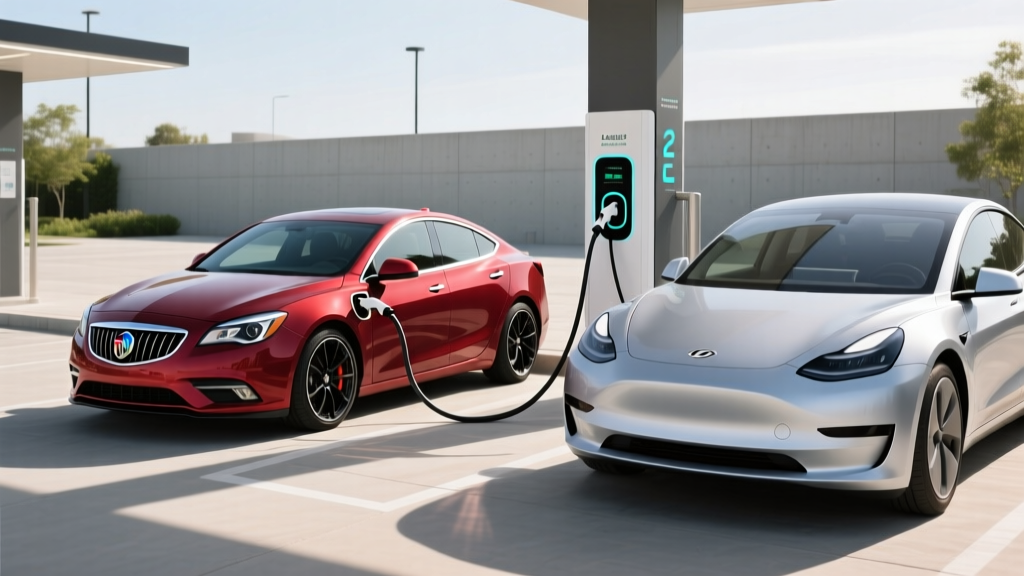
Even at public DC fast charging rates ($0.35–$0.50/kWh typical for networks like Electrify America or EVgo in 2026), the Ioniq 5 costs $0.105–$0.150/mile — still 23–46% cheaper than the Regal GS on premium fuel.
Charging Levels Explained: Speeds in kW and Miles Per Hour
Understanding EV charging requires distinguishing between kW (kilowatts — the rate of power delivery) and kWh (kilowatt-hours — the total energy stored in the battery). Think of kW as how fast water flows from a hose, and kWh as the size of the bucket you're filling.
| Level | Voltage | Power (kW) | Miles Added/Hour | Best For |
|---|---|---|---|---|
| Level 1 | 120V AC | 1.0–1.4 kW | 3–5 mi/hr | Overnight top-ups, PHEVs, emergencies |
| Level 2 | 240V AC | 3.3–19.2 kW | 12–75 mi/hr | Daily home charging, workplace |
| DC Fast Charge | 400–800V DC | 50–350 kW | 150–1,200+ mi/hr | Road trips, rapid top-ups |
For a vehicle like the Ioniq 5 with an 84 kWh (usable) battery:
- Level 1 (120V, 12A): Adds ~4 miles/hour. A full charge from 10% would take roughly 70+ hours — impractical for daily use.
- Level 2 (240V, 48A / 11.5 kW): Adds ~40 miles/hour. A 10–80% charge takes approximately 5.5 hours — ideal for overnight charging.
- DC Fast Charge (peak 240 kW on 800V architecture): A 10–80% charge takes roughly 18 minutes at a compatible 350 kW station. Note: peak 240 kW is only sustained up to ~55% SoC, then the charge curve tapers significantly. Expect an average rate closer to 130–150 kW across the full 10–80% session.
Home Charger Installation: Electrical Requirements and Costs
This is where many prospective EV owners encounter their first real decision point. A proper Level 2 home charger installation involves electrical work that varies dramatically based on your home's existing infrastructure.
Electrical Requirements for Level 2 Charging
Most Level 2 home chargers require a dedicated 240V circuit at 40–60 amps. The National Electrical Code (NEC) requires that continuous loads (like EV charging, which runs for 3+ hours) use only 80% of the circuit's rated capacity. So:
- A 50-amp circuit delivers up to 40 amps (9.6 kW) continuously to the vehicle
- A 60-amp circuit delivers up to 48 amps (11.5 kW) continuously
Wire gauge, conduit type, and run distance from your electrical panel to the charger location all affect the installation scope and cost.
The Panel Upgrade Question
Many homes built before 2000 have 100-amp or 150-amp main electrical panels. If your panel is already near capacity — running electric range, dryer, central AC, and water heater — adding a 50–60 amp EV circuit may require a panel upgrade to 200 amps. This is the single biggest variable in installation cost and can add $1,500–$3,500 to the project.
Homes with existing 200-amp panels and available breaker slots typically need no upgrade. A licensed electrician will perform a load calculation per NEC Article 220 to determine your panel's headroom.
| Component | Low Estimate | High Estimate | Notes |
|---|---|---|---|
| Level 2 Charger Equipment | $350 | $750 | Smart Wi-Fi chargers, 32–48A |
| Electrician Labor | $400 | $1,500 | Varies by run distance, wall type, conduit |
| Electrical Materials (wire, conduit, breaker) | $150 | $500 | Longer runs = more copper wire cost |
| Permit & Inspection | $50 | $300 | Required in most jurisdictions |
| Panel Upgrade (if needed) | $1,500 | $3,500 | 100A → 200A service upgrade |
| Total (no panel upgrade) | $950 | $3,050 | Most common scenario |
| Total (with panel upgrade) | $2,450 | $6,550 | Older homes with 100A service |
Some utilities offer rebates of $250–$500 for Level 2 charger installation, and certain states provide additional incentives. Check with your local utility for current programs.
Connector Compatibility: NACS, CCS1, and CHAdeMO
The North American EV charging connector landscape has shifted dramatically. As of 2026, the North American Charging Standard (NACS) — originally developed by Tesla — has become the dominant connector, adopted by Ford, GM, Rivian, Volvo, Hyundai/Kia, and most major automakers for new vehicles.
| Connector | Type | Compatible Brands (New Vehicles) | DC Fast Availability |
|---|---|---|---|
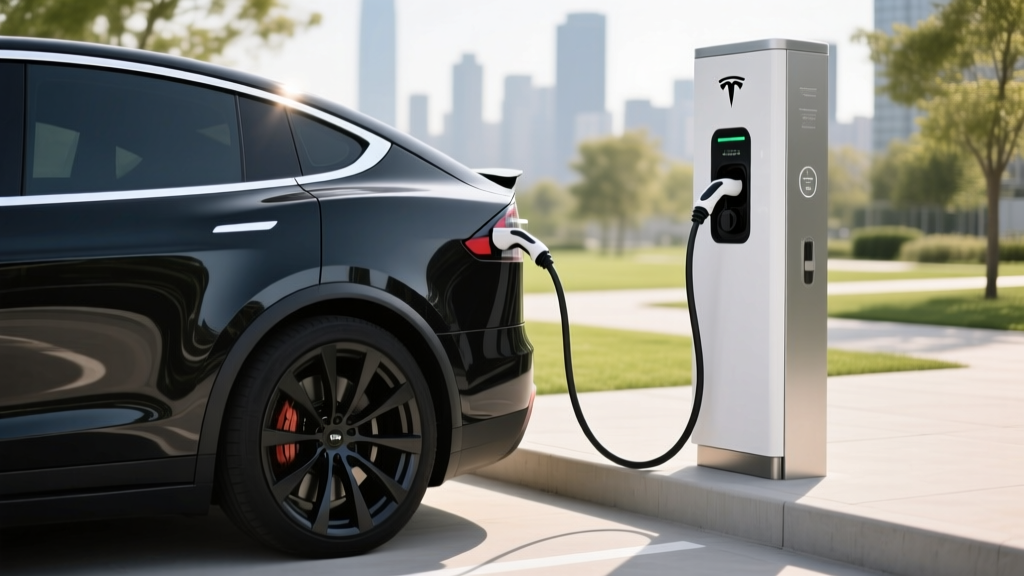
| NACS (J3400) | AC + DC combo | Tesla, Ford, GM, Hyundai, Kia, Rivian, Volvo, BMW, Mercedes | Tesla Supercharger (20,000+ stalls), growing third-party |
| CCS1 | AC + DC combo | VW, legacy models from Ford/GM/Hyundai (2024 and earlier) | Electrify America, EVgo, ChargePoint |
| CHAdeMO | DC only | Nissan Leaf (legacy) | Limited, declining network |
Adapter needs: If you own a CCS1-equipped vehicle (most 2024-and-earlier EVs from non-Tesla brands), you can purchase a CCS-to-NACS adapter ($150–$250) to access Tesla Supercharger stations. Tesla owners driving to CCS stations will need a NACS-to-CCS adapter, though this use case is increasingly rare. CHAdeMO vehicles like the Nissan Leaf have limited adapter options and a shrinking fast-charge network.
Recommended Home Chargers: Equipment Picks for 2026
After testing dozens of Level 2 units, these are our top picks based on reliability, power output, cable management, and smart features.
ChargePoint Home Flex (NACS)
- Power: Up to 12 kW (50A) on a 60A circuit
- Connector: NACS (also available in J1772 for older EVs)
- Cable Length: 23 feet
- Smart Features: Wi-Fi, app scheduling, Alexa integration, energy tracking
- Price: ~$599
- Best For: Most EV owners wanting reliable app control and flexible amperage settings
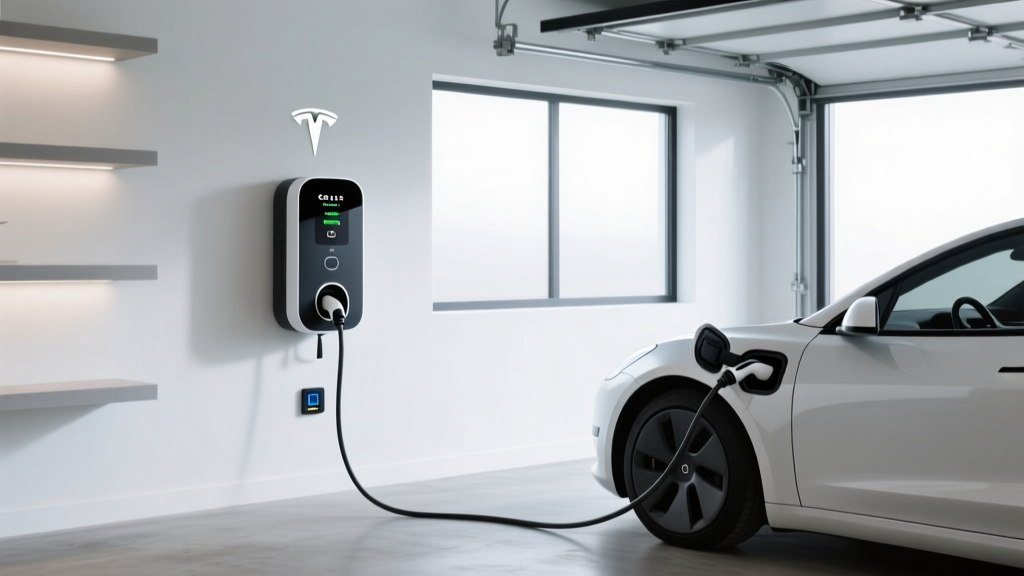
Wall Connector (Tesla / NACS)
- Power: Up to 11.5 kW (48A) on a 60A circuit
- Connector: NACS native
- Cable Length: 24 feet
- Smart Features: Wi-Fi, OTA updates, power sharing (link multiple units), access control
- Price: ~$475
- Best For: Tesla and NACS-adopted EV owners; cleanest wall-mount design
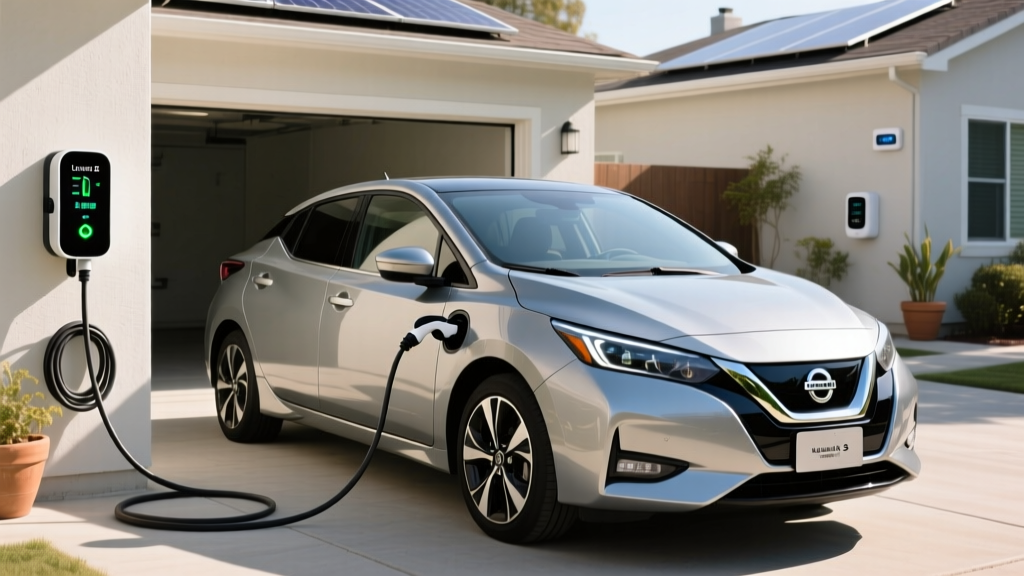
Emporia Level 2 Smart Charger
- Power: Up to 11.5 kW (48A) on a 60A circuit
- Connector: J1772 (NACS adapter available)
- Cable Length: 24 feet
- Smart Features: Wi-Fi, real-time energy monitoring, solar integration, load management
- Price: ~$399
- Best For: Budget-conscious buyers, solar panel owners wanting integrated energy management
All three units support hardwired installation (required for 48A+ operation) and carry NEMA 4 outdoor ratings for garage or exterior mounting. Hardwired installations eliminate the need for a NEMA 14-50 receptacle, which itself can add $100–$200 in parts and labor.
Safety, Electrical Code, and Installation Best Practices
EV charging is a high-draw, continuous-load application. Proper installation protects your home and ensures reliable operation for years.
- Dedicated circuit: Your Level 2 charger must be on its own dedicated breaker — never shared with other appliances.
- GFCI protection: NEC 2023 and later require GFCI (Ground Fault Circuit Interrupter) protection for EV charging outlets in garages and all outdoor locations. Hardwired chargers with built-in ground-fault detection may satisfy this requirement depending on local code interpretation.
- Outdoor rating: If mounting outside, ensure the charger carries a NEMA 4 or NEMA 4X rating for weather resistance. All three units recommended above meet this standard.
- Permit and inspection: Most municipalities require an electrical permit for EV charger installation. This ensures a third-party inspector verifies the work — protecting you from fire risk and insurance complications. Budget $50–$300 depending on your jurisdiction.
- Load management: If your panel is tight on capacity, consider a smart charger with load management (like the Emporia or Wall Connector with power sharing) that dynamically adjusts charge rate based on real-time household demand.
Always hire a licensed electrician familiar with NEC Article 625 (Electric Vehicle Charging). Per the National Fire Protection Association, improper EV charging installations are a documented fire risk — this is not a DIY project.
From Supercharged GS to EV: The Ownership Transition
The Buick Regal Supercharged GS was a genuinely compelling performance sedan in its era — 240 hp and 280 lb-ft of torque from a supercharged pushrod V6, wrapped in a comfortable, quiet chassis. But the ownership calculus has shifted dramatically.
Beyond the $9,000+ five-year fuel savings, consider:
- Maintenance elimination: No supercharger belt, no oil changes, no spark plugs, no transmission fluid (EVs use a single-speed reduction gear with lifetime fluid). The 3800 Series II is legendary for durability, but a 20-year-old supercharged engine requires ongoing attention to LIM gaskets, supercharger couplers, and aging rubber.
- Performance comparison: The Ioniq 5 LR RWD produces 225 hp and 258 lb-ft of instant torque — comparable output to the Regal GS, but delivered with zero lag and no supercharger whine. The Ioniq 5 Limited AWD bumps this to 320 hp and 446 lb-ft, with a 0–60 mph time of 4.5 seconds — handily outrunning the Regal GS's ~7.0-second sprint.
- EPA range reality: The Ioniq 5 LR RWD carries a 303-mile EPA rating. In real-world highway driving at 70 mph, expect roughly 250–270 miles. In cold weather (below 30°F), that drops to ~220–240 miles due to cabin heating demand and battery chemistry resistance. Plan road trips accordingly.
The Regal GS will always have enthusiast appeal, and well-maintained examples continue to appreciate. But as a daily driver, the fuel cost, maintenance overhead, and aging infrastructure make the transition to a modern EV increasingly rational.
How much does it cost to install a home EV charger?
A typical Level 2 home charger installation costs $950–$3,050 when no panel upgrade is needed, covering equipment ($350–$750), electrician labor ($400–$1,500), materials ($150–$500), and permits ($50–$300). If your home requires a 200-amp panel upgrade, add $1,500–$3,500. Get at least three quotes from licensed electricians.
How fast will each charging level add range?
Level 1 (120V) adds 3–5 miles per hour. Level 2 (240V, 48A) adds roughly 35–40 miles per hour for most EVs. DC fast charging at 150–250 kW can add 150–300 miles in a 20–30 minute session, though charge speed tapers significantly above 80% State of Charge.
Which connector/charger is compatible with my EV?
For 2025–2026 model-year EVs from Tesla, Ford, GM, Hyundai, Kia, Rivian, and most others, NACS (J3400) is the standard connector. Older CCS1-equipped vehicles can access Tesla Superchargers with a $150–$250 adapter. CHAdeMO is limited to the Nissan Leaf and a few legacy models.
How much does charging cost per mile vs gas?
Home charging at $0.14/kWh costs roughly $0.04–$0.05 per mile for a mainstream EV — compared to $0.15–$0.20 per mile for a gasoline car averaging 21–28 mpg on $3.50–$4.10/gallon fuel. That's a 70–80% reduction in per-mile energy cost.
What electrical upgrades might I need?
The most common upgrade is a panel capacity increase from 100A or 150A to 200A service, costing $1,500–$3,500. You may also need a new 50A or 60A double-pole breaker, appropriate-gauge wire (typically 6 AWG copper for 50A), and conduit routing from the panel to the charger location. A licensed electrician will assess these needs during a site visit. Consult the U.S. Department of Energy's home charging guide for additional planning details.