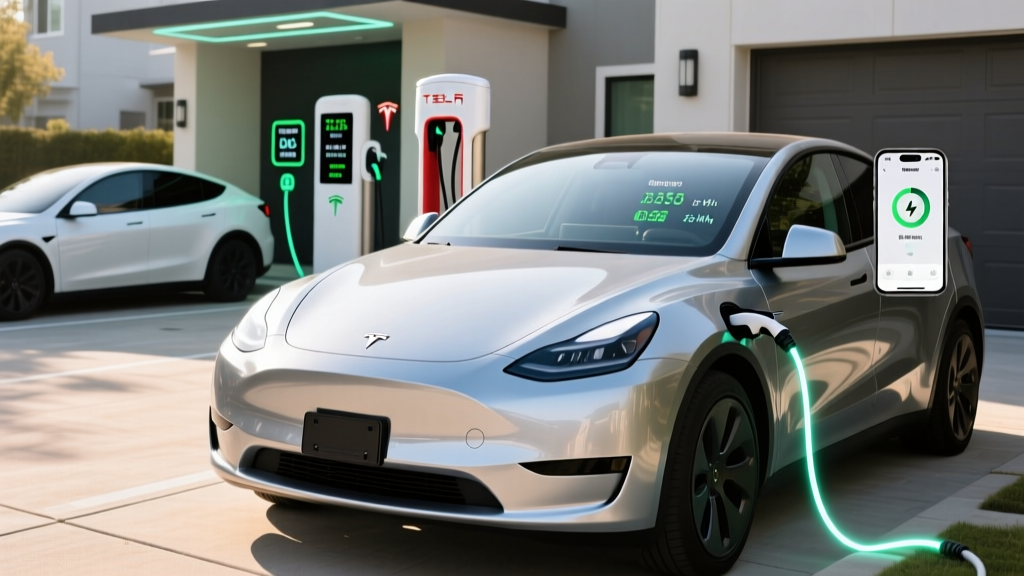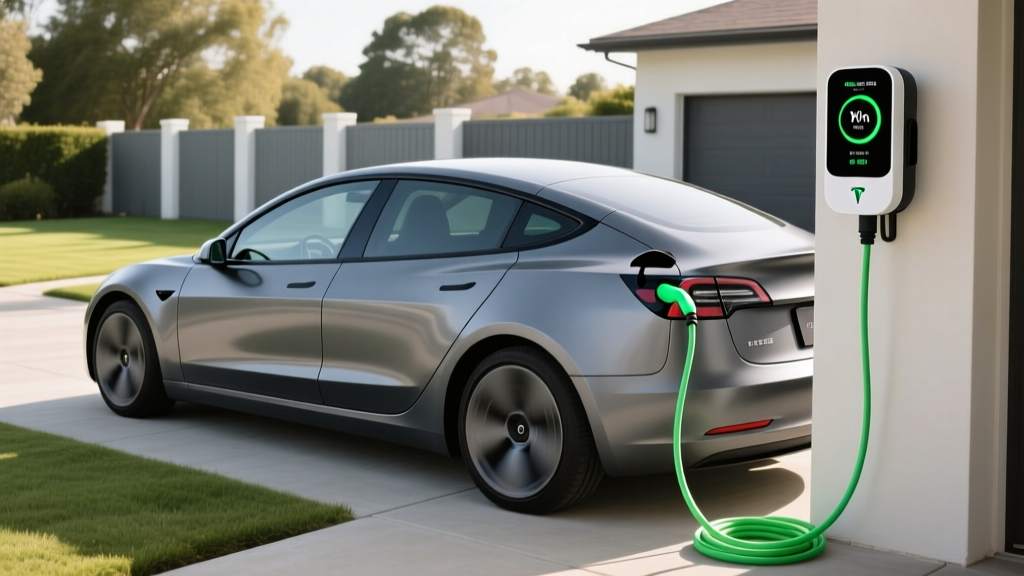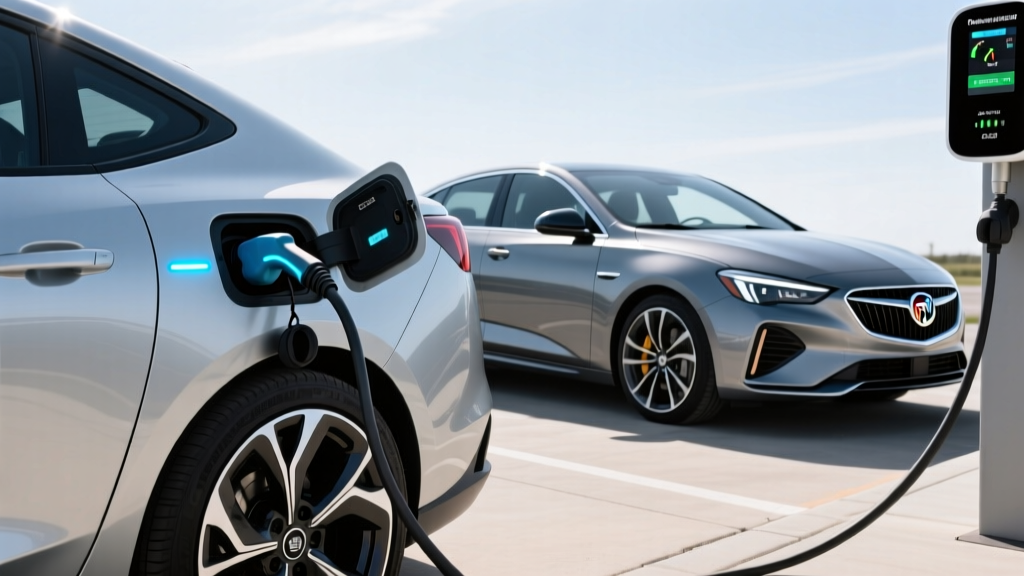
Searches for the Buick Regal GS Supercharged have surged in 2026 as enthusiasts revisit one of GM's most memorable sport sedans. With its supercharged 3.8L V6 producing 240 hp and delivering roughly 18 MPG combined, the Regal GS remains a benchmark for affordable performance. But if you're cross-shopping that legacy against a modern electric vehicle, the ownership math has shifted dramatically — especially at the charger.
This guide breaks down exactly what it costs to charge an EV at home and on the road, how that compares dollar-for-mile against fueling a Buick Regal GS Supercharged, and what you'll spend to install a Level 2 home charger — including the panel upgrades that catch older-home buyers off guard.
Charging Levels Explained: kW Speed and Miles Added Per Hour
Before comparing costs, you need the three charging tiers straight. The single most common EV mistake is confusing kW (kilowatts — the rate of power delivery, like water pressure) with kWh (kilowatt-hours — total energy stored, like gallons in a tank). A charger delivers kW; your battery holds kWh.
| Level | Voltage | Max Power (kW) | Miles of Range Added Per Hour | Best Use |
|---|---|---|---|---|
| Level 1 | 120V | 1.2–1.9 kW | 3–5 miles | Overnight top-offs, PHEVs |
| Level 2 | 240V | 7.2–19.2 kW | 20–60 miles | Daily home & workplace charging |
| DC Fast | 400–800V DC | 50–350 kW | 150–1,000+ miles (peak) | Road trips, rapid top-ups |
A typical 2026 EV with a 75 kWh battery charging at a 48-amp (11.5 kW) Level 2 station will add roughly 35–40 miles of range per hour — enough to replenish a full day's driving in about two hours. DC fast charging peaks high but tapers above 80% State of Charge, so a 10–80% session on a 150 kW charger typically takes 25–30 minutes for that same battery.
EV Charging Cost Per Mile vs. the Buick Regal GS Supercharged
The Buick Regal GS Supercharged requires premium fuel to deliver its rated 240 hp. At an EPA combined 18 MPG and a national premium average of $3.85/gallon (early 2026), the Regal GS costs roughly $0.214 per mile in fuel alone.
Here's how common EV charging scenarios compare:
| Scenario | Rate | Cost Per Mile (at 3.5 mi/kWh) | Savings vs. Regal GS |
|---|---|---|---|
| Home off-peak (utility TOU plan) | $0.09/kWh | $0.026 | 88% cheaper |
| Home standard rate | $0.16/kWh | $0.046 | 79% cheaper |
| Public Level 2 (ChargePoint, EVgo) | $0.35/kWh | $0.100 | 53% cheaper |
| DC Fast (Electrify America, EA Pass) | $0.48/kWh | $0.137 | 36% cheaper |
| Tesla Supercharger (non-member) | $0.35/kWh | $0.100 | 53% cheaper |
| Buick Regal GS Supercharged | $3.85/gal premium | $0.214 | — |
Even at the most expensive DC fast-charging networks, an EV costs less per mile than the Regal GS on premium. At home on an off-peak plan, the EV is nearly 9× cheaper per mile. Over 15,000 annual miles, that's a $2,800–$3,000 fuel-cost gap — before factoring in the Regal GS's higher maintenance spend (supercharger belt service, synthetic oil changes, spark plugs).
How Much Does a Home Level 2 EV Charger Installation Cost?
Home Level 2 installation is the single biggest variable in EV ownership setup. Costs depend on your electrical panel's capacity, the distance from panel to charger location, and local permit fees. Here's a realistic 2026 breakdown:
| Component | Low-End Estimate | High-End Estimate | Notes |
|---|---|---|---|
| Level 2 charger hardware (48A, hardwired) | $350 | $700 | Smart Wi-Fi models cost more |
| Electrician labor (240V/50A circuit run) | $500 | $1,500 | Varies with conduit run length |
| Permit and inspection | $50 | $250 | Required in most jurisdictions |
| Electrical panel upgrade (100A → 200A) | $1,500 | $3,500 | Common in pre-1990 homes |
| Total (no panel upgrade) | $900 | $2,450 | Most modern homes fall here |
| Total (with panel upgrade) | $2,400 | $5,950 | Older homes with 100A service |
Panel upgrade reality check: If your home has a 100-amp main panel that's already near capacity (common in homes built before 1990), adding a 50-amp dedicated EV circuit may require a service upgrade to 200 amps. Budget $1,500–$3,500 for this — and expect a utility coordination visit. A licensed electrician can perform a load calculation during the initial quote to flag this early.
Electrical Requirements for a Standard 48-Amp Level 2 Charger
- Voltage: 240V (split-phase residential)
- Circuit amperage: 60A breaker (NEC requires 125% headroom for continuous loads — 48A × 1.25 = 60A)
- Wire gauge: 6 AWG copper (THHN in conduit) or 4 AWG aluminum
- Dedicated circuit: Yes — no sharing with dryer, oven, or HVAC
- GFCI protection: Required for outdoor receptacles (NEC 2023+); hardwired installations may exempt this depending on AHJ
- Outdoor rating: NEMA 4 or 4X enclosure if mounted outside
Connector Compatibility: NACS, CCS1, CHAdeMO, and Adapter Needs
The North American EV market consolidated heavily toward NACS (the Tesla-standard connector) between 2024 and 2026. Here's where major brands stand:
| Connector | Brands Using It (2026) | Adapter Needed? |
|---|---|---|
| NACS (native) | Tesla, Ford, GM, Rivian, Volvo, Polestar, Hyundai/Kia (2025+) | No — direct plug at Superchargers |
| CCS1 | Legacy VW ID.4, older BMW iX, some Stellantis models | NACS-to-CCS adapter for Tesla network (~$200) |
| CHAdeMO | Nissan Leaf (discontinued 2025), Mitsubishi Outlander PHEV | Limited public network; plan around CCS/NACS |
If you're buying a 2026 EV, NACS is now the default for most brands. CCS1 vehicles can access Tesla Superchargers via OEM-provided or third-party adapters (A2Z, Lectron), though peak charge rates may be limited by the adapter's thermal rating — typically 100–150 kW sustained rather than the station's full 250+ kW.
Charging Time Examples for Common 2026 EV Battery Sizes
Charge times depend on both the vehicle's onboard acceptance rate and the charger's output. Here are real-world 10–80% times for representative 2026 EVs:
| Vehicle | Battery (kWh, usable) | Chemistry | Peak DC kW | 10–80% Time | Level 2 (11.5 kW) 0–100% |
|---|---|---|---|---|---|
| Tesla Model Y Long Range | 75 kWh | NMC | 250 kW | ~22 min | ~6.5 hours |
| Hyundai Ioniq 5 (NACS) | 84 kWh | NMC | 350 kW (800V) | ~18 min | ~7.3 hours |
| Ford F-150 Lightning Ext. Range | 131 kWh | NMC | 150 kW | ~41 min | ~11.4 hours |
| Chevrolet Equinox EV 3RS | 85 kWh | NMC | 190 kW | ~28 min | ~7.4 hours |
| Tesla Model 3 RWD | 57.5 kWh | LFP | 170 kW | ~25 min | ~5.0 hours |
Charge-curve reality: The peak kW number is a ceiling, not a constant. A vehicle rated at 250 kW peak may sustain that rate only between 10–30% SoC, then taper to 150 kW, then 90 kW, and finally 40 kW above 80%. This is why 10–80% time is the industry-standard metric — the final 20% can take as long as the first 70%.
LFP vs. NMC charging behavior: Lithium Iron Phosphate (LFP) batteries, like those in the Model 3 RWD, tolerate regular 100% charging better than NMC cells, which manufacturers recommend keeping below 80% for daily use. LFP also has a flatter voltage curve, making state-of-charge estimation less precise — expect the displayed range to occasionally "jump" after calibration drives.
Recommended Home Level 2 Chargers for 2026
ChargePoint Home Flex
- Power output: Up to 12 kW (50A) on a 60A circuit
- Connector: NACS (2025+ models) or J1772 with adapter
- Cable length: 23 feet
- Smart features: Wi-Fi, app scheduling, utility TOU integration, Alexa
- Price: $549 (NACS version)
- Best for: Most homeowners wanting reliable smart scheduling
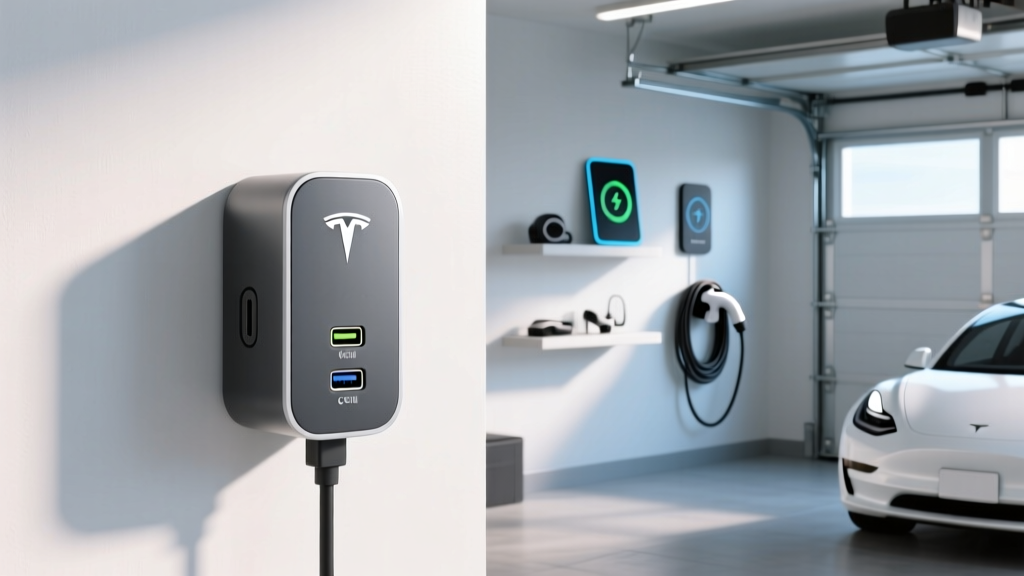
Tesla Wall Connector
- Power output: Up to 11.5 kW (48A) on a 60A circuit
- Connector: NACS native
- Cable length: 24 feet
- Smart features: Wi-Fi, OTA updates, power-sharing with second unit, load management
- Price: $425
- Best for: Tesla owners; best value per kW in the market
Emporia Vue EV Charger
- Power output: Up to 11.5 kW (48A)
- Connector: J1772 (NACS adapter included)
- Cable length: 24 feet
- Smart features: Energy monitoring, solar integration, circuit-load balancing
- Price: $399
- Best for: Homes with solar panels or tight panel capacity
For homes with limited panel capacity, the Emporia's load-balancing feature can dynamically reduce charge rate when other high-draw appliances (dryer, HVAC) kick in — potentially avoiding a panel upgrade entirely.
Safety, Electrical Code, and Permit Considerations
A Level 2 charger is a continuous-load appliance under the National Electrical Code (NEC Article 625). Key requirements for a compliant, safe installation:
- Dedicated circuit: The charger must be on its own breaker — no shared circuits with laundry, kitchen, or HVAC equipment.
- 125% rule: A 48A charger requires a 60A breaker (48 × 1.25 = 60). Never undersize the breaker.
- GFCI protection: NEC 2023 and later requires GFCI on outdoor 240V receptacles. Hardwired units may be exempt depending on your local Authority Having Jurisdiction (AHJ).
- Outdoor rating: Any outdoor-mounted charger must carry a NEMA 4 or 4X rating for rain and dust ingress protection.
- Permit and inspection: Most municipalities require an electrical permit ($50–$250) and a post-install inspection. Skipping this can void homeowner's insurance coverage for electrical fires.
- Utility notification: Some utilities require advance notice for EV charger installs and may offer dedicated TOU metering at reduced rates.
Always hire a licensed electrician familiar with NEC Article 625. A qualified installer will perform a load calculation on your panel, pull the permit, and coordinate the inspection — saving you from costly rework or insurance disputes down the line.
The Buick Regal GS Supercharged in 2026: Ownership Context
The Buick Regal GS Supercharged (produced 2012–2017 for the GS variant with the 3.8L supercharged V6 in earlier generations, and the 2.0T in later years) remains a desirable used sport sedan. But ownership costs have aged less gracefully than its design:
- Fuel: 18 MPG combined on premium (93 octane recommended) — $0.214/mile at 2026 prices
- Maintenance: Supercharger coupler replacement ($300–$500), synthetic oil changes, ignition components — $800–$1,200/year typical for a 10-year-old example
- Insurance: Collector/sport-sedan rates vary; Hagerty-type policies average $600–$900/year
- No federal tax credits: As a used ICE vehicle, no §30D or §25E credits apply
Compare this to a 2026 EV like the Chevrolet Equinox EV 3RS ($43,400 MSRP, eligible for the §30D federal tax credit of up to $7,500 when battery sourcing and buyer income requirements are met, bringing effective cost to ~$35,900). With home charging at $0.046/mile and minimal drivetrain maintenance, the five-year fuel and maintenance savings over the Regal GS can exceed $15,000.
Note: §30D credit eligibility depends on MSRP caps ($55,000 for sedans, $80,000 for SUVs/trucks), buyer modified adjusted gross income limits ($150K single / $300K joint), and battery critical-mineral and component sourcing thresholds that tighten annually. Consult a tax professional and check fueleconomy.gov for model-specific credit status.
Frequently Asked Questions
How much does it cost to install a home EV charger?
Expect $900–$2,450 for a standard 48-amp Level 2 installation in a home with adequate panel capacity. If your home needs a 100A-to-200A panel upgrade, add $1,500–$3,500. Total range: $900 (best case) to $5,950 (older home with panel upgrade). Always get a load calculation from a licensed electrician before committing.
How fast will each charging level add range?
Level 1 (120V): 3–5 miles per hour. Level 2 (240V, 48A): 30–40 miles per hour. DC fast charging: 150–1,000+ miles per hour at peak, but sustained rates taper significantly above 80% SoC. For daily use, Level 2 at home is the practical standard — most EVs fully replenish overnight.
Which connector and charger is compatible with my EV?
For 2026 models, most brands (Tesla, Ford, GM, Hyundai, Kia, Rivian, Volvo) use NACS natively. Older CCS1 vehicles can use Tesla Superchargers via a NACS-to-CCS adapter (~$200). CHAdeMO is effectively discontinued for new vehicles. Check your vehicle's charge port or the manufacturer's spec sheet before purchasing a home charger.
How much does charging cost per mile compared to gas?
Home charging at $0.16/kWh averages $0.046/mile for a typical EV at 3.5 mi/kWh. The Buick Regal GS Supercharged at 18 MPG on $3.85 premium costs $0.214/mile — roughly 4.6× more. Even public DC fast charging at $0.48/kWh ($0.137/mile) undercuts the Regal GS by 36%.
What electrical upgrades might I need for a home charger?
The most common upgrade is a panel service increase from 100A to 200A ($1,500–$3,500), required when your existing panel lacks headroom for a dedicated 60A breaker. Other potential needs: conduit runs over 50 feet (adds wire cost), a sub-panel for detached garages ($800–$1,500), or utility meter reconfiguration for TOU rate plans. A licensed electrician's load calculation will identify these before installation begins.
Sources: EPA Fuel Economy for Regal GS MPG data and EV efficiency ratings; IRS §30D Clean Vehicle Credit for current tax credit rules; NEC Article 625 for EV charging electrical code requirements.