Why the Buick Park Avenue Supercharged Still Sparks an EV Charging Conversation
If you've ever searched for a Buick Park Avenue Supercharged in 2026, you're likely a fan of effortless highway torque, plush ride quality, and that supercharged 3.8L V6 (Series II L67) that pushed 240 horsepower and 280 lb-ft of torque through a smooth 4-speed automatic. Produced primarily in the late 1990s and early 2000s, the Park Avenue Ultra with its Eaton M90 supercharger remains a cult classic — a car that delivered luxury-car silence with genuine passing power.
But here's the question modern buyers ask: how does owning and fueling that supercharged legend compare to plugging in a 2026 electric vehicle? The answer reveals just how far daily energy costs, home refueling infrastructure, and per-mile economics have shifted. This guide breaks down everything you need to know about EV charging — levels, home installation costs, connectors, and per-mile cost — using the Park Avenue Supercharged as a real-world baseline comparison.
kW (kilowatts) measures power — the rate at which energy flows, like water pressure in a hose. kWh (kilowatt-hours) measures energy — the total amount stored or consumed, like gallons in a tank. A 10 kW charger delivering power for 8 hours adds 80 kWh of energy. Never confuse them.
Charging Levels Explained: Speeds, Power, and Range Added Per Hour
EV charging operates across three tiers. Understanding each is essential whether you're coming from a supercharged V6 or a modern hybrid.
| Level | Voltage | Power (kW) | Miles of Range Added Per Hour | Best Use Case |
|---|---|---|---|---|
| Level 1 | 120V AC | 1.2–1.9 kW | 3–5 mi/hr | Overnight top-up, PHEVs, low daily mileage |
| Level 2 | 240V AC | 7.2–19.2 kW | 25–75 mi/hr | Daily home charging, workplace, destination |
| DC Fast Charge | 400–800V DC | 50–350 kW | 150–1,200 mi/hr (peak) | Road trips, highway corridors, quick stops |
Real-world context: A 2026 Hyundai Ioniq 5 (84 kWh usable battery, EPA 310 mi range) charging on a Level 2 home station at 11.5 kW will fully replenish from 10% to 100% in roughly 7.5 hours — easily overnight. On a 350 kW DC fast charger, that same vehicle peaks at approximately 240 kW and reaches 10–80% in about 18 minutes, though the charge curve tapers significantly above 80% SoC to protect battery health.
For comparison, the Buick Park Avenue Supercharged with its 18.5-gallon fuel tank took roughly 5 minutes to fill at a gas station, yielding approximately 330–370 miles of real-world range at its EPA-rated 18 city / 28 highway mpg. The speed advantage of liquid fuel at the pump remains real — but the cost and convenience calculus has shifted dramatically for daily driving.
Home EV Charger Installation: Electrical Requirements, Costs, and Panel Upgrades
This is where most EV-curious buyers stall. Let's break down exactly what a Level 2 home charging setup requires in 2026.
Electrical Requirements
A typical Level 2 home charger requires a dedicated 240V circuit, most commonly rated at 40A or 50A. The National Electrical Code (NEC) mandates that continuous loads (including EV charging) cannot exceed 80% of the circuit breaker rating — meaning a 50A breaker supports a maximum continuous draw of 40A (9.6 kW). A 60A breaker supports 48A continuous (11.5 kW).
Homes built before 1990 — the era when the Buick Park Avenue Supercharged was rolling off the Hamtramck assembly line — often have 100A or 150A main service panels. Adding a 50A EV circuit may push total load beyond safe capacity, requiring a panel upgrade to 200A. This is the single biggest variable in home charging cost.
Installation Cost Breakdown
| Component | Simple Install (Panel Has Capacity) | Complex Install (Panel Upgrade Needed) |
|---|---|---|
| Level 2 Charging Equipment (hardwired or NEMA 14-50) | $350–$700 | $350–$700 |
| Electrician Labor (run 240V circuit, mount unit) | $500–$1,500 | $800–$2,500 |
| Electrical Permit | $50–$200 | $50–$200 |
| Panel Upgrade (100A/150A → 200A) | Not needed | $1,500–$3,500 |
| Utility Service Upgrade (rare, for very old homes) | Not needed | $2,000–$5,000+ |
| Total Estimated Cost | $900–$2,400 | $2,700–$11,900 |
Key insight: Always hire a licensed electrician to perform a load calculation before committing to equipment. Many utilities offer free or low-cost home energy assessments that flag panel capacity issues early. Some states and utilities also offer rebates of $250–$1,000 for Level 2 equipment and installation — check your local utility and the AFDC state incentive database for specifics.
Safety and Code Considerations
- Dedicated circuit: Your EV charger must be on its own breaker — never shared with a dryer, oven, or HVAC system.
- GFCI protection: NEC 2020 and later require GFCI breakers for EV receptacles (NEMA 14-50 outlets). Hardwired units bypass this requirement and are generally recommended for reliability.
- Outdoor rating: If your charger mounts outside, ensure it carries a NEMA 4 or IP65 weather-resistance rating. Most quality 2026 units are rated for indoor and outdoor use.
- Cable management: A 25-foot cable is the practical minimum for reaching most parked vehicles; 18-foot cables are frustratingly short in real-world driveways.
Connector Compatibility: NACS, CCS1, CHAdeMO, and Adapter Realities
The connector landscape has consolidated significantly since 2023, when Ford and GM announced their shift to Tesla's North American Charging Standard (NACS). Here's where things stand in 2026:
| Connector | Native Vehicles | DC Fast Availability | Adapter Required? |
|---|---|---|---|
| NACS (J3400) | Tesla (all), Ford, GM, Rivian, Volvo, Polestar, Mercedes (newer) | Tesla Supercharger + growing open networks | CCS-to-NACS adapters available for legacy CCS vehicles (~$200–$300) |
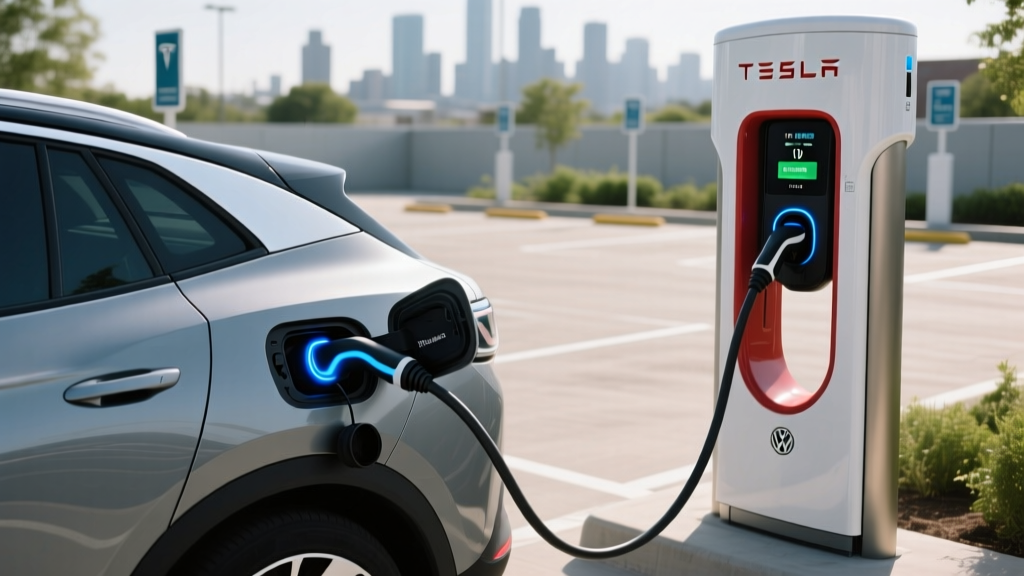
| CCS1 | Hyundai, Kia, BMW, VW, older Ford/GM models | Electrify America, EVgo, ChargePoint DC stations | NACS-to-CCS adapter needed at Tesla Superchargers |
| CHAdeMO | Nissan Leaf (legacy only) | Declining — limited new installations | No practical adapter to NACS/CCS for DC |
What this means practically: If you're buying a 2026 GM vehicle (yes, Buick's current parent), it ships with a native NACS port and has full access to Tesla's Supercharger network — over 25,000 stalls in North America. If you own an older CCS-equipped EV, a certified adapter (such as the Lectron or A2Z adapter) enables Supercharger access, though charge speed may be marginally reduced due to adapter thermal limits.
For Level 2 home charging, the connector is less critical — all Level 2 units use the universal J1772 plug, and NACS vehicles include a J1772-to-NACS adapter in-box. You can buy any quality Level 2 charger and it will work with any EV sold in the US.
Cost Per Mile: EV Charging vs Fueling a Supercharged V6
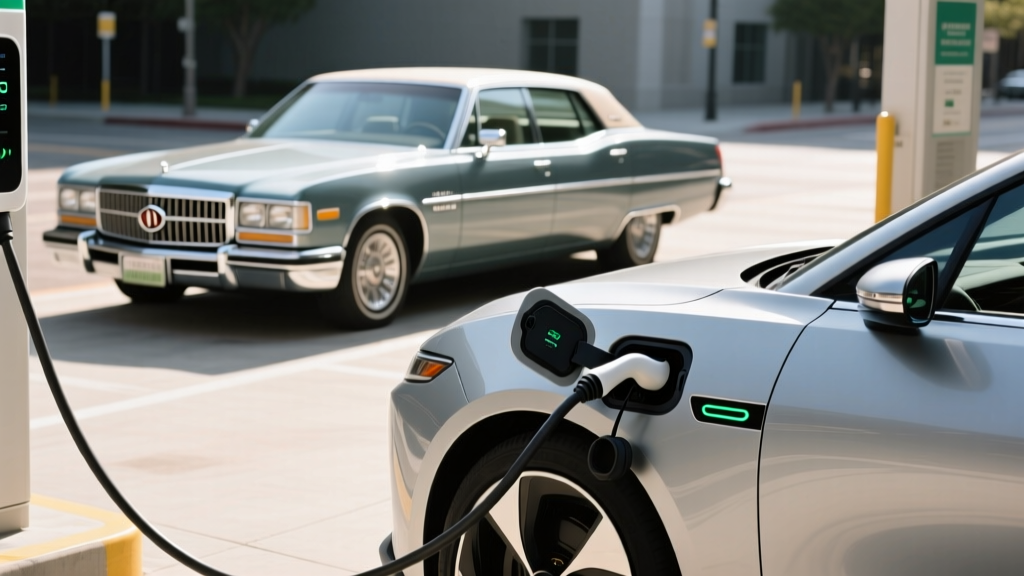
This is where the Buick Park Avenue Supercharged comparison becomes illuminating. That Eaton M90 supercharger didn't just compress air — it compressed your fuel budget.
| Scenario | Energy Cost | Efficiency | Cost Per Mile |
|---|---|---|---|
| Home Level 2 (off-peak, $0.12/kWh) | $0.12/kWh | 3.5 mi/kWh (typical 2026 EV) | $0.034/mi |
| Home Level 2 (standard rate, $0.18/kWh) | $0.18/kWh | 3.5 mi/kWh | $0.051/mi |
| Public DC Fast ($0.40/kWh avg) | $0.40/kWh | 3.5 mi/kWh | $0.114/mi |
| Buick Park Ave Supercharged ($3.40/gal, 20 mpg combined) | $3.40/gal | 20 mpg | $0.170/mi |
| Buick Park Ave Supercharged ($4.00/gal, 18 mpg city) | $4.00/gal | 18 mpg | $0.222/mi |
Annual savings at 12,000 miles/year: Charging at home off-peak saves approximately $1,632/year compared to fueling the Park Avenue Supercharged at $3.40/gallon. Even at public DC fast-charging rates, the EV still saves roughly $672 annually. Over five years of home charging, that's over $8,000 in fuel savings alone — enough to cover the home charger installation and a significant portion of the vehicle's depreciation.
According to fueleconomy.gov, the average 2026 EV achieves 100–130 MPGe combined, translating to 3.0–4.0 miles per kWh. The Park Avenue Supercharged, by contrast, rated 18 city / 28 highway on the original EPA cycle — respectable for a 3,900-lb luxury sedan of its era, but not competitive with electrified drivetrains on operating cost.
Equipment Recommendations: Best Home Level 2 Chargers for 2026
Based on sustained power delivery, cable quality, smart features, and real-world reliability, these are the Level 2 units we recommend for home installation:
ChargePoint Home Flex
- Power: Up to 12 kW (50A) adjustable down to 16A
- Connector: J1772 (NACS adapter included for newer models)
- Cable: 23 feet
- Smart features: Wi-Fi, scheduling, energy tracking, Alexa integration
- Price: ~$550–$650
Best for: Flexible amperage matching your panel capacity.
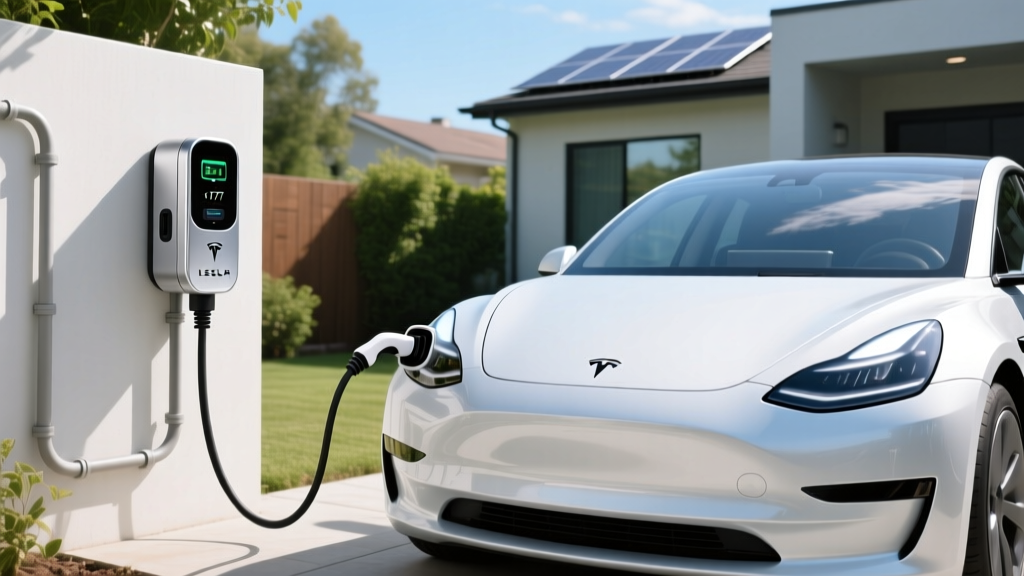
Tesla Wall Connector
- Power: Up to 11.5 kW (48A)
- Connector: NACS native (J1772 adapter available separately)
- Cable: 24 feet
- Smart features: Wi-Fi, OTA updates, Powerwall integration, load sharing between multiple units
- Price: ~$475
Best for: NACS-native households with Tesla or GM/Ford vehicles.
Emporia Level 2 Charger
- Power: Up to 11.5 kW (48A)
- Connector: J1772 (NACS adapter included)
- Cable: 24 feet
- Smart features: Wi-Fi, solar integration, energy monitoring via Emporia Vue panel monitor
- Price: ~$400
Best for: Solar-equipped homes wanting integrated energy management.
Grizzl-E Smart
- Power: Up to 10 kW (40A)
- Connector: J1772
- Cable: 24 feet
- Smart features: OCPP-compatible, works with multiple apps, extreme cold rated (-40°F)
- Price: ~$450
Best for: Cold-climate garages and open-protocol smart charging.
Charging time benchmarks for common battery sizes (Level 2 at 11.5 kW):
- 60 kWh battery (e.g., base Chevy Equinox EV): 10–80% in approximately 3.5 hours
- 84 kWh battery (e.g., Hyundai Ioniq 5 Long Range): 10–80% in approximately 5 hours
- 100 kWh battery (e.g., Ford F-150 Lightning Extended): 10–80% in approximately 6 hours
- 130 kWh battery (e.g., GMC Sierra EV / Hummer EV): 10–80% in approximately 8 hours
DC Fast Charging Time Examples: What Road Trips Actually Look Like
When you leave home, DC fast charging is your highway refueling equivalent. Here's what 10–80% stops look like on modern infrastructure, factoring in real-world charge-curve taper:
- Hyundai Ioniq 5 (84 kWh, 800V architecture): Peaks at ~240 kW on a 350 kW stall. 10–80% in approximately 18 minutes. Sustained average closer to 160 kW due to taper above 60% SoC.
- Tesla Model Y Long Range (75 kWh, 400V): Peaks at ~250 kW at V4 Superchargers. 10–80% in approximately 22 minutes.
- Ford F-150 Lightning Extended (131 kWh): Peaks at ~170 kW. 10–80% in approximately 41 minutes — the large battery means more total energy even at moderate charge rates.
- Chevy Equinox EV (85 kWh): Peaks at ~150 kW. 10–80% in approximately 30 minutes.
Charge curve reality check: Peak kW ratings are maintained only in a narrow SoC window (typically 10–40%). Above 60%, charging power drops substantially — a 240 kW peak may sustain only 80–100 kW by the time you reach 75% SoC. This is why manufacturers quote 10–80% times rather than 0–100%: the final 20% can take as long as the first 70%.
Frequently Asked Questions
How much does it cost to install a home EV charger?
A straightforward Level 2 installation on an existing 200A panel with short cable runs typically costs $900–$2,400 total (equipment, electrician labor, and permit). If your home needs a panel upgrade from 100A or 150A to 200A, expect $2,700–$6,000 total. Homes needing a full utility service upgrade can exceed $10,000. Always get a load calculation from a licensed electrician before purchasing equipment.
How fast will each charging level add range?
Level 1 (120V) adds 3–5 miles per hour — adequate for PHEVs with small batteries or drivers covering under 30 miles daily. Level 2 (240V) adds 25–75 miles per hour depending on amperage and vehicle acceptance rate, easily replenishing a full battery overnight. DC fast charging adds 150–1,200 miles per hour at peak, though sustained rates average lower due to charge-curve taper — expect a 10–80% stop in 18–45 minutes depending on battery size and vehicle architecture.
Which connector/charger is compatible with my EV?
For Level 2 home charging, every EV sold in the US uses the J1772 standard (or includes an adapter if equipped with NACS). Any Level 2 charger will work with any EV. For DC fast charging, check whether your vehicle has a NACS port (Tesla, newer Ford, GM, Rivian) or CCS1 (Hyundai, Kia, BMW, VW, older models). CHAdeMO is limited to the legacy Nissan Leaf and has minimal new infrastructure. Refer to the NHTSA vehicle database or your manufacturer's spec sheet for your specific model's connector type.
How much does charging cost per mile vs gas?
Home charging at off-peak rates ($0.12/kWh) costs approximately $0.034 per mile for a typical 2026 EV. Public DC fast charging at $0.40/kWh runs about $0.114 per mile. By comparison, the Buick Park Avenue Supercharged at 20 mpg combined and $3.40/gallon costs $0.17 per mile — roughly 5x the cost of home EV charging. Even at standard residential electricity rates ($0.18/kWh), the EV costs $0.051/mile, still one-third the fuel cost of the supercharged V6.
What electrical upgrades might I need?
The most common upgrade is a panel replacement from 100A or 150A to 200A service, costing $1,500–$3,500. Older homes (pre-1980s) may also need a utility service drop upgrade if the incoming wire from the transformer is undersized. Some homeowners opt for a smart electrical panel (e.g., SPAN) or a load-management device (e.g., Emporia Smart Panel monitor) that allows EV charging to dynamically reduce power when other appliances activate — potentially avoiding a panel upgrade entirely. Your electrician can determine whether load management or a panel upgrade is the better path during the initial assessment.
The Bottom Line: Supercharged Past vs Electrified Present
The Buick Park Avenue Supercharged was an engineering statement for its time — forced induction on a pushrod V6 delivering luxury-sedan comfort with genuine highway authority. But in 2026, the math of daily energy costs has fundamentally changed. A home Level 2 charger, installed for $1,000–$3,000 in most homes, delivers fuel at one-third to one-fifth the per-mile cost of that supercharged 3.8L. The Park Avenue Ultra will always have a place in enthusiast garages, but for daily transportation economics, the wall connector has replaced the supercharger as the most impactful forced-induction device in your garage.