Why Buc-ee's Tesla Chargers Matter for Road Trips
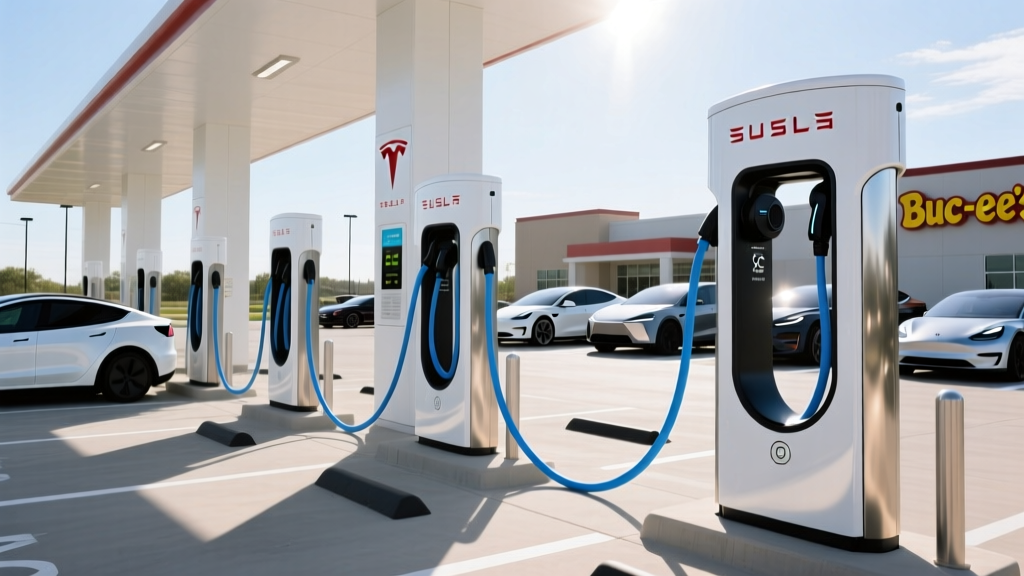
If you've driven a Tesla through Texas, you already know the ritual: pull into a Buc-ee's, grab a Beaver Nug, and plug into a Supercharger while you refuel yourself. Buc-ee's travel centers have become some of the most reliable Tesla Supercharger host locations in the South, combining 250 kW V3 (and increasingly V4) chargers with clean restrooms, hot food, and ample parking. As of early 2026, over 30 Buc-ee's locations across Texas, Georgia, Alabama, Florida, and the Carolinas feature Tesla Superchargers, with stall counts ranging from 8 to 20 per site.
But Buc-ee's chargers are just one piece of a broader EV charging ecosystem. Whether you're planning a road trip, considering a home charger install, or trying to understand why your CCS-equipped EV can now access the Tesla network, this guide breaks down every charging level, connector, cost, and installation detail you need to make informed decisions.
Charging Levels Explained: kW, Speeds, and Range Added
The single most important distinction in EV charging is between kW (kilowatts), which measures the rate of power delivery, and kWh (kilowatt-hours), which measures the total energy stored in your battery. Think of kW as how fast water flows from a hose, and kWh as the size of the bucket you're filling. Confusing the two is the most common EV literacy gap — and it leads to bad purchasing decisions.
| Level | Voltage | Power (kW) | Miles of Range Added per Hour | Typical Use Case |
|---|---|---|---|---|
| Level 1 | 120V AC | 1.0–1.4 kW | 3–5 mi/hr | Overnight top-ups, PHEVs, emergencies |
| Level 2 | 240V AC | 7.2–19.2 kW | 20–60 mi/hr | Home daily charging, workplaces, hotels |
| DC Fast Charge | 400–800V DC | 50–350 kW | 150–1,000+ mi/hr (peak) | Road trips, highway corridors, Buc-ee's Superchargers |
At a Buc-ee's Tesla Supercharger (V3, 250 kW), a Tesla Model Y Long Range with its ~75 kWh usable battery can add roughly 200 miles of range in about 15 minutes when starting from a low state of charge. V4 Supercharger cabinets now being deployed at select new locations can sustain higher power for longer portions of the charge curve, though peak rates still depend on the vehicle's onboard charge acceptance.
Real-world charging caveat: Peak kW ratings are not sustained. A 250 kW Supercharger delivers peak power only in the 10–30% state-of-charge window. Above 50%, the charge curve tapers significantly. A realistic 10–80% session on a V3 stall takes 22–28 minutes for most Tesla models, not the 15 minutes that peak math might suggest. Cold batteries charge even slower unless preconditioned via navigation routing.
Buc-ee's Supercharger Network: What to Expect in 2026
Buc-ee's locations with Tesla Superchargers typically feature V3 stalls rated at 250 kW. These use the NACS (North American Charging Standard) connector natively. Starting in 2024, Tesla opened its Supercharger network to non-Tesla EVs equipped with NACS ports or approved adapters, and by 2026 the majority of new EVs from Ford, GM, Rivian, Volvo, Hyundai, and Kia ship with native NACS ports. This means your Ford F-150 Lightning or Hyundai Ioniq 5 can now charge at most Buc-ee's Supercharger locations, provided the stall supports non-Tesla vehicles (check the Tesla app for site-specific access).
| Connector | Brands Using It (2026) | Buc-ee's / Tesla Supercharger Access |
|---|---|---|
| NACS (Tesla) | Tesla, Ford, GM, Rivian, Volvo, Polestar, Hyundai, Kia, BMW (new models) | Native — plug directly in |
| CCS1 | Legacy VW ID.4, older Ford/GM EVs, some Stellantis models | Requires CCS-to-NACS adapter (Tesla-approved or MagicDock-equipped stall) |
| CHAdeMO | Nissan Leaf (legacy), Mitsubishi Outlander PHEV | Not available at Superchargers; use Electrify America or EVgo |
If you drive a CCS-equipped EV from model years 2022–2024, you'll likely need a CCS-to-NACS adapter (roughly $150–$250 from approved suppliers) to access Buc-ee's Superchargers. Some newer Supercharger stalls feature Tesla's MagicDock, a built-in adapter that accepts CCS1 plugs directly — but don't count on every Buc-ee's location having MagicDock-equipped stalls yet.
How Much Does It Cost to Install a Home EV Charger?
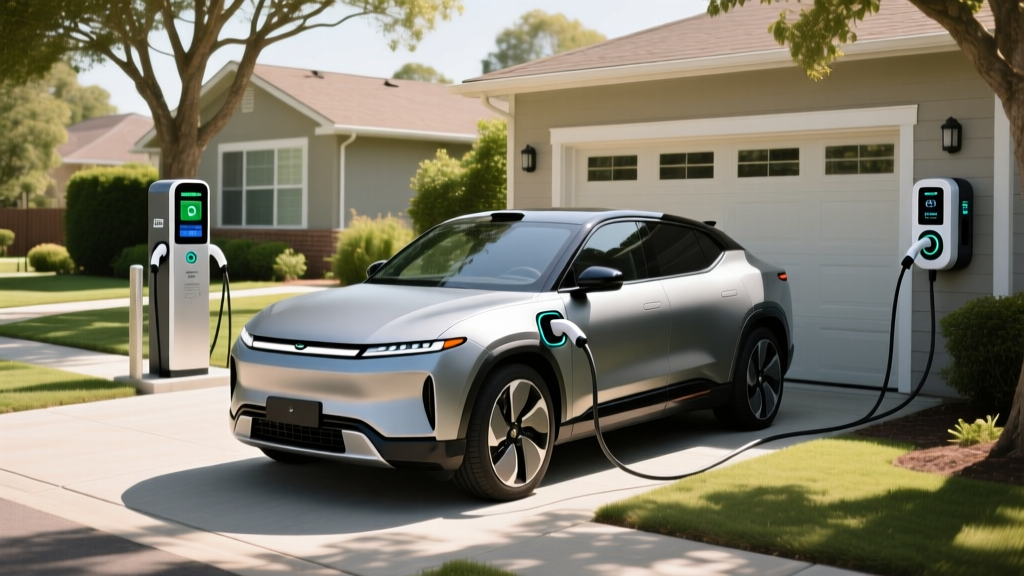
Home Level 2 charging is where most EV owners do 80–90% of their charging. A proper installation involves three cost components: the charger hardware, electrical labor, and permits. The total varies enormously based on your home's electrical panel capacity and the distance from the panel to your garage or driveway.
| Component | Simple Install (Panel Nearby, 200A Service) | Complex Install (Long Run or Panel Upgrade) |
|---|---|---|
| Level 2 Charger (hardware) | $400–$700 | $400–$700 |
| Electrician labor (240V/50A circuit) | $500–$1,200 | $1,500–$3,500 |
| Permit & inspection | $50–$200 | $100–$300 |
| Electrical panel upgrade (100A → 200A, if needed) | $0 | $1,500–$4,000 |
| Total Estimated Cost | $950–$2,100 | $3,500–$8,500 |
The most common surprise cost is a panel upgrade. Homes built before 1990 often have 100-amp or even 60-amp electrical service. Adding a 50-amp dedicated circuit for EV charging may exceed the panel's remaining capacity, requiring an upgrade to 200A service. Always have a licensed electrician perform a load calculation before committing to a charger install.
Electrical requirements for a standard home Level 2 install:
- 240V dedicated circuit (NEMA 14-50 outlet or hardwired)
- 50-amp breaker for a 40-amp continuous charger (NEC requires 125% overcurrent rating for continuous loads)
- GFCI protection if using a receptacle (required by NEC 2020+ in garages)
- Outdoor-rated enclosure (NEMA 4) if installed outside
- Proper wire gauge: 6 AWG copper for 50A circuits, 4 AWG for longer runs to minimize voltage drop
The IRS §30C alternative fuel vehicle refueling property credit may cover up to 30% of home charger equipment and installation costs (capped at $1,000), but eligibility depends on your census tract meeting specific low-income or rural criteria. Check the IRS guidance or consult a tax professional before assuming you qualify.
Charging Cost Per Mile: EV vs. Gas in Real Dollars
The economics of EV charging depend heavily on where and when you charge. Home charging on off-peak utility rates is dramatically cheaper than gas, while frequent DC fast charging on road trips narrows the gap.
| Scenario | Rate | Vehicle Efficiency | Cost Per Mile |
|---|---|---|---|
| Home Level 2 (off-peak, $0.12/kWh) | $0.12/kWh | 3.5 mi/kWh (typical EV sedan) | $0.034 |
| Home Level 2 (standard rate, $0.18/kWh) | $0.18/kWh | 3.5 mi/kWh | $0.051 |
| Public Level 2 (ChargePoint, avg. $0.25/kWh) | $0.25/kWh | 3.5 mi/kWh | $0.071 |
| DC Fast Charge (Tesla Supercharger, ~$0.35/kWh) | $0.35/kWh | 3.5 mi/kWh | $0.100 |
| DC Fast Charge (Electrify America, ~$0.48/kWh) | $0.48/kWh | 3.5 mi/kWh | $0.137 |
| Gas car (28 MPG combined, $3.30/gal) | $3.30/gal | 28 MPG | $0.118 |
| Gas truck (20 MPG combined, $3.30/gal) | $3.30/gal | 20 MPG | $0.165 |
The takeaway: home-charged EVs cost roughly 3–5 cents per mile, making them 3–5x cheaper than gasoline per mile. But if you rely exclusively on DC fast charging at $0.40+/kWh, your per-mile cost can match or exceed an efficient gas car. This is why home charging access is the single biggest factor in EV satisfaction.
At a Buc-ee's Tesla Supercharger, expect to pay around $0.30–$0.40/kWh depending on the location and time of day. Tesla's pricing is typically more competitive than Electrify America or EVgo, especially at high-traffic travel centers where competition from other networks is limited. Non-Tesla EVs using the Supercharger network via adapter may pay a slightly higher per-kWh rate unless they have a Tesla account with a membership subscription (~$13/month) that unlocks member pricing.
Charging Time Examples: What to Expect by Battery Size
Charge times depend on your battery's usable capacity (in kWh), the charger's power output (in kW), and your vehicle's charge curve. Here are realistic 10–80% times for common scenarios:
- Tesla Model Y Long Range (75 kWh usable) at Buc-ee's V3 Supercharger (250 kW): 10–80% in approximately 22–25 minutes. Peak rate of ~250 kW is sustained only briefly between 10–25% SoC, then tapers to ~150 kW through 50%, and ~75 kW from 60–80%.
- Ford F-150 Lightning Extended Range (131 kWh usable) at 250 kW DCFC: 10–80% in approximately 38–42 minutes. Larger batteries take proportionally longer even at the same peak kW.
- Hyundai Ioniq 5 (77.4 kWh usable) at 350 kW charger: 10–80% in approximately 18 minutes, thanks to its 800V architecture that sustains higher power deeper into the charge curve.
- Chevrolet Equinox EV (85 kWh usable) at 150 kW DCFC: 10–80% in approximately 35–40 minutes, as its ~150 kW peak caps the rate.
- Home Level 2 (11.5 kW) for any 75 kWh battery: 10–80% in approximately 5.5 hours — ideal for overnight charging.
Recommended Home Level 2 Chargers for 2026
Not all Level 2 chargers are created equal. Here are four well-regarded options with their key specs:
Tesla Wall Connector
- Power: Up to 11.5 kW (48A) on a 60A circuit
- Connector: NACS native; J1772 adapter included for non-Tesla EVs
- Cable length: 24 feet
- Smart features: Wi-Fi, OTA updates, power-sharing between two units, Tesla app integration
- Price: ~$475
- Best for: Tesla owners or households with NACS-equipped EVs
ChargePoint Home Flex
- Power: Up to 12 kW (50A) on a 65A circuit, configurable down to 16A
- Connector: J1772 (NACS adapter available separately)
- Cable length: 23 feet
- Smart features: Wi-Fi, Alexa integration, scheduling, energy tracking via app
- Price: ~$550–$650
- Best for: Mixed-EV households, flexible amperage for older panels
Emporia Vue Level 2 Charger
- Power: Up to 11.5 kW (48A)
- Connector: J1772 with NACS adapter option
- Cable length: 24 feet
- Smart features: Integration with Emporia energy monitoring, solar-aware scheduling
- Price: ~$400–$500
- Best for: Budget-conscious buyers with solar panels or energy monitoring
Grizzl-E Smart
- Power: Up to 10 kW (40A) on a 50A circuit
- Connector: J1772
- Cable length: 24 feet
- Smart features: OCPP-compatible, works with multiple energy management platforms
- Price: ~$450–$550
- Best for: Cold-climate durability (rated to -40°F), Canadian-made
Safety, Code, and Electrical Considerations
A Level 2 charger draws significant continuous current — typically 32 to 48 amps for hours at a time. This is not a DIY project. Key safety and code requirements include:
- Dedicated circuit: Your charger must be on its own dedicated breaker, not shared with other appliances. A 48A charger requires a 60A breaker per NEC continuous-load rules.
- GFCI protection: NEC 2020 and later requires GFCI protection for all 240V receptacles in garages. If you install a NEMA 14-50 outlet, your electrician must use a GFCI breaker. Hardwired installations may not require GFCI in some jurisdictions — confirm with your local inspector.
- Outdoor rating: If your charger is mounted outside, it must carry a NEMA 4 (or IP65+) rating to withstand rain and dust. All four chargers recommended above meet this standard.
- Wire gauge and conduit: Longer wire runs (over 50 feet from the panel) may require upsized wire (4 AWG instead of 6 AWG) to prevent voltage drop. Your electrician will calculate this based on the specific run.
- Permit and inspection: Most jurisdictions require an electrical permit for a new 240V circuit. The inspection ensures the work meets NEC and local code. Skipping the permit can void your homeowner's insurance in the event of an electrical fire.
- Load management: If your panel is near capacity, consider a smart charger with built-in load management (like the Emporia or certain ChargePoint configurations) that dynamically reduces charge current when other household loads spike.
Frequently Asked Questions
Can non-Tesla EVs charge at Buc-ee's Tesla Superchargers?
Yes, at most locations. Tesla opened its Supercharger network to non-Tesla EVs starting in 2024. Vehicles with native NACS ports (2025+ Ford, GM, Rivian, Hyundai, Kia, Volvo models) can plug in directly. CCS-equipped EVs need a CCS-to-NACS adapter or a stall with Tesla's MagicDock built-in adapter. Check the Tesla app for site-specific non-Tesla access before you arrive.
How fast will a Buc-ee's Tesla Supercharger charge my EV?
Most Buc-ee's locations have V3 Superchargers rated at 250 kW. A Tesla Model 3 or Model Y can add up to 200 miles in roughly 15 minutes under ideal conditions (low SoC, preconditioned battery). Realistic 10–80% sessions take 22–28 minutes. Non-Tesla EVs may charge at slightly lower peak rates depending on their onboard charge acceptance and adapter overhead.
How much does it cost to charge at a Buc-ee's Supercharger?
Expect $0.30–$0.40/kWh depending on the location and time of day. For a Tesla Model Y Long Range charging from 10–80% (~52 kWh added), that's roughly $16–$21 per session. Non-Tesla EVs without a Tesla membership may pay a premium of $0.05–$0.10/kWh more.
Do I need a panel upgrade for a home EV charger?
It depends on your existing electrical service. Homes with 200A panels and available breaker slots typically don't need an upgrade. Homes with 100A service — common in pre-1990 construction — often require a panel upgrade ($1,500–$4,000) to safely add a 50A dedicated EV circuit. A licensed electrician will perform a load calculation to determine your specific needs.
Is it cheaper to charge at home or at public DC fast chargers?
Home charging is dramatically cheaper. At $0.12/kWh (off-peak utility rate), you'll pay about 3.4 cents per mile. At a DC fast charger averaging $0.35/kWh, you'll pay about 10 cents per mile — still cheaper than most gas cars, but roughly 3x the cost of home charging. The economics strongly favor having reliable home or workplace Level 2 access.
What's the difference between kW and kWh?
kW (kilowatts) measures the rate of power delivery — how fast you're charging right now. kWh (kilowatt-hours) measures total energy — how much is stored in your battery. A 75 kWh battery charged at 11.5 kW (Level 2) takes roughly 6.5 hours from empty to full. The same battery at 250 kW (DC fast) reaches 80% in about 25 minutes. Peak kW matters for road trips; kWh determines your total range.
For authoritative data on EV efficiency and range, consult fueleconomy.gov, the EPA's official source for MPGe ratings and energy consumption by model. For current tax credit rules on home charger installations, see the IRS §30C credit page.