Buc-ee's and EV Charging: What Road-Trippers Need to Know
If you've driven through Texas, Florida, Georgia, or the Carolinas, you've likely seen the beaver mascot and the famously clean restrooms. But for EV owners, the bigger question is: do Buc-ee's have charging stations? The answer in 2026 is yes — but with important caveats about location, charger type, and whether you can actually rely on them for a road trip.
Buc-ee's has been rolling out DC fast charging stalls at many of its mega-travel centers, typically offering 150–350 kW chargers. However, not every location has them yet, and availability varies by state and store age. Before you plan a 400-mile EV road trip around brisket stops, here's the full picture on Buc-ee's charging — plus everything you need to know about charging at home, where 80%+ of all EV charging actually happens.
Charging Levels Explained: Speeds, kW, and Miles Per Hour
Before comparing public chargers at travel centers to your home setup, you need to understand the three charging levels. The critical distinction: kW (kilowatts) measures power — how fast energy flows into your car. kWh (kilowatt-hours) measures energy — the total capacity of your battery. Think of kW as the width of a hose and kWh as the size of the bucket.
| Level | Voltage | Power (kW) | Miles of Range Added Per Hour | Typical Use Case |
|---|---|---|---|---|
| Level 1 | 120V AC | 1.0–1.4 kW | 3–5 miles/hr | Emergency / overnight trickle (PHEV-friendly) |
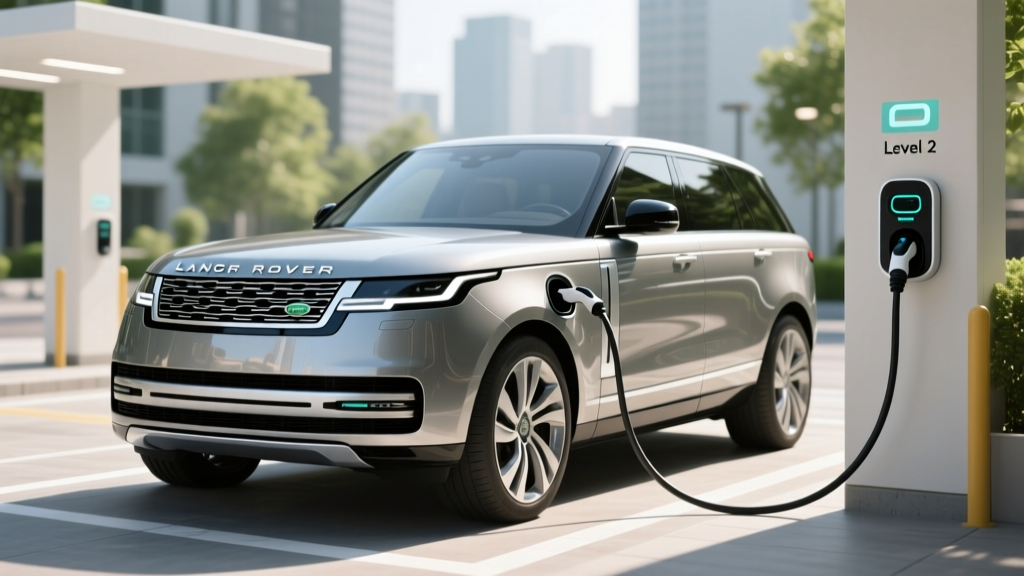
| Level 2 | 240V AC | 3.3–19.2 kW | 12–75 miles/hr | Home daily charging, workplaces, hotels |
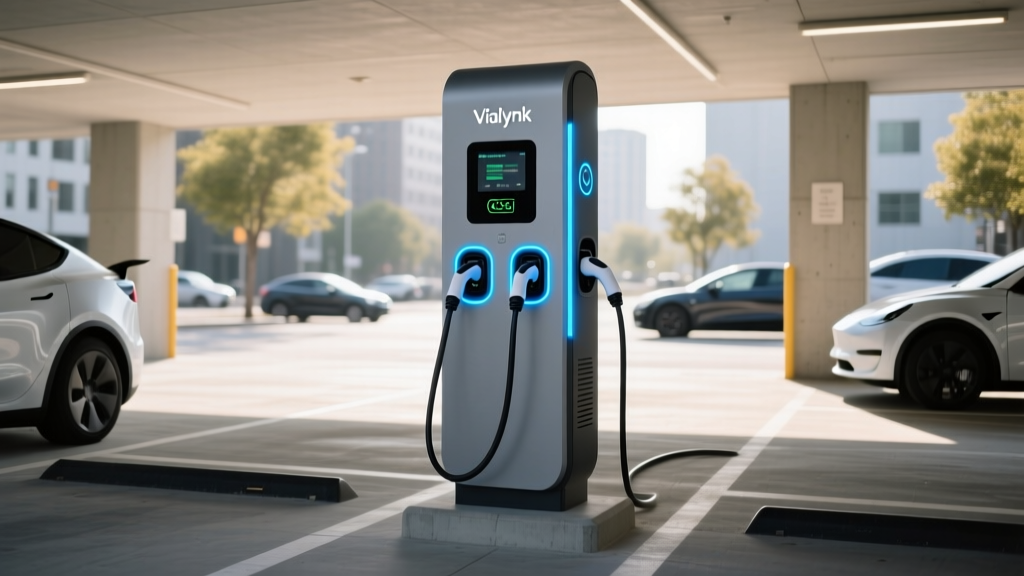
| DC Fast (Level 3) | 400–800V DC | 50–350 kW | 150–1,000+ miles/hr (peak) | Road trips, travel centers like Buc-ee's |
A few real-world nuances that spec sheets gloss over:
- DC fast charging is not linear. A charger rated at 350 kW won't deliver that rate for your entire session. Most EVs hit peak charge rate between 10–30% state of charge (SoC), then taper significantly above 80%. This is called the charge curve, and it's why 10–80% time is the standard benchmark.
- Level 2 home charging at 48A (11.5 kW) will fully replenish a 75 kWh battery (like a Tesla Model Y Long Range) in roughly 7–8 hours — perfect for overnight.
- Level 1 is viable for PHEVs with small batteries (10–20 kWh) but painfully slow for full BEVs. A 82 kWh battery at 1.4 kW takes nearly 60 hours from empty.
Do Buc-ee's Have DC Fast Chargers? Location-by-Location Reality
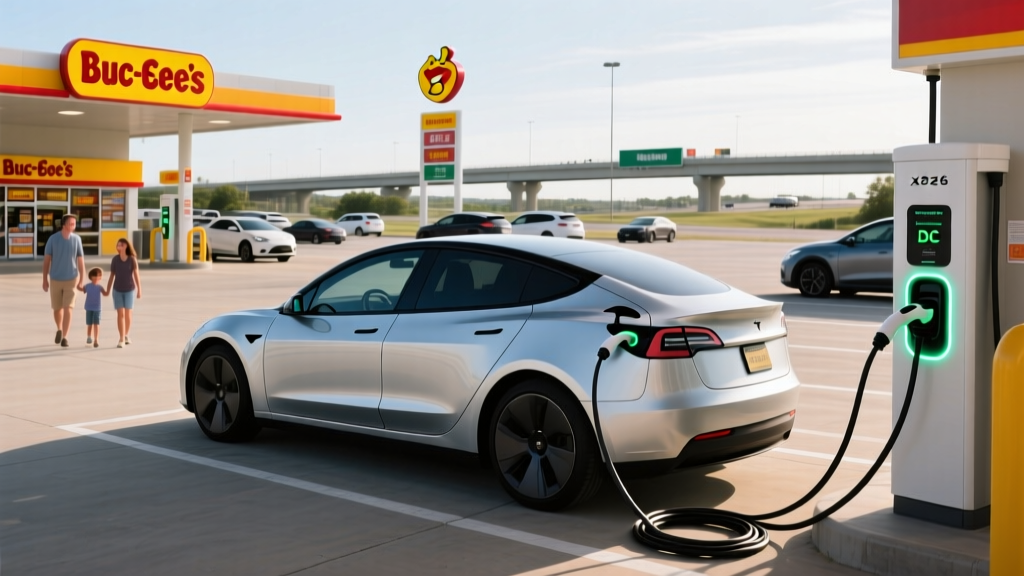
Buc-ee's operates over 50 locations as of early 2026, and the company has been partnering with charging networks to install DC fast chargers at many newer and renovated travel centers. Here's what to expect:
- Charger types: Most Buc-ee's DC fast stations offer CCS1 connectors, with an increasing number adding NACS (Tesla-style) connectors or providing CCS-to-NACS adapters. CHAdeMO is rare and being phased out nationally.
- Power output: Typically 150 kW or 350 kW stalls. At 150 kW, a Hyundai Ioniq 5 (84 kWh battery) can add roughly 180 miles in 18 minutes (10–80%). At 350 kW, vehicles with 800V architecture (Ioniq 5, Kia EV6, Porsche Taycan) can charge even faster, reaching 10–80% in ~18 minutes.
- Network operators: Buc-ee's chargers are typically operated by networks like Electrify America, EVgo, or Tesla Superchargers (at some co-located sites). You'll need the relevant app or RFID card, though federal requirements increasingly mandate credit card readers.
- Reliability: Buc-ee's locations tend to be well-maintained, but charger uptime depends on the network operator. Always check PlugShare or your vehicle's navigation for real-time stall status before relying on a single stop.
Home Level 2 Charger Installation: Costs, Electrical Requirements, and Gotchas
While Buc-ee's chargers are great for road trips, home Level 2 charging is where the economics and convenience of EV ownership really shine. Here's exactly what's involved in getting a 240V charger installed.
Electrical Requirements
A typical home Level 2 charger requires a 240V dedicated circuit, similar to what an electric dryer or oven uses. The most common setups:
- 40-amp circuit / 32A continuous charging (7.7 kW): Adequate for most EVs; adds ~25–30 miles per hour.
- 50-amp circuit / 40A continuous (9.6 kW): Sweet spot for most homes; adds ~35–40 miles per hour.
- 60-amp circuit / 48A continuous (11.5 kW): Maximum for most residential chargers; adds ~42–50 miles per hour.
National Electrical Code (NEC) requires that continuous loads not exceed 80% of a circuit's rated amperage — so a 50A breaker supports 40A of continuous charging.
Panel Upgrade: The Hidden Cost
Many older homes (pre-1990s) have 100-amp electrical panels that simply don't have spare capacity for a 40–60A EV circuit. If your panel is maxed out, an upgrade to 200A service may be required. This is the single biggest variable in installation cost.
Signs you may need a panel upgrade:
- Your panel is 100A or less
- No available breaker slots
- You already run electric heat, electric dryer, and electric range simultaneously
- Your electrician performs a load calculation and flags insufficient headroom
Installation Cost Breakdown
| Component | Simple Install (panel has capacity) | Complex Install (panel upgrade needed) |
|---|---|---|
| Level 2 Charger (hardware) | $350–$700 | $350–$700 |
| Electrical Permit | $50–$200 | $100–$300 |
| Electrician Labor (run 240V line, install breaker, mount charger) | $400–$1,200 | $800–$2,000 |
| Panel Upgrade (100A → 200A service) | N/A | $1,500–$4,000 |
| Conduit/Wiring (long runs from panel to garage) | $100–$500 | $200–$800 |
| Total Estimated Cost | $900–$2,600 | $2,950–$7,800 |
The wide range reflects real-world variables: how far the charger is from your panel, whether walls need to be opened, local labor rates, and whether your utility requires a service upgrade. Always get 2–3 quotes from licensed electricians, and ask specifically about a load calculation per NEC Article 220.
Connector Compatibility: NACS, CCS1, CHAdeMO, and Adapters
The EV charging connector landscape has shifted dramatically. As of 2026, the North American Charging Standard (NACS) — originally Tesla's proprietary connector — has become the dominant standard, with most major automakers adopting it for new vehicles.
| Connector | Brands Using It (2026 Models) | DC Fast Charge Availability | Adapter Needed? |
|---|---|---|---|
| NACS (Tesla-style) | Tesla, Ford, GM, Rivian, Volvo, Polestar, Mercedes, BMW (newer models) | Tesla Superchargers + growing NACS public networks | CCS-to-NACS adapter for older CCS vehicles at NACS stations |
| CCS1 | Hyundai, Kia, VW, BMW (older), Stellantis, Honda Prologue | Electrify America, EVgo, ChargePoint DC stations | NACS-to-CCS adapter to use Tesla Superchargers |
| CHAdeMO | Nissan Leaf (legacy only — discontinued in US) | Limited and shrinking | No widely available adapter; network declining |
Key takeaway for 2026: If you're buying a new EV, NACS is the safest long-term bet for connector access. Ford and GM owners received NACS adapters in 2024–2025 to access Tesla Superchargers, and by 2026, most new EVs ship with NACS ports natively. CCS1 owners aren't stranded — Electrify America and EVgo continue operating CCS chargers, and CCS-to-NACS adapters (like the Lectron or A2Z EV adapter, $150–$250) bridge the gap.
Cost to Charge: Home vs. Public vs. Gas — The Real $/Mile Math
This is where EV ownership economics become compelling — or frustrating, depending on where and how you charge.
| Charging Scenario | Cost per kWh | Cost to Add 200 Miles (at 3 mi/kWh efficiency) | Cost Per Mile |
|---|---|---|---|
| Home Level 2 — Off-Peak Utility Rate | $0.08–$0.12/kWh | $5.33–$8.00 | $0.027–$0.040 |
| Home Level 2 — Standard Rate | $0.13–$0.18/kWh | $8.67–$12.00 | $0.043–$0.060 |
| Public Level 2 (workplace, grocery) | $0.20–$0.35/kWh | $13.33–$23.33 | $0.067–$0.117 |
| DC Fast (Buc-ee's / Electrify America) | $0.35–$0.55/kWh | $23.33–$36.67 | $0.117–$0.183 |
| Tesla Supercharger (varies by location) | $0.25–$0.40/kWh | $16.67–$26.67 | $0.083–$0.133 |
| Gas Car (28 MPG combined, $3.40/gal) | — | $24.29 | $0.121 |
The math reveals a critical insight: home off-peak charging is 3–4x cheaper per mile than gasoline, while DC fast charging on road trips roughly matches gas costs. If you charge 85% of your miles at home and 15% on DC fast chargers (a realistic split for most owners), your blended cost per mile is roughly $0.04–$0.06 — about half the cost of a 28 MPG gas car.
Utility time-of-use (TOU) plans are essential for maximizing savings. Many utilities offer rates as low as $0.06–$0.09/kWh between midnight and 6 AM. Set your charger or vehicle to schedule charging during these windows.
Equipment Recommendations: Best Home Level 2 Chargers for 2026
Not all Level 2 chargers are equal. Here are proven picks based on power output, build quality, smart features, and cable management.
Emporia Vue Level 2 EV Charger
- Power: 48A / 11.5 kW (on 60A circuit)
- Connector: NACS or J1772 (configurable)
- Cable Length: 24 ft
- Smart Features: Wi-Fi, app scheduling, energy monitoring, solar integration
- Price: ~$399
- Best For: Budget-conscious buyers who want full smart features and solar pairing
ChargePoint Home Flex
- Power: Up to 50A / 12 kW (adjustable 16–50A)
- Connector: NACS or J1772
- Cable Length: 23 ft
- Smart Features: Wi-Fi, app, Alexa, adjustable amperage to match panel capacity
- Price: ~$599
- Best For: Homes with limited panel capacity (can dial down to 32A/40A circuit)
Tesla Wall Connector
- Power: 48A / 11.5 kW
- Connector: NACS (native), J1772 adapter included
- Cable Length: 24 ft
- Smart Features: Wi-Fi, OTA updates, power sharing (link multiple units), load management
- Price: ~$475
- Best For: Tesla owners or multi-EV households (power sharing avoids panel upgrades)
Grizzl-E Smart
- Power: 40A / 9.6 kW
- Connector: J1772 (NACS adapter available)
- Cable Length: 24 ft
- Smart Features: Wi-Fi, OCPP compatibility, extreme cold rated (-40°F)
- Price: ~$449
- Best For: Cold-climate garages and outdoor installs (built like a tank in Canada)
Safety, Code, and Installation Best Practices
EV chargers draw sustained high current for hours — this is not the same as plugging in a phone. Proper installation protects your home and your vehicle.
- Dedicated circuit: Your Level 2 charger must have its own dedicated breaker — never share a circuit with other appliances.
- GFCI protection: NEC 2020 and later requires GFCI (ground-fault circuit interrupter) protection for EV charging outlets. Hardwired chargers typically have GFCI built into the unit; plug-in units (NEMA 14-50 outlets) require a GFCI breaker, which adds $50–$100 to the install.
- Outdoor rating: If your charger is installed outside (driveway, carport), it must be rated NEMA 4 or NEMA 4X for weather resistance. All chargers listed above meet this standard.
- Permit and inspection: Most jurisdictions require an electrical permit and post-installation inspection for EV charger circuits. Skipping this can void home insurance coverage in the event of an electrical fire.
- Hardwired vs. plug-in: Hardwired installations (no outlet, direct wire to charger) avoid the GFCI breaker requirement and are generally more reliable. Plug-in (NEMA 14-50) offers portability if you move. Discuss with your electrician.
- Utility notification: Some utilities require you to notify them before installing an EV charger, especially if you want TOU rate plans. A few offer rebates of $250–$500 for smart charger installations — check with your provider.
Charging Time Examples: 10–80% for Common Battery Sizes
How long does a charging stop actually take? Here's real-world timing for popular 2025–2026 EVs at different charger types:
| Vehicle | Battery (kWh usable) | Level 2 at 11.5 kW (0–100%) | DC Fast 150 kW (10–80%) | DC Fast 350 kW (10–80%) |
|---|---|---|---|---|
| Tesla Model Y LR | 75 kWh | ~7 hours | ~30 min | ~25 min |
| Hyundai Ioniq 5 | 84 kWh (NMC) | ~7.5 hours | ~28 min | ~18 min (800V) |
| Ford F-150 Lightning Ext. Range | 131 kWh | ~11.5 hours | ~52 min | ~41 min |
| Chevrolet Equinox EV | 85 kWh | ~7.5 hours | ~32 min | ~28 min |
| Toyota bZ4X | 64 kWh | ~6 hours | ~30 min | ~28 min (limited by 150 kW max) |
Note that vehicles with 800-volt architecture (Hyundai Ioniq 5, Kia EV6, Genesis GV60, Porsche Taycan) can sustain higher charge rates longer, making the 350 kW Buc-ee's or Electrify America chargers genuinely faster. Vehicles limited to 400V (most others) peak lower and taper sooner, so a 350 kW charger offers diminishing returns over a 150 kW unit.
Frequently Asked Questions
Do all Buc-ee's locations have EV charging stations?
No. As of 2026, many but not all Buc-ee's locations have DC fast chargers. Newer and recently expanded travel centers are more likely to have them. Always verify via PlugShare, your vehicle's built-in navigation, or the specific charging network's app before relying on a Buc-ee's stop.
How much does it cost to install a home EV charger?
A straightforward Level 2 installation (panel has capacity, short wire run) typically costs $900–$2,600 including equipment, electrician labor, and permit. If your home needs a 200A panel upgrade, total costs can reach $3,000–$7,800. Get multiple quotes and ask your electrician for a NEC Article 220 load calculation.
How fast will each charging level add range?
Level 1 (120V): 3–5 miles per hour. Level 2 (240V, 48A): 35–50 miles per hour depending on vehicle efficiency. DC Fast (150–350 kW): 150–1,000+ miles per hour at peak, though the rate tapers significantly above 80% SoC. For road trips, plan around 10–80% DC fast times of 18–45 minutes depending on battery size and vehicle architecture.
Which connector or charger is compatible with my EV?
Check your vehicle's charge port. 2025–2026 models from Tesla, Ford, GM, Rivian, and Volvo use NACS. Hyundai, Kia, VW, and some others still use CCS1. The legacy CHAdeMO connector (Nissan Leaf) is being phased out. Adapters are widely available: CCS-to-NACS ($150–$250) lets older CCS vehicles use NACS chargers, and most NACS vehicles include a J1772 adapter for older Level 2 stations.
How much does charging cost per mile compared to gas?
At home on off-peak rates ($0.08–$0.12/kWh), EV charging costs roughly $0.03–$0.04 per mile — about one-third the cost of a 28 MPG gas car at $3.40/gallon ($0.12/mile). Public DC fast charging ($0.35–$0.55/kWh) is roughly comparable to gas per mile. The savings are greatest when you charge at home most of the time.
What electrical upgrades might I need for a home charger?
The most common upgrade is a panel replacement from 100A to 200A service ($1,500–$4,000), needed when your existing panel lacks spare capacity for a 40–60A dedicated circuit. You may also need new conduit runs if the charger is far from the panel, a GFCI breaker for plug-in installations, or a utility service upgrade if your transformer can't support the additional load. A licensed electrician's load calculation will determine exactly what's required.
Can I use a regular outlet to charge my EV?
Yes, but only as a Level 1 trickle charge at 120V / 12A (~1.4 kW). This adds just 3–5 miles of range per hour and is practical only for plug-in hybrids with small batteries (10–20 kWh) or as an emergency top-up for full EVs. For daily BEV use, a 240V Level 2 installation is strongly recommended.
Whether you're stopping at a Buc-ee's on I-10 or plugging in at home every night, understanding charging speeds, costs, and connectors transforms EV ownership from an experiment into a predictable, money-saving routine. The data is clear: install a Level 2 charger at home, use DC fast chargers for road trips, and your per-mile fuel cost drops to roughly a third of what gas costs — with the added bonus of never waiting in line for a pump.