Buc-ee's and EV Charging: What You Need to Know in 2026
If you've ever driven through Texas, you already know Buc-ee's is a cultural institution — massive convenience stores with spotless restrooms, brisket sandwiches, and enough beaver nuggets to fill a pickup bed. But for EV owners planning a road trip through the South, the pressing question is practical: does Buc-ee's have electric charging stations?
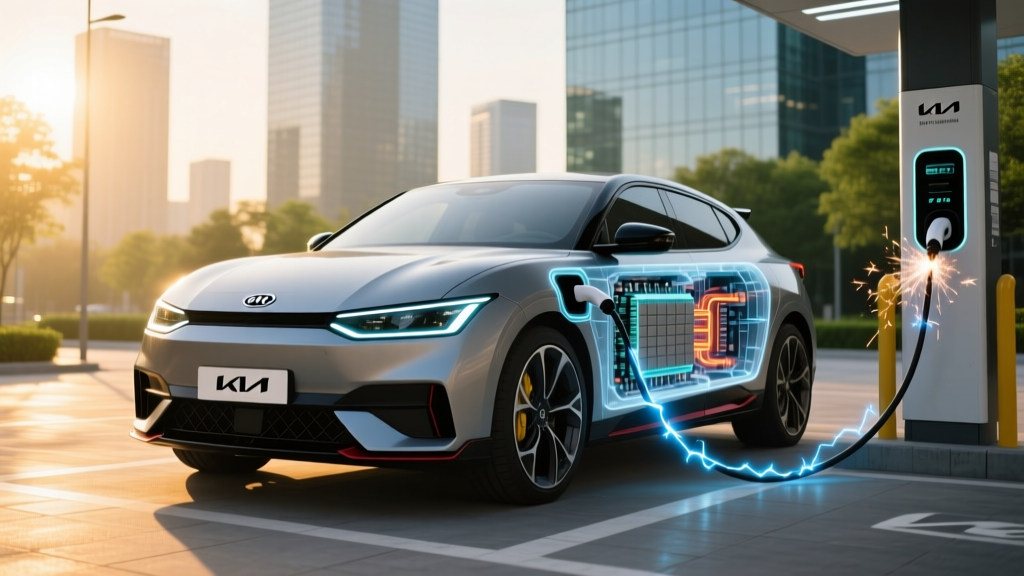
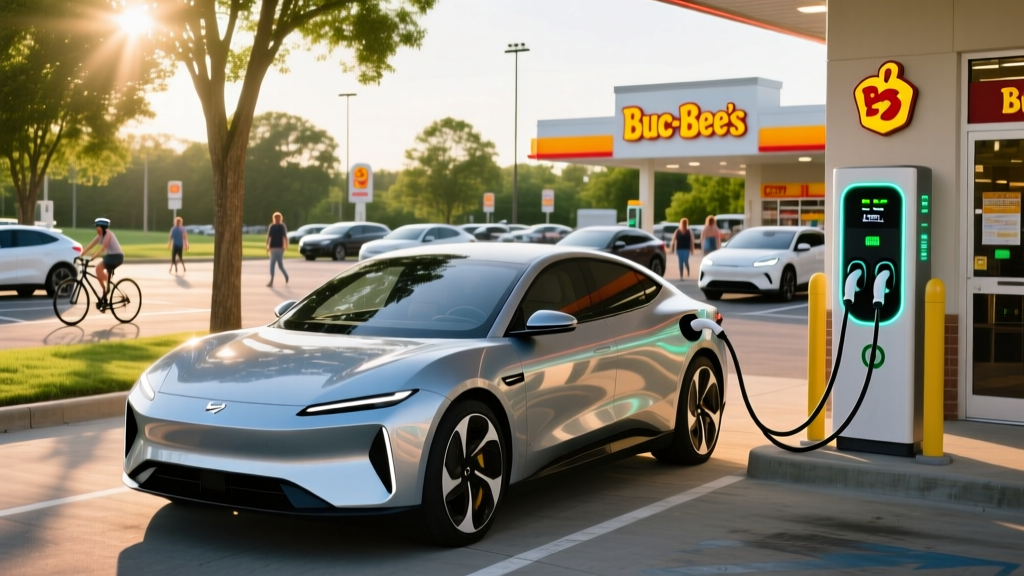
The short answer is yes — and the network is growing fast. As of early 2026, Buc-ee's has DC fast charging installations at the majority of its travel center locations across Texas, with expanding coverage in Alabama, Georgia, Florida, Tennessee, Kentucky, and Colorado. Most sites feature CCS1 and NACS (Tesla) connectors capable of delivering up to 350 kW of peak power, making Buc-ee's a legitimate highway-charging destination rather than just a novelty stop.
But real-world charging at Buc-ee's involves more than pulling up and plugging in. Charge speeds depend on your vehicle's acceptance rate, the specific charger generation at each location, and whether you're competing with other EVs for available stalls. This guide breaks down exactly what you'll find, what it costs, and how to plan around Buc-ee's chargers — plus how to set up reliable home charging so you're never dependent on public infrastructure alone.
Buc-ee's EV Charging Locations and Hardware
Buc-ee's began rolling out DC fast chargers in partnership with networks like Electrify America and Tesla Superchargers starting in 2022. By 2026, the chain operates chargers at over 30 locations. Here's what the hardware typically looks like:
- Peak power output: 150 kW to 350 kW per stall (varies by location and installation year)
- Connectors available: CCS1 (most non-Tesla EVs), NACS (Tesla and 2025+ NACS-native vehicles like the Ford F-150 Lightning and Rivian R1T Gen 2)
- CHAdeMO: Largely phased out — older Nissan Leaf owners should carry a CHAdeMO-to-CCS adapter or plan alternative stops
- Stall count: Typically 4–8 DC fast stalls per location, though newer mega-locations (e.g., Buc-ee's in Luling, TX and Richmond, TX) feature 12+ stalls
- Amenities while charging: Full convenience store, fresh food, restrooms — a 20-minute charge session is genuinely pleasant here
Understanding Charging Levels: Speeds in kW and Miles Per Hour
Whether you're charging at Buc-ee's, a hotel, or your garage, all EV charging falls into three levels. The critical distinction: kW (kilowatts) measures power — how fast energy flows into your car. kWh (kilowatt-hours) measures energy — how much your battery holds. Think of kW as the width of a hose and kWh as the size of the bucket.
| Level | Voltage / Power | kW Output | Miles of Range Added Per Hour | Typical Use Case |
|---|---|---|---|---|
| Level 1 | 120V / 12–16A | 1.4–1.9 kW | 3–5 mi/hr | Emergency / overnight trickle (PHEV-friendly) |
| Level 2 | 240V / 32–48A | 7.7–11.5 kW | 25–44 mi/hr | Home daily charging, workplaces, hotels |
| DC Fast (Level 3) | 400–800V DC | 50–350 kW | 150–1,200+ mi/hr (peak) | Highway road trips (Buc-ee's, Electrify America, Tesla Superchargers) |
For context, a 77 kWh battery (like the one in a Ford Mustang Mach-E Extended Range) charging at a 150 kW DC fast charger at Buc-ee's could add roughly 150 miles of range in about 15 minutes during peak acceptance. That same battery on a Level 2 home charger at 11.5 kW takes approximately 6.5 hours for a full 0–100% charge — ideal for overnight replenishment.
Charging Time Examples: 10–80% at Buc-ee's vs. Home
Most EV manufacturers recommend charging to 80% at DC fast stations to preserve battery health and avoid the steep taper that occurs above 80% SoC. Here's what 10–80% sessions look like for popular 2026 EVs at a typical Buc-ee's 175–350 kW stall:
| Vehicle | Battery (kWh Usable) | Peak DC Acceptance (kW) | 10–80% at Buc-ee's (est.) | 10–80% at Home L2 (48A) |
|---|---|---|---|---|
| Tesla Model Y Long Range | 75 kWh (NMC) | 250 kW | ~22 min | ~4.5 hr |
| Hyundai Ioniq 5 (Long Range) | 77.4 kWh (NMC) | 240 kW (800V) | ~18 min | ~5 hr |
| Ford F-150 Lightning (Ext. Range) | 131 kWh (NMC) | 155 kW | ~42 min | ~8.5 hr |
| Chevrolet Equinox EV | 85 kWh (NMC) | 150 kW | ~32 min | ~5.5 hr |
| Tesla Model 3 (RWD, LFP) | 57.5 kWh (LFP) | 170 kW | ~25 min | ~3.5 hr |
Connector Compatibility: Will Your EV Plug In at Buc-ee's?
The connector landscape has shifted dramatically since Tesla opened its Supercharger network and the industry adopted the North American Charging Standard (NACS). Here's how connector compatibility breaks down for 2026 EVs at Buc-ee's and other public stations:
| Connector | Vehicles That Use It | Available at Buc-ee's? | Adapter Needed? |
|---|---|---|---|
| NACS (Tesla) | All Teslas; 2025+ Ford, Rivian, GM, Volvo, Polestar, Hyundai/Kia (select models) | Yes — Tesla Superchargers at many Buc-ee's locations | CCS-to-NACS adapter for non-Tesla NACS vehicles at CCS-only stalls (~$200–$250) |
| CCS1 | Most non-Tesla EVs through 2024; many 2025–2026 models still ship CCS1 | Yes — Electrify America and other networks at Buc-ee's | NACS-to-CCS adapter needed at Tesla-only stalls |
| CHAdeMO | Nissan Leaf (2011–2025), Mitsubishi Outlander PHEV (older) | Rarely — most stations have removed CHAdeMO | CHAdeMO-to-CCS adapter (~$300+) or plan alternative stops |
Key takeaway for 2026: If you're buying a new EV, prioritize NACS-native vehicles or ensure your CCS1 vehicle includes a manufacturer-provided NACS adapter (Ford, GM, and Rivian provide or sell these). The CCS1 standard is being phased out at new installations, though existing CCS chargers remain operational.
How Much Does Charging Cost at Buc-ee's vs. Home vs. Gas?
One of the biggest misconceptions among new EV owners is that public DC fast charging is always cheaper than gasoline. It isn't — not at peak rates. Here's a realistic cost comparison using national averages for early 2026:
| Scenario | Rate ($/kWh) | Cost to Add 200 Miles* | Cost Per Mile |
|---|---|---|---|
| Home (off-peak utility rate) | $0.09–$0.14/kWh | $5.40–$8.40 | $0.027–$0.042 |
| Home (standard residential) | $0.15–$0.18/kWh | $9.00–$10.80 | $0.045–$0.054 |
| Buc-ee's DC Fast (Electrify America) | $0.37–$0.56/kWh | $22.20–$33.60 | $0.111–$0.168 |
| Tesla Supercharger at Buc-ee's | $0.28–$0.40/kWh | $16.80–$24.00 | $0.084–$0.120 |
| Gasoline (25 MPG combined, $3.20/gal) | — | $25.60 | $0.128 |
*Based on a vehicle averaging 3.3 miles per kWh (approximately 100 MPGe combined, typical of a mid-size crossover EV like the Hyundai Ioniq 5 or Tesla Model Y).
The math is clear: home charging is dramatically cheaper than both public DC fast charging and gasoline. A Buc-ee's DC fast stop at peak Electrify America rates ($0.48–$0.56/kWh in many states) can actually cost more per mile than a 25 MPG gas car. The economic case for EV ownership depends heavily on your ability to charge at home. Public fast charging is a road-trip convenience, not your cost-savings strategy.
According to fueleconomy.gov, the average 2026 EV achieves 3.0–4.0 miles per kWh depending on weight, aerodynamics, and driving conditions. Highway driving at 75+ mph reduces efficiency by 15–25% compared to city driving with regenerative braking — factor this into road-trip budgeting.
Home EV Charger Installation: Costs, Electrical Requirements, and Upgrades
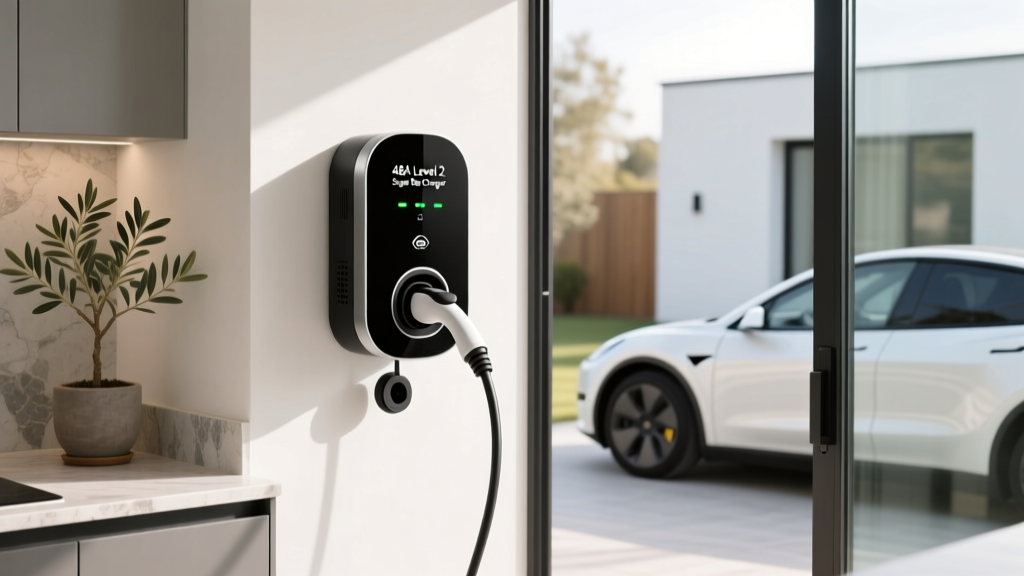
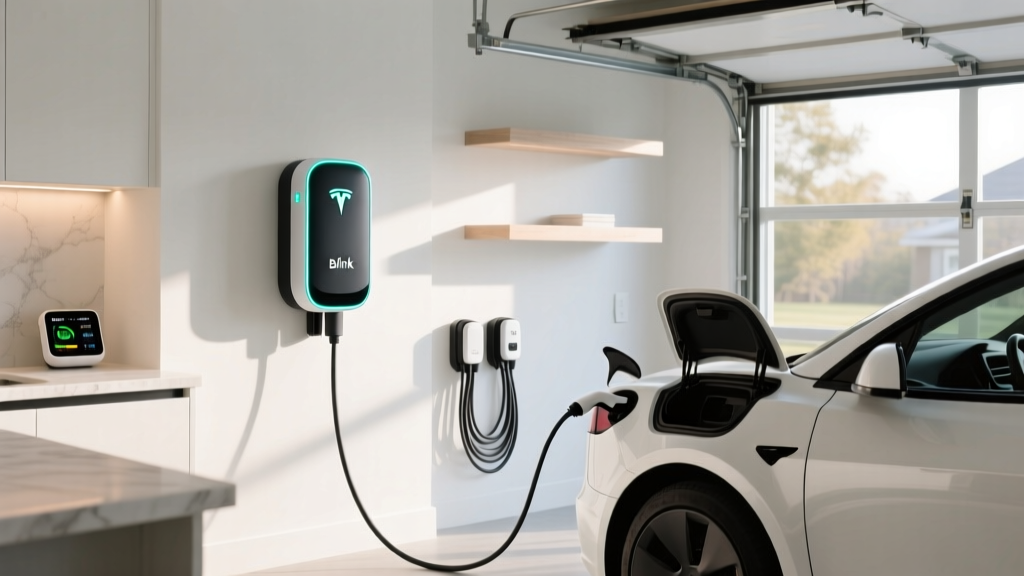
Since home charging is where the economics of EV ownership truly work, installing a dedicated Level 2 charger is the single most impactful upgrade an EV owner can make. Here's what's involved:
Electrical Requirements
- Voltage: 240V (same as your electric dryer or oven)
- Amperage: 40A circuit minimum for a 32A charger (code requires circuits rated at 125% of continuous load); 60A circuit for a 48A charger
- Dedicated circuit: Your EV charger needs its own breaker — it cannot share a circuit with other appliances
- GFCI protection: NEC 2020 and later require GFCI breakers for outdoor EV receptacles (NEMA 14-50); hardwired chargers have GFCI built into the unit
Do You Need a Panel Upgrade?
This is the variable that can double or triple your installation cost. Most modern homes built after 2000 have 200A electrical panels with sufficient spare capacity. However, older homes with 100A panels, or homes already running electric heat, an electric oven, a dryer, and A/C, may not have room for an additional 40–60A load.
A licensed electrician will perform a load calculation (NEC Article 220) to determine if your panel can handle the charger. If not, a panel upgrade to 200A typically costs $1,500–$3,000 on top of the charger installation.
Installation Cost Breakdown
| Component | Simple Install (panel nearby, no upgrade) | Complex Install (long run, panel upgrade) |
|---|---|---|
| Level 2 Charger (hardware) | $350–$700 | $350–$700 |
| Electrician labor (2–4 hrs simple / 6–10 hrs complex) | $300–$800 | $1,000–$2,500 |
| Electrical panel upgrade (if needed) | $0 | $1,500–$3,000 |
| Permit and inspection | $50–$200 | $100–$350 |
| Conduit, wiring, mounting (materials) | $50–$150 | $200–$600 |
| TOTAL | $750–$1,850 | $3,150–$7,150 |
Always hire a licensed electrician and pull a permit. Unpermitted EV charger installations can void home insurance claims and create fire hazards. The National Electrical Contractors Association maintains a directory of qualified EV-installation electricians.
Recommended Home EV Chargers for 2026
Not all Level 2 chargers are equal. Here are proven picks based on reliability, smart features, and build quality:
ChargePoint Home Flex
- Power: Up to 11.5 kW (48A) on a 60A circuit; adjustable down to 16A
- Connector: J1772 (NACS adapter included or available)
- Cable length: 23 feet
- Smart features: Wi-Fi, app scheduling, Alexa integration, energy tracking
- Price: ~$549–$649
- Best for: Most EV owners wanting flexibility and smart scheduling
Tesla Wall Connector
- Power: Up to 11.5 kW (48A) on a 60A circuit
- Connector: NACS native (J1772 adapter available for non-Teslas)
- Cable length: 24 feet
- Smart features: Wi-Fi updates, power sharing (multiple units on one circuit), load management
- Price: ~$475
- Best for: Tesla owners and NACS-native vehicle buyers
Emporia Vue Level 2 Charger
- Power: Up to 11.5 kW (48A)
- Connector: J1772
- Cable length: 24 feet
- Smart features: Real-time energy monitoring, solar integration, time-of-use scheduling, detailed app analytics
- Price: ~$399–$499
- Best for: Budget-conscious buyers who want detailed energy data
Grizzl-E Smart
- Power: Up to 10 kW (40A) on a 50A circuit
- Connector: J1772
- Cable length: 24 feet
- Smart features: OCPP-compatible, works with multiple apps, adjustable amperage
- Price: ~$449
- Best for: Cold-climate owners (rated to -40°F), rugged outdoor installs
Safety and Electrical Code Considerations
EV chargers draw sustained high current for hours — this is fundamentally different from a dryer that cycles on and off. Safety considerations are non-negotiable:
- Dedicated circuit required: Never share the charger circuit with other outlets or appliances.
- Outdoor rating: If your charger is installed outdoors (garage-free homes), ensure the unit is NEMA 4 rated (weatherproof). All chargers listed above meet this standard.
- GFCI protection: Required for outdoor NEMA 14-50 receptacles under NEC 2020+. Hardwired installations handle GFCI internally.
- Wire gauge: 6 AWG copper for 48A circuits; 8 AWG for 32A circuits. Your electrician will size this correctly — don't attempt DIY on 240V circuits.
- Permit and inspection: Most jurisdictions require an electrical permit for EV charger installation. The inspection ensures the work meets code and protects your home insurance coverage.
- Utility notification: Some utilities require you to notify them before installing a Level 2 charger, especially if you're on a time-of-use (TOU) rate plan that offers discounted overnight charging.
Frequently Asked Questions
Does every Buc-ee's have EV chargers?
No. As of 2026, the majority of Buc-ee's travel centers in Texas have DC fast chargers, along with many locations in Alabama, Georgia, Florida, and Tennessee. However, some older or smaller Buc-ee's locations may not yet have chargers. Always check the Electrify America, Tesla Supercharger, or PlugShare apps before relying on a specific location.
Can I charge a non-Tesla EV at a Tesla Supercharger at Buc-ee's?
Yes — if your vehicle has a NACS charge port (2025+ Ford, GM, Rivian, and select Hyundai/Kia models) or you carry a CCS-to-NACS adapter. Tesla has opened many Supercharger stalls to non-Tesla EVs through the "Charge with NACS" program, though not all stalls at every location are open to non-Tesla vehicles. Check the Tesla app for stall-level compatibility.
How much does it cost to install a home EV charger?
A straightforward Level 2 installation (panel nearby, no upgrade needed) typically costs $750–$1,850 including the charger hardware, electrician labor, permit, and materials. If your home needs an electrical panel upgrade from 100A to 200A, total costs can reach $3,150–$7,150. Always get 2–3 quotes from licensed electricians.
Is Buc-ee's charging cheaper than gas?
It depends on the network and rate. Tesla Superchargers at Buc-ee's ($0.28–$0.40/kWh) typically cost less per mile than gasoline. Electrify America at peak rates ($0.48–$0.56/kWh) can actually exceed the per-mile cost of a 25 MPG gas car. Home charging at $0.09–$0.18/kWh is always cheaper than gas.
What electrical upgrades might I need for a home charger?
The most common upgrade is a panel capacity increase from 100A to 200A ($1,500–$3,000). Homes with modern 200A panels usually have sufficient capacity. Other potential upgrades include adding a sub-panel near the garage, running new conduit for long wire runs (50+ feet from panel to charger), or upgrading the utility service drop in very old homes. A licensed electrician's load calculation will determine exactly what's needed.
How fast will each charging level add range?
Level 1 (120V) adds 3–5 miles per hour — enough for PHEVs with small batteries, too slow for BEVs. Level 2 (240V, 48A) adds 25–44 miles per hour — a full overnight charge for most EVs. DC Fast Charging (50–350 kW) adds 150–1,200+ miles per hour at peak, though real sessions taper significantly above 80% SoC. See the charging levels table above for detailed specs.
Which connector does my EV need?
All Teslas and an expanding list of 2025–2026 EVs (Ford, GM, Rivian, select Hyundai/Kia/Volvo/Polestar) use the NACS connector. Most 2024 and earlier non-Tesla EVs use CCS1. The CHAdeMO connector is essentially discontinued — only the Nissan Leaf still uses it, and new CHAdeMO charger installations have nearly stopped. When buying, prioritize NACS-native for future-proofing.
Planning Your EV Road Trip Through Buc-ee's Country
Buc-ee's has evolved from a quirky Texas rest stop into a legitimate EV charging waypoint. With 150–350 kW DC fast chargers at most locations, NACS and CCS1 compatibility, and the best brisket sandwich in the South, it's a solid stop on any I-10, I-35, or I-45 road trip.
But the economics of EV ownership still hinge on home charging. At $0.09–$0.18/kWh from your garage, you'll pay $0.03–$0.05 per mile — roughly one-third the cost of gasoline. At Buc-ee's peak DC fast rates, you might pay more than gas per mile. The strategy is simple: charge at home overnight, use DC fast chargers like Buc-ee's for road-trip segments only, and always plan stops using real-time availability apps (PlugShare, Electrify America, Tesla) rather than hoping for an open stall.
Before your next trip, verify your specific Buc-ee's destination has operational chargers, confirm your connector compatibility, and precondition your battery (if your EV supports it) for the fastest possible charge when you arrive. Safe travels — and grab some beaver nuggets while you wait.