If you have driven through Texas on I-35, I-10, or I-45, you have likely seen the beaver logo and the 100+ pump fuel islands. What you may not know is that Buc-ee's has been quietly adding EV infrastructure to its travel centers, and for 2026 road-trippers, Buc-ee's electric car charging is becoming a legitimate route-planning option — not just a clean restroom and a brisket sandwich.
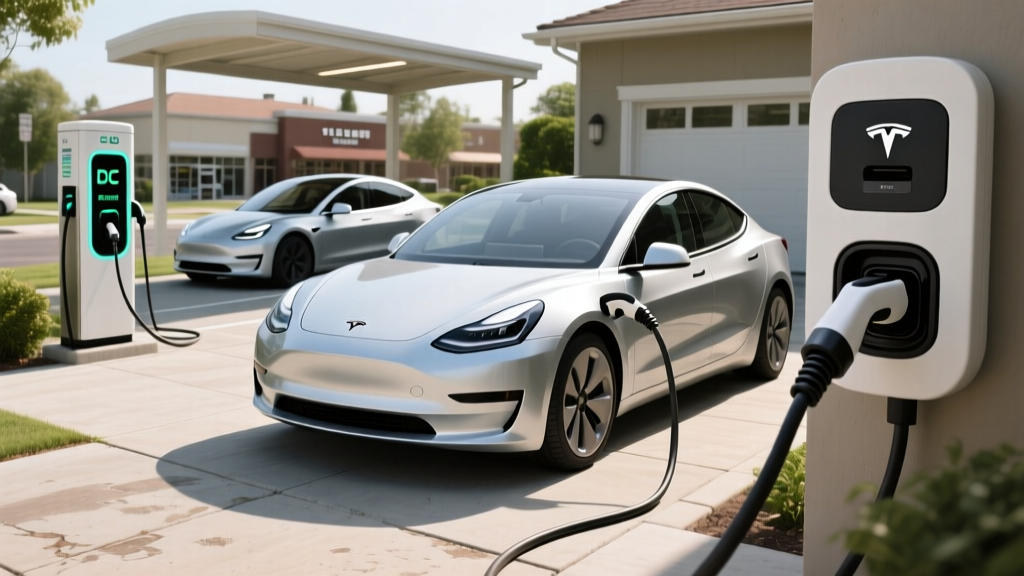
But Buc-ee's is only one piece of a complete charging strategy. Most EV owners do 80% or more of their charging at home on Level 2 equipment, relying on DC fast-charger networks like Buc-ee's, Tesla Superchargers, and Electrify America only for highway trips. This guide covers Buc-ee's public charging in detail, then walks through the home-charging setup, costs, connectors, and per-mile economics you need to make EV ownership practical day-to-day.
What Buc-ee's Electric Car Charging Actually Offers
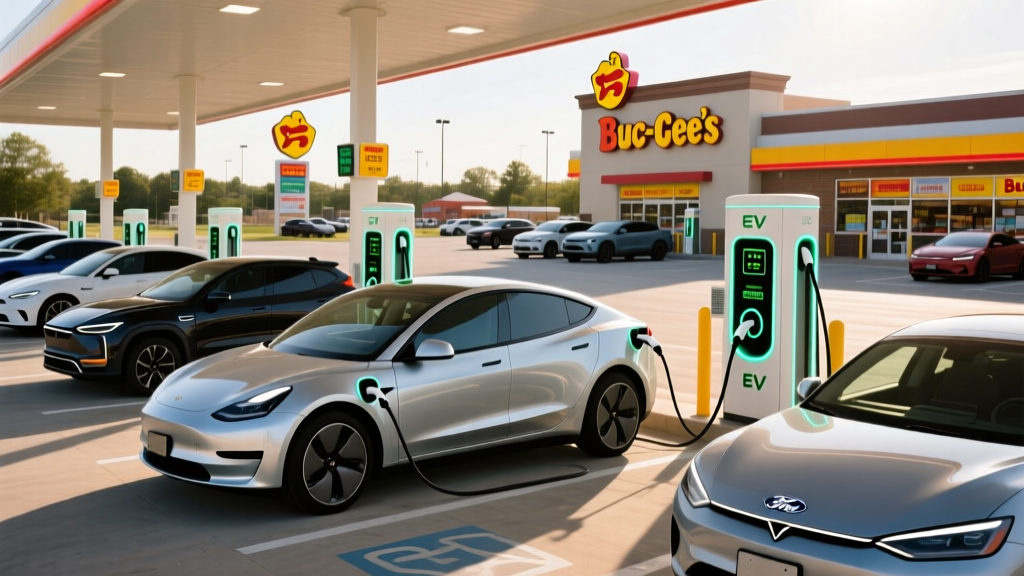
Buc-ee's travel centers are large-format stops designed around fuel throughput, clean facilities, and food. Their EV charging rollout has focused on DC fast charging (DCFC) — the high-power chargers capable of adding 100+ miles of range in 15–20 minutes. As of early 2026, select Buc-ee's locations in Texas, Alabama, Florida, and Georgia host third-party DC fast chargers, typically through partnerships with networks such as Electrify America and EVgo. Stall counts vary by location, ranging from 4 to 12 DCFC ports.
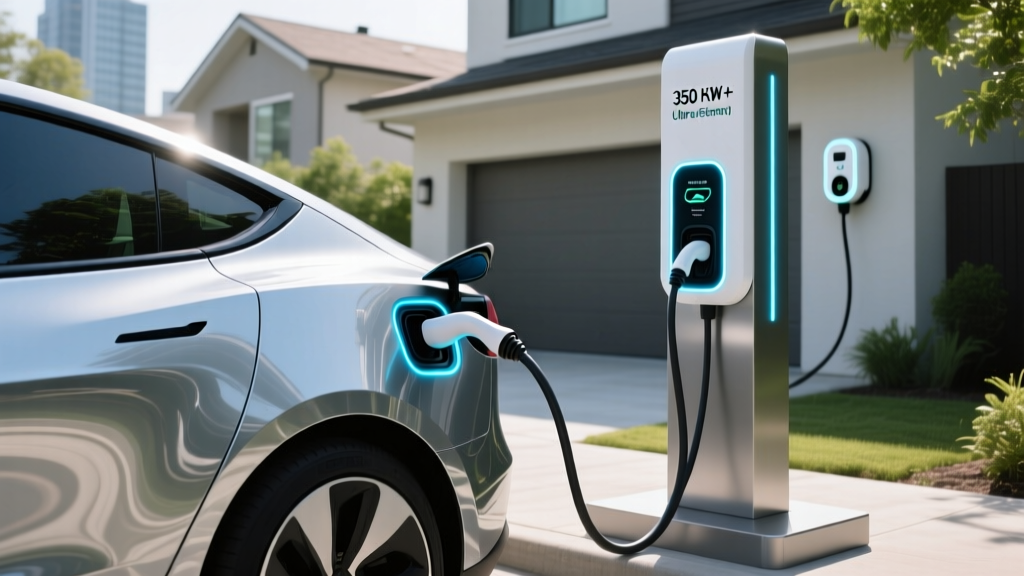
Peak power output at these stations typically runs 150 kW to 350 kW. A 350 kW stall can, under ideal conditions, charge a compatible vehicle like the Hyundai Ioniq 5 or Porsche Taycan from 10% to 80% State of Charge (SoC) in approximately 18 minutes. However, real-world charge speed depends on your vehicle's onboard charge-curve limit, battery temperature, and current SoC. A Chevrolet Equinox EV with a peak acceptance of ~150 kW will not benefit from a 350 kW stall beyond that 150 kW ceiling.
Charging Levels Explained: Speeds, Power, and Range Added
Before we break down costs, it is critical to understand the three charging levels and the difference between kW (kilowatts, a measure of power — how fast energy flows) and kWh (kilowatt-hours, a measure of energy — how much the battery holds). Confusing these is the single most common mistake new EV owners make.
| Level | Voltage | Power (kW) | Miles of Range Added per Hour | Typical Use |
|---|---|---|---|---|
| Level 1 | 120V AC | 1.0–1.4 kW | 3–5 mi/hr | Overnight trickle; PHEVs; low daily mileage |
| Level 2 | 240V AC | 7.2–19.2 kW | 25–65 mi/hr | Home daily charging; workplace; hotels |
| DC Fast | 400–800V DC | 50–350 kW | 150–1,000+ mi/hr (peak) | Highway road trips; quick top-ups |
Charging time examples (10–80% SoC):
- Tesla Model Y (75 kWh battery, NACS): ~25 min on a 250 kW Supercharger; ~35 min on a 150 kW DCFC
- Ford F-150 Lightning (131 kWh extended-range, CCS1/NACS adapter): ~41 min on a 150 kW charger; ~28 min on a 350 kW charger (limited by ~230 kW peak acceptance)
- Chevrolet Bolt EV (65 kWh, CCS1): ~55 min on a 50 kW charger; the Bolt's peak acceptance is only ~55 kW, so faster stalls do not help
- Hyundai Ioniq 5 (77.4 kWh, NACS/CCS1): ~18 min on a 350 kW charger (800V architecture enables ~240 kW sustained peak)
Connector Compatibility: Will Your EV Plug In at Buc-ee's?
Connector standards in the U.S. have consolidated rapidly since 2024. Here is what you will encounter at Buc-ee's DC fast-charging stalls and across public networks in 2026:
| Connector | Brands Using It (2026) | Availability at Buc-ee's / Public DCFC |
|---|---|---|
| NACS (Tesla / North American Charging Standard) | Tesla, Ford, GM, Rivian, Volvo, Polestar, Mercedes-Benz, Hyundai/Kia (2025+ models), Nissan (Ariya refresh) | Widely available; Tesla Superchargers now open to NACS-equipped non-Tesla EVs via the Tesla app |
| CCS1 (Combined Charging System) | Legacy models from VW, BMW, older Ford/GM/Hyundai/Kia vehicles (pre-NACS switch) | Still common at Electrify America, EVgo; declining as NACS expands |
| CHAdeMO | Nissan Leaf (all years), Mitsubishi Outlander PHEV (older trims) | Rare; being phased out at most networks |
Adapter needs: If you drive a CCS1-equipped EV and want access to Tesla Superchargers (many of which are near or co-located with Buc-ee's properties in some markets), you will need a CCS-to-NACS adapter. Ford, GM, and Rivian owners received adapters from their manufacturers starting in 2024. Third-party adapters from Lectron or A2Z typically cost $150–$250. Always verify adapter compatibility with your specific model year before purchasing.
Cost to Charge: Buc-ee's Public Pricing vs. Home vs. Gas
DC fast charging at Buc-ee's partner stations is priced per kWh, and rates vary by network, time of day, and location. Here is a realistic 2026 cost breakdown:
| Scenario | $/kWh | Cost to Add 200 Miles* | Cost per Mile |
|---|---|---|---|
| Home Level 2 (off-peak utility rate) | $0.08–$0.14 | $5.60–$9.80 | $0.028–$0.049 |
| Home Level 2 (standard residential rate) | $0.14–$0.20 | $9.80–$14.00 | $0.049–$0.070 |
| Buc-ee's / Public DCFC (network rate) | $0.35–$0.55 | $24.50–$38.50 | $0.123–$0.193 |
| Gasoline vehicle (27 MPG avg, $3.10/gal) | — | $22.96 | $0.115 |
*Based on an average EV efficiency of 3.5 miles per kWh (approximately 28 kWh per 100 miles), consistent with vehicles like the Tesla Model Y and Hyundai Ioniq 5. Larger vehicles like the F-150 Lightning consume closer to 2.0–2.5 mi/kWh.
The takeaway is clear: home charging on Level 2 is dramatically cheaper than both public DCFC and gasoline. Even at standard residential electricity rates, an EV costs roughly half as much per mile to fuel as a comparable gas car. Public DC fast charging — including at Buc-ee's — is best reserved for road trips, not your daily commute.
How Much Does It Cost to Install a Home EV Charger?
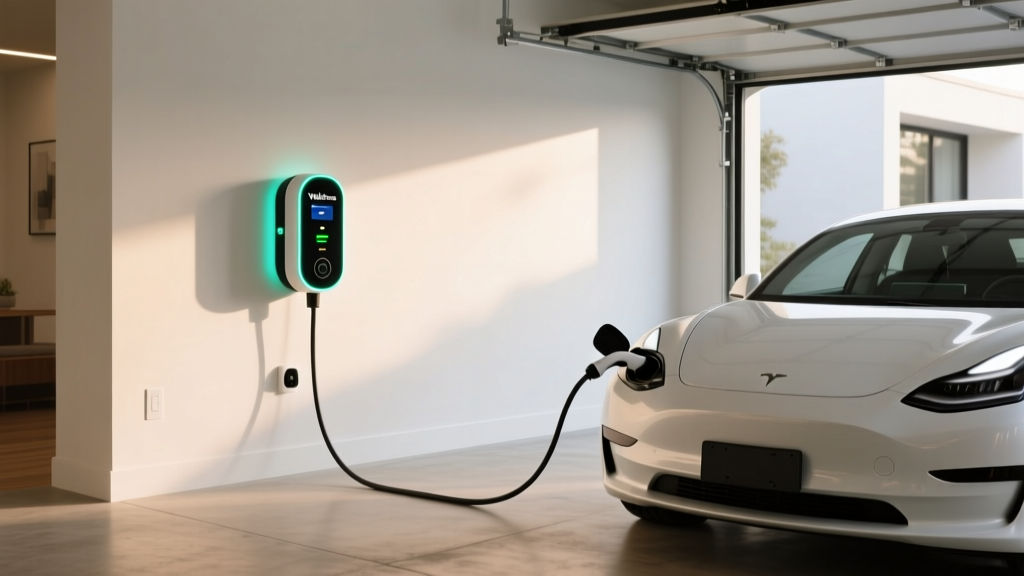
Installing a Level 2 home charger is the single most impactful upgrade for EV ownership. Here is what to budget for a typical 240V / 48A (11.5 kW) hardwired installation:
| Component | Typical Cost Range | Notes |
|---|---|---|
| Level 2 charger (equipment) | $400–$750 | Smart Wi-Fi chargers (ChargePoint Home Flex, Emporia Vue, Wallbox Pulsar Plus) |
| Electrician labor (standard install) | $600–$1,500 | Assumes panel is nearby; 240V/50A circuit with 6 AWG wire |
| Permit and inspection | $50–$200 | Varies by municipality; required for code compliance |
| Electrical panel upgrade (if needed) | $1,500–$3,500 | Required if your panel is 100A or maxed out; upgrading to 200A service |
| Total (no panel upgrade) | $1,050–$2,450 | Most homes with 200A service and garage-adjacent panel |
| Total (with panel upgrade) | $2,550–$5,950 | Older homes with 100A panels or distant install locations |
What Electrical Upgrades Might You Need?
A Level 2 charger drawing 48A continuous requires a dedicated 60A breaker (the National Electrical Code requires circuits to be rated at 125% of continuous load). Your electrician will assess:
- Panel capacity: A 200A panel with available breaker slots can usually handle a 60A EV circuit. A 100A panel in an older home often cannot, necessitating a service upgrade to 200A — the single largest cost variable.
- Wire run distance: Longer runs from panel to garage increase wire gauge requirements and labor time. A 50-foot run costs significantly more than a 10-foot run through a shared wall.
- GFCI protection: The 2023 NEC update (adopted by most states by 2026) requires GFCI protection for EV charging circuits. Hardwired chargers typically handle this internally; plug-in units (NEMA 14-50 outlets) require a GFCI breaker, which adds $50–$120 to material costs.
- Outdoor rating: If your charger mounts outside, ensure the unit carries a NEMA 4 or IP65 weatherproof rating. Most major chargers (ChargePoint, Wallbox, Emporia) are outdoor-rated.
Best Home EV Chargers for 2026: Equipment Picks
Based on reliability, smart features, and real-world charging performance, these are the top Level 2 home chargers for most EV owners:
ChargePoint Home Flex
- Power output: Up to 12 kW (50A) on a 60A circuit; configurable down to 16A for lower-capacity panels
- Connector: J1772 (NACS vehicles use the included adapter or vehicle-side adapter)
- Cable length: 23 feet
- Smart features: Wi-Fi, Alexa integration, scheduling, energy tracking via app
- Price: ~$650
- Best for: Versatility — adjustable amperage fits almost any home panel
Emporia Level 2 EV Charger
- Power output: Up to 11.5 kW (48A) on a 60A circuit
- Connector: J1772 (NACS adapter available)
- Cable length: 24 feet
- Smart features: Wi-Fi, solar-integration with Emporia Vue energy monitor, time-of-use scheduling
- Price: ~$400
- Best for: Budget-conscious buyers; solar-home integration
Wallbox Pulsar Plus
- Power output: Up to 11.5 kW (48A)
- Connector: J1772
- Cable length: 25 feet
- Smart features: Wi-Fi + Bluetooth, compact form factor, Power Sharing for dual-charger setups
- Price: ~$550
- Best for: Compact garages; two-EV households on one circuit
Tesla Wall Connector (Gen 3)
- Power output: Up to 11.5 kW (48A)
- Connector: NACS native (J1772 adapter included for non-Tesla EVs)
- Cable length: 24 feet
- Smart features: Wi-Fi, over-the-air updates, Power Sharing, Tesla app integration
- Price: ~$475
- Best for: Tesla owners or mixed-fleet households with NACS vehicles
Planning a Road Trip with Buc-ee's Charging Stops
Buc-ee's locations are strategically placed along major Texas and Southeast corridors. When planning a long-distance EV trip, integrate Buc-ee's chargers alongside Supercharger and Electrify America stops using route-planning tools like A Better Route Planner (ABRP) or PlugShare. Key considerations:
- Preconditioning: If your EV supports it (Tesla, Hyundai/Kia 800V models, Ford), set the charger as your navigation destination. The car will warm the battery to optimal temperature before arrival, enabling faster peak charge rates. Without preconditioning, expect 20–30% slower charging, especially in cold weather.
- Charge curve taper: Do not plan stops based on peak kW alone. A 350 kW charger may deliver that rate only between 10–40% SoC, tapering to 150 kW by 60% and below 50 kW past 80%. Plan to charge from 10–80% and drive on — charging past 80% at a DCFC is almost never time-efficient.
- Cold-weather range loss: In temperatures below 40°F, expect 15–30% range reduction depending on cabin heating demands and battery chemistry (LFP batteries lose proportionally more range in cold than NMC). Plan shorter intervals between charging stops in winter.
- Amenities advantage: Buc-ee's 20–30 minute charge time aligns well with a restroom break, meal, and fuel-station snack run — one of the better DCFC environments for making productive use of charging downtime.
Federal Tax Credits for Home Charging Equipment
Under the Inflation Reduction Act, the Alternative Fuel Vehicle Refueling Property Credit (IRC §30C) covers 30% of the cost of home EV charger equipment and installation, up to a maximum credit of $1,000. This credit is available through 2032, subject to income limitations and census-tract eligibility requirements (the property must be in a qualifying low-income or non-urban census tract). Consult a tax professional and review current IRS guidance before claiming.
Frequently Asked Questions
How fast will each charging level add range to my EV?
Level 1 (120V standard outlet) adds 3–5 miles per hour — suitable for plug-in hybrids with small batteries or EVs driven under 30 miles daily. Level 2 (240V home charger) adds 25–65 miles per hour depending on your charger's kW output and your vehicle's onboard charger capacity. DC fast charging at 150–350 kW adds 150–1,000+ miles per hour at peak, but real-world sessions average 10–80% in 18–45 minutes depending on battery size and vehicle acceptance rate.
Which connector does my EV need for Buc-ee's chargers?
Most Buc-ee's DCFC stalls use Electrify America or EVgo equipment with CCS1 connectors. If your vehicle has a NACS port (all Teslas, plus 2025+ Ford, GM, Rivian, and others), you will need a NACS-to-CCS adapter for these stalls. Check PlugShare or the specific network app before arriving to confirm connector availability at your destination Buc-ee's.
Is charging at Buc-ee's cheaper than filling up with gas?
It depends on your vehicle and local gas prices. At $0.45/kWh (a typical DCFC rate), an efficient EV like the Model Y costs about $0.16/mile — more than the $0.11/mile a 27 MPG gas car burns at $3.10/gallon. However, home Level 2 charging at $0.14/kWh drops EV cost to about $0.05/mile, well below gas. The economics favor EVs overwhelmingly when most charging happens at home.
Do I need to upgrade my electrical panel for a Level 2 charger?
Maybe. If your home has a 200A panel with available capacity, you likely will not need an upgrade. If your panel is 100A, already near capacity, or uses Federal Pacific or Zinsco breakers (common in pre-1990 homes and flagged as safety hazards), a panel upgrade to 200A will be required. Budget $1,500–$3,500 for this work. A licensed electrician's load calculation is the definitive answer — do not guess.
Can I use a regular 120V outlet to charge my EV at home?
Yes, but slowly. Level 1 charging from a standard 120V outlet delivers about 1.2 kW, adding roughly 4 miles of range per hour. For a 75 kWh battery, a full charge from empty would take approximately 60+ hours. Level 1 is practical for plug-in hybrids (which have smaller batteries of 10–20 kWh) or for EV drivers with very short daily commutes under 25 miles. For most BEV owners, Level 2 is the minimum viable home setup.
How do I find the nearest Buc-ee's with EV charging?
Use the PlugShare app or website and filter by network (Electrify America, EVgo) near Buc-ee's addresses. Buc-ee's does not maintain a dedicated EV charger map on its own site, but community reviews on PlugShare provide real-time stall status, connector types, and reliability reports. The ABRP route planner can also integrate Buc-ee's-adjacent chargers into long-distance trip plans.
Sources: fueleconomy.gov (EPA efficiency data); IRS.gov §30C credit guidance; Electrify America station network data.