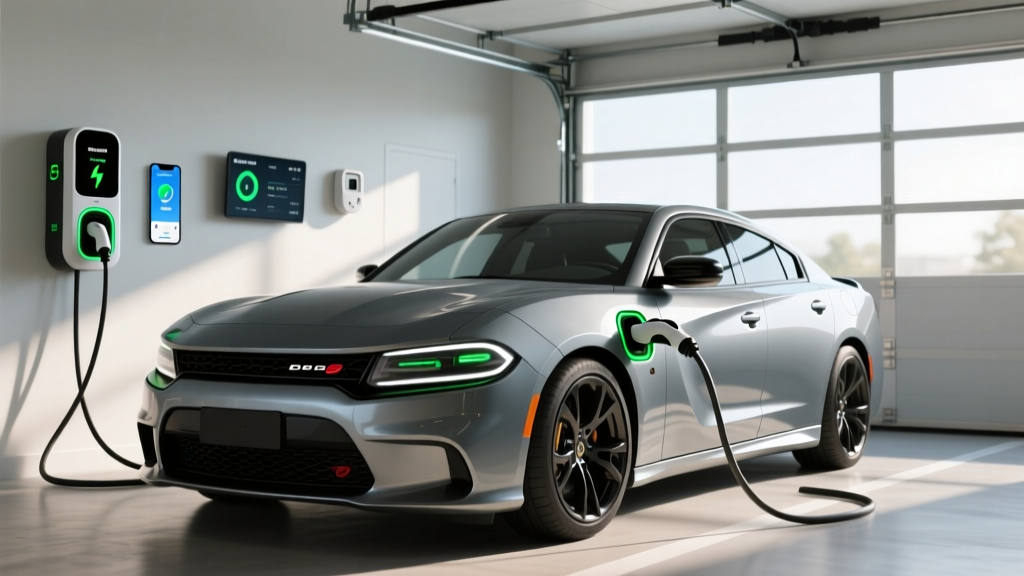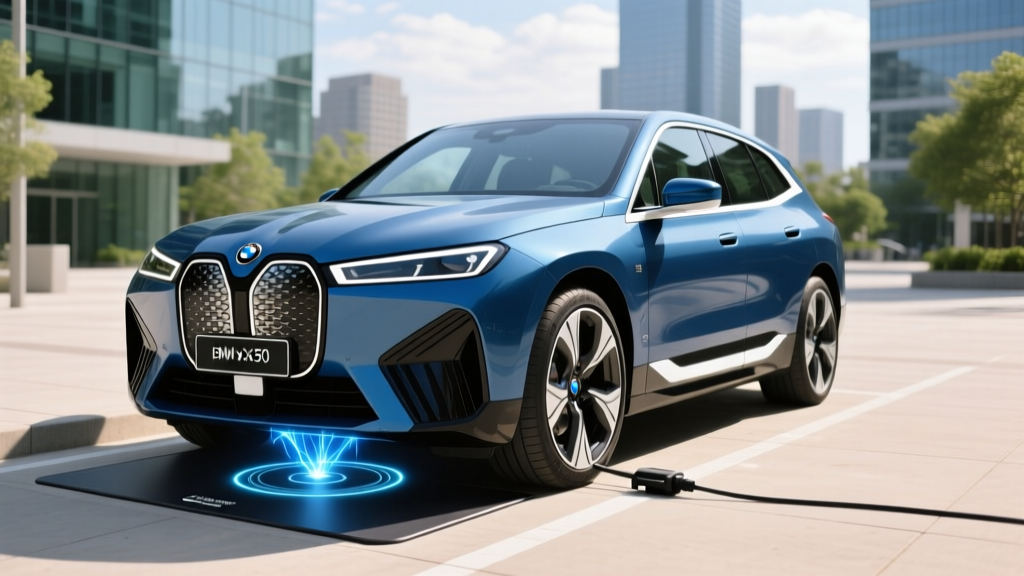
If you've seen promotional footage of a BMW 530e gliding over a ground pad and charging without a cable, you've witnessed inductive power transfer in action. BMW wireless charging — officially called Wireless Charging — was one of the first factory-supported inductive charging systems offered on a production plug-in hybrid. But how does it actually work, what does it cost, and is it a practical alternative to a conventional Level 2 home charger in 2026?
This guide covers the real-world physics, speeds, costs, and compatibility of BMW's wireless charging system, while also giving you a complete home-charging reference so you can decide whether induction or a hardwired Level 2 station makes more sense for your garage.
What Is BMW Wireless Charging and How Does Induction Work?
BMW Wireless Charging uses electromagnetic induction — the same principle behind wireless phone chargers, but scaled up to deliver kilowatts of power to a vehicle's traction battery. Here's the hardware chain:
- Ground Pad (Induction Base Pad): Installed on your garage floor or driveway, this coil connects to a 240V wall-box unit. It generates an alternating electromagnetic field.
- Vehicle Pad (Car Pad): A matching receiver coil mounted under the car's floor. When aligned over the ground pad, the magnetic field induces an alternating current in this coil.
- Rectifier and Power Electronics: The induced AC is converted to DC and fed into the high-voltage battery.
- Alignment Assistance: The iDrive display shows a top-down camera view with guide lines so the driver can position the car precisely over the pad — typically within ±1 inch of optimal alignment.
The system debuted on the BMW 530e iPerformance (G30 generation) and was later offered on select BMW 7 Series plug-in hybrids. As of 2026, BMW has not expanded wireless charging to its full BEV lineup (i4, i5, i7, iX), though the technology remains available on certain PHEV models in supported markets. The BMW USA electrified vehicle page lists current PHEV availability — always verify wireless charging compatibility for your specific model year and trim.
Charging Levels Compared: Where Does Wireless Fit?
To understand BMW wireless charging's place in the ecosystem, here's how it compares to the three standard wired charging levels. Wireless induction at 3.2 kW sits between Level 1 (standard outlet) and a full Level 2 installation in terms of power delivery.
| Level | Voltage / Amperage | Power (kW) | Miles of Range Added/Hour | Typical Use Case |
|---|---|---|---|---|
| Level 1 (120V) | 120V / 12A | 1.4 kW | 3–5 mi/hr | Overnight trickle, PHEVs |
| BMW Wireless (Induction) | 240V / 16A (ground pad) | 3.2 kW | 8–12 mi/hr | Cable-free PHEV top-ups |
| Level 2 (240V, 32A) | 240V / 32A | 7.7 kW | 22–30 mi/hr | Standard home BEV charging |
| Level 2 (240V, 48A) | 240V / 48A | 11.5 kW | 33–44 mi/hr | Fast home / workplace BEV |
| DC Fast Charge | 400–800V DC | 50–350 kW | 150–1,200+ mi/hr (peak) | Road trips, public stations |
Real-world context: A BMW 530e with 12.0 kWh of usable battery capacity and an EPA electric-only range of approximately 21 miles can fully recharge via wireless induction in about 3.5–4 hours. That's perfectly adequate for overnight PHEV replenishment. But for a BEV like the BMW i5 (84.3 kWh usable, EPA range up to 295 miles), 3.2 kW wireless would take over 26 hours — making it impractical as a sole charging method for battery-electric vehicles.
Home Installation: Electrical Requirements and Costs
Despite the "wireless" branding, BMW's system still requires a hardwired 240V connection to the ground-pad wall-box unit. The induction part only applies between the ground pad and the car — your house wiring is very much wired.
Electrical Specifications for BMW Wireless Charging
- Circuit requirement: Dedicated 240V / 20A circuit (the wall-box draws up to 16A continuous)
- Wire gauge: 12 AWG copper minimum (10 AWG recommended for runs over 50 feet)
- Breaker: 20A double-pole breaker in your main panel
- GFCI protection: Required by NEC 2023 Article 625 for all EV supply equipment
- Outdoor rating: The ground pad itself is rated for outdoor installation (IP67 sealed), but the wall-box unit should be mounted in a covered area
Full Installation Cost Breakdown
| Component | Low Estimate | High Estimate | Notes |
|---|---|---|---|
| BMW Wireless Charging Pad + Wall-Box Kit | $2,800 | $3,500 | OEM equipment, purchased through BMW dealer |
| Licensed Electrician Labor | $500 | $1,500 | Depends on panel distance, conduit runs, local rates |
| Permit & Inspection | $100 | $300 | Varies by municipality; required in most jurisdictions |
| Panel Upgrade (if needed) | $1,500 | $4,000 | 100A → 200A service; older homes may lack capacity |
| Total (no panel upgrade) | $3,400 | $5,300 | Most common scenario for modern homes |
| Total (with panel upgrade) | $4,900 | $9,300 | Homes with 100A service or full panels |
Panel upgrade reality check: Many homes built before 1990 have 100-amp electrical service. Adding a dedicated 240V circuit for EV charging may require upgrading to 200A service — a significant cost that surprises first-time EV buyers. Before purchasing any charging equipment, have a licensed electrician perform a load calculation on your panel. This is non-negotiable for safety and code compliance.
Connector Compatibility: Wireless, NACS, CCS, and CHAdeMO
BMW wireless charging is a supplement to — not a replacement for — wired charging. Every BMW PHEV or BEV with wireless capability also has a conventional charge port. Here's how connector compatibility breaks down across the BMW lineup and the broader market:
| Connector | Standard On | AC Level 2 | DC Fast | Adapter Needed? |
|---|---|---|---|---|
| NACS (Tesla/J3400) | Tesla, Ford, GM, Rivian, Hyundai, BMW (2025+ models) | Yes | Yes | CCS→NACS adapter for older CCS vehicles |
| CCS1 | BMW (pre-2025), VW, Hyundai/Kia (pre-2025), Stellantis | Yes | Yes | NACS→CCS adapter to use Tesla Superchargers |
| CHAdeMO | Nissan Leaf (legacy), Mitsubishi Outlander PHEV | No (J1772 for AC) | Yes | CHAdeMO→CCS adapters limited; network declining |
| J1772 | All non-Tesla EVs (AC only) | Yes | No | J1772→NACS adapter for Tesla destination chargers |
| BMW Wireless (Induction) | Select BMW PHEVs (530e, 745e) | N/A (wireless) | No | N/A — proprietary OEM system |
2026 market shift: BMW began transitioning its North American vehicles to the NACS (J3400) connector starting with 2025 model-year vehicles. If you're buying a new BMW in 2026, expect a NACS port. If you own a 2022–2024 BMW EV or PHEV, you likely have CCS1 and will need a BMW-approved CCS-to-NACS adapter (approximately $200–$250) to access Tesla Supercharger stations. Wireless charging operates independently of the wired connector standard.
Cost to Charge: Home vs Public vs Gas
Whether you're using BMW wireless charging at 3.2 kW or a 48A Level 2 station at 11.5 kW, the electricity cost per kWh is the same — it's your rate that matters. Here's how charging costs compare across scenarios:
| Scenario | Rate / Price | Cost per kWh | Cost per Mile (BMW 530e PHEV) | Cost per Mile (BMW i5 BEV) |
|---|---|---|---|---|
| Home — Off-Peak TOU Rate | $0.08–$0.12/kWh | $0.10 avg | $0.03 | $0.03 |
| Home — Standard Rate | $0.13–$0.18/kWh | $0.16 avg | $0.05 | $0.05 |
| Public Level 2 (ChargePoint, etc.) | $0.25–$0.49/kWh | $0.35 avg | $0.10 | $0.11 |
| DC Fast Charge (Electrify America) | $0.35–$0.55/kWh | $0.48 avg | N/A (PHEVs rarely DC charge) | $0.15 |
| Gasoline (30 MPG avg, $3.50/gal) | $3.50/gallon | N/A | $0.12 | N/A |
The math: The BMW 530e consumes approximately 33 kWh/100 miles in electric mode. At a home off-peak rate of $0.10/kWh, that's $3.30 per 100 miles — or $0.033 per mile. The same distance in a gas car at 30 MPG and $3.50/gallon costs $11.67 — or $0.117 per mile. That's roughly a 72% per-mile savings charging at home versus fueling with gas.
Wireless charging at 3.2 kW is slightly less efficient than wired Level 2 due to inductive transfer losses (typically 5–10% energy loss as heat in the air gap). In practice, this means you might pay $0.035/mile wirelessly versus $0.033/mile wired — a negligible difference for most owners, but worth noting for efficiency purists.
Level 2 Equipment Recommendations (Wired Alternatives)
If BMW wireless charging isn't available for your model — or you need faster charging for a BEV — here are proven Level 2 home stations that pair well with BMW's electrified lineup:
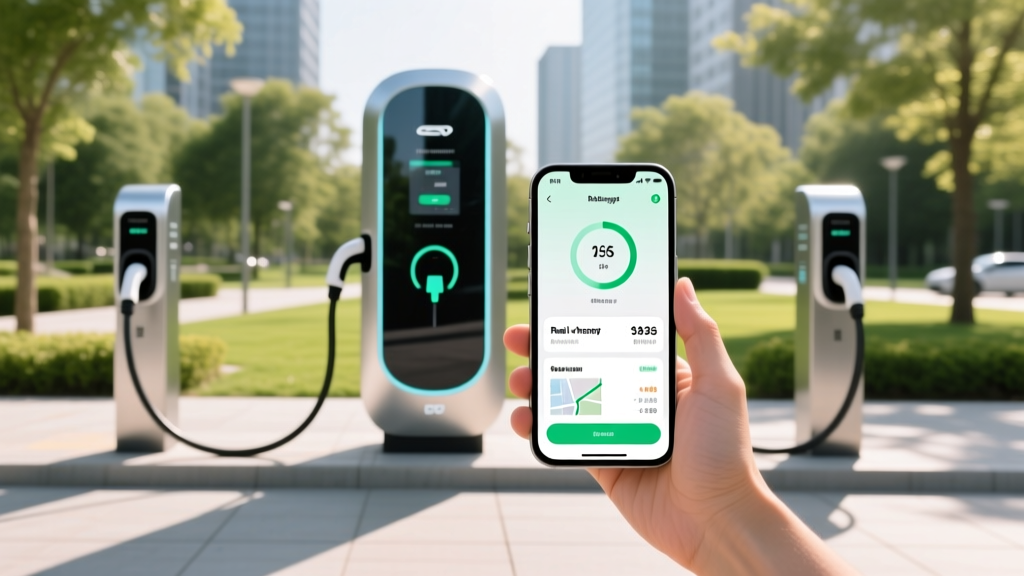
ChargePoint Home Flex
- Power: Up to 12 kW (50A, adjustable to 16–50A)
- Connector: NACS or J1772 (configurable)
- Cable length: 23 feet
- Smart features: Wi-Fi, Alexa, scheduled charging, energy tracking
- Price: $599–$699
- Best for: Flexible amperage; ideal if panel capacity is limited
Wall Connector (Tesla, 3rd Gen)
- Power: Up to 11.5 kW (48A)
- Connector: NACS native
- Cable length: 24 feet
- Smart features: Wi-Fi updates, power sharing (multiple units), access control
- Price: $475
- Best for: NACS-equipped BMWs (2025+); best value at 48A
Emporia Level 2 Smart Charger
- Power: Up to 11.5 kW (48A)
- Connector: J1772 (NACS adapter available)
- Cable length: 24 feet
- Smart features: Energy monitoring, solar integration, load management
- Price: $399
- Best for: Budget-conscious; solar-home owners
For BMW PHEV owners who don't need maximum speed, a 32A (7.7 kW) charger will fully replenish a 12 kWh battery in under 2 hours — faster than the wireless pad at a fraction of the equipment cost. For BEV owners (i4, i5, iX), 48A is strongly recommended to achieve overnight 10–80% charges in 7–9 hours.
Charging Time Examples: What to Expect
Charge times depend on battery size (kWh), onboard charger capacity, and the power source. Here are realistic estimates for common BMW electrified models:
| Vehicle | Battery (usable kWh) | Wireless (3.2 kW): 0–100% | Level 2 (7.7 kW): 0–100% | Level 2 (11.5 kW): 0–100% | DC Fast: 10–80% |
|---|---|---|---|---|---|
| BMW 530e (PHEV) | 12.0 kWh | ~3.75 hrs | ~1.6 hrs | ~1.0 hr | N/A (no DC port on most PHEVs) |
| BMW i4 eDrive40 | 81.5 kWh | N/A (wireless not available) | ~10.6 hrs | ~7.1 hrs | ~31 min (200 kW peak) |
| BMW i5 eDrive40 | 84.3 kWh | N/A | ~11.0 hrs | ~7.3 hrs | ~30 min (205 kW peak) |
| BMW iX xDrive50 | 105.2 kWh | N/A | ~13.7 hrs | ~9.1 hrs | ~35 min (195 kW peak) |
Charge curve reality: DC fast charging does not sustain peak kW for the entire session. A BMW i5 that peaks at 205 kW will typically hold that rate only between 10–40% SoC, then taper progressively. The 10–80% time of ~30 minutes reflects the integrated average, not sustained peak power. Above 80%, charging slows dramatically to protect battery health — expect 80–100% to take nearly as long as 10–80%. This is normal lithium-ion battery management behavior.
Safety, Code Compliance, and Installation Best Practices
Whether installing a wireless ground pad or a conventional Level 2 charger, these electrical safety requirements apply:
- Dedicated circuit: EV charging equipment must be on its own dedicated breaker — never shared with appliances, HVAC, or outlets.
- GFCI protection: NEC 625.41 requires ground-fault protection for all EVSE. Modern chargers have built-in GFCI; your electrician will verify compliance.
- Outdoor installations: Any outdoor charger or ground pad must carry a NEMA 4 or IP65+ rating. The BMW ground pad is IP67-rated (submersion-resistant).
- Permit and inspection: Most US jurisdictions require an electrical permit for new 240V circuits. Skipping this risks insurance claim denials and code violations.
- Wireless-specific safety: The BMW system includes foreign object detection (FOD) that pauses charging if metal debris is detected between pads. The electromagnetic field is contained and complies with ICNIRP exposure limits.
Frequently Asked Questions
How much does it cost to install BMW wireless charging at home?
Expect $3,400–$5,300 total (equipment + electrician + permit) if your electrical panel has spare capacity. The BMW wireless pad kit itself runs $2,800–$3,500 through a dealer. Homes needing a 200A panel upgrade should budget $4,900–$9,300. Compare this to a wired Level 2 installation (ChargePoint Home Flex + electrician) at $1,100–$2,200 — wireless carries a significant cost premium for the convenience of cable-free charging.
Is BMW wireless charging available on all BMW electric cars?
No. As of 2026, BMW Wireless Charging is limited to select PHEV models (530e, 745e in supported markets). It is not available on BMW's battery-electric vehicles (i4, i5, i7, iX). BMW has not announced plans to expand induction charging to its BEV lineup, likely because the 3.2 kW rate is impractical for batteries over 80 kWh.
How fast does BMW wireless charging add range compared to Level 2?
BMW Wireless Charging delivers 3.2 kW, adding approximately 8–12 miles of electric range per hour on a PHEV. A standard 32A Level 2 charger at 7.7 kW adds 22–30 miles per hour — roughly 2.4× faster. A 48A Level 2 at 11.5 kW adds 33–44 miles per hour. For PHEVs with small batteries, wireless is adequate overnight. For BEVs, wired Level 2 is essential.
Does wireless charging waste electricity compared to plugging in?
Inductive charging has a transfer efficiency of approximately 90–95%, meaning 5–10% of the energy is lost as heat in the air gap between pads. A wired Level 2 connection operates at 97–99% efficiency. For a 12 kWh PHEV battery, this translates to roughly 0.6–1.2 kWh of additional energy per full charge — about $0.06–$0.12 at typical residential rates. The convenience trade-off is minimal in cost terms.
Can I use BMW wireless charging outdoors in rain or snow?
Yes. The BMW ground pad is sealed to IP67 standards, meaning it can withstand temporary submersion and is fully protected against dust and water ingress. Snow accumulation on the pad should be cleared for optimal alignment and efficiency, but rain, sleet, and puddles pose no safety concern. The system's foreign object detection will pause charging if conditions are abnormal.
Which connector does my 2026 BMW use for wired charging?
Starting with 2025 model-year vehicles, BMW transitioned to the NACS (J3400) connector for North American models. If you have a 2025 or 2026 BMW EV or PHEV, you'll have a NACS port and can use Tesla Superchargers natively. Older BMWs (2022–2024) use CCS1 and require a BMW-approved CCS-to-NACS adapter (~$200–$250) for Supercharger access. Wireless charging is independent of the wired connector standard.
Sources: EPA Fuel Economy, IRS Clean Vehicle Credits, BMW USA specifications.