For years, Tesla's Supercharger network was the walled garden of EV charging — fast, reliable, and exclusive to Tesla owners. That changed when BMW joined the growing list of automakers adopting the North American Charging Standard (NACS). If you drive a BMW i4, iX, i7, or i5 and have searched for BMW Tesla Supercharger compatibility, this guide covers exactly what you need: which adapter to buy, how fast you'll actually charge, what it costs, and what the real-world experience looks like on the road.
We'll also cover the full charging landscape for BMW EV owners — from Level 1 trickle charging in your garage to DC fast charging on road trips — with the exact numbers, costs, and equipment picks you need to make informed decisions.
BMW and the Tesla Supercharger Network: Where Things Stand
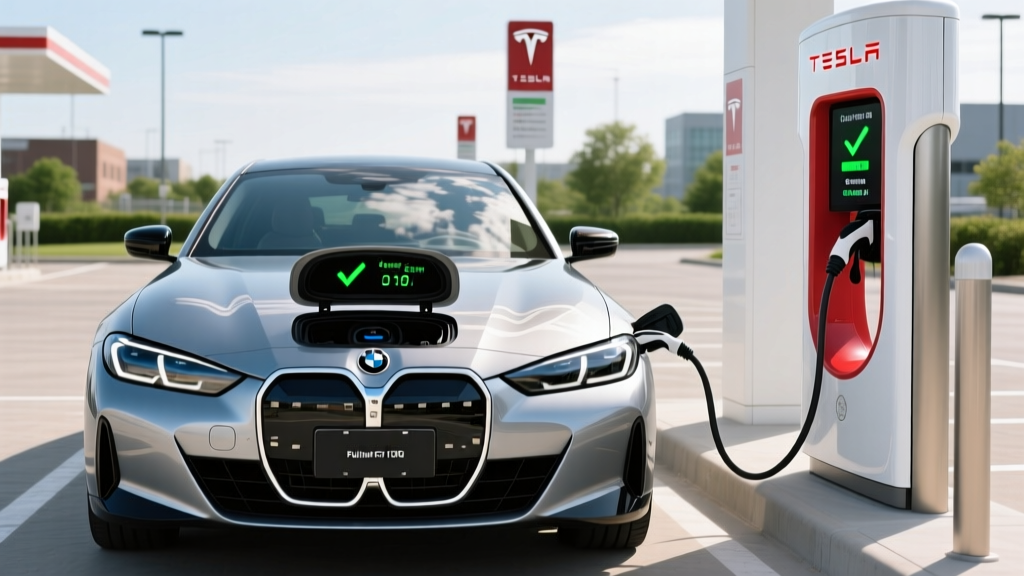
Starting with 2025 model-year vehicles, BMW began equipping new EVs with the NACS charge port — the same physical connector Tesla uses. This means a 2025 or 2026 BMW i4, iX, i5, or i7 can plug directly into a Tesla Supercharger V3 or V4 stall without any adapter.
For BMW owners with older models (2022–2024 i4, iX, or i7), these vehicles shipped with the CCS1 (Combined Charging System) port. To use a Tesla Supercharger, you need a NACS-to-CCS adapter. BMW has offered an official adapter through its dealer network, and third-party options from companies like Lectron and A2Z are also available, typically priced between $150 and $250.
The critical caveat: not every Supercharger stall supports non-Tesla vehicles. Tesla has opened select Supercharger locations to NACS-equipped non-Tesla EVs under its "Open Supercharging" program, but availability varies by region. The Tesla app and your BMW's navigation system (with updated software) will show which stations are accessible. According to Tesla's official support page, the rollout continues to expand through 2026.
| BMW Model Year | Native Port | Tesla Supercharger (NACS) | Electrify America / CCS Networks | CHAdeMO |
|---|---|---|---|---|
| 2025–2026 (i4, i5, i7, iX) | NACS | Direct plug-in | Requires CCS-to-NACS adapter | Not supported |
| 2022–2024 (i4, iX, i7) | CCS1 | Requires NACS-to-CCS adapter | Direct plug-in | Not supported |
Charging Levels Explained: kW, Miles Per Hour, and What to Expect
Before we get into specific times for your BMW, let's clarify the three charging levels and the distinction between kW (kilowatts — the rate of power delivery, like water pressure from a hose) and kWh (kilowatt-hours — the total energy stored in your battery, like the size of the tank). Confusing these two is the single most common mistake in EV discussions.
A charger rated at 11 kW delivers energy at that rate. If your BMW iX xDrive50 has a 105.2 kWh usable battery, charging from empty at a sustained 11 kW would theoretically take about 9.5 hours. In practice, charging curves taper near full capacity, so actual times differ.
| Level | Voltage | Max Power (kW) | Miles of Range Added Per Hour | Best Use Case |
|---|---|---|---|---|
| Level 1 | 120V AC | 1.0–1.4 kW | 3–5 miles | Overnight top-up, emergencies |
| Level 2 | 240V AC | 7.2–19.2 kW | 20–60 miles | Home daily charging, workplace |
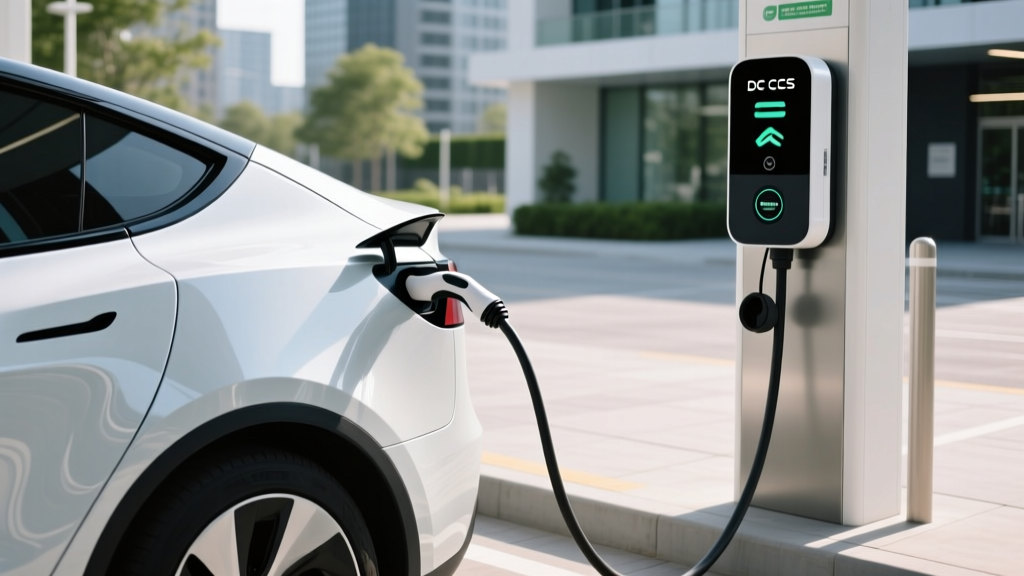
| DC Fast Charging | 400–800V DC | 50–350 kW | 150–800+ miles (peak rate) | Road trips, rapid top-ups |
For BMW EVs specifically, here's how the numbers translate. The BMW i4 eDrive40 (81.5 kWh usable battery, EPA 301 miles) charging at a sustained 11 kW Level 2 adds roughly 35–40 miles of range per hour. On a Tesla Supercharger V3 (peak 250 kW), BMW's NACS-equipped models can accept up to 200–205 kW depending on the model and state of charge.
Real Charging Times: BMW Models from 10% to 80%
Manufacturers and the EPA quote 10–80% charge times because the charging curve tapers significantly above 80%. Pushing electrons into an already-full battery is like stuffing the last few items into an overpacked suitcase — it slows dramatically to protect battery health. Here's what to expect with common BMW EV battery sizes:
| Model | Battery (kWh usable) | Level 2 at 11 kW | DC Fast at Peak kW | Peak DC Rate Accepted |
|---|---|---|---|---|
| 2026 BMW i4 eDrive40 | 81.5 kWh | ~5.2 hours | ~31 minutes | 205 kW |
| 2026 BMW i5 eDrive40 | 81.2 kWh | ~5.1 hours | ~30 minutes | 205 kW |
| 2026 BMW iX xDrive50 | 105.2 kWh | ~6.7 hours | ~34 minutes | 200 kW |
| 2026 BMW i7 eDrive50 | 101.7 kWh | ~6.5 hours | ~34 minutes | 195 kW |
A few real-world caveats: these DC fast-charging times assume you arrive at a low state of charge (10–15%), the battery is preconditioned to optimal temperature, and the charger can deliver its peak rate. In cold weather (below 40°F), expect charge times to increase by 15–25% unless your BMW has preconditioned the battery via navigation routing to the charger. At Tesla Supercharger V3 stalls, the 250 kW peak is shared if another vehicle is plugged into the same stall pair — though V4 posts have largely eliminated this issue.
Home Charger Installation: Costs, Electrical Requirements, and Gotchas
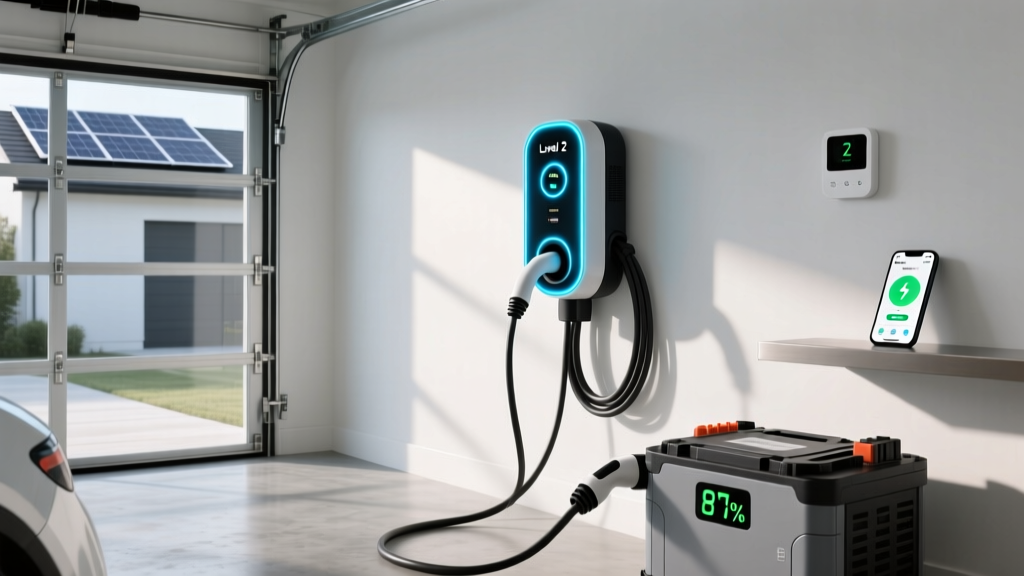
Most BMW EV owners will do 80–90% of their charging at home on a Level 2 charger. Here's what that involves electrically and financially.
Electrical requirements: A Level 2 home charger requires a dedicated 240V circuit. The most common setup is a 40-amp or 48-amp circuit on a NEMA 14-50 outlet or hardwired connection. A 48-amp charger delivers up to 11.5 kW — enough to fully recharge any BMW EV overnight. Your electrical panel needs sufficient spare capacity; most modern 200-amp panels can accommodate this without issue.
The panel-upgrade gotcha: Homes with older 100-amp panels, or panels already near capacity (common with electric ranges, dryers, and HVAC), may require a service upgrade to 200 amps. This is the single biggest variable in installation cost — a panel upgrade adds $1,500 to $4,000+ to the project.
| Component | Typical Range | Notes |
|---|---|---|
| Level 2 Charger Equipment | $300–$700 | Varies by brand, power output, smart features |
| Electrician Labor | $400–$1,500 | Depends on run length from panel to garage/carport |
| Electrical Permit | $50–$200 | Required in most jurisdictions; varies by locality |
| Panel Upgrade (if needed) | $1,500–$4,000 | Only if existing panel lacks capacity |
| Total (no panel upgrade) | $750–$2,400 | Most homes with modern 200A panels |
| Total (with panel upgrade) | $2,250–$6,400 | Older homes or high-load panels |
Always hire a licensed electrician and pull a permit. Unpermitted work can void home insurance coverage and create fire risk. The National Electrical Contractors Association recommends a dedicated circuit with GFCI protection for outdoor installations, and NEMA 3R or NEMA 4-rated enclosures for any charger exposed to weather.
What Electrical Upgrades Might I Need?
Beyond the dedicated 240V circuit, potential upgrades include:
- Panel capacity assessment: Your electrician will perform a load calculation per NEC Article 220. If your existing loads plus the new 40A/48A circuit exceed 80% of panel rating, you need an upgrade.
- Conduit and wire run: Longer runs from the panel to the garage require thicker gauge wire (6 AWG for 48A), which increases material cost.
- Smart panel or load management: Some homes use load-management devices (like the Emporia VUE or Span smart panel) to dynamically share capacity between the EV charger and other appliances, avoiding a full panel upgrade.
Home Charger Equipment Picks for BMW Owners
Not all Level 2 chargers are equal. Here are three proven options that pair well with BMW EVs, covering different budgets and feature sets.
Emporia Vue Level 2 EV Charger
- Power Output: 11.5 kW (48A)
- Connector: NACS (native) or J1772 (with CCS models)
- Cable Length: 24 feet
- Smart Features: Wi-Fi, app scheduling, solar integration, energy tracking
- Price: ~$350
- Best For: Budget-conscious owners who want smart scheduling and energy monitoring
ChargePoint Home Flex
- Power Output: Up to 12 kW (50A, configurable down to 16A)
- Connector: NACS or J1772 (configurable)
- Cable Length: 23 feet
- Smart Features: Wi-Fi, Alexa integration, ChargePoint app, flexible amperage
- Price: ~$550
- Best For: Owners who want adjustable amperage to match their panel capacity
Wallbox Pulsar Plus
- Power Output: 11.5 kW (48A)
- Connector: NACS or J1772
- Cable Length: 25 feet
- Smart Features: Wi-Fi + Bluetooth, app control, Power Sharing for dual installations
- Price: ~$450
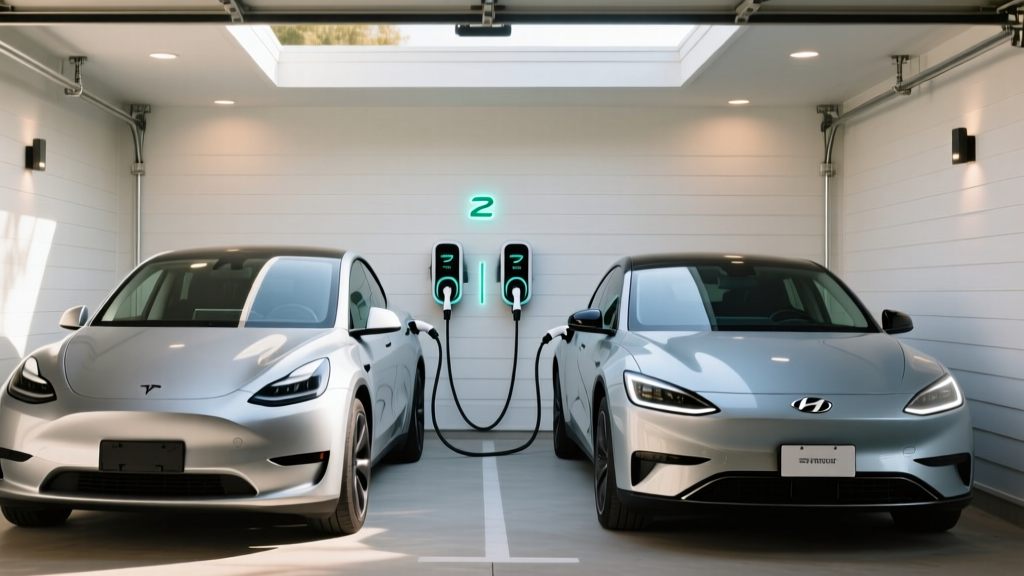
- Best For: Compact size, clean aesthetics, and dual-charger garages
For 2025–2026 BMW models with native NACS ports, order the NACS-connector version of any charger above. For 2022–2024 CCS-equipped BMWs, choose the J1772 version (J1772 is the AC charging standard that all CCS vehicles accept for Level 2).
Charging Cost Per Mile: BMW EV vs. Gas Equivalent
One of the strongest arguments for going electric is fuel cost savings — but the actual number depends heavily on how and where you charge. Let's run the numbers for a BMW i4 eDrive40 (3.4 kWh/mile combined, per fueleconomy.gov) versus a comparable BMW 430i Gran Coupe (29 MPG combined).
| Scenario | Rate | BMW i4 Cost/Mile | BMW 430i Cost/Mile ($3.50/gal) | Annual Savings (12,000 mi) |
|---|---|---|---|---|
| Home Level 2 (off-peak utility rate) | $0.13/kWh | $0.044 | $0.121 | $924 |
| Home Level 2 (average US rate) | $0.17/kWh | $0.058 | $0.121 | $756 |
| Public Level 2 (network pricing) | $0.30/kWh | $0.102 | $0.121 | $228 |
| DC Fast Charging (Tesla Supercharger avg) | $0.35/kWh | $0.119 | $0.121 | $24 |
| DC Fast Charging (peak pricing) | $0.52/kWh | $0.177 | $0.121 | -$672 (EV costs more) |
The takeaway: home charging on off-peak rates delivers massive savings — roughly $900+ per year over gas. But relying exclusively on expensive public DC fast chargers can actually cost more than gasoline. BMW owners who install a Level 2 home charger and use DC fast charging only for road trips typically see annual fuel savings of $700–$1,000.
Tesla Supercharger pricing varies by location and time of day. As of early 2026, most US Superchargers charge between $0.28 and $0.48 per kWh, with some urban locations higher during peak demand. Non-Tesla vehicles accessing Superchargers may pay a small premium (typically 10–15%) unless enrolled in a Tesla membership plan.
Safety, Code, and Practical Installation Considerations
EV charging involves sustained high-current draw over many hours — far more demanding than typical household appliances. Proper installation isn't optional.
- Dedicated circuit: Your Level 2 charger must be on its own dedicated breaker. Sharing a circuit with other appliances risks tripping and fire hazard.
- GFCI protection: The 2020 NEC (and later) requires GFCI protection for outdoor receptacles used for EV charging. Indoor garage installations on hardwired chargers may not require GFCI in all jurisdictions, but it's recommended.
- Outdoor rating: If your charger is mounted outside, it must carry a NEMA 3R (rain-resistant) or NEMA 4 (watertight) rating. All three chargers recommended above meet outdoor standards.
- Cable management: A 24-foot cable drags on the ground and creates trip hazards. Wall-mounted cable organizers or retractable reel systems ($40–$120) keep things tidy and safe.
- Wi-Fi connectivity: Smart chargers allow you to schedule charging during off-peak utility hours, potentially saving hundreds per year. Most utility time-of-use programs require or incentivize scheduled charging.
Frequently Asked Questions
How much does it cost to install a home EV charger for my BMW?
Expect $750–$2,400 for a standard installation on an existing 200-amp panel, including equipment ($300–$700), electrician labor ($400–$1,500), and permits ($50–$200). If your home needs a panel upgrade from 100A to 200A, add $1,500–$4,000. Always get at least two quotes from licensed electricians.
How fast will each charging level add range to my BMW?
Level 1 (120V) adds 3–5 miles per hour — too slow for daily use on larger batteries. Level 2 (240V at 48A/11.5 kW) adds 35–45 miles per hour, easily replenishing a day's driving in 1–2 hours. DC fast charging at 200 kW can add 150+ miles in 10 minutes at peak rate, but the charge curve tapers significantly above 80% state of charge.
Which connector and charger is compatible with my BMW EV?
2025–2026 BMW EVs use the NACS connector natively and can plug directly into Tesla Superchargers and any NACS-equipped station. 2022–2024 BMW EVs use CCS1 and require a NACS-to-CCS adapter for Supercharger access. For home Level 2 charging, 2025+ models need a NACS-connector charger; older models need J1772 (which is the AC portion of CCS).
How much does charging cost per mile vs. gas?
At home on average US electricity rates ($0.17/kWh), a BMW i4 costs about $0.058 per mile to fuel — roughly half the $0.121/mile cost of a comparable gas BMW 430i at $3.50/gallon. However, DC fast charging at $0.35–$0.52/kWh can approach or exceed gasoline costs, making home charging the economic advantage.
What electrical upgrades might I need for a home charger?
The most common upgrade is a panel capacity increase from 100A to 200A service ($1,500–$4,000). You may also need a new conduit run if the garage is far from the panel, thicker wire for long runs, or a load-management device if your panel is near capacity but you want to avoid a full upgrade. An electrician's load calculation per NEC Article 220 will determine what's required.
Can I use a Tesla Supercharger with my older CCS-equipped BMW?
Yes, but with limitations. You'll need a NACS-to-CCS adapter ($150–$250), and only Supercharger locations enrolled in Tesla's Open Supercharging program accept non-Tesla vehicles. Check the Tesla app or your BMW's updated navigation for compatible locations before planning a road trip around Supercharger stops.