Why BMW Owners Need a Tesla Adapter in 2026
If you own a BMW i4, iX, i5, or i7, you've likely noticed a frustrating reality: BMW's CCS1 charge port limits your access to the largest fast-charging network in North America — Tesla's Supercharger network. While the industry-wide shift to the North American Charging Standard (NACS) is well underway, most BMW EVs sold through 2025 shipped with CCS1 ports. That means a BMW Tesla adapter is the key to unlocking over 25,000 Supercharger stalls nationwide.
Starting with 2026 model-year vehicles, BMW has committed to equipping new EVs with native NACS ports. But for the hundreds of thousands of CCS-equipped BMWs already on the road, a CCS1-to-NACS adapter remains essential. This guide covers everything you need to know: which adapters work, what charging speeds you'll get, how much it costs, and how to set up reliable home charging alongside public access.
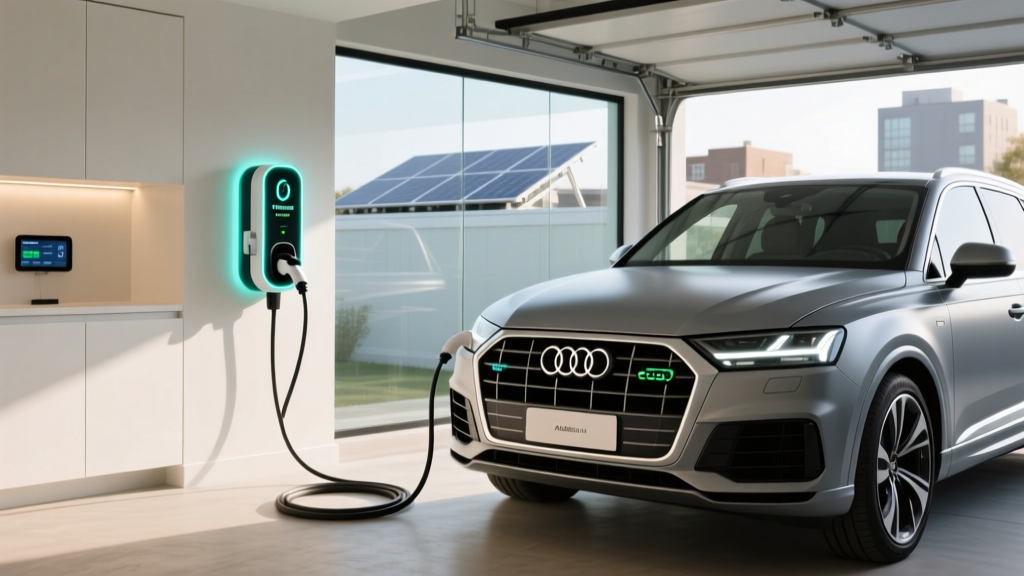
BMW EV Charging Speeds: Level 1, Level 2, and DC Fast Charging
Before selecting an adapter or home charger, understand the three charging tiers available to your BMW EV. Each level serves a different use case, and the speeds vary dramatically.
| Charging Level | Voltage / Amperage | Max Power (kW) | Miles of Range Added per Hour | Typical Use Case |
|---|---|---|---|---|
| Level 1 (120V household outlet) | 120V / 12A | ~1.4 kW | 3–5 mi/hr | Emergency/trickle charging; PHEV overnight top-ups |
| Level 2 (240V home or public) | 240V / 32–48A | 7.7–11.5 kW | 22–40 mi/hr | Daily home charging; overnight full charge |
| DC Fast Charging (CCS1 or NACS w/ adapter) | 400–800V DC | Up to 205 kW (i4/i5) | ~180–220 mi in 10–80% session (~31 min) | Road trips; rapid top-ups on the go |
The BMW i4 and i5 support DC fast charging at up to 205 kW peak on CCS1. The larger BMW iX xDrive50 peaks around 150 kW, while the i7 xDrive60 reaches approximately 195 kW. When using a BMW Tesla adapter at a V3 Supercharger (250 kW capable), your actual peak charge rate is limited by the BMW's onboard charging hardware, not the Supercharger's maximum output. Expect real-world 10–80% times of roughly 28–35 minutes depending on battery preconditioning and ambient temperature.
Connector Compatibility: NACS, CCS1, and the BMW Tesla Adapter
The connector landscape has shifted dramatically. Here's where BMW fits in and which adapter you actually need.
| Connector Type | Physical Standard | Networks Using It | BMW Compatibility |
|---|---|---|---|
| CCS1 (Combined Charging System) | OEM port on 2022–2025 BMW EVs | Electrify America, EVgo, ChargePoint, most non-Tesla networks | Native — no adapter needed |
| NACS (North American Charging Standard) | Tesla's proprietary connector, now SAE J3400 | Tesla Superchargers; Ford, Rivian, GM, and 2026+ BMW EVs | Requires CCS1-to-NACS adapter for pre-2026 BMWs; native on 2026+ models |
| CHAdeMO | Legacy DC fast connector | Declining; some older public stations | Not compatible — BMW EVs never shipped with CHAdeMO |
Choosing the Right BMW Tesla Adapter
Several CCS1-to-NACS adapters have reached the market since Tesla opened its Supercharger network. For BMW owners, the critical factors are:
- Rated power capacity: The adapter must handle at least 250 kW DC to avoid bottlenecking your BMW's 205 kW peak charge rate. Most quality adapters are rated for 300 kW or higher.
- Amperage rating: Ensure the adapter supports at least 500A DC for full Supercharger V3/V4 compatibility.
- Safety certifications: Look for UL-listed or TÜV-certified adapters. Uncertified adapters from unknown marketplace sellers may lack proper thermal management or connector tolerances.
- Fit and retention: CCS1 connectors use a latch mechanism; NACS uses a different retention system. A well-designed adapter maintains secure engagement on both ends without wobble.
BMW has offered an official CCS1-to-NACS adapter through its parts channels, priced around $250. Third-party options from reputable brands like Lectron and A2Z range from $150 to $220. The official BMW adapter is the safest choice for warranty peace of mind, though certified third-party units perform identically in independent testing.
Level 2 Home Charging: J1772 vs. NACS Wall Connectors
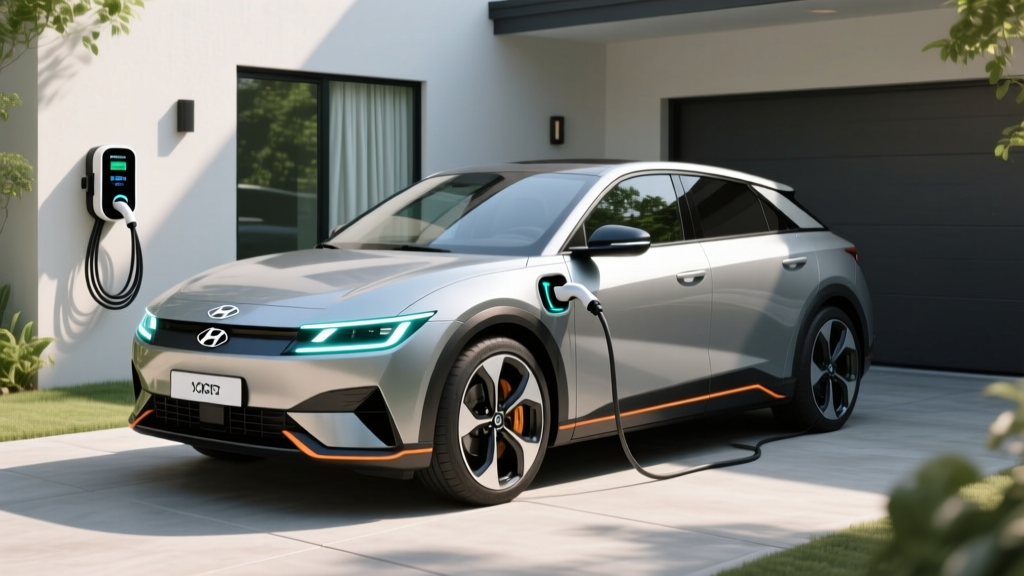
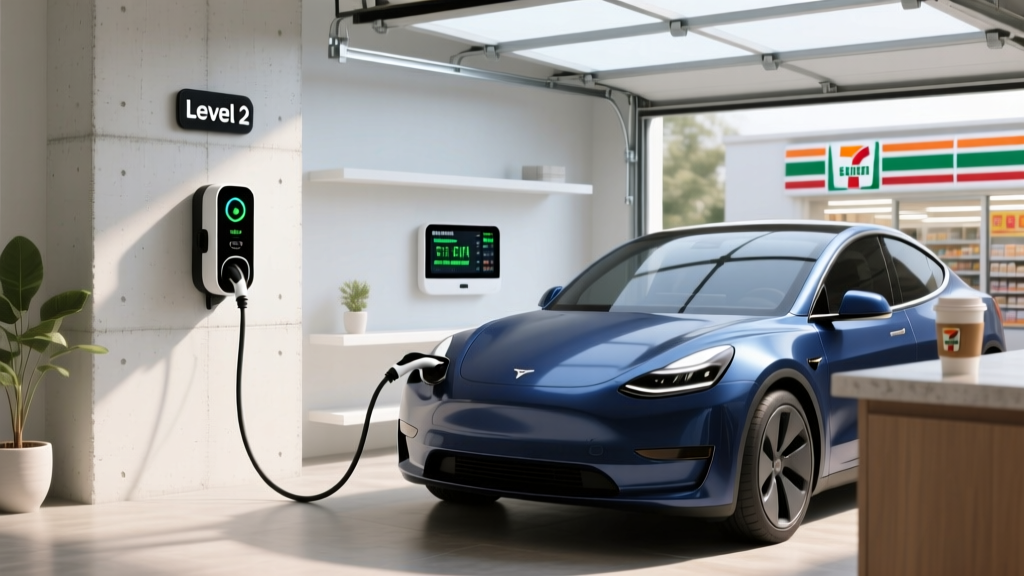
For home Level 2 charging, the picture is simpler. All BMW EVs accept J1772 connectors for AC charging (the CCS1 port's upper section is a J1772 inlet). If you install a NACS-equipped Tesla Wall Connector at home, you'll need a separate NACS-to-J1772 adapter for AC charging — or simply choose a J1772-native Level 2 charger, which is the more practical path for most BMW owners.
How Much Does It Cost to Install a Home EV Charger?
Home Level 2 charging is where EV ownership economics shine — but installation costs vary enormously depending on your home's electrical infrastructure. Here's a realistic breakdown.
| Cost Component | Typical Range | Notes |
|---|---|---|
| Level 2 charger (hardware) | $400–$700 | 48A smart charger; Wi-Fi-enabled for scheduling and monitoring |
| Electrical permit | $50–$200 | Required by most municipalities; varies by jurisdiction |
| Electrician labor (simple install) | $500–$1,200 | Panel within 20–30 ft of garage; existing 200A service with spare capacity |
| Electrician labor (complex install) | $1,200–$3,000+ | Long conduit runs, panel relocation, or subpanel addition |
| Electrical panel upgrade (if needed) | $1,500–$4,000 | Upgrading from 100A to 200A service; common in pre-1990 homes |
| Total (typical scenario) | $950–$2,100 | Assumes 200A panel with capacity; no upgrade needed |
| Total (with panel upgrade) | $2,450–$5,900 | Older home requiring full service upgrade |
Electrical Requirements for BMW Level 2 Charging
The BMW i4's onboard AC charger accepts up to 11 kW (48A at 240V). To maximize this, you need a dedicated 60A circuit (the National Electrical Code requires circuits to be derated to 80% of breaker capacity for continuous loads, so a 48A charger requires a 60A breaker). If your panel only supports a 40A circuit, you'll charge at 32A (7.7 kW) — still sufficient for overnight charging but roughly 40% slower.
Recommended Level 2 Chargers for BMW EVs
ChargePoint Home Flex
- Power: Up to 12 kW (50A) / configurable 16–50A
- Connector: J1772 (native BMW compatibility)
- Cable length: 23 ft
- Smart features: Wi-Fi, app scheduling, Alexa integration, energy tracking
- Price: ~$549
- Best for: BMW owners who want flexible amperage to match their panel capacity
Emporia Level 2 EV Charger
- Power: Up to 11.5 kW (48A)
- Connector: J1772
- Cable length: 24 ft
- Smart features: Wi-Fi, energy monitoring, solar integration, time-of-use scheduling
- Price: ~$399
- Best for: Budget-conscious buyers with solar panels or time-of-use utility rates
Tesla Wall Connector (J1772 version)
- Power: Up to 11.5 kW (48A)
- Connector: J1772 (2024+ version)
- Cable length: 24 ft
- Smart features: Wi-Fi, power sharing between multiple units, OTA updates
- Price: ~$475
- Best for: Households with both a BMW and a Tesla — power sharing manages load on one circuit
How Much Does Charging Cost per Mile vs. Gas?
The economics of EV charging depend heavily on where and when you charge. Here's a data-driven comparison using a BMW i4 eDrive40 (rated at 3.3 kWh/mile or roughly 109 MPGe combined per fueleconomy.gov) versus a comparable BMW 330i (30 MPG combined).
| Charging/Fueling Scenario | Rate | Cost per Mile (BMW i4) | Cost per Mile (BMW 330i at $3.50/gal) |
|---|---|---|---|
| Home charging (off-peak utility rate) | $0.12/kWh | $0.040 | $0.117 |
| Home charging (average US residential) | $0.17/kWh | $0.056 | $0.117 |
| Home charging (high-cost state, e.g. CA peak) | $0.35/kWh | $0.116 | $0.117 |
| Public Level 2 (ChargePoint, EVgo) | $0.25–$0.40/kWh | $0.083–$0.132 | $0.117 |
| DC Fast Charging (Tesla Supercharger via adapter) | $0.28–$0.48/kWh | $0.092–$0.158 | $0.117 |
| DC Fast Charging (Electrify America) | $0.35–$0.55/kWh | $0.116–$0.182 | $0.117 |
The takeaway is clear: home charging at off-peak rates delivers the lowest cost per mile — roughly one-third the cost of gasoline. However, exclusive reliance on DC fast charging at premium rates can actually exceed the per-mile cost of gas in some markets. BMW i4 owners who charge at home 80% of the time and use DC fast charging for road trips typically see a blended cost of $0.05–$0.07 per mile, saving $1,200–$1,800 annually versus a comparable gas BMW at 12,000 miles/year.
Supercharger Access for BMW: What Changes with the Adapter
Tesla opened its Supercharger network to non-Tesla EVs through the "Magic Dock" built-in adapter at select stalls and via the NACS standard at newer V4 Supercharger locations. Here's what BMW owners need to know about practical Supercharger access:
Supercharger Network Realities for CCS-Equipped BMWs
- V3 Superchargers with Magic Dock: These stalls have a built-in CCS1 adapter integrated into the NACS cable. You don't need your own adapter — simply use the Tesla app to initiate the session. However, Magic Dock stalls represent a minority of the network, and cable reach can be tight on BMWs whose charge ports are positioned differently than Tesla's rear-quarter location.
- V4 Superchargers: Newer V4 stalls feature longer cables and some offer native CCS1 connectors alongside NACS. Availability is expanding but still limited compared to V3.
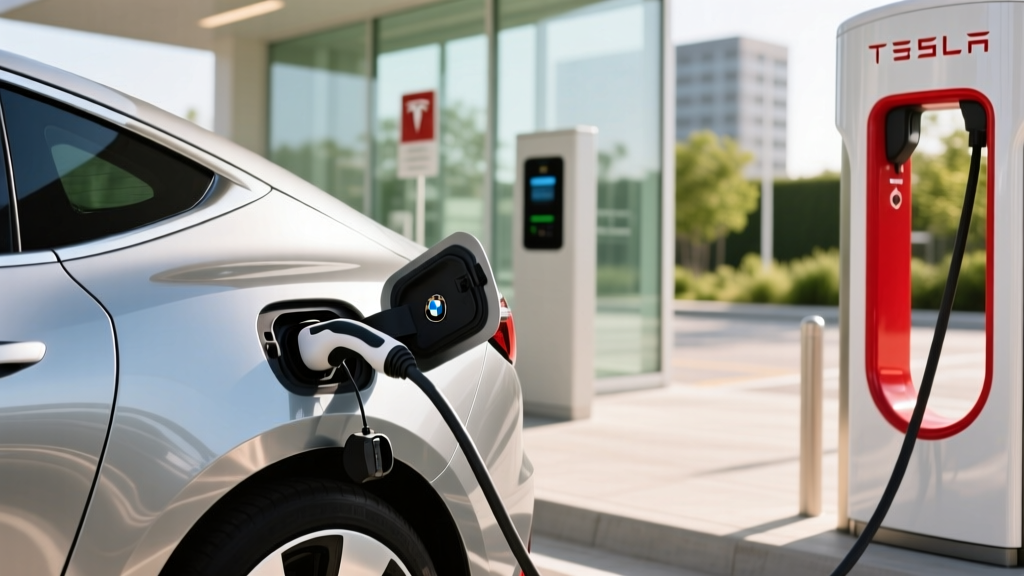
- Using your own BMW Tesla adapter: At NACS-only Supercharger stalls, your CCS1-to-NACS adapter plugs into the Supercharger cable, then your BMW's CCS1 port connects to the adapter. This gives you access to the full network, not just Magic Dock-equipped stalls.
Charging speed at a V3 Supercharger (250 kW max) will be governed by your BMW's peak acceptance rate. A BMW i4 will peak around 180–205 kW and typically complete a 10–80% session in 28–33 minutes. The BMW iX, with its ~150 kW peak, takes roughly 34–38 minutes for the same session. These times assume the battery is preconditioned — use your BMW's navigation to route to the charger, which triggers battery thermal preparation automatically.
Safety, Code, and Installation Best Practices
A Level 2 home charger draws significant continuous current for hours at a time. Proper installation isn't optional — it's a safety and insurance requirement.
Electrical Code Essentials for EV Charger Installation
- Dedicated circuit: Your Level 2 charger must be on its own dedicated circuit — it cannot share a breaker with other appliances. A 48A charger requires a 60A dedicated breaker.
- GFCI protection: The 2020 and 2023 National Electrical Code (NEC) require GFCI protection for EV charging outlets in garages and outdoor locations. Hardwired chargers (no plug) are exempt from the GFCI requirement in many jurisdictions and are often preferred for reliability.
- Outdoor rating: If your charger is installed outdoors (carport, driveway), the unit must carry a NEMA 4 or IP55+ weather rating. All chargers recommended above meet outdoor installation standards.
- Permit and inspection: Nearly all US jurisdictions require an electrical permit for EV charger installation. The inspection ensures code compliance and protects your homeowner's insurance coverage. Skipping the permit risks denied claims in the event of an electrical fire.
- Wire gauge: A 60A circuit requires 4 AWG copper wire (or 3 AWG aluminum) for runs up to 50 feet. Longer runs may require upsized wire to prevent voltage drop. Your electrician will calculate this based on your specific installation.
Frequently Asked Questions: BMW Tesla Adapter and EV Charging
Does using a BMW Tesla adapter void my BMW warranty?
No. Using a properly certified CCS1-to-NACS adapter does not void your BMW high-voltage battery or powertrain warranty under the Magnuson-Moss Warranty Act. However, if an uncertified adapter causes damage to the charge port or onboard charging system, BMW may deny coverage for that specific repair. Stick with BMW's official adapter or UL/TÜV-listed third-party options.
How fast will each charging level add range to my BMW i4?
Level 1 (120V) adds approximately 3–5 miles of range per hour — essentially useless for a full BEV but workable for PHEVs like the BMW X5 xDrive50e. Level 2 (240V, 48A) adds roughly 30–36 miles per hour, fully recharging an i4 overnight in about 9 hours. DC fast charging at a Supercharger or Electrify America station adds up to 180+ miles in a 30-minute session (10–80% SoC).
Which connector does my 2024–2025 BMW EV have?
All 2022–2025 BMW EVs (i4, i5, iX, i7) sold in North America use the CCS1 connector for DC fast charging and J1772 for Level 2 AC charging. These are the same physical port — the CCS1 inlet incorporates the J1772 connector in its upper section. A BMW Tesla adapter (CCS1-to-NACS) is required to use Tesla Superchargers.
How much does it cost to charge a BMW i4 at a Tesla Supercharger?
Supercharger pricing varies by location and time of day, typically ranging from $0.28 to $0.48 per kWh. Charging a BMW i4 from 10–80% (approximately 57 kWh) costs between $16 and $27 per session. That's roughly $0.09–$0.16 per mile — competitive with or slightly above gasoline depending on your local fuel prices.
Do I need a panel upgrade for a home Level 2 charger?
It depends on your home's existing electrical service. Homes with 200A panels and spare breaker slots typically don't need an upgrade. Homes with 100A service, or 200A panels already near capacity (electric HVAC, dryer, range, water heater), will require a load calculation by a licensed electrician. If the calculation shows insufficient capacity, a panel upgrade to 200A or 400A service costs $1,500–$4,000 and adds 1–3 weeks to the project timeline.
Can I use a Tesla Wall Connector to charge my BMW at home?
Yes, but with a caveat. Tesla now sells a J1772-equipped Wall Connector (~$475) that natively fits BMW's AC charge port without any adapter. If you already own a NACS-equipped Tesla Wall Connector, you'll need a NACS-to-J1772 adapter for AC charging. For most BMW-only households, buying a J1772-native charger (ChargePoint Home Flex, Emporia, or the J1772 Tesla Wall Connector) is the simpler and more reliable choice.
What's the BMW i4's real-world range vs. the EPA estimate?
The BMW i4 eDrive40 carries an EPA-estimated range of 301 miles. In real-world highway driving at 70 mph, expect approximately 250–270 miles in moderate temperatures. In cold weather (below 30°F), range drops to roughly 220–240 miles due to cabin heating demands and increased battery resistance. The i4 M50, with its more powerful dual-motor setup, is EPA-rated at 227–270 miles depending on wheel size, with real-world highway figures 15–20% lower.