BMW Meets the Tesla Supercharger Network: What You Need to Know
If you own a BMW i4, iX, i5, or i7—or you're shopping for one—you've likely searched "BMW with Supercharger" wondering whether Munich's finest can plug into Tesla's sprawling fast-charging network. The short answer: yes, but with important caveats around adapters, charge speeds, and connector standards that vary by model year.
Starting in 2024, BMW joined the broader industry shift to the North American Charging Standard (NACS). For 2025 and 2026 model-year BMWs, Tesla Supercharger access became available via a BMW-approved CCS-to-NACS adapter, and select newer models now ship with a native NACS port. Here's exactly how it works, what it costs, and how to set up your full charging ecosystem at home and on the road.
Understanding Charging Levels: kW, kWh, and What They Mean
Before plugging in anywhere, let's clear up the single most common EV confusion: kW (kilowatts) measures power—the rate at which electricity flows into your car. kWh (kilowatt-hours) measures energy—the total capacity of your battery. Think of kW as the width of a hose and kWh as the size of the bucket.
A BMW i4 eDrive40 carries an 81.5 kWh usable battery (NMC chemistry). A BMW iX xDrive50 packs 105.2 kWh usable. How fast those batteries fill depends entirely on the charging level you're using.
| Level | Voltage | Power (kW) | Miles of Range Added per Hour | Typical Use Case |
|---|---|---|---|---|
| Level 1 | 120V AC | 1.0–1.4 kW | 3–5 mi/hr | Emergency top-ups, overnight trickle |
| Level 2 | 240V AC | 7.2–19.2 kW | 22–60 mi/hr | Daily home & workplace charging |
| DC Fast | 400–800V DC | 50–350 kW | 150–800+ mi/hr (peak) | Road trips, rapid top-ups |
Real-world note: Those "miles per hour" figures assume optimal conditions. In cold weather (below 32°F), Level 2 charging can slow by 20–30% until the battery warms. DC fast charging speeds peak only within a specific state-of-charge window—typically 10% to 50%—then taper significantly above 80%.
BMW Supercharger Compatibility: Connector Guide
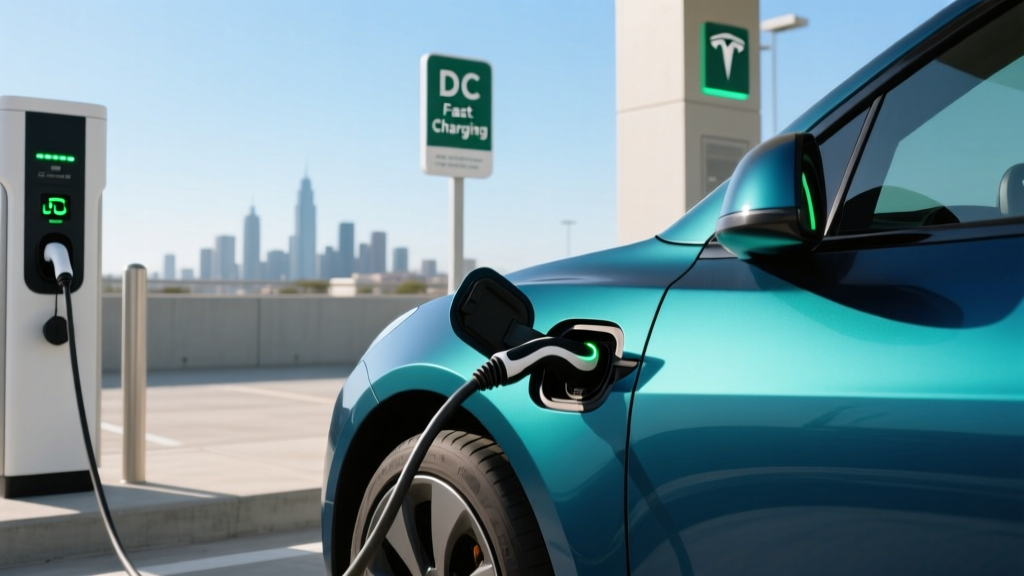
Tesla Superchargers originally used a proprietary connector. With the NACS standard now adopted industry-wide, Tesla has opened its network to non-Tesla EVs—provided your vehicle has the right connector or adapter.
| BMW Model | Model Years | Native Port | Supercharger Access | Adapter Required |
|---|---|---|---|---|
| i4 (all trims) | 2022–2024 | CCS1 | Yes, via adapter | CCS-to-NACS adapter (~$200–$300) |
| i4 (all trims) | 2025–2026 | NACS (native) | Yes, direct plug | None for Superchargers; NACS-to-CCS for legacy CCS stations |
| iX (all trims) | 2022–2024 | CCS1 | Yes, via adapter | CCS-to-NACS adapter (~$200–$300) |
| iX (all trims) | 2025–2026 | NACS (native) | Yes, direct plug | None for Superchargers |
| i5 (all trims) | 2024–2026 | NACS (2025+) | Yes | Adapter for 2024 CCS models |
| i7 | 2023–2026 | CCS1/NACS | Yes | Adapter for CCS models |
Charging Speeds: What to Expect from Your BMW on Superchargers and Beyond
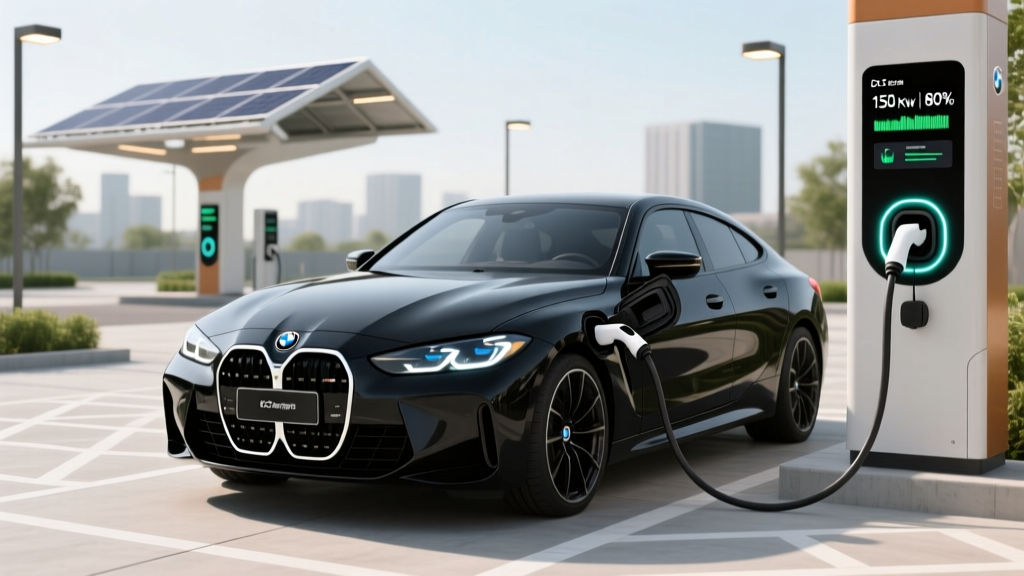
Plugging a BMW i4 into a V3 Tesla Supercharger (250 kW max) doesn't mean you'll pull 250 kW. The car's onboard charge architecture sets the ceiling. Here's what real-world charging looks like across BMW's EV lineup:
| Model | Battery (kWh usable) | Max DC Rate (kW) | 10–80% at Max DC | Level 2 at 11 kW | Level 2 at 7.7 kW |
|---|---|---|---|---|---|
| i4 eDrive40 | 81.5 | 205 kW | ~31 min | ~5.5 hrs | ~8 hrs |
| i4 M50 | 81.5 | 205 kW | ~31 min | ~5.5 hrs | ~8 hrs |
| iX xDrive50 | 105.2 | 200 kW | ~35 min | ~7 hrs | ~10.5 hrs |
| iX M60 | 105.2 | 200 kW | ~35 min | ~7 hrs | ~10.5 hrs |
| i5 eDrive40 | 81.2 | 205 kW | ~30 min | ~5.5 hrs | ~8 hrs |
| i7 eDrive50 | 101.7 | 195 kW | ~34 min | ~7 hrs | ~10 hrs |
Charging curve reality: BMW's peak DC rate applies roughly between 10% and 40% SoC. After 50%, the rate tapers. By 80%, you might be pulling only 50–70 kW. That's why we quote 10–80% times rather than 0–100%—charging above 80% on DC is painfully slow and generates excess heat, accelerating long-term battery degradation. For daily driving, set your charge limit to 80% and reserve 100% fills for road-trip mornings.
On EPA range, the EPA's fueleconomy.gov lists the i4 eDrive40 at 301 miles combined (19" wheels), the iX xDrive50 at 324 miles, and the i5 eDrive40 at 295 miles. In real-world highway driving at 70+ mph, expect roughly 10–15% less. In sub-freezing temperatures without preconditioning, knock off another 15–25%.
Home Charging Installation: Costs, Electrical Requirements, and Panel Upgrades
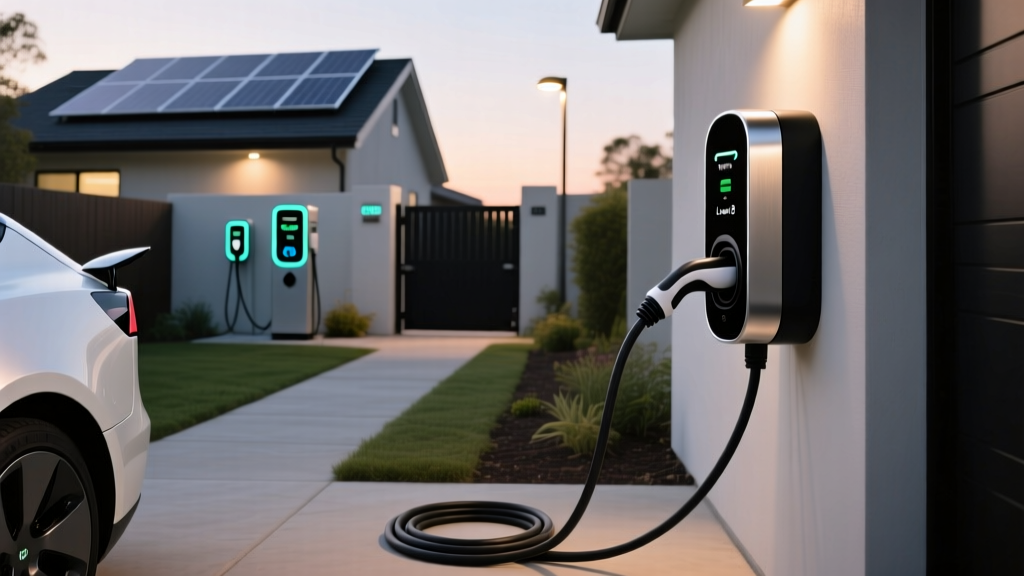
For BMW EV owners, a Level 2 home charger is the single best investment you can make. You'll wake up to a full battery every morning, avoid public-charger reliability headaches, and pay the lowest per-kWh rate available.
Electrical Requirements
Most BMW EVs accept up to 11 kW on Level 2 AC (48 amps on a 60-amp dedicated circuit at 240V). To get the full 11 kW charge rate, you need:
- Circuit: 60-amp dedicated breaker (240V)
- Wire: 6 AWG copper (or 4 AWG aluminum) for runs up to 50 feet; thicker gauge for longer runs
- Outlet: NEMA 14-60 receptacle, or hardwired connection (hardwired is preferred for outdoor installs and avoids GFCI nuisance trips)
- Panel capacity: Your main electrical panel must have at least 60 amps of spare capacity beyond your existing loads
If your home has a 100-amp main panel (common in pre-1980 construction), adding a 60-amp EV circuit may exceed safe capacity. This triggers a panel upgrade to 200 amps—a significant but sometimes unavoidable cost.
Installation Cost Breakdown
| Component | Cost Range | Notes |
|---|---|---|
| Level 2 Charger (equipment) | $400–$750 | Smart Wi-Fi chargers; basic units from $300 |
| Electrician labor (standard install) | $500–$1,500 | Varies by run length, wall type, conduit needs |
| Electrical permit | $50–$250 | Required in most jurisdictions; inspector visit included |
| Panel upgrade (if needed) | $1,500–$4,000 | 100A → 200A service upgrade; older homes only |
| Total (no panel upgrade) | $950–$2,500 | Typical for homes with 200A panels and nearby garage |
| Total (with panel upgrade) | $2,450–$6,500 | Full service upgrade scenario |
Safety and Code Considerations
- Dedicated circuit: Your EV charger must have its own breaker—never share with other appliances.
- GFCI protection: NEC 2020+ requires GFCI on 240V receptacles in garages. Hardwired chargers are exempt and avoid nuisance tripping.
- Outdoor rating: If installing outside, ensure the charger carries a NEMA 4 or IP65 rating for weather resistance.
- Cable management: Choose a charger with at least 18–25 feet of cable to reach your BMW's charge port (located on the driver-side front fender on most models).
- Permit and inspection: Skipping the permit risks insurance denial if an electrical fire occurs. Most jurisdictions require inspection within 30 days of install.
Cost to Charge: BMW EV vs. Gas Per Mile
Charging economics depend heavily on where and when you plug in. Here's a realistic breakdown for a BMW i4 eDrive40 (81.5 kWh battery, EPA-rated 3.25 miles/kWh):
| Scenario | Rate ($/kWh) | Full Charge Cost | Cost per Mile | vs. Gas (30 MPG at $3.50/gal) |
|---|---|---|---|---|
| Home off-peak (utility TOU) | $0.08–$0.12 | $6.50–$9.80 | $0.025–$0.037 | ~68% cheaper |
| Home standard rate | $0.14–$0.18 | $11.40–$14.70 | $0.044–$0.057 | ~52% cheaper |
| Public Level 2 (ChargePoint, etc.) | $0.20–$0.35 | $16.30–$28.50 | $0.063–$0.110 | ~6–47% cheaper |
| Tesla Supercharger (NACS Open) | $0.28–$0.40 | $22.80–$32.60 | $0.088–$0.126 | Comparable to gas |
| Electrify America DC Fast | $0.35–$0.55 | $28.50–$44.80 | $0.110–$0.172 | Can exceed gas cost |
The bottom line: If you charge at home 80%+ of the time (as most EV owners do), your BMW i4 will cost roughly $0.03–$0.05 per mile in electricity—compared to $0.12 per mile for a gas car getting 30 MPG at $3.50/gallon. Over 15,000 miles per year, that's a savings of $1,050–$1,350 annually. Public DC fast charging erodes that advantage, which is why home charging is the economic backbone of EV ownership.
Note: Tesla Supercharger pricing for non-Tesla vehicles sometimes carries a surcharge. BMW owners accessing Superchargers through the Tesla app may see rates $0.04–$0.08/kWh higher than Tesla owners. Check the Tesla app for station-specific pricing before plugging in.
Best Home Chargers for BMW EVs: Equipment Picks
Not all Level 2 chargers are equal. For BMW's 11 kW AC acceptance rate, you want a charger that delivers at least 48 amps (11.5 kW) on a 60-amp circuit to maximize overnight charging speed. Here are our tested picks:
ChargePoint Home Flex
- Power: Up to 12 kW (50A), configurable 16A–50A
- Connector: NACS (2025+ units) or J1772/CCS
- Cable: 23 feet
- Smart features: Wi-Fi, app scheduling, Alexa, utility TOU integration
- Price: ~$550–$650
- Best for: BMW owners wanting flexible amperage for older panels
Tesla Wall Connector
- Power: Up to 11.5 kW (48A)
- Connector: NACS (native Tesla plug)
- Cable: 24 feet
- Smart features: Wi-Fi, OTA updates, power-sharing between units
- Price: ~$450–$500
- Best for: BMW owners with 2025+ NACS-port models who also use Superchargers
Emporia Level 2 EV Charger
- Power: Up to 11.5 kW (48A)
- Connector: J1772 (CCS-compatible) or NACS
- Cable: 24 feet
- Smart features: Wi-Fi, energy monitoring, solar integration, TOU scheduling
- Price: ~$400–$500
- Best for: Budget-conscious BMW owners wanting detailed energy tracking
BMW Wallbox (OEM)
- Power: Up to 11 kW (48A)
- Connector: CCS/NACS depending on market
- Cable: 20 feet
- Smart features: BMW app integration, charge scheduling, preconditioning
- Price: ~$600–$750
- Best for: Owners wanting seamless BMW Connected Drive integration
Our pick: For 2025–2026 BMWs with native NACS ports, the Tesla Wall Connector offers the cleanest experience—same plug you'll use at Superchargers, no adapter needed at home. For 2022–2024 CCS-port BMWs, the ChargePoint Home Flex provides the most flexibility and a longer cable for tricky garage layouts.
Federal Tax Credit for Home Charging Equipment
The IRS Residential Clean Energy Credit (Section 25C) covers 30% of home EV charger equipment and installation costs, up to $1,000. This credit applies to chargers installed through December 31, 2032.
Key eligibility requirements:
- The charger must be installed at your primary or secondary residence in the United States.
- The credit is non-refundable—it reduces your tax liability but won't generate a refund beyond what you owe.
- The $1,000 cap is per tax year, not per device.
- The credit also covers panel upgrades if they are required solely to support the charger installation.
Always confirm eligibility with a tax professional. IRS rules and form 8911 requirements can change, and state-level rebates may stack on top of the federal credit.
Frequently Asked Questions
How much does it cost to install a home EV charger for my BMW?
A typical Level 2 installation runs $950–$2,500 including equipment, electrician labor, and permit—if your electrical panel has sufficient capacity. If you need a panel upgrade from 100A to 200A service, add $1,500–$4,000. The 30% federal tax credit (up to $1,000) applies to both equipment and installation.
How fast will each charging level add range to my BMW?
Level 1 (120V) adds roughly 3–5 miles per hour—essentially useless for daily needs. Level 2 (240V at 48A/11 kW) adds approximately 35–40 miles per hour for an i4, fully replenishing overnight. DC fast charging at a Supercharger or Electrify America station adds 150+ miles in 15 minutes at peak rates, but tapers significantly above 80% SoC.
Which connector does my BMW use, and will it work at Tesla Superchargers?
2022–2024 BMW EVs use a CCS1 port and require a CCS-to-NACS adapter ($200–$300) for Supercharger access. 2025–2026 models are transitioning to native NACS ports and can plug directly into Superchargers. Always verify your specific model year and use a BMW-approved adapter to avoid warranty issues.
How much does charging a BMW cost per mile compared to gas?
At home off-peak rates ($0.10/kWh), a BMW i4 costs roughly $0.03 per mile—about 75% less than a 30-MPG gas car at $3.50/gallon ($0.12/mile). At public DC fast chargers ($0.35–$0.45/kWh), the cost rises to $0.09–$0.14 per mile, which can match or exceed gas. Home charging is where the savings live.
What electrical upgrades might I need for a home charger?
If your home has a 200-amp panel with available capacity, you'll likely only need a new 60-amp breaker and a wiring run to your garage or parking spot. Homes with 100-amp panels, older wiring, or heavy existing loads may require a full panel upgrade to 200 amps—a $1,500–$4,000 job. A licensed electrician's load calculation is the definitive answer.
Can I precondition my BMW's battery for faster Supercharger charging?
Yes. Set a Supercharger or DC fast-charger as your navigation destination in BMW's iDrive system, and the car will precondition (warm) the battery to optimal temperature before arrival. In cold weather, this can cut your 10–80% charge time by 5–10 minutes and allow the car to hit peak kW sooner. Always precondition before DC fast charging—it's the single biggest factor in real-world charge speed.